
Container Linux
Container Linux (formerly CoreOS Linux) is a discontinued open-source lightweight operating system based on the Linux kernel and designed for providing infrastructure for clustered deployments. One of its focuses was scalability. As an operating system, Container Linux provided only the minimal functionality required for deploying applications inside software containers, together with built-in mechanisms for service discovery and configuration sharing.[9][10][11][12][13]
Container Linux shares foundations with Gentoo Linux,[14][15]ChromeOS, and ChromiumOS through a common software development kit (SDK). Container Linux adds new functionality and customization to this shared foundation to support server hardware and use cases.[12][16]:7:02 CoreOS was developed primarily by Alex Polvi, Brandon Philips, and Michael Marineau,[11] with its major features available as a stable release.[17][18][19]
The CoreOS team announced the end-of-life for Container Linux on May 26, 2020,[1] offering Fedora CoreOS,[20] and RHEL CoreOS as its replacement.
Overview
لا يوفر نظام لينكس الحاويات مدير حزم لتوزيع تطبيقات الحمولة، مما يتطلب تشغيل جميع التطبيقات داخل حاوياتها. وباعتباره مضيف تحكم مركزي، يستخدم نظام لينكس الحاويات ميزات المحاكاة الافتراضية على مستوى نظام التشغيل لنواة لينكس لإنشاء وتكوين حاويات متعددة تعمل كأنظمة لينكس معزولة . وبهذه الطريقة، يتم تقسيم الموارد بين الحاويات من خلال مثيلات متعددة معزولة في مساحة المستخدم ، بدلاً من استخدام برنامج إدارة الأجهزة الافتراضية (Hypervisor) وتوفير أجهزة افتراضية كاملة . يعتمد هذا النهج على وظائف مجموعات التحكم (cgroups) ومساحات الأسماء في نواة لينكس ، [ 21 ] [ 22 ] والتي توفر معًا إمكانية تحديد استخدام الموارد ( وحدة المعالجة المركزية ، والذاكرة، وإدخال /إخراج القرص ، وما إلى ذلك) وحسابه وعزله لمجموعات عمليات مساحة المستخدم . [ 10 ] [ 13 ] [ 23 ]
Initially, Container Linux exclusively used Docker as a component providing an additional layer of abstraction and interface[24] to the operating system-level virtualization features of the Linux kernel, as well as providing a standardized format for containers that allows applications to run in different environments.[10][23] In December 2014, CoreOS released and started to support rkt (initially released as Rocket) as an alternative to Docker, providing through it another standardized format of the application-container images, the related definition of the container runtime environment, and a protocol for discovering and retrieving container images.[25][26][27][28] CoreOS provides rkt as an implementation of the so-called app container (appc) specification that describes the required properties of the application container image (ACI). CoreOS created appc and ACI as an independent committee-steered set of specifications[29][30] aimed to become part of the vendor- and operating-system-independent Open Container Initiative, or OCI, initially named the Open Container Project (OCP) containerization standard,[31] which was announced by a group of large tech companies in June 2015.[32][33][34]
Container Linux uses ebuild scripts from Gentoo Linux for automated compilation of its system components,[14][15] and uses systemd as its primary init system, with tight integration between systemd and various Container Linux's internal mechanisms.[10][35]
Updates distribution
يحقق نظام التشغيل لينكس الحاويات أمانًا وموثوقيةً إضافيين لتحديثات نظام التشغيل الخاص به من خلال استخدام FastPatch كآلية تقسيم مزدوجة للجزء المخصص للقراءة فقط من عملية التثبيت، ما يعني أن التحديثات تُجرى كوحدة واحدة وتُثبّت على قسم تمهيد ثانوي غير نشط يُفعّل عند إعادة التشغيل أو تنفيذ kexec . يتجنب هذا النهج المشكلات المحتملة الناجمة عن تحديث أجزاء معينة فقط من نظام التشغيل، ويضمن سهولة الرجوع إلى إصدار مستقر ومعروف من نظام التشغيل، ويسمح بتوقيع كل قسم تمهيد لمزيد من الأمان. [ 10 ] [ 13 ] [ 36 ] يُعاد تحجيم قسم الجذر ونظام ملفاته تلقائيًا لملء جميع مساحة القرص المتاحة عند إعادة التشغيل؛ بينما يوفر قسم الجذر مساحة تخزين للقراءة والكتابة، يُثبّت نظام التشغيل نفسه للقراءة فقط تحت /usr . [ 37 ] [ 38 ] [ 39 ]
لضمان إعادة تشغيل جزء محدد فقط من المجموعة عند تطبيق تحديثات نظام التشغيل، والحفاظ على الموارد اللازمة لتشغيل التطبيقات المنشورة، يوفر CoreOS أداة locksmith كمدير لإعادة التشغيل لنظام Container Linux. [ 40 ] باستخدام locksmith، يمكن للمستخدم الاختيار بين استراتيجيات تحديث مختلفة، تُحدد بناءً على كيفية تنفيذ عمليات إعادة التشغيل كخطوة أخيرة في تطبيق التحديثات؛ على سبيل المثال، يمكن تحديد عدد أعضاء المجموعة المسموح لهم بإعادة التشغيل في وقت واحد. داخليًا، تعمل locksmith كخدمة locksmithd التي تعمل على أعضاء المجموعة، بينما تدير أداة سطر الأوامر locksmithctl معلمات التكوين. [ 41 ] [ 42 ] كُتبت أداة locksmith بلغة Go وتُوزع بموجب شروط رخصة Apache 2.0 . [ 43 ]
يعتمد نظام توزيع التحديثات المستخدم في نظام Container Linux على مشروع Omaha مفتوح المصدر من Google ، والذي يوفر آلية لنشر التحديثات وبروتوكول الطلب والاستجابة الأساسي القائم على XML . [ 6 ] [ 44 ] [ 45 ] بالإضافة إلى ذلك، يوفر CoreOS برنامج CoreUpdate كلوحة تحكم عبر الويب لإدارة التحديثات على مستوى المجموعة. تشمل العمليات المتاحة عبر CoreUpdate تعيين أعضاء المجموعة إلى مجموعات مختلفة تتشارك سياسات تحديث مخصصة، ومراجعة تفاصيل إصدارات Container Linux على مستوى المجموعة، وإيقاف التحديثات وإعادة تشغيلها، ومراجعة سجلات التحديثات المسجلة. كما يوفر CoreUpdate واجهة برمجة تطبيقات (API) قائمة على HTTP تسمح بدمجه في أدوات أو أنظمة نشر تابعة لجهات خارجية . [ 36 ] [ 46 ] [ 47 ]
البنية التحتية للمجموعة
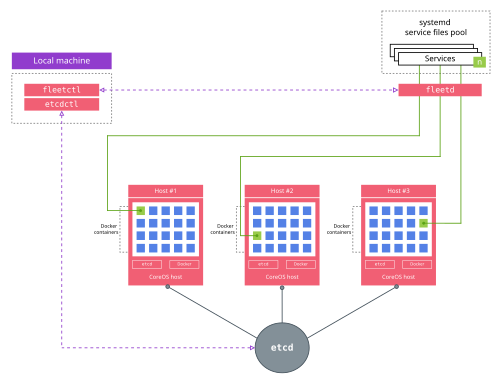
Container Linux provides etcd, a daemon that runs across all computers in a cluster and provides a dynamic configuration registry, allowing various configuration data to be easily and reliably shared between the cluster members.[6][37] Since the key–value data stored within etcd is automatically distributed and replicated with automated master election and consensus establishment using the Raft algorithm, all changes in stored data are reflected across the entire cluster, while the achieved redundancy prevents failures of single cluster members from causing data loss.[28][49] Beside the configuration management, etcd also provides service discovery by allowing deployed applications to announce themselves and the services they offer. Communication with etcd is performed through an exposed REST-based API, which internally uses JSON on top of HTTP; the API may be used directly (through curl or wget, for example), or indirectly through etcdctl, which is a specialized command-line utility also supplied by CoreOS.[10][13][50][51][52] etcd is also used in Kubernetes software.
Container Linux also provides the fleet cluster manager, which controls Container Linux's separate systemd instances at the cluster level. As of 2017, "fleet" is no longer actively developed and is deprecated in favor of Kubernetes.[53] By using fleetd, Container Linux creates a distributed init system that ties together separate systemd instances and a cluster-wide etcd deployment;[49] internally, fleetd daemon communicates with local systemd instances over D-Bus, and with the etcd deployment through its exposed API. Using fleetd allows the deployment of single or multiple containers cluster-wide, with more advanced options including redundancy, failover, deployment to specific cluster members, dependencies between containers, and grouped deployment of containers. A command-line utility called fleetctl is used to configure and monitor this distributed init system;[54] internally, it communicates with the fleetd daemon using a JSON-based API on top of HTTP, which may also be used directly. When used locally on a cluster member, fleetctl communicates with the local fleetd instance over a Unix domain socket; when used from an external host, SSH tunneling is used with authentication provided through public SSH keys.[55][56][57][58][59]
All of the above-mentioned daemons and command-line utilities (etcd, etcdctl, fleetd and fleetctl) are written in the Go language and distributed under the terms of the Apache License 2.0.[8][60]
Deployment
عند تشغيل نظام Container Linux على أجهزة مخصصة، يمكن تثبيته بشكل دائم على وحدة تخزين محلية، مثل القرص الصلب (HDD) أو القرص ذي الحالة الصلبة (SSD)، [ 61 ] أو تشغيله عن بُعد عبر الشبكة باستخدام بيئة تنفيذ ما قبل التمهيد (PXE) بشكل عام، أو iPXE كأحد تطبيقاتها. [ 62 ] [ 63 ] يدعم CoreOS أيضًا عمليات النشر على منصات افتراضية للأجهزة المختلفة ، بما في ذلك Amazon EC2 و DigitalOcean و Google Compute Engine و Microsoft Azure و OpenStack و QEMU / KVM و Vagrant و VMware . [ 13 ] [ 64 ] [ 65 ] [ 66 ] يمكن أيضًا تثبيت Container Linux على Citrix XenServer، مع العلم أن هناك "قالبًا" خاصًا بـ CoreOS.
يمكن أيضًا نشر نظام تشغيل Container Linux من خلال توزيعته التجارية المسماة Tectonic ، والتي تدمج أيضًا Kubernetes من Google كأداة لإدارة المجموعات. اعتبارًا من أبريل 2015 من المقرر طرح برنامج Tectonic كنسخة تجريبية لعملاء محددين. [ 29 ] [ 67 ] [ 68 ] كما يوفر CoreOS برنامج Flannel كمكون، لتنفيذ شبكة تراكبية مطلوبة بشكل أساسي للتكامل مع Kubernetes. [ 29 ] [ 69 ] [ 70 ]
اعتبارًا من فبراير 2015 يدعم نظام التشغيل Container Linux بنية x86-64 فقط . [ 6 ]
المشتقات
بعد استحواذها على شركة CoreOS, Inc. [ 71 ] في يناير 2018، أعلنت Red Hat [ 72 ] أنها ستدمج CoreOS Container Linux مع مشروع Atomic التابع لشركة Red Hat لإنشاء نظام تشغيل جديد، Red Hat CoreOS، مع مواءمة مجتمع المصادر المفتوحة لمشروع Fedora حول Fedora CoreOS، والجمع بين التقنيات من كلا النظامين السابقين.
في 6 مارس 2018، أعلنت شركة Kinvolk GmbH عن Flatcar Container Linux، وهو نظام تشغيل مشتق من CoreOS Container Linux. [ 73 ] يتتبع Flatcar إصدارات CoreOS الأصلية من قنوات ألفا وبيتا والمستقرة، مع إضافة قناة تجريبية لإصدار Edge في مايو 2019. [ 74 ] في 29 أبريل 2021، استحوذت مايكروسوفت على Kinvolk GmbH. [ 75 ] أصبح Flatcar Container Linux هو المصدر الرئيسي لنظام Azure Container Linux. [ 76 ]
استقبال
قام موقع LWN.net بمراجعة نظام التشغيل CoreOS في عام 2014: [ 77 ]
بالنسبة لمن يقومون بإنشاء أنظمة موزعة واسعة النطاق، وتطبيقات الويب مثالٌ بارزٌ على ذلك، يبدو أن CoreOS يمتلك العديد من الوظائف المهمة. فهو يسمح لهذه التطبيقات بالتوسع والتقلص حسب الحاجة، كما يوفر منصة مستقرة لا تُشكّل فيها التحديثات عبئًا مستمرًا. بالنسبة لعمليات نشر الخوادم الضخمة، يبدو أن CoreOS، أو نظامٌ مشابهٌ له في كثير من الخصائص، هو الحل الأمثل للمستقبل.
انظر أيضاً
- محاكاة التطبيقات - تقنية برمجية تغلف برامج التطبيقات عن نظام التشغيل الذي يتم تشغيلها عليه
- مقارنة برامج محاكاة التطبيقات – آلات افتراضية محمولة متنوعة وآلات افتراضية بلغات البرمجة النصية
- مقارنة برامج محاكاة المنصات - المحاكيات المختلفة وبرامج إدارة الأجهزة الافتراضية، التي تحاكي أجهزة الكمبيوتر المادية بالكامل
- LXC (حاويات لينكس) – بيئة لتشغيل أنظمة لينكس معزولة متعددة (حاويات) على مضيف تحكم لينكس واحد
- تطبيقات المحاكاة الافتراضية على مستوى نظام التشغيل - تعتمد على دعم نواة نظام التشغيل لنسخ متعددة معزولة من مساحة المستخدم
- البرمجيات كخدمة (SaaS) – نموذج لترخيص البرمجيات وتوزيعها، حيث يتم استضافة البرنامج مركزياً وترخيصه على أساس الاشتراك.
- المحاكاة الافتراضية - مفهوم عام لتوفير نسخ افتراضية من منصات أجهزة الكمبيوتر وأنظمة التشغيل وأجهزة التخزين وما إلى ذلك.
مراجع
- 1 2 "إعلان انتهاء دعم نظام CoreOS Container Linux" . coreos.com . تم الاطلاع عليه بتاريخ 16 أغسطس 2020 .
- ↑ "coreos/manifest: Release v94.0.0 (Container Linux v94.0.0)" . github.com . October 3, 2013 . Retrieved September 22, 2014 .
- ↑ "ملاحظات إصدار CoreOS Container Linux # القناة المستقرة" . coreos.com . 22 مايو 2020. مؤرشف من الأصل في 11 نوفمبر 2020. تم الاطلاع عليه في 22 مايو 2020 .
- ↑ "ملاحظات إصدار CoreOS Container Linux # قناة بيتا" . coreos.com . 22 مايو 2020. مؤرشف من الأصل في 11 نوفمبر 2020. تم الاطلاع عليه في 22 مايو 2020 .
- ↑ "ملاحظات إصدار CoreOS Container Linux # قناة ألفا" . coreos.com . 22 مايو 2020. مؤرشف من الأصل في 11 نوفمبر 2020. تم الاطلاع عليه في 22 مايو 2020 .
- 1 2 3 4 تيموثي بريكيت مورغان (15 فبراير 2015). "نظام CoreOS يُوسّع نطاق لينكس بشكل كبير من خلال جعله غير مرئي" . nextplatform.com . تم الاطلاع عليه في 14 يونيو 2015 .
- ↑ "اتفاقية تجريبية لنظام CoreOS" . coreos.com . 13 مارس 2014. مؤرشفة من الأصل في 12 سبتمبر 2014. تم الاطلاع عليها في 26 مارس 2014 .
- 1 2 "coreos/etcd: etcd/LICENSE at master" . github.com . 31 يوليو 2013. تم الاطلاع عليه في 26 مارس 2014 .
- ↑ "نظام CoreOS Linux أصبح الآن نظام Container Linux" . coreos.com . تم الاطلاع عليه بتاريخ 20 ديسمبر 2016 .
- 1 2 3 4 5 6 ليبي كلارك (9 سبتمبر 2013). "براندون فيليبس: كيف تستخدم توزيعة CoreOS Linux مجموعات التحكم Cgroups" . Linux.com . مؤرشف من الأصل في 22 فبراير 2014. تم الاطلاع عليه في 13 فبراير 2014 .
- 1 2 كيد ميتز (21 أغسطس 2013). "مخترقو لينكس يعيدون بناء الإنترنت من مرآب في وادي السيليكون" . وايرد . تم الاسترجاع في 13 فبراير 2014 .
- ١ ٢ "CoreOS - نهج جديد لأنظمة الخوادم القائمة على لينكس" . itnews2day.com . ٢٢ أغسطس ٢٠١٣. مؤرشف من الأصل في ٢٩ نوفمبر ٢٠١٤. تم الاطلاع عليه في ٢٦ مارس ٢٠١٤ .
- 12345"CoreOS documentation: Using CoreOS". coreos.com. Archived from the original on February 23, 2014. Retrieved February 13, 2014.
- 12"Building development images: Updating portage-stable ebuilds from Gentoo". coreos.com. Archived from the original on July 14, 2017. Retrieved May 24, 2016.
- 12"Distributions based on Gentoo". gentoo.org. March 25, 2016. Retrieved May 24, 2016.
- ↑Brian Harrington (July 8, 2014). "CoreOS: Anatomy of a CoreOS update". youtube.com. Rackspace. Retrieved July 25, 2014.
- ↑Alex Polvi (July 25, 2014). "CoreOS Stable Release". coreos.com. Retrieved August 28, 2014.
- ↑"CoreOS Release Notes". coreos.com. Archived from the original on November 11, 2020. Retrieved August 28, 2014.
- ↑Brandon Philips (January 28, 2015). "etcd 2.0 Release – First Major Stable Release". coreos.com. Retrieved June 14, 2015.
- ↑"Fedora CoreOS Documentation :: Fedora Docs Site". docs.fedoraproject.org. Retrieved August 16, 2020.
- ↑Jonathan Corbet (October 29, 2007). "Notes from a container". LWN.net. Retrieved July 3, 2016.
- ↑Jake Edge (November 19, 2014). "Control group namespaces". LWN.net. Retrieved July 3, 2016.
- 12"CoreOS documentation: Using Docker with CoreOS". coreos.com. Archived from the original on August 4, 2016. Retrieved June 14, 2015.
- ↑"Docker 0.9: Introducing execution drivers and libcontainer". docker.com. March 10, 2014. Retrieved January 20, 2015.
- ↑ ليبي كلارك (30 يناير 2015). "أليكس بولفي، المؤسس المشارك لـ CoreOS، يتحدث عن الحاويات، وروكيت مقابل دوكر، والمزيد" . Linux.com . تم الاطلاع عليه في 14 يونيو 2015 .
- ↑ تشارلز بابكوك (20 فبراير 2015). "حاويات روكيت: كيف تخطط CoreOS لمنافسة دوكر" . informationweek.com . تم الاطلاع عليه في 14 يونيو 2015 .
- ↑ أليكس بولفي (1 ديسمبر 2014). "نظام CoreOS يعمل على بناء بيئة تشغيل للحاويات، rkt" . coreos.com . تم الاطلاع عليه في 14 يونيو 2015 .
- 1 2 جوش بيركوس (4 فبراير 2015). "إصدارات جديدة من etcd وappc وRocket من CoreOS" . LWN.net . تم الاطلاع عليه في 22 يونيو 2015 .
- 1 2 3 جوش بيركوس (13 مايو 2015). "مهرجان CoreOS وعالم الحاويات، الجزء 1" . LWN.net . تم الاطلاع عليه في 22 يونيو 2015 .
- ↑ ناثان ويليس (3 ديسمبر 2014). "نظام حاويات روكيت" . LWN.net . تم الاطلاع عليه في 22 يونيو 2015 .
- ↑ ماكاليستر، نيل (22 يونيو 2015). "دوكر وشركاؤها يكشفون عن منظمة معايير لحاويات البرمجيات" . مركز البيانات. ذا ريجستر . تم الاطلاع عليه في 19 يناير 2017.
أُعلن في مؤتمر دوكر كون في سان فرانسيسكو يوم الاثنين، أن مشروع الحاويات المفتوحة (OCP) سيتولى صيانة وتطوير بيئة تشغيل حاويات مشتركة وتنسيق صور يعتمد جزئيًا على التعليمات البرمجية والمواصفات التي تبرعت بها دوكر.
- ↑ فريدريك لاردينوا (22 يونيو 2015). "دوكر، كور أو إس، جوجل، مايكروسوفت، أمازون، وغيرهم يجتمعون لتطوير معيار مشترك للحاويات" . تيك كرانش . تم الاطلاع عليه في 24 يونيو 2015 .
- ↑ "قادة الصناعة يتحدون لإنشاء مشروع لمعايير الحاويات المفتوحة" . opencontainers.org . 22 يونيو 2015. مؤرشف من الأصل في 13 أغسطس 2015. تم الاطلاع عليه في 14 مارس 2016 .
- ↑ نيل ماكاليستر (22 يوليو 2015). "مشروع الحاويات المفتوحة يُعيد تسمية نفسه، ويقول إن المعيار بات وشيكًا: مؤسسة لينكس، ودوكر، وحلفاؤهما يختارون مبادرة الحاويات المفتوحة" . ذا ريجستر . تاريخ الاطلاع: 29 يناير 2016 .
- ↑"CoreOS documentation: Using systemd with CoreOS". coreos.com. Archived from the original on February 14, 2014. Retrieved February 13, 2014.
- 12"CoreOS documentation: Updates & patches". coreos.com. Archived from the original on February 14, 2014. Retrieved February 27, 2015.
- 12Phil Whelan (August 28, 2013). "Alex Polvi Explains CoreOS". activestate.com. Archived from the original on February 24, 2015. Retrieved May 7, 2015.
- ↑"CoreOS documentation: Adding disk space to your CoreOS machine". coreos.com. Retrieved February 27, 2015.
- ↑Alex Polvi (March 27, 2014). "Major Update: btrfs, Docker 0.9, add users, writable /etc, and more!". coreos.com. Retrieved February 27, 2015.
- ↑"Simple Introduction to CoreOS with CEO Alex Polvi and CTO Brandon Philips". centurylinklabs.com. June 6, 2014. Archived from the original on June 22, 2015. Retrieved June 22, 2015.
- ↑"CoreOS documentation: Update strategies". coreos.com. Retrieved April 17, 2015.
- ↑"coreos/locksmith: locksmith/README.md at master". github.com. February 1, 2015. Retrieved April 17, 2015.
- ↑"coreos/locksmith: locksmith/LICENSE at master". github.com. January 19, 2014. Retrieved April 17, 2015.
- ↑"Omaha – software installer and auto-updater for Windows". code.google.com. Retrieved October 11, 2014.
- ↑"Omaha Overview". omaha.googlecode.com. September 23, 2009. Archived from the original on May 6, 2009. Retrieved October 11, 2014.
- ↑"Package omaha". godoc.org. June 24, 2014. Retrieved July 4, 2014.
- ↑"CoreOS documentation: CoreUpdate". coreos.com. Retrieved July 4, 2014.
- ↑Mark Moudy (May 16, 2014). "CoreOS + Docker Development Environment Demo". github.com. Retrieved April 16, 2015.
- 12Jonathan Corbet (October 22, 2014). "Etcd and fleet". LWN.net. Retrieved June 22, 2015.
- ↑"CoreOS documentation: Using etcd with CoreOS". coreos.com. Retrieved February 13, 2014.
- ↑"CoreOS documentation: Getting started with etcd". coreos.com. Retrieved February 13, 2014.
- ↑Brandon Philips (January 15, 2014). "etcd @ GoSF". speakerdeck.com. Retrieved February 13, 2014.
- ↑Wood, Josh. "Container orchestration: Moving from fleet to Kubernetes". coreos..com. CoreOS.
- ↑Justin Ellingwood (September 12, 2014). "How To Use Fleet and Fleetctl to Manage your CoreOS Cluster". digitalocean.com. Retrieved June 22, 2015.
- ↑"CoreOS documentation: Launching containers with fleet". coreos.com. Retrieved April 3, 2014.
- ↑"CoreOS documentation: Using the client". coreos.com. Retrieved April 3, 2014.
- ↑"coreos/fleet: fleet/README.md at master". github.com. February 18, 2014. Retrieved April 3, 2014.
- ↑"coreos/fleet: fleet/Documentation/deployment-and-configuration.md at master (Deploying fleet)". github.com. April 14, 2015. Retrieved April 17, 2015.
- ↑"coreos/fleet: fleet/Documentation/api-v1.md (fleet API v1)". github.com. October 29, 2014. Retrieved April 17, 2015.
- ↑"coreos/fleet: fleet/LICENSE at master". github.com. February 6, 2014. Retrieved April 3, 2014.
- ↑"CoreOS documentation: Installing CoreOS to disk". coreos.com. Retrieved February 13, 2014.
- ↑"CoreOS documentation: Booting CoreOS via PXE". coreos.com. Retrieved February 13, 2014.
- ↑"CoreOS documentation: Booting CoreOS via iPXE". coreos.com. Retrieved February 13, 2014.
- ↑Alex Crawford (September 5, 2014). "CoreOS Image Now Available On DigitalOcean". coreos.com. Retrieved September 5, 2014.
- ↑Jack Clark (May 23, 2014). "Google brings futuristic Linux software CoreOS onto its cloud". The Register. Retrieved May 26, 2014.
- ↑Alex Crawford (October 20, 2014). "CoreOS Now Available On Microsoft Azure". coreos.com. Retrieved October 22, 2014.
- ↑Steven J. Vaughan-Nichols (April 6, 2015). "CoreOS is bringing Google's Kubernetes to the enterprise". ZDNet. Retrieved April 29, 2015.
- ↑Ben Kepes (April 6, 2015). "CoreOS And Google Make Their Defensive Plays, Is Docker The Victim?". Forbes. Retrieved April 29, 2015.
- ↑Eugene Yakubovich (August 28, 2014). "Introducing flannel: An etcd-backed overlay network for containers". coreos.com. Retrieved June 22, 2015.
- ↑"Tutorial on using CoreOS Flannel for Docker". slideshare.net. November 2014. Retrieved June 22, 2015.
- ↑Rosoff, Matt (January 30, 2018). "Red Hat pays $250 million for CoreOS, a start-up that sells Google-developed technology". CNBC. Retrieved June 6, 2019.
- ↑"Fedora CoreOS, Red Hat CoreOS, and the future of Container Linux | CoreOS". coreos.com. Retrieved June 6, 2019.
- ↑"Announcing the Flatcar Linux project | Kinvolk". kinvolk.io. March 6, 2018. Retrieved June 6, 2019.
- ↑"Introducing the Flatcar Linux Edge Channel | Kinvolk". kinvolk.io. May 15, 2019. Retrieved June 6, 2019.
- ↑"Microsoft acquires Kinvolk to accelerate container-optimized innovation". April 29, 2021. Retrieved May 21, 2026.
- ↑"Microsoft surprises with its first server Linux distribution: Azure Linux 4.0". May 18, 2026. Retrieved May 21, 2026.
- ↑"CoreOS: A different kind of Linux distribution [LWN.net]".
External links
- Official website
 and GitHub source code repositories: CoreOS, etcd, fleet, rkt and CoreOS-overlay
 - CoreOS at DistroWatch
- Han, Sébastien (September 3, 2013). "First glimpse at CoreOS".
- Vaughan-Nichols, Steven J. (July 2, 2014). "CoreOS: Linux for the cloud and the datacenter". ZDNet.
- Asay, Matt (October 9, 2014). "What's CoreOS? An existential threat to Linux vendors". InfoWorld.
- Delp, Aaron; Gracely, Brian (March 4, 2015). "Understanding CoreOS distributed architecture" (a talk to Alex Polvi).
- Waldon, Brian; et al. (August 26, 2014). "CoreOS fleet architecture".
- "Running CoreOS on Google Compute Engine". May 23, 2014.
- Larabel, Michael (January 18, 2015). "CoreOS moves from Btrfs to Ext4 + OverlayFS". Phoronix.
- Berkus, Josh (May 28, 2015). "Containers and persistent data". LWN.net.
- "Flatcar Container Linux".
- Containerization software
- Enterprise Linux distributions
- Linux containerization
- Linux distributions
- Red Hat software
- Software using the Apache license
- Virtualization software for Linux