
Oval with Points
Oval with Points is a series of enigmatic abstract sculptures by British sculptor Henry Moore, made in plaster and bronze from 1968 to 1970, from a 14-centimetre (5.5 in)maquette in 1968 (LH 594) made in plaster and then cast in bronze, through a 110-centimetre (43 in) working model in 1968–1969 (LH 595) also made plaster and then cast in bronze, to a full-size 332-centimetre (131 in) bronze version cast in 1969 (LH 596).
Description
The sculpture is a flattened oval ring with rounded edges, pierced by a large hole. The inside edge of the hole has two protrusions rising from opposite sides and narrowing to sharp points that almost meet at the centre of the hole, creating a sense of energy and dynamic tension. The points divide the hole into two areas, a smaller one above and a larger one below, like a figure 8, with the shape of the void sometimes interpreted as resembling a human form with a head and a torso.
The beginnings of the sculpture can be traced in Moore's works back to a sculpture made in 1939–40, Three Points, and some drawings from 1940. Moore was often inspired by found natural objects, such as stone with a hole. The work may draw inspiration from an elephant skull collected in East Africa by Sir Julian Huxley and displayed in his garden, and later given to Moore as a gift. Oval with Points is also related to other Moore sculptures, included his Spindle Piece and Two Piece Points: Skull, both of which have two points facing outwards rather than inwards. Moore himself later mentioned a link in his mind to spark plugs.
Moore made a plaster maquette of Oval with Points (LH 594) in 1968, which was then cast in bronze in an edition of 9+1 (nine castings plus an artist's copy). It measures 16.4 by 13.9 by 9.4 centimetres (6.5 in × 5.5 in × 3.7 in). The plaster maquette and the bronze artist's copy, cast 0, are held by the Henry Moore Foundation in Perry Green, Hertfordshire. Another example is at the Art Gallery of Ontario.
قام مور بتوسيع نطاق العمل في الفترة 1968-1969، ليُنشئ نموذجًا أوليًا لشكل بيضاوي ذي نقاط (LH 595) بأبعاد 118 × 92 × 54 سنتيمترًا (46 × 36 × 21 بوصة) . نُحت التمثال في الأصل من الجبس، وهو موجود الآن في مركز هنري مور للنحت في معرض أونتاريو للفنون. [ 2 ] صُبّ هذا النموذج في طبعة من 12 نسخة برونزية + نسختين للفنان (أي نسختان للفنان، و12 نسخة أخرى). تحتفظ مؤسسة هنري مور الآن بنسختي الفنان، إلى جانب نسختين جبسيتين من هذا النموذج الأولي. أما النسخ البرونزية الأخرى فهي مملوكة لمتحف الفن الحديث في نيويورك (غير معروضة حاليًا)، ومتحف سان فرانسيسكو للفن الحديث (غير معروضة حاليًا)، ومتحف طهران للفن المعاصر (معروضة)، [ 3 ] وجامعة كاليفورنيا في لوس أنجلوس (معروضة حاليًا في مبنى كلية الطب بجامعة كاليفورنيا في لوس أنجلوس ).
وأخيرًا، في عام ١٩٦٩، قام مور بزيادة حجم التمثال مرة أخرى ليصنع نسخة برونزية بالحجم الطبيعي (LH ٥٩٦) يبلغ ارتفاعها ٣٣٢ سنتيمترًا (١٣١ بوصة) . وقد صُبّت هذه النسخة في إصدار محدود من ٦ نسخ بالإضافة إلى نسخة واحدة كنموذج للفنان، وذلك على يد موريس سينغر . ويمكن الاطلاع على نماذج من العمل بالحجم الطبيعي في:
- مؤسسة هنري مور ، في بيري غرين، هيرتفوردشاير (طاقم التمثيل 0)
- في جامعة برينستون ، في موقع كان سابقًا موقع قاعة ريونيون قبل هدمها في عام 1966 (النسخة 1).
- وسط نافورة في ساحة إكستشينج في هونغ كونغ (الطاقم 3)
- مقابل منتزه دوريان كومنز في كولومبوس، أوهايو [ 4 ] [ 5 ] (طاقم التمثيل 4)
- طريق الكورنيش في جدة ( النسخة رقم 5) (تم الحصول عليها عام 1977، إلى جانب نسخة من قطعة المغزل الكبيرة وشخصية الاستلقاء المكونة من ثلاث قطع رقم 1)
- خارج كونستهالي بيليفيلد (طاقم التمثيل 6)
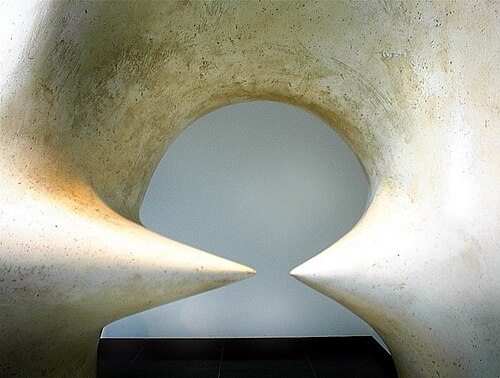 جزء من نموذج العمل في تورنتو
 ساحة إكستشينج، هونغ كونغ
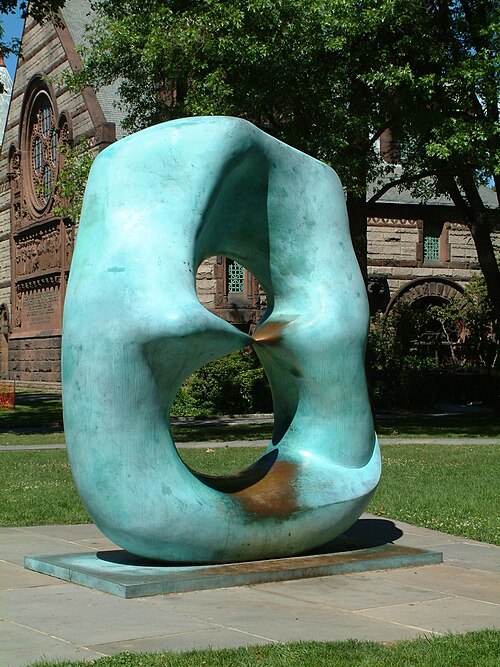 برينستون
 قاعة بيليفيلد للفنون
 كولومبوس
انظر أيضاً
مراجع
- ↑ "شكل بيضاوي ذو نقاط" . henry-moore.org . مؤرشف من الأصل في 27 يوليو 2021.
- ↑ مركز هنري مور للنحت، تاريخ الوصول 11 مايو 2017
- ↑ "نموذج عمل لشكل بيضاوي بنقاط في متحف الفن المعاصر في إيران" . catalogue.henry-moore.org . تم الاطلاع عليه بتاريخ 29 مارس 2024 .
- ↑ "شكل بيضاوي كبير ذو نقاط، (نحت)" . مؤسسة سميثسونيان . تم الاطلاع عليه بتاريخ 27 أكتوبر 2018 .
- ↑ "انتقال لوحة CMA البيضاوية مع نقاط من تصميم هنري مور إلى موقع جديد خارج مبنى المحكمة الجديد" . يوتيوب .
روابط خارجية
- الاحتفاء بمور: أعمال من مجموعة مؤسسة هنري مور ، ص 293
- نموذج مصغر (LH 594)
- نموذج جبسي، قالب ، مؤسسة هنري مور
- نموذج برونزي، مصبوب رقم 0 ، مؤسسة هنري مور
- نموذج التشغيل (LH 595)
- نموذج عمل من الجبس، مصبوب ، مؤسسة هنري مور
- نموذج عمل من الجبس، قالب ب ، مؤسسة هنري مور
- نموذج عمل برونزي، مصبوب رقم 0 ، مؤسسة هنري مور
- نموذج برونزي عامل، مصبوب رقم 00 ، مؤسسة هنري مور
- متحف الفن الحديث ، نيويورك
- متحف سان فرانسيسكو للفن الحديث
- الحجم الكامل (LH 596)
- المنحوتات التجريدية في الولايات المتحدة
- منحوتات برونزية في ولاية أوهايو
- وسط مدينة كولومبوس، أوهايو
- منحوتات خارجية في كولومبوس، أوهايو
- منحوتات لهنري مور