
Stun grenade
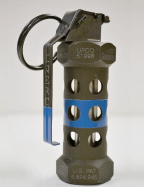
A stun grenade, also known as a flash grenade, flashbang, thunderflash, or sound bomb,[1] is a non-lethalexplosive device used to temporarily disorient an enemy's senses. Upon detonation, a stun grenade produces a blinding flash of light and an extremely loud "bang". They are often used in close-quarters combat, door breaching, and riot control, typically to stun enemies or distract them.[2]
Originally developed to simulate explosions during military training, stun grenades were first used by the British ArmySpecial Air Service's counterterrorist wing in the late 1970s,[3][4] and have been used by police and military forces worldwide since.[5]
Despite their less-lethal nature, stun grenades are still capable of causing harm, and can injure or kill when detonating in close proximity. They are also capable of sparking fires.[6]
Effects

Stun grenades are designed to produce a blinding flash of light of around 7 megacandela (Mcd) and an intensely loud "bang" of greater than 170 decibels (dB).[7]
Construction
Unlike a fragmentation grenade, stun grenades are constructed with a casing designed to remain intact during detonation and avoid fragmentation injuries, while having large circular cutouts to allow the light and sound of the explosion through. The filler comprises a pyrotechnic metal-oxidant mix of magnesium or aluminium and an oxidizer such as potassium perchlorate or potassium nitrate.[8]
Hazards
While stun grenades are designed to limit injury, permanent hearing loss has been reported.[9][10] The concussive blast has the ability to cause injuries, and the heat generated may ignite flammable materials. The fires that occurred during the 1980 Iranian Embassy siege in London were caused by stun grenades.[11]
See also
- كرة الانفجار – قنبلة يدوية غير قاتلة
- دازلر – سلاح غير قاتل يسبب العمى المؤقت
- قنبلة الصعق الكهربائي M84 – قنبلة نارية أمريكية غير قاتلة
- قنبلة صوتية ضوئية من طراز NICO BTV-1 – قنبلة صوتية ضوئية مستخدمة في الولايات المتحدة
- قنبلة دخان
مراجع
- ↑ "مداهمة لمكافحة المخدرات تسفر عن ضبط أطنان من الكوكايين والماريجوانا في تشيلي" . صحيفة ديلي تلغراف . لندن. 3 سبتمبر 2014. مؤرشف من الأصل في 4 سبتمبر 2014.
- ↑ "مكتب قدرات القوات المتوسطة المشتركة > قدرات القوات المتوسطة الحالية > قنبلة إم-84 الصوتية والمرئية" . وزارة الدفاع الأمريكية . مؤرشف من الأصل في 29 سبتمبر 2020. تم الاطلاع عليه في 3 أغسطس 2024 .
- ↑ "قوات SAS - الأسلحة - قنبلة صوتية | قنبلة صاعقة" . القوات البريطانية النخبة. مؤرشف من الأصل بتاريخ 31 أغسطس 2017. تم الاطلاع عليه بتاريخ 29 مايو 2013 .
- ↑ بونفيل، لي، القوات الخاصة البريطانية 1983-2014 (النخبة) ، دار نشر أوسبري، 2016، رقم ISBN 1472814037رقم الكتاب المعياري الدولي (ISBN) 978-1472814036، ص.9
- ↑ ماك إيفوي، ماثيو، وآخرون. "عنف الدولة ضد المتظاهرين: وجهات نظر واتجاهات في استخدام الأسلحة الأقل فتكًا." مجلة التعذيب 34.1 (2024): 35.
- ↑ أنجوين، جوليا؛ نيهرينغ، آبي (12 يناير 2015). "أكثر سخونة من الحمم البركانية" . برو بابليكا . تم الاسترجاع في 8 سبتمبر 2023 .
- ↑ "قياس التعرض للضوضاء المفاجئة في ميادين الرماية الداخلية والخارجية أثناء التدريبات التكتيكية" (ملف PDF) . مراكز السيطرة على الأمراض والوقاية منها . مؤرشف (ملف PDF) من الأصل بتاريخ 19 ديسمبر 2017. تم الاطلاع عليه بتاريخ 25 أغسطس 2013 .
- ↑ تومبارسكا، أديلينا (2018). "الأسلحة غير الفتاكة في إنفاذ القانون المحلي: بعض الجوانب القانونية والأخلاقية" . المؤتمر الدولي الرابع للأمن البشري . بلغراد: جامعة بلغراد، كلية الدراسات الأمنية، مركز أبحاث الأمن البشري. ص 39-45 . doi : 10.18485/fb_ic4hs.2018.4 . ISBN 978-86-80144-30-6تم الاطلاع عليه بتاريخ 2023-02-08 .
- ↑ "قنابل الصوت تسبب فقدان السمع الدائم" . صحيفة كشمير أوبزرفر . مؤرشف من الأصل بتاريخ 14 فبراير 2018.
- ↑ هامبلينغ، ديفيد (6 أغسطس 2009). "الجيش لا يزال يحاول استبدال قنابل الصعق الخطيرة" . وايرد .
- ↑ بيري، مايك (30 أبريل 2020). "قبل 40 عامًا، اقتحمت القوات الخاصة البريطانية السفارة الإيرانية واكتسبت شهرة عالمية" . مجموعة SOFREP الإعلامية . تم الاطلاع عليه في 12 يونيو 2023 .
روابط خارجية
- FM 3-23.30 القنابل اليدوية والإشارات النارية . GlobalSecurity.org ، 1 سبتمبر 2000. الفصل 1، القسم 10. "قنابل يدوية صاعقة". تم الاطلاع عليه بتاريخ 26 مايو 2011.
- قنابل صوتية
- الاختراعات البريطانية