
Purism

Purism, referring to the arts, was a movement that took place between 1918 and 1925 that influenced French painting and architecture. Purism was led by Amédée Ozenfant and Charles-Édouard Jeanneret (Le Corbusier). Ozenfant and Le Corbusier formulated an aesthetic doctrine born from a criticism of Cubism and called it Purism: where objects are represented as elementary forms devoid of detail. The main concepts were presented in their short essay "Après le Cubisme" (After Cubism) published in 1918.[1][2]
Post World War I

Le Corbusier and Ozenfant were the creators of Purism. Fernand Léger was a principal associate.[2] Purism was an attempt to restore regularity in a war-torn France post World War I.[1] Unlike what they saw as 'decorative' fragmentation of objects in Cubism, Purism proposed a style of painting where elements were represented as robust simplified forms with minimal detail, while embracing technology and the machine.[2]
Purism culminated in Le Corbusier's Pavillon de l'Esprit Nouveau (Pavilion of the New Spirit), constructed for the International Exhibition of Modern Decorative and Industrial Arts in 1925. This included the work of Cubists Juan Gris and Jacques Lipchitz. Following this exhibition the relationship between Le Corbusier and Ozenfant declined.[2]
L'Esprit Nouveau
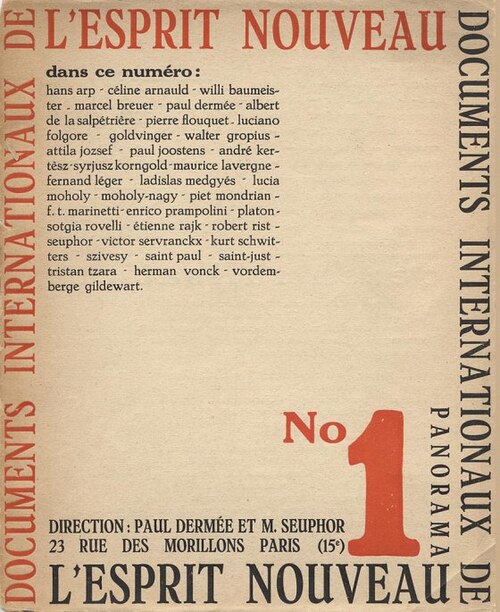

Ozenfant and Le Corbusier contributed extensively to an art magazine called L'Esprit Nouveau from 1920 to 1925 serving as a platform for propaganda towards their Purist movement.[1][3]
Purist Manifesto
يحدد بيان المذهب التجريدي القواعد التي وضعها أوزنفان ولو كوربوزييه لتنظيم الحركة التجريدية. [ 1 ]
- لا يهدف المذهب التجريدي إلى أن يكون فناً علمياً، وهو ليس كذلك بأي حال من الأحوال.
- لقد أصبح التكعيب فنًا زخرفيًا ذا طابع رومانسي.
- توجد تسلسلات هرمية في الفنون: الفن الزخرفي في القاعدة، والشكل البشري في القمة.
- إن جودة الرسم تعتمد على الصفات الجوهرية لعناصره التشكيلية، وليس على إمكانياتها التمثيلية أو السردية.
- يسعى المذهب النقي إلى التصور الواضح، والتنفيذ الأمين، والدقة التامة دون أي تزييف؛ فهو ينبذ التصورات المضطربة، والتنفيذات المختصرة أو المتوترة. يجب على الفن الجاد أن ينبذ كل التقنيات التي لا تعكس القيمة الحقيقية للتصور.
- يتجلى الفن في الفكرة قبل أي شيء آخر.
- التقنية ليست سوى أداة، بتواضع في خدمة الفكرة.
- يخشى المذهب التجريدي كل ما هو غريب وأصيل . إنه يسعى إلى العنصر النقي من أجل إعادة بناء لوحات منظمة تبدو وكأنها حقائق من الطبيعة نفسها.
- يجب أن تكون الطريقة مضمونة بما يكفي لعدم إعاقة الحمل.
- لا يعتقد المذهب التطهيري أن العودة إلى الطبيعة تعني نسخها.
- وهي تقبل أن كل تشوه مبرر بالبحث عن الثابت.
- جميع الحريات مقبولة في الفن باستثناء تلك غير الواضحة. [ 1 ]
انظر أيضاً
مراجع
- 1 2 3 4 5 بول، سوزان (1981). أوزنفانت والنقاء: تطور أسلوب 1915-1930 . آن أربور، ميشيغان: مطبعة يو إم آي للأبحاث. ص 213.
- 1 2 3 4 "النزعة التجريدية - مصطلح فني" . تيت . مؤرشف من الأصل بتاريخ 2022-01-05 . تم الاطلاع عليه بتاريخ 2022-01-05 .
- ^ إلييل، كارول س. وآخرون. (2001). الروح الجديدة: النقاء في باريس، 1918-1925 . نيويورك: شركة هاري أبرامز ISBN 0-8109-6727-8
روابط خارجية
- Le Purisme، L'Esprit nouveau: revue Internationale d'Esthétique، 1920 . جاليكا، المكتبة الوطنية الفرنسية
- Purisme، وكالة التصوير الفوتوغرافي لجمعية المتاحف الوطنية
- النقاء
- الحركات الفنية الفرنسية
- الفن الحديث
- الحركات الفنية
- الفن التجريدي
- الحركات الفنية في القرن العشرين
- القرن العشرون في الفنون
- الحركات الفنية في أوروبا
- المجموعات الفنية الفرنسية والتجمعات الفنية