
Bridge (exercise)
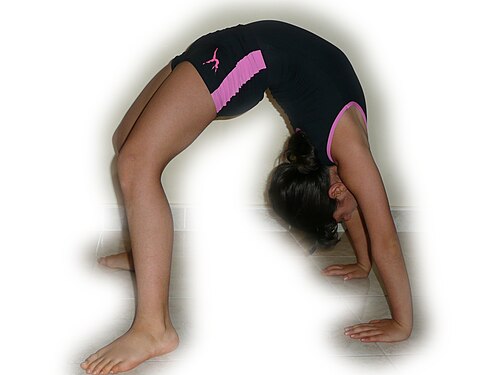
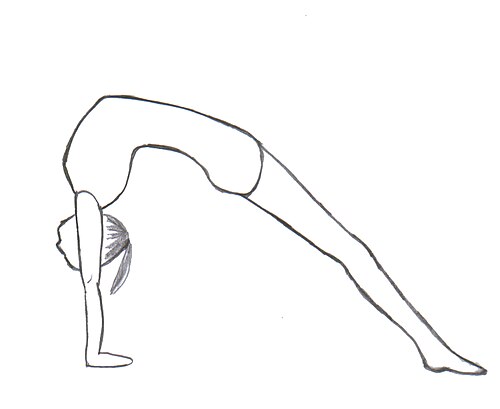
The bridge (also called gymnastic bridge[1]) is an exercise. Many variations of this exercise are employed throughout the world, most commonly the balancing of the body on the hands and the feet. It is intended to improve lower back and gluteus strength. Examples of bridging in sportive or self-defense applications are seen in Kung Fu, Judo, Brazilian jiu jitsu, Capoeira, mixed martial arts, and wrestling.
In yoga, this particular pose is called Chakrasana, Urdhva Dhanurasana, or Wheel, while the Westernized nickname "Bridge pose" refers to a less rigorous supine backbend called Setu Bandha Sarvangasana, in which the body is fairly straight from knees to shoulders, and most of the bend is in the knees.[2]
Variations
The bridging exercise is not a singular movement, but includes a wide range of variations and progressions. [3] There is no single agreed upon "standard" variation of the bridge like with other common bodyweight exercises.
Bridge hold
The bridge hold is a static variation of the bridge exercise that involves getting into the full bridge as shown at the top of the article and holding the position, either for time or until exhaustion. This variation is possibly the most frequent variation of the bridge around the world, but is most commonly used in Calisthenics circles to build strength in order to progress to some of the more difficult bridge variations.[4]
Bridge push-up
The bridge push-up involves lying on the ground on the back with the feet pulled up to the buttocks and palms of the hands against the ground on either side of the head, followed by "pushing" the entire body upwards with both arms and feet. The practitioner then pulls the body back to the original position and repeats the whole movement for a set amount of repetitions, or until exhaustion. This is also one of the ways to get into the bridge hold position, along with the closing bridge below.
One-armed bridge push-up
A great amount of further difficulty can be introduced to the regular bridge push-up by executing the movement only supported by one arm. This also introduces unilaterality to the movement, primarily working only one side of the spinal erectors, and especially only one of the deltoids.
One-legged bridge push-up
كما هو الحال في التمرين السابق، يمكن أداء تمرين الضغط مع رفع إحدى الساقين. عند القيام بذلك، لا يتم التركيز على جانب واحد فقط، بل يتم أيضًا تمرين عضلات الفخذ الخلفية والأرداف (بالإضافة إلى عضلات أخرى في الأطراف السفلية التي يتم تمرينها أثناء رفع الساق) بشكل أكبر.
المشي على الجدران
يُعدّ المشي على الحائط أحد أنواع تمارين الجسر الشائعة، ويتضمن الوقوف مع إسناد الظهر إلى حائط على مسافة متفاوتة، ثم الانحناء للخلف حتى يتمكن الشخص من الضغط براحتي يديه على الحائط من الخلف. بعد ذلك، يقوم الممارس بـ"المشي" بيديه على طول الحائط وصولاً إلى الأرض. ولزيادة صعوبة التمرين، يمكن إنهاء الحركة بالعودة إلى وضعية الوقوف، ثم دفع الحائط بالذراعين للعودة إلى وضعية الوقوف الأصلية. ويمكن تكرار هذا التمرين عدة مرات.
إغلاق الجسر
يتضمن تمرين الجسر الختامي الوقوف باستقامة مع تغيير المسافة بين القدمين، ثم الانحناء ببطء إلى الخلف مع مد الذراعين، حتى الوصول إلى وضعية الجسر الكاملة. هذه هي الطريقة المعتادة التي يتبعها لاعبو الجمباز للوصول إلى وضعية الجسر المذكورة أعلاه، وهي أيضاً تمرين ممتاز لتقوية العضلات عند تكرارها عدة مرات.
جسر الوقوف إلى الوقوف
يُعتبر هذا النوع من التمارين الأكثر تقدماً في تمرين الجسر، وهو بلا شك الأكثر تطلباً للقوة. يتضمن هذا النوع أداء حركة إغلاق الجسر الكاملة كما سبق، ثم إعادة فتح الجسر إما بالدفع عن الأرض بالذراعين أو بالعودة إلى وضعية الوقوف بالاعتماد فقط على عضلات الجذع والساقين. علاوة على ذلك، يمكن إضافة عنصر أحادي الجانب إلى هذا النوع من التمارين بأداء الحركة كاملةً بذراع واحدة فقط.
انظر أيضاً
مراجع
- ↑ هيل، إيرين (25 مارس 2016). "طفلة تبلغ من العمر 5 سنوات أصيبت بالشلل بعد انحناء ظهرها وتبدأ رحلة التعافي" . people.com .
- ↑ "وضعية الجسر" . مجلة اليوغا . 11-11-2021 . تم الاطلاع عليه بتاريخ 18-06-2025 .
- ↑ كيم، جوسونغ؛ بارك، مينتشول (سبتمبر 2016). "تغيرات في نشاط عضلات الجذع وعضلات باسطة الورك أثناء تمارين الجسر مع تغيرات في زاوية مفصل الركبة أحادي الجانب" . مجلة علوم العلاج الطبيعي . 28 (9): 2537-2540 . doi : 10.1589/jpts.28.2537 . ISSN 0915-5287 . PMC 5080170. PMID 27799688 .
- ↑ "كيفية أداء تمرين الجسر في الجمباز بشكل صحيح - مركز سيدني لعلم وظائف الأعضاء الرياضية" . ssep.com.au. 22-05-2019 . تاريخ الاطلاع: 18-06-2025 .
- تمارين وزن الجسم
- عناصر الجمباز
- فنون القتال الهندية