
Coptic binding
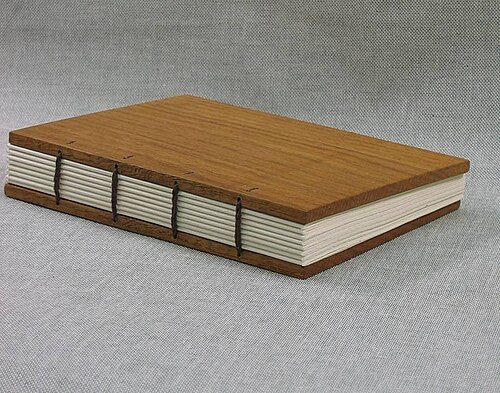
Coptic binding or Coptic sewing comprises methods of bookbinding employed by early Christians in Egypt, the Copts, and used from as early as the 2nd century AD to the 11th century.[1][note 1][2] The term is also used to describe modern bindings sewn in the same style.
Coptic bindings, the first true codices, are characterized by one or more sections of parchment, papyrus, or paper sewn through their folds, and (if more than one section) attached to each other with chain stitch linkings across the spine, rather than to the thongs or cords running across the spine that characterise European bindings from the 8th century onwards. In practice, the phrase "Coptic binding" usually refers to multi-section bindings, while single-section Coptic codices are often referred to as "Nag Hammadi bindings", after the 13 codices found in 1945 which exemplify the form.
Nag Hammadi bindings
Nag Hammadi bindings were constructed with a textblock of papyrus sheets, assembled into a single section and trimmed along the fore edge after folding to prevent the inner sheets from extending outward beyond the outer sheets. Because the inner sheets were narrower than the outer sheets after trimming, the width of text varied through the textblock, and it is likely that the papyrus was not written on until after it was bound; this, in turn, would have made it a necessity to calculate the number of sheets needed for a manuscript before it was written and bound.[3][note 2] Covers of Nag Hammadi bindings were limp leather, stiffened with waste sheets of papyrus. The textblocks were sewn with tackets, with leather stays along the inside fold as reinforcement. These tackets also secured the textblock to the covers; on some of the Nag Hammadi bindings, the tackets extended to the outside of the covering leather, while on others the tackets were attached to a strip of leather which served as a spine liner, and which was in turn pasted to the covers.[4] A flap, either triangular or rectangular, extended from the front cover of the book, and was wrapped around the fore edge of the book when closed. Attached to the flap was a long leather thong which was wrapped around the book two or three times, and which served as a clasp to keep the book securely shut.[5][6]
Multi-section Coptic bindings
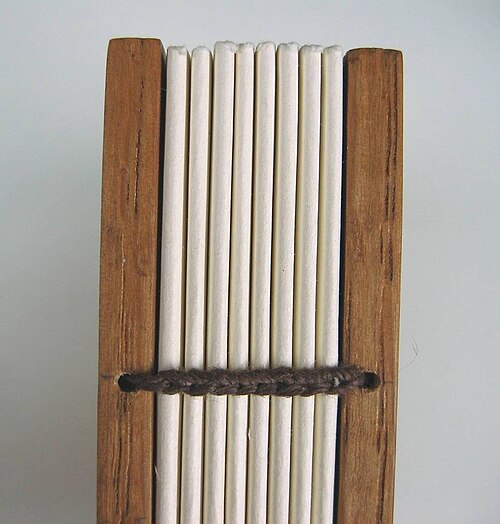
كانت أغلفة الكتب القبطية متعددة الأقسام تتكون في البداية من طبقات من ورق البردي، ولكن بحلول القرن الرابع الميلادي، شاع استخدام الألواح الخشبية أيضاً. كما شاع استخدام الجلد في التجليد بحلول القرن الرابع الميلادي، وتنحدر جميع أغلفة الكتب الجلدية الغربية المزخرفة اللاحقة من الأغلفة القبطية. [ 7 ]
يوجد ما يقارب 120 غلافًا قبطيًا أصليًا وكاملاً في مجموعات المتاحف والمكتبات، [ 8 ] على الرغم من وجود بقايا ما يصل إلى 500 غلاف قبطي. [ 9 ] [ ملاحظة 3 ]
تستخدم المجلدات الأوروبية القليلة المبكرة جداً التي نجت تقنية الخياطة القبطية، ولا سيما إنجيل القديس كوثبرت في المكتبة البريطانية ( حوالي 698 ) وأناجيل كادموغ في فولدا ( حوالي 750 ).
التجليد القبطي الحديث
يمكن صنع التجليدات القبطية الحديثة بجلد مغطى أو بدونه؛ فإذا تُركت مكشوفة، يُمكن فتح التجليد القبطي بزاوية 360 درجة. أما إذا لم يُستخدم الجلد، فإن التجليد القبطي يكون غير لاصق، ولا يتطلب استخدام أي غراء في صناعته.
كثيراً ما يستخدم الحرفيون والفنانون التجليد القبطي عند صنع دفاتر فنية يدوية أو كتب أخرى.
انظر أيضاً
ملحوظات
- ↑ يُزعم أحيانًا أن التجليد القبطي، وبالتالي المخطوطة الغربية، نشأ في القرن الرابع الميلادي. في حين أن تجليد المخطوطات ازدهر في القرن الرابع، إلا أن العديد من أجزاء المخطوطات الموجودة تعود إلى القرن الثاني، وأكثر من 250 مخطوطة موجودة من قبل عام 300. (انظر تيرنر، الفصل 7، وسيرماي، الفصل 2.)
- ↑ يشير تيرنر إلى أنه يمكن للناسخ، مع ذلك، إدراج ورقة واحدة إما في منتصف الكتاب أو في نهايته؛ وتشير بعض الأدلة إلى أنه تم القيام بذلك في اثنين من مخطوطات نجع حمادي.
- ↑ لم يذكر غلايستر منهجية حسابه، ونظراً لانخفاض عدده، فمن المحتمل أنه يشير فقط إلى المجلدات السليمة؛ يشمل عدد زيرماي أجزاءً أو صفائح تظهر عليها أدلة على التجليد، مثل ثقوب الخياطة أو ترقيم صفحات المخطوطة.
مراجع
- ↑ تيرنر، إريك ج. (1977). تصنيف المخطوطات المبكرة . مطبعة جامعة بنسلفانيا . ص 89-94 . ISBN 0-8122-7696-5.
- ↑ غرينفيلد، جين (2002). أبجديات تجليد الكتب: معجم فريد يضم أكثر من 700 رسم توضيحي لهواة جمع الكتب وأمناء المكتبات . نيوكاسل (ديلاوير) نوتنغهام (بريطانيا العظمى): مطبعة أوك نول، مطبعة ذا بلاو. ص 81. ISBN 978-1-884718-41-0.
- ↑ Szirmai، 12-13.
- ↑ Szirmai، 9-10.
- ↑ Szirmai, 9.
- ↑ غرينفيلد، جين (2002). أبجديات تجليد الكتب . نيو كاسل، ديلاوير: دار أوك نول للنشر. الصفحات 80-81 . ISBN 1-884718-41-8.
- ↑ إيثرينغتون ، دونالد (1982). تجليد الكتب وترميمها . مكتبة الكونغرس . ص 65. ISBN 0-8444-0366-0.
- ↑ جلايستر، جيفري أشال (1996). موسوعة الكتاب . دار أوك نول للنشر والمكتبة البريطانية . الصفحات 113-114 . ISBN 1-884718-14-0.
- ↑ زيرماي، جيه إيه (1999). علم آثار تجليد الكتب في العصور الوسطى . بروكفيلد، فيرمونت: أشغيت. ISBN 0-85967-904-7.
روابط خارجية
- صنع كتاب معدل بتجليد قبطي على موقع Wayback Machine (تمت أرشفته في 29 يونيو 2019)
- مُحسِّن التوقيع ، وهو برنامج جافا سكريبت لتحسين المخطوطات المطبوعة للتجليد القبطي
- اصنع دفتر ملاحظات متينًا باستخدام التجليد القبطي ، Makezine.com
- التجليد
- الثقافة القبطية