
Destructive testing
In destructive testing (or destructive physical analysis, DPA) tests are carried out to the specimen's failure, in order to understand a specimen's performance or material behavior under different loads. These tests are generally much easier to carry out, yield more information, and are easier to interpret than nondestructive testing.
Applications
Destructive testing is most suitable, and economic, for objects which will be mass-produced, as the cost of destroying a small number of specimens is negligible. It is usually not economical to do destructive testing where only one or very few items are to be produced (for example, in the case of a building).
Analyzing and documenting destructive failure mode
Analyzing and documenting the destructive failure mode is often accomplished using a high-speed camera recording continuously (movie-loop) until the failure is detected. Detecting the failure can be accomplished using a sound detector or stress gauge which produces a signal to trigger the high-speed camera. These high-speed cameras have advanced recording modes to capture almost any type of destructive failure.[1] After the failure the high-speed camera will stop recording. The captured images can be played back in slow motion showing precisely what happens before, during and after the destructive event, image by image.
Methods and techniques
Testing of large structures
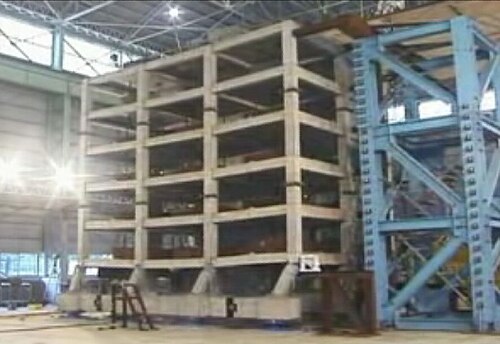
Building structures or large nonbuilding structures (such as dams and bridges) are rarely subjected to destructive testing due to the prohibitive cost of constructing a building, or a scale model of a building, just to destroy it.
Earthquake engineering requires a good understanding of how structures will perform at earthquakes. Destructive tests are more frequently carried out for structures which are to be constructed in earthquake zones. Such tests are sometimes referred to as crash tests, and they are carried out to verify the designed seismic performance of a new building, or the actual performance of an existing building. The tests are, mostly, carried out on a platform called a shake-table which is designed to shake in the same manner as an earthquake. Results of those tests often include the corresponding shake-table videos.
Testing of structures in earthquakes is increasingly done by modelling the structure using specialist finite element software.
Software testing
اختبار البرمجيات التخريبي هو نوع من اختبار البرمجيات يحاول التسبب في فشل جزء من البرمجيات بطريقة غير متحكم بها، وذلك لاختبار متانتها والمساعدة في تحديد حدود النطاق التي ستعمل البرمجيات ضمنها بطريقة مستقرة وموثوقة.
اختبارات السيارات
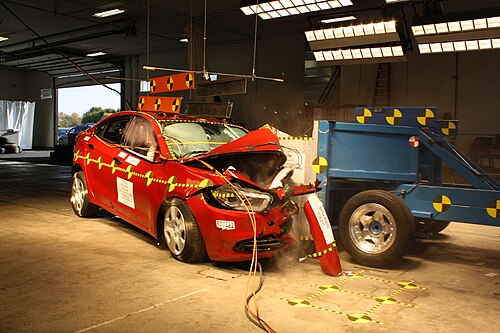
تخضع السيارات لاختبارات التصادم من قبل شركات تصنيع السيارات ومجموعة متنوعة من الهيئات. كما تجري الشركات المصنعة اختبارات على عينات للتحقق من صحة الاختبارات غير المدمرة التي تُجرى على خط الإنتاج، وعادةً ما يتم ذلك عن طريق الفحص بالموجات فوق الصوتية.
اختبار الطائرات
كما أُجريت اختبارات تدميرية واسعة النطاق على طائرات الركاب والطائرات العسكرية، من قِبل شركات تصنيع الطائرات ومنظمات مثل ناسا . وقد نفّذت قناة ديسكفري تجربة تحطم طائرة بوينغ 727 عام 2012 وصوّرتها . وأصبح من الإجراءات القياسية الآن اختبار النماذج الإنتاجية الأولى للطائرات الجديدة حتى تدميرها، وذلك بتحميل مكونات مختلفة حتى تتعطل. ويروي فيلم " لا طريق في السماء" (No Highway in the Sky) الذي عُرض عام 1951، من بطولة جيمس ستيوارت ومارلين ديتريش، قصة مهندس غريب الأطوار رائد في أبحاث الاختبارات التدميرية للمكونات الكاملة، متجاوزًا الكثير من الشكوك.
اختبار المواد والعمليات
بعد تشكيل المادة، يمكن استخدام عمليات متنوعة لقياس قوتها ومرونتها ومتانتها وغيرها من الخصائص المهمة. تُستخدم بعض طرق الاختبار هذه بشكل شائع في الهندسة لتحديد مدى ملاءمة المادة لمشروع ما، أو ما إذا كان من الضروري النظر في بديل لها.
قد تشمل اختبارات المواد شدّ عينة وسحبها لتقييم مرونتها، ومدى قدرتها على الاحتفاظ بشكلها بعد تشوّهها. يساعد هذا في تحديد ما إذا كانت المادة قادرة على العودة إلى شكلها الأصلي قبل تعرضها لأضرار جسيمة. بالإضافة إلى ذلك، تقيّم هذه الاختبارات مدى قدرة المادة على تحمّل الظروف القاسية قبل الكسر، مما يوفر معلومات قيّمة حول قوتها وصلابتها الإجمالية.
قد يشمل اختبار المواد أيضًا استخدام الكهرباء لتقييم أنواع المعادن المختلفة من حيث التوصيلية، ومقاومة السخونة الزائدة، والمتانة تحت الضغط الكهربائي. تُعد هذه المعلومات بالغة الأهمية لتحديد المواد المناسبة لأعمدة وأنظمة الكهرباء، مما يضمن الكفاءة وسلامة العمال.
انظر أيضاً
مراجع
- الاختبارات الميكانيكية
- هندسة الزلازل
- اختبار المنتج
- بقايا القطاع الثانوي