
الإمبراطور هوي من سلالة هان
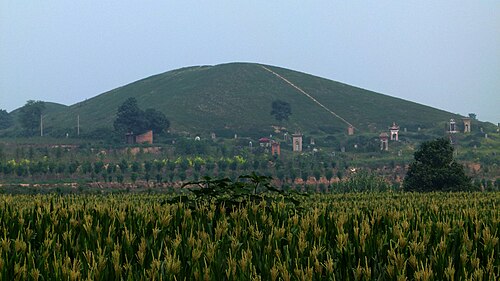
الإمبراطور هوي من سلالة هان ( بالصينية :漢惠帝؛ بينيين : Hàn Huìdì ؛ 210 ق.م. [ 1 ] - 26 سبتمبر 188 ق.م.)، [ 2 ] المولود باسم ليو يينغ (劉盈)، كان ثاني أباطرة سلالة هان . كان الابن الثاني للإمبراطور غاوزو ، أول أباطرة هان، والابن الوحيد للإمبراطورة لو من عشيرة لو القوية. يُذكر الإمبراطور هوي عمومًا بشخصيته الضعيفة نوعًا ما، والتي كانت خاضعة لسيطرة والدته، الإمبراطورة لو، التي أصبحت الإمبراطورة الأرملة بعد وفاة زوجها إثر إصابته في حرب شجعته على تولي قيادتها بنفسه. [ 3 ]
كان هويدي طيب القلب وحسن النية، بسيطًا، مترددًا، رقيق القلب وكريمًا، ولم يستطع التخلص من تأثير قسوة والدته. حاول حماية أخيه غير الشقيق الأصغر ، رويي، أمير تشاو، من القتل على يد الإمبراطورة الأرملة لو، لكنه فشل. بعد ذلك، انغمس في الشراب والجنس، وتخلى عن شؤون الدولة لوالدته، وتوفي في سن مبكرة نسبيًا. كانت زوجة الإمبراطور هوي هي الإمبراطورة تشانغ يان ، ابنة أخته الكبرى الأميرة يوان من لو ؛ وكان زواجهما نتيجة إصرار من الإمبراطورة الأرملة لو، ولم يثمر عن أطفال. بعد وفاة الإمبراطور هوي دون وريث مُعيّن، نصّبت الإمبراطورة الأرملة لو اثنين من أبنائه المزعومين، واللذين تبنتهما، في عشيرتها، وهما الإمبراطور تشيانشاو من هان وليو هونغ ، ابنا واحدة أو أكثر من محظيات الإمبراطور . تم إبادة هؤلاء وبقية أفراد عشيرة لو في أعقاب الاضطرابات التي تلت ذلك، وتم تنصيب الأخ غير الشقيق للإمبراطور هوي، ليو هينغ، إمبراطورًا باسم وين.
حياته المبكرة وسنواته كولي للعهد
السنوات الأولى
وُلد ليو يينغ خلال عهد أسرة تشين . ولا تزال تفاصيل طفولته غامضة. بعد ولادته، أسس والده ليو بانغ أسرة هان ، وحصل لاحقًا على لقب هان غاودي (الإمبراطور غاو من هان). المعروف أن ليو يينغ لم يكن الابن الأكبر لليو بانغ ، بل كان ليو فاي ، الذي أصبح فيما بعد أمير تشي. ومع ذلك، اعتُبر ليو يينغ الوريث الشرعي لأن والدته، الإمبراطورة لو لاحقًا، كانت زوجة ليو بانغ، بينما كانت والدة ليو فاي إما محظية أو عشيقة كانت على علاقة بليو بانغ قبل أن يصبح ملكًا على هان. [ 4 ]
خلاف تشو-هان
خلال فترة الصراع بين تشو وهان ، بينما كان ليو بانغ يخوض حربًا استمرت خمس سنوات مع شيانغ يو من أجل السيادة على العالم الصيني، لم يتبع هو ووالدته وأخته والده في البداية إلى إمارة هان ( سيتشوان الحديثة ، تشونغتشينغ ، وجنوب شانشي )؛ بل بقوا في موطن والده، ربما في مسقط رأسه باي (沛縣، في شوتشو الحديثة ، جيانغسو ) في عمق إمارة شيانغ لغرب تشو ، على الأرجح مع جده ليو تايغونغ .
انتكاسة كبيرة للأب ليو
في عام ٢٠٥ قبل الميلاد، بدا أن ليو بانغ على وشك تحقيق نصرٍ حاسم، بعد أن استولى على بينغتشنغ ، عاصمة شيانغ . لم يتضح كيف تلقت عائلته هذا النبأ، ولكن بعد بضعة أشهر، عندما ردّ شيانغ وسحق قوات ليو، فرّ ليو، وحاول أثناء فراره المرور عبر مسقط رأسه ليأخذ عائلته معه. تمكّن من العثور على أطفاله وأخذهم معه، لكن قوات شيانغ أسرت والده وزوجته واحتجزتهما كرهائن، ولم يُعادا إليه إلا بعد أن أبرم ليو وشيانغ صلحًا مؤقتًا في عام ٢٠٣ قبل الميلاد. لا بد أن ليو يينغ، الذي كان صغيرًا جدًا آنذاك، قد أمضى تلك الأيام لا يعلم مصير جده ووالدته.
انتصار كبير للأب ليو
بعد انتصار ليو بانغ وإعلانه نفسه إمبراطورًا (والذي عُرف لاحقًا باسم الإمبراطور غاو )، مؤسسًا بذلك سلالة هان ، في عام 202 قبل الميلاد، عيّن زوجته إمبراطورة ، وليو يينغ وليًا للعهد بصفته الوريث الشرعي . وهكذا، أصبح ليو يينغ أول ولي عهد في تاريخ الإمبراطورية الصينية. وبصفته ولي العهد يينغ ، عُرف بلطفه وتسامحه، وهي صفات لم تكن تُرضي الإمبراطور غاو. بل فضّل ابنه الصغير ليو رويي ، الذي اعتبره أشبه به، وكانت والدته، المحظية تشي ، محظيته المفضلة. وبدعم من المسؤولين ورؤساء جبل شانغ الأربعة، حافظ الأمير يينغ على مكانته كوريث للعرش رغم مكائد المحظية تشي. [ 5 ]
أربعة رؤوس بيضاء من جبل شانغ

Soon after establishing the Han dynasty, the new emperor, Gaodi, was eager to recruit talented persons. In 196 BCE, Gao even issued a decree to the effect that any official knowing of a virtuous man must so report on penalty of being fired (unless they were too old or sick).[6]:28 Sometime before or after that, Gao attempted to obtain the services of the Four Whiteheads of Mount Shang: Master Dongyuan, Qi Liji, Master Xiahuang and Mr. Lu Li. During the time of troubles which characterized the Qin dynasty, these four had entered into a life of seclusion on Mount Shang. They were old and had white hair and beards. Thus, they were known as the Four Whiteheads of Mount Shang. Liu Bang was well aware of the reputation of these four sages, and when he became emperor Gao, the four refused his ardent entreaties to assume positions of importance in his newly established government. When the question of who was to be imperial heir came up, two of Gaodi's women both advocated for their own son: Lü for Ying and Qi for her own son. Gao favored Qi's son, as he thought the youth embodied more of his personality. Lü Hou got the advantage: she went to the powerful official Zhang Liang, who said, “His Majesty had long heard about the Four Whiteheads of Mount Shang and wanted to invite them to serve the country. However, they refused. If the Crown Prince could obtain the support of the Four Whiteheads of Mount Shang, then His Majesty would not depose him.” Lü Hou then applied her forces of persuasion. The Four Whiteheads of Mount Shang showed up at court. The four agreed that according to the Confucian precepts of filial piety, as the elder son the future Huidi should succeed to the rulership. Furthermore, Liu Ying's nature was benevolent and compassionate. Gaodi noticed the presence of four elders with white hair and white beards at his court, and inquired as to their identity. Upon finding out who they were and what their position was, Gaodi went to Lady Qi and told her: “I cannot appoint your son as the successor because the Crown Prince has already obtained the support of such capable people. His position is firmly entrenched.”[7]
Empress Lü: Growing ascendancy
As crown prince, Prince Ying, along with his mother, would be the ones who would rule on important matters at the capital in his father's absence during various campaigns. When Ying Bu rebelled in 196 BC, Emperor Gao was ill and considered sending Prince Ying as the commander of the forces against Ying Bu rather than campaigning himself, but at the suggestion of Empress Lü (who averred that the generals, who were generally Emperor Gao's old friends, might not fully obey the young prince), went on the campaign himself. Prince Ying was instead put in charge of home territories around the capital Chang'an, assisted by Confucian scholar Shusun Tong (叔孫通) and strategist Zhang Liang (張良). He appeared to carry out the tasks competently but without distinction, but his mother, Empress Lu, first received the memorials and determined what subjects would be given to her son, the crown prince. On important matters, she had to be informed and consulted for decision-making, and orders were issued with her approval.
Succession to the imperial power
Prince Ying succeeded to the throne of Han when his father died in 195 BC from complications of an arrow wound suffered during the campaign against Ying Bu, after Lü Hou had insisted on Gaodi personally leading the fight.[8]
Reign as emperor under Empress Lü's regency
Immediately upon Prince Ying's ascension to the throne as Emperor Hui, Empress Lü, now empress dowager, became the effective lead figure in his administration. She wanted to carry out a plot of revenge against Consort Qi and her son Ruyi. She first arrested Consort Qi and put her in prison garb (shaved head, confined by stock, and wearing red clothes). She then summoned Liu Ruyi to the capital—an attempt that was initially resisted by Ruyi's chief of staff Zhou Chang (周昌), whom she respected because he was one of the officials who insisted on Liu Ying being the rightful heir. Instead of directly moving against Zhou and Liu Ruyi, though, Lü circumvented Zhou by first summoning him to the capital, and then summoning Liu Ruyi.[9]
Emperor Hui tried to save Liu Ruyi's life. Before Liu Ruyi could get to the capital, Emperor Hui intercepted his young brother at Bashang (霸上, in modern Xi'an) and received Liu Ruyi into his palace, and they dined and slept together. Empress Dowager Lü wanted to kill Liu Ruyi, but was afraid that any attempt might also harm her own son, and therefore could not carry out her plot for several months.[10]
سنحت الفرصة للإمبراطورة الأرملة لو في يناير/كانون الثاني من عام ١٩٤ قبل الميلاد تقريبًا . في صباح أحد الأيام، كان الإمبراطور هوي يصطاد ويريد اصطحاب ليو رويي معه. كان الأمير الشاب آنذاك في الرابعة عشرة من عمره فقط، ورفض النهوض من فراشه، فغادر الإمبراطور هوي للصيد بمفرده. سمعت الإمبراطورة الأرملة لو بذلك، فأرسلت على الفور قاتلًا إلى قصر الإمبراطور لإجبار الأمير على شرب نبيذ مسموم. وعندما عاد الإمبراطور هوي، كان أخوه قد مات. فأمرت بفقء عيني المحظية تشي، وجعلت أذنيها صماء، وخدرتها حتى فقدت القدرة على الكلام، وقطعت ذراعيها وساقيها. أُلقيت المرأة المشوهة في مرحاض، ثم أُطعمت وأُبقيت على قيد الحياة في حظيرة خنازير، وأُطلق عليها اسم "人彘"، أي حرفيًا "الخنزير البشري". (كانت ستموت من التعذيب). عندما رأى الإمبراطور هوي حبيبة والده ووالدة أخيه الصغير الحبيب في تلك الحالة، بكى بحرقة وأصيب بالاكتئاب والمرض لمدة عام تقريبًا. أخبر والدته أنه لا يستطيع حكم الإمبراطورية، كونه ابنًا لشخص مثلها ارتكب مثل هذه الأعمال اللاإنسانية. ومنذ ذلك الحين، انغمس الإمبراطور هوي في ملذات الدنيا، ولم يعد يتخذ القرارات الرئيسية والمهمة في الحكم، تاركًا إياها لوالدته، وأصبحت الإمبراطورة الأرملة لو تتمتع بنفوذ كبير لدرجة أن الإمبراطور هوي أصبح عاجزًا عن التأثير. [ 11 ]
مع ذلك، استمر الإمبراطور هوي في محاولاته لحماية إخوته. في حوالي ديسمبر من عام ١٩٤ قبل الميلاد، [ ١٢ ] عندما قام ليو فاي، أمير تشي - أخيه غير الشقيق الأكبر - بزيارة رسمية للعاصمة، حضر كلاهما وليمة أقامتها الإمبراطورة الأرملة لو. كرم الإمبراطور هوي الأمير كأخ أكبر، وطلب منه الجلوس على مائدة أكثر شرفًا من مائدته. شعرت الإمبراطورة الأرملة بإهانة بالغة، وأمرت خدمها بسكب كأسين من النبيذ المسموم، وُضعا على المائدة بين الثلاثة. وأمرت ليو فاي أن يشرب نخبها، متجاهلةً الإمبراطور هوي. وبينما كان ليو فاي على وشك شرب النبيذ المسموم، مدّ الإمبراطور هوي يده فجأةً إلى الكأس الثانية، وهو ما لم تكن الإمبراطورة تنويه، لعلمه بغيرة والدته الشديدة وتذكره كيف مات أخوه الآخر. (كان الكأس الثاني مجرد تمويه، وُضع هناك فقط ليُشير إلى ليو فاي بأنها سترد له نخبه، كما تقتضي الطقوس، مع أنه سيموت فور شربه، لذا لن تحتاج لشرب الكأس الآخر. استحوذ استياؤها من ليو فاي على انتباهها تمامًا، ولم تفكر حتى في وجود ابنها.) قفزت الإمبراطورة الأرملة لو وصفعت الكأس الثاني بعيدًا عن الإمبراطور هوي، فانسكب. أدرك ليو فاي الخدعة وغادر متظاهرًا بأنه ثمل. في النهاية، لم يتمكن من مغادرة العاصمة إلا بعد أن عرض على الإمبراطورة مقاطعة كاملة من إمارته، لتكون إقطاعية الأميرة يوان من لو . سُرّت الإمبراطورة الأرملة لو، التي كانت تُحب ابنتها كثيرًا أيضًا، وسمحت لليو فاي بالعودة إلى إمارته. [ 13 ]
الإنجازات
بصفته ثاني أباطرة سلالته، ساهم هويدي في ترسيخ دعائم سلالة هان: فقد عزز طموحات سلالة هان ببناء أضرحة تُخلّد ذكرى والده في جميع أنحاء البلاد. ورغم أن والده، غاودي، استمر في تطبيق العديد من مؤسسات تشين، إلا أن هويدي ألغى بعض قوانين تشين القاسية، مثل قانون حرق الكتب ودفن العلماء . ومع ذلك، لم تكن طبيعة هويدي اللطيفة في البداية ندًا يُذكر للقسوة التي أبدتها لو هو وعشيرتها. ومع ذلك، فقد ترسخت سلالة هان بعد أن تم القضاء على عشيرة لو هو المُتحدية بشكل عام، وخلف هان هويدي فعليًا الإمبراطور وين من هان . [ 6 ] : 31، 33
موت
توفي هوي في خريف عام 188 قبل الميلاد بمرض غير محدد. بعد وفاة الإمبراطورة لو ومذبحة عشيرة لو عام 180 قبل الميلاد، اختار مسؤولو الإمبراطور غاوزو والناجون من عشيرة ليو الإمبراطورية ليو هنغ إمبراطورًا خلفًا، وذلك عمدًا لافتقاره إلى عشيرة أم قوية. [ 6 ] : 33
الزواج والأطفال
In c.November 192 BC, Emperor Hui married Empress Zhang, a marriage that would not yield any children. However, whether Emperor Hui actually had children during or before his reign is a controversial question. The officials, including Chen Ping and Zhou Bo, who would later overthrow the Lü clan after the deaths of both Emperor Hui and Empress Dowager Lü, claimed that Emperor Hui had no sons—but that Empress Zhang, at Empress Dowager Lü's instigation, stole eight boys from other people, put their mothers to death, and made the children her own. Modern historians have split opinions on the issue, but largely believe that the boys were actually Emperor Hui's sons by concubines and that Empress Zhang did indeed put their mothers to death and make them her own children. (As, for example, Bo Yang pointed out, it would be logically incongruent, if Empress Zhang did steal these children from elsewhere, for her to put only the mothers but not the fathers to death.) Under this theory, the officials denied the imperial ancestry of these children in fear of the fact that they were also descendants of Empress Dowager Lü and her clan, and therefore might if allowed to live eventually to seek vengeance for the slaughter of the Lü clan—a reason that they themselves admitted. Except for Emperor Qianshao (who was deposed and executed by Empress Dowager Lü), the other children either died young by natural causes or were executed by the officials after they made Liu Heng, the Prince of Dai (Emperor Wen) the emperor.
Family
- Empress Xiaohui, of the Zhang clan (孝惠皇后 張氏; 202–163 BC), niece, personal name Yan (嫣)
- Unknown
- Emperor Qianshao of Han, Emperor (皇帝; 193–184 BC)
- Liu Qiang, Prince Huai of Huaiyang (淮陽懷王 劉強; d. 183 BC)
- Liu Buyi, Prince Ai of Hengsha (恆山哀王 劉不疑; d. 186 BC)
- Liu Hong, Emperor (皇帝 劉弘; 190–180 BC)
- Liu Chao, Prince of Hengshan (恆山王 劉朝; d. 180 BC)
- Liu Wu, Prince of Huaiyang (淮陽王 劉武; d. 180 BC)
- Liu Tai, Prince of Liang (梁王 劉太; d. 180 BC)
See also
Reference citations
Classical Chinese secondary reference sources
These Classical Chinese historical sources are standard, and incorporated herein:
- Sima Tan and Sima Qian. Records of the Grand Historian, vol. 9 (on or around 94 BCE).
- Ban Biao, Ban Gu, and Ban Zhao. Book of Han, vol. 2 (111 CE).
- Sima Guang, et al.Zizhi Tongjian (Comprehensive Mirror in Aid of Governance), vols. 9, 11, 12 (1084).
Other references
- ↑Emperor Hui's biography in Book of Han indicated that he was 5 (by East Asian reckoning) when his father Liu Bang became King of Han.
- ↑wuyin day of the 8th month of the 7th year of Emperor Hui's reign, per Emperor Hui's biography in Book of Han
- ↑Zizhi Tongjian, vol.12
- ↑(齐悼惠王肥,其母高祖微时外妇也。) Book of Han, vol.38
- ↑(上欲废太子,立戚夫人子赵王如意。大臣多谏争,未能得坚决者也。吕后恐,不知所为。人或谓吕后曰:“留侯善画计䇲,上信用之。”吕后乃使建成侯吕泽劫留侯,曰:“君常为上谋臣,今上欲易太子,君安得高枕而卧乎?”留侯曰:“始上数在困急之中,幸用臣䇲。今天下安定,以爱欲易太子,骨肉之间,虽臣等百馀人何益。”吕泽强要曰:“为我画计。”留侯曰:“此难以口舌争也。顾上有不能致者,天下有四人。四人者年老矣,皆以为上慢侮人,故逃匿山中,义不为汉臣。然上高此四人。今公诚能无爱金玉璧帛,令太子为书,卑辞安车,因使辩士固请,宜来。来,以为客,时时从入朝,令上见之,则必异而问之。问之,上知此四人贤,则一助也。”于是吕后令吕泽使人奉太子书,卑辞厚礼,迎此四人。四人至,客建成侯所。) Shiji, vol.55. Zhang Liang's biography in Book of Han also contained this anecdote.
- 123Paludan, Ann (1998). Chronicle of the Chinese Emperors: The Reign-by-Reign Record of the Rulers of Imperial China. New York, New York: Thames and Hudson. ISBN 0-500-05090-2.
- ↑Yeh Chia-ying, translation Josey Shun and Bhikshuni Heng Yin, "Lectures on Tao Yuanming's Poems", a series of lectures at Gold Buddha Monastery, Canada (lecture tapes were transcribed by Tu Xiaoli, An Yi, and Yang Aidi) <"Vajra Bhodi Sea" No. 382, March 2002>
- ↑(是时,上有疾,欲使太子往击黥布。太子客东园公、绮里季、夏黄公、角里先生说建成侯吕释之曰:“太子将兵,有功则位不益,无功则从此受祸矣。君何不急请吕后,承间为上泣言:‘黥布,天下猛将也,善用兵。今诸将皆陛下故等夷,乃令太子将此属,无异使羊将狼,莫肯为用;且使布闻之,则鼓行而西耳!上虽病,强载辎车,卧而护之,诸将不敢不尽力。上虽苦,为妻子自强!’”于是吕释之立夜见吕后。吕后承间为上泣涕而言,如四人意。上曰:“吾惟竖子固不足遣,而公自行耳。......上击布时,为流矢所中,行道,疾甚。) Zizhi Tongjian, vol.12. However, the same volume of Zizhi Tongjian also recorded that Liu Bang was already ill when he chose to lead an army against Ying Bu, and that it was he who refused further treatment after a doctor assessed that he could be saved. (吕后迎良医。医入见,曰:“疾可治。”上嫚骂之曰:“吾以布衣提三尺取天下,此非天命乎?命乃在天,虽扁鹊何益?”遂不使治疾,赐黄金五十斤,罢之。)
- ↑(高祖崩,太后使使召赵王,其相昌令王称疾不行。使者三反,昌曰:“高帝属臣赵王,王年少,窃闻太后怨戚夫人,欲召赵王并诛之。臣不敢遣王,王且亦疾,不能奉诏。”太后怒,乃使使召赵相。相至,谒太后,太后骂昌曰:“尔不知我之怨戚氏乎?而不遣赵王!”昌既被征,高后使使召赵王。) Book of Han, vol.42
- ↑(王来,未到;帝知太后怒,自迎赵王霸上,与入宫,自挟与起居饮食。太后欲杀之,不得间。) Zizhi Tongjian, vol.12
- ↑Ban Gu; Ban Zhao; Ban Biao (1962) [111]. "3: 高后紀". Book of Han漢書. Zhonghua Shuju.
- ↑Volume 12 of Zizhi Tongjian placed this incident in the 10th month of the 2nd year of Emperor Hui's reign, which corresponds to 20 Nov to 19 Dec 194 BCE in the proleptic Julian calendar. In the modified Zhuanxu calendar used during this era, the 2nd year of Emperor Hui's reign starts from 20 Nov 194 BCE and ends on 8 Nov 193 BCE in the proleptic Julian calendar.
- ↑(齐悼惠王来朝,饮于太后前。帝以齐王,兄也,置之上坐。太后怒,酌鸩酒置前,赐齐王为寿。齐王起,帝亦起取卮;太后恐,自起泛帝卮。齐王怪之,因不敢饮,佯醉去;问知其鸩,大恐。齐内史士说王,使献城阳郡为鲁元公主汤沐邑。太后喜,乃罢归齐王。) Zizhi Tongjian, vol.12
- 210 BC births
- 188 BC deaths
- 2nd-century BC Chinese monarchs
- Emperor Gaozu of Han
- People from Xuzhou
- Western Han dynasty emperors