
التسميد المائي

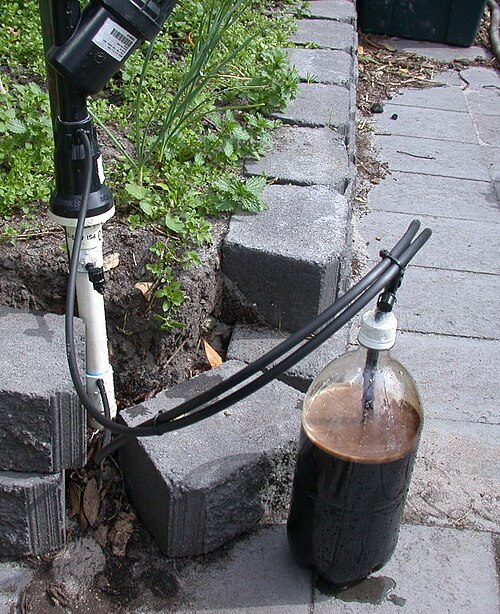
التسميد المائي هو عملية حقن الأسمدة ، المستخدمة لتحسين التربة ، وتحسين المياه، وغيرها من المنتجات القابلة للذوبان في الماء في نظام الري .
الري الكيميائي، وهو حقن مواد كيميائية في نظام الري، يرتبط بالتسميد المائي. يُستخدم المصطلحان أحيانًا بشكل متبادل، إلا أن الري الكيميائي عمومًا عملية أكثر تحكمًا وتنظيمًا نظرًا لطبيعة المواد الكيميائية المستخدمة. غالبًا ما يتضمن الري الكيميائي مبيدات حشرية ومبيدات أعشاب ومبيدات فطريات ، بعضها يُشكل خطرًا على صحة الإنسان والحيوان والبيئة.
الاستخدامات
تُستخدم تقنية التسميد المائي على نطاق واسع في الزراعة التجارية والبستنة. كما يتزايد استخدامها في تنسيق الحدائق مع ازدياد موثوقية وحدات التوزيع وسهولة استخدامها. يُستخدم التسميد المائي لإضافة عناصر غذائية إضافية أو لمعالجة نقص العناصر الغذائية الذي يُكتشف في تحليل أنسجة النبات. ويُطبق عادةً على المحاصيل ذات القيمة العالية مثل الخضراوات، والعشب، وأشجار الفاكهة، ونباتات الزينة.
المواد الكيميائية شائعة الاستخدام
يُعدّ النيتروجين أكثر العناصر الغذائية استخدامًا في النباتات. النيتروجين الطبيعي (N₂ ) جزيء ثنائي الذرة يُشكّل ما يقارب 80% من الغلاف الجوي للأرض. لا تستطيع معظم النباتات استهلاك النيتروجين ثنائي الذرة مباشرةً؛ لذا يجب أن يكون النيتروجين مُرتبطًا بمكونات أخرى تستطيع النباتات استهلاكها. تُستخدم عادةً الأمونيا اللامائية ونترات الأمونيوم واليوريا كمصادر متاحة بيولوجيًا للنيتروجين. تشمل العناصر الغذائية الأخرى التي تحتاجها النباتات الفوسفور والبوتاسيوم . ومثل النيتروجين، تحتاج النباتات إلى هذه المواد للبقاء على قيد الحياة، ولكن يجب أن تكون مُرتبطة بمواد كيميائية أخرى مثل فوسفات أحادي الأمونيوم أو فوسفات ثنائي الأمونيوم لتكون عناصر غذائية متاحة بيولوجيًا. يُعدّ كلوريد البوتاسيوم، وهو كلوريد البوتاسيوم كيميائيًا ، مصدرًا شائعًا للبوتاسيوم . [ 1 ] يُستخدم تحليل خصوبة التربة لتحديد أيّ من العناصر الغذائية الأكثر استقرارًا يجب استخدامها.
تُستخدم مبيدات الفطريات على العشب (أو المسطحات الخضراء)، مثل ملاعب الجولف ومزارع العشب. وكان السيبروكونازول من أوائلها ، وقد تم تسويقه في عام 1995. [ 2 ]
المزايا
تشمل فوائد طرق التسميد بالري مقارنةً بطرق التسميد التقليدية أو طرق التسميد بالتقطير ما يلي:
- زيادة امتصاص العناصر الغذائية من قبل النباتات.
- Accurate placement of nutrient, where the water goes the nutrient goes as well.
- Ability to "micro dose", feeding the plants just enough so nutrients can be absorbed and are not left to be washed down to storm water next time it rains.
- Reduction of fertilizer, chemicals, and water needed.
- Reduced leaching of chemicals into the water supply.
- Reduced water consumption due to the plant's increased root mass's ability to trap and hold water.
- Application of nutrients can be controlled at the precise time and rate necessary.
- Minimized risk of the roots contracting soil borne diseases through the contaminated soil.
- Reduction of soil erosion issues as the nutrients are pumped through the water drip system. Leaching is decreased often through methods used to employ fertigation.
Disadvantages
- Concentration of the solution may decrease as the fertilizer dissolves; this depends on equipment selection. If poorly selected may lead to poor nutrient placement.
- The water supply for fertigation is to be kept separate from the domestic water supply to avoid contamination.
- Possible pressure loss in the main irrigation line.
- The process is dependent on the water supply's non-restriction by drought rationing.
Methods used
- Drip irrigation – Less wasteful than sprinklers. It is not only more efficient for fertilizer usage but can also be for maximizing nutrient uptake in plants like cotton.[3] Drip irrigation using fertigation can also increase yield and quality of fruit and flowers, especially in subsurface drip systems rather than above surface drip tape.[4]
- Sprinkler systems – Increases leaf and fruit quality.
- Continuous application – Fertilizer is supplied at a constant rate.
- Three-stage application – Irrigation starts without fertilizers. Fertilizers are applied later in the process once the ground is wet, and the final stage clears fertilizers out of the irrigation system.[5]
- Proportional application – Injection rate is proportional to water discharge rate.
- Quantitative application – Nutrient solution is applied in a calculated amount to each irrigation block.
- Other methods of application include the lateral move, the traveler gun, and solid set systems.
System design
Fertigation assists distribution of fertilizers for farmers. The simplest type of fertigation system consists of a tank with a pump, distribution pipes, capillaries, and a dripper pen.
All systems should be placed on a raised or sealed platform, not in direct contact with the earth. Each system should also be fitted with chemical spill trays.
نظراً لاحتمالية تلوث مياه الشرب، يُشترط تركيب جهاز لمنع التدفق العكسي في معظم أنظمة التسميد المائي. وتختلف متطلبات منع التدفق العكسي اختلافاً كبيراً، لذا من المهم جداً فهم المستوى المناسب لمنع التدفق العكسي الذي يقتضيه القانون. في الولايات المتحدة، يُحدد الحد الأدنى للحماية من التدفق العكسي عادةً بموجب لوائح الولاية، بينما يحق لكل مدينة أو بلدة تحديد مستوى الحماية المطلوب. [ 6 ]
انظر أيضاً
مراجع
- ↑ "أسمدة البوتاسيوم" . إرشاد جامعة ولاية بنسلفانيا (Penn State Extension) . مؤرشف من الأصل بتاريخ 20 ديسمبر 2016. تم الاطلاع عليه بتاريخ 16 سبتمبر 2014 .
- ↑ وكالة حماية البيئة (سبتمبر 1995). "سيبروكونازول - تسجيل مبيد الفطريات Sentinel 40 WG للعشب (رقم تسجيل وكالة حماية البيئة 55947-132)" . وكالة حماية البيئة . تم الاطلاع عليه في 4 يونيو 2015 .
- ^ هو، ز.، لي، ب.، لي، ب. وآخرون. التربة النباتية (2007) 290: 115. دوى : 10.1007/s11104-006-9140-1
- ↑ الهندي، خالد، الهنداوي، صلاح، عبد السلام، إسلام، الغوربان، عبد الله، وأحمد، مختار. (2016). تأثيرات التسميد المائي عبر الري بالتنقيط السطحي وتحت السطحي على معدل النمو، والمحصول، وجودة أزهار زهرة الزينيا الأنيقة. براغانتيا ، 75 (1)، 96-107. نُشر إلكترونيًا في 22 ديسمبر 2015. doi : 10.1590/1678-4499.176
- ↑ فاليفين، ستيفن. "التسميد الزراعي - التقنيات والمعدات والإدارة" . وزارة الصناعات الأولية في نيو ساوث ويلز . حكومة نيو ساوث ويلز . تم الاطلاع عليه بتاريخ 4 نوفمبر 2021 .
- ^ حسن، محمد فخرول. أزلان، محمد؛ سابوان، سيارفا زاهيرة؛ هميسة، محمد؛ عبد الحميد، ت. د (أكتوبر 2022). “تطوير نظام التسميد المعتمد على الأردوينو للزراعة الذكية”. مجلة التصميم من أجل البيئة المستدامة . 4 : 22 - 28.
فهرس
- أسدي، م.إ، 1998. "إدارة المياه والنيتروجين للحد من تأثير النترات". وقائع المؤتمر الدولي الخامس للهندسة الزراعية، 7-10 ديسمبر، بانكوك، تايلاند، ص 602-616.
- أسدي، م. إي.، كليمنتي، ر. س. 2000. "تأثير استخدام الأسمدة النيتروجينية على البيئة". وقائع المؤتمر الدولي السادس للهندسة الزراعية، 4-7 ديسمبر، بانكوك، تايلاند. ص 413-423.
- Asadi, M.E., Clemente, R.S., Gupta, A.D., Loof, R., and Hansen, G.K. 2002. "Impacts of fertigation Via sprinkler irrigation on nitrate leaching and corn yield on an acid - sulphate soil in Thailand. Agricultural Water Management" 52(3): 197–213.
- Asadi, M.E., 2004. "Optimum utilization of water and nitrogen fertilizers in sustainable agriculture". Programme and Abstracts N2004. The Third International Nitrogen Conference. October 12–16, Nanjing, China. p. 68.
- Asadi, M.E., 2005. "Fertigation as an engineering system to enhance nitrogen fertilizer efficiency". Proceedings of the Second International Congress: Information Technology in Agriculture, Food and Environment, (ITAFE), October 12–14, Adana, Turkey, pp. 525–532.
- Department of Natural Resources, Environment, "Fertigation systems." Web. 4 May 2009.
- Hanson, Blaine R., Hopmans, Jan, Simunek, Jirka. "Effect of Fertigation Strategy on Nitrogen Availability and Nitrate Leaching using Microirrigation". HortScience 2005 40: 1096
- North Carolina Department of Agriculture and Consumer Services, www.ncagr.com/fooddrug/pesticid/chemigation2003.pdf "Chemigation & Fertigation". (2003) 4 May 2009.
- Neilsen, Gerry, Kappel, Frank, Neilsen, Denise. "Fertigation Method Affects Performance of `Lapins' Sweet Cherry on Gisela 5 Rootstock". HortScience 2004 39: 1716–1721
- NSW department of primary industries, "Horticultural fertigation"Archived 2013-12-12 at the Wayback Machine. 2000.
- Suhaimi, M. Yaseer; Mohammad, A.M.; Mahamud, S.; Khadzir, D. (July 18, 2012). "Effects of substrates on growth and yield of ginger cultivated using soilless culture", Journal of Tropical Agriculture and Food Science, Malaysian Agricultural Research and Development Institute 40(2) pp. 159 - 168. (Selangor)
- Agricultural terminology
- Fertilizers
- Irrigation
- Lawn care
- Plant nutrition