
Rio Tinto (river)
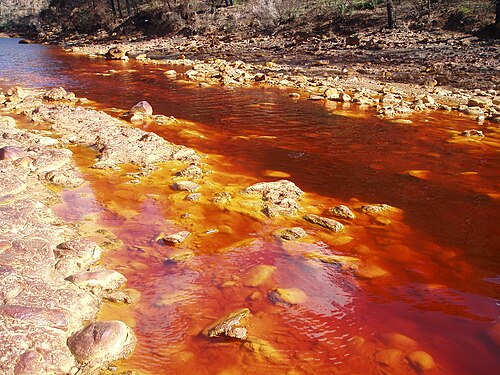
The Río Tinto (Spanish pronunciation:[ˈri.oˈtinto], red river or Tinto River) is a highly toxic river in southwestern Spain that rises in the Sierra Morena mountains of Andalusia. It flows generally south-southwest, reaching the Gulf of Cádiz at Huelva. The Río Tinto river has a unique red and orange colour derived from its extremely acidic chemical makeup with very high levels of iron and heavy metals.[1] The name río tinto means "coloured river" in Spanish, in contrast to most rivers, which are clear. However, "tinto" is also an expression for red wine in Spain, so it is also related to this second meaning.
The river maintains its colour for approximately 50 kilometres.[2] After 50 kilometres, its unique chemistry appears to slowly subside, along with the odd colouring. The acidic content of the river is altered near the town of Niebla.[2] The acid begins to be neutralized past the town of Niebla as the Río Tinto blends with other streams flowing into the Atlantic Ocean.[2] The river is approximately 100 km (62 mi) long and is located within the Iberian Pyrite Belt.[1] This area has large amounts of ore and sulphide deposits.
The Río Tinto area has had approximately 5,000 years of oremining,[3] including copper, silver, gold, and other minerals,[4] extracted as far as 20 kilometres from the river shores.[2] As a possible result of the mining, the Río Tinto is very acidic (pH 2) with its deep reddish hue due to iron dissolved in the water. Acid mine drainage from the mines leads to severe environmental problems because the acidity (low pH) dissolves heavy metals into the water. It is not clear how much acid drainage is from natural processes and how much has come from mining. There are severe environmental concerns over the river pollution.[2]
Although the river is a harsh environment, some microorganisms classified as extremophiles do thrive in these conditions. Such life forms include certain species of bacteria, algae and heterotrophs.[5]
History
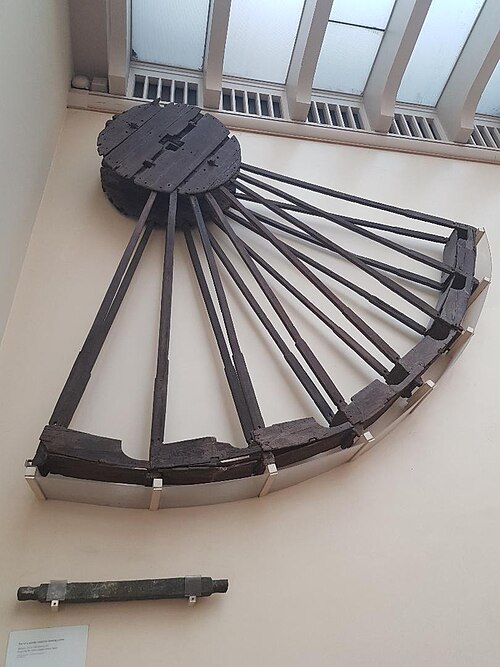
The ore body was deposited during the Carboniferous period (300–350 Ma) by hydrothermal activities on the sea floor. The history of mining in the Río Tinto area traces back to the Tartessans and the Iberians starting mining in 3000 BC, followed by the Phoenicians, Greeks, Romans, Visigoths, and Moors. The Río Tinto region has been the source of approximately 5,000 years of ore extraction,[3] and chemical refinement primarily for copper, silver and gold, and later for iron, manganese and other minerals.[4] This long standing mining activity has vastly modified the topography of the region.[3]
بعد فترة من الهجر وعدم الاستخدام، أُعيد اكتشاف المناجم عام 1556، وبدأت الحكومة الإسبانية تشغيلها مجددًا عام 1724. [ 4 ] في القرن التاسع عشر، بدأت شركات من المملكة المتحدة عمليات تعدين واسعة النطاق. وفي عام 1873، تأسست شركة ريو تينتو لإدارة المناجم. انخفض الإنتاج بعد ذروته عام 1930، وتوقف عام 1986 بالنسبة لتعدين النحاس، وعام 1996 بالنسبة لتعدين الفضة والذهب ، مع توقف الأنشطة المتبقية تمامًا عام 2001. [ 6 ] [ 7 ]
أدى ارتفاع أسعار النحاس في العقد الثاني من الألفية إلى سعي شركة EMED للتعدين (المعروفة الآن باسم Atalaya Mining ) لإعادة فتح المنجم، إلا أن صعوبات الحصول على جميع حقوق الملكية اللازمة، والمخاوف البيئية، والحصول على الموافقات التنظيمية، أدت إلى تأخير إعادة الافتتاح. وكان المنجم، الذي وظّف ما يصل إلى 20,000 عامل في السابق، سيوظف 350 شخصًا خلال مرحلة التشغيل. وتتركز المخاوف البيئية على خزانات المياه المهجورة منذ فترة طويلة، والتي قد لا تتمكن من تحمل ضغط تدفق النفايات المتجددة. [ 7 ] وعلى الرغم من هذه المشكلات، فقد مُنح الترخيص في نهاية المطاف في يناير 2015، واستؤنف الإنتاج التجاري للنحاس في فبراير 2016. [ 8 ] [ 9 ] [ 10 ] [ 11 ]
الأصل والبيئة
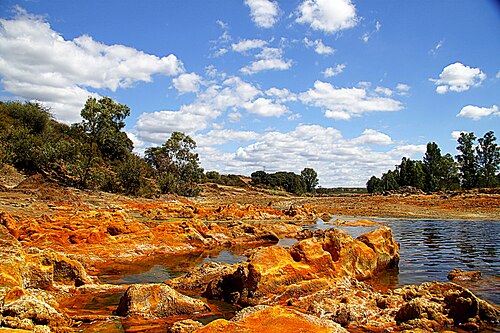
نظراً للظروف القاسية التي يمر بها النهر، يكاد يخلو من مظاهر الحياة، باستثناء كميات ضئيلة من الكائنات الدقيقة ، بما فيها الطحالب . ويُعتقد أن وجود البكتيريا اللاهوائية في الرواسب يُسهم جزئياً في انخفاض درجة حموضة النهر (pH) بشكل ملحوظ، مما يزيد بدوره من تركيز المعادن الثقيلة الذائبة . وتُوفر مياه نهر ريو تينتو، الغنية بكبريتيدات المعادن، بيئة مثالية للكائنات الدقيقة الكيميائية ذاتية التغذية ، حيث تُشكل الكبريتيدات مصدراً غذائياً لها. وينتج عن عملية استقلاب كبريتيدات المعادن من خلال الأكسدة الحديديك وإفراز سائل حمضي.
The continuation of this process for an extended period of time is thought by some scientists to be responsible for keeping the river's pH between 2 and 2.5 in most areas. Even in the extremely acidic water, both red and green algae have been observed to thrive in relatively high concentrations.[12] Despite algae levels in the Río Tinto accounting for over half of the total biomass in the river, algae is understood to have minimal effects on the characteristics of the complex ecosystem.[2]
The discovery of multiple oxide terraces mediated by microorganisms at up to 60 metres above the current water level, and as far away as 20 kilometres from the current river's path, may suggest that the unusual ecosystem is a natural phenomenon since before human mining activities started in this region.[13] On the other hand, it is known that toxic water emanates from these vast underground and open pit mines and chemical ore refinement that had been active off and on for thousands of years.[14] While it is still undetermined if the unique water chemistry of the Río Tinto developed as a result of thousands of years of mining or by natural causes, it is possible that the river's chemical makeup is due to the combination of both natural causes and acid mine drainage.[15][16][17] The river drains an area with huge deposits of sulphides which was formed more than 350 million years ago. When sulphides are exposed to air, water, and microorganisms, drainage from acidic rocks flows into surface and ground water. Mining, however, greatly increases exposed areas.[16]
Astrobiology
This river has gained recent scientific interest due to the presence of extremophileanaerobicbacteria that dwell in the acidic water. The subsurface rocks on the river bed contain iron and sulphideminerals on which the bacteria feed.[18][19][20] The extreme conditions in the river may be analogous to other locations in the Solar System thought to contain liquid water, such as groundwater on Mars. Scientists have also directly compared the chemistry of the water in which the Mars rocks of Meridiani Planum were deposited in the past with the Río Tinto.[21] Likewise, the moon Europa contains an acidic ocean of water underneath its ice surface, thus the Río Tinto river is of interest to astrobiologists studying the environmental limits of life and planetary habitability.[15]
See also
References
- 12Amaral Zettler, Linda A.; Messerli, Mark A.; Laatsch, Abby D.; Smith, Peter J. S.; Sogin, Mitchell L. (2003-04-01). "From Genes to Genomes: Beyond Biodiversity in Spain's Rio Tinto". The Biological Bulletin. 204 (2): 205–209. doi:10.2307/1543560. ISSN 0006-3185. JSTOR 1543560. PMID 12700155. S2CID 25932347.
- 123456Fernández-Remolar, David C.; Morris, Richard V.; Gruener, John E.; Amils, Ricardo; Knoll, Andrew H. (2005). "The Río Tinto Basin, Spain: Mineralogy, sedimentary geobiology, and implications for interpretation of outcrop rocks at Meridiani Planum, Mars". Earth and Planetary Science Letters. 240 (1): 149–167. Bibcode:2005E&PSL.240..149F. doi:10.1016/j.epsl.2005.09.043.
- 123Fernández-Remolar, David C.; Morris, Richard V.; Gruener, John E.; Amils, Ricardo; Knoll, Andrew H. (2005). "The Río Tinto Basin, Spain: Mineralogy, sedimentary geobiology, and implications for interpretation of outcrop rocks at Meridiani Planum, Mars". Earth and Planetary Science Letters. 240 (1): 149–167. Bibcode:2005E&PSL.240..149F. doi:10.1016/j.epsl.2005.09.043.
- 123Bordenstein, Sarah. "Rio Tinto, Spain". Science Education Resource Center. Carleton College. Retrieved March 3, 2009.
- ↑Fernández-Remolar, David C.; Morris, Richard V.; Gruener, John E.; Amils, Ricardo; Knoll, Andrew H. (2005). "The Río Tinto Basin, Spain: Mineralogy, sedimentary geobiology, and implications for interpretation of outcrop rocks at Meridiani Planum, Mars". Earth and Planetary Science Letters. 240 (1): 149–167. Bibcode:2005E&PSL.240..149F. doi:10.1016/j.epsl.2005.09.043.
- ↑Davis, R. A. Jr.; Welty, A. T.; Borrego, J.; Morales, J. A.; Pendon, J. G.; Ryan, J. G. (2000). "Rio Tinto estuary (Spain): 5000 years of pollution". Environmental Geology. 39 (10): 1107–1116. doi:10.1007/s002549900096. S2CID 130535502.
- 12Minder, Raphael (April 12, 2012). "In Struggling Spanish Town, Hopes of Reopening Mine Are Delayed". The New York Times. Retrieved April 13, 2012.
- ↑ondaminera (23 January 2015). "La Junta de Andalucía concede el permiso de explotación a EMED Tartessus para reactivar la mina de Riotinto". Onda Minera RTV Nerva (in Spanish).
- ↑Arenas Posadas, Carlos (2017). "Riotinto, el declive de un mito minero (1954-2003)". Revista de Historia Industrial (in Spanish) (69). Barcelona: Universidad de Barcelona: 137. ISSN 1132-7200.
- ↑"Atalaya revives iconic Rio Tinto mine in Spain". The Northern Miner. 21 November 2016. Retrieved 3 March 2025.
- ↑ «شركة أتاليا للتعدين تحوّل منجم ريو تينتو الأصلي من موقع متضرر إلى مشروع مربح للغاية» . سيتي إيه إم. 5 ديسمبر 2016. تاريخ الاطلاع: 3 مارس 2025 .
- ^ سانز، خوسيه إل. رودريغيز، نوريا؛ دياز، إميليانو إي؛ أميلز ، ريكاردو (2011/08/01). “تكوين الميثان في رواسب نهر ريو تينتو، وهو نهر شديد الحموضة”. علم الأحياء الدقيقة البيئي . 13 (8): 2336–2341 . بيب كود : 2011EnvMi..13.2336S . دوى : 10.1111/j.1462-2920.2011.02504.x . اتش دي ال : 10261/57674 . ISSN 1462-2920 . بميد 21605308 .
- ↑ فرنانديز-ريمولار، ديفيد سي.؛ موريس، ريتشارد في.؛ غرونر، جون إي.؛ أميلز، ريكاردو؛ نول، أندرو إتش. (2005). "حوض ريو تينتو، إسبانيا: علم المعادن، والجيوبيولوجيا الرسوبية، وآثارها على تفسير الصخور المكشوفة في ميريدياني بلانوم، المريخ". رسائل علوم الأرض والكواكب . 240 (1): 149-167 . Bibcode : 2005E & PSL.240..149F . doi : 10.1016/j.epsl.2005.09.043 .
- ↑ ريو تينتو: النهر والمنجم والشركة لا تزال تلوث بعد كل هذه السنوات . غاري جي. كولز، دكتور في الطب، دولوث ريدر . يونيو 2015.
- 1 2 ريو تينتو، إسبانيا. سارة بوردنشتاين، مختبر الأحياء البحرية. موارد تعليمية عن الحياة الميكروبية. 21 يونيو 2013.
- ١ ٢ ريو تينتو والمناجم: إعادة زيارة الموقع الخامل منذ فترة طويلة لأول احتجاج بيئي في إسبانيا عام ١٨٨٨. آدم ليدرير وفيكي أزكويتيا. مجلة التاريخ الطبيعي . مايو ٢٠١٧.
- ↑ نهر ريو تينتو، البيئة الشبيهة بالمريخ في جنوب غرب الأندلس . أندرو فوربس. ١١ أكتوبر ٢٠١٣. اقتباس: "هناك تلوث طبيعي من الحديد الموجود في الأرض، بالإضافة إلى تلوث بالمعادن الثقيلة من المناجم المهجورة."
- ↑ فرنانديز ريمولار، دي سي؛ موريس، آر في؛ غرونر، جيه إي؛ أميلز، آر؛ نول، إيه إتش (2005). "حوض ريو تينتو، إسبانيا: علم المعادن، والجيوبيولوجيا الرسوبية، وآثارها على تفسير الصخور المكشوفة في ميريدياني بلانوم، المريخ". رسائل علوم الأرض والكواكب . 240 (1): 149-167 . Bibcode : 2005E & PSL.240..149F . doi : 10.1016/j.epsl.2005.09.043 .
- ↑Fernández Remolar, D. C.; Rodríguez, N.; Gómez, F.; Amils, R. (2003). "Geological record of an acidic environment driven by iron hydrochemistry: The Tinto River system". Journal of Geophysical Research: Planets. 108 (E7): 5080. Bibcode:2003JGRE..108.5080F. doi:10.1029/2002JE001918.
- ↑Sánchez Andrea, I; Rodríguez, N; Amalis, R; Sans, J. L. (2011). "Microbial diversity in anaerobic sediments at Rio Tinto, a naturally acidic environment with a high heavy metal content". Applied and Environmental Microbiology. 77 (17): 6085–6093. Bibcode:2011ApEnM..77.6085S. doi:10.1128/AEM.00654-11. PMC 3165421. PMID 21724883.
- ↑Guy Webster (2005-11-29). "News | NASA Rover Helps Reveal Possible Secrets of Martian Life". Jpl.nasa.gov. Archived from the original on 2009-05-11. Retrieved 2017-01-16.
External links
- BBC short documentary on Río Tinto
- Mars Analog Research and Technology Experiment FAQArchived 2011-01-05 at the Wayback Machine
- (in Spanish)Protected Landscape Río Tinto
- (in Spanish)Mining Park of Río TintoArchived 2011-02-04 at the Wayback Machine With link to The Ernest Lluch mining Museum, RioTinto, the fairly new mining museum of the area, containing a permanent exhibition on the history of mining, and geological information.
- Rivers of Spain
- Rivers of Andalusia
- Environmental impact of mining
- Environmental issues in Spain
- Mining in Spain
- Water pollution in Spain