
Seth Low
Seth Low (January 18, 1850 – September 17, 1916) was an American public figure. He chronologically served as the 23rd mayor of Brooklyn from 1881 to 1885, the 11th president of Columbia University from 1890 to 1901, a diplomatic representative of the United States to the International Peace Conference at The Hague in 1899, and the 93rd mayor of New York City from 1902 to 1903. He was a leading municipal reformer fighting for efficiency during the Progressive Era.
Early life
Low was the son of Abiel Abbot Low and Ellen Almira Dow.[1] Low's father was a leading trader in China, and his father's sister, Harriet Low, was one of the first young American women to live in China.[2] The Low family was old Puritan New England stock, descended from Thomas Low of Essex County, Massachusetts.[3] Low was named after his grandfather Seth Low (1782–1853) who moved with his son Abiel to Brooklyn to start a prosperous importing company.[3] When Brooklyn was incorporated as a city in 1834, Seth the elder was one of the incorporators; he also served on the Board of Aldermen and was first President of the Board of Education.[3] Seth the elder was also involved with charity and support work for the poor; on his deathbed, he admonished his three-year-old grandson and namesake: "Be kind to the poor."[3]
Low's father was a Unitarian, and his mother was an Episcopalian.[3] For years, Low wavered between the two faiths. Finally, at age 22, Low decided he would henceforth be an Episcopalian.[3]
Low attended Poly Prep Country Day School in Brooklyn and Columbia College. After graduating from Columbia in 1870, Low made a short trip abroad, and then entered the tea and silk house of A. A. Low & Brothers, which had been founded by his father in New York. In 1875, he was admitted a member of the firm, from which, upon its liquidation in 1888, he withdrew with a large fortune.[4]
Advocating cuts to welfare
In the mid-1870s, Low began to lay the groundwork for his political career by supporting "welfare reform" and the elimination of food and coal disbursements for the poor which caused "starving people" to gather at "warehouses where food was stored" to beg for help. During this period, the reform movement, of which Low was a stalwart, denounced emergency assistance of potatoes and flour for the poor. The reduction in welfare assistance for the poor led many to seek shelter in "police station basements" and in city hospitals, and led many poor parents to bring "their children to asylums" and many men to beg on the streets for "charity or work."[5]
On December 9, 1880, Low married Anne Wroe Scollay Curtis of Boston, daughter of Justice Benjamin R. Curtis of the United States Supreme Court. They had no biological children, but adopted two nieces and a nephew.[1]
Mayor of Brooklyn
First term
By 1881, Brooklyn had been governed for years by a corrupt Democratic political machine under Hugh McLaughlin.[3] By this time, a wave of goo-goo (or "good government") sentiment had begun to gain favor, and public sentiment was starting to turn against the incumbent Democratic regime.[3]
Brooklyn Republicans sensed an opportunity, but they were split between the "stalwart" candidate Benjamin F. Tracy and reform candidate Ripley Ropes.[3] Low had no particular ambition to become mayor,[3] but his name was brought forth as a compromise, because his wealth and old family name appealed to the "stalwarts" and his reformist views appealed to the reformers.[3] He accepted the nomination at the Republican city convention, stating that he would not be a partisan mayor.[3] He defeated the incumbent Democrat James Howell after a two-week campaign, 45,434 votes to 40,937.[3]
Low's time in office was marked by a number of reforms:
- Low's major achievement as mayor was to secure a degree of "home rule" of the city. Previously, the State Government dictated city policies, hiring, salaries, and other affairs. He also managed to secure an unofficial veto over all Brooklyn bills in the State Assembly.[3]
- Low instituted a number of educational reforms. He was the first to integrate Brooklyn schools.[3] He introduced free textbooks for all students, not just those who had taken a pauper's oath.[3] He instituted a competitive examination for hiring teachers, instead of giving teaching jobs to pay political debts.[3] He set aside $430,000 for the construction of new schools to accommodate 10,000 new students.[3]
- Low introduced Civil Service Code to all city employees, eliminating patronage jobs.[3]
- German immigrants wanted to enjoy their local beer gardens on the Sabbath, in violation of state "dry" laws and the demands of local puritanical clergy. His compromise solution was that saloons could stay open as long as they were orderly.[3] At the first sign of rowdiness, they would be closed.[3]
- Low served as a member of the board of the New York Bridge Company, the company that built the Brooklyn Bridge, and led an unsuccessful effort to remove Washington Roebling as the chief engineer on that project.[6]
- Low raised the tax rate from $2.33 of $100 assessed valuation in 1881 to $2.59 in 1883.[3] He also went after property owners who had not paid back taxes.[3] This increase in city revenue enabled him to reduce the city's debt and increase services. However, raising taxes proved extremely unpopular.[3]
Second term
Low's tax increases and non-partisan governing policy lost him a measure of public support. By 1883, fellow Republicans were criticizing him openly, and the press was critical of his tax policy.[3] Although the Democrats ran the weak, nearly unknown candidate Joseph C. Hendrix in 1883, Low beat him by a slimmer margin than his first election. While he had won his first term by 5,000 votes, he squeaked by for re-election with only a 1,548-vote margin.[3]
In 1884, Low's mugwump support of Democrat Grover Cleveland in 1884 furthered the rift with his fellow Republicans. He declined to run for a third term in 1885, and refused to support Republican nominee General Isaac S. Catlin.[3] Instead, he supported a reform candidate, General John B. Woodward.[3] By this time, the public was losing their attraction to reform, and Democrat Daniel D. Whitney won election. With Whitney came the return of Democratic machine politics for another seven years.[3] By 1892, some writers were looking back on Low's tenure as a "Golden Age" of clean government.[3]
President of Columbia University

Following his tenure as mayor of Brooklyn, Low assumed the presidency of Columbia College, serving between 1890 and 1901. While not himself an educator, he succeeded by his administrative skill in transforming the institution.[4] He led the move of the institution from Midtown Manhattan to Morningside Heights, and secured trustee approval to change its name to "Columbia University". The new campus matched his vision of a civic university fully integrated into the city; the original design subsequently reconceived, left it open to the street and surrounding neighborhoods.
To forge a university, Low united the various schools into one organization whose direction was moved from the separate faculties to a university council. Further reforms he effected included the reorganization of the law school, the addition of a faculty of pure science, the association of the university with the Teachers College, and the extension of the department of political and social study.[4] In 1895, he gave one million dollars of his inheritance from his father for Low Memorial Library to be built at the new Columbia University campus. It was dedicated to his father and opened in 1897.
During his time at Columbia, Low was elected to the American Philosophical Society.[7]
International Peace Conference

في الرابع من يوليو عام 1899، كان لو أحد المندوبين الأمريكيين الذين حضروا مؤتمر السلام الدولي في لاهاي . وكان من بين أعضاء الوفد الآخرين أندرو د. وايت ، سفير الولايات المتحدة آنذاك لدى الإمبراطورية الألمانية؛ وستانفورد نيويل من مينيسوتا، وزير الولايات المتحدة آنذاك لدى هولندا؛ والكابتن ألفريد ماهان من البحرية الأمريكية؛ والكابتن ويليام كروزير من الجيش الأمريكي؛ وفريدريك هولز من نيويورك.
وفي المؤتمر، ألقى لو الخطاب الختامي، الذي نُشر بعد شهرين في صحيفة نيويورك تايمز ، قائلاً:
في هذا اليوم، المفعم لدى الأمريكيين بذكريات استقلالهم الوطني، لا ننسى أن للأمريكيين أسبابًا أخرى للامتنان لشعب هولندا. لا يمكننا أن ننسى أن علمنا تلقى أول تحية أجنبية من ضابط هولندي، ولا أن مقاطعة فريزلاند منحت استقلالنا أول اعتراف رسمي به. عبر ليدن ودلفت هافن وبليموث روك ، ثم عبر نيو أمستردام ، وصلت المدارس العامة المجانية إلى الشواطئ الأمريكية. لقد استمدت الولايات المتحدة الأمريكية اسمها من الولايات المتحدة الهولندية . لقد تعلمنا منكم أن "في الاتحاد قوة"؛ إنه درس قديم، ولكننا تعلمنا أيضًا، إلى حد كبير، كيف نجعل من الكثيرين "واحدًا". تعلمنا منكم ما نُقدّره، على الأقل، وهو فصل الدين عن الدولة؛ ومنكم نستمد الإلهام دائمًا في حرصنا على التعلم، وعلى الحرية الدينية، وعلى الحرية الفردية والوطنية. هذه بعض الأمور التي نعتقد أن الشعب الأمريكي مدينٌ بها للهولنديين. وهذه هي الأمور التي نتجرأ اليوم، متحدثين باسم الشعب الأمريكي، على التعبير عن شكرنا العميق لها.
عمدة مدينة نيويورك
لم تنجح حملة لو الأولى لمنصب عمدة مدينة نيويورك الموحدة عام 1897، ويعود ذلك جزئياً إلى الانقسام بين المرشحين والأحزاب المناهضة لقاعة تاماني . [ 8 ]
خلال حملة لو الانتخابية لمنصب رئيس البلدية عام 1901، حظي بدعم الكاتب الساخر مارك توين . وقد ظهر هو وتوين معاً في فعالية اجتذبت حشداً يزيد عن 2000 شخص.
في عام ١٩٠٢، استقال لو من رئاسة جامعة كولومبيا ليصبح ثاني عمدة لمدينة نيويورك الموحدة حديثًا ، والعمدة رقم ٩٣ إجمالًا. [ ٩ ] [ ١٠ ] وكان أول عمدة لمدينة نيويورك الكبرى يُنتخب على قائمة ائتلافية ، بدعم من كلٍّ من حزب اتحاد المواطنين والحزب الجمهوري . ومن بين إنجازاته استحداث نظام خدمة مدنية قائم على الجدارة لتوظيف موظفي البلدية، والحد من الفساد المستشري في قسم الشرطة ، وتحسين نظام التعليم في المدينة ، وخفض الضرائب. ورغم هذه الإنجازات، لم يخدم سوى عامين، وهُزم في انتخابات عام ١٩٠٣ أمام الديمقراطي جورج بي. ماكليلان الابن.
مرحلة لاحقة من العمر
كان لو رئيسًا لجامعة توسكيجي ( معهد توسكيجي سابقًا )، وهي جامعة تاريخية للسود أدارها بوكر تي واشنطن ، من عام 1907 حتى عام 1916. ومنذ عام 1907، شغل أيضًا منصب رئيس تحالف الأعمال والعمال، الاتحاد المدني الوطني . ورغم إيمانه بحقوق المفاوضة الجماعية، التي كانت تُحرم منها النقابات العمالية عادةً من قِبل السلطات، إلا أنه فضّل التحكيم على الإضرابات كأسلوب تفاوض مناسب بين العمال والإدارة. وكان لو مؤسسًا وأول رئيس لمكتب الأعمال الخيرية في بروكلين، وانتُخب نائبًا لرئيس أكاديمية نيويورك للعلوم ورئيسًا للمعهد الأثري الأمريكي . [ 4 ]
انصبّ اهتمام لو على مشكلة مساهمة الإمدادات الغذائية في ارتفاع تكاليف المعيشة باستمرار . واقتنع بأن أفضل حل لهذه المشكلة يكمن في التعاون الديمقراطي بين المزارعين والمستهلكين. شغل منصب رئيس جمعية بيدفورد التعاونية للمزارعين، وكان أيضًا أحد مؤسسي شركة نيويورك التعاونية لتجارة الجملة، وهي منظمة تسعى إلى إنشاء اتحاد تجاري يضم جميع جمعيات المتاجر التعاونية الاستهلاكية في شرق الولايات المتحدة. إلا أنه، لعدم تعاطفه مع التوجه الراديكالي لهذه المرحلة من الحركة التعاونية ، استقال في نهاية المطاف وكرّس نفسه بالكامل للمرحلة الزراعية من التعاون. كما كان عضوًا في مجلس أمناء معهد كارنيجي في واشنطن العاصمة [ 1 ].
في ربيع عام ١٩١٦، أُصيب لو بمرض السرطان. [ ٣ ] وتوفي في منزله في بيدفورد هيلز، نيويورك ، في ١٧ سبتمبر ١٩١٦. وقد أظهرت جنازته قدرته على التوصل إلى توافق سياسي، حيث كان من بين حاملي النعش الفخريين كل من الممول والفاعل الخير جيه بي مورغان الابن، والناشط العمالي ومؤسس اتحاد العمل الأمريكي صموئيل غومبرز . [ ١١ ] ودُفن في مقبرة غرين وود في بروكلين ، نيويورك.
إرث
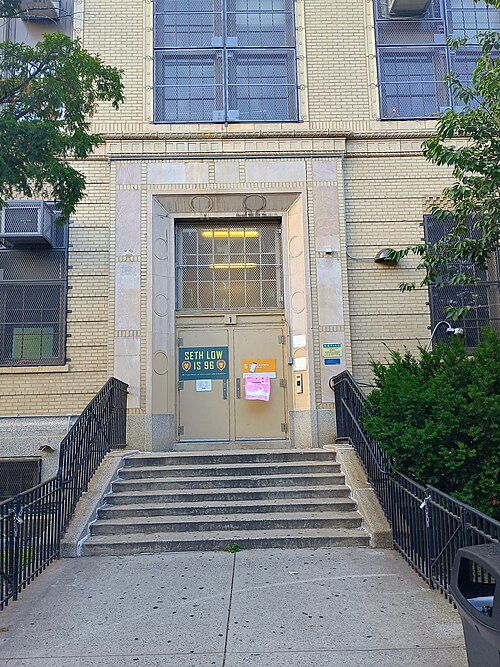
مدرسة في حي بنسونهرست في بروكلين تحمل اسم مدرسة سيث لو المتوسطة رقم 96. وكان ملعب في المربع المجاور معروفًا لسنوات عديدة باسم ملعب سيث لو لدى السكان المحليين، قبل أن يُطلق عليه الاسم رسميًا في عام 1987. [ 12 ] [ 13 ]
في محمية سيث لو بيريبونت ستيت بارك ، التي سميت على اسم ابن شقيق لو ، يوجد شارع يحمل اسم لو وهو طريق سيث لو ماونتن. [ 14 ]
في منطقة براونزفيل في بروكلين ، نيويورك، يوجد مشروع إسكان عام تابع لهيئة الإسكان في مدينة نيويورك يُسمى "منازل سيث لو". ويتكون من أربعة مبانٍ تتراوح بين 17 و 18 طابقًا.
قامت إدارة إطفاء بروكلين بتشغيل قارب إطفاء يسمى سيث لو من عام 1885 إلى عام 1917. [ 15 ]
كانت هناك كلية سيث لو جونيور في جامعة كولومبيا بين عامي 1928 و 1936. [ 16 ]
انظر أيضاً
مراجع
- ملحوظات
- 1 2 3 هومانز، جيمس إي، محرر (1918). . موسوعة السير الأمريكية . نيويورك: جمعية الصحافة للمحررين.

- ^ بوجا ، روجيريو ميغيل (يونيو 2008). "تفسير ماكاو من خلال مجلات هارييت لو وريبيكا تشيس كينسمان" . مجلة الدراسات الثقافية الصينية الغربية (中西文化研究) (باللغتين الإنجليزية والصينية).
{{cite journal}}: CS1 maint: deprecated archiveal service ( link ) - ١ ٢ ٣ ٤ ٥ ٦ ٧ ٨ ٩ ١٠ ١١ ١٢ ١٣ ١٤ ١٥ ١٦ ١٧ ١٨ ١٩ ٢٠ ٢١ ٢٢ ٢٣ ٢٤ ٢٥ ٢٦ ٢٧ ٢٨ ٢٩ ٣٠ ٣١ كورلاند ، جيرالد ( ١٩٧١ ) . سيث لو : المصلح في عصر حضري وصناعي . دار نشر توين . LCCN ٧٦-١٢٥٨١٦ . OCLC ١٠٣٦٨٦٦٦٩٦. تم الاطلاع عليه في ٢٥ مارس ٢٠٢٢ - عبر أرشيف الإنترنت .
- 1 2 3 4 جيلمان، دي سي ؛ بيك، إتش تي؛ كولبي، إف إم، محررون. (1905). . الموسوعة الدولية الجديدة ( الطبعة الأولى). نيويورك: دود، ميد.
- ↑ والاس، مايك ؛ بوروز، إدوين ج. (19 نوفمبر 1998). غوثام: تاريخ مدينة نيويورك حتى عام 1898. مدينة نيويورك : مطبعة جامعة أكسفورد . ISBN 978-0-19-511634-2.
- ↑ ماكولوغ، ديفيد (1972). الجسر العظيم . سيمون وشوستر . ISBN 0-671-21213-3.
- ↑ "تاريخ أعضاء الجمعية الفلسفية الأمريكية" . search.amphilsoc.org . تم الاطلاع عليه في 3 أبريل 2024 .
- ↑ فيلد، بروس (9 مارس 1992). "رئاسة سيث لو للبلدية" . صحيفة نيويورك تايمز (رسالة إلى المحرر) . تم الاطلاع عليه في 8 أغسطس 2008 .
- ↑ "رؤساء بلديات مدينة نيويورك" . تم الاطلاع عليه بتاريخ 25 مارس 2022 .
{{cite web}}: CS1 maint: deprecated archiveal service ( link ) - ↑ جينيفر بيلتز (18 ديسمبر 2025). "لممداني مكانة في تاريخ مدينة نيويورك. ولكن أي مكانة في قائمة رؤساء البلديات الممتدة لقرون؟" . أسوشيتد برس . تم الاطلاع عليه في 1 يناير 2026 .
- ↑ "نيويورك 100 - رؤساء بلديات مدينة نيويورك - المئة عام الأولى" . مدينة نيويورك . مؤرشف من الأصل في 12 أكتوبر 2007. تم الاطلاع عليه في 5 أغسطس 2006 .
- ↑ "ملعب سيث لو / أبرز معالم ساحة بيالين : حدائق مدينة نيويورك" . إدارة الحدائق والترفيه بمدينة نيويورك . تم الاطلاع عليه بتاريخ 20 نوفمبر 2017 .
- ↑ "ملعب سيث لو / أبرز معالم ساحة بيالين : حدائق مدينة نيويورك" . www.nycgovparks.org . تم الاطلاع عليه بتاريخ 30 يوليو 2025 .
- ↑ "منتزه سيث لو بيريبونت الحكومي" (ملف PDF) . وزارة الطاقة وحماية البيئة في ولاية كونيتيكت . تم الاطلاع عليه بتاريخ 25 مارس 2022 .
{{cite web}}: CS1 maint: deprecated archiveal service ( link ) - ↑ ميك، كلارنس إي. (يوليو 1954). "قوارب الإطفاء عبر السنين" . تم الاسترجاع في 28 يونيو 2015 .
- ↑ هيرت، ليزا (خريف 2016). "جامعة كولومبيا لليهود؟ القصة غير المروية لكلية سيث لو جونيور" . ذا كارنت . مؤرشف من الأصل في 19 مارس 2022. تم الاطلاع عليه في 18 يناير 2020 .
- للمزيد من القراءة
- سيريلو، أوغسطس (1999). "لو، سيث" . في غاراتي، جون آرثر ؛ كارنز، مارك كريستوفر (محرران). السيرة الوطنية الأمريكية . المجلد 14. مدينة نيويورك : مطبعة جامعة أكسفورد . ص 29. ISBN 0-1952-0635-5LCCN 98020826 . OCLC 468280018 . تم الاسترجاع في 25 مارس 2022 – عبر أرشيف الإنترنت .
- فريدمان، ل. إي. (1972). "سيث لو: مُنظِّر الإصلاح البلدي". مجلة الدراسات الأمريكية . 6 (1): 19-39 . doi : 10.1017/S0021875800001171 . ISSN 0021-8758 . S2CID 145262585 .
- لو، بنيامين آر سي (1925). سيث لو . جي بي بوتنام وأولاده . رقم مكتبة الكونغرس 25008687. رقم مكتبة الكونغرس 3940557. رقم المكتبة المفتوحة 6676816M .
- سويت، ستيفن سي. (1960). "معيار المُصلح: دراسة عن سيث لو، عمدة مدينة نيويورك، 1902-1903". مجلة الجمعية التاريخية لنيويورك الفصلية . 44 (1): 5-41 . ISSN 0028-7253 .
- توبير، جوبي (2011). "رؤساء الجامعات، والصورة العامة، والصحافة الشعبية: دراسة مقارنة بين فرانسيس ل. باتون من جامعة برينستون وسيث لو من جامعة كولومبيا، 1888-1902". وجهات نظر حول تاريخ التعليم العالي . 28 : 63-114 . ISSN 1948-6812 .
روابط خارجية
- أعمال سيث لو في مشروع غوتنبرغ
- أعمال من تأليف أو عن سيث لو في أرشيف الإنترنت
- دليل البحث عن أوراق سيث لو في جامعة كولومبيا. مكتبة الكتب والمخطوطات النادرة.
- 1850 مولودًا
- وفيات عام 1916
- رؤساء بلديات مدن في ولاية نيويورك في القرن التاسع عشر
- رؤساء بلديات مدن في ولاية نيويورك خلال القرن العشرين
- الجمعية الجغرافية الأمريكية
- الدفن في مقبرة غرين وود
- خريجو كلية كولومبيا، جامعة كولومبيا
- الوفيات الناجمة عن السرطان في ولاية نيويورك
- مندوبون إلى مؤتمرات السلام في لاهاي
- رؤساء بلديات بروكلين
- رؤساء بلديات مدينة نيويورك
- الجمهوريون في ولاية نيويورك
- سكان بيدفورد هيلز، نيويورك
- سياسيون من مقاطعة ويستشستر، نيويورك
- خريجو بولي بريب
- رؤساء جامعة كولومبيا
- العصر التقدمي في الولايات المتحدة
- رؤساء المعهد الأثري الأمريكي
- أعضاء الجمعية الفلسفية الأمريكية