
Lid

A lid or cover is part of a container, and serves as the closure or seal, usually one that completely closes the object. Lids can be placed on small containers such as tubs as well as larger lids for open-head pails and drums.
Etymology
The Old English term hlid is derived from the Proto-Germanic term *hlidan, meaning literally "that which bends over".[1]
According to the Oxford English Dictionary, the earliest attested use of the word in English is by Ælfric of Eynsham in his Homilies (c. 1000).[2] Other meanings of the term, now mostly obsolete or slang, include shutters, the top pie crust, the kneecap, a hat or cap (from which the phrase "flipped his lid" is derived, or the act of concealment or silencing (as in "keeping the lid on the secret").[2] It is also used metaphorically in the saying "there's a lid for every pot", meaning that for each person there exists an ideal partner.[3]
History

Ancient vessels with lids have been discovered dating to as early as 4000–3500 BC,[4] and a lid alone dating to 6500–4000 BC has been recovered.[5] A study of cooking dishes in the Aegean region from the Neolithic to the Iron Age noted an absence of surviving lids, although there was some evidence to suggest lids may have been used.[6] Egyptologist Julia Budka has suggested that early pots may have used lids made from organic materials that did not survive, or that early lids may have been misinterpreted as dishes.[7]
Ancient Egyptian canopic jars with lids date as far back as 2532 BC.[8]Jar burials were also used in southeast Europe, with a lidded jar being recovered from an early Neolithic site.[9]
ظهر استخدام الأواني ذات الأغطية للتخمير بحلول عام 1000 قبل الميلاد، حيث عُثر على أوانٍ محكمة الإغلاق للمشروبات في مواقع أثرية صينية قديمة. [ 10 ] كما عُثر على أوانٍ إيطالية للطبخ ذات أغطية يعود تاريخها إلى عام 100 قبل الميلاد في تل عنافة بإسرائيل، مما يشير إلى وجود تجارة بهذه الأدوات. [ 11 ]
كانت الأباريق ذات الأغطية المفصلية المصنوعة من الفضة أو القصدير تصميمًا شائعًا في شمال أوروبا بحلول القرن الثامن عشر الميلادي. [ 12 ] وبدايةً من أربعينيات القرن التاسع عشر، استُخدمت تقنية الطباعة لتزيين أغطية المنتجات التجارية. [ 13 ] وأصبحت شركة إف آند آر برات من فينتون [ 14 ] ستافوردشاير منتجًا رئيسيًا لأغطية الأواني المطبوعة بالألوان، والتي تم توثيق أكثر من 550 تصميمًا منها؛ عُرض بعضها في المعرض الكبير عام 1851. [ 13 ] [ 15 ] وبحلول ثمانينيات القرن التاسع عشر في بريطانيا، كان يتم إنتاج أغطية الفخار المصبوبة المطبوعة بالأبيض والأسود تحت الطلاء بكميات كبيرة للإعلان عن استخدامها من قبل موردي معجون السمك، ومستحضرات التجميل مثل دهن الشعر، والصيادلة الذين يصنعون معجون الأسنان والكريمات. [ 16 ] بدأت المزادات المتخصصة لأغطية الأواني في عام 1924 وبلغت ذروتها في سبعينيات القرن العشرين، على الرغم من أنها لا تزال تحظى باهتمام هواة الجمع. [ 13 ]
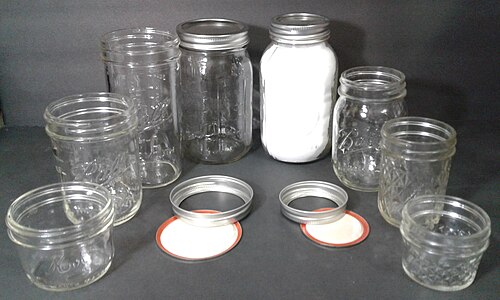
The use of glass or tin lids sealed to jars with wax emerged in Europe by 1814 and was popularized by the 1840s for people engaged in home canning.[17] The screw-on Mason jar lid was patented in 1858 and was considered superior to previous fruit jar closure techniques, particularly after the addition of a lid liner in 1869 to prevent the metal lid from impacting the taste of the product.[17] That lid was largely replaced by a tin band design as a result of metal shortages during World War II, although variations on this design existed from the 1860s.[17] Lids with a lightning toggle were also used for fruit jars from 1882; alternative designs from the 1860s used a thumbscrew or lever closure.[17] A version using a spring clip became popular during the early 20th century, but was overtaken by the screw band design in the 1930s.[17] A revival in interest in home canning during the COVID-19 pandemic led to a shortage of Mason jar lids.[18]
The precursor to the lid safety button, a mechanism to ensure a jar is sealed, was patented in 1936.[19] When baby food began to be sold in glass jars in the 1960s, consumer concerns led to the safety button design being incorporated into marketing of these products.[19] The Continental White Cap company, which specialized in lid design and production, pursued a lid-testing process in the 1990s and filed multiple patents for tamper-evident closures following the Heinz extortion campaign, resulting in the modern safety button design.[19] In 1945, Earl Tupper patented a design for a watertight and airtight lid made of plastic. This design became the basis for Tupperware.[20]
There was a significant increase in patents filed for "drink-through hot beverage lids" in the 1980s.[21] The increased popularity of lattes and similar drinks in the 2000s resulted in the development of elevated lids to accommodate microfoam.[21]As of 2009 the coffee lid market is valued at roughly $180 million. An estimated 14 billion lids were sold in 2009 in the United States.[22]
Design
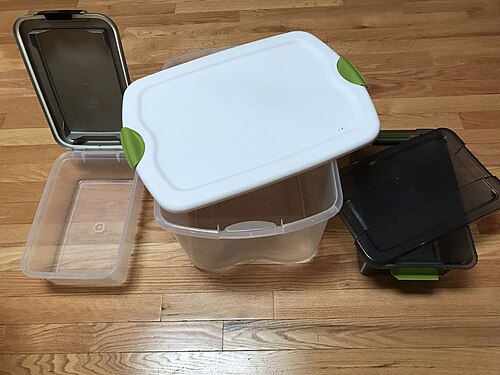
Lids can be made of varying materials, and may or may not match the material of their associated container; for example, some modern glass reusable food containers are sold with plastic lids.[23] Some lids have latches and/or rubber gaskets to improve the security of their fit.[23] Others have anti-tampering mechanisms to hold the lid on securely until opening.[24] Lids which have become unsealed or left uncovered may present a food safety risk.[25][26]
Lids can be designed to sit flat against the rim of the associated vessel, to seal the rim, or to cover the rim from the outside. They may have handles to facilitate removal, particularly if intended for use with cooking vessels.[27] Lids can be attached or detached; attached lids have been promoted as a means of addressing plastic pollution.[28]
Some containers have a plastic film heat-sealed onto the container, often called a lidding film. These are often used in food production to improve longevity of the product and maintain food safety.[29]
Certain lid designs present accessibility concerns, as older people or those with certain disabilities may lack the strength or dexterity to open tight lids or peel lidding films.[30][31]
Cultural significance
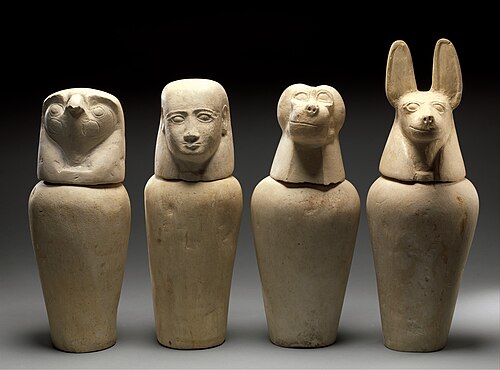
The lids of reliquary or burial jars (after 2000 BC) are typically designed as figurines with cultural or religious significance. For example, later Egyptian canopic jars use lids in the form of the four children of Horus,[32] while the Fang people attached figurines symbolizing their ancestors to containers preserving their bones.[33] Lids could also be decorated; for example, some types of ritual Chinese wine vessels used lids decorated with historic scenes,[34] while Roman sarcophagi may use lids imitating temple roofs or displaying a portrait of the deceased.[35] The Sutton Hoo purse-lid is "one of the most remarkable creations of the early modern period".[36]
The lid plays a significant role in the Greek myth of Pandora's box, actually a large jar which, upon removal of the lid, released all the evils of the world, leaving only hope behind. According to Willem Jacob Verdenius in his commentary on the work of Hesiod (who recorded the myth in his c. 700 BC poem Works and Days), "the suggestion that the fact that ἐλπίς is caught by the lid symbolizes the fact that hope always desires to be realized but never is".[37]
See also
References
- ↑"lid (n.)". Online Etymology Dictionary. 27 July 2018.
- 12"Lid, n". Oxford English Dictionary. June 2025. doi:10.1093/OED/1157632363.
- ↑"there's a lid for every pot". The Free Dictionary. Farler. Retrieved 15 February 2025.
- ↑"Small jar with lid". Israel Museum, Jerusalem. Retrieved 15 February 2025.
- ↑"Neolithic Pot Lid". Birmingham Museums. Retrieved 15 February 2025.
- ↑Dimoula, A; Tsirtsoni, Z; Valamoti, S (2022). "Ceramic cooking dishes in the prehistoric Aegean". Hesperia. 91: 1–61. doi:10.2972/hesperia.91.1.0001.
- ↑Budka, Julia (25 July 2022). "The right lid for every pot?". Munich University Attab to Ferka Survey Project.
- ↑"Canopic jar and lid of Queen Meresankh III". Boston Museum of Fine Arts. Retrieved 15 February 2025.
- ↑Bacvarov, Krum (2008). "A long way to the west: earliest jar burials in southeast Europe and the Near East". In Bacvarov, Krum (ed.). Babies reborn: infant/child burials in pre- and protohistory. Archaeopress. p. 61.
- ↑ باتريك إي ماكغفرن؛ جوزهونغ تشانغ؛ جيجين تانغ؛ تشي تشينغ تشانغ؛ غريتشن آر هول؛ روبرت إيه مورو؛ ألبرتو نونيز؛ إريك دي بوتريم؛ مايكل بي ريتشاردز؛ تشن شان وانغ؛ غوانغ شنغ تشنغ؛ تشي جون تشاو؛ تشانغ سوي وانغ (2004). " المشروبات المخمرة في الصين ما قبل التاريخ والعصور البدائية" . وقائع الأكاديمية الوطنية للعلوم في الولايات المتحدة الأمريكية . 101 (51): 17593-17598 . Bibcode : 2004PNAS..10117593M . doi : 10.1073/pnas.0407921102 . PMC 539767. PMID 15590771 .
- ↑ برلين، أندريا (1993). "أواني الطبخ الإيطالية والمطبخ من تل عنافة". مجلة استكشاف إسرائيل . 43 (1): 35-44 . JSTOR 27926288 .
- ↑ "كأس" . متحف المتروبوليتان للفنون . تم الاطلاع عليه بتاريخ 15 فبراير 2025 .
- 1 2 3 أركيل، رولاند. "أغطية القدور" . مجلة تجارة التحف . تم الاطلاع عليه بتاريخ 15 فبراير 2025 .
- ↑ فليتشر، إدوارد (1975). جمع أغطية الأواني . بيتمان. ص 3. ISBN 0273008188.
- ↑ "غطاء قدر" . متحف فيكتوريا وألبرت . تم الاطلاع عليه بتاريخ 15 فبراير 2025 .
- ↑ فليتشر، إدوارد (1975). جمع أغطية الأواني . دار نشر بيتمان. الصفحات 2-16 . ISBN 0273008188.
- 1 2 3 4 5 "أنواع أغطية الزجاجات" . جمعية علم الآثار التاريخية. 1 يناير 2024.
- ↑ ماتشار، إميلي (26 أغسطس 2020). "نبذة تاريخية عن مرطبان ماسون" . مجلة سميثسونيان .
- 1 2 3 سميث، إرني (19 يوليو 2023). "دليل على التلاعب" . تيديوم .
- ↑ رايان، جيمس؛ شلوب، ليونارد (2006). قاموس تاريخي لأربعينيات القرن العشرين . إم إي شارب. ص 383-384 . ISBN 9780765621078.
- 1 2 هولاند، أوسكار (5 أبريل 2018). "ما تخبرنا به أغطية القهوة التي تستخدم لمرة واحدة عن تعقيد التصميم "اليومي"" . سي إن إن.
- ↑ والاس، بنجامين (29 يوليو 2010). "سيرك الخيمة الكبيرة" . بلومبيرغ بيزنس ويك . مؤرشف من الأصل في 5 أغسطس 2010. تم الاطلاع عليه في 3 أغسطس 2010 .
- 12King, Eric; Kelly, Grace (4 February 2025). "We Tested 12 Food Storage Containers to Find the Best Ones for Leftovers and Lunches". Serious Eats.
- ↑"Food tampering, an extra ounce of caution". US Food and Drug Administration. Retrieved 15 February 2025.
- ↑"When a jar becomes unsealed". Penn State. 24 August 2022.
- ↑Nunez, Kirtsten (12 March 2023). "6 common food storage mistakes to avoid, according to food scientists". Martha Stewart.
- ↑"All about lids". Vintage French Copper. 3 January 2022. Retrieved 15 February 2025.
- ↑Rosseinsky, Katie (14 August 2024). "The new plastic bottle lids are driving us mad for a good reason". The Independent.
- ↑Dube, Nathan (24 August 2021). "What are lidding films? Applications and uses". Industrial Packaging.
- ↑Canty, Laura; Lewis, Roger; Yoxall, Alaster (2013). "Investigating openability of rigid plastic containers with peelable lids: The link between human strength and grip and opening forces". Journal of Mechanical Engineering Science. 227 (5): 1056–1068. doi:10.1177/0954406212457729.
- ↑Yen, Wei-Ting; Flinn, Sharon; Sommerich, Carolyn; Lavender, Steven; Sanders, Elizabeth (2013). "Preference of lid design characteristics by older adults with limited hand function". Journal of Hand Therapy. 26 (3): 261–271. doi:10.1016/j.jht.2013.04.002. PMID 23770203.
- ↑"Canopic jars". University College London. Archived from the original on 2013-01-18. Retrieved 15 February 2025.
- ↑"Reliquary guardian figure". Saint Louis Art Museum. 11 June 2020.
- ↑"Ritual wine vessel: understanding Chinese art". Weisbrod Collection. Retrieved 15 February 2025.
- ↑Taft, Abigail (29 September 2008). "Art in Antiquity 2008". Joukowsky Institute for Archaeology and the Ancient World.
- ↑ آدامز، نويل (2004). "قراءة غطاء محفظة ساتون هو" (ملف PDF) . ساكسون . ص 1. مؤرشف من الأصل (ملف PDF) بتاريخ 2017-01-07.
- ↑ فيردينيوس، دبليو جيه (2018). تعليق على هسيود: الأعمال والأيام، الأبيات 1-382 . بريل. الصفحات 67-68 . ISBN 978-90-04-32821-1.
للمزيد من القراءة
- الأختام (الميكانيكية)
- التغليف