
SPAD S.VII
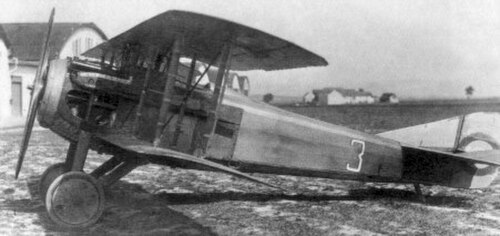
The SPAD S.VII C.1 was the first in a series of single-seat biplanefighter aircraft produced by Société Pour L'Aviation et ses Dérivés (SPAD) during the First World War. Like its successors, the S.VII was renowned as a sturdy and rugged aircraft with good diving characteristics. It was also a stable gun platform, although pilots used to the more manoeuvrable Nieuport fighters found it heavy on the controls. It was flown by a number of famous aces, such as France's Georges Guynemer, Italy's Francesco Baracca and Australia's Alexander Pentland.
Design and development
Origins
In February 1915, Swiss designer Marc Birkigt had created an overhead cam aviation powerplant based on his Hispano-Suiza V8 automobile engine, resulting in a 150-kilogram (330 lb) engine capable of producing 100 kW (140 hp) at 1,400 rpm. Further refinement brought the power to 110 kW (150 hp) by July 1915. Given the engine's potential, French officials ordered called upon aircraft designers to create a new high-performance fighter around the engine, called the Hispano-Suiza 8A, with production to begin as soon as possible.
Louis Béchereau, chief designer of the SPAD company, quickly produced a prototype fighter with the new engine. The SPAD V was a version of the SPAD S.A two-seat "pulpit fighter", which dispensed with the so-called "pulpit" which carried the observer in front of the propeller.
Design


من بين العديد من السمات التصميمية المشتركة بين طائرة SPAD V الجديدة وطائرة SA2، استخدام جناح ثنائي السطح ذي حجرة واحدة مع دعامات إضافية مثبتة في منتصف الحجرة عند نقطة التقاء أسلاك الطيران والهبوط. وقد بسّط هذا التصميم عملية التجهيز وخفّض مقاومة الهواء. كان هيكل الطائرة ذا تصميم قياسي في ذلك الوقت، يتألف من إطار خشبي مغطى بالقماش، بينما كان الجزء الأمامي مغطى بصفائح معدنية. تم تركيب مدفع رشاش من طراز فيكرز عيار 7.7 ملم فوق المحرك، متزامنًا مع إطلاق النار عبر قوس المروحة. كما زُوّد النموذج الأولي بغطاء دوار كبير ، تم التخلي عنه لاحقًا. ومن السمات التصميمية المشتركة الأخرى بين كل من "المقاتلات ذات المنبر" وطائرة S.VII - والتي تشترك فيها أيضًا طائرة S.XIII - وصلة التحكم في الجنيحات ذات قضبان الدفع، والتي تستخدم زوجًا من أذرع التوصيل المكشوفة بزاوية 90 درجة، بارزة من ألواح الجناح السفلية، لتشغيل قضبان دفع رأسية، تمتد إلى أذرع تحكم الجنيحات الأمامية.
قام الطيار التجريبي بيكيت بقيادة طائرة SPAD V لأول مرة في أبريل 1916. [ 2 ] كشفت اختبارات الطيران عن سرعة قصوى ممتازة ( 192 كم/ساعة (119 ميل/ساعة)) ومعدل صعود يبلغ 4.5 دقيقة إلى ارتفاع 2000 متر (6560 قدمًا) ). كما مكّن التصميم المتين لهيكل الطائرة من أداء غوص جيد. بالمقارنة، لم تتمكن مقاتلات نيوبورت 17 ذات السطحين غير المتساويين، التي كانت تُجهز بها معظم وحدات المقاتلات، من الغوص بنفس السرعة بسبب وزنها الأخف، لكنها تفوقت على طائرات SPAD في الصعود بفارق كبير. وعدت سرعة الغوص العالية بمنح طياري الحلفاء الأقل مهارة زمام المبادرة للاشتباك مع المقاتلات الألمانية الأثقل أو الانسحاب منها. على الرغم من أن المقاتلة الجديدة كانت منصة إطلاق نار متينة ومستقرة، إلا أن العديد من الطيارين أعربوا عن أسفهم لافتقارها إلى القدرة على المناورة.
تم إبرام عقد إنتاج أولي في 10 مايو 1916، ينص على إنتاج 268 طائرة، سيتم تسميتها SPAD VII C.1 (C.1، من avion de c hasse بالفرنسية، مما يشير إلى أن الطائرة مقاتلة، بينما يشير الرقم 1 إلى أنها ذات مقعد واحد). [ 2 ]
Early production aircraft suffered from numerous defects which took time to resolve and limited deliveries. While a few SPADs arrived at frontline units as early as August 1916, large numbers only began to appear in the first months of 1917. In hot weather, the engine overheated and in cold weather, the engine would not warm up. Field modifications attempted to counter the problem, including cutting extra holes in the metal sheeting to provide more air over the engine. On the production lines, the cowling opening was enlarged and then redesigned with vertical shutters to solve both problems. The engine mount also proved weak, and reinforcements were added.[3] Early production aircraft had two ammunition drums: one for the loaded canvas cartridge belt, and one to hold the empty belt after the rounds had been fired. However, dealing with the fabric belt as it came out of the gun was a significant problem, and was prone to jamming, which was only solved when Prideaux disintegrating ammo links were introduced.
With the initial teething problems solved, several subcontractors began producing the SPAD VII under license. The subcontractors included the firms Grémont, Janoir, Kellner et Fils, de Marçay, Société d'Etudes Aéronautiques, Régy and Sommer. It was not, however, until February 1917 that the last examples from the initial batch of 268 aircraft was delivered.[4] In early 1917, an improved version of the engine developing 130 kW (180 hp), the Hispano-Suiza 8Ab, was made available. This provided the SPAD VII with better performance, the top speed increasing from 192 to 208 km/h (119 to 129 mph). The new engine gradually became the standard powerplant for the SPAD VII and by April 1917, all newly produced aircraft were equipped with it.
Variants and experiments
Numerous experiments were made to improve performance. A Renault V8 110 kW (150 hp) powerplant was tested but required major redesign and the performance was not worthwhile. A supercharged Hispano-Suiza engine was also tested, but also failed to significantly improve performance. Different wing profiles were tested but were not incorporated in production models. One field modification was applied in Czechoslovakia after the war when the undercarriage struts of one S.VII were faired over.
في المراحل الأولى لتطوير طائرة إس.7، أبدى سلاح الجو الملكي البريطاني وسلاح الجو الملكي البحري اهتمامًا بهذه المقاتلة الجديدة. وقُدِّم طلب مبدئي لثلاثين طائرة، إلا أن صعوبات الإنتاج حالت دون تسليمها، حتى أن الإنتاج لم يُلبِّ المتطلبات الفرنسية. ونظرًا لتزايد حدة المعارضة التي واجهها سلاح الجو الملكي البريطاني على الجبهة، بدأ إنتاج طائرة إس.7 في المملكة المتحدة. وتم تزويد شركتي بليريو وسباد لصناعة الطائرات ومان وإيغرتون وشركاه المحدودة بالخطط ونماذج الطائرات، وبدأ الإنتاج في أسرع وقت ممكن.
حلّقت أول طائرة بريطانية الصنع من طراز S.VII واختُبرت في أبريل 1917، وأُفيد بأن أداءها يُضاهي أداء الطائرات الفرنسية. مع ذلك، كانت هناك اختلافات بينهما. فقد انتاب البريطانيين قلقٌ بشأن تسليح S.VII الخفيف، إذ كانت معظم المقاتلات الألمانية آنذاك تحمل مدفعين، ولذا أُجريت تجاربٌ لإضافة مدفع رشاش إضافي. زُوّدت إحدى الطائرات بمدفع رشاش لويس على الجناح العلوي، واختُبرت في مارتلشام هيث في مايو 1917، بينما أجرت وحدات الخطوط الأمامية تعديلات ميدانية باستخدام حوامل فوستر، الشائعة في طائرات مصنع الطائرات الملكي SE5 . كان انخفاض الأداء كبيرًا جدًا لدرجة حالت دون اعتماد هذا التركيب كمعيار، ولذا حلّقت معظم طائرات S.VII بمدفع رشاش فيكرز واحد.
تضمنت السمات المميزة الأخرى لطائرات إس.في.آي.آي.آي. المصنعة في بريطانيا غطاءً واقيًا للمدفع ولوحة وصول صلبة لغطاء المحرك. غطى الغطاء الواقي المدفع جزئيًا وامتد للخلف، ليحل محل الزجاج الأمامي. إلا أن هذا الأمر حدّ بشكل كبير من رؤية الطيار للأمام، وعلى الرغم من الإبقاء عليه في طائرات التدريب، فقد أُزيل في الطائرات المخصصة لوحدات الخطوط الأمامية. صُنعت لوحة الوصول المنتفخة للمحرك، الموجودة أسفل أنبوب العادم في الطرازات البريطانية، من صفيحة معدنية صلبة، بدلاً من اللوحة ذات الفتحات الموجودة في طرازات الإنتاج الفرنسية. كما زُوّدت بعض طائرات سباد البريطانية بأغطية صغيرة على محور المروحة.
سرعان ما اتضح أن خطوط الإنتاج البريطانية كانت ذات معايير جودة أدنى من نظيرتها الفرنسية، مما أدى إلى تراجع الأداء وسهولة التحكم. فقد عانت طائرات سباد البريطانية من رداءة خياطة القماش، وهشاشة ألواح الذيل، وعدم كفاءة المشعات. وتُظهر الأدلة الفوتوغرافية أن بعضها كان يحتوي على أغطية أسطوانات المحرك، أو حتى غطاء المحرك العلوي بالكامل، مقطوعًا لتعويض أعطال المشعات. ونتيجة لذلك، استُخدمت معظم طائرات إس. 7 البريطانية الصنع للتدريب، بينما زُوّدت وحدات الخطوط الأمامية بنماذج فرنسية الصنع. وبعد إنتاج حوالي 220 طائرة، توقف الإنتاج البريطاني لطائرة إس. 7 لصالح أنواع بريطانية مماثلة أصبحت متوفرة.
In a similar fashion, the Dux factory in Moscow produced approximately 100 S.VIIs under licence in 1917, with engines supplied by France. It would appear the engines were often used and/or of lower quality, and that Dux used lower-grade material in building the airframes. This combination of extra weight and weaker powerplants significantly reduced performance.
The total number of aircraft produced is uncertain, with sources varying from 3,825 to some 5,600 SPAD S.VIIs built in France, 220 in the United Kingdom and approximately 100 in Russia. French production numbers may include other SPAD models, and/or S.VIIs produced by other contractors.
The SPAD XII began as an enlarged S.VII, equipped with a 37 mm cannon. It was a distinct type rather than a variant of the S.VII though. the S.VII can be distinguished from both the S.XII and the later and larger S.XIII by having unraked cabane struts, connecting the top wing to the fuselage, as well as differences in armament.
Late models were equipped with 130 kW (170 hp) or 150 kW (200 hp) Hispano-Suiza engines. The upgrade produced a top speed of 212 km/h (132 mph).
Operational history
France

The French Aviation Militaire had been sufficiently impressed by the performance of the SPAD V prototype to order a batch of 268 aircraft on 10 May 1916. However, teething problems soon appeared and it would be several months before the SPAD VII would serve in significant numbers on the front, the last aircraft of the initial batch only being delivered in February 1917.
على الرغم من هذه التأخيرات، تم تسليم بعض الطائرات إلى وحدات الخطوط الأمامية في وقت مبكر من أغسطس 1916، لتُكمّل مقاتلات نيوبورت. بحلول ذلك التاريخ، كانت طائرات نيوبورت 11، التي أنهت حقبة " وباء فوكر " سيئة السمعة، قد استُبدلت إلى حد كبير بأنواع أحدث مثل نيوبورت 17 ، ولكن هذه الأخيرة كانت تُهزم الآن من قِبل جيل جديد من المقاتلات الألمانية في النصف الثاني من عام 1916، مما هدد بإعادة ألمانيا إلى السيطرة على الأجواء. في الوقت نفسه، أثبتت المحركات الدوارة التي كانت تُشغّل معظم مقاتلات الحلفاء حتى ذلك الحين صعوبة في التوسع، بينما كانت المحركات الخطية الأثقل تزداد قوةً باستمرار. في هذا السياق، كان يُؤمل أن تتمكن طائرة سباد 7 الجديدة، المزودة بمحرك هيسبانو-سويزا 8، من مواجهة أحدث المقاتلات الألمانية بشروط أفضل. كانت أول طائرة تم تسليمها إلى وحدة في الخطوط الأمامية هي إس.112 التي كان يقودها الملازم سوفاج من السرب 65، تلتها إس.113، التي خُصصت لجورج غينيمر من السرب 3. كان غوينيمر قد حقق بالفعل 15 انتصاراً في ذلك الوقت، لكن أرماند بينسارد من الفريق رقم 26 كان أول من حقق فوزاً جوياً في 26 أغسطس.

لم يكن إدخال طائرة SPAD VII كافيًا لتغيير موازين الحرب الجوية، ولكنه أتاح للطيارين والفنيين على حد سواء فرصة التعرف على المقاتلة الجديدة. وجد العديد من الطيارين أن طائرة SPAD تفتقر إلى القدرة على المناورة، حتى أن بعضهم عاد إلى طائرات نيوبورت الأكثر رشاقة. تم تطوير تكتيكات جديدة تعتمد على السرعة للاستفادة من قوة طائرة SPAD، وللتعويض عن افتقارها إلى القدرة على المناورة. سمحت قدرة الطائرة على الغوص بأمان حتى سرعة 400 كم/ساعة (250 ميل/ساعة) للطيار بالانسحاب من القتال عندما يتطلب الموقف ذلك.
بعد حلّ المشاكل الأولية وتقاسم الإنتاج بين عدة مصنّعين، أصبح طراز SPAD VII متوفرًا بأعداد كبيرة على الجبهة في أوائل عام 1917. وبحلول منتصف العام نفسه، كان نحو 500 طائرة في الخدمة على الخطوط الأمامية، بعد أن حلّت محلّ طائرات نيوبورت إلى حد كبير. واكتسبت سمعةً لكونها أقوى من سابقاتها. وكان عيبها الرئيسي هو تسليحها بمدفع رشاش واحد في حين كانت مقاتلات ألباتروس D.III المعادية مزوّدة بمدفعين. وتم استبدال SPAD VII تدريجيًا بطراز SPAD XIII المُحسّن في وحدات الخطوط الأمامية، لكنها ظلت قيد الاستخدام كطائرة تدريب لدى سلاح الطيران العسكري طوال فترة الحرب، وظلت الطائرة القياسية لاختبارات اعتماد الطيارين حتى عام 1928.
السلك الدبلوماسي

Allied air services were also equipped with the new fighter. The Royal Flying Corps was the first foreign service to receive the SPAD VII, although only 19 Squadron and 23 Squadron) used it on the Western Front. Fighter schools in the United Kingdom and 30 Squadron in Mesopotamia also received SPADs. British-built SPADs were generally used in the training units and in the Middle East, while fighting units in France used superior French-built models. The SPAD VII was replaced by the Sopwith Dolphin in 19 Squadron in January 1918 – with No. 23 Squadron in April (becoming perhaps the last squadron to use S.VIIs in France).
Russia received a batch of 43 in spring 1917 which were supplemented by approximately 100 SPAD VII manufactured by the Dux factory under licence.
Another early user of the SPAD VII was Germany. Several were captured intact and were reportedly used both in combat and for training. Rudolf Windisch of Jasta 66 flew a SPAD VII with German markings in combat, although it is not known if any aerial victories were achieved.
Belgium equipped the 5e Escadrille (later renamed 10e Escadrille) with the S.VII. Edmond Thieffry was probably the most famous Belgian pilot to fly the type, most other aces preferring the Hanriot HD.1.
Italy began using the SPAD VII in March 1917 where nine Squadriglia were equipped with it. As was the case in other air services, pilots accustomed to more manoeuverable mounts disliked the new fighter, and again some reverted to the Nieuport 27 or the Hanriot HD.1, which eventually became the standard Italian fighter. Francesco Baracca, Italy's leading ace, was delighted with the new model, and his personal aircraft is preserved in Italy.
When the United States entered the war in 1917, an order for 189 SPAD VIIs was placed for the United States Army Air Service of the American Expeditionary Force. The first aircraft were delivered in December 1917. Most were used as advanced trainers to prepare the American pilots for the SPAD XIII.
After the war, surplus SPAD VIIs were used into the late 1920s by numerous countries, including Brazil, Czechoslovakia, Finland, Greece, Japan, the Netherlands, Peru, Poland, Portugal, Romania, Siam, the United States and Yugoslavia.
Operators


- Argentine Air Force - Postwar - two aircraft.


- Brazilian Air Force - Postwar - 15 aircraft.

- Chilean Air Force - Postwar - one aircraft

- Czech Air Force - Postwar - 70–80 aircraft

- Estonian Air Force - Postwar, two aircraft

- Finnish Air Force - Postwar, one aircraft


- Hellenic Air Force - Postwar

- Corpo Aeronautico Militare - 214 aircraft
- Regia Aeronautica - Postwar


 Netherlands
- - One aircraft
 Peru
Peru- - Two aircraft
 Poland
- Polish Air Force - Post-war


- Romanian Air Corps - Postwar

- Imperial Russian Air Service - 43 aircraft


- Royal Aeronautical Service - Postwar. Locally designated B.Kh.3 (Thai: บ.ข.๓).[5]

- Soviet Air Force - Postwar.[6]

- Ukrainian People's Republic Air Fleet - Postwar - two aircraft
 United Kingdom
- - 185 aircraft
 Uruguay
- - Two aircraft - Fighter Squadron
 United States

- Yugoslav Royal Air Force - Postwar
Surviving aircraft

- Canada
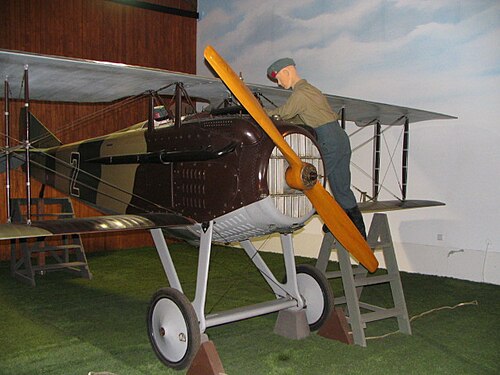
- B9913 - SPAD S.VII Scout CF-RFC, on display at Canada Aviation and Space Museum in Ottawa. The airplane was built in Britain then transferred to the United States in 1918, was purchased by the museum in 1965.[7]
- Czech Republic
- 11583 – SPAD VIIC.1 on static display at the Prague Aviation Museum in Kbely, Prague. It was flown post-World War I by the Czechoslovak Air Force and then the West Bohemia Aero Club until 1930.[8]
- France
- S.254 – SPAD VII Vieux Charles on static display at the Musée de l'Air et de l'Espace in Paris, Île-de-France. Georges Guynemer scored 16 kills in this aircraft in World War I.[9][10]
- Italy
- S.153 – SPAD VII on static display at the Italian Air Force Museum in Bracciano, Lazio. It was flown by Fulco Ruffo di Calabria.[11]
- Unknown – SPAD VII on static display at the Italian Air Force Museum in Bracciano, Lazio. It was flown by Ernesto Cabruna.[12]
- United States
- B9913 – SPAD VII is on display at the Shannon Air Museum in Fredericksburg, Virginia. It was one of 100 British made SPADS built in 1917 by Mann Egerton & Co. Ltd. It was fully restored in 1973.[13][14]
- B9916 – SPAD VIIC.1 on static display at the San Diego Air & Space Museum in San Diego, California. Built by Mann Egerton & Co. Ltd in Norwich, England in 1917, it was one of a batch shipped to the United States for use as a trainer. The aircraft was fully restored in 1990 and is 95 percent original.[15][16]
- AS 94099 – SPAD VII on static display at the National Museum of the United States Air Force in Dayton, Ohio. It was acquired from the Museum of Science and Industry and restored by the 1st Fighter Wing from 1962 to 1966.[17][18]
Specifications
Data fromDavilla, Dr. James J.; Soltan, Arthur (1997). French Aircraft of the First World War. Mountain View, CA: Flying Machines Press. p. 493. ISBN 978-1891268090.
General characteristics
- Crew: 1
- Length: 6.080 m (19 ft 11 in)
- Wingspan: 7.822 m (25 ft 8 in)
- Height: 2.20 m (7 ft 3 in)
- Wing area: 17.85 m2 (192.1 sq ft)
- Empty weight: 500 kg (1,102 lb)
- Gross weight: 705 kg (1,554 lb)
- Powerplant: 1 × Hispano-Suiza 8Aa 90° V-8 liquid-cooled engine, 110 kW (150 hp)
- Propellers: 2-bladed wooden propeller
Performance
- Maximum speed: 193 km/h (120 mph, 104 kn) at sea level
- 187 km/h (116 mph; 101 kn) at 2,000 m (6,600 ft)
- 180 km/h (110 mph; 97 kn) at 3,000 m (9,800 ft)
- 174 km/h (108 mph; 94 kn) at 4,000 m (13,000 ft)
- Range: 400 km (250 mi, 220 nmi)
- Endurance: 2.66 hours
- Service ceiling: 5,500 m (18,000 ft)
- Time to altitude:
- 6 minutes 40 seconds to 2,000 m (6,600 ft)
- 11 minutes 20 seconds to 3,000 m (9,800 ft)
Armament
- Guns: * 1 × 7.7 mm (.303 in) Vickers machine gun
See also
Related development
Aircraft of comparable role, configuration, and era )
References
Notes
- ↑Sharpe 2000, p. 270.
- 12Bruce 1981, p. 59.
- ↑Bruce 1981, p. 61.
- ↑Bruce 1981, p. 62.
- ↑"Thai Military Aircraft Designations". designation-systems.net. Retrieved 2025-03-18.
- ↑"Red Fighters".
- ↑Harold A. Skaarup. "Canadian Warplanes 1: S.P.A.D. S.VII Scout". silverhawkauthor.com.
- ↑"SPAD S-VIIC.1 - stíhací letoun". Vojenský Historický Ústav Praha (in Czech). Vojenský Historický Ústav. Archived from the original on 14 June 2012. Retrieved 11 May 2017.
- ↑"SPAD VII". Musée Air & Espace (in French). Retrieved 11 May 2017.
- ↑"LE SPAD VII S 254". Musée Air & Espace (in French). Archived from the original on 13 October 2015. Retrieved 11 May 2017.
- ↑"SPAD S-VII RUFFO". Aeronautica Militare (in Italian). Retrieved 11 May 2017.
- ↑"SPAD S-VII CABRUNA". Aeronautica Militare (in Italian). Retrieved 11 May 2017.
- ↑"HISTORIC AIRCRAFT"(PDF). Virginia Aviation Museum. Archived from the original(PDF) on 12 May 2016. Retrieved 11 May 2017.
- ↑"Shannon's rebirth". AOPA Pilot Magazine. February 2018. Retrieved 7 June 2019.
- ↑"SPAD VII". San Diego Air & Space Museum. Retrieved 11 May 2017.
- ↑ "ملف هيكل الطائرة - شركة الطيران ومشتقاتها (SPAD) S-VIIc1، الرقم التسلسلي B9916، سلاح الجو الملكي البريطاني" . صور جوية . AerialVisuals.ca . تم الاطلاع عليه بتاريخ 11 مايو 2017 .
- ↑ "سباد 7" . المتحف الوطني للقوات الجوية الأمريكية . 7 أبريل 2015. تم الاطلاع عليه بتاريخ 11 مايو 2017 .
- ↑ "ملف هيكل الطائرة - شركة الطيران ومشتقاتها (SPAD) S-VII، الرقم التسلسلي AS94099 USAAS" . صور جوية . AerialVisuals.ca . تم الاطلاع عليه بتاريخ 11 مايو 2017 .
فهرس
- بوردس، جيرارد. "سباد." Mach 1، L'encyclopédie de l'Aviation، Volume 8. Paris: Atlas، 1981، pp. 2173–2187.
- بروس، جيه إم. "أولى طائرات سباد المقاتلة". مجلة عشاق الطيران ، العدد 15، أبريل - يوليو 1981، الصفحات 58-77. بروملي، كينت: بايلوت برس. الرقم الدولي الموحد للدوريات 0143-5450
- بروس، JM SPAD Scouts SVII - SXIII (Aircam Aviation Series رقم 9). إنجلترا : منشورات أوسبري، 1969. ISBN 0-85045-009-8.
- كونورز، جون إف.، دون جرير، وبيري مانلي. مقاتلات سباد في العمل (الطائرات في العمل رقم 93). كارولتون، تكساس: سكوادورن-سيجنال، 1989. ISBN 0-89747-217-9.
- كروسبي، فرانسيس. دليل الطائرات المقاتلة . لندن: دار هيرمس هاوس، 2003. ISBN 1-84309-444-4.
- دافيلا، د. جيمس ج.؛ سلطان، آرثر (1997). الطائرات الفرنسية في الحرب العالمية الأولى . ماونتن فيو، كاليفورنيا: دار فلاينج ماشينز للنشر. ISBN 978-1891268090.
- جيرديسن، فريدريك. "القوة الجوية الإستونية 1918-1945". مجلة عشاق الطيران ، العدد 18، أبريل - يوليو 1982، الصفحات 61-76. الرقم الدولي الموحد للدوريات 0143-5450 .
- غوتمان، جون. سباد إس 7 أبطال الحرب العالمية الأولى (أوسبري: طائرات الأبطال؛ المجلد 39). أكسفورد: أوسبري، 2001. ISBN 1-84176-222-9.
- كلاو، بارت فان دير (مارس-أبريل 1999). "مكاسب غير متوقعة: عن طريق الخطأ أو عن قصد، أكثر من 100 طائرة "وصلت" إلى الأراضي الهولندية خلال الحرب العالمية الأولى". مجلة عشاق الطيران (80): 54-59 . الرقم الدولي الموحد للدوريات 0143-5450 .
- كودليكا ، بوهومير (أغسطس 2001). "Des avions français en Tchécoslovaquie: les Unités de chasse sur Spad" [ الطائرات الفرنسية في تشيكوسلوفاكيا: الوحدات المقاتلة ذات البستوني ] . الطيران: Toute l'Aéronautique et son histoire (بالفرنسية) (101): 52–56 . ISSN 1243-8650 .
- Kudlicka, Bohumir (September 2001). "Des avions français en Tchécoslovaquie: les unités de chasse sur Spad" [French Aircraft in Czechoslovakia: Everyone Goes Down!]. Avions: Toute l'Aéronautique et son histoire: Tout le monde descende! (in French) (102): 54–58. ISSN 1243-8650.
- Rimell, R. L., Spad 7.C1 (Windsock Datafile 8). Berkhamsted, UK : Albatros Productions, 1996. ISBN 0-948414-12-X.
- Sharpe, Michael. Biplanes, Triplanes, and Seaplanes. London: Friedman/Fairfax Books, 2000. ISBN 1-58663-300-7.
- United States Air Force Museum Guidebook. Wright-Patterson AFB, Ohio: Air Force Museum Foundation, 1975.
- Velek, Martin, Spad S.VII C1. Prague : MARK I, 2004. ISBN 80-86637-00-X.
External links
- Spad VIIs in the United States Air Service and Lafayette Flying CorpsArchived 2013-03-29 at the Wayback Machine
- 1910s French fighter aircraft
- SPAD aircraft
- Aircraft first flown in 1916
- Biplanes
- Single-engined tractor aircraft