
سباد إس.13
إن طائرة SPAD S.XIII هي طائرة مقاتلة فرنسية ثنائية السطح من الحرب العالمية الأولى ، طورتها شركة Société Pour L'Aviation et ses Dérivés (SPAD) من طائرة SPAD S.VII السابقة والناجحة للغاية .
في أوائل عام 1917، قرر المصمم الفرنسي لويس بيشيرو ، مدفوعًا باقتراب تقادم طائرة إس. 7، تطوير طائرتين مقاتلتين جديدتين، إس . 12 وإس. 13، تستخدمان نسخة جديدة قوية مزودة بتروس من محرك هيسبانو-سويزا 8 إيه الناجح. لم يلقَ تسليح إس. 12 بالمدفع استحسانًا، لكن إس. 13 أثبتت أنها من أكثر الطائرات المقاتلة كفاءة في الحرب، فضلاً عن كونها من أكثرها إنتاجًا، حيث تم بناء 8472 طائرة منها، وأُلغيت طلبات شراء حوالي 10000 طائرة أخرى عند توقيع الهدنة . [ 1 ]
بحلول نهاية الحرب العالمية الأولى، كانت طائرات إس. إكس. آي. 13 قد زُوِّدت بها جميع أسراب المقاتلات التابعة لسلاح الجو الأمريكي تقريبًا . إضافةً إلى ذلك، حصل سلاح الجو التابع للجيش الأمريكي على كميات كبيرة من هذا الطراز خلال الحرب، واستبدل بعضها طائرات إس. 7 آي. 1 في سلاح الجو الملكي البريطاني أو عززها ، بانتظار وصول طائرات سوبويث دولفين . وقد لاقت هذه الطائرات رواجًا كبيرًا بين طياريها، وقادها العديد من الطيارين البارعين من مختلف الدول. بعد هدنة 11 نوفمبر 1918 ، التي مثّلت نهاية الحرب العالمية الأولى، بيعت طائرات إس. إكس. آي. 13 الفائضة إلى جهات مدنية وعسكرية في جميع أنحاء العالم.
تطوير
خلفية
يعود أصل طائرة SPAD S.XIII إلى أداء سابقتها، SPAD S.VII ، وهي طائرة مقاتلة أحادية المقعد مزودة بمحرك Hispano-Suiza 8 A V-8 مبرد بالماء بقوة 110 كيلوواط (150 حصانًا) يعمل بنظام الدفع المباشر ، ومسلحة بمدفع رشاش Vickers متزامن . كان أداء هذا الطراز جيدًا في ذلك الوقت، ودخل الخدمة في سلاح الجو الفرنسي (Aéronautique Militaire) خلال أغسطس 1916. [ 3 ] إلا أنه بحلول أوائل عام 1917، تفوقت عليها أحدث المقاتلات الألمانية مثل Albatros D.III . [ 4 ]
سرعان ما أدى تفوق المقاتلات الألمانية إلى تحول في ميزان القوى الجوية لصالح دول المحور ، مما استدعى المطالبة بطائرات أفضل. [ 5 ] وقد ضغط الطيار الفرنسي البارع جورج غينيمر شخصيًا من أجل تطوير طائرة إس. 7، مصرحًا لمصمم طائرة سباد، لويس بيشيرو، بأن "طائرة سباد ذات الـ 150 حصانًا لا تُضاهي طائرة هالبرشتات ... هناك حاجة إلى مزيد من السرعة". [ 6 ] وكان الحل السريع لهذه المشكلة هو زيادة نسبة انضغاط محرك هيسبانو-سويزا، مما رفع قوته إلى 130 كيلوواط (170 حصانًا) لتحسين الأداء بشكل ملحوظ، مما سمح لطائرة سباد إس. 7 بالحفاظ على قدرتها التنافسية في الوقت الراهن. [ 7 ]
كانت شركة هيسبانو-سويزا قد بدأت بالفعل في تطوير نسخة مُحسّنة من محرك 8A، [ 4 ] وقد اختار بيشيرو هذا المحرك لتشغيل نسختين مطورتين من طائرة S.VII. كما تم تزويد طائرات رويال إيركرافت فاكتوري البريطانية SE5a وسوبويث دولفين المقاتلة بنفس المحرك. [ 5 ]
رحلة تعريفية
كانت طائرة S.XII، بنسختها HS.8BeC (أو "HS-38") ، أولى تصاميم بيشيرو التي حلقت بمحرك HS.8B الجديد ذي التروس المخفضة ، والمُسلحة بمدفع غير مألوف عيار 37 ملم (1.457 بوصة) يُطلق النار عبر عمود المروحة . مع ذلك، لم تُستخدم هذه الطائرة إلا استخدامًا محدودًا، إذ سرعان ما تبعتها طائرة S.XIII المُسلحة تسليحًا تقليديًا، والتي اعتبرها العديد من الطيارين والمسؤولين الفرنسيين خيارًا أفضل. [ 8 ] وقد ذكر كاتب الطيران سي إف أندروز أن جزءًا كبيرًا من الفضل في طائرة S.XIII يعود إلى مارك بيركيغت، مصمم المحرك، الذي اختار إدخال العديد من الميزات المبتكرة عليه، مثل أسطوانات الألمنيوم أحادية الكتلة ، المُزودة ببطانات فولاذية مثبتة ببراغي ، مما حسّن من أدائه. [ 9 ]
The SPAD S.XIII flew for the first time on 4 April 1917.[10][11] An early distinguishing feature of the S.XIII – as with the SPAD S.XII – was that its similarly geared HS.8Be V8 engine had a left-handed propeller, which rotating in the opposite rotation to the earlier, direct-drive HS.8A-powered S.VII. Early on, similarly to the British Sopwith Dolphin also powered with HS.8B-series geared V8s, problems were encountered with the gearing, however, Béchereau persisted with the engine, which soon became fairly reliable.[11] Production was ramped up almost immediately after the first flight. Within months of its first flight, the S.XIII had not only entered service with the Aéronautique Militaire, but had proven itself to be a successful fighter.[11]
Design
The SPAD S.XIII was a single-engine biplane fighter aircraft. In terms of its construction, it shared a similar configuration and layout to the earlier S.VII,[nb 1] featuring a mainly wooden structure with a fabric covering.[12] It was however generally larger and heavier than its predecessor. Other changes were made to the ailerons, the rounded tips of the tailplanes, the bulkier cowling accommodating the gear-drive Hispano-Suiza 8B engine, and enlarged fin and rudder with a curved trailing edge.[11] The S.XIII was armed with a pair of forward-mounted Vickers machine guns with 400 rounds per gun, which replaced the single gun of the earlier aircraft.[10]
The S.XIII featured relatively conventional construction, that being a wire-braced biplane with a box-shaped fuselage and a nose-mounted engine, except for its interposed wing struts located halfway along the wing span, which gave the fighter the appearance of being a double-bay aircraft instead of a single-bay.[13] This change prevented the landing brace wires from whipping and chafing during flight. Otherwise, it had an orthodox structure, comprising wooden members attached to metal joint fixtures.[13] The fuselage consisted of four square-section longerons, with wooden struts and cross-members while braced with heavy-gauge piano wire. Wire cable was used for the flying and landing wires.[14]

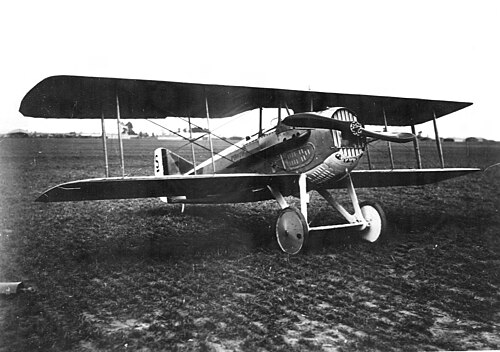
To enable a two-hour endurance, the S.XIII was fitted with several underbelly fuel tanks held within the forward fuselage area which fed into the main service tank in the upper wing center section with an engine-driven pump.[15] Similar pumps were used for supplying pressurised oil and water circulation between the engine's radiator and a header tank was housed within the upper wing. The circular nose radiator incorporated vertical Venetian-style blinds to regulate engine temperatures.[12]
The upper wing was made in one piece, with hollow box-section short spars that connected with linen-wrapped scarf joints, Andrews claims that long runs of spruce were difficult to obtain.[14] Plywood webs and spruce capping strips, internally braced with piano wire, formed the airfoil. The upper wing was fitted with ailerons, actuated by the pilot via a series of tubular pushrods that ran vertical directly beneath the ailerons, with external, 90° bellcranks mounted on top of the lower wings.[15] The lower wing had spruce leading edges and wire-cable trailing edges, while the surfaces were fabric-covered and treated with aircraft dope to produce a scalloped effect.[14]
While the forward Vickers machine guns were standard, they were not always available. As a result of a shortage during the last months of the war, several American S.XIII squadrons replaced Vickers .303 machine guns with the lighter 11.34 kg (25.0 lb).30/06-calibre Marlin Rockwell M1917 and M1918 aircraft machine guns,[16][17] saving some 7 kg (15 lb)[18] over the Vickers' 30 kg (66 lb), for the guns alone. By the end of the war, about half of American S.XIIIs had been converted.
The powerplant of the S.XIII was a geared Hispano-Suiza engine, at first a 8Ba providing 150 kW (200 hp),[10] but in later aircraft a high-compression 8Bc or 8Be delivering 160 kW (210 hp) was often used.[19] These improvements produced a notable improvement in flight and combat performance.[11] It was faster than its main contemporaries, the British Sopwith Camel and the German Fokker D.VII, and its higher power-to-weight ratio gave it a good rate of climb. The SPAD was renowned for its speed and strength in a dive, although the maneuverability of the type was relatively poor and the aircraft was difficult to control at low speeds, needing to be landed with power on, unlike contemporary fighters like the Nieuport 27 which could be landed with power off.[11]
The geared engines proved to be unreliable, suffering from vibration and poor lubrication. This severely affected serviceability, with it being claimed in November 1917 that the Spad S.XIII was "incapable of giving dependable service". Even in April 1918, an official report stated that two-thirds of the 150 kW (200 hp) SPADs were out of use at any one time due to engine problems.[20] At least one American observer believed at the time that the French were giving the American SPAD XIII squadrons lower-quality engines from their least favored manufacturers while keeping the best for themselves. The reliability issues were an acceptable price to pay for improved performance, however,[21] improved build quality and changes to the engine improved serviceability.[22]
At the beginning of 1918 the Aviation Militaire issued a requirement for a more powerful fighter, in a C1 (Chasseur single-seat) specification. SPAD responded by fitting the 220 kW (300 hp) Hispano-Suiza 8Fb in the SPAD XIII airframe. The structure was strengthened and improved aerodynamically, retaining the dimensions of the SPAD XIII. Twenty SPAD XVII fighters were built and issued to units with GC 12 (Les Cigones).
Operational history

Armée de l'Air
Deliveries to the Armée de l'Air commenced During May 1917, only one month following the type's first flight.[23] The new aircraft quickly became an important element in the French plans for its fighter force, being expected to replace the SPAD S.VII as well as remaining Nieuport fighters in front line service.
However the slow rate of deliveries disrupted these forecasts and by the end of March 1918, only 764 of the planned 2,230 had been delivered.[24]
Eventually, the S.XIII equipped nearly every French fighter squadron, 74 escadrilles, during the First World War.[25] At the end of the war, plans were underway to replace the S.XIII with several fighter types powered by the 220 kW (300 hp) Hispano-Suiza 8F, such as the Nieuport-Delage NiD 29, the SPAD S.XX and the Sopwith Dolphin II.[26] These plans lapsed following the signing of the Armistice of 11 November 1918, which ended the First World War and the SPAD S.XIII remained in French service as a fighter aircraft until 1923,[16] with Nieuport-Delage NiD 29 deliveries being delayed until 1920.
The S.XIII was flown by numerous famous French fighter pilots such as Rene Fonck (the highest scoring Allied ace, with 75 victories), Georges Guynemer (54 victories), and Charles Nungesser (45 victories), and also by the leading Italian ace Francesco Baracca (34 victories).[27] Aces of the United States Army Air Service who flew the S.XIII include Eddie Rickenbacker (the United States' leading First World War ace with 26 victories) and Frank Luke (18 victories). Andrews attributes the S.XIII's natural stability, which made it a steady gun platform, as the key for its success.[28]
USAAS
سارعت قوات الحلفاء الأخرى إلى تبني المقاتلة الجديدة، حيث زُوِّدت 15 من أصل 16 سربًا من أسراب المطاردة العملياتية التابعة لسلاح الجو الأمريكي بطائرات SPAD XIII بحلول الهدنة. وقبل دخول الولايات المتحدة الحرب، كان المتطوعون الأمريكيون الذين يطيرون مع الحلفاء يستخدمون هذا النوع من الطائرات. [ 29 ] وبحلول عام 1920، كان ما يقرب من نصف الطائرات الـ 893 التي اشترتها الولايات المتحدة لا تزال في الخدمة. وفي الولايات المتحدة، أُعيد تزويد بعض طائرات S.XIII بمحركات رايت-هيسبانو بقوة 130 كيلوواط (170 حصانًا) واستُخدمت لتدريب الطيارين على قيادة المقاتلة الجديدة توماس-مورس MB-3 (التي استخدمت أجنحة من نوع SPAD) في عام 1922. ولم تتمكن محركات رايت-هيسبانو من مضاهاة أداء المحرك الأصلي. [ 29 ]
RFC
خلال شهر ديسمبر من عام 1917، كان السرب رقم 23 التابع لسلاح الطيران الملكي مجهزًا بطائرات سباد إس.13، واستمر في استخدامها حتى أبريل 1918 عندما تم استبدالها بطائرات دولفين. في حين أن السرب رقم 19 (المجهز بطائرات إس.7 السابقة) كان يشغل أيضًا طائرة إس.13 واحدة على الأقل لفترة من الزمن. [ 30 ] وقد استُخدم هذا النوع من الطائرات كمقاتلة مؤقتة في انتظار تسليم الطائرات البريطانية الصنع. [ 29 ]
في مذكراته "صعود القوس"، وصف سيسيل لويس منافسة جوية بينه وبين طائرة سباد يقودها غاينماير، ولويس نفسه يقود طائرة إس إي 5، قائلاً: "كانت سرعتهما متقاربة للغاية، لكن طائرة سباد ذات الضغط العالي كانت تصعد أسرع. بعد انتهاء السباق، خضنا أنا وغينيمير مناورة استعراضية فوق المطار. ومرة أخرى، مُنيتُ بهزيمة ساحقة. كان غاينماير متفوقًا عليّ تمامًا. كانت طائرة سباد في يديه أعجوبة من المرونة. في الدقيقة الأولى، كان من المفترض أن أُسقط عشرات المرات". [ 31 ]
فيلق الطيران العسكري
حصلت إيطاليا أيضًا على طائرة إس. إكس. آي. 3 لصالح سلاح الجو الإيطالي . [ 29 ] أبدى الطيارون الإيطاليون تفضيلهم لمقاتلة أخرى فرنسية الصنع، وهي هانريو إتش دي. 1 ، التي كانت أكثر قدرة على المناورة ولكنها أقل قوة. كما شغّلت بلجيكا طائرة إس. إكس. آي. 3، وبرز أحد الطيارين البلجيكيين البارعين، إدموند ثيفري، أثناء قيادته لهذا النوع من الطائرات. [ 29 ] بعد انتهاء الحرب، صُدّرت طائرة إس. إكس. آي. 3 أيضًا، بما في ذلك إلى اليابان وبولندا وتشيكوسلوفاكيا .
معرض
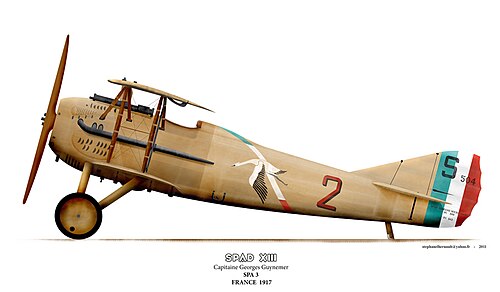 سباد الثالث عشر جورج غينيمر
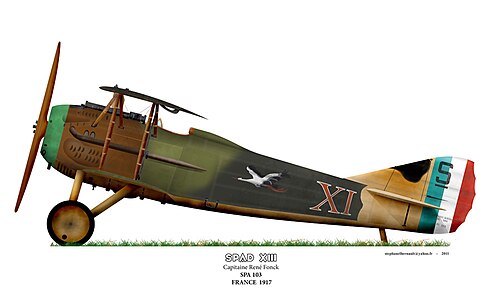 سباد الثالث عشر رينيه فونك
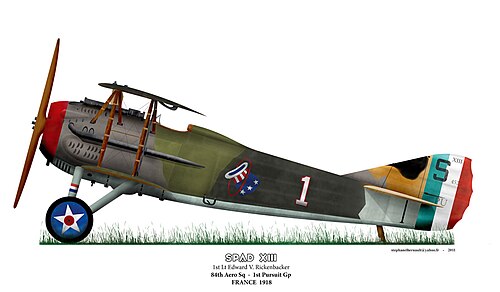 سباد الثالث عشر إيدي ريكنباكر
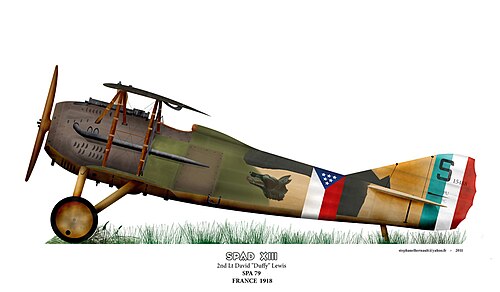 سباد الثالث عشر ديفيد "دوفي" لويس
المشغلون


- Aviação Militar do Exército Brasileiro (طيران الجيش البرازيلي) - 1920 إلى 1930

- القوات الجوية التشيكية – فترة ما بعد الحرب.

- السرب 3
- السرب 12
- إسكادريل 15
- إسكادريل 16
- إسكادريل 23
- إسكادريل 26
- Escadrille 31
- Escadrille 37
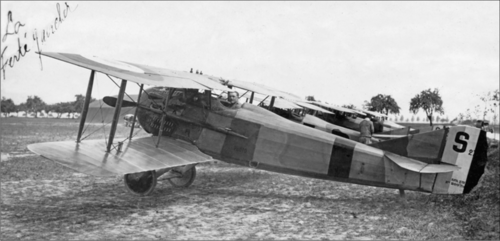
SPAD XIII n°2782 of French Pilot Louis Prosper Gros in La Ferté-Gaucher on June 1918. - Escadrille 38
- Escadrille 48
- Escadrille 49
- Escadrille 57
- Escadrille 62
- Escadrille 65
- Escadrille 67
- Escadrille 68
- Escadrille 69
- Escadrille 73
- Escadrille 75
- Escadrille 76
- Escadrille 77
- Escadrille 78
- Escadrille 79
- Escadrille 80
- Escadrille 81
- Escadrille 82
- Escadrille 83
- Escadrille 84
- Escadrille 85
- Escadrille 86
- Escadrille 87
- Escadrille 88
- Escadrille 89
- Escadrille 90
- Escadrille 91
- Escadrille 92
- Escadrille 93
- Escadrille 94
- Escadrille 95
- Escadrille 96
- Escadrille 97
- Escadrille 98
- Escadrille 99
- Escadrille 100
- Escadrille 102
- Escadrille 103
- Escadrille 112
- Escadrille 124 better known as the Lafayette Escadrille
- Escadrille SPA.124 (Jeanne d'Arc)
- Escadrille 150
- Escadrille 151
- Escadrille 152
- Escadrille 153
- Escadrille 154
- Escadrille 155
- Escadrille 156
- Escadrille 157
- Escadrille 158
- Escadrille 159
- Escadrille 160
- Escadrille 161
- Escadrille 162
- Escadrille 163
- Escadrille 164
- Escadrille 165
- Escadrille 166
- Escadrille 167
- Escadrille 168
- Escadrille 169
- Escadrille 170
- Escadrille 171
- Escadrille 173
- Escadrille 175
- Escadrille 313
- Escadrille 314
- Escadrille 315
- Escadrille 412
- Escadrille 442
- Escadrille 461
- Escadrille 462
- Escadrille 463
- Escadrille 464
- Escadrille 466
- Escadrille 467
- Escadrille 469
- Escadrille 470
- Escadrille 471
- Escadrille 472
- Escadrille 506
- Escadrille 507
- Escadrille 523
- Escadrille 531
- Escadrille 561
- Escadrille Lafayette
- Aéronautique Navale


- Polish Air Force (Postwar)

- Romanian Air Corps (Postwar)[32]



- Soviet Air Force – Taken over from the Imperial Russian Air Force.

- Royal Siamese Aeronautical Service – Locally designated B.Kh.3 (Thai: บ.ข.๓).[33]



- Royal Flying Corps[34]
- No. 19 Squadron RFC – One aircraft
- No. 23 Squadron RFC – December 1917 – May 1918.


Surviving aircraft
Belgium
- SP49 – معروضة بشكل ثابت في المتحف الملكي للقوات المسلحة والتاريخ العسكري في بروكسل . [ 35 ]
فرنسا
- S4377 – صالحة للطيران مع جمعية الطيران التذكارية في La Ferté-Alais، إيل دو فرانس . [ 36 ] [ 37 ]
- S5295/S15295 - معروض بشكل ثابت في Musée de la Grande Guerre du pays de Meaux، على سبيل الإعارة من Musée de l'air et de l'espace في باريس، إيل دو فرانس . [ 38 ] [ 39 ]
الولايات المتحدة
- S7689 سميث الرابع - معروضة بشكل ثابت في المتحف الوطني للطيران والفضاء في واشنطن العاصمة [ 40 ] [ 41 ]
- S16594 – معروضة بشكل ثابت في المتحف الوطني للقوات الجوية الأمريكية في دايتون، أوهايو . تم طلاؤها لتمثيل طائرة إيدي ريكنباكر . [ 42 ]
- S15155 – معروضة بشكل ثابت في محطة قطار سكاي ترين بشارع 44 في مطار فينيكس سكاي هاربور الدولي في فينيكس، أريزونا . تتضمن أجزاءً من ثلاث طائرات مختلفة [ 43 ] ومطلية لتمثيل طائرة SPAD XIII التي كان يقودها فرانك لوك .
المواصفات (SPAD S.XIII)
بيانات من الطائرات الفرنسية في الحرب العالمية الأولى [ 44 ]
الخصائص العامة
- الطاقم: 1
- الطول: 6.25 متر (20 قدم 6 بوصات)
- طول الجناح: 8.25 متر (27 قدم 1 بوصة) وكانت النماذج المتأخرة يبلغ طول جناحها 8.08 متر (26.5 قدم).
- الارتفاع: 2.60 متر (8 أقدام و6 بوصات)
- مساحة الجناح: 21.11 متر مربع (227.2 قدم مربع ) وكانت مساحة الجناح في النماذج المتأخرة 20.2 متر مربع (217 قدم مربع )
- الوزن فارغاً: 601.5 كجم (1326 رطلاً)
- الوزن الإجمالي: 856.5 كجم (1888 رطل)
- محطة توليد الطاقة: 1 × هيسبانو سويزا 8 Ba أو Bb أو Bd مبرد بالماء، 8 أسطوانات من النوع V، 150 كيلو واط (200 حصان)
- المراوح: ثنائية الشفرات
أداء
- السرعة القصوى: 211 كم/ساعة (131 ميل/ساعة، 114 عقدة) على ارتفاع 1000 متر (3300 قدم)
- 208.5 كم/ساعة (129.6 ميل/ساعة؛ 112.6 عقدة) على ارتفاع 2000 متر (6600 قدم)
- 205.5 كم/ساعة (127.7 ميل/ساعة؛ 111.0 عقدة) على ارتفاع 3000 متر (9800 قدم)
- 201 كم/ساعة (125 ميل/ساعة؛ 109 عقدة) على ارتفاع 4000 متر (13000 قدم)
- 190 كم/ساعة (120 ميل/ساعة؛ 100 عقدة) على ارتفاع 5000 متر (16000 قدم)
- مدة التحمل: ساعتان
- سقف الخدمة: 6800 متر (22300 قدم)
- الوقت اللازم للوصول إلى الارتفاع المطلوب:
- دقيقتان و20 ثانية للوصول إلى 1000 متر (3300 قدم)
- 5 دقائق و17 ثانية للوصول إلى ارتفاع 2000 متر (6600 قدم)
- 8 دقائق و45 ثانية للوصول إلى ارتفاع 3000 متر (9800 قدم)
- 13 دقيقة و5 ثوانٍ للوصول إلى ارتفاع 4000 متر (13000 قدم)
- 20 دقيقة و10 ثوانٍ للوصول إلى ارتفاع 5000 متر (16000 قدم)
- حمولة الجناح: 40 كجم/م 2 (8.2 رطل/ قدم مربع)
التسليح
- الأسلحة: مدفعان رشاشان من طراز فيكرز عيار 7.70 ملم ( 0.303 بوصة) أو مدفعان رشاشان من طراز مارلين M1917 أو M1918 ( على سبيل المثال، في القوات الجوية الأمريكية).
- القنابل: 4 قنابل كوبر وزن كل منها 25 رطلاً (11 كجم)
انظر أيضاً
- إيرلي بيرد سباد 13 ، نسخة طبق الأصل محلية الصنع من طائرة سباد إس.13
التطورات ذات الصلة
طائرات ذات دور وتكوين وعصر مماثل
مراجع
ملحوظات
الاقتباسات
- 1 2 شارب 2000، ص. 272.
- ↑ وينشستر 2006، ص 23.
- ↑ بروس إير إنثوزياست ، المجلد الخامس عشر، الصفحات 58-60.
- 1 2 أندروز 1965، ص. 4.
- 1 2 أندروز 1965، ص 4-5.
- ↑ بروس إير إنترناشونال مايو 1976، ص 240.
- ↑ بروس إير إنثوزياست ، المجلد الخامس عشر، الصفحات 61-62.
- ↑ بروس إير إنترناشونال مايو 1976، ص 240-242.
- ↑ أندروز 1965، ص 5.
- 1 2 3 بروس إير إنترناشونال يونيو 1976، ص 289.
- 1 2 3 4 5 6 7 أندروز 1965، ص. 6.
- 1 2 أندروز 1965، ص 7-8.
- 1 2 أندروز 1965، ص 6-7.
- 1 2 3 أندروز 1965، ص. 7.
- 1 2 أندروز 1965، ص. 8.
- 1 2 بروس إير إنترناشونال يونيو 1976، ص 312.
- ↑ ماورر 1978، ص 146-147.
- ↑ صفحة مواصفات مدفع رشاش مارلين M1917/18 المؤرشفة
- ↑ بروس إير إنترناشونال يونيو 1976، ص 292.
- ↑ بروس إير إنترناشونال يونيو 1976، ص 291.
- ↑ بروس إير إنترناشونال يونيو 1976، ص 293.
- ↑ بروس وآخرون 1969، ص 9.
- ↑ بروس إير إنترناشونال يونيو 1976، ص 280.
- ↑ بروس إير إنترناشونال يونيو 1976، ص 290-291.
- ↑ بروس إير إنترناشونال يونيو 1976، ص 293-294.
- ↑ بروس إير إنترناشونال يونيو 1976، ص 310.
- ↑ أندروز 1965، ص 8-10.
- ↑ أندروز 1965، ص 9.
- 1 2 3 4 5 أندروز 1965، ص 10.
- ↑ بروس 1982، ص 561-563.
- ↑ طالع القوس، سيسيل لويس
- ↑ "Modelism International - Spad Vii-Xiii en Romania PDF" (باللغة الرومانية). مؤرشف من الأصل بتاريخ 22-04-2021 . تم الاطلاع عليه بتاريخ 16-04-2021 .
- ↑ "تسميات الطائرات العسكرية التايلاندية" . designation-systems.net . تم الاطلاع عليه بتاريخ 18-03-2025 .
- ↑ بروس 1982، ص 561-564.
- ↑ "ملف هيكل الطائرة – شركة الطيران ومشتقاتها (SPAD)XIII، رقم التسلسل SP-49" . صور جوية . AerialVisuals.ca . تم الاطلاع عليه بتاريخ 11 مايو 2017 .
- ↑ "سباد 13 سي 1" . رحلة تذكارية . تم الاطلاع عليه بتاريخ 11 مايو 2017 .
- ↑ "Immatriculation des aéronefs [ F-AZFP ] " (بالفرنسية) . تم الاطلاع عليه بتاريخ 12 مايو 2017 .
- ↑ "ملف هيكل الطائرة – شركة الطيران ومشتقاتها (SPAD)XIII، الرقم التسلسلي S5295 التابع لسلاح الجو الملكي البريطاني، رقم التصنيع S5295" . صور جوية . AerialVisuals.ca . تم الاطلاع عليه بتاريخ 11 مايو 2017 .
- ↑ "SPAD XIII C1 رقم 15295 الرمز S-5295 - متحف الحرب العالمية الأولى - مو (77) -" (بالفرنسية) . تم الاطلاع عليه بتاريخ 30 يونيو 2024 .
- ↑ "سباد الثالث عشر "سميث الرابع"" . متحف سميثسونيان الوطني للطيران والفضاء . تم الاطلاع عليه بتاريخ 11 مايو 2017 .
- ↑ "ملف هيكل الطائرة - شركة الطيران ومشتقاتها (SPAD) XIII، رقم تسلسلي 7689" . صور جوية . AerialVisuals.ca . تم الاطلاع عليه بتاريخ 12 مايو 2017 .
- ↑"SPAD XIII C.1". National Museum of the US Air Force. 7 April 2015. Retrieved 11 May 2017.
- ↑"SPAD XIII at Sky Harbor International". Skytamer. Retrieved 5 March 2019.
- ↑Davilla, 1997, p.509
Bibliography
- Andrews, C.F. Profile No 17: The SPAD XIII C.1. Leatherhead, Surrey, UK: Profile Publications, 1965.
- Bruce, J.M. The Aeroplanes of the Royal Flying Corps (Military Wing). London: Putnam, 1982. ISBN 0-370-30084-X.
- Bruce, J.M. "The First Fighting SPADs". Air Enthusiast, Issue 15, April–July 1981, pp. 58–77. Bromley, Kent: Pilot Press. ISSN 0143-5450.
- Bruce, J.M. "Spad Story: Part One". Air International, Vol. 10, No. 5, May 1976, pp. 237–242. Bromley, UK: Fine Scroll.
- Bruce, J.M. "Spad Story: Part Two". Air International, Vol. 10, No. 6, June 1976, pp. 289–296, 310–312. Bromley, UK: Fine Scroll.
- Bruce, J.M., Michael P. Rolfe and Richard Ward. AircamAviation Series No 9: Spad Scouts SVII–SXIII. Canterbury, UK: Osprey, 1968. ISBN 0-85045-009-8.
- Bruner, Georges (1977). "Fighters a la Francaise, Part One". Air Enthusiast (3): 85–95. ISSN 0143-5450.
- Davilla, Dr. James J.; Soltan, Arthur (1997). French Aircraft of the First World War. Mountain View, CA: Flying Machines Press. ISBN 978-1891268090.
- Kudlicka, Bohumir (September 2001). "Des avions français en Tchécoslovaquie: les unités de chasse sur Spad" [French Aircraft in Czechoslovakia: Everyone Goes Down!]. Avions: Toute l'Aéronautique et son histoire: Tout le monde descende! (in French) (102): 54–58. ISSN 1243-8650.
- Maurer, Maurer, ed. The U.S. Air Service in World War I: Volume I: The Final Report and a Tactical History. Washington, D.C.: The Office of Air Force History, USAF, 1978.
- Sharpe, Michael. Biplanes, Triplanes, and Seaplanes. London: Friedman/Fairfax Books, 2000. ISBN 1-58663-300-7.
- Winchester, Jim. Fighter: The World's Finest Combat Aircraft – 1913 to the Present Day. New York: Barnes & Noble Publishing, Inc. and Parragon Publishing, 2006. ISBN 0-7607-7957-0.
External links
- Boyne, Walter J. (October 2006). "Airpower Classics"(PDF). Air & Space Forces Magazine. Vol. 89, no. 10. Archived(PDF) from the original on 25 January 2026. Retrieved 21 February 2007.
- Spad S. XIII shown in Belgique maximum card
- Spad XIII in the United States Air Service with pursuit group historiesArchived 2018-08-15 at the Wayback Machine
- The NMUSAF's SPAD S.XIII Page
- 1910s French fighter aircraft
- SPAD aircraft
- Aircraft first flown in 1917
- Biplanes
- Single-engined tractor aircraft