
Geographical indication
A geographical indication (GI) is a name or sign used on products which corresponds to a specific geographical location or origin (e.g., a town or region).[1]:39 The use of a geographical indication, as an indication of the product's source, is intended as a certification that the product possesses certain qualities, is made according to traditional methods, or enjoys a good reputation due to its geographical origin.
Article 22.1 of the TRIPS Agreement defines geographical indications as "...indications which identify a good as originating in the territory of a Member [of the World Trade Organization], or a region or locality in that territory, where a given quality, reputation or other characteristic of the good is essentially attributable to its geographical origin."[2]
Appellation d'origine contrôlée ('Appellation of origin') is a sub-type of geographical indication where quality, method, and reputation of a product originate from a strictly defined area specified in its intellectual property right registration.
History
Governments have protected trade names and trademarks of food products identified with a particular region since at least the end of the 19th century, using laws against false trade descriptions or passing off, which generally protects against suggestions that a product has a certain protection benefits.
One of the first GI systems is the one used in France from the early part of the 20th century known as appellation d'origine contrôlée (AOC). Items that meet geographical origin and quality standards may be endorsed with a government-issued stamp which acts as official certification of the origins and standards of the product. Examples of products that have such "appellations of origin" include Gruyère cheese (from Switzerland) and many French wines.[3]
Under "Champagnerparagraph" of the 1919 Treaty of Versailles, Germany was forbidden from using allied geographical indications on products, which in particular affected the German "cognac" and "champagne" industries, as the French considered the terms misleading references to places in France. Since then, the terms "Weinbrand" and "Sekt" have been used instead.[4]
Geographical indications have long been associated with the concept of terroir and with Europe as an entity, where there is a tradition of associating certain food products with particular regions. Under European Union law, a sui generis geographical indications framework was adopted in 1992 regulating two separate GI schemes called Protected Designation of Origin (PDO) and Protected Geographical Indication (PGI).[5]
Since 2006, the European Union has required provisions in geographical indications in its free trade agreements.[1]:40
Areas covered
The primary examples of geographical indications include agricultural products and wines and spirits, such as Champagne, Colombian coffee, Feta cheese, or Longjing tea.[1]:39
The use of geographical indications is not limited to agricultural products. A geographical indication may also highlight specific qualities of a product that are due to human factors found in the product's place of origin, such as specific manufacturing skills and traditions. For example, handicrafts, which are generally handmade using local natural resources and usually embedded in the traditions of local communities.[2]
An EU Regulation on geographical indication (GI) protection for craft and industrial products entered into force on 16 November 2023, introducing a new EU-wide GI protection scheme for these products. Following its entry into force, the EUIPO gained the authority to handle GIs for craft and industrial products.
From 1 December 2025, the EUIPO will be responsible for the registration of Geographical Indications (GIs) for craft and industrial products. It will be possible to file applications for the registration of names of craft and industrial products meeting the necessary requirements in the EU. The European Union Intellectual Property Office (EUIPO) is the body responsible for the management of this EU GI scheme.
Differences between geographical indications and other protections
Trademarks
Geographical indications and trademarks are distinctive signs used to distinguish goods or services in the marketplace. Both convey information about the origin of a good or service, and enable consumers to associate a particular quality with a good or service. Trademarks inform consumers about the source of a good or service. They identify a good or service as originating from a particular company. Trademarks help consumers associate a good or service with a specific quality or reputation, based on information about the company responsible for producing or offering it.
Geographical indications identify a good as originating from a particular place. Based on its place of origin, consumers may associate a good with a particular quality, characteristic or reputation. A trademark often consists of an arbitrary sign that may be used by its owner or another person authorized to do so. A trademark can be assigned or licensed to anyone, anywhere in the world, because it is linked to a specific company and not to a particular place. In contrast, the sign used to denote a geographical indication usually corresponds to the name of the place of origin of the good, or to the name by which the good is known in that place. A geographical indication may be used by all persons who, in the area of origin, produce the good according to specified standards. However, because of its link with the place of origin, a geographical indication cannot be assigned or licensed to someone outside that place or not belonging to the group of authorized producers.[2]
Appellation of origin
Appellations of origin are a special kind of geographical indication. The term is used in the Paris Convention and defined in the Lisbon Agreement. Article 2 of the Lisbon Agreement defines appellations of origin as"(1)... the geographical denomination of a country, region, or locality, which serves to designate a product originating therein, the quality or characteristics of which are due exclusively or essentially to the geographical environment, including natural and human factors." This definition suggests that appellations of origin consist of the name of the product's place of origin. However, a number of traditional indications that are not place names, but refer to a product in connection with a place, are protected as appellations of origin under the Lisbon Agreement (for example, Reblochon (cheese) and Vinho Verde (green wine)).It is sometimes argued that products with a certain reputation, but no other quality due to their place of origin are not considered appellations of origin under the Lisbon Agreement. However, this interpretation is not universally accepted.[2]
مع ذلك، يتطلب كل من تسمية المنشأ والمؤشرات الجغرافية وجود صلة نوعية بين المنتج الذي تشير إليه ومكان منشئه. فكلاهما يُعلم المستهلكين بالمنشأ الجغرافي للمنتج وبصفة أو خاصية مرتبطة بمكان منشئه. ويكمن الفرق الأساسي بين المصطلحين في أن الصلة بمكان المنشأ يجب أن تكون أقوى في حالة تسمية المنشأ. إذ يجب أن تنجم جودة أو خصائص المنتج المحمي كتسمية منشأ بشكل حصري أو أساسي عن منشئه الجغرافي. وهذا يعني عمومًا أن المواد الخام يجب أن تُستخرج من مكان المنشأ وأن تتم معالجة المنتج هناك أيضًا. أما في حالة المؤشرات الجغرافية، فيكفي معيار واحد يُعزى إلى المنشأ الجغرافي، سواء أكانت جودة أو خاصية أخرى للمنتج، أو حتى سمعته. علاوة على ذلك، لا يشترط أن يتم إنتاج المواد الخام وتطوير أو معالجة منتج ذي مؤشر جغرافي بالكامل في المنطقة الجغرافية المحددة. يُستخدم مصطلح "تسمية المنشأ" غالبًا في القوانين التي تُرسّخ حقًا ونظام حماية خاصين للمؤشرات الجغرافية، فيما يُعرف بأنظمة الحماية الفريدة (انظر القسم الخاص بكيفية الحصول على الحماية للمؤشرات الجغرافية). أما المؤشر الجغرافي فهو مفهوم أعمّ لا يُحدّد نمطًا مُعيّنًا للحماية. [ 2 ]
آثار التنمية الريفية
تُطبَّق المؤشرات الجغرافية عمومًا على المنتجات التقليدية التي تنتجها المجتمعات الريفية أو المهمشة أو الأصلية على مر الأجيال، والتي اكتسبت سمعة طيبة في الأسواق المحلية والوطنية والدولية بفضل خصائصها الفريدة. ووفقًا لمنظمة الأغذية والزراعة (الفاو)، تُعدّ المؤشرات الجغرافية وسيلة فعّالة لتعزيز النظم الغذائية المستدامة من خلال النهج الإقليمية والروابط السوقية، لا سيما بالنسبة للجهات الفاعلة الصغيرة، وذلك عن طريق منع نقل الإنتاج إلى خارج نطاقه المحلي، والحفاظ على التنوع البيولوجي المحلي، وخلق فرص عمل. [ 6 ] بالإضافة إلى ذلك، تُشير المنظمة العالمية للملكية الفكرية (الويبو) إلى أن المؤشرات الجغرافية تُسهم في تحسين سُبل العيش في المناطق الريفية من خلال الحدّ من عدم تماثل المعلومات والاستغلال غير المشروع لسمعة المنتج، وبالتالي تُشكّل بذلك إجراءً وقائيًا لكلٍّ من المستهلكين والمنتجين. [ 7 ]
يمكن للمنتجين إضافة قيمة إلى منتجاتهم من خلال المؤشرات الجغرافية عن طريق:
- إيصال خصائص المنتج إلى المستهلكين، والتي تستمد من المناخ والتربة والظروف الطبيعية الأخرى في منطقتها الجغرافية المحددة؛
- تعزيز الحفاظ على عمليات الإنتاج التقليدية المحلية؛
- حماية الهوية الثقافية للمجتمعات المحلية وتعزيز قيمتها؛ و
- التنسيق لفرض أساليب إنتاج صارمة ومعايير جودة عالية (على سبيل المثال، اتحاد بارميجيانو-ريجيانو )، مما يمنع التنافس الداخلي في السوق، ويتجنب التنافس على أدنى مستوى، ويضمن ثقة المستهلك. [ 8 ]
يُتيح الاعتراف بأسماء هذه المنتجات وحمايتها في الأسواق لمجتمع المنتجين الاستثمار في الحفاظ على الخصائص المميزة للمنتج التي بُنيت عليها سمعته. والأهم من ذلك، مع انتشار هذه السمعة عالميًا وتزايد الطلب، يُمكن توجيه الاستثمار نحو استدامة البيئة التي تنشأ فيها هذه المنتجات وتُنتج. في دليل مركز التجارة الدولية للمؤشرات الجغرافية: ربط المنتجات بأصولها ، يؤكد المؤلفون دانييلي جيوفانوتشي، والبروفيسور تيم جوسلينج، وويليام كير، وبرنارد أوكونور، وماي تي يونغ بوضوح أن المؤشرات الجغرافية ليست بأي حال من الأحوال حلًا سحريًا لمشاكل التنمية الريفية. ومع ذلك، يُمكنها أن تُوفر إطارًا شاملًا للتنمية الريفية، إذ يُمكنها أن تُغطي بشكل إيجابي قضايا التنافسية الاقتصادية، وإنصاف أصحاب المصلحة، والإدارة البيئية، والقيمة الاجتماعية والثقافية. [ 9 ] سيضمن تطبيق الاقتصاد الدائري عوائد اجتماعية واقتصادية على المدى الطويل لتجنب النمو على حساب البيئة. كما يُمكن لهذا النهج في تطوير المؤشرات الجغرافية أن يُتيح الاستثمار جنبًا إلى جنب مع تعزيز سمعة المنتج بما يتماشى مع مبادئ الاستدامة كلما أمكن ذلك.
يمكن أن تكون آثار التنمية الريفية الناجمة عن المؤشرات الجغرافية، والتي تشير إلى حماية البيئة والتنمية الاقتصادية والرفاه الاجتماعي، على النحو التالي:
- تعزيز الإنتاج والإمداد الغذائي المحلي المستدام (باستثناء المؤشرات الجغرافية غير الزراعية مثل الحرف اليدوية)؛
- هيكلة سلسلة التوريد حول سمعة منتج مشتركة مرتبطة بأصله؛
- منح منتجي المواد الخام قوة تفاوضية أكبر لتحسين التوزيع، بحيث يحصلون على نسبة فائدة أعلى في سعر التجزئة؛
- قدرة المنتجين على استثمار المكاسب الاقتصادية في جودة أعلى للوصول إلى الأسواق المتخصصة، وتحسين وسائل الاقتصاد الدائري في جميع مراحل سلسلة القيمة، والحماية من الانتهاكات مثل الاستغلال المجاني من قبل المنتجين غير الشرعيين، وما إلى ذلك؛
- المرونة الاقتصادية من حيث زيادة واستقرار أسعار منتجات المؤشر الجغرافي لتجنب فخ السلع الأساسية من خلال إلغاء تحويلها إلى سلع أساسية، أو لمنع/تقليل الصدمات الخارجية التي تؤثر على مكاسب النسبة المئوية لسعر العلاوة (والتي تتراوح عادةً من 20 إلى 25٪)؛ [ 10 ]
- القيمة المضافة في جميع مراحل سلسلة التوريد؛
- الآثار الجانبية مثل الأعمال التجارية الجديدة وحتى تسجيلات المؤشرات الجغرافية الأخرى؛
- الحفاظ على الموارد الطبيعية التي يعتمد عليها المنتج وبالتالي حماية البيئة؛
- الحفاظ على التقاليد والمعارف التقليدية؛
- المكانة القائمة على الهوية؛ [ 10 ]
- linkages to rural tourism, particularly when regions build experiences and storytelling around their protected products (e.g., cellars in Champagne or cheese-aging caves in Roquefort).[8]
None of these impacts are guaranteed and they depend on numerous factors, including the process of developing the geographical indications, the type and effects of the association of stakeholders, the rules for using the GI (or Code of Practice), the inclusiveness and quality of the collective dimension decision making of the GI producers association and quality of the marketing efforts undertaken. Success heavily depends on consumer education and awareness; without marketing and storytelling, legal protection may act merely as an administrative burden without creating market advantage.[8]
Furthermore, implementing GIs can present practical challenges for rural development. High compliance costs, such as certification, independent audits, and annual administrative fees, can create barriers to entry that price out smaller producers who need the protection the most. There is also a risk of regulatory capture, where larger producers shape the GI standards to exclude local competition. Overly rigid specifications can sometimes act as a straitjacket, stifling innovation or leading to market protectionism by preventing adaptation to evolving global market demands.[8]
In China, the use of GIs have increased farmers' incomes and helped reduce rural poverty.[11]
International issues
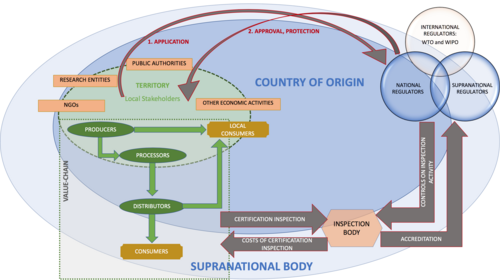
Like trademarks, geographical indications are regulated locally by each country because conditions of registration such as differences in the generic use of terms vary from country to country. This is especially true of food and beverage names which frequently use geographical terms, but it may also be true of other products such as carpets (e.g. 'Shiraz'), handicrafts, flowers and perfumes.
عندما تكتسب المنتجات الحاصلة على مؤشرات جغرافية شهرة عالمية، قد تحاول بعض المنتجات الأخرى الترويج لنفسها على أنها منتجات أصلية تحمل هذه المؤشرات. يُنظر إلى هذا النوع من المنافسة غالبًا على أنه غير عادل، إذ قد يُثبط عزيمة المنتجين التقليديين ويُضلل المستهلكين. ولذلك، سعى الاتحاد الأوروبي جاهدًا لتحسين حماية المؤشرات الجغرافية على الصعيد الدولي. [ 12 ] ومن بين أمور أخرى، وضع الاتحاد الأوروبي تشريعات خاصة لحماية الأسماء الجغرافية في مجالات النبيذ والمشروبات الروحية والمنتجات الزراعية، بما في ذلك البيرة. كما تم إنشاء سجل للمؤشرات الجغرافية المحمية وتسميات المنشأ المتعلقة بالمنتجات في المجال الزراعي، بما في ذلك البيرة، باستثناء المياه المعدنية (DOOR). وتم إنشاء سجل آخر لأسماء مناطق النبيذ، وهو سجل E-Bacchus. وفي نوفمبر 2020، أطلق مكتب الاتحاد الأوروبي للملكية الفكرية قاعدة البيانات الشاملة GI View التي تغطي المؤشرات الجغرافية للأغذية والنبيذ والمشروبات الروحية. [ 13 ] ويهدف مشروع قاعدة بيانات خاصة (دليل GEOPRODUCT) إلى توفير تغطية عالمية. ينبغي توجيه اتهامات المنافسة "غير العادلة" بحذر، إذ أن استخدام المؤشرات الجغرافية يأتي أحيانًا من المهاجرين الأوروبيين الذين جلبوا معهم أساليبهم ومهاراتهم التقليدية. [ 14 ]
اتفاقية باريس واتفاقية لشبونة
أدى التوسع في التجارة الدولية إلى ضرورة توحيد المناهج والمعايير المختلفة التي تستخدمها الحكومات لتسجيل المؤشرات الجغرافية. وقد ظهرت المحاولات الأولى في هذا الصدد في اتفاقية باريس للعلامات التجارية (1883، لا تزال سارية المفعول، وتضم 176 دولة عضواً)، تلتها أحكام أكثر تفصيلاً في اتفاقية لشبونة لعام 1958 بشأن حماية تسميات المنشأ وتسجيلها . وقد سجلت الدول الأعضاء في اتفاقية لشبونة حوالي 9000 مؤشر جغرافي.

According to WIPO World Intellectual Property Indicators 2023, with data received from 91 national and regional authorities, there were an estimated 58400 protected GI in existence in 2022. Of the 58,400 GIs in force in 2022, upper middle-income economies accounted for 46.3% of the world total, followed by high-income (43.1%) and lower middle-income economies (10.6%). In terms of regional distribution, Europe had the most GIs in force, amounting to 53.1%, followed by Asia (36.3%), Latin America and the Caribbean (4.3%), Oceania (3.6%), North America (2.6%) and Africa 0.1%. Figures should nevertheless be interpreted with caution as GIs can be protected through many different means, sui generis systems, trademark systems, other national legal means, regional systems and international agreements (e.g., Lisbon and Madrid systems).[15]
Agreement on Trade-Related Aspects of Intellectual Property Rights
The WTOAgreement on Trade-Related Aspects of Intellectual Property Rights ("TRIPS") defines "geographical indications" as indications that identify a good as "originating in the territory of a Member, or a region or locality in that territory, where a given quality, reputation or other characteristic of the good is essentially attributable to its geographic origin."[16]
In 1994, when negotiations on the WTOTRIPS were concluded, governments of all WTO member countries (164 countries, as of August 2016) had agreed to set certain basic standards for the protection of GIs in all member countries. There are, in effect, two basic obligations on WTO member governments relating to GIs in the TRIPS agreement:
- Article 22 of the TRIPS Agreement says that all governments must provide legal opportunities in their own laws for the owner of a GI registered in that country to prevent the use of marks that mislead the public as to the geographical origin of the good. This includes prevention of use of a geographical name which although literally true "falsely represents" that the product comes from somewhere else.[16]
- تنص المادة 23 من اتفاقية تريبس على أنه يتعين على جميع الحكومات منح أصحاب المؤشرات الجغرافية الحق، بموجب قوانينها، في منع استخدام أي مؤشر جغرافي يُحدد أنواع النبيذ التي لا تنشأ في المكان المشار إليه في المؤشر. وينطبق هذا حتى في حال عدم تضليل الجمهور ، وعدم وجود منافسة غير عادلة، وحيث يُشار إلى المنشأ الحقيقي للسلعة، أو يُرفق المؤشر الجغرافي بعبارات مثل "نوع" أو "طراز" أو "أسلوب" أو "تقليد" أو ما شابه. ويجب توفير حماية مماثلة للمؤشرات الجغرافية التي تُحدد المشروبات الروحية. [ 16 ]
تنص المادة 22 من اتفاقية تريبس أيضاً على أنه يجوز للحكومات رفض تسجيل علامة تجارية أو إبطال علامة تجارية قائمة (إذا سمحت تشريعاتها بذلك أو بناءً على طلب حكومة أخرى) إذا كانت تضلل الجمهور بشأن المنشأ الحقيقي للسلعة. وتنص المادة 23 على أنه يجوز للحكومات رفض تسجيل علامة تجارية أو إبطالها إذا كانت تتعارض مع مؤشر جغرافي للنبيذ أو المشروبات الروحية، سواءً كانت العلامة التجارية مضللة أم لا.
تنص المادة 24 من اتفاقية تريبس على عدد من الاستثناءات لحماية المؤشرات الجغرافية، وهي استثناءات ذات صلة خاصة بالمؤشرات الجغرافية للخمور والمشروبات الروحية (المادة 23). فعلى سبيل المثال، لا يُلزم الدول الأعضاء بإخضاع مؤشر جغرافي للحماية إذا أصبح مصطلحًا عامًا لوصف المنتج المعني. ويجب ألا تمس التدابير المتخذة لتنفيذ هذه الأحكام بحقوق العلامات التجارية السابقة التي تم اكتسابها بحسن نية؛ وفي ظل ظروف معينة - بما في ذلك الاستخدام طويل الأمد - يجوز السماح بالاستمرار في استخدام مؤشر جغرافي للخمور أو المشروبات الروحية على نطاق وطبيعة كما كان من قبل. [ 16 ]
اتفاقية ما بعد اتفاقية تريبس
يُعدّ إنشاء سجل للمؤشرات الجغرافية للخمور والمشروبات الروحية، بالإضافة إلى توسيع نطاق المؤشرات الجغرافية ليشمل منتجات أخرى غير الخمور والمشروبات الروحية، من القضايا المهمة على جدول أعمال منظمة التجارة العالمية منذ اتفاقية تريبس. [ 1 ] : 60-61. وفي جولة الدوحة التنموية لمفاوضات منظمة التجارة العالمية، التي انطلقت في ديسمبر 2001، تتفاوض الحكومات الأعضاء في المنظمة بشأن إنشاء "سجل متعدد الأطراف" للمؤشرات الجغرافية. وتسعى بعض الدول، بما فيها الاتحاد الأوروبي، إلى إنشاء سجل ذي أثر قانوني، بينما تسعى دول أخرى، بما فيها الولايات المتحدة، إلى نظام غير ملزم يتم بموجبه إخطار منظمة التجارة العالمية ببساطة بالمؤشرات الجغرافية الخاصة بكل دولة عضو.
ترغب بعض الحكومات المشاركة في المفاوضات (وخاصة الجماعات الأوروبية) في المضي قدمًا والتفاوض بشأن إدراج المؤشرات الجغرافية على منتجات أخرى غير النبيذ والمشروبات الروحية بموجب المادة 23 من اتفاقية تريبس. وتجادل هذه الحكومات بأن توسيع نطاق المادة 23 سيزيد من حماية هذه العلامات في التجارة الدولية. إلا أن هذا المقترح مثير للجدل، إذ تعارضه حكومات أخرى، بما فيها الولايات المتحدة، التي تتساءل عن جدوى توسيع نطاق الحماية المشددة التي توفرها المادة 23 لتشمل منتجات أخرى. وتخشى هذه الحكومات من أن تكون الحماية التي توفرها المادة 23، في معظم الحالات، أكبر من اللازم لتحقيق منفعة المستهلك التي تُعدّ الهدف الأساسي لقوانين المؤشرات الجغرافية.
قانون جنيف لاتفاقية لشبونة
في عام 2015، تم اعتماد قانون جنيف، ودخل حيز التنفيذ مطلع عام 2020 مع انضمام الاتحاد الأوروبي. يربط قانون جنيف بين نظام لشبونة لتسميات المنشأ ونظام تريبس للمؤشرات الجغرافية.
أمثلة
- الويسكي الاسكتلندي : ويسكي مقطر ومعتق في اسكتلندا بموجب لوائح صارمة.
- الشمبانيا : نبيذ فوار يُنتج حصرياً في منطقة الشمبانيا في فرنسا.
- التيكيلا : مشروب كحولي مصنوع من نبات الصبار الأزرق الذي يزرع في مناطق محددة في المكسيك.
- قماش الكينتي : نسيج يُنتج في جميع أنحاء أفريقيا والشتات، مع تمتع غانا بحماية جغرافية للمنتج الأصلي.
- بارميجيانو ريجيانو : جبن صلب ينتج في مقاطعات بارما، وريجيو إميليا، ومودينا، وبولونيا، ومانتوا في إيطاليا.
- شاي دارجيلنغ : شاي يزرع في منطقة دارجيلنغ في ولاية البنغال الغربية، الهند.
- لحم كوبي : لحم بقري من سلالة تاجيما من أبقار واغيو التي تربى في محافظة هيوغو اليابانية.
- روكفور : جبن أزرق مصنوع من حليب الأغنام ويتم تخميره في الكهوف الطبيعية في روكفور سور سولزون، فرنسا.
الاختلافات في الفلسفة
أحد أسباب النزاعات بين الحكومات الأوروبية والأمريكية هو اختلاف وجهات النظر حول تعريف المنتج "الأصلي". ففي أوروبا، تسود نظرية " التربة" (Terroir )، التي تنص على وجود خصائص مميزة لمنطقة جغرافية معينة، مما يستلزم استخدامًا دقيقًا للأسماء الجغرافية. وقد نجح الاتحاد الأوروبي داخليًا في تعزيز المؤشرات الجغرافية كملكية فكرية. [ 1 ] : 39 ويحق للمنتجين من منطقة محددة منع المنتجين في مناطق أخرى من استخدام الاسم الجغرافي لمنتجات مماثلة. [ 1 ] : 39 وبالتالي، يمكن لأي شخص يمتلك أغنامًا من السلالات المناسبة صنع جبن روكفور إذا كان موجودًا في المنطقة الفرنسية التي يُصنع فيها هذا الجبن، ولكن لا يحق لأي شخص خارج تلك المنطقة صنع جبن أزرق من حليب الأغنام وتسميته روكفور، حتى لو اتبع نفس عملية التصنيع المذكورة في تعريف روكفور بدقة.
تاريخيًا، جلب المهاجرون الأوروبيون إلى دول مثل الولايات المتحدة وكندا وأستراليا ونيوزيلندا منتجات تحمل أسماء أماكن إلى أوطانهم الجديدة. [ 1 ] : 39 وفي هذه الدول، أصبحت أسماء المنتجات التي تحمل أسماء أماكن أسماءً عامة غير مقيدة الاستخدام. [ 1 ] : 39 ويُعدّ هذا الاختلاف سببًا رئيسيًا للخلاف بين الولايات المتحدة وأوروبا في مواقفهما تجاه الأسماء الجغرافية. [ 17 ] تعارض الولايات المتحدة عمومًا تنظيم المؤشرات الجغرافية على غرار الاتحاد الأوروبي، لأن أسماء الأماكن إما مسجلة بالفعل كعلامات تجارية أو فقدت تميزها من خلال الاستخدام العام. [ 1 ] : 40 وتُعدّ الخلافات حول المؤشرات الجغرافية من المجالات القليلة في إدارة الملكية الفكرية العالمية التي يختلف فيها الاتحاد الأوروبي والولايات المتحدة. [ 1 ] : 40
مع ذلك، ثمة بعض التداخل، لا سيما مع المنتجات الأمريكية التي تتبنى منظورًا أوروبيًا في هذا الشأن. [ 18 ] ومن أبرز هذه المنتجات المحاصيل: بصل فيداليا ، وبرتقال فلوريدا ، وبطاطس أيداهو . ففي كل حالة من هذه الحالات، سجلت حكومات ولايات جورجيا وفلوريدا وأيداهو علامات تجارية، ثم سمحت لمزارعيها - أو في حالة بصل فيداليا، فقط أولئك الموجودين في منطقة جغرافية محددة داخل الولاية - باستخدام المصطلح، بينما منعت استخدامه عن الآخرين. ويكتسب المفهوم الأوروبي قبولًا متزايدًا في زراعة العنب الأمريكية؛ كما يسعى منتجو النبيذ في مختلف مناطق زراعة العنب الأمريكية إلى بناء هويات مميزة وفريدة مع ازدياد قبول نبيذ العالم الجديد في أوساط محبي النبيذ . وأخيرًا، تتمتع الولايات المتحدة بتقاليد عريقة في فرض قيود صارمة نسبيًا على أنواع الويسكي المحلية . ومن الجدير بالذكر بشكل خاص متطلبات تسمية المنتج " ويسكي صافي " (والتي تتطلب إنتاج الويسكي في الولايات المتحدة وفقًا لمعايير معينة) والشرط، الذي يفرضه القانون الفيدرالي والعديد من الاتفاقيات الدولية ( من بينها اتفاقية التجارة الحرة لأمريكا الشمالية ) بأن يكون المنتج المسمى " ويسكي تينيسي" ويسكي بوربون صافي منتج في ولاية تينيسي .
وعلى النقيض من ذلك، تبنت بعض المنتجات الأوروبية نظامًا أمريكيًا أكثر: ومن الأمثلة الرئيسية على ذلك نيوكاسل براون أيل ، التي حصلت على وضع جغرافي محمي من الاتحاد الأوروبي في عام 2000. وعندما انتقل مصنع الجعة من تاينسايد إلى تادكاستر في شمال يوركشاير ( على بعد حوالي 150 كم) في عام 2007 لأسباب اقتصادية، كان لا بد من إلغاء هذا الوضع.
تبنّت الصين مفهوم المؤشرات الجغرافية من القانون الأوروبي، لكنها لم تتبنَّ نهج "تيروار" (Terroir)، بل اعتمدت على تحليل قانون الاتحاد الأوروبي للجمهور المعني لتطبيق مبادئ قانون العلامات التجارية. وبموجب قواعد المحكمة العليا الصينية، يجب حلّ النزاعات المتعلقة بعلامات المؤشرات الجغرافية المتنازع عليها بناءً على ما إذا كان من الممكن تضليل الجمهور وجعله يعتقد أن المنتجات منشؤها منطقة معينة. [ 19 ] ويرى المعلقون الأكاديميون أن نهج الصين في استخدام نوعين من القوانين لنفس المسألة يُثير تضاربًا في القوانين. [ 20 ]
انظر أيضاً
ملحوظات
- 1.^See also the Paris Convention, the Madrid Agreement, the Lisbon Agreement, the Geneva Act.
Sources
 This article incorporates text from a free content work.Licensed under CC BY 3.0 IGO(license statement/permission).Text taken from Geographical indications An introduction, 2nd edition,WIPO,WIPO.
References
- 12345678910Cheng, Wenting (2023). China in Global Governance of Intellectual Property: Implications for Global Distributive Justice. Palgrave Socio-Legal Studies series. Palgrave Macmillan. ISBN 978-3-031-24369-1.
- 12345World Intellectual Property Organization. (2021). "Geographical indications An introduction, 2nd edition". World Intellectual Property Organization. doi:10.34667/tind.44179. Retrieved 2021-09-17.
- ↑"Geographical Indications – a Virtual Experience". wkcexhibitions.wipo.int. Archived from the original on 2021-09-15. Retrieved 2021-09-15.
- ↑von Galen, Maike (29 May 2019). "Warum deutsche Schaumweine ein Image-Problem haben"[Why German Sparkling Wines have an Image Problem]. Neue Westfälische (in German). Retrieved 7 December 2022.
- ↑Gragnani, M. (2012-04-01). "The law of geographical indications in the EU". Journal of Intellectual Property Law & Practice. 7 (4): 271–282. doi:10.1093/jiplp/jps020. ISSN 1747-1532.
- ↑"Resources - Food and Agriculture Organization of the United Nations". www.fao.org. Retrieved 7 April 2026.
- ↑The Economics of Geographical Indications: Towards a Conceptual Framework for Geographical Indication Research in Developing Countries(PDF). WIPO. 2009.
- 1234"When Geographical Indications Actually Create Value (And When They're Just Expensive Paperwork)". Regency Hampers. 20 December 2016. Retrieved 7 April 2026.
- ↑Giovannucci, Daniele, Tim Josling, William Kerr, Bernard O'Connor, and May T. Yeung. 2009. Guide to Geographical Indications: Linking Products and their Origins. Geneva: International Trade Centre (ITC).
- 12Sovbetov, Ihlas; Ozdemir, M. B. (2026). "Labeling Quality or Quantity? The Differential Impact of Geographical Indications on Export Performance in Turkish Agri-Food Products". Applied Economic Perspectives and Policy. doi:10.1002/aepp.70077.
- ↑Dreyer, Iana; Messerlin, Patrick (2012). "Free Trade Agreements". In Jones, Erik (ed.). The Political Economy of the European Union. London: Palgrave Macmillan. pp. 40, 73. ISBN 978-1-137-02422-0.
- ↑Huysmans, Martijn (2020). "Exporting protection: EU trade agreements, geographical indications, and gastronationalism". Review of International Political Economy. 29 (3): 979–1005. doi:10.1080/09692290.2020.1844272.
- ↑"GI View".
- ↑"Geographical Indications and the challenges for ACP countries, by O'Connor and Company". Archived from the original on 2011-07-21. Retrieved 2011-06-14.
- ↑"World Intellectual Property Indicators (WIPI) - 2023". World Intellectual Property Organization. Retrieved 2023-12-11.
 This article incorporates text available under the CC BY 4.0 license.
 - 1234"WTO - intellectual property (TRIPS) - agreement text - standards". www.wto.org.
- ↑Zappalaglio, Andrea (2015). "The Protection of Geographical Indications: Ambitions and Concrete Limitations". University of Edinburgh Student Law Review. 2: 88. Retrieved 24 June 2020.
- ↑Le Goffic, Caroline; Zappalaglio, Andrea (2017). "The Role Played by the US Government in Protecting Geographical Indications". World Development. 98 (C): 35–44. doi:10.1016/j.worlddev.2016.08.017.
- ↑"最高人民法院关于审理商标授权确权行政案件若干问题的规定". 最高人民法院 (in Chinese). 2020-12-29 [Issued 2020-12-29]. Translated in "Trademark Administrative Appeals Rules". CBL Translations. Retrieved 2025-05-25.
- ↑Zhu, Lanye (2006). "An Analysis of China's System of Protecting Geographical Indications". Asian Journal of Comparative Law. 1: 1–21. doi:10.1017/S2194607800000806.
Further reading
- Baeumer, Ludwig, "Protection of Geographical Indications under WIPO Treaties and Questions Concerning the Relationship Between Those Treaties and the TRIPS Agreement", in Symposium on the Protection of Geographical Indications in the Worldwide Context (held in Eger, Hungary, October 24/25, 1997), WIPO publication No. 760(E), Geneva, 1999.
- Bramley, Cerkia, Estelle Biénabe, and Johann Kirsten, "The Economics of Geographical Indications: Towards a Conceptual Framework for Geographical Indication Research in Developing Countries", in The Economics of Intellectual Property, WIPO, 2009.
- Giovannucci, Daniele et al., Guide to Geographical Indications, Linking Products and their Origins, International Trade Centre (ITC), Geneva, 2009.
- Rangnekar, Dwijen, The Socio-Economics of Geographical Indications: A Review of Empirical Evidence from Europe, UNCTAD-ICTSD Project on IPTs and Sustainable Development Series, Issue Paper 8, 2004.
- Vandecandelaere, Emilie et al., Linking People, Places and Products, jointly published by the Food and Agriculture Organization of the United Nations (FAO) and SINER-GI, FAO, 2009.
- United Nations Industrial Development Organization (UNIDO), Adding Value to Traditional Products of Regional Origin: A Guide to Creating a Quality Consortium, Vienna, 2010.
- World Trade Organization (WTO), "Review under Article 24.2 of the Application of the Provisions of the Section of the TRIPS Agreement on Geographical Indications", WTO document IP/C/W/253/Rev.1, 2003.
- WIPO: SCT/3/6: Geographical Indications.
- WIPO: SCT/5/3: Conflicts between Trademarks and GIs, Conflicts between Homonymous
- WIPO: GIs.SCT/8/4: Geographical Indications, Historic Background, Nature of the Right, Existing Systems of Protection, Obtaining Protection in Other Countries.
- WIPO: SCT/9/4: The Definition of Geographical Indications.
External links
- قانون الملكية الفكرية
- المؤشرات الجغرافية
- قانون الغذاء في الاتحاد الأوروبي