
Humane World for Animals
Humane World for Animals, formerly the Humane Society of the United States[3] (HSUS) and Humane Society International (HSI), is a global nonprofit organization that focuses on animal welfare and opposes animal-related cruelties of national scope. It uses strategies that are beyond the abilities of local organizations.[4] It works on issues including pets, wildlife, farm animals, horses and other equines, and animals used in research, testing and education.[5] As of 2001, the group's major campaigns targeted factory farming, hunting, the fur trade, puppy mills, and wildlife abuse.[6]
The global offices of Humane World for Animals are based in Washington, D.C., and the organization has offices in six continents. The original organization was founded in 1954 by journalist Fred Myers and Helen Jones, Larry Andrews, Marcia Glaser and Oliver M Evans. In 2013, the Chronicle of Philanthropy ranked the HSUS as the 136th largest charity in the US in its Philanthropy 400 listing.[7][8] Its reported revenue was US$129 million and net assets US$215 million as of 2014.[1] It employed 528 employees during 2014.[1]
Overview
تأسست جمعية الرفق بالحيوان في الولايات المتحدة (HSUS) بعد انقسامٍ ظهر في الجمعية الأمريكية للرفق بالحيوان حول مصادرة الحيوانات من الملاجئ، ومسابقات رعاة البقر، وقضايا سياسية أخرى. وضمّ مؤسسو الجمعية أربعة أشخاص هم: لاري أندروز، ومارسيا جلاسر، وهيلين جونز، وفريد مايرز، وجميعهم كانوا فاعلين في قيادة مجموعات محلية ووطنية قائمة، والذين أصبحوا فيما بعد أول أربعة موظفين فيها. وكان أوليفر مارشال إيفانز (1906-1975) أحد المؤسسين الأصليين، والذي سُمّي مقر الجمعية في واشنطن العاصمة باسمه عام 1975. (المصدر: أخبار جمعية الرفق بالحيوان في الولايات المتحدة، عدد شتاء 1975-1976) شغل منصب مدير أو مسؤول لمدة 21 عامًا حتى وفاته عام 1975. كما شغل منصب رئيس جمعية الرفق بالحيوان في الولايات المتحدة من عام 1963 إلى عام 1967. آمنوا بأن نوعًا جديدًا من المنظمات من شأنه أن يعزز حركة الرفق بالحيوان الأمريكية، فأسسوا جمعية الرفق بالحيوان في الولايات المتحدة تحت مسمى "الجمعية الوطنية للرفق بالحيوان" في واشنطن العاصمة، لضمان قدرتها على لعب دور فاعل في وضع السياسات الوطنية المتعلقة برفاهية الحيوان. وقد صادقت الجمعية على مبدأها التوجيهي عام 1956: "تعارض جمعية الرفق بالحيوان في الولايات المتحدة وتسعى إلى منع أي استخدام أو استغلال للحيوانات يسبب الألم أو المعاناة أو الخوف." [ 9 ] [ 10 ] [ 11 ] [ 12 ] [ 13 ] [ 14 ]
الأساس المنطقي
استُمدّت القيم التي شكّلت تأسيس جمعية الرفق بالحيوان في الولايات المتحدة (HSUS) عام 1954، إلى حدٍّ ما، من الحركة الإنسانية التي نشأت في ستينيات القرن التاسع عشر في الولايات المتحدة. وقد ترسخت فكرة الرفق بالحيوانات بشكلٍ كبير في الثقافة الأمريكية في السنوات التي أعقبت الحرب الأهلية . وساهم نموّ التعاطف مع المخلوقات المتألمة، والرضا الذي يشعر به من يقتنيها كحيوانات أليفة، وتزايد الوعي بالعلاقة بين القسوة على الحيوانات والعنف بين الأفراد ، في تعزيز جاذبية الحركة الشعبية. [ 15 ]

كان التأثير الفلسفي الأبرز على دعاة حقوق الحيوان في خمسينيات القرن العشرين، بمن فيهم المنتسبون إلى جمعية الرفق بالحيوان في الولايات المتحدة، هو مفهوم تبجيل الحياة الذي طرحه ألبرت شفايتزر . فقد أدرج شفايتزر تقديرًا عميقًا للحيوانات غير البشرية ضمن معتقداته، وقد استمدّ دعاة حقوق الحيوان، الذين سعوا جاهدين لإبراز قضاياهم، دفعةً معنويةً من خطاب شفايتزر عند استلامه جائزة نوبل للسلام عام 1952 ، حيث أشار فيه إلى أن " الرحمة ، التي تتجذر فيها الأخلاق، لا تبلغ أبعادها الحقيقية إلا عندما تشمل ليس فقط الإنسان، بل كل كائن حي". [ 16 ]
وجد مايرز وزملاؤه مثالاً آخر لقيمهم في جوزيف وود كروتش (1893-1970)، الذي عكست كتاباته تقديراً عميقاً للحياة البرية وللكائنات غير البشرية. وبكتابه " سلسلة الحياة العظمى " (1957)، رسّخ كروتش مكانته كفيلسوفٍ للإنسانية، وفي عام 1970، أُعيد تسمية أرفع جائزة تُمنحها جمعية الرفق بالحيوان في الولايات المتحدة باسمه تكريماً له. [ 17 ]
أثرت الحركة البيئية المتنامية في أوائل سبعينيات القرن الماضي على التطور الأخلاقي والعملي لجمعية الرفق بالحيوان في الولايات المتحدة. فقد زادت أزمة التلوث المتفاقمة وفقدان موائل الحياة البرية من وعي الجمهور بضرورة تغيير سلوك البشر تجاه الكائنات الحية الأخرى. وبحلول ذلك الوقت، أصبحت معاملة الحيوانات موضوعًا للنقاش الجاد في الفلسفة الأخلاقية.
امتد النقاش إلى الوعي العام مع نشر كتاب بيتر سينغر " تحرير الحيوان " (1975). سعى كتاب سينغر إلى إعادة صياغة الاهتمام بالحيوانات كقضية قائمة على العدالة، على غرار حركات الحقوق المدنية وحقوق المرأة . [ 18 ]
معظم ما كتبه سينغر بشأن منع معاناة الحيوانات أو الحد منها كان متوافقًا مع أهداف جمعية الرفق بالحيوان في الولايات المتحدة. لم تستند فلسفة سينغر إلى حقوق الحيوانات ، بل رفض تحديدًا إطار الحقوق لصالح تقييم نفعي يركز على إدراك الحيوان. كان اهتمامه الرئيسي، كما هو الحال مع جمعية الرفق بالحيوان في الولايات المتحدة، هو تخفيف المعاناة والقضاء عليها، وقد أيّد وجهة النظر القائلة بأن المعاملة الأخلاقية تسمح أحيانًا، بل وتتطلب أحيانًا، قتل الحيوانات لإنهاء بؤسها. [ 18 ] [ 19 ]
شهدت ثمانينيات القرن العشرين ازدهارًا في الاهتمام بالحيوانات وانتشارًا واسعًا للمنظمات الجديدة، تأثر العديد منها بظهور فلسفة ترى أن للحيوانات حقوقًا أصيلة. وقد رفض الملتزمون بأسمى أشكال حقوق الحيوان أي استخدام بشري للحيوانات. وفي هذا السياق المتغير، واجهت جمعية الرفق بالحيوان في الولايات المتحدة تحديات جديدة. فمع تبني منظمات حيوانية أحدث مناهج أكثر جذرية لتحقيق أهدافها، وجدت المنظمة التي نشأت في خضم سياسات مناهضة للمؤسسة نفسها تُصنف -وأحيانًا تُنتقد- على أنها المجموعة "الرسمية" الرسمية. [ 20 ]
تاريخ
في عام ١٩٥٤، قرر مؤسسو جمعية الرفق بالحيوان في الولايات المتحدة إنشاء نوع جديد من منظمات الرفق بالحيوان، مقرها العاصمة، لمواجهة أعمال القسوة على الحيوانات التي تتجاوز قدرة الجمعيات المحلية والاتحادات الولائية. وأصبح الذبح الرحيم أولوية ملحة، واستحوذ على جزء كبير من موارد المنظمة. كما اعتبر مايرز وزملاؤه هذه الحملة الأولى وسيلة لتعزيز تماسك الحركة.
Humane slaughter legislation
In 1958, the Humane Methods of Slaughter Act passed, which required the proper use of humane slaughter methods at slaughterhouses subject to federal inspection.[21] Only four years after HSUS's formation, Myers pointed out that the movement had united, for the first time in eighty-five years,[21] to achieve enactment of federal legislation that would affect the lives of tens of millions of animals. He was encouraged that "hundreds of local societies could lift their eyes from local problems to a great national cruelty."[4]
Ban of experimentation upon animals
HSUS also made the use of animals in research, testing, and education an early focus. In the post–World War II era, an increasingly assertive biomedical research community sought to obtain animals from pounds and shelters handling municipal animal control contracts. Local humane societies across the nation resisted. HSUS sought to bolster the movement's strong opposition to pound seizure, believing that no public pound or privately operated humane society should be compelled by law to provide animals for experimental use.[22]
HSUS took the position that animal experimentation should be banned, and in the 1950s it placed investigators in laboratories to gather evidence of substandard conditions and animal suffering and neglect.[23] The HSUS was not an anti-vivisection society, Myers explained in 1958. Rather, it stood for the principle that "every humane society ... should be actively concerned about the treatment accorded to such a vast number of animals."[4]
Beginning in the 1990s, HSUS board member David O. Wiebers, a medical doctor associated with the Mayo Clinic, undertook efforts to lessen tensions between animal protection organizations and the scientific community, and to seek to identify areas of common agreement.[24]
Companion animals and shelters
Service to local animal shelters, with a special focus on solving problems and challenges of importance to every one of the nation's humane societies, was an early priority for HSUS. Its first brochure, "They Preach Cruelty", focused on the tragedy of animal overpopulation.[25] HSUS and its state branches operated animal shelters in Waterford, Virginia, Salt Lake City Utah, and Boulder, Colorado, and elsewhere, during the 1960s, and part of the 1970s.[26] From the early 1960s onward, HSUS worked to promote the most humane methods possible for euthanasia of animals in shelters, using its Waterford, Virginia animal shelter as a model for best practices in this area.[27] HSUS does not currently operate any Animal Shelters.
Under Phyllis Wright, HSUS was a driving force behind the shift to use of sodium pentobarbital for animal euthanasia, in opposition to the use of gas chambers and decompression, the standard shelter killing methods until the early 1980s.[28]
In 1984, a General Accounting Office report confirmed HSUS allegations of major problems with puppy mills in the United States, setting the stage for proposed legislation to regulate mills in the 1990s.[29]
Exposure of cruelty in the dog trade
In 1961, HSUS investigator Frank McMahon launched a probe of dog dealers around the country to generate support for a federal law to prevent cruelty to animals destined for use in laboratories. The five-year investigation into the multilayered trade in dogs paid off in February 1966 when Life published a photo-essay of a raid conducted on a Maryland dog dealer's premises by McMahon and the state police.[30][31] The Life spread sparked outrage, and tens of thousands of Americans wrote to their congressional representatives, demanding action to protect animals and prevent pet theft. That summer the U.S. Congress approved the Laboratory Animal Welfare Act (later renamed the "Animal Welfare Act of 1966"), only the second major federal humane law passed since World War II.[32]
Goals and expansion
Other broad goals during this time included a reduction in the U.S.'s homeless dog and cat population, the reform of inhumane euthanasia practices, and to regulate pet shops and to end the commercial pet breeding trade. HSUS and its state branches operated animal shelters in Waterford, Virginia, Salt Lake City Utah, and Boulder, Colorado, and elsewhere, during the 1960s, and part of the 1970s.[26] Today, HSUS operates five animal sanctuaries in the states of California, Florida Massachusetts, Oregon, and Texas.[33]
HSUS also worked, from the 1960s, to promote humane education of children in the schools. Much of this work was carried out under the auspices of an affiliate, the National Association for the Advancement of Humane Education. In the 1980s, HSUS sponsored several validation studies designed to demonstrate the value of humane education.[34][35]
Relationship to animal rights
While HSUS welcomed and benefited from growing social interest in animals, it did not originally embrace the language and philosophy of animal rights. Rather, HSUS representatives expressed their beliefs that animals were "entitled to humane treatment and to equal and fair consideration."[36] Like many of the organizations and individuals associated with humane work, HSUS did try to come to terms with the shift toward rights-based language and arguments. In 1978, attorneys Robert Welborn and Murdaugh Stuart Madden[37] conducted a workshop at the HSUS annual conference, "Can Animal Rights Be Legally Defined?", and assembled constituents passed a resolution to the effect that "animals have the right to live and grow under conditions that are comfortable and reasonably natural... animals that are used by man in any way have the right to be free from abuse, pain, and torment caused or permitted by man... animals that are domesticated or whose natural environment is altered by man have the right to receive from man adequate food, shelter, and care."[38] In 1980 the notion of rights surfaced in an HSUS convention resolution which, noting that "such rights naturally evolve from long accepted doctrines of justice or fairness or some other dimension of morality", called for "pursuit on all fronts... the clear articulation and establishment of the rights of animals"[39]
In 1986, HSUS employee John McArdle declared that "HSUS is definitely shifting in the direction of animal rights faster than anyone would realize from our literature".[40] The HSUS fired McArdle shortly thereafter, he alleged, for being an "animal rights activist".[41]
Position against the use of violence
Since 1990 at least, HSUS has expressed a clear opposition to "the use of threats and acts of violence against people and willful destruction and theft of property."[42][43][44] In 2008, HSUS offered a reward for information leading to the identification and arrest of parties involved with the firebombing of two University of California animal researchers.[45]
Recent history
Wayne Pacelle tenure
In the spring of 2004, the HSUS board appointed Wayne Pacelle as CEO and president. A former executive director of The Fund for Animals and named in 1997 as "one of America's most important animal rights activists",[46] the Yale graduate spent a decade as HSUS's chief lobbyist and spokesperson, and expressed a strong commitment to expand the organization's base of support as well as its influence on public policies that affect animals.[47] Under Pacelle's leadership, HSUS has undertaken several dozen ballot initiative and referendum campaigns in a number of states, concerning issues like unsportsmanlike hunting practices, cruelty in industrial agriculture, greyhound racing, puppy mill cruelty and animal trapping.[48][49][50] In August 2014, Pacelle was again named to the NonProfit Times' "Power and Influence Top 50" for his achievements in leading HSUS, the fourth time he has been so recognized.[51]
منذ تعيين باسيل، حققت جمعية الرفق بالحيوان في الولايات المتحدة (HSUS) نجاحاتٍ عديدة، منها تبني مئات الجامعات وعشرات الشركات سياسات شراء البيض من الدجاج غير المحبوس في أقفاص؛ [ 52 ] وكشف عملية احتيال دولية في صيد الحيوانات من أجل الجوائز ، والتي انتهت لاحقًا من خلال إصلاحات تشريعية؛ [ 53 ] وعدد من التصويتات الناجحة في الكونغرس لحظر ذبح الخيول؛ والتقدم المحرز في سن تشريعات على مستوى الولايات والمستوى الفيدرالي لحظر مصارعة الحيوانات ونقل أدوات المصارعة بين الولايات؛ [ 54 ] وسن قوانين تحظر الصيد عبر الإنترنت في جميع الولايات تقريبًا؛ [ 55 ] وإعلان وولفغانغ باك وبرغر كينغ عن زيادة استخدامهما للمنتجات الحيوانية المُستخرجة وفقًا لمعايير أقل قسوة؛ [ 56 ] وموافقة وزارة الزراعة الأمريكية على بدء تطبيق القوانين الفيدرالية المتعلقة بنقل حيوانات المزارع. [ 57 ]
في عام ٢٠١٨، نشرت صحيفة واشنطن بوست تقريرًا عن تحقيق أجرته شركة مورغان، لويس وبوكيوس، في مجلس إدارة جمعية الرفق بالحيوان، حول مزاعم تحرش جنسي تورط فيها واين باسيل. وخلص التحقيق إلى وجود ثلاث اتهامات موثوقة بالتحرش الجنسي، بالإضافة إلى شهادات من قيادات نسائية أكدت أن "تحذيراتهن بشأن سلوكه لم تُؤخذ بعين الاعتبار". [ ٥٨ ] صوّت المجلس على الإبقاء على باسيل، ولكن بعد استقالة عدد من أعضاء المجلس، بمن فيهم الكاتبة سوزي ويلش والفاعلة الخيرية مارشا بيرلمان، احتجاجًا على ذلك، وإعلان متبرعين بارزين عن نيتهم الامتناع عن التبرع، أعلن باسيل استقالته في ٢ فبراير ٢٠١٨. [ ٥٩ ] بعد ذلك بوقت قصير، عادت بيرلمان، إلى جانب كاثلين لينهان، إلى المجلس كنائبة للرئيس وأمينة للصندوق على التوالي. [ ٦٠ ]
The HSUS board of directors closed the investigation, declining to take any action, and issued a statement that Morgan, Lewis had found no "credible evidence" that would "support the women's claims", sparking outrage and resulting in the resignation of seven further board members. The organization named as Acting President and interim CEO, Kitty Block, who was President of the international affiliate of the organization, Humane Society International, and who had sued her former HSUS boss, David Wills, for sexual harassment 20 years ago.[61] On January 25, 2019, Kitty Block was named official President and CEO of the organization, and Susan Atherton and Thomas J. Sabatino, Jr. were appointed co-chairs of the HSUS Board, after Board Chairman Eric L. Bernthal stepped down after seven years of service.[62]
Animal protection litigation section
HSUS launched an animal protection litigation section in 2005. The section works with several thousand pro bono attorneys around the country to pursue its docket of cases. Under section leader Jonathan Lovvorn, the animal protection litigation group has won approximately three dozen cases in its first decade of existence, taking a practical approach, which Lovvorn explained in a 2012 interview. "We look at cases that are going to have a concrete impact on animals but are winnable. You won't see us out asking for courts to declare animals persons. Or to file habeas corpus requests on behalf of animals, or other things that require judges to go way beyond what they're comfortable with." In 2010, the section estimated that it had filed more than 50 legal actions in 25 states, and won 80% of its cases, while booking 10,000 hours of pro bono attorney time for a total in-kind contribution of $4 million.[63][64][65][66]
Canadian seal cull campaign

Once launched in 2005, the HSUS's campaign to end the hunting of seals in Canada secured pledges from 300 restaurants and companies, plus 120,000 individuals, to boycott Canadian seafood.[67] By 2014, the campaign claimed more than 6,500 restaurants, grocery stores and seafood supply companies were participants the Protect Seals campaign.[68]
Corporate expansion
شمل التوسع المؤسسي الذي أشرف عليه باسيل عمليات اندماج مع صندوق الحيوانات (2005)، الذي أسسه الناقد الاجتماعي والمؤلف كليفلاند أموري ، ورابطة دوريس داي للحيوانات (2006)، التي أسستها الممثلة والمغنية دوريس داي . وقد أتاح ذلك إنشاء قسم مستقل للحملات، وقسم لقضايا الخيول، وقسم للتقاضي، وتعزيز البرامج الرئيسية مثل "حيوانات أليفة مدى الحياة" [ 69 ] و"جيران بريون" [ 70 ] ، وتوسيع نطاق برامج الرعاية العملية للحيوانات [ 71 ] . وخلال أول عامين ونصف من فترة باسيل، نمت الإيرادات والنفقات الإجمالية بأكثر من 50% [ 72 ] . وفي أوائل عام 2008، أعادت جمعية الرفق بالحيوان في الولايات المتحدة تنظيم عملها في مجال الرعاية البيطرية المباشرة ونشاطها في مجال المناصرة البيطرية تحت كيان جديد، هو "الجمعية الطبية البيطرية للرفق بالحيوان"، الذي تم تشكيله من خلال تحالف مع "رابطة الأطباء البيطريين من أجل حقوق الحيوان" (AVAR). [ 73 ]
التواصل بشأن المسؤولية الاجتماعية للشركات
كان التواصل مع الشركات الكبرى في محاولة لإقناعها بالضغط من أجل إصلاحات في سلاسل التوريد الخاصة بها أولوية كبيرة لمنظمة HSUS في العقد الماضي، ونتيجة لجهودها، استخدم أكثر من 60 موردًا رئيسيًا للأغذية نفوذهم لتغيير ممارسات مستوى الإنتاج في صناعة لحم الخنزير. [ 74 ]
تلعب قرارات المساهمين دوراً في حملات جمعية الرفق بالحيوان في الولايات المتحدة (HSUS) الرامية إلى إحداث إصلاحات في الشركات. [ 75 ]
التواصل الديني
في عام ٢٠٠٧، أطلقت جمعية الرفق بالحيوان في الولايات المتحدة (HSUS) برنامجًا يهدف إلى تعزيز العلاقات والوعي داخل المجتمع الديني الأمريكي على جميع المستويات. يوفر البرنامج متحدثين، وينتج مقاطع فيديو ومواد أخرى، ويعمل مع القادة الدينيين لقيادة النقاش حول قضايا الحيوان داخل المجتمع الديني الأوسع. [ ٧٦ ] [ ٧٧ ] [ ٧٨ ] وتتعاون جمعية الرفق بالحيوان في الولايات المتحدة في هذا البرنامج مع منظمة "فارم فورورد" (Farm Forward )، وهي منظمة غير ربحية مسجلة بموجب المادة ٥٠١(ج)(٣) من قانون الضرائب الأمريكي، والتي تُنفذ استراتيجيات مبتكرة لتشجيع الخيارات الغذائية الواعية، والحد من معاناة حيوانات المزارع، والنهوض بالزراعة المستدامة. [ ٧٩ ]
معهد الجمعية الإنسانية للعلوم والسياسات
The Humane Society Institute for Science and Policy (HSISP), founded in 2010, supports the application of scientific and technical analysis and expertise to animal welfare issues and policy questions worldwide. HSISP is sustained by HSUS's own core group of academic, scientific, and technical experts in animal welfare, as well as outside scientists. HSISP is the manager of the Animal Studies Repository, a digital collection of academic and scientific resources related to animal studies and to animal welfare science. HSISP has held three conferences, the first on purebred dogs and genetic defects, the second on outdoor cats and associated management issues, and the third on sentience as a factor in determining animal welfare policy.[80][81][82]
Hurricane Katrina animal rescue
In September 2005, when thousands of animals were left behind as people evacuated during Hurricane Katrina, HSUS joined other organizations in a massive search-and-rescue effort that saved approximately ten thousand animals, and raised more than $34 million for direct relief, reconstruction, and recovery in the Gulf Coast region. HSUS led the campaign that culminated in the federal passage of the PETS Act in October 2006, requiring all local, state, and federal agencies to include animals in their disaster planning scenarios.[83]
In August 2008, Pacelle appeared with Louisiana Attorney General Buddy Caldwell at a press conference marking the enactment of a law prohibiting cockfighting in Louisiana, the last state to do so. The prohibition resulted from a longtime campaign led by HSUS.[84] The HSUS remains active in the Gulf region, funding a number of projects aimed at reducing the area's pet overpopulation problem, and improving access to pet care for the Gulf Coast residents.[85]
Investigation into "faux" fur
In late 2006, HSUS broke the story of its investigation into the sale of coats trimmed with real fur but labeled "faux" or fake. Laboratory testing found that the fur came from purpose-bred raccoon dogs in China that were sometimes beaten to death and skinned alive. The story of fur animals beaten to death and skinned alive is disputed by a fur industry trade group.[86] The investigation reportedly prompted several retailers including Macy's and J.C. Penney to pull the garments from the sale floor. Legislation was introduced in the U.S. Congress to require that all fur jackets be properly labeled, and to ban raccoon dog fur.[87]
In 2014, HSUS accused Kohl's department store of selling a men's jacket made with real animal fur as "faux", and issued a warning to consumers.[88]
Investigation of Westland Meat Packing Company
In February 2008, after an undercover investigation conducted by HSUS at the Westland Meat Packing Company alleged substantial animal abuse, the USDA forced the recall of 143 million pounds of beef, some of which had been routed into the nation's school lunch program.[89] HSUS had been a longtime advocate for the elimination of downer animals from the nation's food supply, and the undercover investigation led to the USDA adopting the policy.[90] In November 2013, the Justice Department reached a $155 million settlement with the firms that operated the plant.[91]Michael Greger, Director of Public Health and Animal Agriculture for HSUS at that time, testified before Congress about the matter.[92]
Petland puppy mills campaign
In the fall of 2008, HSUS also launched a campaign to expose the reliance of the pet store chain Petland on puppy mills where animals are raised under inhumane conditions.[93] However, Jessica Mitler from the United States Department of Agriculture (USDA), the government agency that regulates dog breeders,[94] provided the following response to the HSUS investigation: "The agency has received no complaints from the Humane Society about a particular kennel or Petland; so they have not investigated this specifically."[95] On November 24, 2008, Petland responded to the HSUS campaign video footage of the Petland investigation[96] by stating: "Petland is outraged that HSUS would intentionally use video footage of unrelated kennels in the report to try to mislead the general public into believing these facilities have a connection to Petland."[97] In another statement dated February 19, 2009, Petland stated they turned over death threats and threats of kidnapping generated from the HSUS campaign against Petland to the proper authorities for further investigation. Petland continued by asking HSUS to cease and desist in any actions that may promote malicious intent (directly or indirectly).[98]
On March 17, 2009, HSUS launched a class action suit against Petland on behalf of patrons who allegedly purchased sick animals from the chain, under the alleged pretense that the animals had come from the nation's finest breeders.[99] On August 8, 2009, the case was dismissed by a United States district judge for lack of facts concerning the case.[100] Petland responded to the dismissal by stating: "The Humane Society of the United States touted the lawsuit in furtherance of its fundraising and media campaign seeking to end the sale of animals through pet stores. Petland denied that it had done anything unlawful, and it believes strongly that consumers have the right to purchase and keep pets."[101] The HSUS does not oppose the ownership of pets, but maintains that the desire for profit in commercial pet stores undermines proper care of companion animals.[102]
Political and legislative initiatives against animal abuse and cruelty
During 2013, HSUS helped to pass 109 animal protection laws at the state level.[103] In 2006, HSUS helped to secure the passage of 70 new state laws on behalf of animals. Two successful November 2006 ballot initiatives conducted with its support outlawed dove hunting in Michigan and, through Proposition 204, abusive livestock-farming practices in Arizona.[104] In 2008, HSUS helped to pass 91 state animal-welfare laws, including Proposition 2 in California.[105] HSUS was a leader in the Proposition 2 campaign in California, which gained eight million votes on Election Day 2008, more than any other initiative on the ballot. The measure, which prohibits certain intensive confinement practices in agriculture beginning in 2015, passed by a 63.3 to 36.7 percent margin, winning in 46 of 58 counties, and gaining support throughout the state's urban, suburban, and rural areas. It garnered votes from Democrats, independents, and Republicans alike, as well as among Caucasians, African-Americans, Asian-Americans, and the Latinx populace. Nearly 800,000 Californians signed petitions to place the measure on the ballot.[106]
HSUS was also a participant in a ballot initiative campaign focusing on inhumane treatment of farm animals in Ohio. The livestock-agriculture initiative was withdrawn from the ballot after a compromise was brokered between HSUS, Ohioans for Humane Farms, the Ohio Farm Bureau, and Ohio Governor Ted Strickland.[107][108]
HSUS led a campaign against puppy mill cruelty in Missouri in 2010. The Puppy Mill Cruelty Prevention Act, known as "Prop B", was narrowly passed by Missouri voters.[109]
United Egg Producers
For several years, HSUS cooperated with the United Egg Producers to secure federal legislation to phase out barren battery cages for all laying hens in the United States. Discussion between HSUS and the United Egg Producers concerning a national standard for egg production began with a meeting between Jerry Crawford, an Iowa resident with ties to the egg production industry, and HSUS's Wayne Pacelle. Crawford recommended a further meeting with the United Egg Producers' Chad Gregory. The context for the meeting was HSUS's commanding win in Proposition 2 in California, and a shared belief that open warfare would serve no one's purposes. Additional negotiations produced the agreement to pursue federal legislation, the Egg Products Inspection Act of 2013, to support a shift to cage-free housing systems for laying hens, like enriched colony cages. The proposal failed in the Congress, and was not taken up in the 2014 Farm Bill, as a result of opposition by livestock production groups concerned over the precedent of federally-mandated standards for housing. Hog producers in particular recognized their vulnerability in reference to gestation crates.[110][111][112][113]
Positions and program work
Animal fighting
In July 2007, HSUS led calls for the National Football League to suspend Atlanta Falcons quarterback Michael Vick in the wake of allegations that he had been involved with dog fighting activity.[114] Vick was prosecuted and convicted under state and federal laws.[115] HSUS has backed upgrades of the federal laws concerning animal fighting in 2007, 2008, and in relation to the Animal Fighting Spectator Prohibition Act, from 2011 to the present.[116][117]
Animals in research, testing, and education
Beginning in the 1990s, HSUS board member David O. Wiebers, a medical doctor associated with the Mayo Clinic, undertook efforts to lessen tensions between animal protection organizations and the scientific community, and to seek to identify areas of common agreement.[24] The announcement by the NIH that it would no longer fund experiments that relied on Class B dealers marked the end of a long campaign by HSUS and other organizations to halt this channel for the supply of animals.[118]
In 2013, HSUS worked closely with the Arcus Foundation and other partners in the successful effort to persuade the U.S. government to transfer the remaining chimpanzees it owns to sanctuary over time, and for an end to chimpanzee use in research, testing, and education.[119] Since 2007, HSUS has pressed corporations still using chimpanzees in research to commit to policies of non-use. In 2011, the Institute of Medicine, part of the United States National Academies, recommended the curtailment of chimp use in testing. The IOM said that while genetic similarity made chimps valuable for medical research, such research raised ethical issues and carried a "moral cost". In 2014, Merck, the world's third largest pharmaceutical company, became the largest multinational corporation to make such a commitment.[120][121]
Animals used for food
Basic policy
HSUS opposes cruelty in the raising and slaughter of animals used for food, and has done so since its inception in 1954. HSUS's policy of the 3 Rs encourages its constituents to reduce their consumption of meat.[122][123]
Campaigns
HSUS led the ballot initiative campaign to enact California Proposition 2 (2008), enacted as the Prevention of Farm Animal Cruelty Act, requiring cage-free conditions for laying hens, mother pigs and veal calves raised in the state.[124][125] An HSUS-led coalition also pressed for the passage of a California foie gras ban that took effect in mid-2012.[126] In 2016, HSUS led the campaign to enact the Massachusetts Conditions for Farm Animals Initiative, which banned the use of small cages to raise animals in agriculture; it received 77.7% of public support.[127]
في عام 2018، أصدرت جمعية الرفق بالحيوان في الولايات المتحدة (HSUS) قانون كاليفورنيا رقم 12 (2018) ، الذي استند إلى قانون عام 2008، والذي نصّ على أن البيض ولحم الخنزير ولحم العجل المنتجة والمباعة في الولاية يجب أن تكون من مزارع تربية الدواجن بدون أقفاص. ومنذ ذلك الحين، قادت جمعية الرفق بالحيوان في الولايات المتحدة جهودًا ناجحة لإقرار تشريعات مماثلة في واشنطن وأوريغون وميشيغان وكولورادو. [ 128 ]
نجحت جمعية الرفق بالحيوان في الولايات المتحدة (HSUS) في إقناع مئات من أكبر شركات البقالة والمطاعم بإجراء إصلاحات تتعلق بمعاملتها لحيوانات المزارع. [ 129 ] كما تتعاون المنظمة مع شركات ومؤسسات خدمات الطعام لتقديم المزيد من الوجبات النباتية ، مشيرةً إلى أنها درّبت في عام 2019 أكثر من 10,000 متخصص في مجال خدمات الطعام. [ 130 ]
الحيوانات الأليفة
تُخصص جمعية الرفق بالحيوان في الولايات المتحدة (HSUS) قسمًا كاملاً للحيوانات الأليفة، ولتقديم الخدمات اللازمة لها. [ 131 ] كما تضم أقسامًا تعمل على إنهاء مصارعة الكلاب، وتوفير خدمات الإنقاذ والطوارئ للحيوانات المعرضة للخطر في مصارعة الحيوانات، وتكديسها، ومزارع الكلاب غير المرخصة، والكوارث. [ 132 ] يستخدم برنامج "حيوانات أليفة مدى الحياة" التابع لجمعية الرفق بالحيوان في الولايات المتحدة (HSUS) برامج توعية على مستوى المجتمع في عدد من المدن الأمريكية، بما في ذلك لوس أنجلوس وفيلادلفيا، لرفع معدلات الاحتفاظ بالحيوانات الأليفة وتحسين حياة الحيوانات الأليفة ومن يرعونها، من خلال توفير الخدمات البيطرية في المناطق التي تفتقر إلى الرعاية المريحة ومنخفضة التكلفة. [ 133 ] [ 134 ] وتُعد جمعية الرفق بالحيوان في الولايات المتحدة (HSUS) من أشد الداعمين لبرامج "الحيوانات الأليفة في مكان العمل". [ 135 ]
تنشر جمعية الرفق بالحيوان في الولايات المتحدة مجلة "مأوى الحيوانات "، وهي مجلة تصدر كل شهرين للمختصين في مجال إيواء الحيوانات . [ 136 ] كما تدير الجمعية جمعية الطب البيطري التابعة لها، والتي تقدم خدمات بيطرية مجانية للحيوانات في المجتمعات الفقيرة. [ 137 ]
في عام 2013، منحت جمعية الرفق بالحيوان في الولايات المتحدة جائزة هنري سبايرا للتقدم المؤسسي إلى جمعية منتجات المستهلك المتخصصة تقديراً لالتزام صناعة تصنيع مضادات التجمد بإضافة عامل مرارة إلى المنتجات حتى لا تموت الحيوانات بسبب التسمم، وهو موضوع حملة طويلة الأمد من قبل جمعية الرفق بالحيوان في الولايات المتحدة. [ 138 ]
ترى جمعية الرفق بالحيوان في الولايات المتحدة أن الحيوانات البرية، بشكل عام، غير مناسبة كحيوانات أليفة، وتعارض الاتجار العام بالحيوانات البرية. [ 139 ]
مزارع الكلاب
HSUS has been an active opponent of the domestic and global puppy mill industry, and helped law enforcement agencies to confiscate more than 35,000 animals from purported puppy mills since 2007. HSUS has also pressed anti-puppy mill bills in states like Indiana, Missouri, Oklahoma, Pennsylvania, and Texas. The number of dog breeders licensed by the United States Department of Agriculture declined from 3,486 in 2009 to 2,205 in 2011.[126]
HSUS led the effort to secure adoption of a United States Department of Agriculture rule to prohibit the importation into the United States of dogs from foreign countries for resale unless the animals were in good health, vaccinated and at least 6 months old.[140]
Dog breeders opposed another measure supported by HSUS, to regulate the sale of dogs over the Internet.[141]
Wildlife
HSUS opposes the hunting of any living creature for fun, trophy, or sport. HSUS only supports killing animals for population control when carried out by officials and does not oppose hunting for food or subsistence needs.[142] As a practical matter, HSUS has generally campaigned against abuses found in the treatment of wildlife. Its ballot initiatives focus on things like shooting bear over bait, hunting with hounds, and other forms of hunting the organization believes are unsporting.
Together with its global affiliate, Humane Society International, HSUS has waged a decade-long fight to end the Canadian seal hunt. In late 2013, the World Trade Organization upheld the European Union ban on trade in products of commercial seal hunts, rejecting the Canadian and Norwegian challenge.[143]
HSUS has waged campaigns on behalf of wolves since the 1970s. In recent years, HSUS has campaigned against the killing of wolves via ballot initiatives, and—with other partners—in litigation.[144][145][146]
In June 2007, HSUS launched Humane Wildlife Services, a program to encourage and provide humane wildlife-removal services when wild animals intrude on human dwellings.[147]
Through its efforts in the United States, and globally through its affiliate Humane Society International, HSUS has helped to achieve prohibitions on shark finning in state and national legislatures and through administrative action here and abroad.[148][149][150]
The HSUS offers many resources to individuals, organizations and public officials, for helping feral cats and ultimately reducing their numbers in the community.[151] The Humane Society Institute for Science and Policy convened a conference on outdoor cat issues in December 2012, bringing together stakeholders from a range of interested perspectives.[152]
Zoos
HSUS first took a policy position on zoos in 1975, its board of directors concluding that it would be neither for nor against zoos, but would work against roadside menageries and regular zoos that could not improve. In 1984, HSUS adopted a policy that animals should not be taken from the wild for public display in zoos.[153]
Other issues
HSUS opposes greyhound racing, animal fighting, and works to limit the use and abuse of animals in certain display and spectacular contexts like zoos, circuses, aquariums, and roadside zoos.[154]
HSUS has taken a careful but critical stance concerning practices commonly found in the horse racing industry.[155] On occasion, HSUS has taken a position against particular practices associated with horse racing, such as the use of corticosteroids.[156]
HSUS has long opposed the keeping of marine mammals in captivity and played a key longterm role in the campaign to end captive orca performance at SeaWorld.[157][158] HSUS opposed the Georgia Aquarium's application to the National Marine Fisheries Service to import 18 beluga whales from Russia, an application the NMFS denied.[159]
HSUS has long opposed the use of horses for food, and campaigned against their slaughter via litigation and public policy approaches.[160] It has pursued both legislative and litigation channels as part of its campaign to prevent horse slaughter plants in the United States from resuming their operations.[161]
HSUS, in addition to its ongoing lobbying against the pet industry, has taken a strong stance against the private ownership of any exotic pet, regardless of species.[162][163] The HSUS also heavily lobbied for the passing of HB 4393 in West Virginia,[164] which generated a large amount of controversy when its restricted animal list was originally drafted and made illegal the private ownership of common and harmless exotic pets, such as hamsters, hedgehogs, turtles, tortoises, pufferfish, sugar gliders, salamanders, alpacas and domestic hybrid cat breeds.[165][166]
Governance and expenses

A nonprofit, charitable organization, HSUS is funded almost entirely by private membership dues, contributions, foundation grants, and bequests. HSUS is governed by a 27-member, independent board of directors.[1] Each director serves as a volunteer and receives no compensation for service.[1]
HSUS meets all 21 BBB Wise Giving Alliance financial and administrative standards,[167] and all 20 of the BBB's Standards for Charity Accountability.[168] In 2010, Worth magazine named the HSUS as one of the 10 Most Fiscally Responsible Charities.[169] In 2012, President and CEO Wayne Pacelle received $347,675 in compensation.[170]
In 2014, Charity Navigator issued a "Donor Advisory" about HSUS, temporarily removing its rating of the organization.[171]
Grantmaking
HSUS gave grants to 260 other organizations in the U.S. and abroad during 2011, totaling $6.5 million.[126]
According to its IRS Form 990, HSUS makes grants to organizations that meet its mission criteria, and typically to those groups which it has researched, with which it has an existing relationship, or with which its staff members have interacted at events and through other channels. HSUS lists all grants of $500 or more, with details, although the IRS Schedule F requires only that grants surpassing $5,000 need be reported.[1]
Affiliated and related entities
Humane Society International
Founded in 1991, its international arm, Humane Society International (HSI) (formerly called Humane Society International), seeks to expand the HSUS's activities into Central and South America, Africa, and Asia. HSI's Asian, Australian, Canadian, and European offices carry out field activities and programs.[172] It expanded the HSUS's activities into Central and South America, Africa, and Asia. Humane World for Animals' Asian, Latin American, Australian, Canadian, African and European offices carry out field activities and programs. In February 2025, HSI and the HSUS renamed to Humane World for Animals.[173]
It addresses issues such as inhumane practices and conditions affecting companion and farm animals, illegal wildlife trade, threats to endangered species, slaughter of marine mammals, the use of animals in research and testing, and the suffering of animals for the fur trade.[174] HSI works with national and jurisdictional governments, humane organizations, and individual animal protectionists in over 50 countries worldwide to find practical,[175]culturally sensitive.
It has offices in half a dozen nations and a broad range of international animal protection programs. One of the largest veterinary clinics in the Midwest is the Humane Society location in St. Louis, the growth and success of the clinic has been accredited to their Chief of Staff for 55 years, Suzanne Saueressig. The clinic admits around 80,000 patients a year and averages around 17,000 surgeries.[176]
Humane Society Veterinary Medical Association
The Humane Society Veterinary Medical Association (HSVMA) was formed in 2008 to encompass both veterinary advocacy and veterinary clinical services work conducted by the HSUS, and to provide a political alternative to the American Veterinary Medical Association for veterinarians of a strong animal welfare orientation.[177]
Humane Society Wildlife Land Trust
As an affiliate of the Humane Society of the United States since 1993 HSWLT, alone or in partnership with other conservation groups, has participated in the protection and enhancement of more than 3.6 million acres of wildlife habitat in 38 states and nine foreign countries. HSWLT has taken both large and small properties under its protection, through title donations, conservation easements, and formal agreements, to provide sanctuaries for a variety of animal species.[178][179] In recent years, HSWLT has also sponsored anti-poaching awards as part of its commitment to public awareness and law enforcement work.[180][181]
Doris Day Animal League
The Doris Day Animal League, established in 1987 by the actress Doris Day, is a 501(c)(4) organization that focuses the spaying and neutering of companion animals and the development of national, state and local legislation that will minimize the inhumane treatment of animals. The League launched its annual observance of Spay Day USA in 1994, to bring attention to the pet overpopulation problem in the United States.
The Fund for Animals
The Fund for Animals, founded by the social critic Cleveland Amory in 1967, worked for many years on wildlife issues. Today, it is an entity that manages animal care facilities as an affiliate of HSUS. Its sanctuaries include the Ramona Wildlife Facility, the Cleveland Amory Black Beauty Ranch, the Duchess Horse Sanctuary, and the Cape Wildlife Center.[182]
Humane Society Legislative Fund
The Humane Society Legislative Fund is a 501(c)(4) organization formed in 2004. The group supports the passage of animal protection laws at the state and federal levels, educates the public about animal protection issues, and supports humane candidates for office. In the 2014 cycle, the Humane Society Legislative Fund has endorsed 38 Republicans and 240 Democrats in races across the country.[183] In the 2024 presidential election, the fund endorsed Kamala Harris for president.[184]
The fund raised $7.3 million in 2023., per their 2023 IRS Form 990.[185]
Critics
Center for Consumer Freedom
The Center for Consumer Freedom (CCF), an organization that lobbies on behalf of the food and beverage industry, has criticized HSUS for many years. Experts on non-profit law question CCF's non-profit status,[186][187] while commentators from Rachel Maddow to Michael Pollan have characterized CCF as an astroturfing group.[188][189] CCF's founder Richard Berman refuses to disclose its funders, and in 2013 Charity Navigator issued a donor advisory concerning the group.[190] CCF has produced several advertising campaigns alleging various improprieties by HSUS and accusing HSUS of misrepresenting itself to supporters and donors. HSUS has rejected CCF's accusations as "falsehoods and distortions" by "a flack agency and industry front group for tobacco, alcohol, and agribusiness interests."[191] Non-profit groups operated by Mr. Berman's public relations firm paid Berman and Company $15 million from 2008 to 2010, an arrangement that may violate Internal Revenue Service rules that prohibit executives from profiting off of the non-profit entities they run.[192] CCF carries out its attacks on HSUS via advertisements and direct mail campaigns targeting HSUS donors and supporters.[193] CCF takes this approach in criticizing HSUS: in 2014, HSUS reported revenue of $135,499,050, and it disbursed $15,843,692 of grants.[1][194][195][196]
The CCF created the Humane Watch website. In 2012, Mother Jones reported the following: "According to the Center for Consumer Freedom's 2010 tax filing, the group set aside about a million dollars to set up its anti-Humane Society website "Humane Watch." Berman has created a separate group with the oddly Humane Society-sounding name, the Humane Society for Shelter Pets. Its website snarks at the Humane Society for failing to provide more money for animal shelters."[197]
Nathan Winograd
Nathan Winograd, a No Kill advocate, has been critical of HSUS. He has accused the organization of aiding animal abusers by thwarting legislation designed to curtail abuse. He made such claims in a Huffington Post article entitled "Putting Abusers Before Animals Is Business as Usual at the HSUS."[198] Winograd's general claims concerning HSUS and animal sheltering work have been disputed or qualified by other parties.[28]
Protect the Harvest
Protect the Harvest is an organization founded by trucking magnate Forrest Lucas of Lucas Oil, who uses the group to defend industrial animal agriculture and commercial dog breeders, on whose behalf he has spent hundreds of thousands of dollars nationwide.[199] Protect the Harvest is a 501(c)(4) advocacy organization, and in 2014 formed a Political Action Committee to elect and defeat candidates for office.[200] Executive Director Brian Klippenstein has singled out HSUS as a target of his organization's political activities, and as treasurer of Protect the Harvest PAC he and Lucas campaign against candidates the two groups consider aligned with HSUS.[201][202]
The United States Association of Reptile Keepers
The United States Association of Reptile Keepers (USARK) is a 501(c)(6) organization that lobbies on behalf of the captive-bred reptiles industry, which is made up of both pet owners and professional breeders, as well as supporting zoos and sanctuaries.[203] USARK has argued against a national ban that HSUS has lobbied for since its writing in 2009, which was originally intended to ban the import and interstate transport of nine constrictor snake species.[204] However, due to pressure from the reptile keepers association, the U.S. government lessened the ban to include only four of the original nine species. As a response, Wayne Pacelle wrote on his blog in response that "these large constricting snakes are not suitable as pets", continuing with "they suffer from capture in the wild and long-distance transport for trade; they can injure and kill people who possess or interact with them; and they can wreak havoc on our natural resources as an invasive species, killing native wildlife, including endangered animals."[205]
In the summer of 2014, the United States Fish and Wildlife Service reopened its admission of comments on whether to list the five remaining species of snakes on the Lacey Act, including boa constrictors. The HSUS then called upon its proponents to send in replies and letters to support further restriction of the trade in the reptiles.[206] In response, USARK has accused the HSUS of directly telling its advocates to lie to the U.S. government: the reptile keepers association stating on their website that "HSUS President Wayne Pacelle is even asking HSUS followers to join in and lie to the U.S. Government by sending their sample letter." They continue their argument with "Their deceptive campaign continues because there is not valid, peer-reviewed science to support their claims. They lack credible arguments and instead focus on sensationalized propaganda."[207] HSUS has always been against the keeping of snakes in captivity, stating that they are a "threat to public safety" and that the welfare of the snakes themselves are at risk, as they "[require] specialized expertise and care."[208] The HSUS is also against the keeping of other reptiles in captivity, such as turtles[209] and iguanas,[210] which is in direct opposition of USARK's interests.[211]
Specific criticism
Allegations of misappropriation of donations for Hurricane Katrina rescues
In 2006, the Attorney General of Louisiana opened an inquiry into the American Red Cross and HSUS after complaints about the misuse of funds raised in the aftermath of Hurricane Katrina.[212] This inquiry was part of a wide-ranging effort to ensure that charities providing relief for the victims of the hurricane did not profit from the incident.[213] Neither Attorney General Charles Foti nor his successor Buddy Caldwell took any action, and the inquiry focusing on HSUS ended in early 2008. AR-HR's analysis of the HSUS's 2005, 2006, and 2007 tax returns claimed that 48% of the $34.6 million donated to the HSUS for the purposes of helping animals after Hurricane Katrina was then unaccounted for.[214] For a number of years, HSUS published updates on its Gulf Coast spending, the last of which appeared in 2011.[215]
Allegations of misleading fundraising materials
Critics including the CCF, AR-HR, and Nathan Winograd have accused HSUS of misleading donors into thinking that their donations directly support local animal shelters, when HSUS has no affiliation with or control over local humane societies. HSUS states on its website that it is not affiliated with local animal shelters,[216] and that the organization's role is to supplement and support the work of local shelters, not duplicate them. The fundraising materials of HSUS do not make the claim that HSUS runs local shelters, or that donations will be applied directly to local animal shelters.
Allegations of financial malfeasance
According to the "Pennies for Charity" report issued by the New York State Attorney General, of the $1.95 million raised in 2008 by fundraisers, only 5.29% went to HSUS. The average return for charities in the report was 39.5%. HSUS actually incurred a net loss of $5,358 (−0.32%) in 2007. Those figures in 2006 and 2005 numbers were more positive, with 7.27% and 19.99% of contributions going to HSUS.[217]
In July 2015, the Council of State Governments (CSG) passed a resolution calling on their states' attorneys general to investigate HSUS' fundraising efforts. The resolution highlighted the fact that HSUS' promotional materials give the impression that animals are the main focus, even though only one percent of the money raised goes to pet shelters (and HSUS runs none itself).[218][219]
Animal rights agenda
USA Today, The International Herald Tribune and The San Francisco Chronicle have described HSUS as devoted to "animal rights", as opposed to "animal welfare".[220][221] Shortly after Wayne Pacelle joined HSUS, he stated in an interview with the Animal People newspaper that his goal was to build "a National Rifle Association of the animal rights movement".[222] The IHT describes HSUS as the "least radical" of animal rights groups.[223]Feedstuffs, an agribusiness newspaper, has leveled the charge that HSUS is pursuing a vegetarianism and veganism agenda instead of animal welfare.[224] In 2010, one journalist in Oregon also claimed that HSUS "primarily works on animal rights legislation."[225]
Charity Navigator
في يونيو/حزيران 2014، استبدلت مؤسسة " تشارتي نافيغيتور " تصنيفها لجمعية الرفق بالحيوان في الولايات المتحدة (HSUS) بتوصية للمانحين، مشيرةً إلى تسوية دعوى قضائية بقيمة 15.75 مليون دولار. [ 226 ] وصرح ممثل عن "تشارتي نافيغيتور" لصحيفة "واشنطن إكزامينر" بأن توصية المانحين تشير إلى "قلق بالغ". [ 171 ] وقد رُفعت التوصية لاحقًا. ولم تكن التوصية مرتبطةً إطلاقًا بالمؤشرات المالية، أو الحوكمة، أو الشفافية، أو أثر وفعالية العمل على حماية الحيوانات. بل جاءت فقط نتيجةً لتسوية قانونية توصلت إليها جمعية الرفق بالحيوان في الولايات المتحدة (HSUS) وعدة جهات أخرى مع مالك سيرك رينغلينغ براذرز.
وقد منحتها مؤسسة Charity Navigator تقييمًا قدره 85.09 للسنة المالية 2014، و75.61 للسنة المالية 2019. [ 227 ]
منظمة مراقبة الأعمال الخيرية
انتقد المعهد الأمريكي للعمل الخيري (AIP)، المعروف الآن باسم "مراقبة الأعمال الخيرية"، جمعية الرفق بالحيوان في الولايات المتحدة (HSUS). ومنحها المعهد تقدير "C-" في عام 2013. [ 228 ] ويرى المعهد أن الجمعية تنفق نسبة غير كافية من التبرعات على البرامج، ونسبة مرتفعة للغاية على جمع التبرعات. وباستخدام تقديرات مختلفة لنفقات جمع التبرعات وكفاءتها، يعاقب نظام تصنيف المعهد بشدة المؤسسات الخيرية التي تمتلك أصولًا كبيرة أو تحتفظ باحتياطي يغطي نفقات التشغيل لأكثر من ثلاث سنوات. [ 229 ] وتُعد "مراقبة الأعمال الخيرية" الجهة الوحيدة من بين جميع مجموعات تقييم المؤسسات الخيرية التي ترى أنه لا ينبغي للمنظمات شطب بعض تكاليف جمع التبرعات كنفقات برامج. ويتفق المقيمون الآخرون مع النهج المتبع بموجب مبادئ المحاسبة المقبولة عمومًا ، والتي تسمح بهذا التوزيع المشترك للنفقات.
تركز المنظمة على قياسات مالية محددة، وتفسر بدقة جميع تكاليف البريد المباشر والتسويق عبر الهاتف وطلب التبرعات على أنها نفقات منفصلة لجمع التبرعات.
دعوى قضائية من شركة فيلد إنترتينمنت
رفعت شركة فيلد إنترتينمنت دعوى قضائية ضد جمعية الرفق بالحيوان في الولايات المتحدة (HSUS) وغيرها من منظمات حقوق الحيوان بموجب قانون مكافحة الابتزاز والفساد (RICO). وادّعت فيلد ارتكاب HSUS مخالفات في دعوى قضائية رفعها نشطاء حقوق الحيوان ضدها، زاعمين إساءة معاملة الحيوانات في السيرك. رُفضت هذه الدعوى عام ٢٠٠٩، حيث وجد القاضي أن منظمات حقوق الحيوان دفعت للشاهد الرئيسي، وهو موظف سابق في فيلد، ما لا يقل عن ١٩٠ ألف دولار، كان جزء كبير منها عبارة عن شيك موقّع من السيد باسيل. وقد أدّى اندماج HSUS مع صندوق الحيوانات إلى دخول HSUS في القضية. وفي ديسمبر ٢٠١٢، سوّت الجمعية الأمريكية لمنع القسوة على الحيوانات (ASPCA) دعوى فيلد ووافقت على دفع ٩.٣ مليون دولار. [ 230 ] في مايو 2014، وافقت جمعية الرفق بالحيوان في الولايات المتحدة (HSUS) والمدعى عليهم الآخرون (الذين شملوا اثنين من موظفي HSUS، وصندوق الحيوانات التابع لـ HSUS، وأطرافًا غير تابعة لـ HSUS) على دفع 15.75 مليون دولار لتسوية الدعوى القضائية. [ 231 ]
شكوى لدى مصلحة الضرائب الأمريكية
في نوفمبر/تشرين الثاني 2013، قدم مركز حرية المستهلك شكوى إلى دائرة الإيرادات الداخلية الأمريكية ضد جمعية الرفق بالحيوان في الولايات المتحدة (HSUS) . ووفقًا لوكالة بلومبيرغ الإخبارية ، تزعم الشكوى أن الجمعية "انتهكت قواعد دائرة الإيرادات الداخلية بإدراجها قيمة 17.7 مليون دولار أمريكي، وهي قيمة وقت البث لإعلاناتها التوعوية التي تهدف إلى تشجيع تبني الحيوانات الأليفة، ضمن التبرعات. والنتيجة النهائية هي رفع نسبة نفقات البرنامج إلى إجمالي النفقات، وهي النسبة التي يستخدمها المقيم المستقل "تشارتي نافيغيتور" لتصنيف فعالية المؤسسات الخيرية". ووفقًا لوكالة بلومبيرغ الإخبارية، يدعي محامٍ متخصص في الضرائب أن "جمعية الرفق بالحيوان لا ينبغي لها احتساب وقت البث التوعوي ضمن التبرعات". [ 232 ]
تحقيق في تعبئة اللحوم
شكك وزير الزراعة الأمريكي إد شيفر في طريقة تعامل جمعية الرفق بالحيوان في الولايات المتحدة (HSUS) مع تحقيقها في قضية شركة ويستلاند/هولمارك لتعبئة اللحوم، مصرحًا بأن الجمعية "تجاهلت إنتاجًا استمر أربعة أشهر طُرح في السوق، وهو الآن قيد الاستدعاء". [ 233 ] وفي الآونة الأخيرة، أثار الجدل الدائر حول إجبار منظمات الرفق بالحيوان على نشر معلومات حول القسوة على الحيوانات خلال فترة زمنية محددة انتقادات من هيئات التحرير والصحفيين الذين يشككون في دوافع هذه المطالبات. [ 234 ]
الجدل حول مايكل فيك
The football player Michael Vick was sentenced to prison for running a dogfighting ring; he was found to have buried dogs alive, drowned them, beaten them to death, and pulled out their teeth without anesthetic. After he had completed his sentence, Vick offered to volunteer his time to an HSUS campaign against dogfighting.[235] Pacelle's acceptance of Vick's offer and willingness to appear in public and be photographed alongside Vick caused outrage and led one organization with the words "Humane Society" in its name to stress its non-affiliation with the HSUS.[236]Sports Illustrated magazine published a major investigative cover story about Vick's dogs, and what happened to them after they were seized. The writer, Jim Gorant, was highly critical of the HSUS's immediate call for the pit bulls to be euthanized. Gorant went on to document the animals' rehabilitation, and how one went on to become a therapy dog in a hospital.[237] In 2010, during an interview, Wayne Pacelle pointed out that Vick could own a dog "two or three years down the line"[238] after his sentence was completed. Pacelle toured schools with Vick, in the HSUS campaign against dogfighting, and was quoted as saying, "I have been around him a lot, and feel confident that he would do a good job as a pet owner."[239] Vick's sentence did not include a lifetime ban on owning pets, and Pacelle issued a blog post explaining his stance on Vick as a potential dog owner.[240] In October 2012, Michael Vick acquired a pet dog, purchased from a breeder.[241][242] Additional controversy surrounded the report that HSUS had received a $50,000 grant from Michael Vick's team, the Philadelphia Eagles.[243] The Eagles' donation was made as part of the 2009 launch of its "Treating Animals With Kindness" (TAWK) program, which provides grants to animal welfare organizations to protect animals: HSUS received a $50,000 grant, used to launch anti-dogfighting and community intervention programs in Philadelphia. In April 2011, Vick joined HSUS in denouncing the android App "Dog Wars", which involved a simulation of animal fighting.[244] In July 2011, he lobbied on Capitol Hill for passage of the Animal Fighting Spectator Provision Act.[245] يتفق خبراء مكافحة الحيوانات عموماً على أنه منذ قضية فيك، حدث تعزيز كبير لقوانين مكافحة القسوة على الحيوانات على مستوى الولايات، مما سهّل مقاضاة المخالفين. [ 246 ]
اتهم البعض جمعية الرفق بالحيوان في الولايات المتحدة (HSUS) بتقديم عرض مضلل لجمع التبرعات فيما يتعلق بقضية مايكل فيك المتعلقة بمصارعة الكلاب. [ 247 ] ذكرت مواد جمع التبرعات المنشورة على موقع HSUS الإلكتروني، بعد يوم واحد من توجيه الاتهام إلى فيك، أن التبرعات ستُستخدم "لمساعدة جمعية الرفق بالحيوان في الولايات المتحدة على رعاية الكلاب التي صودرت في قضية مايكل فيك"، وأن التبرعات "ستُستخدم فورًا لرعاية هذه الكلاب". [ 248 ] وكُشف لاحقًا أن الكلاب لم تكن تحت رعاية HSUS، وأن الجمعية أوصت بقتلها الرحيم. [ 249 ] وتم تعديل عرض التبرعات لحذف الإشارات إلى رعاية كلاب فيك بعد أسبوع من العرض الأولي. [ 250 ]
تحريفات حول مشاركة الكنديين في مقاطعة المأكولات البحرية
في عام ٢٠٠٦، أجرت مؤسسة الحفاظ على البيئة الكندية (CCF) استطلاعًا غير رسمي للمطاعم المدرجة ضمن قائمة المقاطعين للمأكولات البحرية الكندية احتجاجًا على صيد الفقمات. وتزعم المؤسسة أن ٦٢٪ من الطهاة ومديري المطاعم الذين تحدثت إليهم عبر الهاتف لم يكونوا على علم بأن شركاتهم مدرجة ضمن قائمة "المقاطعين" على موقع جمعية الرفق بالحيوان في الولايات المتحدة (HSUS). في تقريرها، استبعدت المؤسسة المطاعم التي كانت تقاطع المأكولات البحرية الكندية قبل مقاطعة HSUS، والمطاعم التي تقدم أي نوع من المأكولات البحرية الكندية (بغض النظر عن النوع أو الكمية)، وخلصت إلى أن ٧٨٪ من الذين أجريت معهم المقابلات لم يشاركوا بنشاط في المقاطعة. [ ٢٥١ ] ونقلت المؤسسة عن لويولا هيرن، وزير مصايد الأسماك والمحيطات الكندي، قوله: "بعض جماعات حقوق الحيوان تضلل الرأي العام منذ سنوات... ليس من المستغرب على الإطلاق أن يضلل أغنى هذه الجماعات الرأي العام بمقاطعة زائفة للمأكولات البحرية." [ ٢٥٢ ]
أصدر المدعي العام في أوكلاهوما تنبيهاً
في مارس 2014، أصدر المدعي العام لأوكلاهوما، سكوت برويت، تنبيهًا للمستهلكين بشأن جمعية الرفق بالحيوان في الولايات المتحدة (HSUS) وغيرها من المنظمات الوطنية المعنية بالحيوانات. [ 253 ] وذكر برويت أن مكتبه تلقى شكاوى بشأن تضليل جمعية الرفق بالحيوان في الولايات المتحدة للمتبرعين في أعقاب إعصار مور عام 2013. [ 254 ]
موقفنا من ذبح الخيول
Veterinarians for Equine Welfare (VEW)[255] and the American Veterinary Medical Association (AVMA) have criticized HSUS and other organizations who lobbied for an end to horse slaughter in the United States, stating that instead of making things better, "horses are being abandoned in the United States or transported to Mexico where, without U.S. federal oversight and veterinary supervision, they are slaughtered inhumanely."[256][257]
Other criticisms
1% of the group's budget goes directly to shelters,[194][195] and in recent years, HSUS has taken criticism for not dispersing enough money, in ratio to what it receives from memberships and donations, to local humane societies and shelters, though the HSUS webpage states they are unaffiliated with local shelters.[258]
Animal Charity Evaluators review
Animal charity evaluator Animal Charity Evaluators recommended the Humane Society of the United States' Farm Animal Protection Campaign as a Standout Charity between May 2014 and February 2018.[259] ACE designates as Standout Charities those organizations which they do not feel are as strong as their Top Charities, but which excel in at least one way and are exceptionally strong compared to animal charities in general.[260]
In their November 2016 review of the HSUS Farm Animal Protection Campaign, ACE cited their strengths as their large reach, strategic approach, and long track record of legal work, corporate outreach, and meat reduction programs. ACE stated that their primary concern with the Farm Animal Protection Campaign was that it was unclear the extent to which their budget comes from the HSUS general budget, and whether small donations to the Farm Animal Protection Campaign would be fungible with other HSUS activities.[259]
In February 2018, ACE rescinded their recommendation of the HSUS Farm Animal Protection Campaign following allegations of misconduct from both the former president of HSUS and the former vice president of the Farm Animal Protection Campaign. This rescission was made because ACE believes strong, ethical leadership and a healthy work environment are critical components of an effective charity.[261]
See also
- American Humane (AH)
- Animal Welfare Institute (AWI)
References
- 123456789101112"Form 990: Return of Organization Exempt from Income Tax – The Humane Society of the United States". GuideStar. December 31, 2014.
- ↑"About Us: Overview". HumaneSociety.org. Washington, D.C.: Humane Society of the United States. Archived from the original on April 1, 2011. Retrieved March 30, 2011.
- ↑Taylor, Scott (February 13, 2025). "Humane Society of the United States changes its name to Humane World for Animals". WJLA. Retrieved February 13, 2025.
- 123Unti, Bernard (February 16, 2005). "Fred Myers: Co-founder of the HSUS". HumanSociety.org. Humane Society of the United States. Archived from the original on August 17, 2010. Retrieved April 19, 2011.
After The HSUS formed on November 22, 1954, Myers and the other co-founders—Larry Andrews, Marcia Glaser, and Helen Jones—moved quickly to fulfill their goal of engaging cruelties of a national scope.
- ↑Simon M. Shane. (January 14, 2014).Interview with Wayne Pacelle, president of HSUS. Egg-Cite.com.
- ↑"Campaigns". HumaneSociety.org. Humane Society of the United States. Retrieved March 30, 2011.
- ↑"The Chronicle of Philanthropy – The news and tools you need to change the world". philanthropy.com. Retrieved October 23, 2015.
- ↑October 16, 2011. Lists from the Philanthropy 400. The Chronicle of Philanthropy.
- ↑Unti, Bernard; et al. "A Social History of Postwar Animal Protection". BePress.com. Archived from the original on March 4, 2016. Retrieved October 23, 2015.
- ↑Unti, Bernard; Protecting All Animals: A Fifty-year History of the Humane Society of the United States (2004), idem.
- ↑Swallow, W.; The Quality of Mercy: History of the Humane Movement in the United States, Boston (1962); p. 165.
- ↑Vitello, Paul (April 22, 2012). "John A. Hoyt Dies at 80; Guided Humane Society to Prominence". The New York Times.
- ↑"History of the Humane Society of the United States". FundingUniverse.com. Retrieved October 23, 2015.
- ↑"Humane Society of United States founded". FamousDaily.com. Retrieved October 23, 2015.
- ↑Grier, Katherine C. (2007). Pets in America: A History (1st Harvest ed.). Orlando, Florida: Harcourt. pp. 192–197. ISBN 9780156031769.
- ↑Unti, Protecting All Animals, 16.
- ↑Unti, Protecting All Animals, 17.
- 12P. Singer, Animal Liberation: New York, 1975
- ↑Unti, Protecting All Animals, 18.
- ↑Unti, Bernard; Protecting All Animals: A Fifty-year History of the Humane Society of the United States (2004).
- 12Evans, Kim (2009). Animal Rights. Detroit: Gale. ISBN 978-1414433691.
- ↑Protecting All Animals, 64–65.
- ↑Animals in a Research Laboratory: Washington, DC, 1961
- 12D.Wiebers, "Vision of a New Era", HSUS News Winter 1992, 9.
- ↑Unti, Protecting All Animals, 86.
- 12Unti, Protecting All Animals, 87–90, 182–183.
- ↑Unti, Protecting All Animals, 88, 90, 97–99.
- 12Clifton, Merritt (July 31, 2014). "Nathan Winograd in perspective". Animals 24-7. Retrieved October 23, 2015.
- ↑Unti, Protecting All Animals, 101–102.
- ↑Unti, Bernard. "Frank McMahon: The Investigator Who Took a Bite Out of Animal Lab Suppliers". Humane Society of the United States. Archived from the original on September 30, 2007. Retrieved April 19, 2011.
The conditions that shocked the troopers were all too familiar to the man who led them on to Brown's property, Frank McMahon (1926–1975), HSUS director of field services.
- ↑Wayman, Stan (February 4, 1966). "Concentration Camps for Dogs". Life. Vol. 60, no. 5. pp. 22–29. Retrieved April 19, 2011.
The raid was at the behest of the Humane Society of the United States, which, in its constant surveillance of places like Brown's around the country, had sent one of its agents to check conditions at Brown's twice within the past year
- ↑Unti, Bernard. "'Concentration Camps for Lost and Stolen Pets': Stan Wayman's LIFE photo essay and the Animal Welfare Act". Humane Society of the United States. Archived from the original on September 30, 2007. Retrieved April 19, 2011.
...sparked a public outrage that had a catalytic effect, breaking through the political impasse that had seen one animal welfare bill after another fail in the U.S. Congress.
- ↑Jolley, Chuck (December 13, 2012). "Jolley: Five minutes with Wayne Pacelle and HumaneWatch". CattleNetwork.com. Archived from the original on October 6, 2014. Retrieved July 14, 2014.
- ↑"Mom, Apple Pie ... and Humane Education", Humane Education (March 1983), pp. 7–9
- ↑Ascione, F.; Children and Animals: Exploring the Roots of Kindness and Cruelty (2005), Purdue University Press; p. ix.
- ↑Unti, Protecting All Animals, 27.
- ↑"Murdaugh Stuart Madden: A Half Century's Service, A Lasting Legacy". HumaneSociety.org. Humane Society of the United States. January 14, 2008. Archived from the original on October 6, 2014. Retrieved July 14, 2014.
- ↑The Humane Society News (Winter 1979), pp. 16–19
- ↑Humane Society News (Winter 1981), 25
- ↑John McArdle, quoted in Katie McCabe, "Who Will Live, Who Will Die", Washingtonian, August 1986, p. 115, as cited in The Humane Society in the US: It's Not About Animal Shelters, Daniel Oliver
- ↑"Prof threatened with libel suit". The Daily Pennsylvanian. November 27, 1990. Retrieved March 30, 2011.
- ↑"Joint Resolutions for the 1990s", HSUS News Spring 1991, 1.
- ↑M. Stephens, "Clarifying Our Position", HSUS News Spring 1991, 21–23.
- ↑"Dr. Steve Best, PhD". DrSteveBest.org. Retrieved July 14, 2014.
- ↑Paddock, Richard C.; La Ganga, Maria L. (August 5, 2008). "Officials decry attacks on UC staff". Los Angeles Times.
- ↑"Board of Directors". HumaneUSA.org. Archived from the original on May 1, 2011. Retrieved March 30, 2011.
- ↑Oldenburg, Don (August 9, 2004). "Vegan in The Henhouse". The Washington Post. Retrieved March 30, 2011.
- ↑Initiative and Referendum History – Animal Protection IssuesArchived August 26, 2013, at the Wayback Machine. Humane Society of the United States.
- ↑Humane Society of the United States – Ballotpedia.org
- ↑Rouen, Ethan. "Wayne Pacelle | Humane Society Of The United States | Leading Lobbyist For Animal Welfare". American Way Magazine. Archived from the original on October 6, 2014. Retrieved July 14, 2014.
- ↑"Data"(PDF). www.thenonprofittimes.com.
- ↑"2010 HSUS Accomplishments". HumaneSociety.org. December 31, 2010. Archived from the original on October 16, 2011. Retrieved October 3, 2011.
- ↑Lorentzen, Amy (August 6, 2006). "Congress votes to shut down trophy hunting tax scam". Associated Press. Archived from the original on March 11, 2008. Retrieved April 11, 2011.
The issue came to lawmakers' attention after the Humane Society of the United States conducted a two-year investigation into a scam where they said hunters shot rare animals from around the world, then donated them to phony museums in order to get charitable tax deductions.
- ↑Accomplishments in 2008Archived August 25, 2011, at the Wayback Machine September 30, 2009
- ↑Humane Society, Accomplishments in 2008 Map of Internet Hunting Bans (Aug. 2008)
- ↑"Burger King Shifts Policy on Animals". The New York Times. March 28, 2007.
- ↑ "قاعدة الـ 28 ساعة - قاعدة وزارة الزراعة الأمريكية للـ 28 ساعة - قواعد نقل الماشية" . Beef-Mag.com . 9 أكتوبر 2006. تم الاطلاع عليه في 30 مارس 2011 .
- ↑ باكيت، دانييل (29 يناير 2018). "الرئيس التنفيذي لجمعية الرفق بالحيوان متهم بالتحرش الجنسي من قبل ثلاث نساء، وفقًا لتحقيق داخلي" . صحيفة واشنطن بوست . تاريخ الاطلاع: 9 فبراير 2018 .
- ↑ باكيت، دانييل (2 فبراير 2018). "استقالة الرئيس التنفيذي لجمعية الرفق بالحيوان بعد مزاعم بالتحرش الجنسي" . صحيفة واشنطن بوست . تم الاطلاع عليه في 9 فبراير 2018 .
- ↑ بيرلمان، مارشا (23 أبريل 2018). "لماذا عدت إلى مجلس إدارة جمعية الرفق بالحيوان في الولايات المتحدة" . كرونيكل أوف فيلانثروبي .
- ↑ "إيل: البدلاء" . مجلة إيل . 26 نوفمبر 2018.
- ↑ "جمعية الرفق بالحيوان تختار رئيسًا تنفيذيًا جديدًا بعد الاضطرابات" . صحيفة ذا نون بروفيت تايمز . تم الاطلاع عليه بتاريخ 29 يناير 2019 .
- ↑ "الموضوع الرئيسي: قانون الحيوان" . dcbar.org . مؤرشف من الأصل بتاريخ 23 سبتمبر 2015. تم الاطلاع عليه بتاريخ 23 أكتوبر 2015 .
- ↑ "مقاضاة الحيوانات: أسئلة وأجوبة مع جوناثان لوفورن وبيتر بيترسان" . enviroshop.com . تم الاطلاع عليه بتاريخ 23 أكتوبر 2015 .
- ↑ "كيف تقرر جمعية الرفق بالحيوان من تقاضي" . هافينغتون بوست . 2 أكتوبر 2012.
- ↑ "معلومات عن قانون الحيوان" (ملف PDF) . www.animallaw.info .
- ↑ "مقاطعة المأكولات البحرية الكندية تختتم العام بزخم متزايد" . UnderwaterTimes.com . 20 ديسمبر 2005. تم الاطلاع عليه في 30 مارس 2011 .
- ↑ "انضمام ماكمينامينز إلى حملة حماية الفقمات" . humanesociety.org . تم الاطلاع عليه بتاريخ 23 أكتوبر 2015 .
- ↑ حيوانات أليفة مدى الحياة: مساعدة الحيوانات الأليفة في نيويورك ؛ الجمعية الإنسانية للولايات المتحدة؛ 22 سبتمبر 2010. مؤرشف في 7 أكتوبر 2011، على موقع Wayback Machine
- ↑ "جيران بريون" . HumaneSociety.org . جمعية الرفق بالحيوان في الولايات المتحدة . تم الاطلاع عليه بتاريخ 8 أبريل 2012 .
- ↑Animal Care Centers; Humane Society of the United States; September 14, 2011. Archived October 16, 2011, at the Wayback Machine
- ↑"Merger Adds to Humane Society's Bite". WashingtonPost.com. September 7, 2006. Retrieved March 30, 2011.
- ↑"Humane Society, Veterinarians for Animal Rights Join Forces". The Horse. January 15, 2008.
- ↑"Companies Spend More on CSR and Shareholders Reward them". institutionalinvestor.com. Archived from the original on September 8, 2015. Retrieved October 23, 2015.
- ↑Martin, Andrew (October 27, 2014). "Humane Society Takes Its Fight With Steak 'n Shake to Investors – Businessweek". Businessweek.com. Archived from the original on October 27, 2014. Retrieved October 23, 2015.
- ↑Dallas, Kelsey (October 25, 2014). "Humane Society emphasizes faith connection in new video series". Deseret News. Archived from the original on October 28, 2014. Retrieved October 23, 2015.
- ↑"Christine Gutleben". Q. Retrieved October 23, 2015.
- ↑Oppenheimer, Mark (October 14, 2011). "Pet Ministries Are Growing in Churches". The New York Times.
- ↑"Faith in Food: New Ethical Food Initiatives". farmforward.com. Archived from the original on July 22, 2016. Retrieved July 28, 2016.
- ↑"News Dog World Dog World Home". dogworld.co.uk. Archived from the original on September 23, 2015. Retrieved October 23, 2015.
- ↑"The Outdoor Cat: Science and Policy from a Global Perspective". Archived from the original on November 2, 2014. Retrieved November 2, 2014.
- ↑"Humane Society Institute for Science and Policy". HumaneSociety.org. Humane Society of the United States. Retrieved October 23, 2015.
- ↑President Bush Signs Bill to Leave No Pet Behind in Disaster Planning and Evacuation; Humane Society of the United States; October 6, 2006. Archived August 31, 2010, at the Wayback Machine
- ↑Anderson, Ed (August 16, 2008). "Give cockfighting law a chance, advocates say". NOLA.com. Advance Local Media. Retrieved March 30, 2011.
- ↑Unti, Bernard. August 27, 2011. Six Years After Katrina, HSUS Highly Active in Gulf Coast States; Humane Society of the United States
- ↑Ward, Simon (May 25, 2005). "Chinese Fur Farms: Media Wary of Latest Shock Video". furcommission.com. Fur Commission USA. Archived from the original on October 3, 2011. Retrieved September 30, 2011.
- ↑"Crackdown on dog fur urged". NBC News. March 13, 2007. Retrieved March 30, 2011.
- ↑"Investigators: Kohl's selling real fur as faux". wisconsingazette.com. Retrieved October 23, 2015.
{{cite web}}: CS1 maint: deprecated archival service (link) - ↑Kesmodel, David (February 25, 2008). "Meatpacker in Cow-Abuse Scandal May Shut as Congress Turns Up Heat". The Wall Street Journal. Retrieved March 30, 2011.
- ↑"Humane Society finds more downer cattle abuse". Reuters. June 25, 2008.
- ↑De Atley, Richard K. November 27, 2013. CHINO: Feds announce $155 million settlement in 'downer' cow caseArchived November 28, 2013, at the Wayback Machine. The Press-Enterprise.
- ↑Schmit, Julie (March 5, 2008). "Meat plant concerns raised for years". USA Today.
- ↑"Humane Society Accuses Petland of Supporting Puppy Mills". ConsumerAffairs.com. November 21, 2008. Retrieved March 30, 2011.
- ↑"Questions and Answers: Regulation of Dog and Cat Breeders and Dealers"(PDF). www.APHIS.USDA.gov. Animal and Plant Health Inspection Service, US Department of Agriculture. February 2012. Archived from the original(PDF) on March 24, 2012. Retrieved April 8, 2012.
- ↑"Petland Fights Puppy Mill Allegations". NBC4i.com. Columbus, Ohio: Nexstar Broadcasting. November 20, 2008. Retrieved March 30, 2011.
{{cite web}}: CS1 maint: deprecated archival service (link) - ↑"Petland Investigation". Video.HSUS.org. Humane Society of the United States. Archived from the original on August 22, 2009. Retrieved March 30, 2011.
- ↑"Video footage shown is not from Petland investigation". Petland.com. November 24, 2008. Archived from the original on September 27, 2010. Retrieved March 30, 2011.
- ↑"Petland receives death threats from HSUS campaign". Petland.com. February 19, 2009. Archived from the original on September 27, 2010. Retrieved March 30, 2011.
- ↑"Petland is accused of scheme to sell sick puppies". Archived from the original on March 21, 2009. Retrieved March 18, 2009.
- ↑Court Order- petland.comArchived September 2, 2009, at the Wayback Machine
- ↑"Judge Dismisses Lawsuit Against Petland". Petland.com. Archived from the original on September 27, 2010. Retrieved March 30, 2011.
- ↑"Statement on Companion Animals". HumaneSociety.org. Humane Society of the United States. Archived from the original on July 5, 2011. Retrieved March 30, 2011.
- ↑"The Unionville Times » Pa. improves ranking on animal protection". unionvilletimes.com. Retrieved October 23, 2015.
- ↑Birnbaum, Jeffrey H. (January 30, 2007). "The Humane Society Becomes a Political Animal". The Washington Post. Retrieved May 4, 2010.
- ↑"Accomplishments in 2008". HumaneSociety.org. Archived from the original on September 24, 2015. Retrieved October 23, 2015.
- ↑Salerno, C. (November 4, 2008). "Prop. 2 passes, farm animals get more room to stretch". OaklandNorth.net. Retrieved March 30, 2011.
- ↑"HSUS Drops Ballot Initiative in Ohio". AgWired. June 30, 2010. Retrieved October 23, 2015.
- ↑"Landmark Ohio Animal Welfare Agreement Reached Among HSUS, Ohioans for Humane Farms, Gov. Strickland, and Leading Livestock Organizations". HumaneSociety.org. Humane Society of the United States. December 31, 2010. Retrieved March 30, 2011.
- ↑"State of Missouri General Election: November 2, 2010 General Election". Missouri Secretary of State. November 30, 2010. Archived from the original on February 20, 2011. Retrieved April 8, 2012.
- ↑Egg bill still alive in CongressArchived January 10, 2014, at the Wayback Machine. Capital Press
- ↑"Egg Industry Articles". egg-cite.com. Retrieved October 23, 2015.
- ↑"United Egg Producers declines to renew MOU with HSUS". www.agweek.com. Archived from the original on July 20, 2014. Retrieved January 13, 2022.
- ↑"Our Future Without an "Egg Bill"". egg-cite.com. Retrieved October 23, 2015.
- ↑HSUS Statement on Michael Vick's Sentence Related to State Dogfighting Charges November 25, 2008
- ↑"Michael Vick Pleads Guilty to Dogfighting Charges in Virginia, Insuring Early Prison Release". Fox News. November 25, 2008.
- ↑Simon, Richard (June 8, 2013). "Animal-fight spectators face stiff penalties under proposed law". Los Angeles Times.
- ↑"Multi-state investigation leads to dog-fighting arrests in county". The Southeast Sun. August 26, 2013. Retrieved July 14, 2014.
- ↑"NIH ends funding for experiments using 'random source' dogs". sciencemag.org. Retrieved October 23, 2015.
- ↑"Arcus Welcomes U.S. Agency Decision to Release Lab Chimps", Arcus Foundation; June 27, 2013. Archived February 3, 2014, at the Wayback Machine
- ↑"Merck Joins Companies Ending Chimpanzee Research". ABCNews.Go.com. American Broadcasting Company / Yahoo. January 30, 2014. Retrieved July 14, 2014.
- ↑"Merck Ends Use of Chimpanzees in Research". The Wall Street Journal.
- ↑"Humane Society fetes actor James Cromwell at gala". Archived from the original on October 31, 2014. Retrieved October 29, 2014.
- ↑Statement on Farm Animals and Eating with Conscience July 16, 2009
- ↑"Farm bill compromise protects California's egg law". Los Angeles Times. January 28, 2014. Retrieved September 9, 2020.
- ↑Newman, Kristina Peterson and Jesse (January 29, 2014). "Farm Bill's Path Traces Power Shift in House GOP". Wall Street Journal. ISSN 0099-9660. Retrieved September 9, 2020.
- 123"2013 Animal People Watchdog Report, 18". AnimalPeopleNews.org. Archived from the original on September 7, 2014.
- ↑Buell, Spencer (November 8, 2016). "Mass. Passes Question 3 on Animal Confinement". Boston Magazine. Archived from the original on November 14, 2016. Retrieved November 14, 2016.
- ↑"Breaking news: Colorado becomes seventh U.S. state to ban cages for egg-laying hens". A Humane World. July 1, 2020. Retrieved April 6, 2022.
- ↑Shanker, Deena (April 9, 2015). "How the Humane Society convinced nearly 100 food companies to take their animals out of cages". Fortune. Retrieved April 6, 2022.
- ↑"The Humane Society of the United States 2019 Annual Report"(PDF). Archived from the original(PDF) on September 22, 2020. Retrieved September 9, 2020.
- ↑"Common Questions about Animal Shelters". HumaneSociety.org. Humane Society of the United States. May 3, 2013.
- ↑Pacelle, Wayne (December 23, 2013). "Our Top Achievements for Dogs and Cats, at Home and Abroad". A Humane Nation: Kitty Block's Blog. Humane Society of the United States.
- ↑Cathy Rosenthal. January 6, 2014. $50K grant to help low-income pet owners San Antonio Express-News
- ↑"Changing pet owner attitudes means fewer stray animals on the streets of Boyle Heights". The Eastsider. Los Angeles. January 23, 2014. Retrieved July 14, 2014.
- ↑Steinberg, Stephanie (September 18, 2013). "Around the Water Cooler with the Humane Society's CEO". U.S. News & World Report.
- ↑"Publications". AnimalSheltering.org. Archived from the original on December 23, 2009. Retrieved March 30, 2011.
- ↑Banse, Tom (October 4, 2006). "Mobile Vet Clinic Treats Poor Pets". Voice of America. Voice of America. Retrieved September 23, 2012.
- ↑CSPA Receives Humane Society of the United States Award for Antifreeze Safety Effort; Consumer Specialty Products Association; May 2, 2013. Archived January 16, 2014, at the Wayback Machine
- ↑"Statement on Wild Animals". humanesociety.org. Retrieved October 23, 2015.
{{cite web}}: CS1 maint: deprecated archival service (link) - ↑"Overseas puppy mills: A good new rule to stem a cruel business". Los Angeles Times. August 16, 2014.
- ↑"'Bad rule!' Dog breeders tell USDA about new standards". mcclatchydc. Retrieved October 23, 2015.
- ↑"Wild Animals: Hunting Section". HumaneSociety.org. July 16, 2009. Archived from the original on July 30, 2012. Retrieved August 26, 2012.
- ↑November 25, 2013. CBC News – Seal product ban upheld on 'ethical' grounds
- ↑"Stopping Michigan wolf hunt the focus of humane society president's Kalamazoo visit". MLive.com. July 9, 2014. Retrieved October 23, 2015.
- ↑Stuntz, Scott (September 24, 2014). "Federal Judge stops Wyo. wolf hunt". Teton Valley News. Retrieved October 23, 2015.
- ↑Parker, Kathleen (October 21, 2004). "Bears and wolves find a voice in the wilderness". The Washington Post.
- ↑"The Humane Society of the United States Announces Humane Wildlife Solutions to Help People with Wildlife Conflicts". Extension.org. June 30, 2007. Retrieved March 30, 2011.
{{cite web}}: CS1 maint: deprecated archival service (link) - ↑"Massachusetts to ban shark fin trade". BostonGlobe.com. Retrieved October 23, 2015.
- ↑"EU closes loopholes in shark finning". English pravda.ru. June 6, 2013. Retrieved October 23, 2015.
- ↑"Shark fin imports to Hong Kong tumble after airlines refuse to carry them". South China Morning Post. September 8, 2013. Retrieved October 23, 2015.
- ↑"What You Can Do To Help Feral Cats", Humane Society of the United States, July 3, 2013, accessed June 20, 2014.
- ↑Results of the Outdoor cat conferenceArchived October 10, 2014, at the Wayback Machine, HSUS, March 1, 2013.
- ↑J. Grandy, "Zoos: A Critical Reevaluation", HSUS News Summer 1992, 12–14.
- ↑Statement on Animals in Entertainment and Competition July 16, 2009
- ↑Hegarty, Matt. February 23, 2012. Q&A: Wayne Pacelle, Humane Society. Daily Racing Form
- ↑"HSUS opposes Florida actions", HSUS News Winter 1991, 28.
- ↑"UnderwaterTimes.com – Humane Society: OSHA Sanctions On Seaworld Are Further Evidence That Orcas Are Unsuitable For Captivity". underwatertimes.com. Retrieved October 23, 2015.
- ↑"Ex Sea World trainers speak out in new video". Toronto Sun. Retrieved October 23, 2015.
- ↑"Ga. Aquarium denied permit to import 18 belugas - Atlanta News, Weather, Traffic, and Sports | FOX 5". Archived from the original on October 6, 2014. Retrieved October 5, 2014.
- ↑Glionna, John M. November 6, 2013. Horse slaughter: Activists vow long legal battle to save animals. Los Angeles Times
- ↑"U.S. federal appeals court halts horse slaughter". USA Today. November 4, 2013.
- ↑"Dangerous Exotic Pets". HumaneSociety.org. Humane Society of the United States. Retrieved October 23, 2015.
- ↑"Official: Even chimps in tutus can be vicious - CNN.com". CNN. February 20, 2009. Retrieved May 4, 2010.
- ↑"West Virginia Legislature Passes the Dangerous Wild Animal Act". humanesociety.org. Retrieved October 23, 2015.
- ↑Mattise, Jonathan (September 21, 2014). "West Virginia animal lovers piped up while state drafted ban on wild critters". DailyJournal.net. Associated Press. Archived from the original on October 6, 2014. Retrieved September 29, 2014.
- ↑"Charleston Gazette-Mail – Creatures banned, allowed on state's dangerous animal list baffles experts". Charleston Gazette-Mail. Retrieved October 23, 2015.
- ↑"Charity Review of Humane Society of the United States". BBB.org. Better Business Bureau. December 11, 2007. Retrieved March 30, 2011.
- ↑"The Ten Most Fiscally Responsible Charities"(PDF). January 13, 2010. Archived from the original(PDF) on March 28, 2012. Retrieved October 21, 2011.
- ↑"Financials"(PDF). www.humanesociety.org. Archived from the original(PDF) on February 2, 2014. Retrieved January 28, 2014.
- 12Pollack, Richard (July 7, 2014). "Animal rights groups that paid circus $15.7 million file suit against insurers who cancelled them in 2010". The Washington Examiner. Retrieved July 17, 2014.
- ↑"Humane Society International". interaction.org. Archived from the original on September 24, 2015. Retrieved October 23, 2015.
- ↑Hirsh, Sophie (February 13, 2025). "Why the Humane Society Just Changed Its Name". Green Matters. Retrieved February 17, 2025.
- ↑"Our Impact". Humane Society International. Retrieved March 15, 2021.
- ↑"Where We Work". Humane Society International. Retrieved March 15, 2021.
- ↑Ross, Gloria (February 13, 2013). "Suzanne Saueressig Riegel: Humane Society chief of veterinary staff for decades". The Beacon. St. Louis Public Radio. Archived from the original on April 23, 2015. Retrieved November 17, 2016.
- ↑Fiala, Jennifer (August 2, 2008). "HSVMA to launch insurance options, recruitment campaign – VIN". vin.com. Retrieved October 23, 2015.
- ↑"Developer donates marsh, woods parcel to Humane Society Back River Neck site is group's first wildlife sanctuary in (P Maryland". tribunedigital-baltimoresun. January 13, 1998. Retrieved October 23, 2015.
- ↑"West County wildlife area gets permanent protection Former retreat acquired by Humane Society Trust". Sonoma West Publishers. Archived from the original on August 1, 2020. Retrieved October 23, 2015.
- ↑"Humane Society boosts poaching reward". Aspen Daily News. October 16, 2014.
- ↑"Audubon Society of Portland, the Humane Society of the United States, and the Humane Society Wildlife Land Trust post reward in illegal leg hold trap case". audubonportland.org. Retrieved October 23, 2015.
- ↑Himmel, Larry (December 3, 2013). "The Fund for Animals Wildlife Center: Born to be wild". cbs8.com. Retrieved October 23, 2015.
- ↑"Tom MacArthur endorsed by Humane Society Legislative Fund". burlcogop.org. Archived from the original on October 30, 2015. Retrieved October 23, 2015.
- ↑Judkis, Maura (October 1, 2024). "Humane Society Legislative Fund endorses Kamala Harris". The Washington Post.
- ↑"Financial Statements | HSLF". hslf.org. Retrieved November 8, 2024.
- ↑Preston, Caroline (March 11, 2010). "Nonprofit Group Attacks Humane Society Over Spending of Donations"(PDF). The Chronicle Of Philanthropy. Archived from the original(PDF) on September 24, 2015. Retrieved September 11, 2014.
- ↑Drajem, Mark; Wingfield, Brian (November 1, 2012). "Union Busting by Profiting from Non-profit May Breach IRS". Bloomberg.
- ↑Rachel Maddow-Rick Berman_ King of astroturf. YouTube. October 6, 2009. Archived from the original on December 21, 2021. Retrieved October 23, 2015.
- ↑Pollan, Michael (June 4, 2006). "Attacks on the 'Food Police'". The New York Times.
- ↑Michael Kranish. May 19, 2013. Corporations anonymously fund attacks and influence Washington policy through nonprofit groups. The Boston Globe
- ↑The HSUS Responds to CCFArchived September 26, 2012, at the Wayback Machine HSUS, November 16, 2009
- ↑Drajem, Mark and Brian Wingfield. November 1, 2012. 2, 2012/union-busting-by-profiting-from-non-profit-may-breach-irs.html Union Busting by Profiting From Non-Profit May Breach IRS Bloomberg
- ↑Beall, Pat. January 18, 2014. Taking on the popular: 'Dr. Evil' targets Humane Society. The Palm Beach Post
- 12"The Humane Society of the United States and Pet Shelter Giving"; HumaneWatch
- 12HSUS is Not Your Local Humane Society. HumaneWatch
- ↑Douglas Anthony Cooper, January 23, 2014 "Will the HSUS Make a Killing Off Hurricane Sandy?" The Huffington Post <http://www.huffingtonpost.com>
- ↑"The PR Man Behind the Oscar Night Anti-Humane Society Slam". Mother Jones. Retrieved November 4, 2016.
- ↑Winograd, Nathan J. (May 13, 2013). "Putting Abusers Before Animals Is Business as Usual at the HSUS". The Huffington Post. Retrieved November 17, 2014.
- ↑Huffstutter, P. J.; Baertlein, Lisa (April 16, 2012). "'Pink Slime' controversy stokes clash over agriculture". The Chicago Tribune. Retrieved August 6, 2016.
- ↑Beckelemail, Michael (May 29, 2014). "'Radical animal rights movement' gets new foe". Center for Public Integrity. Retrieved October 23, 2015.
- ↑Crossingham, Ryan (October 17, 2014). "Protect the Harvest taking the fight to radical animal rights activists". Farm and Ranch Guide. Archived from the original on October 23, 2014. Retrieved October 23, 2015.
- ↑"Protect the Harvest PAC Ad Highlights Bruce Braley's Lack of Respect for Iowa Farm Families". theiowarepublican.com. Archived from the original on January 13, 2016. Retrieved October 23, 2015.
- ↑""The Reptile Nation"". Archived from the original on October 6, 2014. Retrieved October 5, 2014.
- ↑"Senate Panel Approves Large Constrictor Snake Trade Ban". Big Cat Rescue. December 10, 2009. Retrieved October 23, 2015.
- ↑"The Way Washington Works". A Humane World. January 17, 2012. Retrieved April 25, 2019.
- ↑"Time to Tighten Grip on Imports of Constricting Snakes". A Humane World. June 24, 2014. Retrieved April 25, 2019.
- ↑"HSUS wants Americans to Lie to the U.S. Government | USARK". Retrieved April 25, 2019.
- ↑"Dangerous Exotic Pets: Snakes". humanesociety.org. Retrieved October 23, 2015.
- ↑"Thinking of getting a pet turtle?". The Humane Society of the United States. Archived from the original on April 25, 2019. Retrieved April 25, 2019.
- ↑"Iguanas". HumaneSociety.org. Humane Society of the United States. Archived from the original on November 14, 2015. Retrieved October 23, 2015.
- ↑usark.org Mission statement
- ↑Salmon, Jacqueline L. (March 26, 2006). "Red Cross, Humane Society Under Investigation". The Washington Post. Retrieved April 8, 2012.
- ↑"Louisiana attorney general launches HSUS investigation". American Veterinary Medical Association. June 1, 2006. Retrieved April 8, 2012.
- ↑"Money Mysteries Part 1: Hurricane Katrina HSUS Fundraising". Archived from the original on January 20, 2012. Retrieved April 20, 2013.
- ↑"Six Years After Katrina, HSUS Highly Active in Gulf Coast States". humanesociety.org. Retrieved October 23, 2015.
- ↑"Common Questions about Animal Shelters". HumaneSociety.org. Humane Society of the United States. Retrieved July 14, 2014.
- ↑""Pennies for Charity" – The Attorney General's Report on Fundraisers in New York". Retrieved December 9, 2009.
- ↑"Legislative conference seeks HSUS investigation". Brownfield Ag News. Archived from the original on February 1, 2016. Retrieved January 26, 2016.
- ↑"Documents"(PDF). www.csgmidwest.org. Archived from the original(PDF) on September 25, 2015. Retrieved January 26, 2016.
- ↑"Canadian seal hunt begins amid protests". USA Today. March 25, 2006. Retrieved May 4, 2010.
- ↑Squatriglia, Chuck (April 1, 2003). "Dolphins hunt for mines in gulf waters / Trained animals helping Navy clear vital port of Umm Qasr". The San Francisco Chronicle. Archived from the original on April 13, 2003.
- ↑Humane Society of the United StatesArchived July 11, 2008, at the Wayback Machine Activistcash.com
- ↑Severson, Kim. "Animal advocates' new weapon: Video sharing". International Herald Tribune. Archived from the original on May 9, 2008. Retrieved March 30, 2011.
- ↑"High welfare standards will be demanded"(PDF). Feedstuffs. Animal Agriculture Alliance. June 5, 2006. Archived from the original(PDF) on January 9, 2011. Retrieved March 30, 2011.
- ↑Terry, Lynne (January 5, 2010). "Agencies will help breeders comply with puppy mill law in Oregon". OregonLive.com. Retrieved March 30, 2011.
- ↑"Charity Navigator Donor Advisory – The Humane Society of the United States". CharityNavigator.org. Retrieved July 17, 2014.
- ↑"Rating for the Humane Society of the United States". Charity Navigator. Retrieved November 2, 2020.
- ↑"HumaneWatch: HSUS nonprofit rating improves to "C-"". CattleNetwork.com. October 4, 2013. Archived from the original on October 6, 2014. Retrieved July 14, 2014.
- ↑Borochoff, Daniel. "How American Institute of Philanthropy Rates Charities". CharityWatch.org. Archived from the original on January 16, 2007. Retrieved March 30, 2011.
- ↑""Animal rights group pays settlement in circus elephant case", Tom Watkins, CNN, December 28, 2012". CNN.com. December 28, 2012. Retrieved July 14, 2014.
- ↑Barakat, Matthew (May 16, 2014). "Animal-rights groups to pay Ringling circus $16 million". St. Louis Post-Dispatch. Associated Press. Retrieved July 14, 2014.
- ↑"Latest Salvo in Feud Targets Humane Society's Accounting". Bloomberg.com. November 7, 2013. Retrieved November 21, 2013.
- ↑"Humane Society blasted for late release of video in beef recall - CNN.com". CNN. February 21, 2008. Retrieved May 4, 2010.
- ↑"Agriculture reporting bill more harmful than helpful". SentinelSource.com. January 15, 2014. Retrieved July 14, 2014.
- ↑"Michael Vick to work with Humane Society on its campaign against dogfighting". Los Angeles Times. May 20, 2009. Retrieved April 20, 2013.
- ↑"Nevada Humane Society responds to Michael Vick inquiries". Archived from the original on December 11, 2013. Retrieved April 20, 2013.
- ↑"What Happened to Michael Vick's Dogs". CNN. December 23, 2008. Archived from the original on December 30, 2008. Retrieved April 20, 2013.
- ↑"Humane Society president open to Michael Vick owning dogs again". CNN. December 21, 2010. Retrieved April 20, 2013.
- ↑"Dog advocates disagree about whether Vick would be a good owner". Retrieved December 15, 2013.
- ↑"Michael Vick and Having a Pet – Wayne Pacelle: A Humane Nation | HSUS President & CEO". Blog.HumaneSociety.org. Humane Society of the United States. December 16, 2010. Retrieved July 14, 2014.
- ↑"Vick on family dog: 'Our pet is well cared for'". USA Today. Retrieved April 20, 2013.
"I understand the strong emotions by some people about our family's decision to care for a pet. As a father, it is important to make sure my children develop a healthy relationship with animals", Vick's reasoning for getting another dog according to Philly.com.
- ↑Mosbergen, Dominique (October 11, 2012). "Michael Vick: Yes, I Have A Dog". Huffington Post.
- ↑"Animal rights activists mixed on Vick move". Archived from the original on July 29, 2013. Retrieved April 20, 2013.
- ↑Associated Press. 26, 2011 Michael Vick: Dogfighting Android app is wrong. CBS News
- ↑Paul Courson. July 19, 2011. Michael Vick backs bill targeting dog fight spectators. Cable News Network
- ↑Williamson, Eric. October 25, 2012 Animal Abuse Laws Stronger After Vick Prosecution, But Still Not Ideal, Experts SayArchived January 12, 2014, at the Wayback Machine. University of Virginia School of Law
- ↑Humane Society of the United States Misled Americans With Fundraising Pitch: Animal Rights Group Falsely Claimed It Would "Care For" Michael Vick's DogsArchived May 22, 2009, at the Wayback Machine Center for Consumer Freedom press release
- ↑"Put an End to Animal Fighting". ConsumerFreedom.com. Center for Consumer Freedom. Retrieved April 8, 2012.
- ↑Schmidt, Michael S. August 1, 2007. Government Makes a Case, and Holds Dogs as Evidence. The New York Times.
- ↑"We've Got A Bone To Pick With HSUS Over Michael Vick". August 2, 2007. Archived from the original on May 25, 2011. Retrieved September 8, 2008.
- ↑"An Investigation of the Canadian Seafood "Boycott" Promoted By the Humane Society of the United States"(PDF). ConsumerFreedom.com. March 2006. Retrieved October 1, 2011.
- ↑"Humane Society of the United States Promotes Phony Canadian-Seafood Boycott". ConsumerFreedom.com. March 23, 2006. Retrieved October 1, 2011.
- ↑"AG Pruitt Warns Oklahomans of Misleading Solicitations by National Animal Welfare Organizations". OAG.OK.gov. Oklahoma Office of the Attorney General. March 12, 2014. Archived from the original on May 29, 2014. Retrieved July 14, 2014.
- ↑Krehbiel, Randy (March 12, 2014). "State AG's office issues alert against Humane Society of the United States". Tulsa World. Retrieved July 14, 2014.
- ↑"About Us". Veterinarians for Equine Welfare. Archived from the original on March 21, 2012. Retrieved April 8, 2012.
- ↑Cruel Deaths in Mexico a Result of Closing U.S. Horse Processing PlantsArchived October 25, 2008, at the Wayback Machine AVMA press release. October 4, 2007
- ↑U.S. horse slaughter exports to Mexico increase 312%Archived September 20, 2008, at the Wayback Machine JAVMA News. January 15, 2008
- ↑"How Is The HSUS Affiliated with Your Local Humane Society?". HumaneSociety.org. Humane Society of the United States. Retrieved April 3, 2018.
- 12"HSUS Farm Animal Protection Campaign". AnimalCharityEvaluators.org. November 2016. Retrieved November 29, 2016.
- ↑Smith, Allison (June 9, 2016). "Our Thinking on Standout Organizations". Archived from the original on October 12, 2016. Retrieved November 29, 2016.
- ↑Smith, Allison (February 2, 2018). "ACE'S Decision to Rescind Our Recommendation of the HSUS Farm Animal Protection Campaign". Retrieved March 15, 2018.
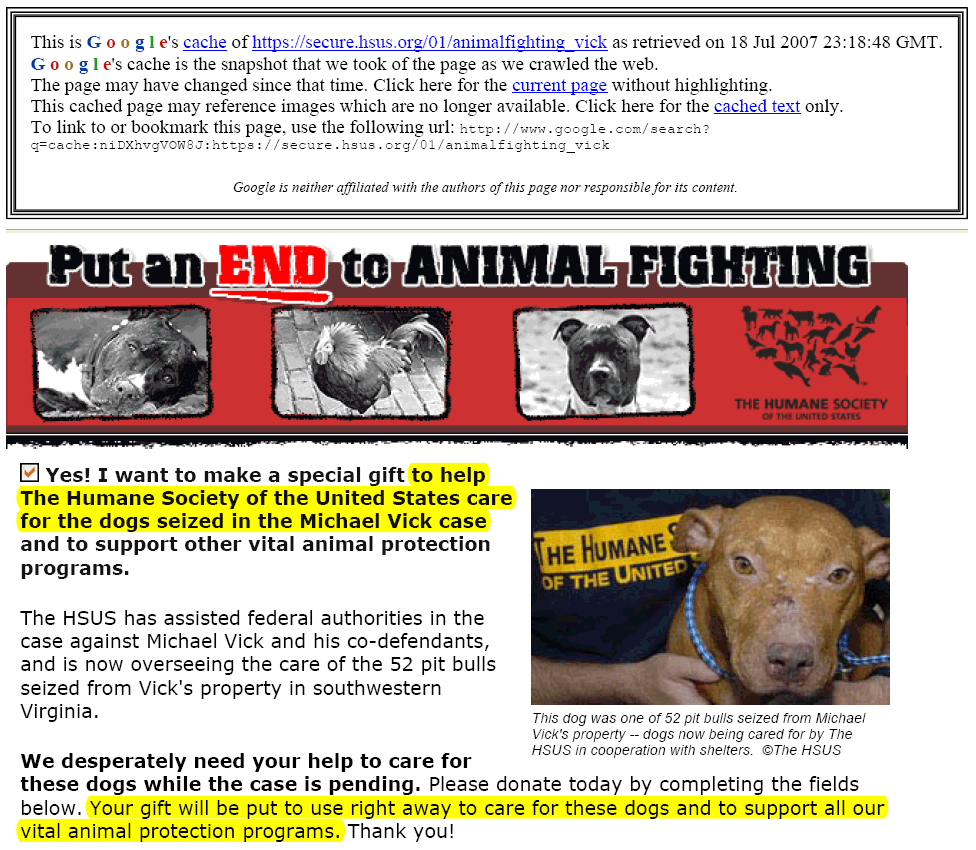
Further reading
- Amory, Cleveland, Man Kind? Our Incredible War on Wildlife (1974).
- Balcombe, Jonathan, The Use of Animals in Higher Education: Problems, Alternatives, and Recommendations (2000).
- Donaldson, Sue and Will Kymlicka, Zoopolis: A Political Theory of Animal Rights (2012).
- Donahue, Jesse, and Erik Trump, The Politics of Zoos: Exotic Animals and their Protectors (2006).
- Hadidian, John A., Wild Neighbors: The Humane Approach to Living With Wildlife 2007.
- Hoyt, John A., Animals in Peril 1994.
- Irwin, Paul, Losing Paradise: The Growing Threat to Our Animals, Our Environment, and Ourselves (2000).
- McGiffin H., and N. Brownley, eds., Animals in Education: The Use of Animals in High School biology Classes and Science Fairs (1980).
- Morse, Mel, Ordeal of the Animals (1970).
- Pacelle, Wayne, The Bond: Our Kinship with Animals, Our Call to Defend Them (2009).
- Russell, William S., and Rex Burch, The Principles of Humane Experimental Technique (1959).
- Scully, Matthew, Dominion: The Power of Man, The Suffering of Animals, and The Call to Mercy (2003).
- Stephens, Martin L., Alternatives to Current Animal Use in Research, Safety, Testing and Education(1986).
- Unti, Bernard. Protecting All Animals: A Fifty-year History of the Humane Society of the United States (2004).
- Unti, Bernard, and Andrew Rowan. "A Social History of Animal Protection in the Post–World War Two Period." In State of the Animals 2001, edited by Deborah J. Salem and Andrew N. Rowan. Washington, D.C.: Humane Society of the United States, 2002.
External links
- Official website
- HSUS News magazine archive 1966–1992 at WellBeing International Studies Repository
- Guide to the Humane Society Veterinary Medical Association Videotape Collection circa 1980–2014
- 1954 establishments in Washington, D.C.
- Animal charities based in the United States
- Animal welfare organizations based in the United States
- Anti-vivisection organizations
- Anti-bullfighting organizations
- American organizations established in 1954
- Non-profit organizations based in Washington, D.C.
- Anti-hunting organizations
- Anti-fur organizations
- Humane education organizations