
Nabemono

Nabemono (鍋物, なべ物, nabe "cooking pot" + mono "thing"), or simply nabe, is a variety of Japanesehot pot dishes, also known as one-pot dishes[1] and sometimes translated as "things in a pot".[2]
Description
Nabemono are stews and soups containing many types of ingredients that are served while still boiling. Nabe is thus typically enjoyed on cold days or in the winter. In modern Japan, nabemono are kept hot at the dining table by portable stoves. The dish is frequently cooked at the table, and the diners can pick the cooked ingredients they want from the pot. It is either eaten with the broth or with a dip. Further ingredients can also be successively added to the pot.
There are two types of nabemono in Japan: lightly flavored stock (mostly with kombu) types such as yudōfu (湯豆腐) and mizutaki (水炊き), eaten with a dipping sauce (tare) to enjoy the taste of the ingredients themselves; and strongly flavored stock, typically with miso, soy sauce, dashi, and/or sweet soy types such as yosenabe (寄鍋), oden (おでん), and sukiyaki (すき焼き), eaten without further flavoring.
The pots are traditionally made of clay (土鍋, donabe) or thick cast iron (鉄鍋, tetsunabe). Clay pots can keep warm for a while after being taken off the fire, while cast iron pots evenly distribute heat and are preferable for sukiyaki. Pots are usually placed in the center of dining tables and are shared by a group of people. This is considered the most sociable way to eat with friends and family.
Varieties
- Chankonabe (ちゃんこ鍋): was originally served only to sumo wrestlers. Chankonabe is served with more ingredients than other nabemono, as it was developed to help sumo wrestlers gain weight. Many recipes exist but usually contain meatballs, chicken, vegetables such as napa cabbage and udon.
- موتسونابي (もつ鍋): طبق يُحضّر من أحشاء البقر أو الخنزير، وهو في الأصل طبق محلي من فوكوكا ، لكنه انتشر على مستوى البلاد في التسعينيات لمذاقه الرائع وسعره المعقول.تختلف مكونات الموتسونابي من مطعم لآخر، ولكن من الشائع سلق أحشاء البقر الطازجة مع الملفوف والثوم المعمر . بعد تناول الأحشاء والخضراوات، يُستخدم ما تبقى من المرق لطهي نودلز تشامبون . وتُستخدم صلصة الصويا أو الميسو كقاعدة أساسية للمرق.
- أودن : يتكون من عدة مكونات مثل البيض المسلوق، والفجل الأبيض ، والكونجاك ، وكعك السمك المُصنّع، مطبوخة في مرق داشي خفيف بنكهة الصويا. ويُستخدم الكاراشي (الخردل الياباني) عادةً كنوع من التوابل.
- شابو شابو : لحم وخضروات مقطعة إلى شرائح رقيقة يتم سلقها في قدر على طاولة الطعام وتؤكل مع صلصة غمس.
- سوكياكي : لحم بقري مقطع إلى شرائح رقيقة، توفو، خضروات، ونودلز نشوية مطهوة في صلصة الصويا المحلاة وتؤكل مع صلصة البيض النيء.
- يوسينابي : كلمة "يوسي" (寄) تعني "الجمع"، مما يعني أن جميع المكونات (مثل اللحوم والمأكولات البحرية والبيض والتوفو والخضراوات ) تُطهى معًا في قدر. عادةً ما يُحضّر اليوسينابي من مرق مصنوع من نكهة الميسو أو صلصة الصويا.
- يودوفو : توفو مطهو ببطء في مرق كومبو ويقدم مع صلصة بونزو ومجموعة متنوعة من التوابل.
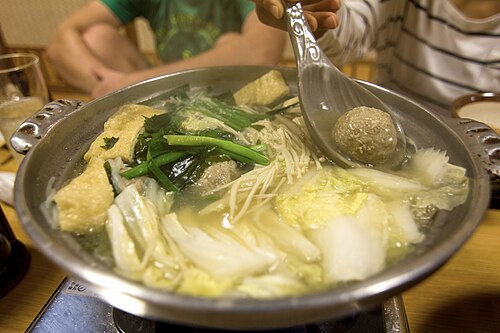


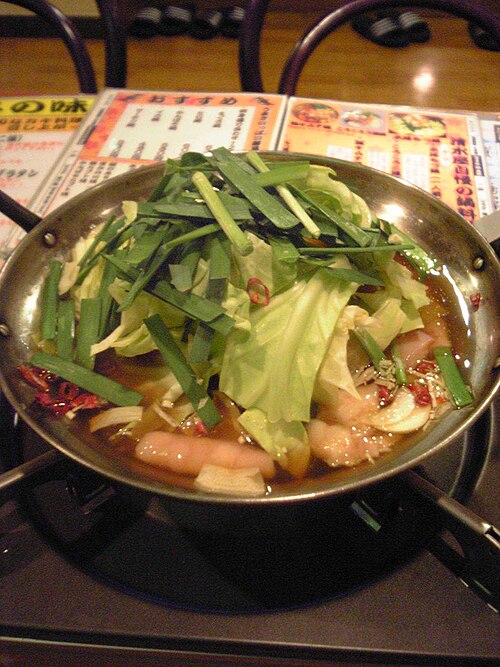
الاختلافات الإقليمية

توجد في اليابان العديد من قوائم الطعام الإقليمية (نابيمونو)، والتي تضم أطعمة محلية مميزة مثل سمك السلمون في هوكايدو والمحار في هيروشيما . ومن الأمثلة على ذلك:
- هوكايدو
- إيشيكاري-نابي : سمك سلمون مطهو ببطء في مرق ميسو مع الخضار. تشمل المكونات النموذجية الفجل الأبيض، والتوفو، والكونجاك، والملفوف الصيني، والبطاطا ، والبصل الأخضر ، والشونجيكو ، وفطر الشيتاكي ، والزبدة .
- منطقة توهوكو
- كيريتامبو-نابي : كيريتامبو (أرز مطحون، مشوي على أسياخ) مطبوخ في مرق مع الدجاج، الأرقطيون ، البقدونس الياباني ، البصل الويلزي، والكونجاك. طبق مميز من محافظة أكيتا .
- منطقة كانتو
- منطقة تشويتسو
- موميجي-نابي (لحم الغزال-نابي). المكونات النموذجية: لحم الغزال ، الأرقطيون، فطر شيتاكي، بصل ويلزي، كونجاك، توفو، خضروات خضراء، مطهوة في مرق أساسه الميسو.
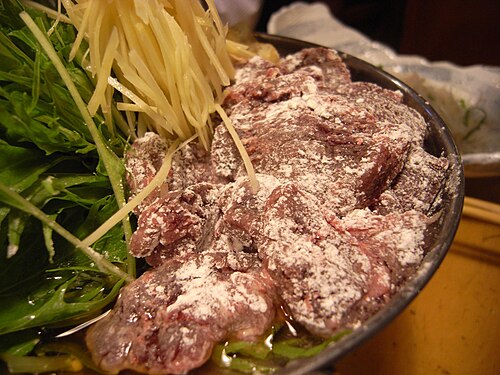
- منطقة كانساي
- منطقة تشوجوكو
- فوغو تشيري : شرائح من سمك الفوغو مطهوة في مرق داشي مع خضراوات ورقية مثل شونغيكو والملفوف الصيني ، وتؤكل مع صلصة بونزو .
- دوت-نابي : محار ومكونات أخرى (عادةً ما تكون ملفوف صيني، وتوفو، وشونجيكو) مطبوخة في قدر مع تغطية بطانته الداخلية بالميسو.
- منطقة شيكوكو
- بنكي نو ناجيرو : ( نا تعني الخضراوات الخضراء، وجيرو تعني الحساء) مصنوع من البط، والخنزير البري، والدجاج، ولحم البقر، ولحم الخنزير، والفجل الأبيض، والجزر، والميزونا، والهيرو (نوع من الكراث)، والزلابية المصنوعة من الحنطة السوداء والأرز.
- منطقة كيوشو
- ميزوتاكي : قطع دجاج وخضراوات مطهوة في مرق بسيط، وتُقدم مع صلصة غمس مثل البونزو. تشمل المكونات الملفوف الصيني، والبصل الأخضر، وفطر شيتاكي أو أنواع أخرى من الفطر، والتوفو، وشونجيكو، ونودلز شيراتاكي .
الصلصات
عادةً ما تُؤكل نابيمونو مع صلصة تُسمى أحيانًا تاري ، وتعني حرفيًا "صلصة التغميس". يمكن استخدام أنواع عديدة من الصلصة مع توابل إضافية تُسمى ياكومي. تشمل الياكومي النموذجية الثوم المبشور، والزبدة، والفلفل الأحمر، ومزيجًا من الفلفل الأحمر وتوابل أخرى، والسمسم المحمص، أو موميجي أوروشي (مزيج من الفجل الأبيض المبشور والفلفل الأحمر).
- بونزو : يتكون البونزو الشائع من صلصة الصويا وعصير البرتقال المر، وساكي حلو، ومرق كومبو (عشب البحر).
- صلصة السمسم ( جوماداري ): عادة ما تُصنع صلصة السمسم من السمسم المطحون وصلصة الصويا ومرق عشب البحر والساكي والسكر.
- البيض النيء المخفوق: يُستخدم عادةً كصلصة للسوكياكي.
انظر أيضاً
مراجع
- ↑ تسوجي، س. (2007). الطبخ الياباني: فن بسيط . سلسلة الطبخ والطعام والشراب. دار كودانشا الدولية المحدودة. ص 254. ISBN 978-4-7700-3049-8.
- ↑ سلاك، إس إف (2001). الفوندو والأطباق الساخنة . كتب إتش بي. ص 89. رقم ISBN 978-1-55788-369-8.
- الاختراعات اليابانية
- الحساء واليخنات اليابانية
- أطباق مطبوخة على الطاولة
- وعاء ساخن