
Regiment

A regiment is a military unit. Its role and size varies markedly, depending on the country, service, or specialisation.
In Medieval Europe, the term "regiment" denoted any large body of front-line soldiers,[1] recruited or conscripted in one geographical area, by a leader who was often also the feudal lordin capite of the soldiers. Lesser barons of knightly rank could be expected to muster or hire a company or battalion from their manorial estate.
By the end of the 17th century, infantry regiments in most European armies were permanent units, with approximately 800 men and commanded by a colonel.
Definitions
During the modern era, the word "regiment" – much like "corps" – may have two somewhat divergent meanings, which refer to two distinct roles:
- a front-line military formation; or
- an administrative or ceremonial unit.
In many armies, the first role has been assumed by independent battalions, battlegroups, task forces, brigades and other, similarly sized operational units.[2] However, these non-regimental units tend to be short-lived; and regiments have tended to retain their traditional responsibilities for ceremonial duties, the recruitment of volunteers, induction of new recruits, individual morale and esprit de corps, and administrative roles (such as pay).
A regiment may consequently be a variety of sizes:
- smaller than a standard battalion, e.g. Household Cavalry Mounted Regiment;
- a battalion equivalent, e.g. 3rd Foreign Infantry Regiment;
- a brigade equivalent, e.g. 8th Marine Regiment (United States);
- several battalions, e.g.
- an entire arm of service, e.g.
- the Royal Australian Regiment includes all of the Australian Army's regular infantry (other than reserve and special forces units), and
- تُعرف وحدات المدفعية التابعة للجيش البريطاني مجتمعة باسم فوج المدفعية الملكي ، والذي ينقسم لأغراض العمليات إلى أفواج ميدانية.
الأصل التاريخي
يُعتقد أن المصطلح الفرنسي "régiment" قد دخل الاستخدام العسكري في أوروبا في أواخر القرن السادس عشر، عندما تطورت الجيوش من مجموعات من الحاشية التي تتبع الفرسان ، إلى قوات عسكرية دائمة ومنظمة رسميًا. في ذلك الوقت، كانت الأفواج تُسمى عادةً بأسماء قادتها من العقداء، وتُحل في نهاية الحملة أو الحرب؛ وقد يقوم العقيد وفوجُه بتجنيد أفراد من عدة ملوك أو دول وخدمتهم. لاحقًا، أصبح من المعتاد تسمية الفوج بحسب موقعه في خط المعركة ، وتجنيد أفراده من أماكن محددة تُسمى الكانتونات . من أقدم الأفواج التي لا تزال قائمة، وتواريخ تأسيسها، فوج المشاة الفرنسي الأول (1479)، وفوج المشاة الإسباني "سوريا" رقم 9 (1505)، [ 3 ] وحرس الحياة السويدي "سفيا" (1521)، وشركة المدفعية البريطانية الشرفية (1537). [ 4 ]
في القرن السابع عشر، شُكّلت الألوية كوحدات تجمع بين المشاة والفرسان والمدفعية، وكانت أكثر فعالية من الأفواج القديمة ذات السلاح الواحد؛ وفي العديد من الجيوش، حلت الألوية محل الأفواج. لم يتبع التنظيم والأعداد أي نمط موحد بين الجيوش أو داخلها خلال هذه الفترة، وكان العامل المشترك الوحيد هو أن لكل فوج قائدًا واحدًا. [ 5 ]
بحلول مطلع القرن الثامن عشر، تطورت الأفواج في معظم جيوش القارة الأوروبية إلى وحدات دائمة ذات ألقاب وأزياء مميزة، يقود كل منها عقيد. عندما يكون الفوج بكامل قوته، يتألف عادةً من كتيبتين ميدانيتين، كل منهما تضم حوالي 800 رجل، أو من 8 إلى 10 سرايا . في بعض الجيوش، كان يُطلق على الفوج المستقل ذي السرايا الأقل اسم " نصف فوج" . [ 6 ] أما فوج الفرسان، فكان يتألف من 600 إلى 900 جندي، يشكلون وحدة واحدة. [ 7 ] خلال الحملات العسكرية، سرعان ما تنخفض هذه الأعداد بسبب الخسائر والانسحابات، وكان من الضروري أحيانًا دمج الأفواج أو سحبها إلى مستودع ريثما يتم تجنيد وتدريب المجندين.
With the widespread adoption of conscription in European armies during the nineteenth century, the regimental system underwent modification. By the end of the 19th century the number of battalions in an infantry regiment was: in France and Germany—3, in Russia—4 for field regiments and 2 for rifle and reserve regiments, in Austria—4; the number of squadrons in a cavalry regiment was: in France and Germany—5, in Russia and Austria—6 (with some exceptions).[8] Prior to World War I, an infantry regiment in the French, German, Russian, and other smaller armies would comprise four battalions, each with a full strength on mobilization of about 1,000 men. As far as possible, the separate battalions would be garrisoned in the same military district, so that the regiment could be mobilized and campaign as a 4,000 strong linked group of sub-units. A cavalry regiment by contrast made up a single entity of up to 1,000 troopers. A notable exception to this practice was the British line infantry system where the two regular battalions constituting a regiment alternated between "home" and "foreign" service and seldom came together as a single unit.
Regimental system

In the regimental system, each regiment is responsible for recruiting, training, and administration; each regiment is permanently maintained and therefore the regiment will develop its unique esprit de corps because of its unitary history, traditions, recruitment, and function. Usually, the regiment is responsible for recruiting and administering all of a soldier's military career. Depending upon the country, regiments can be either combat units or administrative units or both.
This is often contrasted to the "continental system" adopted by many armies. In the continental system, the division is the functional army unit, and its commander is the administrator of every aspect of the formation: his staff train and administer the soldiers, officers, and commanders of the division's subordinate units. Generally, divisions are garrisoned together and share the same installations: thus, in divisional administration, a battalion commanding officer is just another officer in a chain of command. Soldiers and officers are transferred in and out of divisions as required.
Some regiments recruited from specific geographical areas, and usually incorporated the place name into the regimental name (e.g. Bangladesh Infantry Regiment). In other cases, regiments would recruit from a given age group within a nation (e.g. ZuluImpis), an ethnic group (e.g. the Gurkhas), or foreigners (e.g. the French Foreign Legion). In other cases, new regiments were raised for new functions within an army; e.g. the Fusiliers, the Parachute Regiment (British Army), U.S. Army 75th Ranger Regiment, and the Light Reaction Regiment (Philippine Army) .
Disadvantages of the regimental system are hazardous regimental competition, a lack of interchangeability between units of different regiments, and more pronounced "old boy networks" within the military that may hamper efficiency and fairness.
A key aspect of the regimental system is that the regiment or battalion is the fundamental tactical building block. This flows historically from the colonial period, when battalions were widely dispersed and virtually autonomous, but is easily adapted to a number of different purposes. For example, a regiment might include different types of battalions (e.g. infantry or artillery) of different origins (e.g. regular or reserve).
Within the regimental system, soldiers, and usually officers, are always posted to a tactical unit of their own regiment whenever posted to field duty. In addition to combat units, other organizations are very much part of the regimental family: regimental training schools, serving members on "extra-regimental employment", regimental associations (retirees), bands and associated cadet groups. The aspects that an administrative regiment might have in common include a symbolic colonel-in-chief (often a member of the royal family), a colonel of the regiment or "honorary colonel" who protects the traditions and interests of the regimental family and insists on the maintenance of high standards, battle honours (honours earned by one unit of an administrative regiment are credited to the regiment), ceremonial uniforms, cap badges, peculiarities of insignia, stable belts, and regimental marches and songs. The regiment usually has a traditional "home station" or regimental depot, which is often a historic garrison that houses the regimental museum and regimental headquarters. The latter has a modest staff to support regimental committees and administer both the regular members and the association(s) of retired members.
Advantages and disadvantages
The regimental system is generally admired for the esprit de corps it engenders in its units' members, but efforts to implement it in countries with a previously existing continental system usually do not succeed. The system presents difficulties for military planners, who must deal with the problems of trying to keep soldiers of a regiment together throughout their careers and of administering separate garrisons, training and mess facilities. The regimental community of serving and retired members often makes it very difficult for planners to restructure forces by moving, merging or re-purposing units.
In those armies where the continental system exists, the regimental system is criticised as parochial and as creating unnecessary rivalry between different regiments. The question is also raised as to whether it is healthy to develop soldiers more loyal to their regiment than to the military in general. Regiments recruited from areas of political ferment (such as Scotland, Wales, Ireland, Quebec, India, etc.), tend to perform particularly well because of the loyalty their members exhibit to the regiments. Generally, the regimental system is found to function best in countries with small-to medium-sized military forces where the problems of administering vast numbers of personnel are not as prevalent. The regimental system works particularly well in an environment in which the prime role of the army consists of small-scale police actions and counterinsurgency operations, requiring prolonged deployment away from home. In such a situation, co-ordination between regiments is rarely necessary, and the esprit de corps of the regiment provides an emotional substitute for the sense of public approval that an army receives at home. This is particularly relevant to British experience during the days of the empire, where the army was virtually continuously engaged in low-intensity conflict with insurgents, and full-scale warfare was the exception rather than the rule.
A regimental system, since it is decentralized and the regiments are independent from each other, prevents the army from staging a coup d'état. This is best exemplified by the British Army: since the formation of the United Kingdom, there have been no military takeovers.[9][10]
A regimental system can also foster close links between the regiment and the community from which it is recruited. This sense of community 'ownership' over local regiments can be seen in the public outcry over recent regimental amalgamations in the United Kingdom. On the other hand, recruitment from a single community can lead to a concentrated and potentially devastating local impact if the regiment takes heavy casualties.
Further, the regimental system offers the advantage of grouping like units together for centralized administrative, training, and logistical purposes, thereby creating an "economies of scale" effect and its ensuing increased efficiency.
An illustrative example of this is the modular integration employed by the United States Marine Corps, which can take elements from its regimentally grouped forces and specifically tailor combined armstask forces for a particular mission or the deployed Marine Expeditionary Units (MEU). This is achievable partially because of the Marines mission adaptability, flexibility, philosophy, shared culture, history and overall esprit de corps, which allows for near seamless interoperability.[11]
Commonwealth armies
In the British Army and armies modelled on it (such as the Australian, the New Zealand, the Canadian, the Pakistani, Bangladeshi, Myanmar and the Indian armies), the term regiment is used in two different ways: it can mean an administrative identity and grouping, or a tactical unit. In the former Dominion of Newfoundland, "Regiment" was used to describe the entirety of the fighting armed forces, the Royal Newfoundland Regiment.
In the Commonwealth countries listed above, the large administrative regiment has been the normal practice for many years. In the case of India, "large regiments" of four to five battalions date from 1923 and, since the 1950s, many of these have expanded even further. As an example, the Punjab Regiment of the Indian Army has expanded from four battalions in 1956 to its present strength of 20, while, in the Pakistan Army, several regiments have over 50 battalions.
In Australia, there is but one administrative infantry regiment in the regular army: the Royal Australian Regiment, consisting of all seven regular infantry battalions in the Army. The Australian Army Reserve also has state-based infantry regiments which administer the reserve infantry battalions.
In Pakistan, the word regiment is an administrative grouping. While individual battalions may have different roles (for example different battalions of the Frontier Force Regiment may be mechanized infantry, paratroop infantry, or mountain troops), the regiment is considered to encompass all of them.
British Army

The modern British regimental system came about as a result of the 19th century Cardwell Reforms.
In the British Army, for most purposes, the regiment is the largest "permanent" organisational unit. Above regimental level, the organisation is changed to meet the tasks at hand. Because of their permanent nature, many regiments have long histories, often going back for centuries: the oldest British regiment still in existence is the Royal Jersey Militia, established in 1337 although historically the Jersey Militia are referred to as a regiment it is disputed that they are in fact a corps. The Buffs (Royal East Kent Regiment), formed in 1572, was the oldest infantry regiment. It now forms part of the Princess of Wales Royal Regiment.[12]
In the United Kingdom, there existed until recently a number of administrative "divisions" in the infantry that encompassed several regiments, such as the Guards Division, the former Scottish Division (now a single regiment), or the Light Division (now also compressed into a multi-battalion single regiment). The reduction and consolidation of British infantry regiments that began in the late 1950s and concluded in 2006 has resulted in a system of administrative regiments each with several battalions, a band, a common badge and uniform etc.
In the British regimental system, the tactical regiment or battalion is the basic functional unit and its commanding officer more autonomous than in continental systems. Divisional and brigade commanders generally do not immerse themselves in the day-to-day functioning of a battalion – they can replace the commanding officer but will not micro-manage the unit. The regimental sergeant major is another key figure, responsible to the CO for unit discipline and the behaviour of the NCOs.
It should, however, be noted that amalgamations beginning in the late 1950s and ending in 2006 have diluted the British regimental system through the now almost universal adoption of "large regiments" for the infantry of the Army. As of 2014, only thirteen line infantry regiments survive, each comprising up to six of the former battalions that previously had separate regimental status. Only the five Guards regiments retain their historic separate identities. Similarly, as of 2015, only eight of the regiments of the Royal Armoured Corps (cavalry plus Royal Tank Regiments) survive.
One administrative armoured regiment of the British Army consisted of more than one tactical regiment. The Royal Tank Regiment until 2014 had two (1 and 2 RTR), and once had many more. They were all amalgamated into a single regiment. Artillery units are considered part of a single administrative regiment, but there are typically several tactical artillery regiments.
The British Army also has battalion-sized tactical regiments of the Royal Engineers, Royal Corps of Signals, Army Air Corps, Royal Logistic Corps, and Royal Military Police.
Infantry

Administrative infantry regiments are composed of one or more battalions. When a regiment has only one battalion, the battalion may have exactly the same name as the regiment. In Britain, every infantry battalion bears a number, even if it is the only remaining battalion in the regiment. Until after the Second World War, every regiment had at least two battalions. Traditionally, the regular battalions were the 1st and 2nd Battalions, the militia (later Special Reserve) battalion was the 3rd Battalion, and the Army Reserve battalions were the 4th Battalion, the 5th Battalion and up. A few regiments had up to four regular battalions and more than one militia battalion, which disrupted the numbering, but this was rare. For this reason, although the regular battalion today (if there is only one) will always be the 1st Battalion, the TA battalions may have non-consecutive numbers.
In practice, it is impossible to exercise all the administrative functions of a true regiment when the regiment consists of a single unit. Soldiers, and particularly officers, cannot spend a full career in one battalion. Thus in the Armoured Corps, the traditional administrative "regiment" tends to play more of a ceremonial role, while in practice, its members are administered by their corps or "branch" as in the Artillery. Thus soldiers and officers can serve in many different "regiments", changing hat badges without too much concern during their career. Indeed, in the artillery, all regiments wear the same badge.
Canadian Army
في كندا، يُعرَّف الفوج بأنه تشكيلٌ يتألف من وحدةٍ أو أكثر، ويوجد بشكلٍ شبه حصري لأسبابٍ تتعلق بالتراث، واستمرارية أوسمة المعارك ، وروح الفريق . ويتألف كل فوجٍ من أفواج المشاة النظامية الثلاثة من ثلاث كتائب نظامية، تضم كل كتيبةٍ منها حوالي 600 جندي، بالإضافة إلى كتيبةٍ احتياطيةٍ أو أكثر. وتُستخدم الكتائب الكندية تكتيكياً وإدارياً ضمن مجموعات الألوية .
عادةً ما تتألف الأفواج المدرعة في كندا منذ نهاية الحرب العالمية الثانية من فوج تكتيكي واحد. خلال ستينيات القرن الماضي، ضمت ثلاثة أفواج كندية عناصر نظامية وعناصر ميليشيا، تم حلها بعد فترة وجيزة من إعادة توحيد كندا عام 1968. حاليًا، يتألف فوج واحد من فوجين تكتيكيين، هما الفوج المدرع الثاني عشر الكندي والفوج المدرع الثاني عشر الكندي (الميليشيا)، وكلاهما جزء من الفوج الإداري الثاني عشر الكندي .
تُعتبر وحدات المدفعية جزءًا من فوج إداري واحد، ولكن عادةً ما توجد عدة أفواج مدفعية تكتيكية. ويتم تمييزها بالأرقام أو الأسماء أو كليهما. على سبيل المثال، تُعدّ الأفواج التكتيكية مثل الفوج الأول من مدفعية الخيالة الملكية الكندية ، وفوج تورنتو السابع من المدفعية الملكية الكندية، وغيرها الكثير، جزءًا من الفوج الإداري الواحد، وهو الفوج الملكي الكندي للمدفعية . وفي بريطانيا، يعمل الفوج الملكي للمدفعية بنفس الطريقة.
تتألف أفواج المشاة الإدارية من كتيبة واحدة أو أكثر . عندما يضم الفوج كتيبة واحدة فقط، قد تحمل الكتيبة نفس اسم الفوج. على سبيل المثال، فوج شمال ساسكاتشوان هو الكتيبة الوحيدة في الفوج الإداري التي تحمل نفس الاسم. أما إذا كان هناك أكثر من كتيبة، فيتم تمييزها بالأرقام أو الألقاب الفرعية أو كليهما.
الجيش الهندي
عند تأسيسه، ورث الجيش الهندي الهيكل التنظيمي للجيش البريطاني، وهو الهيكل الذي لا يزال قائماً حتى اليوم. ولذلك، وكما كان الحال مع سلفه، فإن مسؤولية فوج المشاة الهندي لا تكمن في تنفيذ العمليات الميدانية، بل في توفير كتائب وأفراد مدربين تدريباً عالياً للتشكيلات الميدانية. ونتيجة لذلك، من الشائع أن نجد كتائب من الفوج نفسه منتشرة عبر عدة ألوية وفرق وفيالق وقيادات، وحتى مسارح عمليات. ومثل نظرائهم البريطانيين ونظرائهم في دول الكومنولث، يتميز الجنود المجندون في الفوج بولائهم الشديد، واعتزازهم الكبير بالفوج الذي ينتمون إليه، وعادةً ما يقضون كامل مسيرتهم المهنية داخله.
تعتمد معظم أفواج المشاة في الجيش الهندي في تجنيدها على معايير اختيار محددة، مثل المنطقة (على سبيل المثال، فوج آسام )، أو الطبقة/المجتمع ( فوج جات )، أو الدين ( فوج السيخ ). وتواصل معظم الأفواج إرث الأفواج التي شُكّلت في ظل الحكم البريطاني، ولكن بعضها شُكّل بعد الاستقلال، وتخصص بعضها في الدفاع عن الحدود، ولا سيما كشافة لاداخ ، وكشافة أروناتشال ، وكشافة سيكيم .
على مر السنين، سادت مخاوف من أن ولاء الجنود يميل أكثر إلى أفواجهم والمناطق/الطوائف/المجتمعات/الأديان التي جُندوا منها، بدلاً من الاتحاد الهندي ككل. ولذلك، تم إنشاء بعض الأفواج "العمومية" أو "الشاملة لجميع الطبقات"، والتي تجند جنودًا من جميع أنحاء الهند، بغض النظر عن المنطقة أو الطائفة أو المجتمع أو الدين: مثل لواء الحرس (الذي تحول لاحقًا إلى سلاح المشاة الآلي) وفوج المظليين .
يضم الجيش الهندي العديد من الأفواج، معظمها من المشاة، بالإضافة إلى أفواج من سلاح الفرسان والمدفعية تتألف من كتيبة واحدة. وتُعدّ هذه الأفواج إرثًا من الجيش الهندي البريطاني خلال فترة الحكم البريطاني للهند قبل 15 أغسطس 1947. قد يضم كل فوج مشاة كتيبة واحدة أو أكثر، بينما تتكون أفواج سلاح الفرسان والمدرعات والمدفعية من كتيبة واحدة. ويوجد لكل فوج مقر قيادة (يُسمى مركزًا).
يقود كل فوج من المشاة عقيد ويساعده مقدم. [ 13 ]
الجيش الأيرلندي
تُسمى وحدات المدفعية الميدانية في الجيش الأيرلندي بالأفواج . وهي مقسمة إلى بطاريات، وتشكل الأفواج مجتمعةً فيلق المدفعية. أما وحدات الدفاع الجوي، فتُنظم كفوج واحد مع بطاريات فردية متمركزة في أنحاء البلاد.
الجيش الفلبيني
يضم الجيش الفلبيني حالياً ثلاثة أفواج مخصصة للعمليات الخاصة تحت قيادة العمليات الخاصة التابعة للقوات المسلحة الفلبينية . وتتخصص هذه الأفواج في العمليات المباشرة، وحرب الأدغال، وحرب المدن، والاستطلاع الخاص، والحرب غير التقليدية، والحرب النفسية، ومكافحة الإرهاب، وعمليات القصف الجماعي، وعمليات القنص ضد مواقع معادية، وذلك بحسب طبيعة كل منطقة.
كشافة رينجرز
The Scout Rangers, known officially as the First Scout Ranger Regiment, specializes in anti-guerrilla jungle warfare, raids, ambushes, close quarters combat, urban warfare and sabotage. It was formed on November 25, 1950, under the command of former AFP Vice Chief of Staff and Defense Secretary Rafael M. Ileto. It was modelled after two legendary fighting groups, the intelligence gathering American Alamo Scouts and the combat ready US Army Rangers. It was also formed to combat insurgencies such as the Communist and Moro Rebellions. It currently have more than 2500 Members.
Special Forces
The Special Forces Regiment (Airborne) is a special forces unit of the Philippine Army. It is based on and continually trains with its American counterpart, the U.S. Army Special Forces (Green Berets). It was established in 1962 by then Captain Fidel V. Ramos PA (INF) (first commanding officer of the SFR-A), primarily trained in both unconventional warfare operations and psychological warfare operations.
Like the Scout Rangers, members of the Special Forces Regiment of the Philippine Army are also highly trained in counter-insurgency operations. Upon assignment to the Special Forces, soldiers are made to undergo the Basic Airborne Course. They, later-on, undergo the Special Forces Operations Course - an eight-month course that equips each SF soldier in the basics of Special Forces and unconventional warfare operations. Each member of the SF Regiment may opt to undergo specialty courses as well after finishing the Special Forces basic course. These include, but is not limited to, training in demolitions and bomb disposal (EOD), psychological warfare operations (PSYOPS), riverine operations including combat diving, intelligence operations, weapons, medics, as well as VIP security training in preparation for reassignment with the Presidential Security Group.
The basic combat organization of the Special Forces is the 12-man Special Forces Team. An SF Team will have at least one of each SF MOS present in the team.
Light Reaction Regiment
The Light Reaction Regiment is the premier counter-terrorist unit of the Philippine Army. It was formerly known as the Light Reaction Battalion and Light Reaction Company. Due to its specialization in counter-terrorism operations and its formation with the assistance of American advisers, the Light Reaction Regiment has been sometimes referred to as the Philippines' Delta Force. It traces its origins back to the year 2000 when non-commissioned officers from the Scout Rangers and 1st Special Forces Regiment (Airborne) were trained by American military advisers from the 1st Battalion, 1st Special Forces Group.
Russian/Soviet Armed Forces
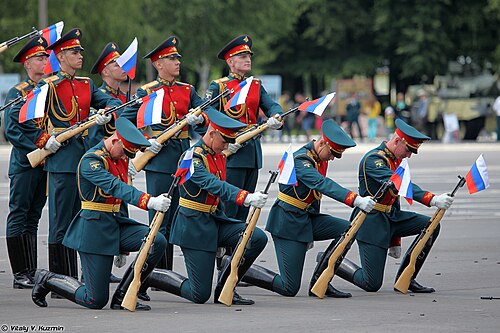
The regiments (Russian: полк)[14] of the Russian Army and armed forces influenced by Russia consist of battalions (Russian: батальон), in the infantry or tank troops, divizions (Russian: дивизион) in the artillery troops, and squadrons (Russian: эскадрилья) in aviation troops. Land forces regiments are subdivided into companies (Russian: рота) (or batteries in the artillery) and platoons (Russian: взвод). These also include many support units of either company or platoon size.
On the march, a regiment normally travels in column along one or two routes, averaging 20–30 km/h when moving on roads or 15 km/h going cross-country. The main force is preceded by reconnaissance and advanced guards and protected on the flanks and the rear by security elements. When offensive operations begin, a regiment normally assumes attack formation about 1,000 metres from the enemy's position and attacks along a front typically 4 to 5 kilometres wide, but can vary between 3 and 8 kilometres. During the attack the average speed of advance is 200 metres per minute with BTRs or BMPs normally following 100 to 400 metres behind tanks and 50 to 100 metres of spacing between vehicles.[15]
Motor rifle regiment
The motor rifle regiment was one of the basic tactical units within the Soviet Ground Forces, totaling around 2,500 officers and other ranks. While normally operating as part of a motor rifle division or tank division, it was capable of short-term independent operations. By the late 1980s, it consisted of a regimental headquarters in command of three motor rifle battalions, each numbering around five hundred personnel and equipped with either BMPinfantry fighting vehicles or BTRarmoured personnel carriers, and one tank battalion, typically consisting of thirty-one T-64, T-72 or T-80 tanks, although older models were present in units outside the European theater. These were supported by a battalion of eighteen 122mm artillery pieces, either the self-propelled 2S1 Gvozdika in BMP regiments or towed D-30howitzers in BTR regiments, though some BTR regiments also used the 2S1, with additional fire support from the organic mortar battery in each infantry battalion. Additional combat support came in the form of an air defence missile and artillery company with four SA-9 or SA-13s and four ZSU-23-4 or 2S6 Tunguskas, an antitank missile battery with nine BRDM-mounted AT-3 Sagger or AT-5 Spandrel launchers, a reconnaissance company mounted on BMPs, BRDMs and motorbikes and an engineer company. Other non-combat formations included a signals company, chemical protection platoon, material support company, maintenance company, and regimental medical point.[16]
Tank regiment
The tank regiment was found in both motorised rifle divisions and tank divisions, with slight organisational differences depending between the two. By the late 1980s, tank regiments operating as part of motorised rifle divisions contained slightly over 1,100 officers and other ranks while those operating within tank divisions contained over 1,600. A regimental headquarters oversaw command of three tank battalions of thirty-one tanks each, typically T-64, T-72, or T-80 tanks although some units used older models, and an artillery battalion of eighteen 2S1 Gvozdika self-propelled howitzers, with some using the older towed D-30 howitzer. Tank regiments operating as part of a tank division included a fifth combat battalion of motorised infantry, identical to those in BMP-equipped motorised rifle regiments. Combat support and combat service support subunits were the same as in motorised rifle regiments with the exception of the antitank missile battery.[17]
Divisional Artillery regiment (mechanized/armored division)
The artillery regiment was used to provide fire support, but differed depending on whether it was part of a motorised rifle division or tank division. The artillery regiment of an MRD consisted of three battalions of eighteen 2S3 Akatsiyas each and a battalion of eighteen BM-21 Grads, numbering just under 1,300 personnel total, while a TD artillery regiment had one less battalion of 2S3s and a little over one thousand personnel total. This was the standard model by the late 1980s; however, not all artillery regiments had yet to conformed to it, and one or more of the battalions might have used older weapon systems like the D-30 howitzer. Each regiment was led by a command control battery and included an artillery reconnaissance battery, motor transport company, maintenance company, regimental medical point, chemical protection platoon and supply and service platoon.[18]
Anti-aircraft rocket regiment
كان فوج الصواريخ المضادة للطائرات جزءًا هامًا من جهود فرقة البنادق الآلية أو فرقة الدبابات لتطويق ساحة المعركة بشبكة دفاع جوي واسعة. يتألف فوج صواريخ أرض-جو، الذي يزيد عدده قليلًا عن خمسمائة فرد، من مقر قيادة مسؤول عن عشرين صاروخًا من طراز SA-6 Gainful موزعة على خمس بطاريات إطلاق صواريخ؛ معظمها من طراز SA-6a، مع أنه منذ عام 1979 تم نشر عدد محدود من طراز SA-6b، واستخدمت بعض الأفواج صاروخ SA-8 Gecko كبديل. كما زُودت كل بطارية صواريخ، إلى جانب مقر القيادة وبطارية الصواريخ الفنية، بثلاثة أنظمة دفاع جوي محمولة محمولة (MANPAD) ، إما من طراز SA-7 Grail أو SA-14 Gremlin أو SA-16 Gimlet . إلى جانب بطارية الصواريخ الفنية، شملت وحدات الدعم الأخرى بطارية استطلاع مدفعي، وسرية نقل آلي، وسرية صيانة، وفصيلة حماية كيميائية. [ 19 ]
فوج مدفعية مضادة للطائرات
في أواخر ثمانينيات القرن العشرين، حلت أفواج المدفعية المضادة للطائرات محل أفواج صواريخ أرض-جو في الفرق العسكرية التي تم تخصيصها للمناطق الخلفية. زُوّدت هذه الأفواج بأربعة وعشرين مدفعًا مضادًا للطائرات من طراز S-60 عيار 57 ملم، موزعة على أربع بطاريات إطلاق نار. كما زُوّدت كل بطارية إطلاق نار، بالإضافة إلى مقر الفوج، بثلاثة صواريخ أرض-جو محمولة ، إما من طراز SA-7 Grail أو SA-14 Gremlin أو SA-16 Gimlet . وتشمل الوحدات الفرعية الإضافية بطارية قيادة وسيطرة وبطارية خدمات. [ 20 ]
الولايات المتحدة

تاريخيًا، كان الجيش الأمريكي مُنظمًا في أفواج، باستثناء الفترة من 1792 إلى 1796 خلال وجود فيلق الولايات المتحدة . خلال هذه الفترة ، كان الجيش، أو "الفيلق"، مُنظمًا في أربعة "أفواج فرعية"، وهي نواة القرن الثامن عشر للواء الأسلحة المشتركة الحديث الذي جمع بين المشاة والبنادق والمدفعية والفرسان . وعندما تم دمجها مع أفواج أخرى خلال الحرب، للعمليات الميدانية النشطة، تم تشكيل الأفواج بشكل أكبر في ألوية وفرق .
منذ الحقبة الاستعمارية، كان الفوج يتألف من مقر قيادة صغير ( لم تكن سرايا مقر القيادة موجودة قبل عام 1915)، وفي عام 1775، ضم عشر سرايا "خطية" على غرار الجيش البريطاني، دون أي مستوى تنظيمي وسيط دائم، أي مقر قيادة كتيبة تابع للفوج. وبين عامي 1776 و1783، احتوت أفواج المشاة الأمريكية على ما بين سبع سرايا (مثل فوج بنادق كارولاينا الجنوبية) واثنتي عشرة سرية (مثل فوج بنادق بنسلفانيا وقوات ولاية ماريلاند)، بينما ضمت أفواج مشاة الجيش القاري ثماني سرايا (زادت إلى تسع سرايا عام 1781). (باختصار، بين عامي 1790 و1792، نُظمت الأفواج في ثلاث كتائب، كل كتيبة تضم أربع سرايا). تقليديًا، كان الفوج والكتيبة كيانًا واحدًا، حيث كانت "الكتيبة" ببساطة هي الفوج المنظم للمعركة.
خلال الحرب الأهلية الأمريكية، أُضيفت تسعة أفواج مشاة جديدة من الجيش النظامي الأمريكي (من الحادي عشر إلى التاسع عشر) إلى الأفواج العشرة الموجودة مسبقًا. كانت الأفواج القديمة (من الأول إلى العاشر) تتألف من كتيبة واحدة وعشر سرايا، بينما صُممت الأفواج الجديدة بثلاث كتائب، كل كتيبة تضم ثماني سرايا. [ 21 ] مع ذلك، لم يبلغ سوى ثلاثة من هذه الأفواج التسعة قوتها الكاملة المكونة من ثلاث كتائب، بينما لم تتجاوز قوة الأفواج الأربعة الأخرى كتيبتين كاملتين. كان يقود الأفواج عادةً عقيد، يُعاونه مقدم ورائد، بالإضافة إلى ضباط أركان وجنود في مقر الفوج. في بعض الأحيان، كان قائد الفوج يُنظم عدة سرايا في كتيبة واحدة، أو نادرًا في كتيبتين، تحت قيادة المقدم أو الرائد أو نقيب كبير في الفوج. (ومن الأمثلة التاريخية على هذا الترتيب فوج الفرسان السابع خلال معركة ليتل بيغ هورن عام 1876.)
تم تجنيد العديد من أفواج المتطوعين الأمريكيين الإضافية من كل ولاية خلال الحرب الأهلية الأمريكية وفقًا للأوامر العامة رقم 15، وزارة الحرب، مكتب المساعد العام، واشنطن، 4 مايو 1861:
بعد أن دعا رئيس الولايات المتحدة إلى تشكيل قوة متطوعة للمساعدة في إنفاذ القوانين وقمع التمرد، وتتألف من تسعة وثلاثين فوجًا من المشاة وفوج واحد من الفرسان، مما يشكل حدًا أدنى إجماليًا قدره (34,506) أربعة وثلاثين ألفًا وخمسمائة وستة ضباط وجنود، وحدًا أقصى إجماليًا قدره (42,034) اثنين وأربعين ألفًا وأربعة وثلاثين ضابطًا وجنديًا، فقد تم اعتماد خطة التنظيم التالية، ويوجه بطباعتها للعلم العام.
في عام 1890، خُفِّض عدد السرايا في الفوج من العشر التقليدية إلى ثماني سرايا فقط، مع اقتراب نهاية حروب الهنود الحمر، ما استدعى تقليص القوات. إلا أنه في عام 1898، مع اندلاع الحرب مع إسبانيا، تم اعتماد هيكل يتألف من ثلاث كتائب واثنتي عشرة سرية. وقد أدى هذا الهيكل الموسع للفوج إلى تشكيل وحدات ذات حجم مماثل تقريبًا لأفواج الحرب الأهلية المكونة من كتيبة واحدة وعشر سرايا. (على سبيل المثال: ١٠١ ضابط وجندي لكل سرية، ومقر قيادة فوجي مكون من ٣٦ فردًا، بإجمالي ١٠٤٦ فردًا لكل فوج مشاة نموذجي في جيش الاتحاد عام ١٨٦١، مقابل ١١٢ ضابطًا وجنديًا لكل سرية، ومقر قيادة فوجي مماثل مكون من ٣٦ فردًا، بإجمالي ١٣٨٠ فردًا لكل فوج في فوج مشاة نموذجي في الجيش الأمريكي عام ١٨٩٨). بعد الحرب القصيرة، خفّض الجيش حجم السرايا والكتائب والأفواج بنحو ٣٠٪ في إطار عملية التسريح. ومع ذلك، بقي عدد السرايا والكتائب في كل فوج عند ١٢ و٣ على التوالي.
حتى عام 1917، وبموجب الخطة التنظيمية المثلثية التقليدية، كانت أفواج المشاة تُنظَّم في ألوية تضم ثلاثة أفواج، حيث تُشكِّل ثلاثة ألوية مشاة (ليصبح المجموع تسعة أفواج مشاة)، بالإضافة إلى لواء واحد من سلاح الفرسان وآخر من المدفعية الميدانية، فرقةً. وفي عام 1917، اعتمد الجيش خطة الفرقة المربعة ، مما زاد حجم الوحدات بشكل كبير من السرية إلى الفيلق، حيث تضاعف عدد القوات في كل وحدة أكثر من ثلاث مرات، أو ما يقارب أربع مرات. (في الفترة من 1915 إلى 1917، ارتفع العدد المُصرَّح به لسرايا البنادق من 76 ضابطًا وجنديًا إلى 256، ونما عدد أفواج المشاة من 959 إلى 3720).
تألفت "الفرقة المربعة" من لواءين مشاة، يتألف كل منهما من فوجين مشاة، ويضم كل فوج سرية قيادة، وسرية رشاشات، وسرية إمداد، و12 سرية بنادق موزعة على ثلاث كتائب، كل كتيبة تضم أربع سرايا بنادق. (كانت سرية الرشاشات الوحيدة تتبع مباشرة لقيادة الفوج). كما ضمت الفرقة لواء مدفعية مؤلفًا من ثلاثة أفواج، وثلاثة أفواج منفصلة للدعم القتالي: الهندسة، والإمداد، والطب.
The Army reorganized in preparation for the Second World War by effecting its triangular division organizational structure in 1939. Under this plan, divisional brigades were eliminated and the division consisted of three infantry regiments and one artillery regiment, styled as "Division Artillery", but usually consisting of battalions of the same regiment. The infantry regiments still contained three battalions; there were now "headquarters and headquarters" companies (HHCs) not only at the regimental-level but in each battalion as well. The battalions still contained four "line" companies, but instead of four rifle companies, now had three rifle companies and a heavy weapons company (containing machine guns and mortars). The regiment's machine gun company became an anti-tank company, the supply company became the service company, and a cannon company and a medical detachment were added to the regiment. In 1942 the Army began organizing armored divisions into combat commands, which grouped armor, armored infantry, and armored field artillery battalions into three tactical groups within the division without regard to regimental affiliation. However, armored regiment designations were retained for lineage and heraldic purposes.
As the United States Army transformed after the Korean War for potential combat against a nuclear-armed Warsaw Pact, changes began in 1956 to transform infantry regiments into battle groups under its new Pentomic organization.[22] Under this plan, battalions were eliminated and the infantry battle groups consisted of an Headquarters and Headquarters Company, five rifle companies, and a combat support company. This scheme retained the regimental designation for lineage and heraldry purposes, but the regiment ceased to exist as an intact organization for both infantry and field artillery units. The Divisional Artillery were now composed of several unrelated artillery battalions.
By 1965, the Army had eliminated the regiment (replaced by the brigade) under the Reorganization Objective Army Divisions (ROAD) plan as a tactical and administrative organization in all combat arms, save for a few armored cavalry regiments. However the battalion was restored as a tactical echelon, now organized into an HHC, three rifle companies, and a combat support company. The ROAD structure sealed the fate of the regiment in the U.S. Army, confirming its elimination as a level of command that had begun in 1942 with the "combat command" organization of the armored divisions and furthered by the Pentomic experiment in the 1950s. By 2015, the only Army unit still organized as a traditional regiment was the 75th Ranger Regiment.
In the 20th century, by using modern industrial management techniques, the Army was able to draft, assemble, equip, train and then employ huge masses of conscripted civilians in very short order, starting with minimal resources. Beginning with the First World War, as units became increasingly larger, and weapon systems and equipment became more complex, the regiment, while still filling a role as the immediate headquarters for its organic battalions, began to be replaced by the brigade as the intermediate tactical and operational headquarters for battalions, with the division becoming the senior administrative and logistical headquarters for the battalions, regiments, and brigades under its command.
A new system, the Combat Arms Regimental System, or CARS, was adopted in 1957 to replace the old regimental system. CARS uses the Army's traditional regiments as parent organizations for historical purposes, but the primary building blocks are divisions, brigades, and battalions. Each battalion carries an association with a parent regiment, even though the regimental organization no longer exists. In some brigades several numbered battalions carrying the same regimental association may still serve together, and tend to consider themselves part of the traditional regiment when in fact they are independent battalions serving a brigade, rather than a regimental, headquarters.
The United States Army Regimental System (USARS) was established in 1981 to replace the Combat Arms Regimental System, to provide each soldier with continuous identification with a single regiment, and to support that concept with a personnel system that would increase a soldier's probability of serving recurring assignments with his or her regiment. The USARS was developed with the intention that it would enhance combat effectiveness by providing the opportunity for a regimental affiliation, thus obtaining some of the benefits of the traditional regimental system.
Exceptions exist to USARS regimental titles, including the armored cavalry regiments (now defunct) and the 75th Ranger Regiment created in 1986. On 1 October 2005, the word "regiment" was formally appended to the name of all active and inactive CARS and USARS regiments. So, for example, the 1st Cavalry officially became titled the 1st Cavalry Regiment.
United States Marine Corps
The historical background of the use of regiments in the United States Marine Corps (USMC) is contained within USMC: A Complete History[23] and a summary of that information follows:
منذ الثورة الأمريكية وحتى عام 1913، كان من الممارسات الشائعة دمج وحدات مشاة البحرية الأمريكية (سواءً كانت بحرية أو برية) لتشكيل وحدات مؤقتة. في أغلب الأحيان، كانت هذه التشكيلات تتخذ شكل كتائب مؤقتة ، ولكنها كانت في بعض الأحيان تتحول إلى أفواج مؤقتة، أو ألوية مؤقتة ، أو نادرًا (خاصةً عند دمجها مع أفراد البحرية) ألوية مشاة بحرية . [ 24 ] كانت هذه المنظمات مؤقتة عمدًا، إذ لم تكن مشاة البحرية الأمريكية تحتفظ عادةً بقوات دائمة أكبر من حجم السرية، بل كانت تُنشئ "وحدات مهام" حسب الحاجة.
بينما شُكّلت أفواج مؤقتة، سُمّيت بالأفواج من الأول إلى الرابع، للعمليات الاستكشافية في بنما (1895) والفلبين (1899)، [ 24 ] بدأ تاريخ أفواج مشاة البحرية الأمريكية الحديثة في عام 1913 مع إنشاء فوجي القوات الأساسية المتقدمة الأول والثاني . هذان الفوجين (وهما حاليًا فوجا مشاة البحرية الثاني والأول على التوالي)، إلى جانب الأسلاف العددية لفوجي مشاة البحرية الثالث والرابع (اللذين شُكّلا في عام 1914 لحرب تامبيكو القصيرة مع المكسيك، والتي تضمنت احتلال فيراكروز )، يُعتبران النواة الأولى لأفواج مشاة البحرية الأمريكية الحديثة قبل الحرب العالمية الأولى.
ابتداءً من الحرب العالمية الأولى، ومع مشاركة سلاح مشاة البحرية الأمريكية مع الجيش الأمريكي في قوة المشاة الأمريكية ، حيث شكّلت الكتيبة الخامسة والسادسة من مشاة البحرية (إلى جانب كتيبة المدفعية الرشاشة السادسة ) لواء مشاة البحرية الرابع التابع للفرقة الثانية من الجيش الأمريكي ، بدأ سلاح مشاة البحرية الأمريكية بتنظيم قوات نظامية أكبر. وقد حاكت وحدات سلاح مشاة البحرية الأمريكية في حقبة الحرب العالمية الأولى وحدات الجيش الأمريكي المكافئة من خلال استخدام خطة "الفرقة المربعة" التنظيمية في تشكيل أفواجها وألويتها.
خلال الحرب العالمية الثانية، نظمت قوات مشاة البحرية الأمريكية أفواجها وفرقها وفقًا لنموذج "الفرقة المثلثة" الذي طوره الجيش في عام 1939. ولا تزال أفواج وفرق مشاة البحرية الأمريكية الحديثة تُنظم باستخدام نموذج مثلث مشابه جدًا لنموذج الحرب العالمية الثانية، مع اختلافات طفيفة للتكيف مع الأسلحة والمعدات الحديثة وهيكل الرتب المجندة.
Current Marine infantry, field artillery, and combat logistics battalions are organized into regiments, commanded by a colonel. Marine infantry and field artillery regiments are sequentially numbered and are referred to generically as "nth Marines" or "nth Marine Regiment", as in 1st Marines (an infantry regiment) or 12th Marine Regiment (a field artillery regiment). Marine infantry regiments consist of a regimental headquarters and service company (H&S Co) and three identical infantry battalions. Marine field artillery regiments consist of a regimental headquarters and service battery (H&S Bttry), a target acquisition battery, and from two to four field artillery battalions.
Marine logistics groups (MLG) contain two types of regiments; one headquarters (HQ) regiment (except in the Reserve 4th MLG) and two combat logistics regiments (CLR). Each of these two types of regiments contain a headquarters company and varying numbers and types of logistics battalions and separate logistics companies, depending upon whether the regiment's primary mission is to provide direct support to (1) a regimental combat team (RCT) or a Marine amphibious unit (MEU), or (2) provide general support across the Marine expeditionary force (MEF), including intermediate ground logistics support to Marine aviation units. These varying types of battalions and separate companies include: combat logistics, maintenance, and supply battalions, and combat logistics, communications, food service, and service companies (the latter three types in 3rd MLG only).
The HQ regiments (whose primary mission includes providing support to the MEUs) are not numbered; however, the CLRs are numbered according to their primary mission. CLRs that support RCTs have the same number as the parent Marine division of its supported RCT. Therefore, CLR 2 supports the RCTs of the 2nd Marine Division. CLRs that provide general maintenance and supply support to the MEF are designated by a two-digit number: the first digit is the Hindu-Arabic numeral equivalent of the MEF's roman numeral designation, and the second digit is always an arbitrarily assigned numeral "5". Therefore, the CLR that provides general maintenance and supply support to III MEF is CLR 35.
ينشر سلاح مشاة البحرية الأمريكية كتائب من أفواج المشاة التابعة له لتشكيل نواة فريق إنزال كتيبة (BLT) كعنصر قتالي بري (GCE) لوحدة استكشافية بحرية (MEU). مع ذلك، قد ينتشر فوج مشاة تابع لسلاح مشاة البحرية الأمريكية بكامله لتشكيل نواة فريق إنزال فوجي (RCT) أو فريق إنزال فوجي (RLT) كعنصر قتالي بري (GCE) للواء استكشافي بحري (MEB). في كلتا الحالتين، يتم تعزيز عنصر المشاة بقوات دعم قتالي بري تشمل المدفعية الميدانية، والاستطلاع، ومركبات الإنزال البرمائية الهجومية، ومركبات الاستطلاع المدرعة الخفيفة، والدبابات، ووحدات الهندسة القتالية. ثم يُدمج العنصر القتالي البري الناتج مع عنصر قتالي جوي (ACE)، وعنصر قتالي لوجستي (LCE)، وعنصر قيادة (CE) لتشكيل قوة مهام جوية برية تابعة لسلاح مشاة البحرية (MAGTF).
انظر أيضاً
مراجع
- ↑ الصفحة 39، المجلد الثالث والعشرون، الموسوعة البريطانية، الطبعة الحادية عشرة.
- ↑ "تعريف الفوج | Dictionary.com" . www.dictionary.com . تاريخ الاسترجاع: 23-03-2023 .
- ^ فيلاتورو، مانويل ب. (23 يوليو 2014). "الفوج الأكثر أنتيغو دي أوروبا empezó siendo un tercio español y Combatió contra Napoléón">الفوج الأكثر أنتيغو دي أوروبا empezó siendo un tercio español y Combati contra Napoléón" ABC . تم استرجاعه في 24 يوليو 2014 .
- ^ "Contenido - Ejército de tierra" . ejercito.defensa.gob.es . تم الاسترجاع 2022-08-14 .
- ↑ الموسوعة البريطانية، الطبعة الحادية عشرة، صفحة 39، المجلد 23
- ↑ ص 72 ويستكوت، توماس. نظرة على ديفونشاير في عام 1830: مع نسب معظم نبلائها. دبليو. روبرتس، 1845 - ديفون (إنجلترا) -
- ↑ كريستوفر دافي، الصفحتان 110 و121، التجربة العسكرية في عصر العقل ، رقم ISBN 1-85326-690-6
- ↑ تتضمن هذه المقالة نصًا من منشور أصبح الآن ملكًا عامًا : . قاموس بروكهاوس وإيفرون الموسوعي (باللغة الروسية). 1906.
- ↑ كانون، جون. رفيق أكسفورد للتاريخ البريطاني. 2009. مطبعة جامعة أكسفورد .
- ↑ تشاندلر، ديفيد ج.، تاريخ أكسفورد للجيش البريطاني. 2003. مطبعة جامعة أكسفورد.
- ↑ فلين، جي جي (يونيو 2010). "الفريق" (ملف PDF) . مفاهيم العمليات في سلاح مشاة البحرية (الطبعة الثالثة): 24. مؤرشف من الأصل (ملف PDF) في 22 مايو 2011. تم الاطلاع عليه في 4 مايو 2013 .
- ↑ هذه الادعاءات محل نزاع استنادًا إلى عدة نقاط تتعلق بالأسبقية؛ انظر الأسئلة الشائعة: الأفواج، بشكل عام وخاصة: الأسئلة الشائعة: أقدم فوج في الجيش البريطاني. مؤرشف في 13 يناير 2008 على موقع Wayback Machine.
- ↑ "هيكل الجيش" . indianarmy.nic.in . تم الاطلاع عليه بتاريخ 22 يناير 2020 .
- ↑ الكلمة لها أصل لغوي مشترك مع كلمة " fólk" الإسكندنافية التي كانت تعني في العصور القديمة شيئًا مشابهًا لتجمع الأشخاص المسلحين
- ↑ بيانات ميدانية هندسية FM 5-34. وزارة الجيش. 30 أغسطس 1999. التهديد 2-11
- ↑ جيش الولايات المتحدة 1991 ، ص 4-3.
- ↑ جيش الولايات المتحدة 1991 ، الصفحات 4-46، 4-109.
- ↑ جيش الولايات المتحدة 1991 ، الصفحات 4-50.
- ↑ جيش الولايات المتحدة 1991 ، الصفحات 4-62.
- ↑ جيش الولايات المتحدة 1991 ، الصفحات 4-104.
- ↑ ماهان، ج. ودانيش، ر. سلسلة أنساب الجيش، المشاة الجزء 1: الجيش النظامي. (1972) مكتب رئيس التاريخ العسكري، جيش الولايات المتحدة: واشنطن العاصمة. ص 24.
- ↑ باسيفيتش 1986 .
- ↑ هوفمان، ج. مشاة البحرية الأمريكية: تاريخ كامل. (2002) جمعية مشاة البحرية: كوانتيكو، فيرجينيا.
- باسيفيتش، أ. ج. (1986). الخطأ الخماسي: جيش الولايات المتحدة بين كوريا وفيتنام . واشنطن العاصمة: مطبعة جامعة الدفاع الوطني .
- جيش الولايات المتحدة (1991-06-01). الدليل الميداني 100-2-3 الجيش السوفيتي: القوات والتنظيم والمعدات . واشنطن العاصمة : مقر قيادة وزارة الجيش .
- الوحدات والتشكيلات العسكرية حسب الحجم
- أفواج