
نعاس
النعاس ( أو الخمول ) هو حالة من الرغبة الشديدة في النوم ، أو النوم لفترات طويلة بشكل غير معتاد (قارن بفرط النوم ). وله معانٍ وأسباب مختلفة. قد يشير إلى الحالة الطبيعية التي تسبق النوم ، [ 1 ] أو إلى حالة النعاس الناتجة عن اضطرابات الساعة البيولوجية ، أو كعرض من أعراض مشاكل صحية أخرى. وقد يترافق مع الخمول والضعف وقلة التركيز الذهني. [ 2 ]
غالباً ما يُنظر إلى النعاس على أنه عرض وليس اضطراباً بحد ذاته. ومع ذلك، فإن مفهوم تكرار النعاس في أوقات معينة ولأسباب محددة يشكل اضطرابات متنوعة، مثل النعاس المفرط أثناء النهار ، واضطراب النوم الناتج عن العمل بنظام المناوبات ، وغيرها؛ وهناك رموز طبية خاصة بالنعاس باعتباره اضطراباً.
قد يكون النعاس خطيرًا عند أداء مهام تتطلب تركيزًا مستمرًا، مثل قيادة السيارة. وعندما يشعر الشخص بإرهاق شديد ، قد يمر بنوبات نوم قصيرة . أما لدى الأشخاص الذين يعانون من قلة النوم، فقد يزول النعاس تلقائيًا لفترات قصيرة؛ وتُعرف هذه الظاهرة بـ" النشاط المتجدد" ، وهي ناتجة عن تداخل الدورة الطبيعية للإيقاع اليومي مع العمليات التي يقوم بها الجسم للاستعداد للراحة.
كلمة "النعاس" مشتقة من الكلمة اللاتينية "somnus" التي تعني "النوم".
الأسباب
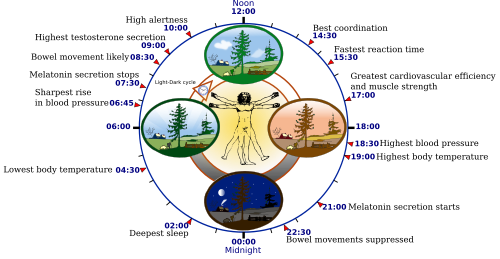
اضطرابات الإيقاع اليومي
تُعدّ اضطرابات الساعة البيولوجية (الإيقاع اليومي) سببًا شائعًا للنعاس، شأنها شأن عدد من الحالات الأخرى مثل انقطاع النفس النومي والأرق والنوم القهري. [ 2 ] تُصنّف اضطرابات الساعة البيولوجية إلى خارجية (ناتجة عن عوامل خارجية) وداخلية. ومن أمثلة النوع الخارجي اضطراب النوم الناتج عن العمل بنظام المناوبات، والذي يُصيب الأشخاص الذين يعملون ليلاً أو بنظام المناوبات المتغيرة. أما الأنواع الداخلية فتشمل: [ 3 ]
- اضطراب طور النوم المتقدم (ASPD) – حالة يشعر فيها المرضى بنعاس شديد ويذهبون إلى الفراش مبكراً في المساء ويستيقظون مبكراً جداً في الصباح
- اضطراب تأخر طور النوم (DSPD) – خلل في توقيت النوم، وفترة ذروة اليقظة، وإيقاع درجة حرارة الجسم الأساسية، والدورات الهرمونية وغيرها من الدورات اليومية بحيث تحدث متأخرة بعدة ساعات عن المعتاد، وغالبًا ما يتم تشخيصها خطأً على أنها أرق
- Non-24-hour sleep–wake disorder – A faulty body clock and sleep-wake cycle that usually is longer than (rarely shorter than) the normal 24-hour period causing complaints of insomnia and excessive sleepiness
- Irregular sleep–wake rhythm – Numerous naps throughout the 24-hour period, no main nighttime sleep episode and irregularity from day to day
Physical illness
Sleepiness can also be a response to infection.[4] Such somnolence is one of several sickness behaviors or reactions to infection that some theorize evolved to promote recovery by conserving energy while the body fights the infection using fever and other means.[5][6] Other causes include:[7]
- Anxiety
- Brain tumor
- Chronic pains
- Concussion – a mild traumatic brain injury
- Diabetes
- Fibromyalgia
- Head injury
- Hypercalcemia – too much calcium in the blood
- Hypermagnesemia
- Hyponatremia – low blood sodium
- Hypothyroidism – the body doesn't produce enough hormones that control how cells use energy
- Meningitis
- Mood disorders – depression
- Multiple sclerosis
- Narcolepsy – disorder of the nervous system
- Skull fractures
- Sleeping sickness – caused by a specific parasite
- Stress
Medicine
- Analgesics – mostly prescribed or illicit opiates such as OxyContin or heroin
- Anticonvulsants / antiepileptics – such as phenytoin (Dilantin), carbamazepine (Tegretol), Pregabalin (Lyrica) and Gabapentin (Neurontin)
- Antidepressants – for instance, sedating tricyclic antidepressants[8]amitriptyline and mirtazapine. Somnolence is less common with SSRIs[9] and SNRIs as well as MAOIs.
- Antihistamines – for instance, diphenhydramine (Benadryl, Nytol), doxylamine (Unisom-2), hydroxyzine (Atarax) and promethazine (Phenergan)
- Typical antipsychotics - for example levomepromazine, chlorpromazine
- Antipsychotics – for example, thioridazine, quetiapine (Seroquel), olanzapine (Zyprexa), risperidone and ziprasidone (Geodon) but not haloperidol
- Dopamine agonists used in the treatment of Parkinson's disease – e.g. pergolide, ropinirole and pramipexole.
- HIV medications – such as efavirenz
- Hypertension medications – such as amlodipine
- Hypnotics, or soporific drugs, commonly known as sleeping pills.
- Tranquilizers – such as zopiclone (Zimovane), or the benzodiazepines such as diazepam (Valium) or nitrazepam (Mogadon) and the barbiturates, such as amobarbital (Amytal) or secobarbital (Seconal)
- Other agents impacting the central nervous system in sufficient or toxic doses
Assessment
Quantifying sleepiness requires a careful assessment. The diagnosis depends on two factors, namely chronicity and reversibility. Chronicity signifies that the patient, unlike healthy people, experiences persistent sleepiness which does not pass. Reversibility stands for the fact that, even if the individual goes to sleep, the sleepiness may not be completely gone after waking up. The problem with the assessment is that patients may only report the consequences of sleepiness: loss of energy, fatigue, weariness, difficulty remembering or concentrating, etc. It is crucial to aim for objective measures to quantify the sleepiness. Measurement scales of sleepiness include:
- Multiple sleep latency test (MSLT). It assesses the sleep onset latency during the course of one day—often from 8:00 to 16:00.[10] An average sleep onset latency of less than 5 minutes is an indication of pathological sleepiness.[11]
- Karolinska Sleepiness Scale
Severity
A number of diagnostic tests, including the Epworth Sleepiness Scale, are available to help ascertain the seriousness and likely causes of abnormal somnolence.[12][13]
See also
References
- ↑Bereshpolova, Y.; Stoelzel, C. R.; Zhuang, J.; Amitai, Y.; Alonso, J.-M.; Swadlow, H. A. (2011). "Getting Drowsy? Alert/Nonalert Transitions and Visual Thalamocortical Network Dynamics". Journal of Neuroscience. 31 (48): 17480–7. doi:10.1523/JNEUROSCI.2262-11.2011. PMC 6623815. PMID 22131409.
- 12"Drowsiness – Symptoms, Causes, Treatments". www.healthgrades.com. 26 June 2014. Retrieved 2015-10-31.
- ↑"Circadian Sleep Disorders Network". www.circadiansleepdisorders.org. Retrieved 2015-11-02.
- ↑Mullington, Janet; Korth, Carsten; Hermann, Dirk M.; Orth, Armin; Galanos, Chris; Holsboer, Florian; Pollmächer, Thomas (2000). "Dose-dependent effects of endotoxin on human sleep". American Journal of Physiology. Regulatory, Integrative and Comparative Physiology. 278 (4): R947–55. doi:10.1152/ajpregu.2000.278.4.r947. PMID 10749783. S2CID 10272455.
- ↑Hart, Benjamin L. (1988). "Biological basis of the behavior of sick animals". Neuroscience & Biobehavioral Reviews. 12 (2): 123–37. doi:10.1016/S0149-7634(88)80004-6. PMID 3050629. S2CID 17797005.
- ↑Kelley, Keith W.; Bluthé, Rose-Marie; Dantzer, Robert; Zhou, Jian-Hua; Shen, Wen-Hong; Johnson, Rodney W.; Broussard, Suzanne R. (2003). "Cytokine-induced sickness behavior". Brain, Behavior, and Immunity. 17 (1): 112–118. doi:10.1016/S0889-1591(02)00077-6. PMID 12615196. S2CID 25400611.
- ↑"Drowsiness: MedlinePlus Medical Encyclopedia". www.nlm.nih.gov. Retrieved 2015-10-31.
- ^ زيمرمان، سي. فايفر، هـ. (يناير 2007). "Schlafstörungen bei Depression: Behandlungsmöglichkeiten" [ اضطرابات النوم في الاكتئاب: خيارات العلاج ] . دير نيرفينارت (في المانيا). 78 (1): 21– 30. دوى : 10.1007/s00115-006-2111-1 . بميد 16832696 .
- ↑ واتانابي، نوريو؛ أوموري، إيشيرو م؛ ناكاغاوا، أتسو؛ سيبرياني، أندريا؛ باربوي، كورادو؛ تشرشل، راشيل؛ فوروكاوا، توشي أ (2011). " ميرتازابين مقابل مضادات الاكتئاب الأخرى لعلاج الاكتئاب" . قاعدة بيانات كوكرين للمراجعات المنهجية (12) CD006528. doi : 10.1002/14651858.CD006528.pub2 . PMC 4158430. PMID 22161405 .
- ↑ كوشيدا، كليت أ.؛ سوليفان، شانون س. (2008-10-01). "اختبار زمن استغراق النوم المتعدد واختبار الحفاظ على اليقظة" . مجلة الصدر . 134 (4): 854-861 . doi : 10.1378/chest.08-0822 . ISSN 0012-3692 . PMID 18842919 .
- ↑ روهرز، تيموثي؛ كارسكادون، ماري أ.؛ ديمينت، ويليام س.؛ روث، توماس (2017)، "النعاس واليقظة أثناء النهار"، مبادئ وممارسة طب النوم ، إلسيفير، ص 39-48.e4، doi : 10.1016/b978-0-323-24288-2.00004-0 ، ISBN 978-0-323-24288-2
- ↑ كارسكادون، إم إيه؛ ديمينت، دبليو سي؛ ميتلر، إم إم؛ روث، تي؛ ويستبروك، بي آر؛ كينان، إس. إرشادات اختبار زمن استغراق النوم المتعدد (MSLT): مقياس معياري للنعاس. مجلة النوم 1986؛ 9: 519-524
- ↑ جونز، إم دبليو (مارس 2000). "حساسية وخصوصية اختبار زمن استغراق النوم المتعدد (MSLT)، واختبار الحفاظ على اليقظة، ومقياس إيبوورث للنعاس: فشل اختبار زمن استغراق النوم المتعدد كمعيار ذهبي" . مجلة أبحاث النوم . 9 (1): 5-11 . doi : 10.1046/j.1365-2869.2000.00177.x . PMID 10733683 .
روابط خارجية
- أعراض وعلامات الاضطرابات النفسية
- ينام
- العمليات العقلية