
Putney
Putney (/ˈpʌtni/) is an affluent district in southwest London, England, in the London Borough of Wandsworth, five miles (eight kilometres) southwest of Charing Cross. The area is identified in the London Plan as one of 35 major centres in Greater London.[2]
History

Putney is an ancient parish which covered 9.11 km2 (3+17⁄32 sq mi) in the Hundred of Brixton in the county of Surrey. Its area has been reduced by the loss of Roehampton to the south-west, an offshoot hamlet that conserved more of its own clustered historic core.[3][4]
In 1855, the parish was included in the area of responsibility of the Metropolitan Board of Works and was grouped into the Wandsworth District. In 1889, the area was removed from Surrey and became part of the County of London. The Wandsworth District became the Metropolitan Borough of Wandsworth in 1900. Since 1965, Putney has formed part of the London Borough of Wandsworth in Greater London.[5]
The benefice of the parish remains a perpetual curacy whose patron is the Dean and Chapter of Worcester Cathedral. The church, founded in the medieval period as a chapel of ease to Wimbledon, was rebuilt in the very early Tudor period and in 1836 was again rebuilt, and the old tower restored, at an expense of £7,000 (which is approximately equivalent to £691,291in 2025) defrayed by subscription, a rate, and a grant of £400 from the Incorporated Society. It has a small chantry chapel (originally erected by native Nicholas West, Bishop of Ely (d. 1533)) removed from the east end of the south aisle, and rebuilt at the east end of the north side, preserving the old style.[6]
In 1684, Thomas Martyn bequeathed lands for the foundation and support of a charity school for 20 boys, sons of watermen; and by a decree of the court of chancery in 1715, the property was vested in trustees. A charitable almshouse for 12 men and women, dedicated to the Holy Trinity, was erected by Sir Abraham Dawes, who provided it with an endowment.[7]
Putney was the birthplace of Thomas Cromwell, made Earl of Essex by Henry VIII; of Edward Gibbon, author of the Decline and Fall of the Roman Empire, who was born in 1737; and also of Clement Attlee, Prime Minister of the United Kingdom 1945–1951 and Leader of the Labour Party 1935 –1955, born in 1883.[8]John Toland, a noted free-thinker, died and was buried at Putney in 1722. Robert Wood, under-Secretary of State for the Southern Department, who published The Ruins of Palmyra about the Roman ruins he visited at Baalbek in Syria, and other archæological works lies here. William Pitt, Earl of Chatham, died at a house on Putney Heath.[7]
In the 1840s, Putney was still a part-wooded, part-agricultural village focussed closest to the Thames, opposite to Fulham, with which it was connected by a wooden bridge. It was street-lit with gas, partly paved, and well supplied with water. In 1840, the College for Civil Engineers relocated to Putney.[9]
Putney had a second place of worship for Independents, and Roehampton achieved separate parish status in 1845. The proprietors of the bridge distributed £31 per annum to watermen, and watermen's widows and children, and the parish received benefit from Henry Smith's and other charities.[7][3] Putney in 1887 covered 9 km2 (3+1⁄2 sq mi).[10]
River crossing
Putney appears in the Domesday Book of 1086 as Putelei, although this was "probably a mistake of the Norman scribes".[11] Ultimately the name derives from the Anglo-SaxonPuttan hythe, meaning Putta's landing place.[12] It was noted that it did not fall into the category of local jurisdictions known as a manor, but obtained 20 shillings from the ferry or market toll at Putney belonging to the manor of Mortlake.[13]
The ferry was mentioned in the household accounts of Edward I (reigned 1272–1307): Robert the Ferryman of Putney and other sailors received 3/6d for carrying a great part of the royal family across the Thames and also for taking the king and his family to Westminster.[14]
One famous crossing at Putney was that of Cardinal Wolsey in 1529 upon his 'disgrace' in falling out of favour with Henry VIII and on ceasing to be the holder of the Great Seal of England. As he was riding up Putney Hill, he was overtaken by one of the royal chamberlains who presented him with a ring as a token of the continuance of his majesty's favour. When the Cardinal had heard these words of the king, he quickly lighted from his mule and knelt down upon both knees, holding up his hands for joy, and said "When I consider the joyful news that you have brought to me, I could do no less than greatly rejoice. Every word pierces so my heart, that the sudden joy surmounted my memory, having no regard or respect to the place; but I thought it my duty, that in the same place where I received this comfort, to laud and praise God upon my knees, and most humbly to render unto my sovereign lord my most hearty thanks for the same".[15]
The first bridge of any kind between the two parishes of Fulham and Putney was built during the Civil War: after the Battle of Brentford in 1642, the Parliamentary forces built a bridge of boats between Fulham and Putney. According to an account from the period:
The Lord-Generall hath caused a bridge to be built upon barges and lighters over the Thames, between Fulham and Putney, to convey his army and artillery over into Surry, to follow the King's forces; and he hath ordered that forts shall be erected at each end thereof to guard it; but for the present the seamen, with long boats and shallops, full of ordnance and musketeers, lie there upon the river to secure it.[16]
The first permanent bridge between Fulham and Putney was completed in 1729, and was the second bridge to be built across the Thames in London (after London Bridge).[17]
One story runs that "in 1720 Sir Robert Walpole was returning from seeing George I at Kingston and being in a hurry to get to the House of Commons rode together with his servant to Putney to take the ferry across to Fulham. The ferry boat was on the opposite side, however and the waterman, who was drinking in the Swan, ignored the calls of Sir Robert and his servant and they were obliged to take another route. Walpole vowed that a bridge would replace the ferry."[18] The Prince of Wales "was often inconvenienced by the ferry when returning from hunting in Richmond Park and asked Walpole to use his influence by supporting the bridge."[18] The bridge was a wooden structure and lasted for 150 years.[17] However, by 1886, it was no longer strong enough to withstand increasing road traffic, and was replaced by the stone bridge that stands today.[19]
St Mary's Church
The parish church of St Mary the Virgin became the site of the 1647 Putney Debates. Towards the end of the English Civil War, with the Roundheads looking victorious, some soldiers in the New Model Army staged a minor mutiny amid fears that a monarchy would be replaced by a new dictatorship. A number, known as the Levellers, complained: "We were not a mere mercenary army hired to serve any arbitrary power of a state, but called forth ... to the defence of the people's just right and liberties".
A manifesto was proposed entitled An Agreement of the People, and at an open meeting in Putney the officers of the Army Council heard the argument from private soldiers for a transparent, democratic state, without corruption. Proposals included sovereignty for English citizens, Parliamentary seats distributed according to population rather than property ownership, religion made a free choice, equality before the law, conscription abolished and parliamentary elections held every year.[20] While the ideas proved greatly influential, including inspiring much of the language of the United States Declaration of Independence, Oliver Cromwell would later have the Leveller leaders executed.
زار كاتب اليوميات صموئيل بيبس كنيسة القديسة مريم عدة مرات. وخلال إحدى زياراته في 28 أبريل 1667، سجل ما يلي:
ثم عدتُ إلى كنيسة بوتني، حيث رأيت فتيات المدارس، وقليل منهنّ جميلات؛ وهناك جلستُ في أحد المقاعد، والتقيتُ بالصغير جيمس بيرس، وهو ما أسعدني كثيرًا، فقد كان هذا الصغير المشاغب سعيدًا جدًا برؤيتي: سيده قارئ الكنيسة. كانت هناك عظة جيدة وحضور كثير، لكنني كنتُ أشعر بالنعاس، وكنتُ أشعر ببعض الإحراج، لأن قبعتي سقطت من خلال ثقب أسفل المنبر، ولكن بعد انتهاء العظة، وبمساعدة عصا وكاتب الكنيسة، نهضتُ مرة أخرى، ثم خرجتُ من الكنيسة. [ 21 ]
مساحات مفتوحة وهواء نقي
لطالما كانت بوتني، على مرّ القرون، وجهةً يقصدها سكان لندن للترفيه والاستمتاع بمساحاتها المفتوحة وهوائها النقي. وكانوا يأتون إليها لممارسة الألعاب. يقول جون لوك، الذي كتب عام ١٦٧٩: "إنّ الرياضات التي قد تثير اهتمام الزائر في إنجلترا هي سباق الخيل، والصيد بالصقور، والصيد البري، ولعبة البولينج؛ وفي بوتني، قد يرى العديد من الأشخاص المهرة يمارسون البولينج مرتين أو ثلاث مرات أسبوعيًا".
كانت الملكة إليزابيث الأولى من بين الزوار المنتظمين ، حيث كانت تزور بوتني بشكل متكرر بين عامي 1579 و1603، وكثيراً ما كانت تزور السيد جون لاسي. وقيل إنها كانت "تكرم لاسي بصحبتها أكثر من أي من رعاياها"، وغالباً ما كانت تقيم معه لمدة يومين أو ثلاثة أيام. [ 15 ]
بوتني هيث

استعرض تشارلز الثاني قواته في بوتني هيث عام 1684؛ وفي مايو 1767، استعرض جورج الثالث الحرس ومتطوعي ساري في نفس المكان عام 1799. [ 22 ] ووفقًا لصموئيل بيبس، اعتاد تشارلز الثاني وشقيقه دوق يورك على إدارة الخيول هنا.
أُقيم مسلة من الحجر والطوب في بوتني هيث عام ١٧٧٠، إحياءً للذكرى المئوية العاشرة لحريق لندن الكبير ، بالتزامن مع اختراع ألواح هارتلي المقاومة للحريق على يد ديفيد هارتلي (الأصغر) ، بالقرب من موقع منزله المقاوم للحريق. لا تزال المسلة، ذات الحجر الأساسي المزخرف بدقة، قائمة حتى اليوم، ويمكن الوصول إليها عبر موقف السيارات المجاور لحانة "ذا تيليغراف" العامة، قبالة طريق وايلدكروفت، SW15. تعرض الجزء السفلي من هذا المنزل للحرق مرارًا وتكرارًا بحضور شخصيات بارزة، من بينهم الملك جورج الثالث والملكة شارلوت ، وأعضاء البرلمان، ورئيس البلدية، وأعضاء مجلس المدينة. [ ٢٣ ] ومنذ عام ١٩٥٥، أُدرجت المسلة ضمن المباني التاريخية من الدرجة الثانية. [ ٢٤ ] وكانت قصر وايلدكروفت المجاور ملكًا سابقًا لقطب النشر جورج نيونس ، باني مكتبة بوتني . في عام 1895 تم منحه لقب بارونيت "في وايلدكروفت، في أبرشية بوتني، في مقاطعة لندن " . [ 25 ]
شهدت بوتني هيث العديد من المبارزات. ففي مايو 1652، تقاتل جورج بريدجز، البارون السادس لتشاندوس ، مع الكولونيل هنري كومبتون، وقُتل كومبتون في تلك المواجهة. وفي ظهيرة يوم أحد من مايو 1798، خاض ويليام بيت ، رئيس الوزراء آنذاك، والذي كان يسكن في منزل بولينغ غرين في بوتني هيث، معركةً سلميةً مع ويليام تيرني، عضو البرلمان. وقد استمد المنزل اسمه من ملعب البولينغ الذي كان ملحقًا به سابقًا، والذي ظل لأكثر من ستين عامًا (1690-1750) أشهر ملعب بولينغ في ضواحي لندن. كان المنزل يضم غرفًا واسعةً مخصصةً لوجبات الإفطار العامة والاجتماعات، وكان مكانًا راقيًا للترفيه، واشتهر بـ"اللعب العميق". توفي بيت في المنزل عام 1806. ثم امتلكه لاحقًا هنري لويس دولتون، نجل هنري دولتون صاحب شهرة صناعة الخزف. تم هدمه وأعيد بناء منزل على طراز آرت ديكو في الموقع عام 1933. وكانت بوتني هيث، بالقرب من حانة التلغراف، هي أيضاً مكان المبارزة التي جرت في سبتمبر 1809 بين وزيري الحكومة جورج كانينغ واللورد كاسلري . [ 26 ]
كان منزل سيو آخر فيلا على طريق بورتسموث تطل على الهيث: وقد تحول في نهاية المطاف إلى مستشفى وعُرف باسم مستشفى سيو هاوس للضباط، بوتني. [ 27 ] ومنذ ذلك الحين، أُعيد تطويره ليصبح مجمعًا سكنيًا مسورًا يضم 70 منزلًا على الطراز الجورجي الجديد موزعة على شارعين. [ 28 ]
Putney Heath is around 400 acres (160 hectares) less the A3 road in size and rises to 45 metres (148 ft) above sea level. Because of its elevation, from 1796 to 1816 Putney Heath hosted a station in the shutter telegraph chain, which connected the Admiralty in London to its naval ships in Portsmouth. One of 10 signal stations with telescopes making observation of the next station's signal, a message could be sent from the Admiralty to Portsmouth within 15 minutes.[29] This was replaced by a semaphore station, which was part of a semaphore line that operated between 1822 and 1847.[30]
Putney Heath was for many years a noted rendezvous for highwaymen. In 1795, the notorious highwayman Jeremiah Abershaw – also known as Jerry Avershaw – was caught in the Green Man pub on the northside of the heath where Putney Hill meets Tibbet's Ride. After execution his body was hung in chains on the heath as a warning to others.[31] An ancient wood fence cattle pound is located opposite the Green Man, adjacent to two huge plane trees, near the bus terminus. This simple wood fence structure, used historically to contain lost livestock, has been listed as a Grade II listed structure since 1983.[32]
A number of fine homes lined Putney Hill and the north face of the heath, west of the Green Man. All had semi-circular carriageway entrances and exits.[33] These included Grantham House, the residence of Lady Grantham; Ripon House, Ashburton House; Exeter House, occupied by the second Marquis of Exeter. George Cokayne, author of peerage and baronetage publications, died at Exeter House in 1911.[34] Nearby Gifford House was owned by the J. D. Charrington of brewing fame; and Dover House, was the seat originally of Lord Dover, afterwards of Lord Clifden. It was owned at the turn of the 20th century by the famous US financier JP Morgan.[35]
مع تطور طرق النقل لخدمة القطاع المالي المتنامي، أصبحت المنطقة مرغوبة للغاية لدى رجال الأعمال في المدينة خلال تسعينيات القرن التاسع عشر، وكانوا يُعرفون في البداية باسم "الغرباء". [ 36 ] في عام 1900، صنّف الباحث الاجتماعي تشارلز بوث منطقة بوتني هيل وويست هيل بأكملها، المؤدية إلى بوتني هيث، كمنطقة ثرية أو ميسورة الحال. وعلى الرغم من وجود عدد كبير من دور العبادة، فقد ذكر أن المنطقة اشتهرت بانخفاض نسبة الحضور في الكنائس ، حيث تتنافس جميع الطوائف على استقطاب سكان بوتني الباحثين عن المتعة... فالطبقة المتوسطة هنا لا تُبالي بالأمر كما هو حال الفقراء في أي مكان آخر. [ 33 ]
يستخدم نادي روهامبتون للكريكيت الملعب الواقع عند زاوية شارعي وايلدكروفت وتلغراف، وهو أحد أقدم فرق الكريكيت في لندن، حيث تأسس عام 1842. ويلعب النادي هناك باستمرار منذ عام 1859، عندما اقترحه إيرل سبنسر، سيد القصر، كموقع جديد. [ 37 ] ويضم النادي فريقين في دوري فولرز ساري كاونتي شديد التنافس، بالإضافة إلى فريق يلعب أيام الأحد على مستوى اجتماعي. في عام 1900، بعد عقد من وفاة والده المليونير جونيوس مورغان ، نما لدى جيه بي مورغان شغفٌ بهذه الرياضة، وحصل على عضوية فخرية. [ 38 ] وقد سمح المستكشف القطبي الجنوبي السير إرنست شاكلتون ، العضو الفخري الذي ترأس حفل عشاء النادي عام 1910، لطفليه الصغيرين [ 39 ] بلعب لعبة رعاة البقر والهنود على ملعب الكريكيت خلال أيام الأسبوع. [ 40 ]
كانت شركة مياه تشيلسي تمتلك موقع الخزان في الأصل، وسمحت ببناء جناح النادي على أرضها. [ 23 ] أما الآن، فالموقع مملوك لشركة مياه التايمز . استمرت مباريات الكريكيت خلال الحرب، على الرغم من تأخر بدء بعض المباريات أو تعادلها بسبب تأخر البدايات أو دوي صفارات الإنذار. ضربت أربع قنابل طائرة ألمانية من طراز V-1 المنطقة خلال الحرب العالمية الثانية. [ 33 ] دمرت إحداها جناح النادي، المقابل لحانة التلغراف، في يوليو 1944، بالقرب من موقع خزان المياه المغطى. كان طريق وايلدكروفت، الذي يتحول إلى طريق بورتسموث، ومن ثم الطريق A3 المستقبلي، طريقًا رئيسيًا إلى جنوب غرب لندن، وأصبح محطة توقف للجنود الأمريكيين الذين كانوا يترجلون من سيارات الجيب الخاصة بهم "لتجربة لعبة الكريكيت المجنونة هذه". [ 41 ]
On the south side of the reservoir, in the triangle of land between Wildcroft Road, Tibbet's Ride and the Green Man, is a large clearing of land. A funfair is set up on the grounds each October, lasting for one week. Ground rent is paid by the touring company to the Wimbledon and Putney Commons Conservators, as part of the income of the charity.[42]
Local character
Excluding the Putney Exchange in a survey by the New Economics Foundation of 27 London high streets in 2005, Putney's ranked fifth most "cloned...[meaning] offering identikit shopping with little local character".[43]
Demographics
A local directory of Putney in 1932 listed a high proportion of residents as being professional, including doctors and lawyers. The area also was home to significant numbers of retired naval officers.[44]
The 2011 census showed this professional character still present. Looking at a combination of the electoral wards of East Putney, West Putney and Thamesfield (which comprises North Putney), 46% of residents were classified as higher or lower "managerial, administrative & professional" socio-economic status; 6% were retired. Ethnicity in these wards is 81% white, 8% Asian, 5% black, and 4% of mixed or multiple ethnicities. Sixty-five percent of the population was born in the UK. The most identified religion was Christianity at 56%, with 27% declaring no religion, 8% not stating any religion, 5% Muslim and other religions making up the remainder.[45]
The 2011 Census also revealed Thamesfield as having the highest number of Australians and New Zealanders in London, followed by the East Putney ward in second place.[46] Putney is also noted for its high concentration of South African residents; a survey by BBC News found that Putney had more South African residents than any other region in the UK.
Politics

The Member of Parliament for Putney is Fleur Anderson, who has served as the MP for the constituency since the 2019 general election, as a member of the Labour Party.
Putney is covered by the East Putney and West Putney wards for elections to Wandsworth London Borough Council.[47]
Rowing and the Boat Race
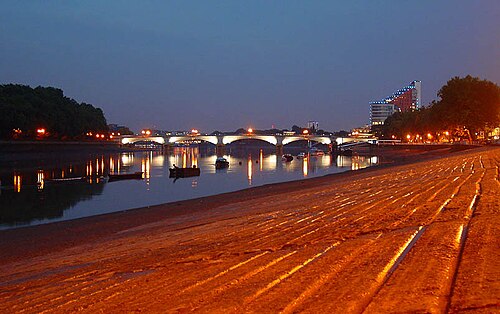
منذ النصف الثاني من القرن التاسع عشر، أصبحت بوتني مركزًا مهمًا لرياضة التجديف . وهناك سببان لذلك.
أولًا، أدى تزايد أعداد القوارب البخارية (ناهيك عن ارتفاع مستويات مياه الصرف الصحي التي تُصرف في النهر) إلى جعل التجديف الترفيهي في نهر التايمز بوسط لندن أمرًا غير مريح، إن لم يكن مستحيلًا. كانت حركة الملاحة التجارية في النهر أقل بكثير في بوتني (ويرجع ذلك جزئيًا إلى أن دعامات جسر بوتني الأصلي الكثيرة كانت تحد من مرور القوارب النهرية الكبيرة)، مما وفر مياهًا أكثر ملاءمة للتجديف. كما كان النهر أنظف في بوتني.
ثانياً، سمح إنشاء خط سكة حديد لندن والجنوب الغربي من واترلو إلى بوتني وخط سكة حديد ديستريكت إلى جسر بوتني بسهولة التنقل.
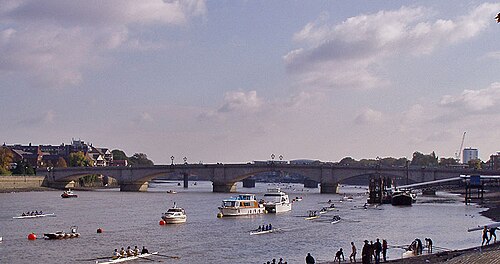
يقع أكثر من عشرين ناديًا للتجديف على ضفاف نهر التايمز في بوتني إمبانكمنت، ضمن منطقة تُعدّ اليوم جزءًا من منطقة محمية صنّفها مجلس البلدة بأنها "فريدة من نوعها في لندن"؛ [ 48 ] ومن بين أكبرها: نادي لندن للتجديف ، ونادي التايمز للتجديف ، ونادي إمبريال كوليدج للقوارب ، ونادي فيستا للتجديف . امتلك نادي لياندر مرسى للقوارب في بوتني من عام 1867 إلى عام 1961. وقد خرّجت نوادي بوتني عددًا كبيرًا من الحائزين على ميداليات أولمبية وفائزين في سباق هينلي . أما نادي بوتني تاون للتجديف ، فقد انتقل الآن إلى كيو ، رغم احتفاظه باسم بوتني .
سباق القوارب الجامعي ، الذي أقيم لأول مرة في عام 1829 في هينلي أون تيمز ، اتخذ من بوتني نقطة انطلاق له منذ عام 1845. ومنذ عام 1856، أصبح حدثًا سنويًا، يبدأ من حجر الجامعة ، أعلى جسر بوتني مباشرة .
تبدأ أو تنتهي العديد من سباقات التجديف المهمة الأخرى على مسار البطولة عند الحجر، ولا سيما سباق رأس النهر .
منحوتة
يقع بجوار جسر بوتني أحد المواقع التي استُخدمت في بناء نفق نهر التايمز . ومع اكتمال المشروع، تم إنشاء سد ترابي جديد مزود بعمود تهوية، ويحمل على طوله قصيدة للشاعرة دوروثيا سمارت. [ 49 ]
مسار بوتني للنحت
Alan Thornhill lived and worked in Putney for many years and his studio still remains. The sculpture Load[50] was presented to Putney[51] on Fools Day and occupies a permanent position near the south-west end of Putney Bridge on Lower Richmond Road. A film, launched at Appledore[52] and Chichester Film Festivals in 2008 documents these celebrations. The acquisition of eight further large works formed a permanent new riverside Putney Sculpture Trail in the London Borough of Wandsworth, officially unveiled in September 2008.
Historic links to sculpture and sculptors
Sir Jacob Epstein was buried in Putney Vale Cemetery on 24 August 1959.[53]
Henri Gaudier-Brzeska had a studio in Putney in the last year of his life after moving from 454a Fulham Road. Sydney Schiff went to visit Gaudier there in 1914 to buy the "Dancer", which was later presented to the Victoria and Albert Museum. Gaudier-Brzeska was killed in France in June 1915.[54]
Plaque
A commemorative plaque was placed at 2 Colinette Road in remembrance of an anecdote of the British mathematician G. H. Hardy when he visited Indian mathematician Srinivasa Ramanujan in hospital.[55]
I remember once going to see him when he was ill at Putney. I had ridden in taxi cab number 1729 and remarked that the number seemed to me rather a dull one, and that I hoped it was not an unfavourable omen. "No," he replied, "it is a very interesting number; it is the smallest number expressible as the sum of two cubes in two different ways."
Transport

Putney is served by mainline South Western Railway trains to London Waterloo from Putney station and by London Underground from East Putney. The far west of Putney is also served by Barnes station, a few hundred yards across the boundary, while Putney Bridge tube station is across the river in Fulham.
تخدم منطقة بوتني خطوط الحافلات 14 و 22 و 37 و 39 و 74 و 85 و 93 و 220 و 265 و 270 و 378 و 337 و 170 و 424 و 430 و 485 وحافلات الليل 14 وN22 و37 وN74 و85 و93 و220.
يخدم رصيف بوتني حافلة نهرية رقم 6 من وإلى رصيف بلاكفرايرز ميلينيوم ، وذلك خلال فترات الذروة في أيام الأسبوع فقط (بمعدل 24 قارباً يومياً). [ 56 ]
يقتبس
وهكذا نودع بوتني، إحدى أجمل ضواحي لندن وأكثرها سهولة في الوصول إليها. يشهد التزايد الهائل في عدد المنازل في السنوات الأخيرة على شعبيتها؛ ولكن لا تزال هناك مساحات شاسعة من الأراضي المفتوحة التي لا يمكن تغطيتها؛ ومع وجود الغابات والمياه، والمروج والتلال، ستبقى في بوتني دائمًا لمسة من الانتعاش والرحابة قلّما نجدها بالقرب من لندن.
— جي سي جيكي، سحر لندن ، 1903 [ 57 ]
سكان بارزون

مدرجة حسب الترتيب الأبجدي للاسم الأخير:
- ستيفان أبينغدون ، موسيقي، من فرقة ذا ميدنايت بيست
- عاش جيه آر أكيرلي ، المؤلف والمحرر الأدبي لمجلة "ذا ليسنر" ، في قصري ستار آند جارتر من عام 1941 حتى وفاته عام 1967
- ويليام آدامز ، مهندس قاطرات [ 58 ]
- استأجر جيري أندرسون وجيم هينسون ، وهما محركا دمى تلفزيونية، في أوقات مختلفة نفس الورشة (التي هُدمت لاحقًا) في طريق روثروود، بوتني.
- كليمنت أتلي ، رئيس وزراء المملكة المتحدة 1945-1951 وزعيم حزب العمال 1935-1955، ولد في بوتني عام 1883 [ 8 ]
- ميليسنت باغوت ، ضابطة المخابرات البريطانية
- عاش إدوارد بينيش ، ثاني رئيس لتشيكوسلوفاكيا ، في شارع غويندولين خلال فترة نفيه في لندن من أكتوبر 1938 وحتى نهاية الحرب العالمية الثانية.
- عاش مارك بولان ، المغني وقائد فرقة تي ريكس، في 7a شارع شوبرت، بوتني، وتوفي في حادث سيارة في بارنز القريبة [ 59 ].
- وُلد بيتر بونيتي ، لاعب كرة القدم في ناديي تشيلسي ودندي يونايتد ، في بوتني.
- ريتشارد برانسون ، رجل أعمال بريطاني
- بيتر بريت ، كاتب أمريكي
- بيرس بروسنان ، الممثل الأيرلندي المعروف بدوره في فيلم جيمس بوند، التحق بالمدرسة في بوتني [ 60 ]
- داستن ديمري بيرنز ، الممثل والكوميدي، التحق بمدرسة في بوتني
- آنا كالفي ، مغنية وكاتبة أغاني
- توفيت روزا نوشيت كاري ، كاتبة روايات الأطفال، في منزلها في طريق كيسويك، بوتني عام 1909 [ 61 ].
- وُلد كريستوفر تشوب ، عضو البرلمان عن حزب المحافظين عن دائرة كرايستشيرش ، في بوتني.
- عاش نيك كليج ، نائب رئيس الوزراء (2010-2015) وزعيم الديمقراطيين الليبراليين (2007-2015)، في بوتني قبل انتقاله إلى كاليفورنيا للعمل في فيسبوك [ 62 ].
- توم كورتيناي ، ممثل
- ولد توماس كرومويل ، كبير وزراء هنري الثامن ومهندس الإصلاح الإنجليزي ، في بوتني حوالي عام 1485
- تايو كروز ، مغني آر أند بي بريطاني
- يعيش جون ديكون ، عازف غيتار البيس السابق في فرقة كوين ، في غرب بوتني
- توفيت الشاعرة كاثرين ماريا فانشو في بوتني هيث عام 1834
- جيسون فليمينغ ، ممثل، ولد في بوتني
- عاش الكاتب إي إم فورستر في 22 شارع ويرتر، بوتني
- هنري فوسلي ، فنان بريطاني من أصل سويسري، وأستاذ الرسم، وأمين الأكاديمية الملكية [ 15 ]
- كونستانس غارنيت ، مترجمة روايات الحرب والسلام ، وآنا كارنينا ، والجريمة والعقاب ، وغيرها من الأعمال الأدبية الروسية
- أُطلق اسم إدوارد جيبون ، المؤرخ المولود في بوتني، على مقسم الهاتف المحلي تكريماً له.
- عاش بيتر غرين ، المغني وعازف الغيتار والمؤسس المشارك لفرقة فليتوود ماك، في ليتون غروف خلال شبابه
- ماريا، كونتيسة جيلفورد ، المقيمة في بوتني هيل، 1825 [ 15 ]
- أسس كينلم لي غينيس ، سائق السباقات، مصنع شمعات الإشعال KLG في بوتني فالي، وكان يسكن في كينغستون هيل.
- عاش بيتر هاين ، عضو البرلمان عن حزب العمال، في بوتني في أواخر الستينيات.
- عاش رالف هيل ، الناقد الموسيقي، في 39 هازلويل رود في الأربعينيات من القرن العشرين حتى وفاته عام 1950. وقد أسس جمعية بوتني غراموفون [ 63 ].
- آشلي هورن ، من فرقة ذا ميدنايت بيست
- كانت جوان هاوسون (1885-1964) فنانة بريطانية متخصصة في الزجاج الملون، وقد عاشت في شارع ديودار.
- كوني حق ، مقدمة برنامج الأطفال التلفزيوني بلو بيتر
- بيني إيرفينغ ، ممثلة (من بين مشاركاتها برنامج بيني هيل ومسلسل هل أنت في الخدمة؟ )
- عاش مايك جاكسون ، رئيس الأركان العامة، 2003-2006، ودرس في المدرسة الابتدائية في بوتني [ 64 ].
- آرثر جيف ، رجل دولة بريطاني ومؤسس مشارك لمدرسة بوتني للفنون والتصميم
- غريس جونز ، مغنية وممثلة
- جو جويس (ملاكم) ، ملاكم بريطاني، التحق بمدرسة إليوت
- روبن نوكس-جونستون ، بحار، ولد في بوتني
- غونجي كويزومي ، أدخل رياضة الجودو إلى المملكة المتحدة
- سايمون لين ، يوتيوبر وعضو في فريق يوغسكاست
- كارولين لانغريش ، ممثلة تعيش في بوتني
- يملك سيمون لو بون ، المغني الرئيسي لفرقة دوران دوران ، منزلاً في شارع أبر ريتشموند، [ 65 ] مع زوجته ياسمين
- عاشت الكاتبة لوري لي وعملت كعاملة بناء في بوتني خلال ثلاثينيات القرن العشرين.
- كان القائد تشارلز لايتولر ، وهو الضابط الأعلى رتبة الذي نجا من كارثة تيتانيك ، يعيش في 60A Upper Richmond Road [ 44 ].
- ديفيد لويز ، لاعب كرة قدم دولي برازيلي ولاعب نادي تشيلسي.
- جيمس ماكفيرسون ، مترجم ومؤلف قصائد أوسيان
- عاش ديفيد ماكي ، مبتكر شخصية السيد بن ، في المنزل رقم 54 بشارع فيستينغ (في المنزل رقم 52 بشارع فيستيف)، والذي أعيد بثه لاحقًا. يوجد خارج المنزل بلاطة رصف منقوشة [ 66 ].
- نشأت سو ماكنوف، واسمها قبل الزواج هاندسكومب، وهي مجدفة أولمبية، [ 67 ] في بوتني
- جي بي مورغان ، ممول أمريكي، احتل منزل دوفر، بوتني [ 68 ]
- عاش جورج نيونس ، قطب النشر، في بوتني
- سيدني نولان ، أحد أبرز فناني أستراليا في القرن العشرين، اشتهر بلوحاته التي تصور نيد كيلي ، الذي كان يعيش في 79 شارع ديودار. [ 69 ]
- لورانس أوتس ، مستكشف القطب الجنوبي، ولد ونشأ في بوتني
- عاشت إدنا أوبراين، الكاتبة الأيرلندية التي ألفت رواية "فتيات الريف" وغيرها، في بوتني في الستينيات [ 70 ].
- وُلد ديك بيبر (1889-1962)، عازف البانجو والكاتب، في بوتني.
- عاشت كاثرين لويزا بيركيس (1839-1910)، مؤلفة روايات الجريمة في العصر الفيكتوري، في بوتني عندما كانت بالغة.
- عاش ويليام بيت الأصغر ، رئيس الوزراء، وتوفي في منزل بولينج جرين في بوتني هيث [ 22 ]
- Roy Plomley (1914–1985), broadcaster, lived at 91 Deodar Road.
- Richard Pollard, (1505–1542), MP for Taunton (1536) and Devon (1539, 1542), resided chiefly at Putney
- David Rock (architect), former RIBA president, lived in West Row, Westleigh Avenue
- Ellen Mary Rope (1855–1934), a British sculptor who lived in Deodar Road
- Margaret Edith Rope (1891–1988) was an English stained-glass artist who lived in Deodar Road
- Justin Rose, golfer, has a flat in Putney[71]
- Ronald Ross, discoverer of malaria transmission by mosquitoes, lived and died at Bath House, Putney Hill[72]
- Fred Russell, known as the "Father of Modern Ventriloquism", remembered by blue plaque, lived in Lower Richmond Road near Putney Bridge
- Abdus Salam, theoretical physicist and Nobel Laureate, lived at Campion Road for almost 40 years and was honoured by an English Heritage blue plaque in 2020[73]
- Ruth Sanger (1918–2001), Australian expert on blood groups, died in Putney
- Harry Gordon Selfridge, founder of Selfridges department store, lived in Putney and died in a flat on Putney Heath in 1947
- Shas Sheehan, Liberal Democrat politician and life peer
- Sophie Simnett, actress
- Freda Skinner, (1911–1993) sculptor and woodcarver, lived at 79 Deodar Road, Putney[74]
- A. W. Smith, market gardener[75]
- Sir Oswald Stoll, Australian-born British theatre and film magnate, lived at 33 Putney Hill[44]
- Algernon Charles Swinburne, poet and Nobel prize nominee, lived and died at The Pines at the foot of Putney Hill[76]
- Daley Thompson, former decathlete
- Gabriel Thomson, actor, attended Elliott School
- Alan Thornhill, sculptor whose nine large works form the permanent Putney Sculpture Trail along the Thames
- Harry Tincknell, racing driver
- Fernando Torres, former Spanish International footballer, played for Chelsea F.C.
- Caroline Charlotte Townshend (1878–1944) was a British stained glass artist who lived in Deodar Road
- Alliott Verdon-Roe, pioneer aviator and founder of aircraft manufacturer AVRO
- Dennis Waterman, actor grew up in Putney and attended Granard School
- Theodore Watts-Dunton, who looked after Swinburne
- Nigel Williams, author
- Mary Wollstonecraft Shelley, author of Frankenstein, lived in Putney at Layton House in 1839, and White House in 1843
- Jack Whitehall, comedian
- Michael Whitehall, talent agent
- Leonard Woolf, husband of Virginia Woolf, grew up in Putney
- Tony Wright, film star, lived in Chartfield Avenue
- Peter Zinovieff, British composer, musician and inventor. founder in 1969 of Electronic Music Studios (EMS), world famous for some of the most innovative and earliest synthesizers
- Sofka Zinovieff, daughter of Peter Zinovieff, writer, grew up in Putney
Nearest places
Nearby settlements include Hammersmith, Fulham, Barnes, East Sheen, Roehampton, Petersham, Wimbledon, Southfields, Earlsfield and Wandsworth Town.
See also
References
- ↑All of the wards in the Putney constituency (population 93,396) are part of the town of Putney apart from Southfields (population 16,256)
- ↑Mayor of London (February 2008). "London Plan (Consolidated with Alterations since 2004)"(PDF). Greater London Authority. Archived(PDF) from the original on 29 February 2008.
- 12H.E. Malden, ed. (1912). "Parishes: Putney". A History of the County of Surrey: Volume 4. Institute of Historical Research. pp. 78–83. Retrieved 11 November 2014.
- ↑Entry in the National Gazetteer of Great Britain and Ireland (1868), genuki.org.uk; accessed 29 July 2017.
- ↑"The history of Putney | Manor Fields".
- ↑Thorne, James (1876). Handbook to the Environs of London: Alphabetically Arranged. Vol. 2. London: John Murray. p. 477. OCLC 500011461.
- 123Samuel Lewis (publisher) (1848). "Putford, East - Pyworthy". A Topographical Dictionary of England. Institute of Historical Research. Retrieved 4 November 2014.
- 1 2 "كليمنت أتلي" . www.number10.gov.uk. مؤرشف من الأصل في 4 أكتوبر 2011. تم الاطلاع عليه في 31 يوليو 2011 .
- ↑ غراتان، جيمس (1 يناير 1846). نشرة تعريفية . بوتني: كلية المهندسين المدنيين، والتعليم العملي والعلمي العام. OCLC 810494704 .
- ↑ " تاريخ بوتني، في واندزورث وساري - خريطة ووصف" . www.visionofbritain.org.uk
- ↑ برايلي، إي دبليو (1841). تاريخ طوبوغرافي لسري . المجلد 3. لندن: تيلت وبوغ. الصفحات 471-472 . OCLC 963699411 .
- ↑ ميلز، أنتوني ديفيد (2001). قاموس أسماء الأماكن في لندن ( الطبعة الثانية). مطبعة جامعة أكسفورد. ص 200. ISBN 9780199566785.
- ↑ "دومداي سودري (سري)" . مؤرشف من الأصل في 30 أكتوبر 2007. تم الاطلاع عليه في 21 سبتمبر 2020 .منشورات جارنونز ويليامز.
- ↑ وادمور، جيمس فوستر (1890). ويلش، تشارلز (محرر). معاملات جمعية لندن وميدلسكس الأثرية . المجلد 6. لندن: جمعية لندن وميدلسكس الأثرية . ص 404.
- 1 2 3 4 إدوارد ولفورد (1878). "بوتني" . لندن القديمة والجديدة: المجلد 6. معهد البحوث التاريخية . تم الاطلاع عليه في 4 نوفمبر 2014 .بوتني، التاريخ البريطاني على الإنترنت
- ↑ فولكنر، توماس (1813). سرد تاريخي وجغرافي لفولهام: بما في ذلك قرية هامرسميث . تي. إيغرتون.
- 1 2 "8 أسرار لجسر بوتني" . londonist.com . 29 يونيو 2017. تم الاطلاع عليه بتاريخ 29 مارس 2018 .
- 1 2 جورج ومايكل ديوي، سلف جسر بوتني - جسر فولهام 1729-1886 (1986)
- ↑ "تاريخ جسر بوتني" . 13 مارس 2017. تم الاطلاع عليه في 1 أغسطس 2019 .
- ↑Vernon, Elliot; Baker, Philip (2010). "What was the first "Agreement of he People"?". The Historical Journal. 53 (1): 39–59. doi:10.1017/S0018246X09990574. ISSN 0018-246X. JSTOR 25643882. S2CID 159787293.
- ↑Diary of Samuel Pepys/1667/April
- 12Geikie, J. C. (1903). The Fascination of London: Hammersmith, Fulham and Putney. London: A & C Black, p. 85.
- 12Geikie, J. C. (1903). The Fascination of London: Hammersmith, Fulham and Putney. London: A & C Black, p. 84.
- ↑"Hartley Memorial Obelisk (North East of Wildcroft Manor) - Wandsworth". britishlistedbuildings.co.uk.
- ↑"No. 26598". The London Gazette. 15 February 1895. p. 911.
- ↑Geikie, J. C. (1903), The Fascination of London: Hammersmith, Fulham and Putney. London: A & C Black, pp. 84–86.
- ↑"Voluntary Hospitals, London". UK Parliament. 25 March 1948. Retrieved 1 August 2012.
- ↑"Welcome". Lynden Gate. Retrieved 1 August 2012.
- ↑Wandsworth Council, Putney Heath Appraisal & Management Strategy (2008), p. 13.
- ↑Propeller Communications. "The Telegraph, Putney Heath, Telegraph Station History, Telegraph Pub". The Telegraph Putney. Archived from the original on 27 December 2013.
- ↑Harper, Charles G (1895). "The Portsmouth Road and its Tributaries: To-day and in days of old". London: Chapman & Hall. p. 69. (Accessed 30 July 2021)
- ↑Good Stuff. "Village Pond - Wandsworth - Greater London - England - British Listed Buildings". britishlistedbuildings.co.uk.
- 123Bailey, Keith. Old Ordnance Survey Maps, Putney 1913. South Shields: Godfrey Maps
- ↑Cokayne, George E. (George Edward) (17 May 1900). "Complete baronetage". Exeter: W. Pollard & co., ltd. – via Internet Archive.
- ↑Geikie, J. C. (1903). The Fascination of London: Hammersmith, Fulham and Putney. London: A & C Black, p. 83.
- ↑Roehampton Cricket Club, Towards the Second Century (1951), p. 6.
- ↑"Roehampton Cricket Club". Pitchero.
- ↑Roehampton Cricket Club, Towards the Second Century (1951), p. 11.
- ↑"Shackleton News"Archived 27 December 2013 at the Wayback Machine James Caird Society
- ↑Roehampton Cricket Club Towards the Second Century (1951), p.4
- ↑Roehampton Cricket Club, Towards the Second Century (1951), p. 16.
- ↑Commons ConservatorsArchived 5 February 2009 at the UK Government Web Archive UK Charity Commission's summary
- ↑Elliot, Valerie (6 June 2005). "Its so wonderful to be here in Exeter or is this Clapham". The Times. London. Retrieved 24 September 2022.
{{cite news}}: CS1 maint: deprecated archival service (link) - 123The Putney Society (2010). The Bulletin, December. p2.
- ↑"Ward Level Key Statistics Analysis Census 2011". Wandsworth Borough Council website. Retrieved 25 February 2013.
- ↑"London's local demographics – Highlights from the 2011 census|". Hidden London. Retrieved 25 February 2013.
- ↑"The London Borough of Wandsworth (Electoral Changes) Order 2021". gov.uk. 25 March 2021. Retrieved 14 November 2021.
- ↑Putney Embankment Conservation Area. London Borough of Wandsworth
- ↑"Hidden Rivers, Hidden Times, Dorothea Smartt FRSL". Bridget Sawyers Ltd. 2024.
- ↑"Alan Thornhill Sculpture". Archived from the original on 16 February 2009.
- ↑Spirit in Mass: Journey into Sculpture (2007). UK documentary film (PG). Alan Thornhill Sculpture.
- ↑"Appledore Arts - Homepage". appledorearts.org.
- ↑Stephen Gardiner, Epstein (1993), Flamingo Books, ISBN 0-00-654598-X.
- ↑H. S. Ede, Savage Messiah (1979), London: Gordon Fraser Gallery, OCLC 10858485; first published Heinemann, 1931.
- ↑ مارشال، مايكل (24 فبراير 2017). "لوحة سوداء لرامانوجان وهاردي و1729" . غود ثينكينغ . تم الاطلاع عليه في 7 مارس 2019 .
- ↑ "مسار نهر RB6" . هيئة النقل في لندن . تم الاطلاع عليه بتاريخ 31 يناير 2023 .
- ↑ جيكي، جيه سي (1903). سحر لندن: هامرسميث، فولهام وبوتني . لندن: إيه آند سي بلاك، ص 94.
- ↑ إليس، هاميلتون (1956). سكة حديد الجنوب الغربي . جورج ألين وأونوين المحدودة. ص 157.
- ↑ "ضريح مارك بولان الصخري" ، ويكيبيديا ، 4 يونيو 2023 ، تم الاطلاع عليه في 21 يونيو 2023
- ↑ ثورب، فانيسا (28 مايو 2016). "من بريكستون مع الحب: مهمة بروسنان الجديدة هي إنقاذ المسرح المجتمعي" . صحيفة الغارديان . تم الاطلاع عليه بتاريخ 29 مارس 2018 .
- ↑ "روزا كاري" . قاموس أكسفورد للسير الوطنية ( الطبعة الإلكترونية). مطبعة جامعة أكسفورد. 2004. doi : 10.1093/ref:odnb/32288 . (يتطلب ذلك اشتراكًا أو الوصول إلى مكتبة ويكيبيديا أو عضوية في مكتبة عامة في المملكة المتحدة .)
- ↑ لوملي، سارة (26 يناير 2019). "نيك كليج يستبدل منزله في بوتني بقصر في كاليفورنيا بقيمة 7 ملايين جنيه إسترليني قبل توليه منصبه الجديد في فيسبوك" . صحيفة التلغراف . ISSN 0307-1235 . مؤرشف من الأصل في 12 يناير 2022. تم الاطلاع عليه في 29 ديسمبر 2019 .
- ↑ "نشرة جمعية بوتني، أبريل 2010" (PDF) .
- ↑ جاكسون، م.، الجندي: السيرة الذاتية ، لندن: دار راندوم هاوس للنشر المحدودة، 2007، ص 23
- ↑ انظر إلى خريطة تشارلز بوث (فاعل الخير) للحصول على مؤشر لتكلفة بناء هذا الشارع.
- ↑ "شارع يُشيد بالسيد بن" . بي بي سي نيوز . 26 نوفمبر 2009.
- ^ "سو ماكنوف (née Handscomb)" . 30 يناير 2018.
- ↑ "الأبرشيات: بوتني - التاريخ البريطاني على الإنترنت" . www.british-history.ac.uk . تاريخ الاطلاع: 29 مارس 2018 .
- ↑ فروست، ستيفان (10 مارس 2022). "جمعية بوتني تكشف النقاب عن لوحة زرقاء للفنان السير سيدني نولان" . صحيفة إس دبليو لندنر . تم الاطلاع عليه بتاريخ 6 نوفمبر 2022 .
- ↑Parker, Ian (4 October 2019). "Edna O'Brien Is Still Writing About Women on the Run". The New Yorker.
- ↑Mair, Lewine (14 December 2006). "Rose now wedded to success". The Daily Telegraph. London. Archived from the original on 18 January 2007. Retrieved 22 May 2010.
- ↑"1920 History Timeline - London School of Hygiene & Tropical Medicine - LSHTM". lshtm.ac.uk. Archived from the original on 28 February 2012. Retrieved 13 February 2012.
- ↑"English Heritage at Putney, London Borough of Wandsworth". English Heritage. Retrieved 1 December 2020.
- ↑"Miss Freda N. Skinner - Mapping the Practice and Profession of Sculpture in Britain and Ireland 1851-1951". sculpture.gla.ac.uk. Archived from the original on 17 December 2018. Retrieved 16 December 2018.
- ↑E., Lucas, Alfred (2000). "The great A.W. Smith". Calder, R. J., Feltham Notes History Group. Ashford: Gables Publishing in association with Feltham Notes History Group. ISBN 0953816508. OCLC 59576929.
{{cite book}}: CS1 maint: multiple names: authors list (link) - ↑"FreeBMD Home Page". freebmd.org.uk.
External links
 Media related to Putney at Wikimedia Commons
- Putney
- Areas of London
- Districts of London on the River Thames
- Districts of the London Borough of Wandsworth
- Major centres of London
- Former civil parishes in the London Borough of Wandsworth