
Epona
In Gallo-Roman religion, Epona was the goddess of horses and ponies.[1] She was also a fertility[2][3] and mother goddess,[4][5] and was frequently depicted in art and sculptures either mounted on a horse, etc., (usually in sidesaddle position) or sitting on a throne with foals, or standing beside a foal.[6]
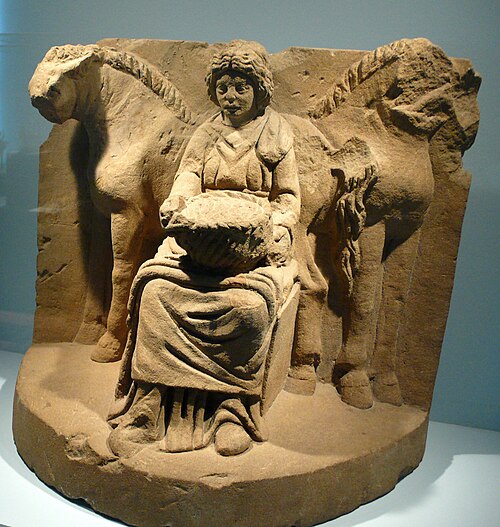
She is typically depicted holding a patera, cornucopia,[7][8][9][10] fruit,[11][1][7] bread, ears of corn (wheat,[8] grain);[12] or accompanied by a foal[7][13] or foals.[15][a]
She may have had a death goddess's aspect,[16] and it is speculated that She (and her horses[16][17]) might have been regarded as escorting souls to the world of the afterlife.[18][21][4][17]
Various scholars also point to the parallel between Epona and the Welsh legendary figure Rhiannon[3][22] (also closely associated with horses[3][23]), and in the first branch of the Mabinogion (Pwyll Pendefig Dyfed), Rhiannon rides up to the tower to meet the title hero Pwyll who is not only lord of Dyfed, but the "Head of Annwn (the Ohterworld/Underworld)".[3][24][b]
Epona's worship as the patroness of cavalry was widespread in the Roman Empire between the 1st and 3rd centuries AD.[26][27] While adopted Celtic deities were usually only associated with specific localities, Epona was "the sole Celtic divinity ultimately worshipped in Rome itself."[28]
Etymology
The name Epona ('Great Mare') originates from Gaulish, an extinct Celtic language. It is derived from the reconstructed Proto-Indo-European word for horse: *éḱwos,[29] which appeared in the reconstructed Proto-Celtic language as *ekʷos ('horse'),[31] and later became the Celtic Gaulishepos ('horse').[32][8] The word is paired with the augmentativesuffix-on which is frequently, although not exclusively, found in theonyms (ex. Sirona, Matrona) and the usual Gaulish feminine singular -a.[33] Alternately, scholars have suggested that the -ona (or -ana) suffix references sacred water, specifically springs or other water sources.[27][34][c]
Literary attestations

A number of Roman writers allude to Epona's cult, and it is rare for a Celtic deity be found in so many instances of mention in classical literature,[36] though the amount of information that can be garnered is still scarce, despite the roster of authors.[37]
من أقدم الشواهد على وجود إيبونا كإلهة كتاب " الساتير " (100-127 م) لجوفينال ، الذي يربط عبادة إيبونا وأيقوناتها بالإسطبلات. [ 38 ] ذُكرت إيبونا في كتاب "الحمار الذهبي " (القرن الثاني الميلادي) لأبوليوس ، حيث في مشهدٍ تدور أحداثه في شمال اليونان ( ثيساليا ، المشهورة بتربية الخيول [ 7 ] )، وُضعت صورة إيبونا على عمود في إسطبل، وزُيّن المكان بأكاليل من الورود المقطوفة حديثًا. [ 39 ]
هكذا يحدث التأثير في عزلة زاوية الاستقرار. من خلال الوقاحة، أتعاون مع نفسي في مساعدة روزاريو، لوسيوس ديمو المستقبلي، الوسيط الغدر، رعاية الصفائح الوسيطة، التي تساعد في الحفاظ على الاستقرار، في نفس الوقت التأمل، Eponae من المحاكاة التي تقيم في العيادات، ما دامت كوروليس روزيس دقيقة حديثيبوس فورات أورناتوم.
بينما كنتُ واقفًا في زاويتي المنعزلة، منبوذًا من صحبة زملائي ذوي الأربع قوائم، وأُفكّر في انتقامٍ مريرٍ منهم في صباح اليوم التالي حالما أنتهي من أكل ورودي وأعود لوسيوس، لاحظتُ ضريحًا صغيرًا للإلهة إيبونا، [الأم ذات رأس الفرس]، قائمًا في تجويف العمود الذي يدعم العارضة الرئيسية للإسطبل. كان مُزيّنًا بإكليلٍ من الورود المقطوفة حديثًا...
كما تشير الأمثلة الأدبية المذكورة أعلاه، فقد تم اكتشاف القطع الأثرية من إيبونا في مواقع مستقرة (انظر § pStable finds ).
يوجد سردٌ غير دقيق لأصل إيبونا في كتاب Parallela Minora ، المنسوب إلى بلوتارخ الزائف :
كان فولفيوس ستيلوس يكره النساء، وكان يضاجع فرساً، وبعد حين أنجبت الفرس فتاة جميلة أطلقوا عليها اسم إيبونا. وهي إلهة حماية الخيول. هذا ما ذكره أجيسيلاوس في الكتاب الثالث من تاريخه الإيطالي. [ 42 ]
وردت هذه الحكاية في طبعة جيامباتيستا ديلا بورتا لكتاب "السحر الطبيعي" (1589)، حيث استشهد خطأً بكتاب " حياة سولون" لبلوتارخ . [ 43 ] وقد تمثل هذه الحكاية نوعًا من التذكير بطقوس التضحية بالخيول لدى الشعوب الهندو-أوروبية القديمة ، مثل طقوس أشفاميدها الفيدية أو الطقوس الأيرلندية التي وصفها جيرالدوس كامبرينسيس ، وكلاهما مرتبط بالملكية. في الطقوس السلتية، يتزاوج الملك مع فرس بيضاء يُعتقد أنها تجسد إلهة السيادة. [ 44 ] [ 45 ]
يروي باوسانياس أسطورة يونانية مماثلة تتعلق بديميتر إيرينيس ("ديميتر المنتقمة")، التي اغتصبها بوسيدون متنكراً في هيئة حصان، وكانت في هيئة فرس. [ 46 ] [ 47 ] وقد تم تبجيل ديميتر كفرس في ليكوسورا في أركاديا .
الوظائف والعبادة
من المرجح أن إيبونا جسّدت الجوانب المستأنسة للحصان، إذ مثّلت الخصوبة والوفرة والتكاثر والحماية. كما يُرجّح أنها كانت تُعتبر حاميةً ليس فقط للفرسان (بمن فيهم جنود سلاح الفرسان وسائقو العربات وسائقو البغال )، بل أيضًا لتربية الخيول ، وكانت تحظى بالتبجيل من قِبل أصحاب المهن ذات الصلة، مثل عمال الإسطبلات والعاملين في رعاية الخيول، بالإضافة إلى أي شخص يعمل في أي نوع من أنواع النقل أو التجارة المتعلقة بالخيول، [ 2 ] [ 48 ] [ 49 ] بما في ذلك المسافرين على ظهور الخيل. [ 51 ]
يشير التوثيق الوارد في كتاب أبوليوس الروماني (انظر قسم التوثيقات الأدبية ) إلى أن المذابح المخصصة للإلهة كانت تُوضع عادةً في الإسطبلات في جميع أنحاء الإمبراطورية الرومانية. [ 14 ] [ 52 ] [ 53 ] وبينما ارتبطت لاحقًا بسلاح الفرسان نظرًا لخضوع بلاد الغال لحكم روما (حيث تم توظيف العديد من السلتيين كفرسان في القوات المساعدة [ 54 ] )، تشير الأيقونات إلى أنها قبل الاحتكاك بالرومان كانت على الأرجح إلهة مسالمة، مرتبطة بالخصوبة والحماية لا بالحرب. [ 29 ]
إيبونا في بلاد الغال
In regional cults in Roman-occupied Gaul, Epona was worshipped as a mother goddess who oversaw the welfare of horses, donkeys, mules, and their riders. Horses were a key component of Pre-Roman Gallic life; Gallic soldiers held their horses in high regard, as seen by Vercingetorix sending away his horses rather than letting them be captured or killed.[55]
Some objects dedicated to the goddess also suggest that she played a funerary role; additionally, horses were believed to guide the soul into the afterlife in some ancient cultures.[53]Fernand Benoît suggested that images of Epona, in addition to those of the serpent-tailed ("anguiforme") daemon, symbolized a theme of victory over death; he found both images to be manifestations of Mediterranean symbolism, which reached Gaul through contacts with Etruria and Magna Graecia.[56]
Roman Epona
When Romans came into contact with Celtic deities, they often interpreted the new deity through existing Roman models in a process known as interpretatio romana.[57] As Gaul was Romanized under the early Empire, Epona's sovereign role evolved into a protector of cavalry.[58] Local Gallic customs and Epona's cult were spread across the Roman Empire by the auxilia, alae, numeri, and equites singulares, military units that were primarily recruited from Gaul, Lower Germany, and Pannonia. Due to the modest nature of the goddess' extant offerings and inscriptions, scholars have suggested that Epona may have retained her rustic qualities and focus on healing and fertility even as she was adopted by the Romans.[59]
Epona's feast day in the Roman calendar was given as December 18 on a rustic calendar from Guidizzolo, Italy,[60] although this may have been only a local celebration. She was incorporated into the Roman imperial cult and invoked on behalf of the emperor as Epona Augusta or Epona Regina ('queen').[61][62]
Epona in Hispania
Evidence of Epona's cult has been found as far west as the Roman province of Hispania, in the Iberian Peninsula. The core of the cult was likely centered around Celtiberia, a region populated by Hispano-Celtic speakers that was later absorbed into the Empire. She is attested to in Cantabria and Palencia in modern-day Spain, where she was known as Epane.[63]
Generally, in art from this region, Epona is depicted riding a horse, standing among a herd of horses, or feeding foals. A small stone altar dedicated to the goddess was found in Andújar, Andalusia, likely dating to the late 1st or early 2nd centuries CE. The goddess herself is not depicted, but a mule is carved into the surface. The expansion of her cult outside of Celtiberia and into cities along the Sierra Morena is likely due to the vast network of copper mines in the region; her worshippers likely worked at or owned these mines.Hernández Guerra (2011), pp. 250–251
In Britain
In the West Country, specifically Padstow and Minehead, the tradition of May Dayhobby-horse parades survived into the 20th century; at the end of the festivities in Padstow, the hobby-horse was formerly ritually submerged into the sea.[64][65] Folklorists have claimed the festival has roots in the ritual worship of Epona. However, there is no firm evidence of the festival existing before the 18th century. A southern Welsh folk ritual called Mari Lwyd (Grey Mare) is still undertaken in December. Some folklorists have likewise claimed the event descends from the veneration of Epona. However, there is no firm evidence to support this claim.
Rhiannon
In the medieval Welsh collection of stories known as the Mabinogion, the regal figure of Rhiannon rides a white horse, whose slow, effortless gait supernaturally outpaces all pursuit. Wrongly accused of killing her offspring, Rhiannon has to live as a horse for seven years as punishment, offering to carry travellers to the court and telling them her story; she also wears the work-collar of an ass.
هي وابنها، الذي أنجبه إله البحر (انظر بوسيدون الروماني اليوناني ، إله الخيول والبحر)، يُوصفان أحيانًا بالفرس والمهر. [ 66 ] يشكك رونالد هاتون في الروابط المزعومة بين إيبونا وريانون؛ فالأخيرة شخصية أدبية ظهرت لاحقًا، على الرغم من أنها تستند أيضًا إلى تقاليد شفهية مفقودة الآن. [ 67 ]
الأدلة الأثرية
عُثر على غالبية القطع الأثرية المتعلقة بإيبونا والمُخصصة لها في ما كان يُعرف بشرق وشمال شرق بلاد الغال الرومانية ، وحول الحدود الرومانية في منطقة الراين الألمانية ، والتي كانت تُحرسها قوات الفرسان . [ 27 ] زعم المؤرخ بينوا أن عبادة إيبونا الأولى ظهرت في مقاطعات الدانوب الرومانية ، وأكد أنها وصلت إلى حدود بلاد الغال عن طريق فرسان من الشرق؛ إلا أن هذا الطرح لا يحظى بقبول واسع. [ 56 ] تتكون الأدلة المتبقية على عبادة إيبونا بشكل أساسي من أشياء نذرية ونقوش وتماثيل صغيرة مصنوعة عادةً من الحجر أو الطين. غالبًا ما تُعثر على الأشياء المُخصصة لإيبونا حول المياه المقدسة - وتحديدًا الآبار والينابيع ونهر موزيل - مما يشير إلى أنها كانت تُعتبر على الأرجح مُعالجة. [ 68 ]

على الرغم من أن اسم "إيبونا" غالي الأصل، فإن النقوش المخصصة لها مكتوبة باللاتينية ، أو نادرًا باليونانية . لم يقتصر صنعها على السلتيين فحسب ، بل شمل أيضًا الجرمان وغيرهم من سكان الإمبراطورية الرومانية . يشير نقشٌ مخصص لإيبونا من مدينة ماينز الألمانية إلى أن كاتبه سوري . [ 69 ] في أغلب الأحيان، كان يُنشئ النقوش فردٌ واحدٌ لتكريم عهدٍ أو نذرٍ للإلهة؛ وكان معظم هؤلاء الأفراد من غير ذوي الرتب العالية في الجيش، وتحديدًا سلاح الفرسان، وكانوا يحملون أسماءً رومانية أو ألقابًا رومانية. [ 70 ]
عُثر عام ١٨٨٧ في روم، دو سيفر (مستوطنة راورانوم الرومانية)، على نقش لاتيني طويل يعود إلى القرن الأول قبل الميلاد، محفور على صفيحة رصاصية ، ومرفق بتضحية مهرة وتقديم نذر عبارة عن مرجل . يرى أولمستيد أن النقش يستحضر الإلهة بألفاظ قديمة كثيرة ، منها: إيبونينا (إيبونا الصغيرة العزيزة)، وأتانتا (إلهة الخيول)، وبوتيا (السيدة القوية (قارن باليونانية بوتنيا ))، وديبونيا (اللاتينية، "الإلهة الطيبة")، وكاتونا (إلهة المعركة)، وفوفيسيا . إلا أن تفسير أولمستيد لم يلقَ قبولًا عامًا بين الباحثين الآخرين؛ إذ يفسر ميد النقش نفسه على أنه استحضار للإلهة ديبونا باليونانية العامية طلبًا للمساعدة في نزاع عاطفي. [ ٧١ ]
يذكر نقشان معبدًا مخصصًا لإيبونا في مدينة نييفر الفرنسية الحالية . ويبدو أن المعبد شُيّد في الموقع الذي هُزم فيه الزعيم الغالي فيرسينجيتوريكس على يد يوليوس قيصر عام 52 قبل الميلاد خلال الحروب الغالية . [ 72 ] [ 73 ] كما عُثر على أدلة تشير إلى مواقع طقوسية أو معابد محتملة في آس وإليويت في بلجيكا الحالية . [ 74 ]
اكتشافات مستقرة
عُثر على بعض القطع الأثرية لإيبونا في مواقع إسطبلات، مثل النقش الموجود في مقر حاكم أبولوم في داسيا ( ألبا يوليا الحالية ، رومانيا ). [ 75 ] كما توجد لوحة جدارية لإلهة تركب حمارًا بشكل جانبي وتحمل طفلًا، في محراب لاراريوم في إسطبل تم اكتشافه في بومبي (الموقع ريجيو التاسع، إنس. 2، رقم 24)؛ ويُعتقد مبدئيًا أنها إيبونا. [ هـ ] [ 77 ] [ 78 ] [ 79 ] وقد عُثر على صور صغيرة لإيبونا في مواقع رومانية لإسطبلات وحظائر في منطقة واسعة .
مثال من بريطانيا
A provincial, small (7.5 cm high) Roman bronze of a seated Epona, flanked by an "extremely small" mare and stallion, was found in England.[80] Lying on her lap and on the patera raised in her right hand are disproportionately large ears of grain; ears of grain also protrude from the mouths of the ponies, whose heads are turned toward the goddess. On her left arm she holds a yoke, which curves up above her shoulder, an attribute unique to this bronze statuette.[f]
Iconography
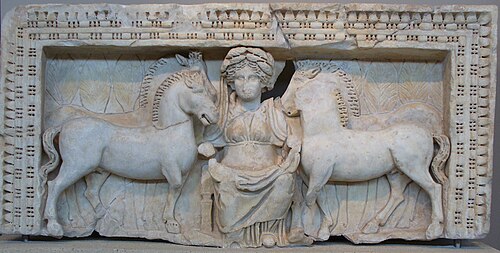
Sculptures of Epona fall into five types, as distinguished by Benoît: riding, standing or seated before a horse, standing or seated between two horses, a tamer of horses in the manner of potnia theron, and the symbolic mare and foal. Most commonly, statues are stone, bronze, or terracotta, and depict the goddess riding sidesaddle.[81][82] In the Equestrian type, common in Gaul, she is depicted sitting side-saddle on a horse or (rarely) lying on one; in the Imperial type (more common outside Gaul) she sits on a throne flanked by two or more horses or foals.[83][84]
In addition to horses, Epona is most frequently depicted holding a cornucopia, with bowls or dishes of fruit, bread, or corn also being common; the cornucopia may have been a Roman addition.[10] These objects are also paired with other goddesses of fertility and abundance such as Fortuna and the Matres. She is also sometimes associated with birds or dogs; the dog is a symbol of Sucellus, Gallic god of agriculture and wine.[82]
عُثر على نقوش ومنحوتات تُصوّر الإلهة في بانونيا ، ومويسيا السفلى ، وداسيا ، ووسط البلقان ؛ وغالبًا ما تُصوّر جالسةً محاطةً بحصانين، مرتديةً رداءً طويل الأكمام ( كيتون ) مع حزام وعباءة فوقها. [ 85 ] كما تُصوّر أيضًا على مقبض إناء فضي وهي تحمل مهرًا وترتدي تاجًا جداريًا . [86 ] ربما كان مُتعبّدوها في هذه المنطقة يتألفون في المقام الأول من حدادين وعمال مناجم من بلاد الغال الذين عملوا في مناجم الفضة والرصاص في المنطقة. [ 87 ] بالإضافة إلى ذلك، قد تكون إيبونا هي الإلهة غير المعروفة التي تُصوّر وهي تتفاعل مع فارس تراقيا - وغالبًا ما تُباركه - وهو إله غامض كان يُعبد في المنطقة. [ 85 ]
في الأدب والفن
في سلسلة ألعاب "أسطورة زيلدا" ، يُطلق على حصان الشخصية الرئيسية لينك اسم إيبونا . ويظهر الحصان دائمًا على شكل فرس بالومينو أو كستنائي فاتح اللون مع عرف أبيض.
يحتوي ألبوم الفنانة إينيا الذي يحمل اسمها والصادر عام 1987 على أغنية بعنوان Epona ، كجزء من الموسيقى التصويرية للفيلم الوثائقي الذي أنتجته هيئة الإذاعة البريطانية The Celts . [ 88 ]
اليوم
في جزيرة ماكيناك بولاية ميشيغان، يُحتفل بمهرجان إيبونا كل شهر يونيو بجولات في الإسطبلات، ومباركة الحيوانات، وموكب إيبونا وباركوس. لا تسمح جزيرة ماكيناك بالسيارات الخاصة؛ فالحصان هو وسيلة النقل الرئيسية، لذا فإن الاحتفال بإيبونا يحمل أهمية خاصة في هذه الجزيرة الواقعة في الغرب الأوسط العلوي. [ 89 ] يتضمن "عيد إيبونا" مباركة الخيول والحيوانات الأخرى من قبل رجل دين محلي. [ 90 ]
تُعبد إيبونا اليوم أيضاً من قبل الكهنة الجدد [ 91 ] وغيرهم من الوثنيين ومتعددي الآلهة. [ 92 ]
استوحى اسم الإلهة اسم جهاز EPONA (جهاز مراقبة بدء الجسيمات النشطة) الموجود على متن المركبة الفضائية جيوتو . [ 93 ]
انظر أيضاً
ملاحظات توضيحية
- ↑ يشير ريناخ (1898) ، ص 198، إلى مثال بارز من متحف فورمس، "مع سلة أو وعاء تحت ركبتيها بين مهرين"، من النوع رقم 64).
- ↑Hubert supposes that the Epono pedestal found at Waldfischbach in the Palatinate depicts the mounted goddess facing a tower, matching the Rhiannon episode in the Mabinogion.[25]
- ↑Reinach (1903) ventured a hypothesis that the goddess Epona signified "horse-spring" and was originally depicted in the form of a horse (""représentée par une cavale), and later altered by "les progrès de l'anthropomorphisme.[34][35]
- ↑In Robert Graves's translation of The Golden Ass, he has interposed an explanatory "the Mare-headed Mother" that does not appear in the Latin text; it would have linked Epona with the primitive mythology of Demeter, who was covered as a mare by Poseidon in stallion-form (see above); there is no justification for identifying Epona with Demeter, however.
- ↑Though not definitively identifiable as Epona, she may be Isis who is connected with asses, and figures in the Golden Ass.[76]
- ↑Identified as a yoke by Catherine Johns 1971; its misidentification as a serpent has led to misleading identification of a "chthonic" Epona.
References
Citations
- 12Aldhouse-Green (1984), p. 146.
- 12Loë, Alfred de, Baron (September 1930). "Statuette équestre d'Épona". Bulletin des Musées royaux d'art et d'histoire. 3ème série. 2 (5): 124–125.
- 1234567Aldhouse-Green, Miranda (2017). "9. Women and Goddesses in the Celtic World §The mistress of animals". In Sutcliffe, Steven J. (ed.). Religion: Empirical Studies. Lit. ISBN 9781351904810.
- 12Eliade, Mircea (1978). A History of Religious Ideas: From Gautama Buddha to the triumph of Christianity. University of Chicago Press. p. 148.
Epona has been interpreted as a Mother Goddess and psychopomp
- ↑Aldhouse-Green (1984), pp. 146, 196.
- ↑Coulter, Charles Russell; Turner, Patricia, eds. (2013). "Epona". Encyclopedia of Ancient Deities. Routledge. ISBN 9781135963972.
- 1234Linduff (1979), p. 821.
- 123Monaghan, Patricia (2014) [2004]. "Historical Cycle". The encyclopedia of Celtic mythology and folklore. Facts on File. pp. 157–158. ISBN 9781438110370.
- ↑Reinach (1895), p. 194, Summary VIII, listing Nos. 2, 4, 28, 30 with both patera and cornucopia, other examples show one or the other.
- 12Hernández Guerra (2011), pp. 247–248, 253.
- ↑Reinach (1895), p. 194.
- ↑Aldhouse-Green (1984), p. 146 and (2017)[3]
- ↑Reinach (1895), p. 195, Summary XI, listing Nos. 8, 9, 15, 26, 28 as examples with poulain..
- 12Irby-Massie, Georgia (2018). Military Religion in Roman Britain. Brill. pp. 154–155. ISBN 9789004351226.
- ↑Aldhouse-Green (1984), p. 195: "On stelae dedicated to her, she is often depicted with mares and/or foals". Aldhouse-Green (2017) and Irby-Massie (2018) mention the § Example from Britain, the bronze statuette, British Museum. Epona with two ponies, also holding sheaf of corn-ears.[3][14]
- 12Plisnier, Marie (2010). "Iron Age Oddity; Unusual Animal Remains". In Hily, Gaël; Lajoye, Patrice; Hascoët, Joël; Oudaer, Guillaume; Rose, Christian (eds.). Deuogdonion: mélanges offerts en l'honneur du professeur Claude Sterckx. Rennes: TIR. p. 539. ISBN 9782917681114.
Epona was a goddess of death. This would explain why the horse—as well as the dog, which was sometimes represented with Epona—would have been perceived as a psychopomp animal
- 12Hernández Guerra (2011), pp. 247–248.
- ↑Aldhouse-Green (2017): "at the great cemetery of Horgne au Sablon.. Onon relief from this site Epona rides.. and behind them walks a human figure whom some have interpreted as the soul of a deceased believer being led to the otherworld".[3]
- ↑Forcey, Colin (1998). "Whatever Happened to the Heroes? Ancestral Cults and the Enigma of Romano-Celtic Temples". Theoretical Roman Archaeology Journal. 1997: 90.
- ↑ روس، آن (1975). "تمثال خشبي من فينتا بيلغاروم". مجلة الآثار . 55 : 336.
إرشاد أرواح الراحلين إلى العالم الآخر في المعتقدات السلتية (نقلاً عن فورسي).
- ↑ فورسي (1998) يصنف إيبونا على أنها كائنات أرضية ، [ 19 ] ويستشهد بروس (1975). [ 20 ]
- ^ هيوبرت، هنري (1925). "Le Mythe d'Epona". تقدم Mélanges linguistiques لـ MJ Vendryes (باللغة الفرنسية). باريس: إ. بطل. ص 187 – 198. hdl : 2027/yul.11164173_000_00 .
- ^ هيرنانديز جويرا (2011) ، ص. 248.
- ↑ هوبرت (1925) ، ص 189.
- ↑ هوبرت (1925) ، ص 188-189.
- ↑ بيريسفورد إليس، بيتر (1998). العالم القديم للسلت . بريطانيا العظمى: كونستابل وروبنسون . ص 175. ISBN 0-7607-1716-8.
- 1 2 3 كروملي، كارول (24-10-2013). الديناميكيات الإقليمية: مناظر بورغندي الطبيعية من منظور تاريخي . إلسيفير. ص 295. ISBN 978-0-323-14402-5.
- ^ فيليس براي بوبر، مراجعة رينيه ماجنين، Epona، Déesse Gauloise des Chevaux، Protectrice des Cavaliers في المجلة الأمريكية لعلم الآثار 62.3 (يوليو 1958، ص 349-350) ص. 349. ساهم إميل ثيفينوت بمجموعة مكونة من 268 نقشًا وتمثيلًا إهداءيًا.
- 1 2 كازاكيفيتش، جينادي (2021). "صورة راكب الخيل على عملات الكلت الشرقية وعبادة إلهة الحرب السلتية" . الأوكرانية Numizmatychnyy ShchorichnykУкраїнський Номизматичний Щорачник[ الكتاب السنوي الأوكراني لعلم المسكوكات ] 5 : 81-92 .
- ↑ شميدت، كارل هورست [بالألمانية] (1991). "اللاتينية والسلتية: العلاقة الجينية والاتصالات الجغرافية" . نشرة مجلس الدراسات السلتية . 38 : 11.
- ↑ يعطي شميدت * eḱuos لسلف معاد بناؤه [ 30 ] ولكنه لا يوضح ما إذا كان هذا هو PIE أو اللغة السلتية البدائية.
- ↑ غايدوز، هنري (يونيو 1887). "دين الغاليين" . المجلة السلتية . 12 (115): 361.
- ^ ديلامار، إكس. (2003). Dictionnaire de la langue gauloise . الطبعة الثانية. باريس، طبعات خطأ. ص 163-164
- 1 2 ريناخ، سالومون (يوليو – أغسطس 1903). "نوفيل إيبوناس" . مراجعة الأثرية . سلسلة 4ème. 2 : 348 - 350.
- ↑ باتون، جيمس م. (1904). "المجلة الأمريكية لعلم الآثار" . مجلة المعهد الأثري الأمريكي . السلسلة الثانية. 8 : 323.
- ↑ غرين، ميراندا جين (1996). الآلهة السلتية: المحاربات والعذارى والأمهات . جي. برازيل. ص 184. ISBN 9780807614051.
- ^ هيرنانديز جويرا (2011) ، ص 248-249.
- ↑ السخرية الثامنة، الأسطر 155-157، حيث يسخر الراوي من قنصل بسبب اهتمامه غير اللائق بالخيول:
interea، dum lanatas robumque iuuencum more Numae caedit، Iouis ante altaria iurat solam Eponam et facies olida ad praesepia pictas
- 1 2 ألدهاوس-غرين، ميراندا (2017). علم آثار الصور: علم الأيقونات وعلم الكونيات في العصر الحديدي وأوروبا الرومانية . تايلور وفرانسيس. ص 232-233 . ISBN 9781134527779.
- ↑ نقلاً عن هيرنانديز غيرا (2011) ، ص 248، حاشية 6، متبوعًا بالترجمة الإسبانية.
- ↑ غريفز (1950، ص 82). نقلاً عن ألدهاوس-غرين (2004). [ 39 ]
- ^ بلوتارخ الزائف، Parallela Minora 29 ، تم الاستشهاد به أيضًا باسم 312e (= Agesilaus FGrHist F 1).
- ^ جيامباتيستا ديلا بورتا (1569). "Magia Naturalis، sive De Miraculis Rerum Naturalium" . ليون.
- ↑ ML West ، الشعر والأساطير الهندية الأوروبية (مطبعة جامعة أكسفورد، 2007)، ص 418.
- ↑ ميريام روبنز ديكستر، "إلهة الحصان"، في موسوعة الثقافة الهندية الأوروبية (تايلور وفرانسيس، 1997)، ص 280.
- ^ بوسانياس، viii.25.5، 37.1 و 42.1 تمت الإشارة إلى الأسطورة في Bibliotheke 3.77 وانعكست أيضًا في قصيدة مفقودة من Callimachus وفي التاريخ الجديد لبطليموس هيفايستيون .
- ↑Karl Kerenyi, The Gods of the Greeks (1951) pp 184ff "Demeter and Poseidon's stallion-marriages".
- ↑Green, Miranda Jane (1993). Celtic myths. University of Texas Press. pp. 60–61. ISBN 9780292727540.
- ↑Turcan, Robert (1996) The Cults of the Roman Empire, p. 23 apudJovičić & Bogdanović (2017), p. 38
- ↑Gillespie, Caitlin C. (2018). Boudica: Warrior Woman of Roman Britain. Oxford University Press. p. 148. ISBN 9780190609078.
- ↑Gillespie (2018)[50] citing Linduff (1979); Aldhouse-Green (2003) "Poles apart ? Perceptions of gender in Gallo-British cult-iconography", pp. 102–106.
- ↑. Encyclopædia Britannica. Vol. 9 (11th ed.). 1911. p. 708.
- 12Hernández Guerra (2011).
- ↑Mackintosh (1995), p. 30.
- ↑Linduff (1979), pp. 833, 836.
- 12Benoît (1950).
- ↑Linduff (1979), p. 818.
- ↑Oaks 1986:79–81.
- ↑Crumley (2013).
- ↑Vaillant, 1951.
- ↑Spickermann, Wolfgang. "Keltische Götternamen als Individuelle Option?" Akten des 11. Internationalen Workshops "Fontes Epigraphici Religionum Celticarum Antiquarum" vom 19-21. Mai 2011 an der Universität Erfurt.
- ↑Crumley (2013), p. 300.
- ↑Simón, Francisco Marco (2005-03-10). "Religion and Religious Practices of the Ancient Celts of the Iberian Peninsula". e-Keltoi: The Celts in the Iberian Peninsula. 6. section 2.2.4.1 (pp. 287–345).
- ↑Theo Brown, "Tertullian and Horse-Cults in Britain" Folklore61.1 (March 1950, pp. 31–34) p. 33.
- ↑Herbert Kille, "West Country hobby-horses and cognate customs" Proceedings of the Somerset Archaeological and Natural History Society77 (1931)
- ↑Ford, Patrick K., The Mabinogi and Other Medieval Welsh Tales, 2008, University of California Press, pp. 12, 26, 36, 75, isbn 9780520253964. See also Sioned Davies (translator), The Mabinogion, Oxford 2007, p. 231.
- ↑ هاتون، رونالد (2014). بريطانيا الوثنية . مطبعة جامعة ييل. ص 366. ISBN 978-0300197716.
- ^ ليندوف (1979) ، ص. 834 : "قوى إبونا لتجديد الحياة"؛ استشهد به أيضًا يوفيتشيتش وبوغدانوفيتش (2017) ، ص. 38
- ↑ CIL 13, 11801
- ↑ كروملي (2013) ، ص 299.
- ^ وولفجانج ميد (2007). "Pseudogallische inschriften". وفي لامبرت، بيير إيف؛ بينولت، جورج جان (محرران). Gaulois et celtique قاري . مكتبة دروز. ص 277 – 290. ISBN 9782600013376.
- ↑ ليندوف (1979) ، ص 821 : "معبد في نييفر وقد تم تأريخه من خلال النقوش إلى أواخر القرن الأول أو أوائل القرن الثاني".
- ^ يوفيتشيتش وبوجدانوفيتش (2017) ، ص 38-39.
- ^ دي لات، سيجفريد ج. (1951). “Survivances Du Culte d’Epona Dans Le Folklore Brabançon؟”. لاتوموس (بالفرنسية). 10 (2): 177- 180. جستور 41516887 .
- ^ حصار ، أدريان (1995). “الآلهة السلتية في داسيا الرومانية” (PDF) . اكتا Musei Napocensis . 32 : 89 - 90.( جوجل )
- ↑ ريناخ (1895) ، ص 193.
- ^ ريناخ (1895) ، ص. 193 رقم 60
- ↑ ماكنتوش (1995) ، ص 31.
- ↑ انظر IX.2.24 بومبي. الإسطبلات ومستودع الأسلحة. تم التنقيب عنها عام 1870 (الجزء 2). مع صور أرشيفية، على سبيل المثال، صورة ملونة التقطها ستانلي أ. جاسيمسكي (1961) وصور أقدم تُظهر اللوحات الجدارية المحيطة بالركن.
- ↑ يُفترض أن ويلتشير هي المصدر الأصلي للاكتشاف، وقد أُضيفت إلى مصدرها " تم العثور عليها في إنجلترا "، بعد أن وُصفت القطعة في كتالوج بيع مجموعة فيرينكز بولسكي، باريس، 1868. وهي محفوظة في المتحف البريطاني ، ووُصفت بأنها "إقليمية، ولكنها ليست بربرية" في مقال كاثرين جونز، "تمثال برونزي روماني لإيبونا"، مجلة المتحف البريطاني الفصلية 36.1 /2 (خريف 1971: 37-41).
- ↑ ليندوف (1979) ، ص 820.
- 1 2 جونز، كاثرين (1971). "تمثال برونزي روماني لإيبونا". مجلة المتحف البريطاني الفصلية . 36 (1/2): 37-41 . JSTOR 4423098 .
- ↑ نانتونوس، 2004.
- ↑Cf. the bronze found at La Madeleine, Ain department (near Bâgé-la-Ville), fig. no. 1, Reinach (1895), p. 165 described as reclining, though appears to be sidesaddle. German finds in stone and terracotta, Nos. 42, 45, 50–59, Reinach (1895), pp. 182–186 ride sidesaddle.
- 12Plemić, Bojana (September 1930). "Contribution to the Study of the Danubian Horsemen Cult: Iconographic Syncretism of the Danubian Goddess and Celtic Fertility Deities". Archaeologia Bulgarica. 17 (2): 59–72.
- ↑Jovičić & Bogdanović (2017), p. 34 citing Popović (1994) cat. 203
- ↑Jovičić & Bogdanović (2017), pp. 34–35 citing Popović (1995), p. 153
- ↑Enya at Discogs.
- ↑"Mackinac Island Lilac Festival". mackinacislandlilacfestival.org. Archived from the original on February 2, 2015.
- ↑Caitlyn Kienitz (2008-06-21). "Animals Are Blessed During Feast of Epona". Town Crier (www.mackinacislandnews.com). Archived from the original on 2016-03-04. Retrieved 2015-06-29.
- ↑Cf. Potia (n.d.). "Epona". Order of Bards Ovates & Druids. Retrieved 2015-06-29.
- ↑Cf. Jane Raeburn (2001). Celtic Wicca: Ancient Wisdom for the 21st Century. Citadel Press. p. 54.
- ↑Calder, Nigel (1992). Giotto to the Comets. London: Presswork. p. 47. ISBN 0-9520115-0-6.
Bibliography
- Aldhouse-Green, Miranda Jane (1984). The Wheel as a Cult-symbol in the Romano-Celtic World: With Special Reference to Gaul and Britain. Latomus. pp. 145–146, 195–196. ISBN 9782870311233.
- Benoît, Fernand[in French] (1950). Les mythes de l'outre-tombe. Le cavalier à l'anguipède et l'écuyère Épona. Latomus.
- Evans, Dyfed Llwyd (2005–2007), Epona: a Gaulish and Brythonic goddess (Divine Horse)
- Green M. J. (1986), The Gods of the Celts, Stroud, Gloucestershire.
- Hernández Guerra, Liborio (2011). "La diosa Epona en la Península Ibérica: una revisión crítica". Hispania antiqua (in Spanish). 35: 247–248.
- Jovičić, Mladen; Bogdanović, Ana (2017). "New Evidence of the Cult of Epona in Viminacium". Archaeology and Science. 13: 33–45.
- Linduff, Katheryn M. (1979). "Epona: A Celt among the Romans". Latomus. 38 (4): 817–837. JSTOR 41531375.
- Mackintosh, Marjorie (1995). "4. Epona". The Divine Rider in the Art of the Western Roman Empire. BAR International Series 607. Tempus Reparatum/British Archaeological Reports. pp. 29–37. (alt url@google)
- Magnen, R. Epona (Delmas, 1953).
- Nantonos and Ceffyl (2004), Epona.net, a scholarly resource
- Oaks, L. S. (1986), "The goddess Epona", in M. Henig and A. King, Pagan Gods and Shrines of the Roman Empire (Oxford), pp 77–84.
- Reinach, Salomon (January–June 1895). "Épona". Revue archéologique. 26: 163–195.
- Reinach, Salomon (July–December 1898). "Encore Épona". Revue archéologique. 33: 187–200.
- Speidel, M. P. (1994). Riding for Caesar: the Roman Emperors' Horse Guards. Cambridge, Massachusetts, Harvard University Press.
- Thevenot, Emile 1949. "Les monuments et le culte d' Epona chez les Eduens," L'antiquité Classique18 pp 385–400. Epona and the Aedui.
- Vaillant, Roger (1951), Epona-Rigatona, Ogam, Rennes, pp 190–205.
Further reading
- Euskirchen, Marion (1993). "Epona." Bericht der Römisch-Germanischen Kommission74 pp. 607–838.
- Lajoye, Patrice (2016). "Note sur une source antique méconnue concernant le culte d'Epona en Cisalpine" [A note about a less known ancient source concerning Epona's cult in Cisalpine Gaul]. Études Celtiques. 42: 59–64. doi:10.3406/ecelt.2016.2469.
- واديل، جون. "أسلاف إيبونا". في: الأسطورة والمادية ، 124-46. أكسفورد؛ فيلادلفيا: أوكس بو بوكس، 2018. أسلاف إيبونا .
- وارميند، مورتن (2016). "مرة أخرى إلهة الحصان السلتية". وقائع ندوة هارفارد السلتية . 36 (36): 231-240 . JSTOR 26383351 . .
- آلهة غالية
- آلهة البريطانيين القدماء
- الآلهة الرومانية
- آلهة الخصوبة
- آلهة الحيوانات
- آلهة الخيول
- آلهة الحمير