
Filioque
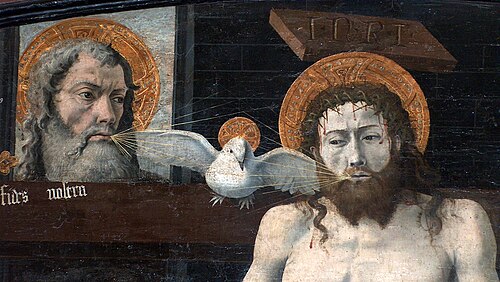
Filioque (English pronunciation /ˌfɪliˈoʊkwi,-kweɪ/FIL-ee-OH-kwee, -kway; Ecclesiastical Latin:[filiˈokwe]) is a Latin term meaning and the Son.[1] The inclusion or omission of this term in the Niceno-Constantinopolitan Creed has been a theological and procedural controversy, a major cause of the schism of 1054 AD between the Western and Eastern churches[1][2][3], and an ongoing source of disagreement for over a thousand years.[4] The clause is inserted in the words Qui ex Patre [Filioque] procedit, 'Who proceeds from the Father [and the Son]', which specifically address the procession of the Holy Spirit, defining whether He proceeds from the Father, or from the Father and the Son (Jesus Christ).
The Nicene Creed was written in Greek, adopted by the First Council of Nicaea in 325 AD, and amended by the First Council of Constantinople in 381 AD. However the wordings of the creeds adopted at Nicaea and Constantinople are not recorded in any surviving document until the Council of Chalcedon in 451 AD. Christian tradition holds that the Constantinople council added the passage stating that the Holy Spirit 'proceeds from the Father' (τὸ ἐκ του Πατρὸς ἐκπορευόμενον).[5]
The Third Council of Toledo in 589 AD inserted the word Filioque into the creed, in response to the Arian interpretation of the Trinity, which the council considered heretical. Supporters argue that this was merely a clarification of existing theology expressed by the Church Fathers. Opponents argue that it violated Canon VII[6][7] of the Council of Ephesus (431 AD), which forbade modifications to the creed. The use of Filioque spread to the Frankish church in the 8th century, who claimed that it was an authentic part of the Nicene Creed, so no canon had been violated. Under pressure from Henry II, Holy Roman Emperor, in 1014 AD Pope Benedict VIII incorporated Filioque into the creed used at Rome.
There have been numerous attempts to resolve the conflict, such as by explaining it as a matter of semantics not doctrine, or by appealing to the early seventh century work of Maximus the Confessor who is accepted by both sides.
Nicene Creed
The Nicene Creed as amended by the Second Ecumenical Council held in Constantinople in 381 includes the section:
| Greek original | Latin translation | English translation |
|---|---|---|
| Καὶ εἰς τὸ Πνεῦμα τὸ Ἅγιον, τὸ Κύριον, τὸ ζῳοποιόν | Et in Spiritum Sanctum, Dominum et vivificantem, | And in the Holy Spirit, the Lord, the giver of life, |
| τὸ ἐκ τοῦ Πατρὸς ἐκπορευόμενον, | qui ex Patre procedit, | who proceeds from the Father, |
| τὸ σὺν Πατρὶ καὶ Υἱῷ συμπροσκυνούμενον καὶ συνδοξαζόμενον, | qui cum Patre, et Filio simul adoratur, et cum glorificatur, | who with the Father and the Son is adored and glorified, |
The controversy arises from the insertion of the word Filioque ("and the Son") in the line:
| Latin | English translation |
|---|---|
| qui ex Patre Filioque procedit,[a] | who proceeds from the Father and the Son, |
Controversy
The controversy referring to the term Filioque involves four separate disagreements:
- Controversy about the term itself
- Controversy about the orthodoxy of the doctrine of the procession of the Holy Spirit from the Father and the Son, to which the term refers
- Controversy about the legitimacy of inserting the term into the Niceno-Constantinopolitan Creed
- Controversy about the authority of the Pope to define the orthodoxy of the doctrine or to insert the term into the Niceno-Constantinopolitan Creed.
Although the disagreement about the doctrine preceded the disagreement about the insertion into the Creed, the two disagreements became linked to the third when the pope approved insertion of the term into the Niceno-Constantinopolitan Creed, in the 11th century. Anthony Siecienski writes that "Ultimately what was at stake was not only God's trinitarian nature, but also the nature of the Church, its teaching authority and the distribution of power among its leaders."[8]
Hubert Cunliffe-Jones identifies two opposing Eastern Orthodox opinions about the Filioque, a "liberal" view and a "rigorist" view. The "liberal" view sees the controversy as being largely a matter of mutual miscommunication and misunderstanding. In this view, both East and West are at fault for failing to allow for a "plurality of theologies". Each side went astray in considering its theological framework as the only one that was doctrinally valid and applicable. Thus, neither side would accept that the dispute was not so much about conflicting dogmas as it was about different theologoumena or theological perspectives. While all Christians must be in agreement on questions of dogma, there is room for diversity in theological approaches.[9]
This view is vehemently opposed by those in Eastern Orthodox Church whom Cunliffe-Jones identifies as holding a "rigorist" view. According to the standard Eastern Orthodox position, as pronounced by Photius, Mark of Ephesus and 20th century Eastern Orthodox theologians such as Vladimir Lossky, the Filioque question hinges on fundamental issues of dogma and cannot be dismissed as simply one of different theologoumena.
In a similar vein, Siecienski comments that, although it was common in the 20th century to view the Filioque as just another weapon in the power struggle between Rome and Constantinople and although this was occasionally the case, for many involved in the dispute, the theological issues outweighed by far the ecclesiological concerns. According to Siecienski, the deeper question was perhaps whether Eastern and Western Christianity had wound up developing "differing and ultimately incompatible teachings about the nature of God". Moreover, Siecienski asserts that the question of whether the teachings of East and West were truly incompatible became almost secondary to the fact that, starting around the 8th or 9th century, Christians on both sides of the dispute began to believe that the differences were irreconcilable.[10]
From the view of the West, the Eastern rejection of the Filioque denied the consubstantiality of the Father and the Son and was thus a form of crypto-Arianism. In the East, the interpolation of the Filioque seemed to many to be an indication that the West was teaching a "substantially different faith". Siecienski asserts that, as much as power and authority were central issues in the debate, the strength of emotion rising even to the level of hatred can be ascribed to a belief that the other side had "destroyed the purity of the faith and refused to accept the clear teachings of the fathers on the Spirit's procession".[10]
History
New Testament
It is argued that in the relations between the persons of the Trinity, one person cannot "take" or "receive" (λήψεται) anything from either of the others except by way of procession.[11] Biblical texts such as John 20:22[12] were seen by Fathers of the Church, especially Athanasius of Alexandria, Cyril of Alexandria and Epiphanius of Salamis, as grounds for saying that the Spirit "proceeds substantially from both" the Father and the Son.[13] Other texts that have been used include Galatians 4:6,[14] Romans 8:9,[15] Philippians 1:19,[16] where the Holy Spirit is called "the Spirit of the Son", "the Spirit of Christ", "the Spirit of Jesus Christ", texts in the Gospel of John on the sending of the Holy Spirit by Jesus,[17] and John 16:7.[18][11] Revelation 22:1[19] states that the river of the Water of Life in Heaven is "flowing from the throne of God and of the Lamb", which may be interpreted as the Holy Spirit proceeding from both the Father and the Son. Tension can be seen in comparing these two passages:
- John 14:26 NASB – [26] "But the Helper, the Holy Spirit, whom the Father will send in My name, He will teach you all things, and bring to your remembrance all that I said to you."
- John 15:26 NASB – [26] "When the Helper comes, whom I will send to you from the Father, [that is] the Spirit of truth who proceeds from the Father, He will testify about Me"
Siecienski asserts that "the New Testament does not explicitly address the procession of the Holy Spirit as later theology would understand the doctrine", although there are "certain principles established in the New Testament that shaped later Trinitarian theology, and particular texts that both Latins and Greeks exploited to support their respective positions vis-à-vis the Filioque".[20] In contrast, Veli-Matti Kärkkäinen says that Eastern Orthodox believe that the absence of an explicit mention of the double procession of the Holy Spirit is a strong indication that the Filioque is a theologically erroneous doctrine.[21]
Church Fathers
Cappadocian Fathers
Basil of Caesarea wrote: "Through the one Son [the Holy Spirit] is joined to the Father".[22] He also said that the "natural goodness, inherent holiness, and royal dignity reaches from the Father through the only-begotten (διὰ τοῦ Μονογενοῦς) to the Spirit".[23] However, Siecienski comments that "there are passages in Basil that are certainly capable of being read as advocating something like the Filioque, but to do so would be to misunderstand the inherently soteriological thrust of his work".[24]
Gregory of Nazianzus distinguished the coming forth (προϊεον) of the Spirit from the Father from that of the Son from the Father by saying that the latter is by generation, but that of the Spirit by procession (ἐκπόρευσις),[25] a matter on which there is no dispute between East and West, as shown also by the Latin Father Augustine of Hippo, who wrote that although biblical exegetes had not adequately discussed the individuality of the Holy Spirit:
they predicate Him to be the Gift of God, [and they infer] God not to give a gift inferior to Himself. [From that, they] predicate the Holy Spirit neither as begotten, like the Son, of the Father; [ ] nor [ ] of the Son, [ and] they do not affirm Him to owe that which He is to no one, [except] to the Father, [ ] lest we should establish two Beginnings without beginning [ ] which would be an assertion at once [ ] false and [ ] absurd, and one proper not to the catholic faith, but to the error of [Manichaeism].[26][27]
Gregory of Nyssa stated:
The one (i.e. the Son) is directly from the First and the other (i.e., the Spirit) is through the one who is directly from the First (τὸ δὲ ἐκ τοῦ προσεχῶς ἐκ τοῦ πρώτου) with the result that the Only-begotten remains the Son and does not negate the Spirit's being from the Father since the middle position of the Son both protects His distinction as Only-begotten and does not exclude the Spirit from His natural relation to the Father.[28]
Alexandrian Fathers
Cyril of Alexandria provides "a host of quotations that seemingly speak of the Spirit's 'procession' from both the Father and the Son". In these passages he uses the Greek verbs προϊέναι (like the Latin procedere) and προχεῖσθαι (flow from), not the verb ἐκπορεύεσθαι, the verb that appears in the Greek text of the Nicene Creed.[29]
Since the Holy Spirit when he is in us effects our being conformed to God, and he actually proceeds from the Father and Son, it is abundantly clear that he is of the divine essence, in it in essence and proceeding from it
—Saint Cyril of Alexandria, Treasure of the Holy and Consubstantial Trinity, thesis 34
Epiphanius of Salamis is stated by Bulgakov to present in his writings "a whole series of expressions to the effect that the Holy Spirit is from the Father and the Son, out of the Father and the Son, from the Father and out of the Son, from Both, from one and the same essence as the Father and the Son, and so on". Bulgakov concludes: "The patristic teaching of the fourth century lacks that exclusivity which came to characterize Orthodox theology after Photius under the influence of repulsion from the Filioque doctrine. Although we do not here find the pure Filioque that Catholic theologians find, we also do not find that opposition to the Filioque that became something of an Orthodox or, rather, anti-Catholic dogma."[30][b]
Regarding the Greek Fathers, whether Cappadocian or Alexandrian, there is, according to Siecienski, no citable basis for the claim historically made by both sides, that they explicitly either supported or denied the later theologies concerning the procession of the Spirit from the Son. However, they did enunciate important principles later invoked in support of one theology or the other. These included the insistence on the unique hypostatic properties of each Divine Person, in particular the Father's property of being, within the Trinity, the one cause, while they also recognized that the Persons, though distinct, cannot be separated, and that not only the sending of the Spirit to creatures but also the Spirit's eternal flowing forth (προϊέναι) from the Father within the Trinity is "through the Son" (διὰ τοῦ Υἱοῦ).[32]
Latin Fathers
Siecienski remarked that, "while the Greek fathers were still striving to find language capable of expressing the mysterious nature of the Son's relationship to the Spirit, Latin theologians, even during Cyril's lifetime, had already found their answer – the Holy Spirit proceeds from the Father and the Son (ex Patre et Filio procedentem). The degree to which this teaching was compatible with, or contradictory to, the emerging Greek tradition remains, sixteen centuries later, subject to debate."[33]
Before the creed of 381 became known in the West and even before it was adopted by the First Council of Constantinople, Christian writers in the West, of whom Tertullian (c.160 – c.220), Jerome (347–420), Ambrose (c.338–397) and Augustine (354–430) are representatives, spoke of the Spirit as coming from the Father and the Son,[11] while the expression "from the Father through the Son" is also found among them.[34][35][36]
In the early 3rd century Roman province of Africa, Tertullian emphasises that Father, Son, and Holy Spirit all share a single divine substance, quality and power,[37] which he conceives of as flowing forth from the Father and being transmitted by the Son to the Spirit.[38] Using the metaphor the root, the shoot, and the fruit; the spring, the river, and the stream; and the sun, the ray, and point of light for the unity with distinction in the Trinity, he adds, "The Spirit, then, is third from God and the Son, ..."
في حججه ضد الأريوسية ، ربط ماريوس فيكتورينوس ( حوالي 280-365 ) بقوة بين الابن والروح القدس. [ 39 ]
في منتصف القرن الرابع، كتب هيلاريوس البواتييه عن الروح القدس بأنه "منبثق من الآب" و"مرسل من الابن"؛ [ 40 ] وأنه "من الآب عن طريق الابن"؛ [ 41 ] وأنه "مصدره الآب والابن"؛ [ 42 ] وفي موضع آخر، يشير هيلاريوس إلى يوحنا 16: 15 [ 43 ] (حيث يقول يسوع: "كل ما للآب هو لي، لذلك قلتُ إن [الروح القدس] سيأخذ مما لي ويخبركم به")، ويتساءل بصوت عالٍ عما إذا كان "الأخذ من الابن هو نفسه الانبثاق من الآب". [ 44 ]
في أواخر القرن الرابع، أكد أمبروز أسقف ميلانو أن الروح القدس "ينبثق من الآب والابن"، دون أن ينفصل عن أي منهما. [ 45 ] ويضيف أمبروز: "معك يا الله القدير، ابنك هو ينبوع الحياة، أي ينبوع الروح القدس. فالروح هو الحياة..." [ 46 ]
"مع ذلك، لم يجعل أي من هؤلاء الكتاب طريقة نشأة الروح موضوعًا للتأمل الخاص؛ بل إن جميعهم مهتمون بالتأكيد على المساواة في مكانة الأقانيم الإلهية الثلاثة كإله، ويقرون جميعًا بأن الآب وحده هو مصدر الوجود الأزلي لله." [ 47 ]
يشير البابا غريغوري الأول ، في عظة الإنجيل رقم ٢٦، إلى أن الابن "مُرسَل" من قِبَل الآب بمعنى التوليد الأزلي والتجسد الزمني. وهكذا، يُقال إن الروح "مُرسَل" من الابن من الآب في مسيرة أزلية ومهمة زمنية. "إن إرسال الروح هو تلك المسيرة التي ينبثق بها من الآب والابن". [ 48 ] في كتابه "الأخلاق في إيوب" ، الذي ألفه في البداية عندما كان مبعوثًا في البلاط الإمبراطوري بالقسطنطينية، ثم نقحه لاحقًا عندما كان بابا روما، كتب غريغوريوس: "لكن وسيط الله والناس، الإنسان يسوع المسيح، في كل شيء، يكون الروح القدس حاضرًا فيه دائمًا وباستمرار. لأن الروح نفسه ينبثق منه جوهريًا ( quia et ex illo isdem Spiritus per substantiam profertur ). وهكذا، مع أن الروح يسكن في الوعاظ القديسين، فإنه يُقال بحق إنه يسكن في الوسيط بطريقة خاصة، لأنه يسكن فيهم بنعمة لغرض معين، ولكنه يسكن فيه جوهريًا لجميع الغايات." [ 49 ] وفي موضع لاحق من كتاب " الأخلاق " (30.4.17)، كتب القديس غريغوريوس عن انبثاق الروح القدس من الآب والابن، مدافعًا عن مساواتهما. وهكذا كتب: «يُبين [الابن] كيف ينبثق من الآب غير منفصل عنه، وكيف ينبثق روح كليهما أزليًا مع كليهما. فسنرى حينها بوضوح كيف أن الكائن بأصله ليس لاحقًا لمن ينبثق منه؛ وكيف أن من يُنتج بالانبثاق ليس سابقًا لمن انبثق منهم. سنرى حينها بوضوح كيف أن الواحد [الله] هو ثلاثة [أقانيم] قابلة للانقسام، والثلاثة [أقانيم] إله واحد غير قابل للانقسام.» [ ٥٠ ]
Later in his Dialogues, Gregory I took the Filioque doctrine for granted when he quoted John 16:7,[51] and asked: if "it is certain that the Paraclete Spirit always proceeds from the Father and the Son, why does the Son say that He is about to leave so that [the Spirit] who never leaves the Son might come?"[52] The text proposes an eternal procession from both Father and the Son by the use of the word "always" (semper). Gregory I's use of recessurum and recedit is also significant for the divine procession because although the Spirit always proceeds (semper procedat in the Vulgate translation) from the Father and the Son, the Spirit never leaves (numquam recedit) the Son by this eternal procession.[53] The Latin fathers generally did not comment on the Greek original texts, but relied on one of two different Latin translations: Vetus Latina and the Vulgate.
Modern Christian theologians
Yves Congar commented, "The walls of separation do not reach as high as heaven."[54] And Aidan Nichols remarked that "the Filioque controversy is, in fact, a casualty of the theological pluralism of the patristic Church", on the one hand the Latin and Alexandrian tradition, on the other the Cappadocian and later Byzantine tradition.[55]
Among 20th-century Protestant theologians, Karl Barth was perhaps the staunchest defender of the Filioque doctrine. Barth was harshly critical of the ecumenical movement which advocated dropping the Filioque in order to facilitate reunification of the Christian churches. Barth's vigorous defence of the Filioque ran counter to the stance of many Protestant theologians of the latter half of the 20th century who favoured abandoning the use of the Filioque in the liturgy.[56][57]
Nicene and Niceno-Constantinopolitan Creeds

The original Nicene Creed – composed in Greek and adopted by the first ecumenical council, Nicaea I (325) – ended with the words "and in the Holy Spirit" without defining the procession of the Holy Spirit. The procession of the Holy Spirit was defined in what is also called the Nicene Creed, or more accurately the Niceno-Constantinopolitan Creed, which was also composed in Greek.
Traditionally, the Niceno-Constantinopolitan Creed is attributed to the First Council of Constantinople of 381, whose participants, primarily Eastern bishops,[58] met, decided issues (legates of Pope Damasus I[59] were present).[60]
The Niceno-Constantinopolitan Creed is not documented earlier than the Council of Chalcedon (451),[61] which referred to it as "the creed [...] of the 150 saintly fathers assembled in Constantinople" in its acts.[62] It was cited at Chalcedon I on instructions from the representative of the Emperor who chaired the meeting and who may have wished to present it as "a precedent for drawing up new creeds and definitions to supplement the Creed of Nicaea, as a way of getting round the ban on new creeds in" Ephesus I canon 7.[61] The Niceno-Constantinopolitan Creed was recognized and received by Leo I at Chalcedon I.[63][64] Scholars do not agree on the connection between Constantinople I and the Niceno-Constantinopolitan Creed, which was not simply an expansion of the Creed of Nicaea, and was probably based on another traditional creed independent of the one from Nicaea.[65]
The Niceno-Constantinopolitan Creed is roughly equivalent to the Nicene Creed plus two additional articles: one on the Holy Spirit and another about the Church, baptism, and resurrection of the dead. For the full text of both creeds, see Comparison between Creed of 325 and Creed of 381.
The Niceno-Constantinopolitan Creed article professes:
| Καὶ εἰς | Et in | And in |
| τὸ Πνεῦμα τὸ Ἅγιον, | Spiritum Sanctum, | the Holy Spirit, |
| τὸ κύριον, τὸ ζωοποιόν, | Dominum et vivificantem, | the Lord, the giver of life, |
| τὸ ἐκ τοῦ Πατρὸς ἐκπορευόμενον, | qui ex Patre procedit, | who proceeds from the Father. |
| τὸ σὺν Πατρὶ καὶ Υἱῷ | Qui cum Patre et Filio | With the Father and the Son |
| συμπροσκυνούμενον καὶ συνδοξαζόμενον, | simul adoratur et conglorificatur; | he is worshipped and glorified. |
| τὸ οφητῶν . | qui locutus est لكل الأنبياء . | لقد تكلم من خلال الأنبياء. |
يتحدث عن الروح القدس "المنبثق من الآب" - وهي عبارة تستند إلى يوحنا 15:26. [ 66 ]
تشير الكلمة اليونانية ἐκπορευόμενον ( إكبوريومينون ) إلى المصدر النهائي الذي ينشأ منه الإجراء، لكن الفعل اللاتيني procedere (والمصطلحات المقابلة المستخدمة لترجمته إلى لغات أخرى) يمكن أن ينطبق أيضًا على المرور عبر قناة وسيطة. [ 67 ] ويشير فريدريك باورشميدت إلى أن ما تجاهله علماء اللاهوت في العصور الوسطى باعتباره اعتراضات طفيفة حول المصطلحات الغامضة، كان في الواقع "فهمًا غير كافٍ للاختلاف الدلالي" بين المصطلحات اليونانية واللاتينية في كل من الشرق والغرب. [ 68 ] [ ج ] استخدم الغرب المصطلح اللاتيني الأكثر عمومية procedere (التقدم للأمام؛ الظهور) وهو أكثر مرادفًا للمصطلح اليوناني προϊέναι ( proienai ) من المصطلح اليوناني الأكثر تحديدًا ἐκπορεύεσθαι ( ekporeuesthai ، "الانبثاق من أصل"). [ 68 ] جرت العادة في الغرب على استخدام مصطلح واحد، بينما جرت العادة في الشرق على استخدام مصطلحين للتعبير عن معنى متكافئ ومتكامل، أي ekporeuesthai من الآب و proienai من الابن. [ 68 ] [ 67 ] علاوة على ذلك، فإن المصطلح اللاتيني الأكثر عمومية، procedere ، لا يحمل "الدلالة الإضافية لنقطة انطلاق تلك الحركة؛ ولذلك يُستخدم لترجمة عدد من المصطلحات اللاهوتية اليونانية الأخرى". [ 47 ] يتم استخدامه كمعادل لاتيني، في النسخه اللاتينية للانجيل ، ليس فقط ἐκπορεύεσθαι ، ولكن أيضًا ἔρχεσθαι، προέρχεσθαι، προσέρχεσθαι ، و προβαίνω (أربعة مرات) ويستخدم للإشارة إلى نشأة يسوع من الله في يوحنا 8: 42، [ 69 ] على الرغم من أن الكلمة اليونانية ἐκπορεύεσθαι في ذلك الوقت كانت قد بدأت بالفعل في الإشارة إلى طريقة نشأة الروح القدس من الآب على عكس طريقة الابن ( γέννησις - كونها (مواليد). [ 70 ]
المجلس المسكوني الثالث
اقتبس المجمع المسكوني الثالث، أفسس الأول (431)، قانون الإيمان بصيغته لعام 325، وليس بصيغته لعام 381، [ 71 ] وقرر في أفسس الأول القانون 7 ما يلي:
[ ] it is unlawful [ ] to bring forward, or to write, or to compose a different [ ] Faith as a rival to that established by the [ ] Fathers assembled [ ] in Nicæa. [ ] those who [ ] compose a different faith, or to introduce or offer it to persons desiring to turn to the acknowledgment of the truth, whether from Heathenism or from Judaism, or from any heresy whatsoever, shall be deposed, if they be bishops or clergymen; [ ] and if they be laymen, they shall be anathematized. [ ][71][d]
Ephesus I canon 7 was cited at the Second Council of Ephesus (449) and at the Council of Chalcedon (451), and was echoed in the Chalcedon definition.[72] This account in the 2005 publication concerning the citing by Eutyches of Ephesus I canon 7 in his defence was confirmed by Stephen H. Webb in his 2011 book Jesus Christ, Eternal God.[73]
Ephesus I canon 7, against additions to the Creed of Nicaea, is used as a polemic against the addition of Filioque to the Niceno-Constantinopolitan Creed,[74][75] In any case, while Ephesus I canon 7 forbade setting up a different creed as a rival to that of Nicaea I, it was the creed attributed to Constantinople I that was adopted liturgically in the East and later a Latin variant was adopted in the West. The form of this creed that the West adopted had two additions: "God from God" (Deum de Deo) and "and the Son" (Filioque).[76] Strictly speaking, Ephesus I canon 7 applies "only to the formula to be used in the reception of converts."[77]
Philippe Labbe remarked that Ephesus I canons 7 and 8 are omitted in some collections of canons and that the collection of Dionysius Exiguus omitted all the Ephesus I canons, apparently considered that they did not concern the Church as a whole.[78]
Fourth Ecumenical Council
At the fourth ecumenical council, Chalcedon I (451), both the Nicene Creed of 325 and the Niceno-Constantinopolitan Creed, were read, the former at the request of a bishop, the latter, against the protests of the bishops, on the initiative of the emperor's representative, "doubtless motivated by the need to find a precedent for drawing up new creeds and definitions to supplement the Creed of Nicaea, as a way of getting round the ban on new creeds in" Ephesus I canon 7.[61] The acts of Chalcedon I defined that:
[ ] no one shall [ ] bring forward a different faith [ ], nor to write, nor to put together, nor to excogitate, nor to teach it to others. [Those who] either [ ] put together another faith, or [ ] bring forward or [ ] teach or [ ] deliver a different Creed [ ] to [those who] wish to be converted [ ] from the Gentiles, or Jews or any heresy whatever, if they be Bishops or clerics let them be deposed, [ ] but if they be monks or laics: let them be anathematized. [ ][79]
Possible earliest use in the Creed
Some scholars claim that the earliest example of the Filioque clause in the East is contained in the West Syriac recension of the profession of faith of the Church of the East formulated at the Council of Seleucia-Ctesiphon in Persia in 410.[80][e] This council was held some twenty years before the Nestorian Schism that caused the later split between the Church of the East and the Church in the Roman Empire.[81] Since wording of that recension ("who is from the Father and the Son") does not contain any mention of the term "procession" or any of the other particular terms that would describe relations between Father, Son and the Holy Spirit, the previously mentioned claim for the "earliest use" of Filioque clause is not universally accepted by scholars. Furthermore, another recension that is preserved in the East Syriac sources of the Church of the East contains only the phrase "and in the Holy Spirit".[82]
Various professions of faith confessed the doctrine during the patristic age. The Fides Damasi (380 or 5th century), a profession of faith attributed to Pseudo-Damasus or Jerome, includes a formula of the doctrine.[83][84] The Symbolum Toletanum I (400), a profession of faith legislated by the Toledo I synod, includes a formula of the doctrine.[85] The Athanasian Creed (5th century), a profession of faith attributed to Pseudo-Athanasius, includes a formula of the doctrine.[86]
The generally accepted first found insertion of the term Filioque into the Niceno-Constantinopolitan Creed, in Western Christianity, is in acts of the Third Council of Toledo (Toledo III) (589),[87] nearly two centuries later, but it may be a later interpolation.[88][f]
Procession of the Holy Spirit
As early as the 4th century, a distinction was made, in connection with the Trinity, between the two Greek verbs ἐκπορεύεσθαι (the verb used in the original Greek text of the 381 Nicene Creed) and προϊέναι. Gregory of Nazianzus wrote: "The Holy Ghost is truly Spirit, coming forth (προϊέναι) from the Father indeed, but not after the manner of the Son, for it is not by Generation but by Procession (ἐκπορεύεσθαι)".[90]
That the Holy Spirit "proceeds" from the Father and the Son in the sense of the Latin word procedere and the Greekπροϊέναι (as opposed to the Greek ἐκπορεύεσθαι) was taught by the early 5th century by Cyril of Alexandria in the East.[11][91] The Athanasian Creed, probably composed as early as the mid 5th-century,[92] and a dogmatic epistle of Pope Leo I,[93][63][g] who declared in 446 that the Holy Spirit proceeds from both Father and Son.[63]
Although the Eastern Fathers were aware that the procession of the Holy Spirit from the Father and the Son was taught in the West, they did not generally regard it as heretical.[94] According to Sergei Bulgakov "a whole series of Western writers, including popes who are venerated as saints by the Eastern church, confess the procession of the Holy Spirit also from the Son; and it is even more striking that there is virtually no disagreement with this theory."[95] In 447, Leo I taught it in a letter to a Spanish bishop and an anti-Priscillianist council held the same year proclaimed it.[93] The argument was taken a crucial step further in 867 by the affirmation in the East that the Holy Spirit proceeds not merely "from the Father" but "from the Father alone".[96][97]
The Filioque was inserted into the Creed as an anti-Arian addition,[98][99][100] by the Third Council of Toledo (589), at which King Reccared I and some Arians in his Visigothic Kingdom converted to orthodox, Catholic Christianity.[101][102][h] The Toledo XI synod (675) included the doctrine but not the term in its profession of faith.[103]
Other Toledo synods "to affirm Trinitarian consubstantiality" between 589 and 693.[104]
The Filioque clause was confirmed by subsequent synods in Toledo and soon spread throughout the West, not only in Spain, but also in Francia, after Clovis I, king of the Salian Franks, converted to Christianity in 496; and in England, where the Council of Hatfield (680), presided over by Archbishop of Canterbury Theodore of Tarsus, a Greek,[105] imposed the doctrine as a response to Monothelitism.[106]
However, while the doctrine was taught in Rome, the term was not professed liturgically in the Creed until 1014.[64]
In the Vulgate the Latin verb procedere, which appears in the Filioque passage of the Creed in Latin, is used to translate several Greek verbs. While one of those verbs, ἐκπορεύεσθαι, the one in the corresponding phrase in the Creed in Greek, "was beginning to take on a particular meaning in Greek theology designating the Spirit's unique mode of coming-to-be [...] procedere had no such connotations".[70]
Although Hilary of Poitiers is often cited as one of "the chief patristic source(s) for the Latin teaching on the filioque", Siecienski says that "there is also reason for questioning Hilary's support for the Filioque as later theology would understand it, especially given the ambiguous nature of (Hilary's) language as it concerns the procession."[107]
However, a number of LatinChurch Fathers of the 4th and 5th centuries explicitly speak of the Holy Spirit as proceeding "from the Father and the Son", the phrase in the present Latin version of the Nicene Creed. Examples are what is called the creed of Pope Damasus I,[108]Ambrose of Milan ("one of the earliest witnesses to the explicit affirmation of the Spirit's procession from the Father and the Son"),[108] Augustine of Hippo (whose writings on the Trinity "became the foundation of subsequent Latin trinitarian theology and later served as the foundation for the doctrine of the filioque").[70] and Leo I, who qualified as "impious" those who say "there is not one who begat, another who is begotten, another who proceeded from both [alius qui de utroque processerit]"; he also accepted the Council of Chalcedon, with its reaffirmation of the Niceno-Constantinopolitan Creed, in its original "from the Father" form,[109] as much later did his successor Pope Leo III who professed his faith in the teaching expressed by the Filioque, while opposing its inclusion in the Creed.[106]
Thereafter, Eucherius of Lyon, Gennadius of Massilia, Boethius, Agnellus, Bishop of Ravenna, Cassiodorus, Gregory of Tours are witnesses that the idea that the Holy Spirit proceeds from the Son was well established as part of the (Western) Church's faith, before Latin theologians began to concern themselves about how the Spirit proceeds from the Son.[110]
Pope Gregory I is usually counted as teaching the Spirit's procession from the Son, although Byzantine theologians, quoting from Greek translations of his work rather than the original, present him as a witness against it, and although he sometimes speaks of the Holy Spirit as proceeding from the Father without mentioning the Son. Siecienski says that, in view of the widespread acceptance by then that the Holy Spirit proceeds from the Father and the Son, it would be strange if Gregory did not advocate the teaching, "even if he did not understand the filioque as later Latin theology would – that is, in terms of a 'double procession'."[111]
"From the Father through the Son"
يستخدم آباء الكنيسة أيضًا عبارة "من الآب عن طريق الابن". [ 34 ] [ 112 ] كيرلس الإسكندري، الذي صرّح مرارًا وتكرارًا بأن الروح القدس ينبثق من الآب والابن ، يتحدث أيضًا عن مجيء الروح القدس من الآب عن طريق الابن، وهما تعبيران مختلفان يُكملان بعضهما بعضًا: فخروج الروح القدس من الآب لا يستبعد وساطة الابن، والابن ينال من الآب مشاركة في مجيء الروح القدس. [ 113 ] [ i ] وقد ذكر كيرلس، في لعنته التاسعة ضد نسطوريوس، أن الروح هو روح المسيح نفسه، مما دفع ثيودوريت الكورشي إلى التساؤل عما إذا كان كيرلس يؤيد فكرة أن "الروح يستمد وجوده من الابن أو عن طريق الابن". بالنسبة لثيودوريت، كانت هذه الفكرة "تجديفًا وإلحادًا [...] لأننا نؤمن بالرب الذي قال: 'روح الحق الذي ينبثق من الآب... ' " . أنكر كيرلس اعتناقه لهذا التعليم، مما دفع ثيودوريت إلى تأكيد صحة لاهوت كيرلس الثالوثي، إذ لطالما علّمت الكنيسة أن «الروح القدس لا يستمد وجوده من الابن أو من خلاله، بل ينبثق من الآب ويُسمى روح الابن لجوهرهما المتساوي». [ 114 ] استمر كيرلس في استخدام عبارة «من الابن أو من خلال الابن»، وإن كان ذلك في ضوء هذا التوضيح. [ 115 ] شكك توما الأكويني في صحة هذا الادعاء لثيودوريت، فكتب: «يُعبّر ثيودوريت في رسالة إلى يوحنا الأنطاكي عن نفسه قائلاً: «الروح القدس لا يأتي من الابن، ولا جوهره منه، بل ينبثق من الآب، ويُسمى روح الابن لجوهرهما المتساوي». وقد نُسبت هذه الكلمات من قِبل ثيودور إلى كيرلس، كما لو كان قد كتبها في رسالةٍ إلى يوحنا الأنطاكي، مع أنها غير موجودةٍ فيها؛ بل عبّر عنها بنفسه قائلاً: «إن روح الله الآب ينبثق منه، ولكنه ينبثق أيضاً من الابن، إذ هو واحدٌ معه في الجوهر». [ 116 ] تقبل الكنيسة الكاثوليكية الرومانية كلا العبارتين، وتعتبر أنهما لا تُغيّران من حقيقة الإيمان نفسه، بل تُعبّران عن الحقيقة نفسها بطرقٍ مختلفةٍ قليلاً. [ 117 ] [ 118 ] وقد ساهم تأثير أوغسطينوس أسقف هيبو في انتشار عبارة «ينبثق من الآب عن طريق الابن» في جميع أنحاء الغرب.[ 119 ]لكن، مع أن عبارة "عن طريق الابن" استُخدمت أيضًا في الشرق، فقد أُسقطت أو رُفضت لاحقًا، وفقًا لفيليب شاف، من قِبل البعض باعتبارها مُرادفة تقريبًا لعبارة "من الابن" أو "والابن". [ 120 ] وتحدث آخرون عن انبثاق الروح القدس "من الآب"، كما في نص قانون الإيمان النيقاوي القسطنطيني، الذي "لم ينص على أن الروح ينبثق من الآب وحده ". [ 121 ]
أول معارضة شرقية

أول اعتراض موثق من ممثل للمسيحية الشرقية على الاعتقاد الغربي بأن الروح القدس ينبثق من الآب والابن كان عندما وجّه البطريرك بولس الثاني، بطريرك القسطنطينية ( حكم من 642 إلى 653 )، اتهاماتٍ إما للبابا ثيودور الأول ( حكم من 642 إلى 649 ) أو البابا مارتن الأول ( حكم من 649 إلى 653 ) لاستخدامهما هذا التعبير. [ 122 ] وقد حرم ثيودور الأول بولس الثاني كنسيًا عام 647 بسبب اعتناقه المونوثيليتية . [ 123 ] ردًا على هجوم بولس، أعلن مكسيموس المعترف، وهو يوناني معارض للمونوثيليتية، أنه من الخطأ إدانة استخدام الرومان لعبارة "والابن" لأن الرومان "قدّموا الدليل بالإجماع من آباء الكنيسة اللاتينية، وكذلك من كيرلس الإسكندري [...] وبناءً على هذه النصوص، فقد بيّنوا أنهم لم يجعلوا الابن سببًا للروح القدس - فهم يعلمون في الواقع أن الآب هو السبب الوحيد للابن والروح القدس، أحدهما بالولادة والآخر بالانبثاق - لكنهم أظهروا الانبثاق من خلاله، وبالتالي أظهروا وحدة الجوهر وتطابقه". كما أشار إلى أن الاختلافات بين اللغتين اللاتينية واليونانية تُشكّل عائقًا أمام التفاهم المتبادل، إذ "لا يمكنهم إعادة إنتاج فكرتهم بلغة وكلمات غريبة عنهم كما يفعلون بلغتهم الأم، تمامًا كما لا نستطيع نحن أيضًا". [ 124 ]
ادعاءات الأصالة
At the end of the 8th and the beginning of the 9th century, the Church of Rome was faced with an unusual challenge regarding the use of Filioque clause. Among the Church leaders in Frankish Kingdom of that time a notion was developing that Filioque clause was in fact an authentic part of the original Creed.[125] Trying to deal with that problem and its potentially dangerous consequences, the Church of Rome found itself in the middle of a widening rift between its own Daughter-Church in Frankish Kingdom and Sister-Churches of the East. Popes of that time, Hadrian I and Leo III, had to face various challenges while trying to find solutions that would preserve the unity of the Church.[126]
First signs of the problems were starting to show by the end of the reign of Frankish king Pepin the Short (751–768). Use of the Filioque clause in the Frankish Kingdom led to controversy with envoys of the Byzantine Emperor Constantine V at the Synod of Gentilly (767).[127][128][129]
The Synod of Gentilly (Latin: Concilsum Gentiliacense) was a Christian Frankish Synod held on Christmas day in 767 AD located at Gentilly, Val-de-Marne.[130] There are no surviving acts of the council.[131] Most of the bishops of Gaul and Germany were present as well as 6 papal legates, 6 ambassadors from the Byzantine emperorConstantine V, several Greek bishops and Pepin the Short with many of his nobles.[130] The question of the procession of the Holy Ghost was discussed at the council, specifically regarding the use of the Filioque inside the Nicene Creed.[130] This caused controversy among the ambassadors of the Byzantine emperor.[132] It is unknown whether it was the Franks or the Greeks that broached the issue concerning the Filioque, but it is more likely that the Franks introduced the issue.[129] There was also a discussion on the veneration of images.[130] The synod sanctioned the use of images during worship, which implies a condemnation of the iconoclastic policies of the Byzantine emperor and refusal to enter diplomatic and political negotiations with the east.[133]
As the practice of chanting the interpolated Latin Credo at Mass spread in the West, the Filioque became a part of Latin liturgy throughout the Frankish Kingdom. The practice of chanting the Creed was adopted in Charlemagne's court by the end of the 8th century and spread through all of his realms, including some northern parts of Italy, but not to Rome, where its use was not accepted until 1014.[100][102]
Serious problems erupted in 787 after the Second Council of Nicaea when Charlemagne accused the Patriarch Tarasios of Constantinople of infidelity to the faith of the First Council of Nicaea, allegedly because he had not professed the procession of the Holy Spirit from the Father "and the Son", but only "through the Son". Pope Adrian I rejected those accusations and tried to explain to the Frankish king that pneumatology of Tarasios was in accordance with the teachings of the holy Fathers.[134][135][j] Surprisingly, efforts of the pope had no effect.
The true scale of the problem became evident during the following years. The Frankish view of the Filioque was emphasized again in the Libri Carolini, composed around 791–793.[k] Openly arguing that the word Filioque was part of the Creed of 381, the authors of Libri Carolini demonstrated not only the surprising lack of basic knowledge but also the lack of will to receive right advice and counsel from the Mother-Church in Rome. Frankish theologians reaffirmed the notion that the Spirit proceeds from the Father and the Son, and rejected as inadequate the teaching that the Spirit proceeds from the Father through the Son.[136][135] That claim was both erroneous and dangerous for the preservation of the unity of the Church.
In those days, another theological problem appeared to be closely connected with the use of Filioque in the West. In the late 8th century, a controversy arose between Bishop Elipandus of Toledo and Beatus of Liébana over the former's teaching (which has been called Spanish Adoptionism) that Christ in his humanity was the adoptive son of God. Elipandus was supported by Bishop Felix of Urgel. In 785, Pope Hadrian I condemned the teaching of Elipandus. In 791, Felix appealed to Charlemagne in defense of the Spanish Adoptionist teaching, sending him a tract outlining it. He was condemned at the Synod of Regensburg (792) and was sent to Pope Hadrian in Rome, where he made of profession of orthodox faith, but returned to Spain and there reaffirmed Adoptionism. Elipandus wrote to the bishops of the territories controlled by Charlemagne in defence of his teaching, which was condemned at the Council of Frankfurt (794) and at the Synod of Friuli (796). The controversy encouraged those who rejected Adoptionism to introduce into the liturgy the use of the Creed, with the Filioque, to profess belief that Christ was the Son from eternity, not adopted as a son at his baptism.[137][138]
At the Synod of Friuli, Paulinus II of Aquileia stated that the insertion of Filioque in the 381 Creed of the First Council of Constantinople was no more a violation of the prohibition of new creeds than were the insertions into the 325 Creed of the First Council of Nicaea that were done by the First Council of Constantinople itself. What was forbidden, he said, was adding or removing something "craftily [...] contrary to the sacred intentions of the fathers", not a council's addition that could be shown to be in line with the intentions of the Fathers and the faith of the ancient Church. Actions such as that of the First Council of Contantinople were sometimes called for in order to clarify the faith and do away with heresies that appear.[139][140][141] The views of Paulinus show that some advocates of Filioque clause were quite aware of the fact that it actually was not part of the Creed.[140]
Political events that followed additionally complicated the issue. According to John Meyendorff,[142] and John Romanides[143] the Frankish efforts to get new Pope Leo III to approve the addition of Filioque to the Creed were due to a desire of Charlemagne, who in 800 had been crowned in Rome as Emperor, to find grounds for accusations of heresy against the East. The Pope's refusal to approve the interpolation of the Filioque into the Creed avoided arousing a conflict between East and West about this matter. During his reign (r.795–816), and for another two centuries, there was no Creed at all in the Roman rite Mass.
Reasons for the continuing refusal of the Frankish Church to adopt the positions of the Church of Rome on necessity of leaving Filioque outside of Creed remained unknown. In 808 or 809 apparent controversy arose in Jerusalem between the Greek monks of one monastery and the Frankish Benedictine monks of another: the Greeks reproached the latter for, among other things, singing the creed with the Filioque included.[47][144][145] In response, the theology of the Filioque was expressed in the 809 local Council of Aachen (809).[47][145][146]
Faced with another endorsement of the Filioque, Pope Leo III denied his approval and publicly posted the Creed in Rome without the Filioque, written in Greek and Latin on two silver plaques, in defense of the Orthodox Faith (810) stating his opposition to the addition of the Filioque into the Creed.[147][136][148] Although Leo III did not disapprove the Filioque doctrine, the Pope strongly believed the clause should not be included into the Creed.[127][47][147][l] In spite of the efforts of the Church of Rome, the acceptance of the Filioque clause in the Creed of the Frankish Church proved to be irreversible.
Photian controversy
حوالي عام 860، اندلع الجدل حول عقيدة "والابن" (Filioque) خلال الخلافات بين البطريرك فوتيوس والبطريرك إغناطيوس . زعم البابا نيكولاس الأول أن البطريرك إغناطيوس عُزل عام 858 ورُفع فوتيوس إلى الكرسي البطريركي في انتهاك للقانون الكنسي، وفي مجمع روماني عُقد في أبريل 863، حرم البابا فوتيوس. [ 149 ] في عام 867، كان فوتيوس بطريرك القسطنطينية، وأصدر رسالة بابوية إلى بطاركة الكنائس الشرقية ، ودعا إلى مجمع في القسطنطينية اتهم فيه الكنيسة الغربية بالهرطقة والانشقاق بسبب اختلاف الممارسات، ولا سيما فيما يتعلق بعقيدة "والابن " وسلطة البابوية. [ 150 ] تصاعد الموقف من مسائل الاختصاص والعرف إلى مسائل العقائد. أعلن هذا المجمع البابا نيكولاس محرومًا كنسيًا، وحرمه، وعزله. [ 151 ]
Photius excluded not only "and the Son" but also "through the Son" with regard to the eternal procession of the Holy Spirit: for him "through the Son" applied only to the temporal mission of the Holy Spirit (the sending in time).[152][153][154] He maintained that the eternal procession of the Holy Spirit is "from the Father alone".[155] This phrase was verbally a novelty,[156][157] however, Eastern Orthodox theologians generally hold that in substance the phrase is only a reaffirmation of traditional teaching.[156][157]Sergei Bulgakov, on the other hand, declared that Photius's doctrine itself "represents a sort of novelty for the Eastern church".[158] Bulgakov writes: "The Cappadocians expressed only one idea: the monarchy of the Father and, consequently, the procession of the Holy Spirit precisely from the Father. They never imparted to this idea, however, the exclusiveness that it acquired in the epoch of the Filioque disputes after Photius, in the sense of ek monou tou Patros (from the Father alone)";[159] Nichols summarized that, "Bulgakov finds it amazing that with all his erudition Photius did not see that the 'through the Spirit' of Damascene and others constituted a different theology from his own, just as it is almost incomprehensible to find him trying to range the Western Fathers and popes on his Monopatrist side."[160]
Photius's importance endured in regard to relations between East and West. He is recognized as a saint by the Eastern Orthodox Church and his line of criticism has often been echoed later, making reconciliation between East and West difficult.
At least three councils – Council of Constantinople (867), Fourth Council of Constantinople (Roman Catholic) (869), and Fourth Council of Constantinople (Eastern Orthodox) (879) – were held in Constantinople over the actions of Emperor Michael III in deposing Ignatius and replacing him with Photius. The Council of Constantinople (867) was convened by Photius to address the question of Papal Supremacy over all of the churches and their patriarchs and the use of the Filioque.[161][162][163][164]
The council of 867 was followed by the Fourth Council of Constantinople (Roman Catholic), in 869, which reversed the previous council and was promulgated by Rome. The Fourth Council of Constantinople (Eastern Orthodox), in 879, restored Photius to his see. It was attended by Western legates Cardinal Peter of St Chrysogonus, Paul Bishop of Ancona and Eugene Bishop of Ostia who approved its canons, but it is unclear whether it was ever promulgated by Rome.[165]
Adoption in Latin liturgies
Latin liturgical use of the Niceno-Constantinopolitan Creed with the added term spread between the 8th and 11th centuries.[63]
Only in 1014, at the request of King Henry II of Germany (who was in Rome for his coronation as Holy Roman Emperor and was surprised by the different custom in force there) did Pope Benedict VIII, who owed to Henry II his restoration to the papal throne after usurpation by Antipope Gregory VI, have the Creed with the addition of Filioque, sung at Mass in Rome for the first time.[100] In some other places Filioque was incorporated in the Creed even later: in parts of southern Italy after the Council of Bari in 1098[166] and at Paris seemingly not even by 1240,[167] 34 years before the Second Council of Lyon defined that the Holy Spirit "proceeds eternally from the Father and from the Son, not as from two principles but from a single principle, not by two spirations but by a single spiration".[168][169]
Since then the Filioque phrase has been included in the Creed throughout the Latin Church except where Greek is used in the liturgy.[64][170]
Its adoption among the Eastern Catholic Churches (formerly known as Uniate churches) has been discouraged.[171][172]
East–West controversy
Eastern opposition to the Filioque strengthened after the 11th century East–West Schism. According to the synodal edict, a Latin anathema, in the excommunication of 1054, against the Greeks included: "ut Pneumatomachi sive Theomachi, Spiritus sancti ex Filio processionem ex symbolo absciderunt"[173] ("as pneumatomachi and theomachi, they have cut from the Creed the procession of the holy Spirit from the Son"). The Council of Constantinople, in a synodal edict, responded with anathemas against the Latins:"[174] ("And besides all this, and quite unwilling to see that it is they claim that the Spirit proceeds from the Father, not [only], but also from the Son – as if they have no evidence of the evangelists of this, and if they do not have the dogma of the ecumenical council regarding this slander. For the Lord our God says, "even the Spirit of truth, which proceeds from the Father (John 15:26)". But parents say this new wickedness of the Spirit, who proceeds from the Father and the Son.")
Two councils that were held to heal the break discussed the question.
The Second Council of Lyon (1274) accepted the profession of faith of Emperor Michael VIII Palaiologos: "We believe also ⟨in⟩ the Holy Spirit, fully, perfectly and truly God, proceeding from the Father and the Son, fully equal, of the same substance, equally almighty and equally eternal with the Father and the Son in all things."[175] and the Greek participants, including Patriarch Joseph I of Constantinople sang the Creed three times with the Filioque clause. Most Byzantine Christians feeling disgust and recovering from the Latin Crusaders' conquest and betrayal, refused to accept the agreement made at Lyon with the Latins. Michael VIII was excommunicated by Pope Martin IV in November 1281,[176] and later died, after which Patriarch Joseph I's successor, Patriarch John XI of Constantinople, who had become convinced that the teaching of the Greek Fathers was compatible with that of the Latins, was forced to resign, and was replaced by Patriarch Gregory II of Constantinople, who was strongly of the opposite opinion.[177]
Lyons II did not require those Christians to change the recitation of the creed in their liturgy.
Lyons II stated "that the Holy Spirit proceeds eternally from the Father and the Son, not as from two principles, but one, not from two spirations but by only one," is "the unchangeable and true doctrine of the orthodox Fathers and Doctors, both Latin and Greek."[168] So, it "condemn[ed] and disapprove[d of] those who [] deny that the Holy Spirit proceeds eternally from Father and Son or who [] assert that the Holy Spirit proceeds from the Father and the Son as from two principles, not from one."[47][168]
The local Orthodox Council of Constantinople (1285) was called in response to Lyons II and repudiated the union of the Churches, condemning the pro-Unionist patriarch John XI Beccus, and giving a more explicit condemnation of the Filioque than any earlier councils. It specifically condemned:
- that the Father is, through the Son, the essential cause of the Spirit.
- that the Spirit exists through the Son and from the Son.
- that the preposition “through” is equivalent to “from.”
- that the one unique essence and divinity of the Father and the Son is the cause of the Spirit.
- that the Father and the Son together constitute a single cause in the procession of the Spirit.
- that the procession of the Spirit from the Father is an activity of the essence, not of the hypostasis.
- that the expression “through the Son,” when used in reference to the creation of the world, indicates that the Son is the primordial or initial cause.
- that the Son is the “fountain of life” or the cause of life in the procession of the Spirit, just as the Virgin is said to be the fountain of life in giving birth to Christ.[178]
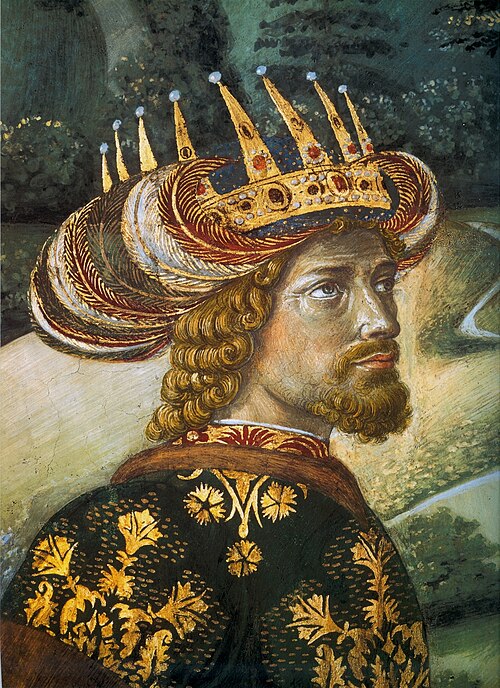
Another attempt at reunion was made at the 15th century Council of Florence, to which Emperor John VIII Palaiologos, Ecumenical Patriarch Joseph II of Constantinople, and other bishops from the East had gone in the hope of getting Western military aid against the looming Ottoman Empire. Thirteen public sessions held in Ferrara from 8 October to 13 December 1438 the Filioque question was debated without agreement. The Greeks held that any addition whatever, even if doctrinally correct, to the Creed had been forbidden by Ephesus I, while the Latins claimed that this prohibition concerned meaning, not words.[179]
During the Council of Florence in 1439, accord continued to be elusive, until the argument prevailed among the Greeks themselves that, though the Greek and the Latin saints expressed their faith differently, they were in agreement substantially, since saints cannot err in faith; and by 8 June the Greeks accepted the Latin statement of doctrine. Joseph II died on 10 June. A statement on the Filioque question was included in the Laetentur Caeli decree of union, which was signed on 5 July 1439 and promulgated the next day – Mark of Ephesus was the only bishop not to sign the agreement.[179]
The Eastern Church refused to consider the agreement reached at Florence binding, since the death of Joseph II had for the moment left it without a Patriarch of Constantinople. There was strong opposition to the agreement in the East, and when in 1453, 14 years after the agreement, the promised military aid from the West still had not arrived and Constantinople fell to the Turks, neither Eastern Christians nor their new rulers wished union between them and the West.
Councils of Jerusalem, AD 1583 and 1672
The Synod of Jerusalem (1583) condemned those who do not believe the Holy Spirit proceeds from the Father alone in essence, and from Father and Son in time. In addition, this synod re-affirmed adherence to the decisions of Nicaea I. The Synod of Jerusalem (1672) similarly re-affirmed procession of the Holy Spirit from the Father alone.[180]
Reformation
Although the Protestant Reformation challenged a number of church doctrines, they accepted the Filioque without reservation. However, they did not have a polemical insistence on the Western view of the Trinity. In the second half of the 16th century, Lutheran scholars from the University of Tübingen initiated a dialogue with the Patriarch Jeremias II of Constantinople. The Tübingen Lutherans defended the Filioque arguing that, without it, "the doctrine of the Trinity would lose its epistemological justification in the history of revelation." In the centuries that followed, the Filioque was considered by Protestant theologians to be a key component of the doctrine of the Trinity, although it was never elevated to being a pillar of Protestant theology.[181] Zizioulas characterizes Protestants as finding themselves "in the same confusion as those fourth century theologians who were unable to distinguish between the two sorts of procession, 'proceeding from' and 'sent by'."[182]
Present position of various churches
Catholicism
The Catholic Church holds, as a truth dogmatically defined since as far back as Pope Leo I in 447, who followed a Latin and Alexandrian tradition, that the Holy Spirit proceeds from the Father and the Son.[93] It rejects the notion that the Holy Spirit proceeds jointly and equally from two principles (Father and Son) and teaches dogmatically that "the Holy Spirit proceeds eternally from the Father and the Son, not as from two principles but as from one single principle".[168][64] It holds that the Father, as the "principle without principle", is the first origin of the Spirit, but also that he, as Father of the only Son, is with the Son the single principle from which the Spirit proceeds.[117]
It also holds that the procession of the Holy Spirit can be expressed as "from the Father through the Son". The agreement that brought about the 1595 Union of Brest expressly declared that those entering full communion with Rome "should remain with that which was handed down to (them) in the Holy Scriptures, in the Gospel, and in the writings of the holy Greek Doctors, that is, that the Holy Spirit proceeds, not from two sources and not by a double procession, but from one origin, from the Father through the Son".[117][171]
The Catholic Church recognizes that the Creed, as confessed at the First Council of Constantinople, did not add "and the Son", when it spoke of the Holy Spirit as proceeding from the Father, and that this addition was admitted to the Latin liturgy between the 8th and 11th centuries.[63] When quoting the Niceno-Constantinopolitan Creed, as in the 2000 document Dominus Iesus, it does not include Filioque.[183] It views as complementary the Eastern-tradition expression "who proceeds from the Father" (profession of which it sees as affirming that the Spirit comes from the Father through the Son) and the Western-tradition expression "who proceeds from the Father and the Son", with the Eastern tradition expressing firstly the Father's character as first origin of the Spirit, and the Western tradition giving expression firstly to the consubstantial communion between Father and Son.[117]
The monarchy of the Father is a doctrine upheld not only by those who, like Photius, speak of a procession from the Father alone. It is also asserted by theologians who speak of a procession from the Father through the Son or from the Father and the Son. Examples cited by Siecienski include Bessarion,[184] Maximus the Confessor,[185] Bonaventure,[186] and the Council of Worms (868),[187] The same remark is made by Jürgen Moltmann.[m] The Pontifical Council for Promoting Christian Unity (PCPCU) also stated that not only the Eastern tradition, but also the Latin Filioque tradition "recognize that the 'Monarchy of the Father' implies that the Father is the sole Trinitarian Cause (αἰτία) or Principle (principium) of the Son and of the Holy Spirit".[64]
The Catholic Church recognizes that, in the Greek language, the term used in the Niceno-Constantinopolitan Creed (ἐκπορευόμενον, "proceeding") to signify the proceeding of the Holy Spirit cannot appropriately be used with regard to the Son, but only with regard to the Father, a difficulty that does not exist in other languages.[64] For this reason, even in the liturgy of Latin Church Catholics, it does not add the phrase corresponding to Filioque (καὶ τοῦ Υἱοῦ) to the Greek language text of the Creed containing the word ἐκπορευόμενον.[64] Even in languages other than Greek, it encourages Eastern Catholic Churches to omit the Filioque from their recitation of the Niceno-Constantinopolitan Creed, even in Eastern Catholic liturgies that previously included it.[189] However, the Eastern Catholic Churches theologically affirm the Filioque as a Catholic dogma, just like all Catholic dogmas.[190]
Lutheranism
Traditionally, the Lutheran Churches, especially those of Western Christendom, affirm and employ the Filioque in the Nicene Creed. The Eastern Lutheran Churches do not typically make use of the Filioque in the recitation of the Nicene Creed.[191]
Through ecumenical dialogue with the Eastern Orthodox Churches, the Lutheran World Federation recommended: "we suggest that the translation of the Greek original (without the Filioque) be used in the hope that this will contribute to the healing of age-old divisions between our communities and enable us to confess together the faith of the Ecumenical Councils of Nicaea (325) and Constantinople (381)."[192]
Anglicanism
The 1978 and 1988 Lambeth Conferences advised the Anglican Communion to omit printing the Filioque in the Niceno-Constantinopolitan Creed.[193] In 1993, a joint meeting of the Anglican Primates and Anglican Consultative Council, passed a resolution urging Anglican churches to comply with the request to print the liturgical Niceno-Constantinopolitan Creed without the Filioque clause.[194] The recommendation was not specifically renewed in the 1998 and 2008 Lambeth Conferences and has not been implemented.[195]
In 1985 the General Convention of The Episcopal Church (USA) recommended that the Filioque clause should be removed from the Niceno-Constantinopolitan Creed, if this were endorsed by the 1988 Lambeth Council.[196] Accordingly, at its 1994 General Convention, the Episcopal Church reaffirmed its intention to remove the Filioque clause from the Niceno-Constantinopolitan Creed in the next revision of its Book of Common Prayer.[197] The Episcopal Book of Common Prayer was last revised in 1979, and has not been revised since the resolution.
The Scottish Episcopal Church does not print the Filioque clause in its modern language liturgy (published 1982), though previous liturgies from 1929 and 1970 which have the Filioque remain authorised.[198][199] The 1987 revision of the Scottish Liturgy of 1970 did not remove the Filioque clause, although it had already been omitted from the 1982 liturgy, promulgated five years earlier.[198]
Moravianism
The Moravian Church has never used the Filioque.
The confession of The Easter Litany of the Moravian Church of 1749 states: "I believe in the Holy Ghost, who proceedeth from the Father, and whom our Lord Jesus Christ sent after he went away, that he should abide with us forever.[200]
Eastern Orthodoxy
There has never been a specific conciliar statement in the Orthodox Church which defined the filioque as heresy.[201]
The Eastern Orthodox interpretation is that the Holy Spirit originates, has his cause for existence or being (manner of existence) from the Father alone as "One God, One Father",[202] Lossky insisted that any notion of a double procession of the Holy Spirit from both the Father and the Son was incompatible with Eastern Orthodox theology. For Lossky, this incompatibility was so fundamental that "whether we like it or not, the question of the procession of the Holy Spirit has been the sole dogmatic grounds of the separation of East and West".[203][204] Eastern Orthodox scholars who share Lossky's view include Dumitru Stăniloae, John Romanides, Christos Yannaras,[205] and Michael Pomazansky. Sergei Bulgakov, however, was of the opinion that the Filioque did not represent an insurmountable obstacle to reunion of the Eastern Orthodox and Roman Catholic churches.[203]
Views of Eastern Orthodox saints
Although Maximus the Confessor declared that it was wrong to condemn the Latins for speaking of the procession of the Holy Spirit from the Father and the Son, the addition of the Filioque to the Niceno-Constantinopolitan Creed was condemned as heretical by other saints of the Eastern Orthodox Church, including Photius the Great, Gregory Palamas and Mark of Ephesus, sometimes referred to as the Three Pillars of Orthodoxy. However, the statement "The Holy Spirit proceeds from the Father and the Son" can be understood in an orthodox sense if it is clear from the context that "procession from the Son" refers to the sending forth of the Spirit in time, not to an eternal, double procession within the Trinity itself which gives the Holy Spirit existence or being. Hence, in Eastern Orthodox thought, Maximus the Confessor justified the Western use of the Filioque in a context other than that of the Niceno-Constantinopolitan Creed.[206][n] and "defended [the Filioque] as a legitimate variation of the Eastern formula that the Spirit proceeds from the Father through the Son".[94] Saint Theophylact of Ohrid likewise maintained that the difference was linguistic in nature and not really theological, urging a spirit of conciliation on both sides over a matter of customs.[207][208][209]
...it is said not that [the Holy Spirit] has existence from the Son or through the Son, but rather that [the Holy Spirit] proceeds from the Father and has the same nature as the Son, is in fact the Spirit of the Son as being One in Essence with Him.
—Theodoret of Cyrus, On the Third Ecumenical Council[206]
According to Metropolitan Hierotheos (Vlachos) of Nafpaktos, an Eastern Orthodox tradition is that Gregory of Nyssa composed the section of the Niceno-Constantinopolitan Creed referring to the Holy Spirit adopted by the Second Ecumenical Council at Constantinople in 381.[o] Siecienski doubts that Gregory of Nyssa would have endorsed the addition of the Filioque, as later understood in the West, into the Creed, notwithstanding that Gregory of Nyssa reasoned "there is an eternal, and not simply economic, relationship of the Spirit to the Son".[211]
Eastern Orthodox view of Roman Catholic theology
Eastern Orthodox theologians (e.g. Pomazansky) say that the Nicene Creed as a Symbol of Faith, as dogma, is to address and define church theology specifically the Orthodox Trinitarian understanding of God. In the hypostases of God as correctly expressed against the teachings considered outside the church. The Father hypostasis of the Nicene Creed is the origin of all. Eastern Orthodox theologians have stated that New Testament passages (often quoted by the Latins) speak of the economy rather than the ontology of the Holy Spirit, and that in order to resolve this conflict Western theologians made further doctrinal changes, including declaring all persons of the Trinity to originate in the essence of God (the heresy of Sabellianism).[212] Eastern Orthodox theologians see this as teaching of philosophical speculation rather than from actual experience of God via theoria.
The Father is the eternal, infinite and uncreated reality, that the Christ and the Holy Spirit are also eternal, infinite and uncreated, in that their origin is not in the ousia of God, but that their origin is in the hypostasis of God called the Father. The double procession of the Holy Spirit bears some resemblance[p] to the teachings of Macedonius I of Constantinople and his sect called the Pneumatomachians in that the Holy Spirit is created by the Son and a servant of the Father and the Son. It was Macedonius' position that caused the specific wording of the section on the Holy Spirit by St Gregory of Nyssa in the finalized Nicene Creed.[214][q]
The following are some Roman Catholic dogmatic declarations of the Filioque which are in contention with Eastern Orthodoxy:
- The Fourth Council of the Lateran (1215): "The Father is from no one, the Son from the Father only, and the Holy Spirit equally from both."[215]
- The Second Council of Lyon, session 2 (1274): "[We confess faithfully and devoutly that] the Holy Spirit proceeds eternally from Father and Son, not as from two principles, but as from one, not by two spirations, but by one only."[168]
- The Council of Florence, session 6 (1439): "We declare that when holy doctors and fathers say that the Holy Spirit proceeds from the Father through the Son, this bears the sense that thereby also the Son should be signified, according to the Greeks indeed as cause, and according to the Latins as principle of the subsistence of the Holy Spirit, just like the Father."[216]
- The Council of Florence, session 8 in Laetentur Caeli (1439), on union with the Greeks: "The Holy Spirit is eternally from Father and Son; He has his nature and subsistence at once (simul) from the Father and the Son. He proceeds eternally from both as from one principle and through one spiration. ... And, since the Father has through generation given to the only-begotten Son everything that belongs to the Father, except being Father, the Son has also eternally from the Father, from whom he is eternally born, that the Holy Spirit proceeds from the Son."[217]
- The Council of Florence, session 11 (1442), in Cantate Domino, on union with the Copts and Ethiopians: "Father, Son and Holy Spirit; one in essence, three in persons; unbegotten Father, Son begotten from the Father, holy Spirit proceeding from the Father and the Son; ... the Holy Spirit alone proceeds at once from the Father and the Son. ... Whatever the Holy Spirit is or has, he has from the Father together with the Son. But the Father and the Son are not two principles of the Holy Spirit, but one principle, just as the Father and the Son and the Holy Spirit are not three principles of creation but one principle."[218]
- In particular the condemnation,[47] made at the Second Council of Lyons, session 2 (1274), of those "who [presume to] deny that the Holy Spirit proceeds eternally from the Father and the Son or who [rashly dare to] assert that the Holy Spirit proceeds from the Father and the Son as from two principles, not from one."[168]
In the judgment of these Orthodox, the Roman Catholic Church is in fact teaching as a matter of Roman Catholic dogma that the Holy Spirit derives his origin and being (equally) from both the Father and the Son, making the Filioque a double procession.[r][220]
They perceive the West as teaching through more than one type of theological Filioque a different origin and cause of the Holy Spirit; that through the dogmatic Roman Catholic Filioque the Holy Spirit is subordinate to the Father and the Son and not a free, independent and equal to the Father hypostasis that receives his uncreatedness from the origin of all things, the Father hypostasis. Trinity expresses the idea of message, messenger and revealer, or mind, word and meaning. Eastern Orthodox Christians believe in one God the Father, whose person is uncaused and unoriginate, who, because He is love and communion, always exists with His Word and Spirit.[t]
Eastern Orthodox theology
In Eastern Orthodox Christianity theology starts with the Father hypostasis, not the essence of God, since the Father is the God of the Old Testament.[202] The Father is the origin of all things and this is the basis and starting point of the Orthodox trinitarian teaching of one God in Father, one God, of the essence of the Father (as the uncreated comes from the Father as this is what the Father is).[202] In Eastern Orthodox theology, God's uncreatedness or being or essence in Greek is called ousia.[222] Jesus Christ is the Son (God Man) of the uncreated Father (God). The Holy Spirit is the Spirit of the uncreated Father (God).[223]
God has existences (hypostases) of being; this concept is translated as the word "person" in the West.[223] Each hypostasis of God is a specific and unique existence of God.[223] Each has the same essence (coming from the origin, without origin, Father (God) they are uncreated).[223] Each specific quality that constitutes an hypostasis of God, is non-reductionist and not shared.[223] The issue of ontology or being of the Holy Spirit is also complicated by the Filioque in that the Christology and uniqueness of the hypostasis of Jesus Christ would factor into the manifestation of the Holy Spirit. In that Jesus is both God and Man, which fundamentally changes the hypostasis or being of the Holy Spirit, as Christ would be giving to the Holy Spirit an origin or being that was both God the Father (Uncreated) and Man (createdness).
The immanence of the Trinity that was defined in the finalized Nicene Creed. The economy of God, as God expresses himself in reality (his energies) was not what the Creed addressed directly.[224] The specifics of God's interrelationships of his existences, are not defined within the Nicene Creed.[224] The attempt to use the Creed to explain God's energies by reducing God existences to mere energies (actualities, activities, potentials) could be perceived as the heresy of semi-Sabellianism by advocates of Personalism, according to Meyendorff.[225][226] Eastern Orthodox theologians have complained about this problem in the Roman Catholic dogmatic teaching of actus purus.[227]
Modern theology
ينقسم البحث اللاهوتي الأرثوذكسي الحديث، وفقًا لويليام لا دو، بين مجموعة من العلماء الذين يتمسكون بـ"تقليدية صارمة تعود إلى فوتيوس" وعلماء آخرين "ليسوا معارضين بشدة لفكرة انبثاق الروح القدس من الآب والابن ". [ 203 ] ويتجلى موقف "التقليديين المتشددين" في موقف لوسكي الذي أصر على أن أي فكرة عن انبثاق مزدوج للروح القدس من كل من الآب والابن تتعارض مع اللاهوت الأرثوذكسي. بالنسبة للوسكي، كان هذا التعارض جوهريًا لدرجة أنه "سواء رغبنا في ذلك أم لا، كانت مسألة انبثاق الروح القدس هي الأساس العقائدي الوحيد لانفصال الشرق عن الغرب". [ 203 ] [ 204 ] ومع ذلك، كان بولغاكوف يرى أن انبثاق الروح القدس من الآب والابن لا يمثل عقبة لا يمكن تجاوزها أمام إعادة توحيد الكنيستين الأرثوذكسية الشرقية والكاثوليكية الرومانية، [ 203 ] وهو رأي شاركه فيه فاسيلي بولوتوف . [ 228 ]
Not all Orthodox theologians share the view taken by Lossky, Stăniloae, Romanides and Pomazansky, who condemn the Filioque.[229]Kallistos Ware considers this the "rigorist" position within the Orthodox Church.[230] Ware states that a more "liberal" position on this issue "was the view of the Greeks who signed the act of union at Florence. It is a view also held by many Orthodox at the present time". He writes that "according to the 'liberal' view, the Greek and the Latin doctrines on the procession of the Holy Spirit may both alike be regarded as theologically defensible. The Greeks affirm that the Spirit proceeds from the Father through the Son, the Latins that He proceeds from the Father and from the Son; but when applied to the relationship between Son and Spirit, these two prepositions 'through' and 'from' amount to the same thing."[231] The Encyclopedia of Christian Theology lists Bolotov,[56] Paul Evdokimov, I. Voronov and S. Bulgakov as seeing the Filioque as a permissible theological opinion or "theologoumenon".[56] Bolotov defined theologoumena as theological opinions "of those who for every catholic are more than just theologians: they are the theological opinions of the holy fathers of the one undivided church", opinions that Bolotov rated highly but that he sharply distinguished from dogmas.[232]
Bulgakov wrote, in The Comforter, that:
It is a difference of theological opinions which was dogmatized prematurely and erroneously. There is no dogma of the relation of the Holy Spirit to the Son and therefore particular opinions on this subject are not heresies but merely dogmatic hypotheses, which have been transformed into heresies by the schismatic spirit that has established itself in the Church and that eagerly exploits all sorts of liturgical and even cultural differences.[233]
Karl Barth considered that the view prevailing in Eastern Orthodoxy was that of Bolotov, who pointed out that the Creed does not deny the Filioque and who concluded that the question had not caused the division and could not constitute an absolute obstacle to intercommunion between the Eastern Orthodox and the Old Catholic Church.[234] David Guretzki wrote, in 2009, that Bolotov's view is becoming more prevalent among Orthodox theologians; and he quotes Orthodox theologian Theodore Stylianopoulos as arguing that "the theological use of the filioque in the West against Arian subordinationism is fully valid according to the theological criteria of the Eastern tradition".[235]
Yves Congar stated in 1954 that "the greater number of the Orthodox say that the Filioque is not a heresy or even a dogmatic error but an admissible theological opinion, a 'theologoumenon'"; and he cited 12th century bishop Nicetas of Nicomedia; 19th century philosopher Vladimir Solovyov; and 20th century writers Bolotov, Florovsky, and Bulgakov.[236]
Oriental Orthodox Churches
All Oriental Orthodox Churches (Coptic, Syriac, Armenian, Ethiopian, Eritrean, Malankaran) use the original Nicene-Constantinopolitan Creed,[237] without the Filioque clause.[238][239]
Church of the East
Two of the present-day churches derived from the Church of the East, the Assyrian Church of the East and the Ancient Church of the East, do not use "and the Son" when reciting the Nicene Creed. A third, the Chaldean Catholic Church, a sui iurisEastern Catholic Church, in 2007 at the request of the Holy See, removed "and the Son" from its version of the Nicene Creed.[189]
Recent theological perspectives
Linguistic issues
Ware suggests that the problem is of semantics rather than of basic doctrinal differences.[229][240] The English Language Liturgical Consultation commented that "those who strongly favour retention of the Filioque are often thinking of the Trinity as revealed and active in human affairs, whereas the original Greek text is concerned about relationships within the Godhead itself. As with many historic disputes, the two parties may not be discussing the same thing."[241]
In 1995, the PCPCU pointed out an important difference in meaning between the Greek verb ἐκπορεύεσθαι and the Latin verb procedere, both of which are commonly translated as "proceed". It stated that the Greek verb ἐκπορεύεσθαι indicates that the Spirit "takes his origin from the Father ... in a principal, proper and immediate manner", while the Latin verb, which corresponds rather to the verb προϊέναι in Greek, can be applied to proceeding even from a mediate channel. Therefore, ἐκπορευόμενον ("who proceeds"), used in the Niceno-Constantinopolitan Creed to signify the proceeding of the Holy Spirit, cannot be appropriately used in the Greek language with regard to the Son, but only with regard to the Father, a difficulty that does not exist in Latin and other languages.[64]
Metropolitan John Zizioulas, while maintaining the explicit Orthodox position of the Father as the single origin and source of the Holy Spirit, declared that PCPCU (1995) shows positive signs of reconciliation. Zizioulas states: "Closely related to the question of the single cause is the problem of the exact meaning of the Son's involvement in the procession of the Spirit. Gregory of Nyssa explicitly admits a 'mediating' role of the Son in the procession of the Spirit from the Father. Is this role to be expressed with the help of the preposition δία (through) the Son (εκ Πατρός δι'Υιού), as Maximus and other Patristic sources seem to suggest?" Zizioulas continues: "The Vatican statement notes that this is 'the basis that must serve for the continuation of the current theological dialogue between Catholic and Orthodox'. I would agree with this, adding that the discussion should take place in the light of the 'single cause' principle to which I have just referred." Zizioulas adds that this "constitutes an encouraging attempt to clarify the basic aspects of the 'Filioque' problem and show that a rapprochement between West and East on this matter is eventually possible".[242]
Some Orthodox reconsideration of the Filioque
Russian theologian Boris Bolotov asserted in 1898 that the Filioque, like Photius's "from the Father alone", was a permissible theological opinion (a theologoumenon, not a dogma) that cannot be an absolute impediment to reestablishment of communion.[243][56][244] Bolotov's thesis was supported by Orthodox theologians Bulgakov, Paul Evdokimov and I. Voronov, but was rejected by Lossky.[56]
In 1986, Theodore Stylianopoulos provided an extensive, scholarly overview of the contemporary discussion.[245] Ware said that he had changed his mind and had concluded that "the problem is more in the area of semantics and different emphases than in any basic doctrinal differences": "the Holy Spirit proceeds from the Father alone" and "the Holy Spirit proceeds from the Father and the Son" may both have orthodox meanings if the words translated "proceeds" actually have different meanings.[246] For some Orthodox, then, the Filioque, while still a matter of conflict, would not impede full communion of the Roman Catholic and Orthodox Churches if other issues were resolved. But 19th century Russian Slavophile theologian Aleksey Khomyakov considered the Filioque as an expression of formalism, rationalism, pride and lack of love for other Christians,[u] and that it is in flagrant contravention of the words of Christ in the Gospel, has been specifically condemned by the Orthodox Church, and remains a fundamental heretical teaching which divides East and West.
Romanides too, while personally opposing the Filioque, stated that Constantinople I was not ever interpreted "as a condemnation" of the doctrine "outside the Creed, since it did not teach that the Son is 'cause' or 'co-cause' of the existence of the Holy Spirit. This could not be added to the Creed where 'procession' means 'cause' of existence of the Holy Spirit."[248]
Inclusion in the Nicene Creed
Eastern Orthodox Christians object that, even if the teaching of the Filioque can be defended, its medieval interpretation and unilateral interpolation into the Creed is anti-canonical and unacceptable.[u][56] "The Catholic Church acknowledges the conciliar, ecumenical, normative and irrevocable value, as expression of the one common faith of the Church and of all Christians, of the Symbol professed in Greek at Constantinople in 381 by the Second Ecumenical Council. No profession of faith peculiar to a particular liturgical tradition can contradict this expression of the faith taught and professed by the undivided Church."[64] The Catholic Church allows liturgical use of the Apostles' Creed as well of the Nicene Creed, and sees no essential difference between the recitation in the liturgy of a creed with orthodox additions and a profession of faith outside the liturgy such that of Patriarch Tarasios of Constantinople, who developed the Nicene Creed with an addition as follows: "the Holy Spirit, the Lord and giver of life, who proceeds from the Father through the Son".[64] It sees the addition of "and the Son" in the context of the Latin qui ex Patre procedit (who proceeds from the Father) as an elucidation of the faith expressed by the Church Fathers, since the verb procedere signifies "the communication of the consubstantial divinity from the Father to the Son and from the Father, through and with the Son, to the Holy Spirit".[64]
Most Oriental Orthodox churches have not added the Filioque to their creeds but the Armenian Apostolic Church has added elucidations to the Nicene Creed.[249] Another change made to the text of the Nicene Creed by both the Latins and the Greeks is to use the singular "I believe" in place of the plural "we believe", while all the Churches of Oriental Orthodoxy, not only the Armenian, but also the Coptic Orthodox Church,[250] the Ethiopian Orthodox Tewahedo Church,[251] the Malankara Orthodox Church,[252] and the Syriac Orthodox Church,[253] have on the contrary preserved the "we believe" of the original text.
Focus on Saint Maximus as a point of mutual agreement
Recently, theological debate about the Filioque has focused on the writings of Maximus the Confessor. Siecienski writes that "Among the hundreds of figures involved in the Filioque debates throughout the centuries, Maximus the Confessor enjoys a privileged position." During the lengthy proceedings at Ferrara-Florence, the Orthodox delegates presented a text from Maximus the Confessor that they felt could provide the key to resolving the theological differences between East and West.[254]
The PCPCU states that, according to Maximus, the phrase "and from the Son" does not contradict the Holy Spirit's procession from the Father as first origin (ἐκπόρευσις), since it concerns only the Holy Spirit's coming (in the sense of the Latin word processio and Cyril of Alexandria's προϊέναι) from the Son in a way that excludes any idea of subordinationism.[64][v]
Orthodox theologian and Metropolitan of Pergamon, John Zizioulas, wrote that for Maximus the Confessor "the Filioque was not heretical because its intention was to denote not the ἐκπορεύεσθαι (ekporeuesthai) but the προϊέναι (proienai) of the Spirit".[242]
Zizioulas also wrote that "Maximus the Confessor insisted, however, in defence of the Roman use of the Filioque, the decisive thing in this defence lies precisely in the point that in using the Filioque the Romans do not imply a "cause" other than the Father. The notion of "cause" seems to be of special significance and importance in the Greek Patristic argument concerning the Filioque. If Roman Catholic theology would be ready to admit that the Son in no way constitutes a "cause" (aition) in the procession of the Spirit, this would bring the two traditions much closer to each other with regard to the Filioque."[242] This is precisely what Maximus said of the Roman view, that "they have shown that they have not made the Son the cause of the Spirit – they know in fact that the Father is the only cause of the Son and the Spirit, the one by begetting and the other by procession".
The PCPCU upholds the monarchy of the Father as the "sole Trinitarian Cause [aitia] or principle [principium] of the Son and the Holy Spirit".[64] While the Council of Florence proposed the equivalency of the two terms "cause" and "principle" and therefore implied that the Son is a cause (aitia) of the subsistence of the Holy Spirit, the PCPCU distinguishes "between what the Greeks mean by 'procession' in the sense of taking origin from, applicable only to the Holy Spirit relative to the Father (ek tou Patros ekporeuomenon), and what the Latins mean by 'procession' as the more common term applicable to both Son and Spirit (ex Patre Filioque procedit; ek tou Patros kai tou Huiou proion). This preserves the monarchy of the Father as the sole origin of the Holy Spirit while simultaneously allowing for an intratrinitarian relation between the Son and Holy Spirit that the document defines as 'signifying the communication of the consubstantial divinity from the Father to the Son and from the Father through and with the Son to the Holy Spirit'."[255]
Roman Catholic theologian Avery Dulles wrote that the Eastern fathers were aware of the currency of the Filioque in the West and did not generally regard it as heretical: Some, such as Maximus the Confessor, "defended it as a legitimate variation of the Eastern formula that the Spirit proceeds from the Father through the Son".[94]
Pomazansky and Romanides[248] hold that Maximus' position does not defend the actual way the Roman Catholic Church justifies and teaches the Filioque as dogma for the whole church. While accepting as a legitimate and complementary expression of the same faith and reality the teaching that the Holy Spirit proceeds from the Father through the Son,[117] Maximus held strictly to the teaching of the Eastern Church that "the Father is the only cause of the Son and the Spirit":[256] and wrote a special treatise about this dogma.[248][206] The Roman Catholic Church cites Maximus as in full accord with the teaching on the Filioque that it proposes for the whole Church as a dogma that is in harmony with the formula "from the Father through the Son",[64] for he explained that, by ekporeusis, "the Father is the sole cause of the Son and the Spirit", but that, by proienai, the Greek verb corresponding to procedere (proceed) in Latin, the Spirit comes through the Son.[64] Later again the Council of Florence, in 1438, declared that the Greek formula "from the Father through the Son" was equivalent to the Latin "from the Father and the Son", not contradictory, and that those who used the two formulas "were aiming at the same meaning in different words".[257][258][259][260]
Per Filium
Recently, some Orthodox theologians have proposed the substitution of the formula ex Patre per Filium / εκ του Πατρός δια του Υιού (from the Father through the Son) instead of ex Patre Filioque (from the Father and the Son).[261]
Recent attempts at reconciliation
Starting in the latter half of the nineteenth century, ecumenical efforts have gradually developed more nuanced understandings of the issues underlying the Filioque controversy and worked to remove them as an obstruction to Christian unity. Lossky insists that the Filioque is so fundamentally incompatible with Orthodox Christianity as to be the central issue dividing the two churches.[204][w]
Western churches have arrived at the position that, although the Filioque is doctrinally sound, the way that it was inserted into the Nicene Creed has created an unnecessary obstacle to ecumenical dialogue. Thus, without abandoning the Filioque, some Western churches have come to accept that it could be omitted from the Creed without violating any core theological principles. This accommodation on the part of Western Churches has the objective of allowing both East and West to once again share a common understanding of the Creed as the traditional and fundamental statement of the Christian faith.
Catholic Church
Popes John Paul II, Benedict XVI, and Leo XIV have recited the Nicene Creed jointly with Patriarchs Demetrius I and Bartholomew I in Greek without the Filioque clause.[47][262][263]
Old Catholic Church
Immediately after the Old Catholic Church separated from the Catholic Church in 1871, its theologians initiated contact with the Orthodox Church. In 1874–75, representatives of the two churches held "union conferences" in Bonn with theologians of the Anglican Communion and the Lutheran Church in attendance in an unofficial capacity. The conferences discussed a number of issues including the filioque controversy. From the outset, Old Catholic theologians agreed with the Orthodox position that the Filioque had been introduced in the West in an unacceptable and non-canonical way. It was at these Bonn conferences that the Old Catholics became the first Western church to omit the Filioque from the Nicene Creed.[264][265][266]
Anglican Communion
Three Lambeth Conferences (1888, 1978 and 1988) have recommended that the Filioque be dropped from the Nicene Creed by churches that belong to the Anglican Communion.
The 1930 Lambeth Conference initiated formal theological dialogue between representatives of the Anglican and Orthodox churches.[267] In 1976, the Agreed Statement of the Anglican-Orthodox Joint Doctrinal Commission recommended that the Filioque should be omitted from the Creed because its inclusion had been effected without the authority of an Ecumenical Council.[268]
In 1994, the General Convention of the Episcopal Church (US) resolved that the Filioque should be deleted from the Nicene Creed in the next edition of the Prayer Book.[269] The enthronement ceremonies of four recent archbishops of Canterbury (Robert Runcie, George Carey, Rowan Williams, Justin Welby) included recitations of the Nicene Creed that omitted the Filioque; this has been considered to have been "a gesture of friendship toward Orthodox guests and their Communions".[270][271]
At the end of October 2017 theologians from the Anglican Communion and Oriental Orthodox Churches signed an agreement on the Holy Spirit. This is the culmination of discussions which began in 2015. The statement of agreement confirms the omission of the Filioque clause.[272]
World Council of Churches
In 1979, a study group of the World Council of Churches examined the Filioque question and recommended that "the original form of the Creed, without the Filioque, should everywhere be recognized as the normative one and restored, so that the whole Christian people may be able ... to confess their common faith in the Holy Spirit".[273] However, nearly a decade later, the WCC lamented that very few member churches had implemented this recommendation.[57]
Joint statement of Catholic and Eastern Orthodox theologians
The Filioque was discussed at the 62nd meeting of the North American Orthodox–Catholic Theological Consultation, in 2002. As a result of these contemporary discussions between both churches, it has been suggested that the orthodox could accept an "economic" filioque that states that the Holy Spirit, who originates in the Father alone, was sent to the Church "through the Son" (as the Paraclete), but it would not be the official orthodox doctrine, but what the Fathers called a theologoumenon, a theological opinion.
In October 2003, the Consultation issued an agreed statement, The Filioque: a Church-dividing issue?, which provides an extensive review of Scripture, history, and theology.[47] The recommendations include:
- That all involved in such dialogue expressly recognize the limitations of our ability to make definitive assertions about the inner life of God.
- That, in the future, because of the progress in mutual understanding that has come about in recent decades, Orthodox and Catholics refrain from labeling as heretical the traditions of the other side on the subject of the procession of the Holy Spirit.
- That Orthodox and Catholic theologians distinguish more clearly between the divinity and hypostatic identity of the Holy Spirit (which is a received dogma of our Churches) and the manner of the Spirit's origin, which still awaits full and final ecumenical resolution.
- That those engaged in dialogue on this issue distinguish, as far as possible, the theological issues of the origin of the Holy Spirit from the ecclesiological issues of primacy and doctrinal authority in the Church, even as we pursue both questions seriously, together.
- That the theological dialogue between our Churches also give careful consideration to the status of later councils held in both our Churches after those seven generally received as ecumenical.
- That the Catholic Church, as a consequence of the normative and irrevocable dogmatic value of the Creed of 381, use the original Greek text alone in making translations of that Creed for catechetical and liturgical use.
- That the Catholic Church, following a growing theological consensus, and in particular the statements made by Pope Paul VI, declare that the condemnation made at the Second Council of Lyons (1274) of those "who presume to deny that the Holy Spirit proceeds eternally from the Father and the Son" is no longer applicable.
In the judgment of the consultation, the question of the Filioque is no longer a "Church-dividing" issue, which would impede full reconciliation and full communion. It is for the bishops of the Catholic and Orthodox Churches to review this work and to make whatever decisions would be appropriate.[47]
Lutheran-Orthodox Common Statement on the Filioque
In July 2024, within the framework of an official dialogue between Lutheran and Orthodox Churches, a common statement was issued; this acknowledged that "the Filioque was inserted in the Nicene-Constantinopolitan Creed by the Latin Church in response to the heresy of Arianism centuries after the Nicene-Constantinopolitan Creed's composition." It stated that "the reformers inherited the Creed with the Filioque as part of the Latin tradition, and did not consider it problematic." It also suggested that "the translation of the Greek original (without the Filioque) be used in the hope that this will contribute to the healing of age-old divisions".[274]
Summary
The Filioque doctrine was traditional in the West, being declared dogmatically in 447 by Pope Leo I, the Pope whose Tome was approved at the Council of Chalcedon[275][63]. Its inclusion in the Creed appeared in the anti-Arian situation of 7th-century Spain. However, this dogma was never accepted in the East. The Filioque, included in the Creed by certain anti-Arian councils in Spain,[276] was a means to affirm the full divinity of the Son in relation to both the Father and the Spirit.[99][277][278]
A similar anti-Arian emphasis also strongly influenced the development of the liturgy in the East, for example, in promoting prayer to "Christ Our God", an expression which also came to find a place in the West,[279][280] where, largely as a result of "the Church's reaction to Teutonic Arianism", "'Christ our God' ... gradually assumes precedence over 'Christ our brother'".[281] In this case, a common adversary, namely Arianism, had profound, far-reaching effects, in the orthodox reaction in both East and West.
The doctrine expressed by the phrase in Latin (in which the word "procedit" that is linked with "Filioque" does not have exactly the same meaning and overtones as the word used in Greek) is definitively upheld by the Western Church, having been dogmatically declared by Leo I,[63] and upheld by councils at Lyon and Florence[9] that the Western Church recognizes as ecumenical, by the unanimous witness of the Latin Church Fathers (as Maximus the Confessor acknowledged) and even by Popes who, like Leo III, opposed insertion of the word into the Creed.[282][283]
That the doctrine is heretical is something that not all Orthodox now insist on. According to Ware, many Orthodox (whatever may be the doctrine and practice of the Eastern Orthodox Church itself) hold that, in broad outline, to say the Spirit proceeds from the Father and the Son amounts to the same thing as to say that the Spirit proceeds from the Father through the Son, a view accepted also by the Greeks who signed the act of union at the Council of Florence.[231] For others, such as Bolotov and his disciples, the Filioque can be considered a Western theologoumenon, a theological opinion of Church Fathers that falls short of being a dogma.[56][232] Bulgakov also stated: "There is no dogma of the relation of the Holy Spirit to the Son and therefore particular opinions on this subject are not heresies but merely dogmatic hypotheses, which have been transformed into heresies by the schismatic spirit that has established itself in the Church and that eagerly exploits all sorts of liturgical and even cultural differences."[233]
See also
References
Notes
- ↑In Greek: τὸ ἐκ τοῦ Πατρὸς [καὶ τοῦ Υἱοῦ] ἐκπορευόμενον,
- ↑The longer form of the creed of Epiphanius (374) included the doctrine: ἄκτιστον, ἐκ τοῦ πατρὸς ἐκπορευόμενον καὶ ἐκ τοῦ υἰοῦ λαμβανόμενον ("uncreated, who proceeds from the Father and is received from the Son").[31]
- ↑Congar (1959, pp. 30–31) points out that provincialism – about theological terms which shape ideas in source languages but do not map to exact terms in target languages, including: prosōpon, hypostasis, and substantia – contributes to "estrangement on the level of thought and mutual understanding."
- ↑Ephesus I canon 7 was translated into English in the late 19th century in Percival (1900, pp. 231–234) and translated in the late 20th century in Tanner (1990, pp. 65–66)
- ↑Indications of "filioque language can also be found in certain early Syriac sources," according to Plested (2011).
- ↑An additional profession of faith in the acts of Toledo III, The Profession of Faith of King Reccaredus, included the doctrine but not the term: "Spiritus aeque Sanctus confitendus a nobis et praedicandus est a Patre et Filio procedere et cum Patre et Filio unius esse substantiae."[89]
- ↑"The Holy Ghost is from the Father and the Son, neither made, nor created, nor begotten, but proceeding". In the original Latin: "Spiritus Sanctus a Patre et Filio: non-factus, nec creatus, nec genitus, sed procedens".
- ↑While Reccared I converted to Catholicism, his successor Liuva II reverted to Arianism.[101]
- ↑Boulnois (2003, pp. 106–107) notes that some ascribe an opinion about the Filioque to Cyril of Alexandria by "quotations grouped in anthologies" without analysis or context. The reason Cyril asserted a dependence was "the continuity between economy and theology" in his analysis of the relationship between the Son and the Holy Spirit. Cyril's reasons "correspond to different mechanisms" within the Trinity "which break up the simplistic opposition between the Latin schema of the triangle and the Greek model of the straight line." Boulnois thinks it is "impossible to classify Cyril unilaterally by applying [ ] a later conflict which, [ ] is largely alien to him."
- ↑Charlemagne's legates claimed that Tarasius, at his installation, did not follow the Nicene faith and profess that the Spirit proceeds from the Father and the Son, but confessed rather his procession from the Father through the Son (Mansi 13.760). The Pope strongly rejected Charlemagne's protest, showing at length that Tarasius and the Council, on this and other points, maintained the faith of the Fathers (ibid. 759–810).
- ↑Following this exchange of letters with the pope, Charlemagne commissioned the Libri Carolini (791–793) to challenge the positions both of the iconoclast council of 754 and of the Council of Nicaea of 787 on the veneration of icons. Again because of poor translations, the Carolingians misunderstood the actual decision of the latter Council.[47]
- ↑"Leo III defended the Filioque outside the Creed.
- ↑Similarly Moltmann observes that "the filioque was never directed against the 'monarchy' of the Father" and that the principle of the "monarchy" has "never been contested by the theologians of the Western Church". If these statements can be accepted by the Western theologians today in their full import of doing justice to the principle of the Father's "monarchy", which is so important to Eastern triadology, then the theological fears of Easterners about the filioque would seem to be fully relieved. Consequently, Eastern theologians could accept virtually any of the Memorandum's alternate formulae in the place of the filioque on the basis of the above positive evaluation of the filioque which is in harmony with Maximos the Confessor's interpretation of it. As Zizioulas incisively concludes: The "golden rule" must be Maximos the Confessor's explanation concerning Western pneumatology: by professing the filioque our Western brethren do not wish to introduce another αἴτον in God's being except the Father, and a mediating role of the Son in the origination of the Spirit is not to be limited to the divine Economy, but relates also to the divine οὐσία.[188]
- ↑Pomazansky wrote that "Maximus the Confessor ... justified [the Westerners] by saying that by the words 'from the Son' [the Westerners] intended to indicate that the Holy Spirit is given to creatures through the Son, that He is manifested, that He is sent — but not that the Holy Spirit has His existence from Him."[206]
- ↑In icons of the Second Ecumenical Council, St. Gregory is presented as the recording clerk of the Synod, "and, as is believed, was the one who gave the final form to the Niceno-Constantinopolitan Creed and formulated the article about the Holy Spirit: 'And in the Holy Spirit, the Lord, the giver of life; Who proceedeth from the Father; Who with the Father and the Son is worshipped and glorified, Who spake by the Prophets'".[210]
- ↑ يذكر فوتيوس في القسم 32: "ومرة أخرى، إذا كان الروح ينبثق من الآب، والابن كذلك مولود من الآب، ففي هذه الحقيقة تحديدًا تتجلى صفات الآب الشخصية. أما إذا كان الابن مولودًا والروح ينبثق من الابن (كما يزعم هذا الهذيان )، فإن روح الآب يتميز بصفات شخصية أكثر من ابن الآب: فمن جهة، كونه ينبثق من مساواة الابن والروح، يتميز الروح أيضًا بالتمييزين الناتجين عن الانبثاق المزدوج، فلا يتميز الروح فقط بتمييزات أكثر من ابن الآب، بل إن الابن أقرب إلى جوهر الآب. وهذا تحديدًا لأن الروح يتميز بصفتين محددتين. لذلك فهو أدنى من الابن، الذي هو بدوره من طبيعة الآب! وهكذا يُهان تساوي الروح في الكرامة، مما يُعيد إحياء الهوس المقدوني ضد الروح." [ 213 ]
- ↑ «مع ذلك، كان رئيس الهراطقة الذين شوّهوا تعاليم الرسل بشأن الروح القدس هو مقدونيوس الأول القسطنطيني ، في القرن الرابع، والذي وجد أتباعًا «بين الآريوسيين السابقين وشبه الآريوسيين». وقد وصف الروح القدس بأنه خليقة الابن، وخادم للآب والابن. وكان من بين من اتهموه بالهرطقة آباء الكنيسة مثل باسيليوس القيصري ، وغريغوريوس النزينزي ، وأثناسيوس الإسكندري ، وغريغوريوس النيصي ، وأمبروز ، وأمفيلوخيوس الإيقوني ، وديودور الطرسوسي ، وغيرهم، الذين كتبوا مؤلفات ضد الهراطقة. وقد دُحضت تعاليم مقدونيوس الخاطئة أولًا في سلسلة من المجامع المحلية، وأخيرًا في مجمع القسطنطينية الأول. «في سبيل الحفاظ على الأرثوذكسية»، أكمل مجمع نيقية الأول رمز نيقية للإيمان «بهذه الكلمات: «وفي الروح القدس، الرب المحيي، المنبثق من الآب، الذي مع الآب ويُعبد الابن ويُمجد على حد سواء، الذي تكلم على لسان الأنبياء، وكذلك بنود العقيدة التي تلي ذلك في رمز الإيمان النيقاوي القسطنطيني. [ 214 ]
- ↑ كتب لوسكي: "إذا انبثق الروح القدس من الآب وحده، باعتباره السبب الأقنومي للأقانيم المتساوية في الجوهر، فإننا نجد "الثالوث البسيط"، حيث تحدد سيادة الآب التنوع الشخصي للثلاثة بينما تعبر في الوقت نفسه عن وحدتهم الجوهرية." [ 219 ]
- أكد غريغوريوس بالاماس، في عام 1351، أن "الروح القدس 'له الآب أساساً ومصدراً وسبباً'، ولكنه 'يستقر في الابن' و'يُرسل - أي يتجلى - من خلال الابن'. (المرجع نفسه، 194) من حيث الطاقة الإلهية المتعالية، وإن لم يكن من حيث الجوهر أو الوجود الأقنومي، فإن 'الروح يفيض من الآب من خلال الابن، وإن شئت، من الابن على جميع المستحقين له'، وهو تواصل يمكن تسميته على نطاق واسع 'انبثاقاً' (إكبوريسيس)."
- في العصر البيزنطي، اتهم الجانب الأرثوذكسي المسيحيين الناطقين باللاتينية، المؤيدين لنظرية " والابن" (Filioque )، بإدخال إلهين، تحديدًا لاعتقادهم بأن هذه النظرية تشير إلى علتين - لا مجرد مصدرين أو مبدأين - في الثالوث الأقدس. وقد ربطت التقاليد الآبائية اليونانية، على الأقل منذ آباء الكبادوكيين، الله بشخص الآب، بينما يبدو أن أوغسطين يربطه بالجوهر الإلهي الواحد (الألوهية أو الإلهية ) . [ s ] [ 221 ]
- كتب لوسكي أن خومياكوف يرى أن "الشكلية القانونية والعقلانية المنطقية للكنيسة الكاثوليكية الرومانية متجذرة في الدولة الرومانية. وقد تعززت هذه السمات فيها أكثر من أي وقت مضى عندما أدخلت الكنيسة الغربية، دون موافقة الكنيسة الشرقية، بند "والابن" في قانون الإيمان النيقاوي . إن هذا التغيير التعسفي في قانون الإيمان هو تعبير عن الكبرياء وانعدام المحبة لإخوان المرء في الإيمان. ولكي لا تُعتبر الكاثوليكية الرومانية انشقاقًا في نظر الكنيسة، اضطرت إلى أن تُنسب إلى أسقف روما عصمة مطلقة." وبهذا الشكل، انفصلت الكاثوليكية عن الكنيسة ككل، وأصبحت منظمة قائمة على سلطة خارجية. ووحدتها تشبه وحدة الدولة: فهي ليست فوق عقلانية، بل عقلانية ورسمية من الناحية القانونية. وقد أدت العقلانية إلى عقيدة أعمال الاستعاضة، وأرست ميزانًا للواجبات والفضائل بين الله والإنسان، حيث تُوزن الذنوب والصلوات، والمعاصي وأعمال التكفير؛ كما تبنت فكرة نقل ديون أو أرصدة شخص إلى آخر، وأضفت الشرعية على تبادل الفضائل المفترضة؛ باختصار، أدخلت إلى حرم الإيمان آلية المؤسسة المصرفية. [ 247 ]
- ↑"The Filioque does not concern the ἐκπόρευσις of the Spirit issued from the Father as source of the Trinity," according to PCPCU (1995), "but manifests his προϊέναι (processio) in the consubstantial communion of the Father and the Son, while excluding any possible subordinationist interpretation of the Father's monarchy".
- ↑Lossky wrote that "Whether we like it or not, the question of the procession of the Holy Spirit has been the sole dogmatic grounds for the separation of East and West. All the other divergences which, historically, accompanied or followed the first dogmatic controversy about the Filioque, in the measure in which they too had some dogmatic importance, are more or less dependent upon that original issue. ... If other questions have arisen and taken the first place in more recent inter-confessional debates, that is chiefly because the dogmatic plane on which the thought of theologians operates is no longer the same as it was in the medieval period."[204]
Citations
- 12"Filioque". Encyclopædia Britannica.
- ↑Larchet 2006, p. 188.
- ↑WCCFO 1979.
- ↑Congar 1959, p. 44; Meyendorff 1987, p. 181; NAOCTC 2003.
- ↑RCA 2002, p. 70.
- ↑"Canon VII".
- ↑For a different view, see e.g. Excursus on the Words πίστιν ἑτέραν
- ↑Siecienski 2010, pp. 4–5.
- 12Cunliffe-Jones 2006, pp. 208–209.
- 12Siecienski 2010, pp. 4–6.
- 1234ODCC 2005, "Double Procession of the Holy Spirit".
- ↑John 20:22 ("He breathed on them and said: Receive the Holy Spirit")
- ↑Maximus the Confessor, Letter to Marinus (PG 91:136), cited in Meyendorff (1987, p. 93)
- ↑Galatians 4:6(And because you are children, God has sent the Spirit of his Son into our hearts, crying, “Abba! Father!”)
- ↑Romans 8:9(But you are not in the flesh; you are in the Spirit, since the Spirit of God dwells in you. Anyone who does not have the Spirit of Christ does not belong to him.)
- ↑Philippians 1:19(for I know that through your prayers and the help of the Spirit of Jesus Christ this will turn out for my deliverance.)
- ↑John 14:16; John 14:26; John 15:26
- ↑John 16:7(Nevertheless, I tell you the truth: it is to your advantage that I go away, for if I do not go away, the Advocate will not come to you; but if I go, I will send him to you.)
- ↑Revelation 22:1(Then the angel showed me the river of the water of life, bright as crystal, flowing from the throne of God and of the Lamb)
- ↑Siecienski 2010, p. 17.
- ↑Kärkkäinen 2010, p. 276.
- ↑Basil of Caesarea De Spiritu Sancto 18.45 (NPNF2 8:28), in Anderson (1980, p. 72)
- ↑Basil of Caesarea De Spiritu Sancto 18.47 (NPNF2 8:29–30), in Anderson (1980, p. 75)
- ↑Siecienski 2010, p. 40.
- ↑Gregory of Nazianzus Oratio 39 12 (NPNF2 7:356), in Daley (2006, p. 133)
- ↑Augustine of Hippo, De fide et symbolo 9.19 (NPNF1 3:329–330).
- ↑Augustine of Hippo, De Trinitate 15.26.47 (NPNF1 3:225); Elowsky 2009, p. 225, "The Spirit of both is not begotten of both but proceeds from both"
- ↑Gregory of Nyssa, Ad Ablabium (PG 45:133; NPNF2 5:331–336); Siecienski 2010, p. 43
- ↑Siecienski 2010, pp. 48–49.
- ↑Bulgakov 2004, pp. 81–82.
- ↑Epiphanius of Salamis, Ancoratus, cap. 120 (DH 2012, n. 44; NPNF2 14:164–165).
- ↑Siecienski 2010, pp. 33–34.
- ↑Siecienski 2010, p. 50.
- 12Tertullian Adversus Praxeas 4 (ANF 3:599–600): "I believe the Spirit to proceed from no other source than from the Father through the Son"
- ↑Tertullian Adversus Praxeas 5 (ANF 3:600–601).
- ↑O'Collins & Farrugia 2015, p. 157.
- ↑Tertullian Adversus Praxeas 2 (ANF 3:598).
- ↑Tertullian Adversus Praxeas 13 (ANF 3:607–609).
- ↑Marius Victorinus Adversus Arium 1.13, 1.16; Kelly 2014, p. 358.
- ↑Hilary of Poitiers, De Trinitate 12.55 (NPNF2 9:233), quoted in NAOCTC (2003)
- ↑Hilary of Poitiers, De Trinitate 12.56 (NPNF2 9:233), quoted in NAOCTC (2003)
- ↑Hilary of Poitiers, De Trinitate 2.29 (NPNF2 9:60), quoted in NAOCTC (2003)
- ↑John 16:15
- ↑Hilary of Poitiers, De Trinitate 8.20 (NPNF2 9:143), quoted in NAOCTC (2003)
- ↑Ambrose of Milan, De Spiritu Sancto 1.11.120 (NPNF2 10:109).
- ↑Ambrose of Milan, De Spiritu Sancto 1.15.172 (NPNF2 10:113).
- 1234567891011NAOCTC 2003.
- ↑Gregory I (1990). Forty gospel homilies. Cistercian studies series. Vol. 123. Translated by David Hurst. Kalamazoo, MI: Cistercian Publications. p. 202. ISBN 978-0-87907623-8. (PL 76, 1201 ff)
- ↑Gregory I. Morals on the Book of Job.PL 75:599A)
- ↑Gregory I. Morals on the Book of Job.PL 75)
- ↑John 16:7
- ↑Gregory I, Dialogues, bk. 2 ch. 38
- ↑Rigotti, Gianpaolo (2005). "Gregorio il Dialogo nel Mondo Bizantino". In Gargano, Innocenzo (ed.). L'eredità spirituale di Gregorio Magno tra Occidente e Oriente. Simposio internazionale Gregorio Magno 604–2004, Roma 10–12 marzo 2004 (in Italian). Negarine, IT: Il segno. p. 278. ISBN 9788888163543.
- ↑Congar 1983, p. 89.
- ↑Nichols 2010, p. 255.
- 1234567ECT 2005, "Filioque".
- 12Guretzki 2009, p. 12.
- ↑Percival 1900, p. 162.
- ↑Kelly 2009, p. 5.
- ↑Galavotti, Enrico. "L'Idea di Pentarchia nella Christianità". homolaicus.com (in Italian).
I vescovi dell'occidente non parteciparono neppure all'incontro sinodale, per cui fino alla seconda metà del VI sec. non lo riconobbero come ecumenico.
- 1 2 3 برايس وجاديس 2005 ، ص. 3.
- ↑ تانر 1990 ، ص 84.
- 1 2 3 4 5 6 7 التعليم المسيحي للكنيسة الكاثوليكية ( الطبعة الثانية). دار النشر الفاتيكانية . 2019. الفقرة 247 .
- 1 2 3 4 5 6 7 8 9 10 11 12 13 14 15 PCPCU 1995 .
- ↑ "قانون الإيمان النيقاوي" . الموسوعة البريطانية . تم الاطلاع عليه بتاريخ 9 نوفمبر 2012 .
- ↑ يوحنا 15:26
- 1 2 ثيسلتون 2013 ، ص. 400.
- 1 2 3 باورشميت 2005 ، ص. 98.
- ↑ يوحنا 8:42
- 1 2 3 Siecienski 2010 ، ص 59.
- 1 2 بيرسيفال 1900 ، ص. 231ب .
- ↑ برايس وغاديس 2005 ، ص 8، 111.
- ↑ ويب، ستيفن هـ. (2011). يسوع المسيح، الإله الأزلي : الجسد السماوي وما وراء الطبيعة للمادة . أكسفورد: مطبعة جامعة أكسفورد. ص 314. ISBN 978-0-19982795-4.
- ↑ هوبكو وآخرون (ب) ، " القرن الخامس ".
- ↑ بونوكور، مارك (12 ديسمبر 2006). "Filioque: رد على اعتراضات الكنيسة الأرثوذكسية الشرقية" . catholic-legate.com . أوتاوا، كندا: Catholic Legate. مؤرشف من الأصل في 7 يوليو 2007.
- ↑ نيكولز 2010 ، ص 254.
- ↑ برايس وغاديس 2005 ، ص 323.
- ↑ بيرسيفال 1900 ، ص. 231أ .
- ↑ بيرسيفال 1900 ، ص 265 .
- ↑ برايس وجاديس 2005 ، ص 193: "نحن نعترف بالروح القدس الحي، الباراقليط الحي، الذي هو من الآب والابن".
- ↑ أوليري، دي لاسي (2002). "الانشقاق النسطوري". الكنيسة السريانية والآباء . جمعية نشر المعرفة المسيحية، لندن 1909، أعيد نشرها بواسطة دار جورجياس للنشر. ISBN 978-1-931956-05-5.
- ↑ بروك 1985 ، ص 133، نقلاً عن بانيكر (2002 ، ص 58-59)
- ↑ DH 2012 ، رقم 71؛ كيلي 2014 ، ص 360.
- ↑ التعليم المسيحي للكنيسة الكاثوليكية (الطبعة الثانية ). دار النشر الفاتيكانية . 2019. الفقرة 193. لا
يمكن اعتبار أي من العقائد من مختلف مراحل حياة الكنيسة متجاوزة أو غير ذات صلة.
- ↑ DH 2012 ، رقم 188.
- ↑ PCPCU 1995 ; DH 2012 , n. 75.
- ↑ DH 2012 ، ص 160؛ Louth 2007 ، ص 142؛ Kelly 2014 ، ص 360–362.
- ↑ DH 2012 ، ص 160؛ كيلي 2014 ، ص 362.
- ↑ DH 2012 ، رقم 470.
- ↑ غريغوريوس النزينزي ، الخطبة 39 12 ( NPNF2 7:356 ).
- ↑ كيرلس الإسكندري، قاموس المرادفات ، (PG 75:585).
- ↑ كروجر، روبرت هـ. (1976). "أصل ومصطلحات قانون الإيمان الأثناسي" (ملف PDF) . wlsessays.net . المكتبة الرقمية لكلية ويسكونسن اللوثرية اللاهوتية. عُرض في المؤتمر الرعوي الغربي لمنطقة داكوتا-مونتانا، زيلاند، داكوتا الشمالية، 5-6 أكتوبر 1976. أُرشف من الأصل في 9 نوفمبر 2015.
- 1 2 3 البابا ليو الأول Quam laudabilliter ج. 1 (PL 54: 680–681)؛ درهم 2012 ، ن. 284
- 1 2 3 دالاس 1995 ، ص 32، 40.
- ↑ بولغاكوف 2004 ، ص 90.
- ↑ Guretzki 2009 ، ص 8.
- ↑ بولغاكوف 2004 ، ص 95.
- ↑ مارثالر 2001 ، ص 248-249.
- 1 2 ايرفين وسنكويست 2001 ، ص. 340.
- 1 2 3 Dix 2005 ، ص 485–488.
- 1 2 هينسون 1995 ، ص 220.
- 1 2 Louth 2007 ، ص. 142.
- ↑ DH 2012 ، رقم 527.
- ^ PCPCU 1995 ؛ درهم 2012 ، ن. 470، 485، 490، 527، 568.
- ↑ Siecienski 2010 ، ص 88.
- 1 2 Plested 2011 .
- ↑ Siecienski 2010 ، ص 53.
- 1 2 Siecienski 2010 ، ص. 57.
- ↑ Siecienski 2010 ، ص 63-64.
- ↑ Siecienski 2010 ، ص 64-66.
- ↑ Siecienski 2010 ، ص 70-71.
- ^ يوحنا الدمشقي، معرض الإيمان 1.12 ( NFPF2 9:15 )
- ↑ بولنوا 2003 ، ص 106-108.
- ↑ Siecienski 2010 ، ص 49.
- ↑ كونغار 1983 ، ص 35، نقلاً عن فاريللي (2005 ، ص 119)
- ^ "توماس الأكويني: أسئلة الخلاف حول القدرات: الإنجليزية" . isidore.co . تم الاسترجاع 10 يونيو 2026 .
- 1 2 3 4 5 التعليم المسيحي للكنيسة الكاثوليكية ( الطبعة الثانية). دار النشر الفاتيكانية . 2019. الفقرة 248 .
- ↑ ديفيز 1993 ، ص 205-206.
- ↑ ديفيز 1987 .
- ↑ Schaff 1885 ، §108 II : "أسقط فوتيوس والمجادلون الشرقيون اللاحقون عبارة per Filium أو رفضوها ، باعتبارها مكافئة تقريبًا لعبارة ex Filio أو Filioque ، أو فهموها على أنها تنطبق فقط على مهمة الروح، وأكدوا على حصرية الانبثاق من الآب".
- ↑ O'Collins & Farrugia 2015 ، ص 158.
- ^ بولجاكوف 2004 ، ص 91-92.
- ↑ نورويتش 1997 ، ص 99.
- ↑ ماكسيموس المعترف، رسالة إلى مارينوس ، (PG 91:136).
- ↑ Siecienski 2010 ، ص 92.
- ↑ Meyendorff 1996 ، ص 38.
- 1 2 Maas 1909 . خطأ في ملف sfn: أهداف متعددة (2×): CITEREFMaas1909 ( مساعدة )
- ↑ هينسون 1995 ، ص 315.
- 1 2 Siecienski 2010 ، ص. 90.
- 1 2 3 4 "مجلس جنتيلي من موسوعة ماكلينتوك وسترونج للكتاب المقدس" . موسوعة ماكلينتوك وسترونج للكتاب المقدس على الإنترنت . تم الاطلاع عليه بتاريخ 22 مارس 2026 .
- ↑ "الموسوعة الكاثوليكية: فيليوك" . www.newadvent.org . تم الاطلاع عليه بتاريخ 22 مارس 2026 .
- ↑ ماس، أنتوني (1909). . الموسوعة الكاثوليكية . المجلد 6.
- ↑ هينسون، جلين. الكنيسة المنتصرة: تاريخ المسيحية حتى عام 1300. ص 315. ISBN 978-0-86554436-9.
- ↑ Siecienski 2010 ، ص 91.
- 1 2 نيكولز 2010 ، ص. 237.
- 1 2 Siecienski 2010 ، ص 91-93.
- ↑ Siecienski 2010 ، ص 93-94.
- ↑ Dales 2013 ، ص 61-67.
- ↑ Siecienski 2010 ، ص 93.
- 1 2 نيكولز 2010 ، ص. 238.
- ↑ كيلي 2014 ، ص 364.
- ↑ Meyendorff 1996 ، ص 41-43 ، 195-197.
- ↑ رومانيدس، جون س. "الفرنجة، الرومان، الإقطاع، والعقيدة" . romanity.org .
- ↑ شماوس 1975 .
- 1 2 هارناك 1898 ، الفصل 6 §2 .
- ↑ براي 1983 ، ص 121.
- 1 2 ODCC 2005 ، "Filioque".
- ↑ نيكولز 2010 ، ص 238-239.
- ↑ جون دبليو أومالي، إس جيه (16 نوفمبر 2009). تاريخ الباباوات: من بطرس إلى الوقت الحاضر . معاهد الحكومة. ISBN 978-1-58051-229-9– عبر كتب جوجل.
- ↑ شاف 1885 ، §70 .
- ↑ ODCC 2005 ، "فوتيوس".
- ↑ تشادويك 2003 ، ص 154: "يمكن لفوتيوس أن يقر بأن الروح القدس يسير من خلال الابن في مهمته الزمنية في النظام المخلوق ولكن ليس في وجوده الأبدي الفعلي".
- ↑ Schaff 1885 ، §108 II : "أسقط فوتيوس والمجادلون الشرقيون اللاحقون عبارة per Filium أو رفضوها ، باعتبارها مكافئة تقريبًا لعبارة ex Filio أو Filioque ، أو فهموها على أنها تنطبق فقط على مهمة الروح، وأكدوا على حصرية الانبثاق من الآب".
- ↑ مايندورف ١٩٨٦ ، §٢ : "كان بليميدس ملتزمًا بوحدة الكنيسة، ودافع عن فكرة أن صورة انبثاق الروح القدس "عن طريق الابن" يمكن أن تكون بمثابة جسر بين اللاهوتيين. جمع بليميدس النصوص الآبائية التي تستخدم صيغة "عن طريق الابن"، وهاجم اليونانيين الذين رفضوا، بدافع الحماس ضد اللاتينية، إعطاءها الأهمية الكافية. بشكل عام، ومنذ عهد فوتيوس، تمثل الموقف اليوناني في التمييز بين انبثاقالابن الأزلي من الآب، وإرسال الروح القدس في الزمان من خلال الابن وبواسطته. كان هذا التمييز بين الانبثاقات الأزلية والمظاهر الزمنية هو التفسير القياسي لدى البيزنطيين للعديد من مقاطع العهد الجديد، حيث يُوصف المسيح بأنه "يعطي" و"يرسل" الروح القدس، وحيث يُشار إلى الروح القدس بأنه "روح الابن". في رسائله، تجنب بليميدس التمييز بين الأبدية والزمن: تعكس الصيغة الآبائية "من خلال الابن" كلاً من العلاقات الأبدية للأقانيم الإلهية ومستوى "الاقتصاد" في الزمن.
- ^ فوتيوس، الرسالة 2 (PG 102: 721-741).
- 1 2 باباداكيس 1997 ، ص. 113.
- 1 2 لوسكي 2003 ، ص. 168.
- ↑ بولغاكوف 2004 ، ص 144.
- ↑ بولغاكوف 2004 ، ص 80.
- ↑ نيكولز 2005 ، ص 157.
- ↑ فورتسكيو 1908 ، ص 147-148.
- ↑ لوث 2007 ، ص 171.
- ↑ توغر، شون (1997). عهد ليو السادس (886-912): السياسة والشعب . البحر الأبيض المتوسط في العصور الوسطى. المجلد 15. ليدن [ua]: بريل. ص 69. ISBN 9789004108110.
- ↑ Siecienski 2010 ، ص 103.
- ↑ فورتيسكيو 1911 .
- ↑ كيد، بي جيه (1927). كنائس العالم المسيحي الشرقي - من عام 451 ميلاديًا إلى الوقت الحاضر . روتليدج. ص 252-253 . ISBN 978-1-136-21278-9.
{{cite book}}عدم توافق رقم ISBN / التاريخ ( مساعدة ) - ↑ نيكولز 1995 ، ص 76.
- 1 2 3 4 5 6 DH 2012 ، رقم 850.
- ↑ تانر 1990 ، ص 314.
- ↑نيمار[ كتاب القداس الروماني ] (باليونانية). المجلد. 1 ( الطبعة الثالثة). هذا هو المكان الذي تعيش فيه. 2005. ص. 347.
- ١ ٢ "المادة ١ من معاهدة بريست" . Ewtn.com. مؤرشف من الأصل في ٣ مارس ٢٠١٦. تم الاطلاع عليه في ٢٥ أبريل ٢٠١٣ .
- ↑ مانوساكيس، جون بانتيليمون (2015). "موكب الروح القدس". من أجل وحدة الجميع: مساهمات في الحوار اللاهوتي بين الشرق والغرب . يوجين، أوريغون: دار نشر ويبف آند ستوك. ص 15. ISBN 9781498200431تم الاطلاع عليه بتاريخ 25 أبريل 2020.
اليوم،
لم يعد بند"Filioque"
إلزاميًا بالنسبة للكاثوليك ذوي الطقوس الشرقية، وقد تم حذفه من نص قانون الإيمان بقرار من التسلسل الهرمي الكاثوليكي اليوناني (31 مايو 1973).
- ↑ ويل 1861 ، ص 163.
- ↑ ويل 1861 ، ص. 159: " في حين أن هذا هو ما يحدث، فإن هذا هو ما يحدث في المستقبل في الواقع، هذا هو المكان الذي ستعيش فيه حياة جديدة. οικουμενικής συνόδου τὸ βлασφήμων κέκτηνται δόγμα. Ὁ μὲν γὰρ ὁ θεὸς ήμάν φησί: ""لا داعي للقلق بشأن هذا الأمر." ἐκπορεύεται". Οἱ δὲ τῆς κοινῆς δυσσεβείας πατέρος τὸ πνεῦμα في الحقيقة، هذا هو ما تبحث عنه
- ↑ DH 2012 ، رقم 853.
- ↑ رينرت، ستيفن و. (2002). "التجزئة (1204-1453)" . في مانجو، سيريل (محرر). تاريخ أكسفورد لبيزنطة . مطبعة جامعة أكسفورد. ص 258. ISBN 978-0-19814098-6.
- ↑ بولغاكوف 2004 ، ص 104.
- ↑ باباداكيس، أريستيدس (1983). أزمة في بيزنطة: جدل الولاء للآب والابن في بطريركية غريغوري الثاني ملك قبرص (1283-1289) . نيويورك: مطبعة جامعة فوردهام. ص 159-164 . ISBN 978-0881411768.
- 1 2 ODCC 2005 ، "فلورنسا، مجلس".
- ↑ شاف، فيليب (1876). «مجمع القدس واعتراف دوسيثيوس، 1672 م» . عقائد المسيحية، مع تاريخ وملاحظات نقدية . الجزء الأول - تاريخ العقائد: الفقرة 17.
- ↑ أوبردورفر، بيرند (2006). " ... من ينبثق من الآب والابن؟ استخدام الكتاب المقدس في نقاش انبثاق الروح القدس من الآب: دراسة حالة تاريخية ومسكونية وتأملات تأويلية" . في: هيلمر، كريستين ؛ هيغبي، شارلين ت. (محرران). تعدد معاني النصوص الكتابية والمعاني اللاهوتية . سلسلة الندوات. المجلد 37. أتلانتا، جورجيا: جمعية الأدب الكتابي. ص 155. ISBN 978-1-58983-221-3.
- ↑ زيزيولاس، جون د. (28 فبراير 2009). نايت، دوغلاس هـ. (محرر). محاضرات في اللاهوت المسيحي . مجموعة كونتينوم للنشر الدولي. ص 78. ISBN 978-0-567-03315-4تم الاطلاع عليه بتاريخ 23 ديسمبر 2011 .
- ↑ مجمع عقيدة الإيمان (6 أغسطس/آب 2000). "Dominus Iesus" . vatican.va . مدينة الفاتيكان. رقم 1. مؤرشف من الأصل في 11 أبريل/نيسان 2013. تم الاطلاع عليه في 25 أبريل/نيسان 2013 .
- ↑ Siecienski 2010 ، ص 163: "لم ينكر هذا التعليم سيادة الآب (الذي ظل السبب الرئيسي) ولم يلمح إلى وجود سببين، حيث أكد اللاتين أن الابن، مع الآب، مبدأ واحد نابض بالحياة"
- ↑ Siecienski 2010 ، ص 81: "أكد ماكسيموس أن التعليم اللاتيني لم ينتهك بأي حال من الأحوال سيادة الآب، الذي ظل السبب الوحيد (μία αἰτἰα) لكل من الابن والروح القدس"
- ↑ Siecienski 2010 ، ص 127: "في دفاعه عن نظرية الوريث من الروح القدس ، حرص بونافنتورا على حماية سيادة الأب، مؤكداً أن "الأب هو في الحقيقة الواحد الذي لا خالق له، ... المبدأ الذي لا ينبثق من غيره، الأب في حد ذاته " ".
- ↑ Siecienski 2010 ، ص 105: "بينما تؤكد بوضوح على ملكية الآب، الذي ظل "ينبوعًا وأصلًا للثالوث بأكمله" ( fons et origo totius Trinitatis )، فإن التعليم اللاتيني كذلك"
- ^ ستيليانوبولوس 1984 ، ص 29-30.
- يونان ، أندرو (13 يوليو 2015). "أسئلة وأجوبة حول القداس الكلداني المُصلَح" . kaldu.org . إل كاجون، كاليفورنيا: أبرشية القديس بطرس الرسول الكلدانية الكاثوليكية. مؤرشف من الأصل في 10 نوفمبر 2015. تم الاطلاع عليه في 10 نوفمبر 2015 .
- ↑ "هل يجب على الكاثوليك الشرقيين أن يؤمنوا بكل ما يؤمن به الكاثوليك الرومان؟" . إجابات كاثوليكية . تم الاطلاع عليه في 14 يوليو 2026.
بصفتك كاثوليكيًا شرقيًا، أو أي نوع من الكاثوليك، فأنت ملزمٌ بالإيمان بالتعاليم النهائية لسلطة التعليم الكنسي للكنيسة الكاثوليكية.
- ↑ ""وابنه"" مجمع ويسكونسن الإنجيلي اللوثري . 22 مارس 2021. تم الاطلاع عليه في 13 مايو 2025. "
- ↑ «بيان مشترك حول نقش الينبوع إلى المسيح: اللجنة الدولية المشتركة للحوار اللاهوتي بين الاتحاد اللوثري العالمي والكنيسة الأرثوذكسية» (ملف PDF) . الاتحاد اللوثري العالمي . 27 مايو 2024. تاريخ الاطلاع: 13 مايو 2025 .
- ↑ مؤتمر لامبيث 1978 ، القرار 35.3؛ مؤتمر لامبيث 1988 ، القرار 6.5.
- ↑ ACC 1993 ، القرار رقم 19.
- ↑ انظر، على سبيل المثال، قانون الإيمان النيقاوي – نصوص مؤرشفة بتاريخ 14 مايو 2014 في أرشيف الإنترنت
- ↑ "المؤتمر العام يحدد مسار الكنيسة، 19 سبتمبر 1985" . Episcopalarchives.org. 19 سبتمبر 1985. تاريخ الاطلاع: 25 أبريل 2013 .
- ↑ "القرار 1994-A028، "إعادة تأكيد النية لإزالة عبارة "Filioque" من كتاب الصلاة القادم"." . Episcopalarchives.org . تم الاطلاع عليه بتاريخ 25 أبريل 2013 .
- 1 2 بريتشين، إدوارد (2001) [نُشر أصلاً في يونيو 1987]. الطقوس الاسكتلندية 1970 (ملف PDF) . إدنبرة: مكتب المجمع العام للكنيسة الأسقفية الاسكتلندية. ص 6. ISBN 0-905573-47-1تم الاطلاع عليه بتاريخ 22 أغسطس 2025 .
- ↑ "كتاب الصلاة العامة الاسكتلندي (1929): المناولة المقدسة، الطقوس الاسكتلندية" .
- ↑ بيليكان، ياروسلاف (12 ديسمبر 2005). العقيدة: دليل تاريخي ولاهوتي للعقائد وإقرارات الإيمان في التقاليد المسيحية . مطبعة جامعة ييل. ص 480. ISBN 978-0-300-10974-0.
- ↑ "أحد آباء نيقية 2016" (PDF) .
- 1 2 3 Hopko & nd(a) , " إله واحد، أب واحد ".
- 1 2 3 4 5 LaDue 2003 ، ص. 63.
- 1 2 3 4 لوسكي 2003 ، ص 163.
- ↑ ياناراس، كريستوس (يناير 2006). الأرثوذكسية والغرب: الهوية الذاتية اليونانية في العصر الحديث . ترجمة بيتر تشامبيراس ونورمان راسل. بروكلين، ماساتشوستس: دار نشر الصليب المقدس الأرثوذكسية. ISBN 9781885652812.
- 1 2 3 4 بومازانسكي 1984 ، "حول موكب الروح القدس" .
- ↑ الأب جون ميندورف، اللاهوت البيزنطي: الاتجاهات التاريخية والمواضيع العقائدية ، الطبعة الثانية (نيويورك: جامعة فوردهام، 1979)
- ↑ "خطبة من ثيوفيلاكت البلغاري إلى أحد تلاميذه بشأن التهم الموجهة ضد اللاتين" (PDF) .
- ↑ "القديس ثيوفيلاكت من أوخريد" .
- ↑ فلاخوس، هيروثيوس. "الحياة بعد الموت" . pelagia.org . مؤرشف من الأصل في 10 فبراير 2001.
- ↑ Siecienski 2010 ، ص 43-45.
- ^ لوسكي 1997 ، ص 48-57.
- ↑ فاريل 1987 ، ص 75-76.
- 1 2 بومازانسكي 1984 ، "المساواة في الشرف وألوهية الروح القدس" .
- ↑ DH 2012 ، رقم 800.
- ↑ «المجمع المسكوني في فلورنسا ومجمع بازل» . Ewtn.com. مؤرشف من الأصل بتاريخ 25 أبريل 2009. تم الاطلاع عليه بتاريخ 25 أبريل 2013 .
- ↑ DH 2012 ، الفقرات 1300-1301، مقتبس في التعليم المسيحي للكنيسة الكاثوليكية ( الطبعة الثانية). دار النشر الفاتيكانية . 2019. الفقرة 246 .
- ↑ DH 2012 ، nn.1330–1331.
- ↑ لوسكي 2003 ، ص 176.
- ↑ كولاكوف 2007 ، ص 177.
- ↑ غريغوري بالاماس، الاعتراف (PG 160:333–352)، مقتبس في NAOCTC (2003) من ترجمة في Meyendorff (1974 ، ص 231–232)
- ↑ بابانيكولاو 2011 .
- 1 2 3 4 5 Hopko & nd(a) , " الأشخاص الإلهيون الثلاثة ".
- 1 2 McGuckin 2011b ، ص 170-171.
- ↑ Meyendorff 1996 ، ص 178.
- ↑ وير 1993 ، الله في الثالوث .
- ↑ Meyendorff 1986 ، §3 : "كان الجانب الأرثوذكسي ... يتجاوز تدريجياً موقفاً دفاعياً بحتاً، من خلال اكتشاف أن المشكلة الحقيقية لـ Filioque لا تكمن في الصيغة نفسها، ولكن في تعريف الله على أنه فعل خالص كما تم الانتهاء منه في كتاب De ente et essentia لتوما الأكويني، في مقابل الرؤية التثليثية الشخصية التي ورثها البيزنطيون من آباء الكبادوكيين."
- ↑ بالتازار 2005 ، ص 209.
- 1 2 "بيان مشترك بين اللوثرية والأرثوذكسية حول الإيمان بالثالوث الأقدس" (ملف PDF) . elca.org . كيرفري، أريزونا. 4 نوفمبر 1998. رقم 11. مؤرشف (ملف PDF) من الأصل في 16 يوليو 2014. تم الاطلاع عليه في 8 نوفمبر 2015 .
- ↑ Ware 2006 ، ص 209.
- 1 2 Ware 2006 ، ص. 208.
- 1 2 AOJDC 1984 ، رقم 45.
- 1 2 بولغاكوف 2004 ، ص. 148.
- ↑ بارث، كارل (8 مايو 2004). علم اللاهوت الكنسي . المجلد 1. بلومزبري أكاديميك. الجزء 1، ص 479. ISBN 9780567050595.
- ↑ Guretzki 2009 ، ص 119.
- ^ كونغار 1959 ، ص 147-148، ن. 28.
- ↑ "جيفارجيس مار يوليوس: المجمع المسكوني لنيقية وقانون الإيمان النيقاوي" .
- ↑ "بولس مار غريغوريوس: الكنائس الأرثوذكسية الشرقية والمشرقية" .
- ^ كريكوريان 2010 ، ص 49، 53، 269.
- ↑ زغبي، إلياس (1992). صوت من الشرق البيزنطي . ترجمة ر. برنارد. ويست نيوتن، ماساتشوستس: الخدمات التعليمية، أبرشية نيوتن [الملكية]. ص 43. ISBN 9781561250189
إنّ الجدل الدائر حول انبثاق الروح القدس من الآب والابن، والذي فرّق بيننا لقرون عديدة، ليس مجرد مسألة فنية، ولكنه ليس مستعصياً على الحل. وبعد تعديل الموقف الحازم الذي اتخذته عند تأليفي كتاب "الكنيسة الأرثوذكسية" قبل عشرين عاماً، أعتقد الآن، بعد مزيد من الدراسة، أن المشكلة تكمن في مجال الدلالات اللغوية أكثر من أي اختلافات عقائدية جوهرية. —كاليستوس
وير - ↑ استشارة ليتورجية باللغة الإنجليزية (مايو 2007) [1988]. "الصلاة معًا" (ملف PDF) . englishtexts.org ( نسخة إلكترونية). استشارة ليتورجية باللغة الإنجليزية. ص 21. مؤرشف من النسخة الأصلية (ملف PDF) في 2 يوليو 2007.
- 1 2 3 زيزيولاس 1996 .
- ↑ Siecienski 2010 ، ص 190-191.
- ↑ فلوروفسكي، جورج (1975). "المسكونية في القرن التاسع عشر" (ملف PDF) . جوانب من تاريخ الكنيسة . الأعمال الكاملة لجورج فلوروفسكي. المجلد 4. بلمونت، ماساتشوستس: نوردلاند. ISBN 978-0-91312410-9تمت أرشفة الملف (PDF) من النسخة الأصلية في 25 يوليو 2011.
- ↑ ستيليانوبولوس 1984 .
- ↑ وير، كاليستوس (مايو 1995). [sn?] (خطاب). أيكن، كارولاينا الجنوبية.مقتبس من "الأب كمصدر للثالوث الأقدس" على موقع geocities.com . مؤرشف من الأصل بتاريخ 25 أكتوبر 2009.
- ↑ لوسكي، نيكولاي (1951). تاريخ الفلسفة الروسية . ترجمة. نيويورك: دار النشر الدولية للجامعات. ص 37. OCLC 258525325 .
- 1 2 3 رومانيدس، جون س. (14 سبتمبر 1987). "الإشارة إلى انبثاق الروح القدس من الآب والابن في بيان دبلن المتفق عليه لعام 1984" . romanity.org . مؤرشف من الأصل في 19 يناير 2000.
- ↑ كامبل 2009 ، ص 38؛ نيرسيسيان 2010 ، ص 33.
- ↑ قداس القديس باسيليوس، مؤرشف في 5 مارس 2012 على موقع Wayback Machine ، الصفحات 13-15
- ↑ «الإيمان الذي تبلور في نيقية» . Eotc.faithweb.com. 25 ديسمبر 1994. تم الاطلاع عليه بتاريخ 25 أبريل 2013 .
- ↑ "قانون الإيمان النيقاوي" . Malankaraorthodoxchurch.in . تم الاطلاع عليه بتاريخ 25 أبريل 2013 .
- ↑ جورج كيراز (8 يونيو 1997). "قانون الإيمان النيقاوي" . Sor.cua.edu. مؤرشف من الأصل في 7 مايو 2012. تم الاطلاع عليه في 25 أبريل 2013 .
- ↑ سيسينسكي، أ. إدوارد (2003). فرصة ضائعة: مجمع فيرارا-فلورنسا واستخدام لاهوت ماكسيموس المعترف بشأن انبثاق الروح القدس من الآب والابن . المؤتمر السنوي التاسع والعشرون للدراسات البيزنطية، لويستون، مين، 16-19 أكتوبر 2003.مُلخَّص في "المؤتمر السنوي التاسع والعشرون للدراسات البيزنطية" . مُلخَّصات الأوراق . مؤتمر الدراسات البيزنطية. 2003. الرقم الدولي الموحد للدوريات 0147-3387 . مؤرشف من الأصل في 5 يناير 2009.
- ↑ ديل كول، رالف (ربيع 1997). "تأملات في رسالة الغسل من الروح القدس" . مجلة الدراسات المسكونية . 34 (2). فيلادلفيا، بنسلفانيا: جامعة تمبل: 202. الرقم الدولي الموحد للدوريات 0022-0558 . تمت زيارة هذا النص سابقًا عبر "تأملات في الخلاصة" ، صفحة 4 من النص الإلكتروني. أُرشف من الأصل بتاريخ 3 سبتمبر 2015. تم الاطلاع عليه بتاريخ 25 أبريل 2013 عبر "البحث عن المقالات" .
- ↑ Siecienski 2010 ، ص 90 "بالالتزام بالتقاليد الشرقية، أكد يوحنا (كما فعل مكسيموس قبل قرن من الزمان) أن "الآب وحده هو سبب [ αἴτιος ]" لكل من الابن والروح القدس، وبالتالي "نحن لا نقول إن الابن سبب أو أب، لكننا نقول إنه من الآب وهو ابن الآب".
- ↑ ماكبراين ، ريتشارد ب. (1994). الكاثوليكية ( طبعة جديدة). نيويورك: هاربر سان فرانسيسكو. ص 329. ISBN 978-0-06-065404-7.
- ↑ غايلاردتز، ريتشارد ر. (1997). التعليم بسلطة: لاهوت السلطة التعليمية في الكنيسة . سلسلة اللاهوت والحياة. المجلد 41. كولجفيل، مينيسوتا: دار النشر الليتورجية. الصفحات 96-97 . ISBN 978-0-8146-5529-0.
- ↑ راش 1997 ، ص 168.
- ↑ كاسبر 2004 ، ص 109.
- ↑ بريك، جون (2001). الكتاب المقدس في التقليد: الكتاب المقدس وتفسيره في الكنيسة الأرثوذكسية . مطبعة معهد القديس فلاديمير اللاهوتي. ص 176. ISBN 978-0-88141-226-0.
- ↑ مكتب الاحتفالات الليتورجية البابوية (29 يونيو 2004). "عرض الاحتفال [ بعيد القديسين بطرس وبولس ] " . vatican.va . مدينة الفاتيكان. رقم 17. مؤرشف من الأصل في 6 أغسطس 2004.
- ^ ليمبو، نيوا (29 نوفمبر 2025). "لحظة نيقية للبابا ليو الرابع عشر والفيليوك المفقود" . الكاثوليكية هيرالد . تم الاسترجاع في 1 ديسمبر 2025 .
- ↑ Guretzki 2009 ، ص 11.
- ↑ مولتمان 1993 ، ص 179-180.
- ↑ توماس، أوين سي؛ ووندرا، إيلين ك. (1 يوليو 2002). مدخل إلى اللاهوت . دار نشر الكنيسة، ص 221. ISBN 978-0-8192-1897-1تم الاطلاع عليه بتاريخ 22 ديسمبر 2011 .
- ↑ ديفيد ج. كينيدي؛ ديفيد كينيدي (2008). سرّية القربان المقدس في سياق مسكوني: الإبيكليس الأنجليكاني . دار نشر أشغيت المحدودة. ص 87. ISBN 978-0-7546-6376-8.
- ↑ AOJDC 1976 ، الحواشي 19-21.
- ↑ أرمنتروت، دانسي س.؛ سلوكوم، روبرت بواك، محرران. (2005) [1999]. "Filioque" . قاموس أسقفي للكنيسة: مرجع سهل الاستخدام للأسقفيين . نيويورك: دار نشر الكنيسة. ص 203. ISBN 978-0-89869-211-2أُرشف من الأصل في 4 نوفمبر 2014. تم الاطلاع عليه في 12 نوفمبر 2015 – عبر موقع episcopalchurch.org.
- ↑ بوكانان، كولين أوجيلفي (2006). قاموس تاريخي للأنجليكانية . دار سكيركرو للنشر. ص 187. ISBN 978-0-8108-5327-0.ملاحظة: نُشر قبل تنصيب جاستن ويلبي
- ↑ «تدشين خدمة رئيس أساقفة كانتربري المئة والخامس، جاستن بورتال ويلبي» (ملف PDF) . خدمة أخبار الكنيسة الأنجليكانية . 21 مارس 2013. ص 32. تاريخ الاطلاع: 9 يناير 2024 .
- ↑ «توقيع اتفاقية تاريخية بين الكنيسة الأنجليكانية والكنيسة الأرثوذكسية الشرقية بشأن الروح القدس في دبلن» . anglicannews.org . 2 نوفمبر 2017. تاريخ الاطلاع: 2 نوفمبر 2017 .
- ^ فيشر 1981 ، ص 3-18.
- ↑ «بيان مشترك لوثري-أرثوذكسي حول انبثاق الروح القدس من الآب والابن» (ملف PDF) . اللجنة الدولية المشتركة للحوار اللاهوتي بين الاتحاد اللوثري العالمي والكنيسة الأرثوذكسية . تاريخ الاطلاع: 3 مايو 2025 .
- ↑ ليو الأول، الرسالة 28 إلى فلافيان ( NPNF2 14:254–258 )
- ↑ Meyendorff 1996 ، ص 37.
- ↑ الكنيسة الأسقفية. اللجنة الليتورجية الدائمة (1998). إثراء عبادتنا: مواد ليتورجية إضافية . ملاحظة موقعة من روث مايرز. نيويورك: دار نشر الكنيسة. الصفحات 75-77 . ISBN 978-0-89869275-4إن
استعادة الصياغة الأصلية لقانون الإيمان النيقاوي ليست في المقام الأول مسألة لاهوتية. أما علاقة الروح القدس بالأقنومين الأول والثاني من الثالوث الأقدس، فتبقى موضع نقاش لاهوتي، وهي في نهاية المطاف غير قابلة للمعرفة.
- ↑ باباداكيس وميندورف 1994 ، ص 228.
- ↑ فوغان، هربرت (1901). "التقديس للمسيح إلهنا وملكنا" . في رينغروس، هياسينت (محرر). روائع الأدب والخطابة والفن الكاثوليكي... المجلد 2. ص 9. OL 7039999M .
- ↑ بيربونت، فوليوت س. (1990). "لجمال الأرض" . في أوزبيك، كينيث و. (محرر). نعمة مذهلة: 366 قصة ترنيمة ملهمة للعبادة اليومية . غراند رابيدز ، ميشيغان: كريجل. ص 331. ISBN 978-0-82543425-9.
- ↑ أوستن، جيرارد (1999). "التاريخ الليتورجي: استعادة التوازن بعد الصراع مع الهرطقة" . في: بيرس، جوان م.؛ داوني، مايكل (محرران). المصدر والقمة: إحياء ذكرى جوزيف أ. يونغمان، اليسوعي . كولجفيل، مينيسوتا: دار النشر الليتورجية. ص 39. ISBN 9780814624616.
- ↑ بولغاكوف 2004 ، ص 92.
- ↑ كونغار 1959 ، ص 53.
مصادر
- الكنيسة الأنجليكانية. مؤتمر لامبث الحادي عشر (13 أغسطس 1978). "القرار 35" . anglicancommunion.org . لندن: مكتب الكنيسة الأنجليكانية. مؤرشف من الأصل في 1 ديسمبر 2020.
{{cite web}}: صيانة CS1: الأسماء الرقمية: قائمة المؤلفين ( رابط ) - الكنيسة الأنجليكانية. مؤتمر لامبث الثاني عشر (14 أغسطس 1988). "القرار 6" . anglicancommunion.org . لندن: مكتب الكنيسة الأنجليكانية. مؤرشف من الأصل في 1 ديسمبر 2020.
{{cite web}}: صيانة CS1: الأسماء الرقمية: قائمة المؤلفين ( رابط ) - المجلس الاستشاري الأنجليكاني 9 (يناير 1993). كُتب في كيب تاون، جنوب أفريقيا. "قرارات" . anglicancommunion.org . لندن: مكتب الكنيسة الأنجليكانية. أُرشف من الأصل في 30 أغسطس 2008. تم الاطلاع عليه في 25 أبريل 2013 .
{{cite web}}: صيانة CS1: الأسماء الرقمية: قائمة المؤلفين ( رابط ) - اللجنة العقائدية المشتركة الأنجليكانية الأرثوذكسية (19 يوليو/تموز 1976). "بيان موسكو المتفق عليه لعام 1976" (ملف PDF) . anglicancommunion.org . لندن: مكتب الكنيسة الأنجليكانية (نُشر عام 2007). أُرشف (ملف PDF) من الأصل في 6 سبتمبر/أيلول 2015.
- اللجنة العقائدية المشتركة الأنجليكانية الأرثوذكسية (19 أغسطس/آب 1984). "بيان دبلن المتفق عليه لعام 1984" (ملف PDF) . anglicancommunion.org . لندن: مكتب الكنيسة الأنجليكانية (نُشر عام 2007). أُرشف (ملف PDF) من النسخة الأصلية في 6 سبتمبر/أيلول 2015.
- بالتازار، هانز أورس فون (2005). "حول انبثاق الروح من الآب والابن" . علم اللاهوت: النظرية المنطقية اللاهوتية . المجلد 3. ترجمة أدريان ج. ووكر. سان فرانسيسكو: دار إغناتيوس للنشر. ISBN 978-0-89870-720-5.
- باسيليوس القيصري (1980). في الروح القدس . آباء الكنيسة الشعبيون. المجلد 5. ترجمة ديفيد أندرسون. كريستوود، نيويورك: مطبعة معهد القديس فلاديمير اللاهوتي. ISBN 978-0-91383674-3.
- بولنوا، ماري أوديل (2003). "سر الثالوث عند كيرلس الإسكندري: توظيف الثالوث وتلخيصه في وحدة الألوهية" . في: ويناندي، توماس ج.؛ كيتينغ، دانيال أ. (محرران). لاهوت القديس كيرلس الإسكندري: دراسة نقدية . لندن: تي آند تي كلارك. ISBN 978-0-567-08900-7.
- براي، جيرالد (1983) [محاضرة تينديل في اللاهوت التاريخي، 1982]. "عبارة الغسل من الروح القدس في التاريخ واللاهوت" (ملف PDF) . نشرة تينديل . 34 (1). كامبريدج: دار تينديل: 91-144 . doi : 10.53751/001c.30585 . ISSN 0082-7118 . S2CID 245875581. مؤرشف من الأصل (ملف PDF) في 16 يوليو 2011.
- بروك، سيباستيان (1999) [نُشر الفصل لأول مرة عام 1985]. "علم المسيح في كنيسة الشرق في مجامع القرن الخامس إلى أوائل القرن السابع: اعتبارات ومواد تمهيدية" . في: فيرغسون، إيفريت (محرر). التنوع العقائدي: أصناف المسيحية المبكرة . دراسات حديثة في المسيحية المبكرة. المجلد 4. نيويورك: غارلاند. الصفحات 126، 133 في النسخة الأصلية لعام 1985 (الصفحات 282، 289 في النسخة المصورة لعام 1999). ISBN 978-0-81533071-4.
- بولغاكوف، سيرجيوس (2004). المعزي . ترجمة بوريس جاكيم. غراند رابيدز، ميشيغان: ويليام ب. إيردمانز. ISBN 978-0-8028-2112-6.
- كامبل، تيد (2009). الإنجيل في التقاليد المسيحية . أكسفورد: مطبعة جامعة أكسفورد. ISBN 978-0-19537063-8.
- تشادويك، هنري (2003). الشرق والغرب: نشأة انقسام في الكنيسة . تاريخ أكسفورد للكنيسة المسيحية. أكسفورد: مطبعة جامعة أكسفورد. doi : 10.1093/acprof:oso/9780199264575.001.0001 . ISBN 978-0-19926457-5.
- كونغار، إيف (1959). بعد تسعمائة عام: خلفية الانشقاق بين الكنائس الشرقية والغربية . ترجمة. نيويورك: مطبعة جامعة فوردهام. ISBN 978-0-58523800-5.
{{cite book}}عدم توافق رقم ISBN / التاريخ ( مساعدة ) - كونغار، إيف (1983). أؤمن بالروح القدس . المجلد 3. ترجمة ديفيد سميث. نيويورك: دار سيبري للنشر. ISBN 978-0-22566355-6.
- كروس، فرانك ل.؛ ليفينغستون، إليزابيث أ.، محرران. (2005). قاموس أكسفورد للكنيسة المسيحية . أكسفورد: مطبعة الجامعة. ISBN 978-0-19-280290-3.
- كونليف-جونز، هوبرت (2006). تاريخ العقيدة المسيحية . مجموعة كونتينوم للنشر الدولي. رقم ISBN 978-0-567-04393-1.
- وير، كاليستوس. "اللاهوت المسيحي في الشرق 600-1453". في كونليف-جونز (2006) .
- ديلز، دوغلاس (2013). ألكوين الثاني: دراسة في لاهوته . كامبريدج: جيمس كلارك. ISBN 978-0-22717394-7.
- ديفيز، برايان (1993). فكر توما الأكويني . أكسفورد: مطبعة جامعة أكسفورد. doi : 10.1093/0198267533.001.0001 . ISBN 978-0-19-826753-9.
- ديفيز، روبرت إي. (1987). فهم العقائد . لندن: إيبوورث. ISBN 9780716204336.
- دينزينجر، هاينريش؛ هونرمان، بيتر؛ وآخرون ، محررون. (2012). "مجموعة العقائد والتعاريف والتصريحات المتعلقة بمسائل الإيمان والأخلاق". Enchiridion symbolorum: مجموعة عقائد وتعاريف وتصريحات الكنيسة الكاثوليكية (الطبعة 43 ). سان فرانسيسكو: مطبعة إغناتيوس. ISBN 978-0898707465.
- ديكس، غريغوري (2005) [1945]. شكل الليتورجيا (نسخة طبق الأصل من الطبعة الثانية لعام 1945 مع مقدمة 2005 كطبعة جديدة). لندن [ua]: كونتينوم. ISBN 978-0-82647942-6.
- دالاس، أفيري (أبريل 1995). "الانبثاق من الروح القدس: ما هو على المحك؟" . مجلة كونكورديا اللاهوتية الفصلية . 59 ( 1-2 ). فورت واين، إنديانا: كلية كونكورديا اللاهوتية: 31-47 ، في 32، 40. الرقم الدولي الموحد للدوريات 0038-8610 . مؤرشف من الأصل في 21 أكتوبر 2004.
- إيلوسكي، جويل سي، محرر (2009). "الذي ينبثق من الآب [والابن]". نؤمن بالروح القدس . العقيدة المسيحية القديمة. المجلد 4. داونرز غروف، إلينوي: دار إنترفرسيتي بريس الأكاديمية. الصفحات 217-234 . ISBN 978-0-83082534-9.
- فاريللي، جون (2005). الثالوث: إعادة اكتشاف السر المسيحي المركزي . لانام: شيد آند وارد. ISBN 978-0-7425-3226-7.
- فورتيسكيو، أدريان (1908). الكنيسة الأرثوذكسية الشرقية ( الطبعة الثانية). لندن: جمعية الحقيقة الكاثوليكية. hdl : 2027 /uva.x000470485 . OCLC 880670516. OL 14032785M .
- فورتيسكيو، أدريان (1911). . في هيربرمان، تشارلز (محرر). الموسوعة الكاثوليكية . المجلد 12. نيويورك: شركة روبرت أبليتون.
- غريغوريوس النزينزي (1893). "مختارات من خطب القديس غريغوريوس النزينزي". القديس كيرلس الأورشليمي؛ القديس غريغوريوس النزينزي . مكتبة مختارة لآباء الكنيسة المسيحية في مجمع نيقية وما بعده: السلسلة الثانية. المجلد 7. ترجمة تشارلز إي. براون وجيمس إي. سوالو. نيويورك: دار النشر المسيحية. ISBN 9780195372045. OCLC 8862602 .
{{cite book}}: عدم توافق رقم ISBN / التاريخ ( مساعدة ) – متاح أيضًا عبر ccel.org . - غريغوريوس النزينزي (2006). غريغوريوس النزينزي . ترجمة برايان دالي. روتليدج. ISBN 978-0-41512180-4.
- غوريتسكي، ديفيد (2009). كارل بارث حول انبثاق الروح من الآب والابن . دراسات بارث. فارنهام، المملكة المتحدة: أشغيت. ISBN 978-0-7546-6704-9.دراسة متعمقة لدفاع كارل بارث عن فكرة "والابن" ولماذا يكون موقفه أقرب إلى المنظور الشرقي مما كان يُفترض عادةً.
- هارناك، أدولف (1898). تاريخ العقيدة . المجلد 5. ترجمة جيمس ميلار. لندن: ويليامز ونورجيت. ISBN 9780195372045. OCLC 589804627 .
{{cite book}}عدم توافق رقم ISBN / التاريخ ( مساعدة ) - هينسون، إي. جلين (1995). الكنيسة المنتصرة: تاريخ المسيحية حتى عام 1300. ماكون، جورجيا: مطبعة جامعة ميرسر. ISBN 978-0-86554436-9.
- هوبكو، توماس (بدون تاريخ). العقيدة والكتاب المقدس . الإيمان الأرثوذكسي. المجلد 1. مركز النشر المسيحي الأرثوذكسي / الكنيسة الأرثوذكسية الأمريكية.
- هوبكو، توماس (بدون تاريخ). تاريخ الكنيسة . الإيمان الأرثوذكسي. المجلد 3. مركز النشر المسيحي الأرثوذكسي / الكنيسة الأرثوذكسية الأمريكية.
- إيرفين، ديل تي.؛ سونكويست، سكوت (2001). تاريخ الحركة المسيحية العالمية . المجلد 1. إدنبرة: تي آند تي كلارك. ISBN 978-0-56708866-6.
- كاسبر، والتر (2004). "تجديد علم الروح القدس في الحياة اللاهوتية الكاثوليكية المعاصرة: نحو تقارب بين الشرق والغرب" . ليكونوا جميعًا واحدًا: دعوة إلى الوحدة . لندن: بيرنز وأوتس. ISBN 978-0-86012379-8.
- كيلي، جوزيف ف. (2009). المجامع المسكونية للكنيسة الكاثوليكية : تاريخ . كولجفيل، مينيسوتا: دار النشر الليتورجية. ISBN 978-0-81465703-4.
- كيلي، جون (2014) [محرر، نُشر عام 1972]. العقائد المسيحية المبكرة ( الطبعة الثالثة). نيويورك: روتليدج. ISBN 978-1-31787173-6.
- كريكوريان، ميسروب ك. (2010). علم المسيح في الكنائس الأرثوذكسية الشرقية: علم المسيح في تقليد الكنيسة الرسولية الأرمنية . بيتر لانغ. ISBN 9783631581216.
- لاكوست، جان إيف، محرر. (2005). "Filioque" . موسوعة اللاهوت المسيحي . المجلد 1. نيويورك: روتليدج. ص 583. ISBN 9780203319017.
- لادو، ويليام ج. (2003). دليل ترينيتي إلى ترينيتي . هاريسبرج، بنسلفانيا: دار ترينيتي برس إنترناشونال. ISBN 978-1-56338-395-3.
- لارشيه، جان كلود (2006). "مسألة أولوية روما في فكر القديس مكسيموس المعترف" . في: كاسبر، والتر (محرر). الخدمة البطريركية: حوار بين الكاثوليك والأرثوذكس: ندوة أكاديمية عُقدت في المجلس البابوي لتعزيز الوحدة المسيحية . ترجمة برايان فاريل. دار بولست للنشر. ISBN 978-0-80-914334-4.
- كاركاينن، فيلي-ماتي (2002). علم الروح القدس: الروح القدس من منظور مسكوني ودولي وسياقي . غراند رابيدز، ميشيغان: بيكر أكاديميك. ISBN 9780801024481.
- كاركاينن، فيلي ماتي ، أد. (2010). الروح القدس والخلاص: مصادر اللاهوت المسيحي . لويزفيل، كنتاكي: مطبعة وستمنستر جون نوكس. رقم ISBN 9780664231361.
- كينامون، مايكل؛ كوب، برايان إي، محرران. (1997) [1996]. الحركة المسكونية: مختارات من النصوص والأصوات الرئيسية . غراند رابيدز، ميشيغان: إيردمانز. ISBN 978-0-8028-4263-3.
- مجلس الكنائس العالمي. لجنة الإيمان والنظام. " [مذكرة كلينغينثال:] عبارة " والابن" من منظور مسكوني [1979] ". في كينامون وكوب (1997) ، ص 172.
- كولاكوف، ميخائيل (2007). "فلاديمير نيكولايفيتش لوسكي (1903-1958) - تعليق" . في: ويت، جون؛ ألكسندر، فرانك س. (محرران). تعاليم المسيحية الأرثوذكسية الحديثة حول القانون والسياسة والطبيعة البشرية . نيويورك: مطبعة جامعة كولومبيا. ISBN 978-0-231-14265-6.
- لوسكي، فلاديمير (1997) [1957]. اللاهوت الصوفي للكنيسة الشرقية . ترجمة أعضاء زمالة القديس ألبان والقديس سرجيوس. كامبريدج، المملكة المتحدة: جيمس كلارك. الصفحات 48-57 . ISBN 978-0-22767919-7.
- لوسكي، فلاديمير (2003) [1974]. "انبثاق الروح القدس في اللاهوت الثالوثي الأرثوذكسي" . في كليندينين، دانيال ب. (محرر). اللاهوت الأرثوذكسي الشرقي: مختارات معاصرة ( الطبعة الثانية). غراند رابيدز، ميشيغان: بيكر أكاديميك. ISBN 978-0-8010-2651-5.نُشر الفصل لأول مرة في
- لوث، أندرو (2007). الشرق اليوناني والغرب اللاتيني: الكنيسة، 681-1071 م . تاريخ الكنيسة. المجلد 3. كريستوود، نيويورك: مطبعة معهد القديس فلاديمير اللاهوتي. ISBN 978-0-88141-320-5.
- ماس، أنتوني (1909). . في هيربرمان، تشارلز (محرر). الموسوعة الكاثوليكية . المجلد 6. نيويورك: شركة روبرت أبليتون.
- مارثالر، بيرارد ل. (2001) [1993]. "مبدأ الوحدة، سبب الانقسام: " الانبثاق من الروح القدس " . العقيدة: الإيمان الرسولي في اللاهوت المعاصر ( طبعة منقحة). ميستيك، كونيتيكت: منشورات الثالث والعشرين. ISBN 978-0-89622537-4.
- ماسبيرو، جوليو (2007). الثالوث والإنسان: غريغوريوس النيصي Ad Ablabium . ملاحق Vigiliae Christianae. المجلد. 86. ليدن [وا]: بريل. ص. 150. ردمك 978-9-00415872-6.
- ماكجوكين، جون أ.، محرر. (2011). "موسوعة المسيحية الأرثوذكسية الشرقية: نيوزيلندا". موسوعة المسيحية الأرثوذكسية الشرقية . دار بلاكويل للنشر. ISBN 9781405185394– عبر موقع بلاكويل ريفرنس الإلكتروني.
- بابانيكولاو، أرسطو. " الثالوث المقدس ". في ماكجوكين (2011) .
- بليستد، ماركوس. " فيليوك ". في ماكجوكين (2011) .
- تروتيانسكي، سيرجي. " الروح القدس ". في ماكجوكين (2011) .
- ماكجوكين، جون أ. (2011ب) [2008]. الكنيسة الأرثوذكسية: مدخل إلى تاريخها وعقيدتها وثقافتها الروحية . هوبوكين، نيوجيرسي: وايلي. ISBN 978-1-4443-3731-0.
- مايندورف، جون (1974). دراسة عن غريغوري بالاماس . ترجمة جورج لورانس ( الطبعة الثانية). كريستوود، نيويورك: مطبعة معهد القديس فلاديمير اللاهوتي.
- مايندورف، جون (1986). "اللاهوت في القرن الثالث عشر: مقارنات منهجية" . المؤتمر البيزنطي الدولي السابع عشر : أوراق رئيسية . المؤتمر البيزنطي الدولي السابع عشر، دمبارتون أوكس/جامعة جورجتاون، واشنطن العاصمة، 3-8 أغسطس 1986. نيو روشيل، نيويورك: دار نشر إيه دي كاراتزاس. ISBN 978-0-89241444-4– عبر موقع myriobiblos.gr.
- مايندورف، جون (1987) [©1983]. اللاهوت البيزنطي: اتجاهات تاريخية ومواضيع عقائدية (الطبعة الثانية المنقحة). نيويورك: مطبعة جامعة فوردهام. الصفحات 60-61 ، 91-94 ، 106-113 ، 181، 188-189 . ISBN 978-0-8232-0967-5.
- ميندورف، جون (1996) [الطبعة الأولى نُشرت عام 1960]. لوسكي، نيكولاس (محرر). الكنيسة الأرثوذكسية: ماضيها ودورها في العالم اليوم . ترجمة جون تشابين (الطبعة الرابعة المنقحة). كريستوود، نيويورك: مطبعة معهد القديس فلاديمير اللاهوتي. ISBN 978-0-91383681-1.
- نيرسيسيان، فريج نيرسيس (2010) [2007]. "المسيحية الأرمنية" . في باري، كين (محرر). دليل بلاكويل للمسيحية الشرقية . سلسلة أدلة بلاكويل للأديان. مالدن، ماساتشوستس: وايلي-بلاكويل. ISBN 978-1-44433361-9.
- مولتمان، يورغن (1993) [©1981]. الثالوث والملكوت: عقيدة الله . ترجمة مارغريت كول (طبعة مُعاد طباعتها ). مينيابوليس، مينيسوتا: دار فورتريس للنشر. ISBN 978-0-8006-2825-3.
- نيكولز، إيدان (1995). نور من الشرق: مؤلفون ومواضيع في اللاهوت الأرثوذكسي . لندن: شيد آند وارد. ISBN 978-0-7220-5081-1.
- نيكولز، أيدان (2005). "مكانة الروح القدس في الثالوث" . الحكمة من فوق: مدخل إلى لاهوت الأب سيرجي بولغاكوف . ليومينستر: غرايس وينغ. ISBN 978-0-85244642-3.
- نيكولز ، ايدان (2010). روما والكنائس الشرقية: دراسة في الانقسام ( الطبعة الثانية). سان فرانسيسكو، كاليفورنيا: مطبعة اغناطيوس. رقم ISBN 9781586172824.
- المؤتمر اللاهوتي الأرثوذكسي الكاثوليكي لأمريكا الشمالية (25 أكتوبر/تشرين الأول 2003). "الانبثاق من الروح القدس: قضية خلافية في الكنيسة؟" . usccb.org . واشنطن العاصمة: مؤتمر الأساقفة الكاثوليك في الولايات المتحدة. مؤرشف من الأصل في 20 فبراير/شباط 2013.مؤرشف أيضاً بعنوان "الانبثاق من الروح القدس: قضية مثيرة للانقسام في الكنيسة؟" . مؤرشف من الأصل بتاريخ 6 أغسطس 2010. تم الاطلاع عليه بتاريخ 25 يونيو 2010 . من موقع scoba.us . نيويورك: المؤتمر الدائم للأساقفة الأرثوذكس القانونيين في الأمريكتين.
- نورويتش، جون ج. (1997). تاريخ موجز لبيزنطة . كنوبف. ISBN 978-0-679-45088-7.
- أوكولينز، جيرالد؛ فاروجيا، ماريو (2015). الكاثوليكية: قصة المسيحية الكاثوليكية (الطبعة الثانية ). أكسفورد: مطبعة جامعة أكسفورد. ص 157-161 . doi : 10.1093/acprof:oso/9780198728184.001.0001 . ISBN 978-0-19-872818-4.
- بانيكر، ماثوني جون (2002). "مجمع سلوقية قطسيفون 410" . شخص السيد المسيح في كتابات يوهانون غريغوريوس أبو الفرج المعروف ببر عبرايا . Studien zur orientalischen Kirchengeschichte. المجلد. 4. مونستر [ua]: LIT Verlag. ص 58 – 59. ISBN 978-3-82583390-9.
- باباداكيس، أريستيدس؛ ميندورف، جون (1994). الشرق المسيحي وصعود البابوية: الكنيسة 1071-1453 م. الكنيسة في التاريخ. المجلد 4. كريستوود، نيويورك: مطبعة معهد القديس فلاديمير اللاهوتي. الصفحات 232-238 ، 379-408 . ISBN 978-0-88141058-7.
- باباداكيس، أريستيدس (1997) [1983]. أزمة في بيزنطة: جدل الولاء للآب والابن في بطريركية غريغوري الثاني ملك قبرص (1283-1289) ( طبعة منقحة). كريستوود، نيويورك: مطبعة معهد القديس فلاديمير اللاهوتي. ISBN 9780881411768.
- بيرسيفال، هنري ر.، محرر. (1900). المجامع المسكونية السبعة للكنيسة غير المنقسمة . مكتبة مختارة لآباء الكنيسة المسيحية في مجمع نيقية وما بعده: السلسلة الثانية. المجلد 14. ترجمة المحرر. نيويورك: سكريبنرز. الصفحات 231-234 . OCLC 887871796. OL 25507835M . - أيضاً عبر موقع ccel.org .
- فوتيوس الأول، بطريرك القسطنطينية (1987). فاريل، جوزيف ب. (محرر). سرّ الروح القدس . آباء الكنيسة. ترجمة المحرر. بروكلين، ماساتشوستس: دار نشر الصليب المقدس الأرثوذكسية. ISBN 978-0-31761415-2.
- بومزانسكي، مايكل (1984). روز، سيرافيم (محرر). اللاهوت العقائدي الأرثوذكسي: عرض موجز . ترجمة المحرر (IntraText CT ed.). روما: Èulogos SpA (نُشر في 4 مايو 2007) – عبر intratext.com.
- المجلس البابوي لتعزيز الوحدة المسيحية (20 سبتمبر 1995). "التقاليد اليونانية واللاتينية المتعلقة بظهور الروح القدس" . لوسيرفاتوري رومانو ( الطبعة الإنجليزية الأسبوعية). ص 3. مؤرشف من الأصل في 3 سبتمبر 2004 - عبر ewtn.com.
- برايس، ريتشارد؛ جاديس، مايكل، محرران. (2005). أعمال مجمع خلقيدونية . نصوص مترجمة للمؤرخين. المجلد 45. ترجمة المحررين. ليفربول: مطبعة جامعة ليفربول. ISBN 978-0-85323039-7.
- الكنيسة الإصلاحية في أمريكا. لجنة اللاهوت (2002). "قانون الإيمان النيقاوي وموكب الروح القدس" . في: كوك، جيمس آي. (محرر). الكنيسة تتحدث: أوراق لجنة اللاهوت، الكنيسة الإصلاحية في أمريكا، 1959-1984 . سلسلة تاريخية للكنيسة الإصلاحية في أمريكا. المجلد 40. غراند رابيدز، ميشيغان: إيردمانز. ISBN 978-0-80280980-3.
- راش، أورموند (1997). استقبال العقيدة: توظيف جماليات الاستقبال والتأويل الأدبي لهانز روبرت ياوس . تيسي غريغوريانا. اللاهوت. المجلد 19. روما: مطبعة الجامعة الغريغورية. ص 168. ISBN 978-8-87652-744-9.
- شاف، فيليب (1885). تاريخ الكنيسة المسيحية . المجلد 4.
- شماوس، مايكل (1975). "الروح القدس" . في: راهنر، كارل (محرر). موسوعة اللاهوت: ملخص ساكرامنتوم موندي . نيويورك: كروسرود. ص 646-647 . ISBN 9780860120063.
- سيسينسكي، أ. إدوارد (2005). استخدام كتابات مكسيموس المعترف حول الإنجيل في مجمع فيرارا-فلورنسا (1438-1439) . آن أربور، ميشيغان: خدمات أطروحات يو إم آي.
- سيسينسكي، أنتوني إدوارد (2010). انبثاق الروح القدس: تاريخ جدل عقائدي . مطبعة جامعة أكسفورد. ISBN 9780195372045.
- ستيليانوبولوس، ثيودور (1984). "الانبثاق من الروح القدس: عقيدة، أم لاهوت، أم خطأ؟". في ستيليانوبولوس، ثيودور ج؛ هايم، س. مارك (محرران). روح الحق: منظورات مسكونية حول الروح القدس . مؤتمر الروح القدس، 24-25 أكتوبر 1985، بروكلين، ماساتشوستس. بروكلين، ماساتشوستس: دار نشر الصليب المقدس الأرثوذكسية (نُشر عام 1986). ISBN 978-0-91765139-7.– مأخوذة أيضاً من موقع goecities.com، نسخة من مقال "الانبثاق من الروح القدس: عقيدة، أم عقيدة لاهوتية، أم خطأ؟". المجلة اللاهوتية الأرثوذكسية اليونانية . 31 ( 3-4 ). بروكلين، ماساتشوستس: مطبعة المعهد اللاهوتي الأرثوذكسي اليوناني: 255-288 . 1986. ISSN 2169-6861 .
- تانر، نورمان؛ ألبريجو، جوزيبي، محرران. (1990). قرارات المجامع المسكونية . المجلد 1. واشنطن العاصمة: مطبعة جامعة جورج تاون.
- ترتليان (1887). . في روبرتس، ألكسندر؛ دونالدسون، جيمس؛ كوكس، أ. كليفلاند (محررون). المسيحية اللاتينية: مؤسسها، ترتليان . آباء ما قبل نيقية: كتابات الآباء حتى عام 325 ميلادي. المجلد 3. فصل مترجم بواسطة بيتر هولمز ( الطبعة الأمريكية). بوفالو: الأدب المسيحي - عبر ويكي مصدر .
- ثيسلتون، أنتوني سي. (2013). الروح القدس: في التعاليم الكتابية، عبر القرون، واليوم . غراند رابيدز، ميشيغان: ويليام ب. إيردمانز. ISBN 978-0-80286875-6.
- توما الأكويني (2005). باورشميت، فريدريك سي. (محرر). التعليم المقدس: تقديم الخلاصة اللاهوتية للقديس توما الأكويني . غراند رابيدز، ميشيغن: برازوس. رقم ISBN 978-1-58743035-0.
- فيشر، لوكاس ، محرر (1981). "عبارة الينبوع إلى الآب والابن من منظور مسكوني". روح الله، روح المسيح: تأملات مسكونية حول جدل الينبوع إلى الآب والابن . لندن: جمعية نشر المعرفة المسيحية. ص 3-18 . ISBN 9782825406625.
- وير، تيموثي (الاسم الديني اللاحق كاليستوس) (1993). الكنيسة الأرثوذكسية ( طبعة إنتراتيكست سي تي). روما: إيولوغوس إس بي إيه (نُشر في 29 مايو 2007) – عبر intratext.com.
- ويل، كورنيليوس، أد. (1861). "Edictum Pseudosynodi Constantinopolitanae" . Acta et scripta quae de controversiis ecclesiae Graecae et Latinae saeculo undecimo composita موجود (باللغة اليونانية واللاتينية). باريس [ua]: Lipsiae et Marpurgi. ص 155 – 168. OCLC 680484996 .
- زيزيولاس، يوانيس (1996). "مصدر واحد: رد أرثوذكسي على توضيح مسألة انبثاق الروح القدس من المسيح" . 30 يومًا في الكنيسة والعالم . 9. نيوتن، نيوجيرسي: إيتالكوسير: 42. ISSN 0897-2435 . نُقلت هذه المعلومات في: زيزيولاس، جون (بدون تاريخ). "مصدر واحد: رد أرثوذكسي على توضيح مسألة انبثاق الروح القدس من الآب" . orthodoxresearchinstitute.org . [sl]: معهد البحوث الأرثوذكسية . تاريخ الاطلاع: 23 ديسمبر 2011 .
{{cite web}}: صيانة CS1: خدمة الأرشفة المهملة ( رابط ) تعليق على PCPCU (1995)
للمزيد من القراءة
- برادشو، ديفيد. أرسطو الشرق والغرب: الميتافيزيقا وانقسام العالم المسيحي . كامبريدج: مطبعة جامعة كامبريدج، 2004، ص 214-220.
- فاريل، جوزيف ب. الله والتاريخ والجدل: الأسس اللاهوتية لأوروبا المنقسمة ونتائجها الثقافية . طبعة ورقية 1997. طبعة إلكترونية 2008.
- جيمينهاردت، بيتر (2002). Die Filioque-Kontroverse zwischen Ost- und Westkirche im Frühmittelalter [الجدل الفلسفي بين الكنائس الشرقية والغربية في أوائل العصور الوسطى]. Arbeiten zur Kirchengeschichte، المجلد 82. برلين / نيويورك: دي جرويتر، ISBN 3-11-017491-X.
- غروب، إليزابيث تيريزا. لاهوت إيف كونغار عن الروح القدس . نيويورك: مطبعة جامعة أكسفورد، ٢٠٠٤. انظر تحديدًا الصفحات ٧٥-٧٩، للاطلاع على ملخص لأعمال كونغار حول انبثاق الروح القدس من الآب والابن . يُعتبر كونغار على نطاق واسع أهم علماء الكنيسة الكاثوليكية في القرن العشرين. كان له دورٌ بارزٌ في صياغة العديد من وثائق المجمع الفاتيكاني الثاني. والأهم من ذلك كله، أنه كان له دورٌ أساسيٌ في ربط علم الروح القدس وعلم الكنيسة في الغرب، وهو تطورٌ جديد.
- هاو، ريتشارد. فوتيوس والكارولنجيون: الجدل التثليثي . بلمونت، ماساتشوستس: شركة نوردلاند للنشر، 1975.
- جون سانت إتش جيبوت، " كورسوس هونوروم والقضية الغربية ضد فوتيوس"، لوغوس 37 (1996)، 35-73.
- هابيتس، مايك، محرر. (2014). منظورات مسكونية حول رسالة الخلاص من الآب والابن في القرن الحادي والعشرين . سلسلة اللاهوت لـ تي آند تي كلارك. لندن؛ نيويورك: بلومزبري أكاديميك. ISBN 978-0-56750072-4.
- يونغمان، جوزيف . الليتورجيا الرعوية . لندن: تشالونر، 1962. انظر "المسيح إلهنا"، الصفحات 38-48.
- ليكوديس، جيمس . إنهاء الانشقاق البيزنطي اليوناني . نيو روشيل، نيويورك: ١٩٩٢. ردٌّ دفاعي على الهجمات الجدلية. كتابٌ قيّم لاحتوائه على نصوص ووثائق مهمة؛ انظر على وجه الخصوص الاقتباسات وأعمال توما الأكويني ، الراهب الدومينيكاني، وديمتريوس كيدونيس ، ونيكوس أ. نيسيوتيس، وأليكسيس ستاوروسكي. قائمة المراجع المختارة ممتازة. يُبيّن المؤلف أن الجدل حول انبثاق الروح القدس من الآب والابن لا يُفهم إلا كجزء من جدل حول أولوية البابا، ولا يمكن تناوله بمعزل عن علم الكنيسة .
- مارشال، بروس د. " من الغرب نور؟ توما الأكويني واللاهوت الأرثوذكسي الشرقي"، اللاهوت الحديث 20:1 (يناير 2004)، 23-50. إعادة النظر في آراء توما الأكويني، لا سيما فيما يتعلق بالتأليه والنعمة، وكذلك آراء نقاده الأرثوذكس. ويشير المؤلف إلى أن توما الأكويني قد يكون لديه منظور أكثر دقة من نقاده، فيما يتعلق بالمسائل المنهجية للاهوت التي تتصل بجدل انبثاق الروح القدس من الآب والابن .
- أوبردورفر، بيرند (2001). فيليوكي. Geschichte und Theologie eines ökumenischen مشاكل [Filioque. تاريخ ولاهوت مشكلة مسكونية]. Forschungen zur systematischen und ökumenischen Theologie، المجلد 96. غوتنغن: Vandenhoeck & Ruprecht، ISBN 3-525-56207-1.
- ريد، دنكان. طاقات الروح: نماذج التثليث في اللاهوت الأرثوذكسي الشرقي والغربي . أتلانتا، جورجيا: دار سكولارز للنشر، 1997.
- سميث، مالون هـ. وأخذ الخبز: سيرولاريوس وجدل الأزيم عام 1054. باريس: بوشين، 1978. لا يزال هذا العمل ذا قيمة لفهم التباعد الثقافي واللاهوتي بين الشرق والغرب مع مطلع الألفية. والآن، بات من الواضح أن أياً من الجانبين لم يفهم الآخر؛ فقد افترض كل من الخصمين اليوناني واللاتيني أن ممارساتهما هي المعيارية والأصيلة.
- ويب، يوجين. في البحث عن الإله الواحد المثلث الأقانيم: المسارات المسيحية في الشرق والغرب . كولومبيا، ميزوري: مطبعة جامعة ميزوري، 2014.
- وير، تيموثي (كاليستوس). الطريق الأرثوذكسي . طبعة منقحة. كريستوود، نيويورك: 1995، ص 89-104.
- فيليوك
- المصطلحات المسيحية
- المسيحية الغربية
- عقيدة نيسن