
الإنجليزية القديمة
الإنجليزية القديمة ( بالإنجليزية : English أو Ænglisc ، تُنطق [ ˈeŋɡliʃ ] أو [ ˈæŋɡliʃ ] )، أو الأنجلوسكسونية ، هي أقدم شكل موثق للغة الإنجليزية ، وكانت تُتحدث في إنجلترا وجنوب وشرق اسكتلندا في أوائل العصور الوسطى . وقد تطورت من اللغات التي جلبها المستوطنون الأنجلوسكسونيون إلى بريطانيا العظمى في منتصف القرن الخامس، ويعود تاريخ أول أدب مكتوب بالإنجليزية القديمة إلى منتصف القرن السابع. بعد الغزو النورماندي عام 1066، حلت اللغة الأنجلو-نورمانية (وهي نوع من الفرنسية ) محل الإنجليزية لعدة قرون كلغة الطبقات العليا. ويُعتبر هذا بمثابة نهاية حقبة الإنجليزية القديمة، إذ تأثرت اللغة الإنجليزية خلال الفترة اللاحقة بشكل كبير باللغتين الأنجلو-نورمانية والنوردية القديمة، وتطورت إلى ما يُعرف الآن بالإنجليزية الوسطى .
تطورت اللغة الإنجليزية القديمة من مجموعة من اللهجات الأنجلو-فريزية أو الإنجفيونية التي كانت تتحدث بها في الأصل القبائل الجرمانية المعروفة تقليديًا باسم الأنجل والساكسون واليوت . ومع سيطرة المستوطنين الجرمانيين على إنجلترا، حلت لغتهم محل لغات بريطانيا الرومانية : اللغة البريطانية العامة ، وهي لغة سلتية ؛ واللاتينية ، التي جلبها الغزو الروماني إلى بريطانيا. كان للغة الإنجليزية القديمة أربع لهجات رئيسية، مرتبطة بممالك أنجلو-ساكسونية محددة : الكنتية ، والميرسية ، والنورثمبرية ، والساكسونية الغربية . شكلت الساكسونية الغربية أساس المعيار الأدبي لفترة اللغة الإنجليزية القديمة المتأخرة، [ 2 ] على الرغم من أن الأشكال السائدة للغة الإنجليزية الوسطى والحديثة تطورت بشكل رئيسي من الميرسية، والاسكتلندية من النورثمبرية. تأثرت لهجة الأجزاء الشرقية والشمالية من إنجلترا بشدة باللغة النوردية القديمة نتيجة للحكم والاستيطان الإسكندنافي الذي بدأ في القرن التاسع.
Old English is one of the West Germanic languages, with its closest relatives being Old Frisian and Old Saxon. Like other old Germanic languages, it is very different from Modern English and Modern Scots, and largely incomprehensible for Modern English or Modern Scots speakers without study.[3] Within Old English grammar, the nouns, adjectives, pronouns, and verbs have many inflectional endings and forms, and word order is much freer.[2] The oldest Old English inscriptions were written using a runic system, but from the 7th century this was replaced by a version of the Latin alphabet.
Etymology
Englisċ, from which the word English is derived, means 'pertaining to the Angles'.[4] The Angles were one of the Germanic tribes who settled in many parts of Britain in the 5th century.[5] By the 9th century, all speakers of Old English, including those who claimed Saxon or Jutish ancestry, could be referred to as Englisċ.
This name probably either derives from Proto-Germanic*anguz, which referred to narrowness, constriction or anxiety, perhaps referring to shallow waters near the coast,[6] or else it may derive from a related word *angô which could refer to curve or hook shapes including fishing hooks.[7][8] Concerning the second option, it has been hypothesised that the Angles acquired their name either because they lived on a curved promontory of land shaped like a fishhook, or else because they were fishermen (anglers).[9]
History


Old English was not static, and its usage covered a period of 700 years, from the Anglo-Saxon settlement of Britain in the 5th century to the late 11th century, some time after the Norman Conquest. While indicating that the establishment of dates is an arbitrary process, Albert Baugh dates Old English from 450 to 1150, a period of full inflections, a synthetic language.[2] Perhaps around 85% of Old English words are no longer in use, but those that survived are the basic elements of Modern English vocabulary.[2]
Old English is a West Germanic language, and developed out of North Sea Germanic dialects from the 5th century. It came to be spoken over most of the territory of the Anglo-Saxon kingdoms which became the Kingdom of England. This included most of present-day England, as well as part of what is now southeastern Scotland, which for several centuries belonged to the kingdom of Northumbria. Other parts of the island continued to use Celtic languages (Gaelic –and perhaps some Pictish –in most of Scotland, Medieval Cornish all over Cornwall and in adjacent parts of Devon, Cumbric perhaps to the 12th century in parts of Cumbria, and Welsh in Wales and possibly also on the English side of the Anglo-Welsh border); except in the areas of Scandinavian settlements, where Old Norse was spoken and Danish law applied.
Old English literacy developed after the Christianisation of Anglo-Saxon England in the late 7th century. The oldest surviving work of Old English literature is Cædmon's Hymn, which was composed between 658 and 680 but not written down until the early 8th century.[2] There is a limited corpus of runic inscriptions from the 5th to 7th centuries, but the oldest coherent runic texts (notably the inscriptions on the Franks Casket) date to the early 8th century. The Old English Latin alphabet was introduced in the 7th century.

With the unification of several of the Anglo-Saxon kingdoms (outside the Danelaw) by Alfred the Great in the later 9th century, the language of government and literature became standardised around the West Saxon dialect (Early West Saxon). Alfred advocated education in English alongside Latin, and had many works translated into the English language; some of them, such as Pope Gregory I's treatise Pastoral Care, appear to have been translated by Alfred himself. In Old English, typical of the development of literature, poetry arose before prose, but Alfred chiefly inspired the growth of prose.[2]
A later literary standard, dating from the late 10th century, arose under the influence of Bishop Æthelwold of Winchester, and was followed by such writers as the prolific Ælfric of Eynsham ("the Grammarian"). This form of the language is known as the "Winchester standard", or more commonly as Late West Saxon. It is considered to represent the "classical" form of Old English.[10] It retained its position of prestige until the time of the Norman Conquest, after which English ceased for a time to be of importance as a literary language.
The history of Old English can be subdivided into:
- Prehistoric Old English (c.450–650); for this period, Old English is mostly a reconstructed language as no literary witnesses survive (with the exception of limited epigraphic evidence). This language, or closely related group of dialects, spoken by the Angles, Saxons, and Jutes, and pre-dating documented Old English or Anglo-Saxon, has also been called Primitive Old English.[11]
- Early Old English (c.650–900), the period of the oldest manuscript traditions, with authors such as Cædmon, Bede, Cynewulf and Aldhelm.
- Late Old English (c.900–1150), the final stage of the language leading up to the Norman conquest of England and the subsequent transition to Early Middle English.[12]
The Old English period is followed by Middle English (1150–1500), Early Modern English (1500–1650) and finally Modern English (after 1650), and in Scotland Early Scots (before 1450), Middle Scots (c.1450–1700) and Modern Scots (after 1700).
Dialects
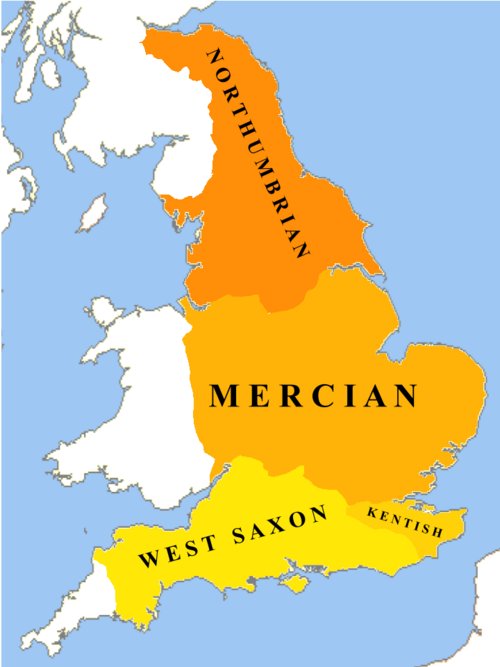
Just as Modern English is not monolithic, Old English varied according to place. Despite the diversity of language of the Germanic-speaking migrants who established Old English in England and southeastern Scotland, it is possible to reconstruct proto-Old English as a fairly unitary language. For the most part, the differences between the attested regional dialects of Old English developed within England and southeastern Scotland, rather than on the Mainland of Europe. Although from the tenth century Old English writing from all regions tended to conform to a written standard based on Late West Saxon, in speech Old English continued to exhibit much local and regional variation, which remained in Middle English and to some extent Modern English dialects.[13]
The four main dialectal forms of Old English were Mercian, Northumbrian, Kentish, and West Saxon.[14] Mercian and Northumbrian are together referred to as Anglian. In terms of geography the Northumbrian region lay north of the Humber River; the Mercian lay north of the Thames and south of the Humber River; West Saxon lay south and southwest of the Thames; and the smallest, Kentish region lay southeast of the Thames, a small corner of England. The Kentish region, settled by the Jutes from Jutland, has the scantest literary remains.[2] The term West Saxon actually is represented by two different dialects: Early West Saxon and Late West Saxon. Hogg has suggested that these two dialects would be more appropriately named Alfredian Saxon and Æthelwoldian Saxon, respectively, so that the naive reader would not assume that they are chronologically related.
Each of these four dialects was associated with an independent kingdom on the islands. Of these, Northumbria south of the Tyne, and most of Mercia, were overrun by the Vikings during the 9th century. The portion of Mercia that was successfully defended, and all of Kent, were then integrated into Wessex under Alfred the Great. From that time on, the West Saxon dialect (then in the form now known as Early West Saxon) became standardised as the language of government, and as the basis for the many works of literature and religious materials produced or translated from Latin in that period.
The later literary standard known as Late West Saxon (see § History), although centred in the same region of the country, appears not to have been directly descended from Alfred's Early West Saxon. For example, the former diphthong/iy/ tended to become monophthongised to /i/ in EWS, but to /y/ in LWS.[15]
Due to the centralisation of power and the destruction wrought by Viking invasions, there is relatively little written record of the non-West Saxon dialects after Alfred's unification. Some Mercian texts continued to be written, however, and the influence of Mercian is apparent in some of the translations produced under Alfred's programme, many of which were produced by Mercian scholars.[16] Other dialects certainly continued to be spoken, as is evidenced by the continued variation between their successors in Middle and Modern English. In fact, what would become the standard forms of Middle English and of Modern English are descended from Mercian rather than West Saxon, while Scots developed from the Northumbrian dialect. It was once claimed that, owing to its position at the heart of the Kingdom of Wessex, the relics of Anglo-Saxon accent, idiom and vocabulary were best preserved in the dialect of Somerset.[17]
Influence of other languages

يبدو أن لغة المستوطنين الأنجلوسكسونيين لم تتأثر بشكل كبير باللغات السلتية البريطانية الأصلية التي حلت محلها إلى حد كبير . عدد الكلمات السلتية الدخيلة على اللغة قليل جدًا، على الرغم من أن مصطلحات اللهجات والأسماء الجغرافية تُحفظ في مناطق التماس اللغوي الغربية (كمبريا، ديفون، الحدود الويلزية، وما إلى ذلك) أكثر من الشرق. ومع ذلك، فقد طُرحت اقتراحات مختلفة بشأن التأثير المحتمل للغة السلتية على تطورات النحو الإنجليزي في فترة ما بعد الإنجليزية القديمة، مثل التركيب التدريجي المنتظم وترتيب الكلمات التحليلي ، [ 18 ] بالإضافة إلى التطور اللاحق للفعل المساعد " do " . لم تحظَ هذه الأفكار عمومًا بتأييد واسع من اللغويين، لا سيما أن العديد من المصطلحات البريطانية المُنظَّرة لم تنتشر على نطاق واسع إلا في أواخر الإنجليزية الوسطى وبداية الإنجليزية الحديثة، بالإضافة إلى وجود أشكال مماثلة في لغات جرمانية حديثة أخرى. [ ب ]
احتوت اللغة الإنجليزية القديمة على عدد من الكلمات المُقترضة من اللاتينية ، التي كانت لغة التواصل العلمي والدبلوماسي في أوروبا الغربية. ويمكن أحيانًا تحديد تواريخ تقريبية لاقتراض كلمات لاتينية معينة بناءً على أنماط التغيرات الصوتية التي طرأت عليها. وقد سبق أن اقتُردت بعض الكلمات اللاتينية إلى اللغات الجرمانية قبل هجرة الأنجلوسكسونيين من أوروبا القارية إلى بريطانيا. ودخلت كلمات أخرى إلى اللغة عندما اعتنق الأنجلوسكسونيون المسيحية واكتسب الكهنة الناطقون باللاتينية نفوذًا. كما ساهم المبشرون المسيحيون الأيرلنديون في إدخال الأبجدية اللاتينية وتكييفها لكتابة الإنجليزية القديمة ، لتحل محل نظام الكتابة الرونية السابق. ومع ذلك، فقد حدث أكبر انتقال للكلمات اللاتينية (وخاصة الفرنسية القديمة ) إلى الإنجليزية في فترة الإنجليزية الوسطى .
كانت اللغة النوردية القديمة مصدرًا آخر للكلمات المُقترضة ، إذ احتكت باللغة الإنجليزية القديمة عبر الحكام والمستوطنين الإسكندنافيين في منطقة دانيلو منذ أواخر القرن التاسع، وخلال حكم كنوت وغيره من ملوك الدنمارك في أوائل القرن الحادي عشر. العديد من أسماء الأماكن في شرق وشمال إنجلترا ذات أصل إسكندنافي. الاقتراضات النوردية نادرة نسبيًا في أدب اللغة الإنجليزية القديمة، وتقتصر في الغالب على المصطلحات المتعلقة بالحكومة والإدارة. مع ذلك، كان المعيار الأدبي قائمًا على لهجة غرب ساكسون ، بعيدًا عن منطقة التأثير الإسكندنافي الرئيسية؛ ولعل تأثير اللغة النوردية كان أكبر في اللهجات الشرقية والشمالية. بالتأكيد، يظهر تأثير نوردي قوي في نصوص اللغة الإنجليزية الوسطى، التي غالبًا ما تستند إلى اللهجات الشرقية. تحتوي اللغة الإنجليزية الحديثة على العديد من الكلمات، التي تُستخدم في كثير من الأحيان بشكل يومي، والمُقترضة من اللغة النوردية القديمة، كما يُعزى التبسيط النحوي الذي حدث بعد فترة اللغة الإنجليزية القديمة غالبًا إلى التأثير النوردي. [ 2 ] [ 26 ] [ 27 ]
لا شك أن تأثير اللغة النوردية القديمة ساهم في تحويل اللغة الإنجليزية من لغة تركيبية على طول سلسلة متصلة إلى نظام كلمات أكثر تحليلية ، ومن المرجح أن اللغة النوردية القديمة كان لها تأثير أكبر على اللغة الإنجليزية من أي لغة أخرى. [ 2 ] [ 28 ] وقد أدى حرص الفايكنج في منطقة دانيلو على التواصل مع جيرانهم الأنجلوسكسونيين إلى احتكاك نتج عنه تآكل في نهايات الكلمات المعقدة. [ 27 ] [ 29 ] [ 30 ] ويشير سيميون بوتر إلى ما يلي:
لم يكن تأثير اللغات الإسكندنافية على النهايات الصرفية للغة الإنجليزية أقلّ اتساعًا، إذ ساهم في تسريع عملية تلاشي وتوحيد الصيغ النحوية التي انتشرت تدريجيًا من الشمال إلى الجنوب. كان هذا التأثير، في نهاية المطاف، تأثيرًا إيجابيًا، فقد فاقت فوائده خسائره، إذ تحسّنت اللغة في المباشرة والوضوح والقوة. [ 31 ]
The strength of the Viking influence on Old English appears from the fact that the indispensable elements of the language –pronouns, modals, comparatives, pronominal adverbs (like hence and together), conjunctions and prepositions –show the most marked Danish influence; the best evidence of Scandinavian influence appears in the extensive word borrowings because, as Jespersen indicates, no texts exist in either Scandinavia or Northern England from this time to give certain evidence of an influence on syntax. The effect of Old Norse on Old English was substantive, pervasive, and of a democratic character.[2][27] Old Norse and Old English resembled each other closely like cousins, and with some words in common, speakers roughly understood each other;[27] in time the inflections melted away and the analytic pattern emerged.[30][32] It is most important to recognise that in many words the English and Scandinavian languages differed chiefly in their inflectional elements. The body of the word was so nearly the same in the two languages that only the endings would put obstacles in the way of mutual understanding. In the mixed population which existed in the Danelaw, these endings must have led to much confusion, tending gradually to become obscured and finally lost. This blending of peoples and languages resulted in "simplifying English grammar".[2]
Phonology
The inventory of Early West Saxon surface phones is as follows:
| Labial | Dental | Alveolar | Palatal | Velar | Glottal | |
|---|---|---|---|---|---|---|
| Nasal | m | (n̥) n | (ŋ) | |||
| Stop | pb | td | tʃ (dʒ) | k (ɡ) | ||
| Fricative | f (v) | θ (ð) | s (z) | ʃ (ç) | xɣ | (h) |
| Lateral | (l̥) l | |||||
| Approximant | (r̥) r | j | (ʍ) w |
The sounds enclosed in parentheses in the chart above are not considered to be phonemes:
- [dʒ] هو صوت بديل للصوت / j/ الذي يأتي بعد /n/ وعندما يكون مضاعفًا (مضاعفًا).
- [ŋ] هو صوت بديل لـ /n/ يحدث قبل [k] و [ɡ].
- [v, ð, z] هي أشكال صوتية مجهورة للأصوات /f, θ, s/ على التوالي، وتحدث بين حروف العلة أو الحروف الساكنة المجهورة عندما يتم تشديد الصوت السابق.
- [h, ç] هي أشكال صوتية بديلة للصوت /x/ تحدث في بداية الكلمة أو بعد حرف علة أمامي، على التوالي.
- [ɡ] هو صوت بديل للصوت /ɣ/ الذي يأتي بعد /n/ أو عند تكراره. [ 33 ] [ 34 ] في مرحلة ما قبل فترة اللغة الإنجليزية الوسطى، أصبح [ɡ] أيضًا هو النطق الذي يبدأ به الكلمة.
- تظهر الأصوات الرنانة المهموسة [ʍ, l̥, n̥, r̥] بعد [h] [ 35 ] [ 36 ] في التسلسلات /xw, xl, xn, xr/ .
النظام المذكور أعلاه مشابه إلى حد كبير لنظام اللغة الإنجليزية الحديثة ، باستثناء أن [ç, x, ɣ, l̥, n̥, r̥] (و [ʍ] بالنسبة لمعظم المتحدثين ) قد فُقدت بشكل عام، في حين أن الأصوات المركبة الصوتية والاحتكاكية (بما في ذلك /ʒ/ الآن ) أصبحت فونيمات مستقلة، كما هو الحال مع /ŋ/ .
| أمام | خلف | |||
|---|---|---|---|---|
| غير مستدير | مستدير | غير مستدير | مستدير | |
| يغلق | i iː | y yː | u uː | |
| منتصف | e eː | o oː | ||
| يفتح | æ æː | ɑ ɑː | ( ɒ ) | |
كان حرف العلة الخلفي المفتوح المدور [ɒ] صوتًا بديلًا لحرف العلة القصير /ɑ/ الذي كان يظهر في المقاطع المشددة قبل الحروف الساكنة الأنفية (/m/ و/n/). وكان يُكتب بأشكال مختلفة إما ⟨a⟩ أو ⟨o⟩.
كانت اللهجات الأنجلية تحتوي أيضًا على حرف العلة الأمامي المتوسط المدور /ø(ː)/ ، والذي يُكتب ⟨oe⟩، والذي نشأ من حرف العلة /o(ː)/ مع علامة التشكيل i. في لهجتي غرب ساكسون وكينتيش، كان هذا الحرف قد اندمج بالفعل مع /e(ː)/ قبل ظهور أول نثر مكتوب.
| العنصر الأول | قصير ( أحادي الموراي ) | طويل (ثنائي الموراي) |
|---|---|---|
| يغلق | iy̯ | iːy̯ |
| منتصف | eo̯ | eːo̯ |
| يفتح | æɑ̯ | æːɑ̯ |
Other dialects had different systems of diphthongs. For example, the Northumbrian dialect retained /i(ː)o̯/, which had merged with /e(ː)o̯/ in West Saxon.
Sound changes
Some of the principal sound changes occurring in the pre-history and history of Old English were the following:
- Fronting of [ɑ(ː)] to [æ(ː)] except when nasalised or followed by a nasal consonant ("Anglo-Frisian brightening"), partly reversed in certain positions by later "a-restoration" or retraction.
- Monophthongisation of the diphthong [ai], and modification of remaining diphthongs to the height-harmonic type.
- Diphthongisation of long and short front vowels in certain positions ("breaking").
- Palatalisation of velars [k],[ɡ],[ɣ],[sk] to [tʃ],[dʒ],[j],[ʃ] in certain front-vowel environments.
- The process known as i-mutation (which for example led to modern mice as the plural of mouse).
- Loss of certain weak vowels in word-final and medial positions; reduction of remaining unstressed vowels.
- Diphthongisation of certain vowels before certain consonants when preceding a back vowel ("back mutation").
- Loss of /x/ between vowels or between a voiced consonant and a vowel, with lengthening of the preceding vowel.
- Collapse of two consecutive vowels into a single vowel.
- "Palatal umlaut", which has given forms such as six (compare German sechs).
Grammar
Morphology
Nouns decline for five cases: nominative, accusative, genitive, dative, instrumental; three genders: masculine, feminine, neuter; and two numbers: singular, and plural; and are strong or weak. The instrumental is vestigial and only used with the masculine and neuter singular and often replaced by the dative. Only pronouns and strong adjectives retain separate instrumental forms. There is also sparse early Northumbrian evidence of a sixth case: the locative. The evidence comes from Northumbrian Runic texts (e.g. ᚩᚾ ᚱᚩᛞᛁon rodi 'on the Cross').[37]
تتطابق الصفات مع الأسماء في الحالة الإعرابية والجنس والعدد، وقد تكون قوية أو ضعيفة. تتطابق الضمائر، وأحيانًا صيغ المشاركة، في الحالة الإعرابية والجنس والعدد. يميز ضميرا المتكلم والمخاطب أحيانًا بين صيغ العدد المزدوج . تعمل أداة التعريف sē وتصريفاتها كأداة تعريف ( the )، وصفة إشارة ( that )، وضمير إشارة . من أسماء الإشارة الأخرى þēs (هذا)، و ġeon (ذلك هناك). تتصرف هذه الكلمات حسب الحالة الإعرابية والجنس والعدد. للصفات نهايات قوية وضعيفة، وتُستخدم النهايات الضعيفة عند وجود أداة تعريف أو ملكية.
تُصرف الأفعال لثلاثة أشخاص : المتكلم والمخاطب والغائب؛ ولعددين: المفرد والجمع؛ ولزمنين: المضارع والماضي؛ ولثلاثة صيغ : الخبرية والشرطية والأمرية؛ [38] وتكون قوية (تُظهر تغييراً صوتياً) أو ضعيفة (تُظهر لاحقة سنية). وللأفعال صيغتان للمصدر : المصدر المجرد والمصدر المقيد ؛ واسمان للفاعل : المضارع والماضي . وللفعل الشرطي صيغتان: المضارع والماضي. وتتوافق الأفعال المصرفة مع الفاعل في الشخص والعدد. ويُصاغ زمن المستقبل والمبني للمجهول وجوانب أخرى باستخدام الكلمات المركبة. وتأتي حروف الجر في الغالب قبل المفعول به ، ولكنها غالباً ما تأتي بعده. وإذا كان مفعول حرف الجر في حالة الجر غير المباشر، فمن الممكن أن يقع حرف الجر في أي مكان في الجملة.
Remnants of the Old English case system in Modern English are in the forms of a few pronouns (such as I/me/mine, she/her, who/whom/whose) and in the possessive ending -'s, which derives from the masculine and neuter genitive ending -es. The modern English plural ending -(e)s derives from the Old English -as, but the latter applied only to "strong" masculine nouns in the nominative and accusative cases; different plural endings were used in other instances. Old English nouns had grammatical gender, while modern English has only natural gender. Pronoun usage could reflect either natural or grammatical gender when those conflicted, as in the case of the grammatically neuter (but naturally feminine) noun ƿīf (/wiːf/), which meant "woman" (from ƿīfmann, lit.'woman person' or 'female person') and became Modern English wife.
In Old English's verbal compound constructions are the beginnings of the compound tenses of Modern English.[39] Old English verbs include strong verbs, which form the past tense by altering the root vowel, and weak verbs, which use a suffix such as -de.[38] As in Modern English, and peculiar to the Germanic languages, the verbs formed two great classes: weak (regular), and strong (irregular). Like today, Old English had fewer strong verbs, and many of these have over time decayed into weak forms. Then, as now, dental suffixes indicated the past tense of the weak verbs, as in work and worked.[2]
Syntax
Old English syntax is similar to that of modern English. Some differences are consequences of the greater level of nominal and verbal inflection, allowing freer word order.
- Default word order is verb-second in main clauses, and verb-final in subordinate clauses[40]
- No do-support in questions and negatives. Questions were usually formed by invertingsubject and finite verb, and negatives by placing ne before the finite verb, regardless of which verb.
- Multiple negatives can stack up in a sentence intensifying each other (negative concord).
- Sentences with subordinate clauses of the type "when X, Y" (e.g. "When I got home, I ate dinner") do not use a wh-type conjunction, but rather a th-type correlative conjunction such as þā, otherwise meaning "then" (e.g. þā X, þā Y in place of "when X, Y"). The wh-words (or "hw-words" in Old English's case) are used only as interrogatives and as indefinite pronouns.
- Similarly, wh-forms were not used as relative pronouns; instead, the indeclinable word þe is used, often preceded by (or replaced by) the appropriate form of the article/demonstrative se.
Orthography
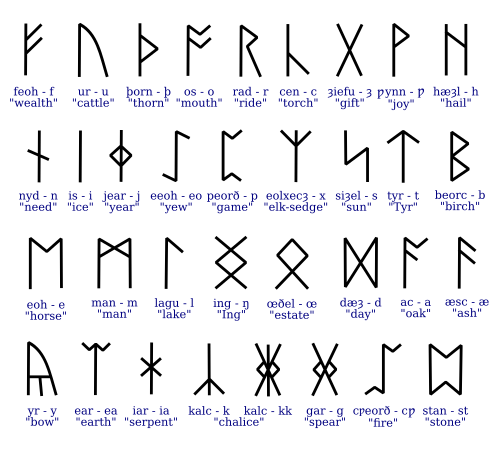
Old English was first written in runes, using the futhorc –a rune set derived from the Germanic 24-character elder futhark, extended by five more runes used to represent Anglo-Saxon vowel sounds and sometimes by several more additional characters. From around the 8th century, the runic system came to be supplanted by a (minuscule) half-uncial script of the Latin alphabet introduced by Irish Christian missionaries.[41] This was replaced by Insular script, a cursive and pointed version of the half-uncial script. This was used until the end of the 12th century when continental Carolingian minuscule (also known as Caroline) replaced the insular.
كانت الأبجدية اللاتينية في ذلك الوقت لا تزال تفتقر إلى الحرفين ⟨j⟩ و⟨ w⟩ ، ولم يكن هناك حرف ⟨v⟩ يميزه عن ⟨u⟩ ؛ علاوة على ذلك، لم تستخدم التهجئة الإنجليزية القديمة الأصلية الأحرف ⟨k⟩ أو ⟨q⟩ أو ⟨z⟩ . أُضيفت أربعة أحرف أخرى إلى الأحرف اللاتينية العشرين المتبقية: ⟨æ⟩ ( æsc ، وهو اسم شجرة الرماد الحديثة ) و⟨ ð⟩ ( ðæt ، ويُسمى الآن eth أو edh) ، وهما حرفان لاتينيان مُعدّلان، و thorn ⟨þ⟩ و wynn ⟨ƿ⟩ ، وهما مُقتبسان من الأبجدية اللاتينية . استُخدمت بعض أزواج الأحرف كثنائيات صوتية ، تُمثل صوتًا واحدًا. استُخدمت أيضًا علامة تيرون ⟨ ⁊ ⟩ (حرف مشابه للرقم ⟨ 7 ⟩ ) للدلالة على حرف العطف " و" . وكان من الاختصارات الشائعة لدى النساخ علامة شوكة مع خط ⟨ ꝥ ⟩ ، والتي استُخدمت للضمير þæt ( الذي ). في الأصل، لم تُستخدم علامات المدّ فوق حروف العلة لتمييز حروف العلة الطويلة (كما في الطبعات الحديثة)، بل للدلالة على النبر، أو كاختصارات للحرف ⟨ m ⟩ أو ⟨ n ⟩ التالي . [ 42 ] [ 43 ]
تُدخل الطبعات الحديثة للمخطوطات الإنجليزية القديمة عمومًا بعض الاصطلاحات الإضافية. تُستخدم الأشكال الحديثة للأحرف اللاتينية، بما في ذلك ⟨g⟩ بدلًا من G في اللغة الإنجليزية القديمة ، و⟨ s⟩ بدلًا من S في اللغة الإنجليزية القديمة و S الطويلة ، وغيرها مما قد يختلف اختلافًا كبيرًا عن الكتابة الإنجليزية القديمة، ولا سيما ⟨e⟩ و⟨f⟩ و⟨r⟩ . تُستخدم علامات المدّ للدلالة على حروف العلة الطويلة، حيث لم يكن يُفرّق عادةً بين حروف العلة الطويلة والقصيرة في النصوص الأصلية. (في بعض الطبعات القديمة، استُخدمت علامة التشكيل الحادة للتوافق مع اصطلاحات اللغة النوردية القديمة). بالإضافة إلى ذلك، غالبًا ما تُميّز الطبعات الحديثة بين الحروف الحنكية والحلقية ⟨c⟩ و⟨ g⟩ بوضع نقاط فوق الحروف الحنكية : ⟨ċ⟩ و⟨ ġ⟩ . عادة ما يتم استبدال الحرف wynn ⟨ ƿ ⟩ بالحرف ⟨ w ⟩ ، ولكن عادة ما يتم الاحتفاظ بالأحرف ⟨ æ ⟩ و ⟨ ð ⟩ و ⟨ þ ⟩ - باستثناء عندما يتم استبدال الحرف ⟨ ð ⟩ بالحرف ⟨ þ ⟩ .
على عكس قواعد الكتابة الإنجليزية الحديثة ، كانت الكتابة الإنجليزية القديمة منتظمة إلى حد كبير ، مع وجود توافق متوقع في الغالب بين الحروف والأصوات . لم تكن هناك عادةً حروف صامتة - ففي كلمة cniht ، على سبيل المثال، كان يُنطق كل من ⟨c⟩ و⟨h⟩ ( / knixt ~ kniçt / ) ، على عكس ⟨k⟩ و⟨ gh⟩ في كلمة knight الحديثة ( / naɪt/ ). وكان الاستثناء الوحيد هو الإدخال العرضي لحرف صامت ⟨e⟩ بين حرف ساكن حنكي وحرف علة خلفي يليه مباشرة. في حين أن معظم التغيرات الصوتية التي أنتجت حروفًا ساكنة حنكية حدثت فقط قبل حروف العلة الأمامية (وأحيانًا قبل / j/ )، فإن التغيرات الصوتية اللاحقة غالبًا ما حذفت حرف العلة الأمامي المسؤول أو /j/ ، مما أدى إلى ظهور حرف ساكن حنكي في موضع "ممنوع"، أي قبل حرف علة خلفي. بالإضافة إلى ذلك، فإن بعض حالات الصوت /j/ موروثة مباشرة من اللغة الجرمانية البدائية، وليست ناتجة عن تحول الصوت / ɣ/ إلى صوت حنكي، وبالتالي يمكن أن يظهر بحرية قبل حروف العلة الخلفية. ولتجنب الالتباس، كان النساخ أحيانًا يضيفون الحرف الصامت ⟨e⟩ للدلالة على الصوت الحنكي "الممنوع" - على سبيل المثال، الفعل smēaġan ( /ˈsmæ͜ːɑ.jɑn/ )، الذي يحتفظ بالصوت /j/ الموروث ، كان يُكتب أحيانًا ⟨smeagean⟩ .
| OE | توجد اختلافات في الطبعات الحديثة | النسخ الصوتي الدولي (IPA) | ملحوظات |
|---|---|---|---|
| أ | أ | /ɑ/ | تشير الاختلافات الإملائية مثل ⟨ land ⟩ ~ ⟨ lond ⟩ ("land") إلى أن حرف العلة القصير كان له صوت بديل مستدير [ɒ] قبل /m/ و /n/ عندما كان يظهر في المقاطع المشددة. |
| أ | /ɑː/ | تستخدم الطبعات الحديثة ⟨ā⟩ للتمييز بين الصوت الطويل / ɑː/ والصوت القصير /ɑ/ . | |
| æ | æ | /æ/ | في السابق كان يتم استخدام الحرف المركب ⟨ ae ⟩ ؛ أصبح ⟨ æ ⟩ أكثر شيوعًا خلال القرن الثامن، وأصبح معيارًا بعد عام 800. تستخدم الطبعات الحديثة ⟨ ǣ ⟩ للتمييز بين /æː/ الطويل و /æ/ القصير . |
| ǣ | /æː/ | ||
| أنا | /æ/ , /æː/ | In 9th-century Kentish manuscripts, a form of ⟨æ⟩ that was missing the upper hook of the ⟨a⟩ part was used; it is not clear whether this represented /æ/ or /e/. The symbol ⟨ę⟩ is used as a modern editorial substitution for the modified Kentish form of ⟨æ⟩. Compare e caudata, ⟨ę⟩. | |
| b | /b/ | ||
| [v] (an allophone of /f/) | Used in this way in early texts (before 800). For example, the word sheaves is spelled scēabas in an early text, but later (and more commonly) as scēafas. | ||
| c | c | /k/ | The /tʃ/ pronunciation is sometimes written with a diacritic by modern editors: most commonly ⟨ċ⟩, sometimes ⟨č⟩ or ⟨ç⟩. Word-initially before another consonant, the pronunciation of ⟨c⟩ is always /k/; before ⟨i⟩, it is usually /tʃ/. Otherwise, predicting its pronunciation with certainty requires a knowledge of the history of the word and the sound changes that occurred in Old English (which created certain patterns in the distribution of Old English palatal and velar consonant sounds). |
| ċ | /tʃ/ | ||
| cg | cg | [ɡɡ] (between vowels; rare), [ɡ] (after /n/) | تطور الصوت المضاعف الحنكي المجهور [ddʒ] (والذي يمكن تحليله صوتيًا كـ /jj/ ) من اللغة الجرمانية البدائية * gj ، والذي تحول إلى حنكي عند تعرضه للتضعيف الجرماني الغربي . ونتيجة لذلك، كان الصوت المضاعف الحنكي المجهور [ɡɡ] (والذي يمكن تحليله صوتيًا كـ /ɣɣ/ ) نادرًا في اللغة الإنجليزية القديمة، وأصله الاشتقاقي في الكلمات التي ورد فيها (مثل frocga ' ضفدع ' ) غير واضح. [ 44 ] تضمنت التهجئات البديلة لكل من الصوتين المضاعفين ⟨gg⟩، ⟨gc⟩، ⟨cgg⟩، ⟨ccg⟩ ، و⟨ gcg⟩ . [ 45 ] [ 46 ] لم يتم التمييز بين الصوتين المضاعفين في تهجئة اللغة الإنجليزية القديمة ؛ في الطبعات الحديثة، يُكتب الحرف المضاعف الحنكي أحيانًا ⟨ ċġ ⟩ لتمييزه عن الحرف المضاعف الحنكي ⟨ cg ⟩ . [ 47 ] بعد الصوت / n/ ، كان يُنطق الصوت / j/ كـ [dʒ] ، والصوت /ɣ/ كـ [ɡ]. استُخدمت أحيانًا التهجئات ⟨ncg⟩ و⟨ ngc⟩ وحتى ⟨ncgg⟩ بدلًا من التهجئة المعتادة ⟨ng⟩ . [ 48 ] ربما كانت إضافة ⟨c⟩ إلى ⟨g⟩ في تهجئات مثل ⟨cynincg⟩ و⟨ cyningc⟩ لكلمة ⟨cyning⟩ وسيلةً للدلالة على أن الكلمة تُنطق بصوت انفجاري وليس احتكاكي ؛ كما وُجدت تهجئات تحتوي على ⟨nc⟩ فقط ، مثل ⟨cyninc⟩ . [ 49 ] ولتوضيح الأمر، يكتب المحررون المعاصرون أحيانًا المجموعة المنتهية بالصوت الاحتكاكي الحنكي ⟨ nċġ ⟩ (أو ⟨ nġċ ⟩ ). [ 50 ] |
| ċġ | [ddʒ] (بين حروف العلة)، [dʒ] (بعد /n/ ) | ||
| د | /د/ | في أقدم النصوص، كان يمثل أيضًا الصوت /θ/ . انظر ⟨ þ ⟩ . | |
| ð | ð, þ | /θ/ ، بما في ذلك صوتها البديل [ð] | كان يُطلق عليه في الإنجليزية القديمة اسم ðæt ، ويُسمى الآن eth أو edh . وهو مُشتق من الصيغة الجزيرية للحرف ⟨d⟩ بإضافة خط أفقي. يُمكن أن يُمثل كل من ⟨þ⟩ و⟨ ð⟩ أيًا من الصيغتين الصوتيتين للحرف /θ/ ، سواءً كان مهموسًا [θ] أو مجهورًا [ð] ، ولكن بعض النصوص تُظهر ميلًا لاستخدام ⟨þ⟩ في بداية الكلمات و⟨ ð⟩ في وسط الكلمة أو في نهايتها. [ 51 ] يستبدل بعض المحررين المعاصرين ⟨ð⟩ بـ ⟨þ⟩ كشكل من أشكال التوحيد ووسيلة لفرض الاتساق . انظر ⟨þ⟩ . |
| هـ | هـ | /هـ/ | |
| ē | /eː/ | تستخدم الطبعات الحديثة ⟨ ē ⟩ للتمييز بين /eː/ الطويلة و /e/ القصيرة . | |
| ea | ea | /æɑ̯/ | في بعض الأحيان يرمز إلى /ɑ/ بعد ⟨ ċ ⟩ أو ⟨ ġ ⟩ |
| ēa | /æːɑ̯/ | تستخدم الطبعات الحديثة الرمز ⟨ēa⟩ للتمييز بين الصوت الطويل / æːɑ̯ / والصوت القصير /æɑ̯/ . ويرمز أحيانًا إلى الصوت / ɑː / بعد الرمز ⟨ċ⟩ أو ⟨ġ⟩ . | |
| eo | eo | /eo̯/ | في بعض الأحيان يرمز إلى /o/ بعد ⟨ ċ ⟩ أو ⟨ ġ ⟩ |
| ēo | /eːo̯/ | تستخدم الطبعات الحديثة ⟨ ēo ⟩ للتمييز بين الصوت الطويل /eːo̯/ والصوت القصير /eo̯/ . | |
| و | /f/ ، بما في ذلك صوته البديل [v] | انظر أيضًا ⟨ ب ⟩ . | |
| ز | ز | /ɣ/ ، بما في ذلك allophone [ɡ] | في المخطوطات الإنجليزية القديمة، كان هذا الحرف عادةً ما يأخذ شكله الجزيري ⟨ᵹ⟩ . أما النطقان [j] و [dʒ] فيُكتبان أحيانًا ⟨ġ⟩ في الطبعات الحديثة. في بداية الكلمة ، قبل حرف ساكن آخر، يكون النطق دائمًا احتكاكيًا حلقيًا [ɣ] . وفي نهاية الكلمة، بعد ⟨i⟩ ، يكون دائمًا حنكيًا [j] . فيما عدا ذلك، يتطلب التنبؤ بنطقه معرفة تاريخ الكلمة والتغيرات الصوتية التي طرأت على اللغة الإنجليزية القديمة (والتي أدت إلى ظهور أنماط معينة في توزيع أصوات الحروف الساكنة الحنكية والحلقية في اللغة الإنجليزية القديمة ). |
| ġ | /j/ ، بما في ذلك صوته البديل [dʒ] ، الذي يأتي بعد ⟨ n ⟩ | ||
| ح | /x/ ، بما في ذلك أشكالها الصوتية [h, ç] | ربما تم تحقيق التركيبات ⟨ hl ⟩ ، ⟨ hr ⟩ ، ⟨ hn ⟩ ، ⟨ hw ⟩ كإصدارات غير مجهورة من الحروف الساكنة الثانية بدلاً من كونها تسلسلات تبدأ بـ [h] . | |
| أنا | أنا | /i/ ، ونادراً ما يكون [j] | على الرغم من استخدام التهجئة ⟨g⟩ للحرف الحنكي / j/ منذ أقدم نصوص اللغة الإنجليزية القديمة، إلا أن الحرف ⟨i⟩ يُستخدم أيضًا كتهجئة أقل شيوعًا للحرف /j/ . وقد فضّل كتّاب اللغة السكسونية الغربية استخدام ⟨ri⟩ بدلًا من ⟨rg⟩ لكتابة تسلسل / rj / الموجود في أفعال مثل herian و swerian ، بينما استخدمت نصوص مرسيا ونورثمبريا عمومًا ⟨rg⟩ في تهجئة هذه الكلمات. [ 52 ] |
| أنا | /أنا/ | تستخدم الطبعات الحديثة ⟨ ī ⟩ للتمييز الطويل /iː/ عن القصير /i/ . | |
| أي | أي | /iy̯/ | |
| أي | /iːy̯/ | تستخدم الطبعات الحديثة ⟨ īe ⟩ للتمييز بين الصوت الطويل /iːy̯/ والصوت القصير /iy̯/ . | |
| io | io | /io̯/ | By the time of the first written prose, /i(ː)o̯/ had merged with /e(ː)o̯/ in every dialect but Northumbrian, where it was preserved until Middle English. In Early West Saxon /e(ː)o̯/ was often written ⟨io⟩ instead of ⟨eo⟩, but by Late West Saxon only the ⟨eo⟩ spelling remained common. |
| īo | /iːo̯/ | Modern editions use ⟨īo⟩ to distinguish long /iːo̯/ from short /io̯/. | |
| k | /k/ | Rarely used; this sound is normally represented by ⟨c⟩. | |
| l | /l/ | Probably velarised[ɫ] (as in Modern English) when in coda position. | |
| m | /m/ | ||
| n | /n/, including its allophone [ŋ] | The allophone [ŋ] occurred before a velar plosive ([k] or [ɡ]). | |
| o | o | /o/ | See also ⟨a⟩. |
| ō | /oː/ | Modern editions use ⟨ō⟩ to distinguish long /oː/ from short /o/. | |
| oe | oe, œ | /ø/ | Only occurs in some dialects. Written as ⟨oe⟩ in Old English manuscripts, but some modern editions use the ligature ⟨œ⟩ to indicate that it is a single vowel sound. Modern editions use ⟨ōe⟩ or ⟨œ̄⟩ to distinguish long /øː/ from short /ø/. |
| ōe, œ̄ | /øː/ | ||
| p | /p/ | ||
| qu | /kw/ | A rare spelling of /kw/, which was usually written as ⟨cƿ⟩ (⟨cw⟩ in modern editions). | |
| r | /r/ | The exact nature of Old English /r/ is not known; it may have been an alveolar approximant[ɹ] as in most modern English, an alveolar flap[ɾ], or an alveolar trill[r]. | |
| s | /s/, including its allophone [z] | ||
| sc | sc | /sk/ (rare)[34] | At the start of a word, the usual pronunciation is palatalised sċ/ʃ/. Between vowels in the middle of a word, the pronunciation can be either a palatalised geminate /ʃː/, as in fisċere/ˈfiʃ.ʃe.re/ ('fisherman') and wȳsċan, /ˈwyːʃ.ʃɑn ('to wish'), or an unpalatalized consonant sequence /sk/, as in āscian/ˈɑːs.ki.ɑn/ ('to ask'). The pronunciation /sk/ occurs when ⟨sc⟩ had been followed by a back vowel (/ɑ/, /o/, /u/) at the time of palatalisation,[53] as illustrated by the contrast between fisċ/fiʃ/ ('fish') and its plural fiscas/ˈfis.kɑs/. But due to changes over time, a knowledge of the history of the word in question is needed to predict the pronunciation with certainty. In word-final position, the pronunciation of sċ was either /ʃ/ or possibly /ʃː/ when the preceding vowel was short.[34] |
| sċ | /ʃː/ (between vowels),/ʃ/ (elsewhere) | ||
| t | /t/ | ||
| th | /θ/ | Represented /θ/ in the earliest texts (see ⟨þ⟩) | |
| þ | /θ/, including its allophone [ð] | Called thorn and derived from a rune of the same name. In the earliest texts ⟨d⟩ or ⟨th⟩ was used for this phoneme, but these were later replaced in this function by eth ⟨ð⟩ and thorn ⟨þ⟩. Eth was first attested (in definitely dated materials) in the 7th century, and thorn in the 8th. Eth was more common than thorn before the time of Alfred. From then onward, thorn was used increasingly often at the start of words, while eth was normal in the middle and at the end of words, although usage varied in both cases. Some modern editions use only thorn. | |
| u | u | /u/, also sometimes /w/. See ⟨ƿ⟩. | |
| ū | /uː/ | Modern editions use ⟨ū⟩ to distinguish long /uː/ from short /u/. | |
| uu | w | /w/ | Old English manuscripts typically represented the sound /w/ with the letter ⟨ƿ⟩, called wynn and derived from the rune of the same name. In earlier texts by continental scribes, and also later in the north, /w/ was represented by ⟨u⟩ or ⟨uu⟩. In modern editions, wynn is replaced by ⟨w⟩, to prevent confusion with ⟨p⟩. |
| ƿ | |||
| x | /ks/ | ||
| y | y | /y/ | |
| ȳ | /yː/ | Modern editions use ⟨ȳ⟩ to distinguish long /yː/ from short /y/. | |
| z | /ts/ | A rare spelling for /ts/; e.g. betst ('best') is occasionally spelt bezt. | |
Doubled consonants are geminated; the geminate fricatives ⟨ff⟩, ⟨ss⟩ and ⟨ðð⟩/⟨þþ⟩/⟨ðþ⟩/⟨þð⟩ are always voiceless [ff], [ss], [θθ].
Literature

The corpus of Old English literature is small but still significant, with some 400 surviving manuscripts.[54] The pagan and Christian streams mingle in Old English, one of the richest and most significant bodies of literature preserved among the early Germanic peoples.[2] In his supplementary article to the 1935 posthumous edition of Bright's Anglo-Saxon Reader, James Hulbert writes:
In such historical conditions, an incalculable amount of the writings of the Anglo-Saxon period perished. What they contained, how important they were for an understanding of literature before the Conquest, we have no means of knowing: the scant catalogues of monastic libraries do not help us, and there are no references in extant works to other compositions....How incomplete our materials are can be illustrated by the well-known fact that, with few and relatively unimportant exceptions, all extant Anglo-Saxon poetry is preserved in four manuscripts.
من أهم الأعمال الأدبية الإنجليزية القديمة الباقية : ملحمة بيوولف ، والوقائع الأنجلوسكسونية ، وهي سجل لتاريخ إنجلترا المبكر، وصندوق فرانكس ، وهو قطعة أثرية منقوشة مصنوعة من عظم الحوت، وترنيمة كيدمون ، وهي قصيدة دينية مسيحية. كما توجد أيضًا مجموعة من الأعمال النثرية الباقية، مثل المواعظ وسير القديسين، والترجمات الكتابية، والأعمال اللاتينية المترجمة لآباء الكنيسة الأوائل، والوثائق القانونية كالقوانين والوصايا، والأعمال العملية في النحو والطب والجغرافيا. ومع ذلك، يُعتبر الشعر جوهر الأدب الإنجليزي القديم. جميع المؤلفين الأنجلوسكسونيين تقريبًا مجهولون، باستثناءات قليلة، مثل بيدا وكيدمون . كيدمون، أقدم شاعر إنجليزي معروف بالاسم، كان راهبًا في دير ويتبي. [ 2 ]
بيوولف
المثال الأول مأخوذ من السطور الأولى من ملحمة بيوولف ، وهي عملٌ يتألف من حوالي 3000 سطر. [ 2 ] يصف هذا المقطع كيف عُثر على سكيلد، سلف هروثغار الأسطوري ، رضيعًا، وجرفته الأمواج إلى الشاطئ، فتبنته عائلة نبيلة. الترجمة حرفية وتحافظ على ترتيب الكلمات الشعري الأصلي. ولذلك، فهي لا تُعدّ نموذجية للنثر الإنجليزي القديم. وقد استُخدمت الكلمات الحديثة المشابهة للكلمات الأصلية كلما أمكن ذلك، لإعطاء إحساسٍ قريبٍ من روح القصيدة الأصلية.
الكلمات بين قوسين مفهومة ضمنيًا في اللغة الإنجليزية القديمة من خلال حالة الاسم، أما الكلمات المكتوبة بخط غامق بين قوسين فهي تفسيرات لكلمات لها معانٍ مختلفة قليلاً في السياق الحديث. يستخدم الشاعر كلمة " ماذا " حيث يُتوقع استخدام كلمات مثل "انظر " أو "تخيّل ". هذا الاستخدام مشابه لعبارة "يا للعجب!" ، فهي تعبير عن الدهشة ولفت الانتباه في آنٍ واحد.
تعتمد القصيدة الإنجليزية على النبر والجناس. في الجناس، يتكرر الحرف الساكن الأول في الكلمة مع الحرف الساكن نفسه في بداية كلمة أخرى، كما في G ār-Dena و ġ eār-dagum . تتكرر حروف العلة مع أي حرف علة آخر، كما في æ þelingas و e llen . في النص أدناه، الحروف التي تتكرر مكتوبة بخط غامق.
| لا. | إبداعي | التمثيل باستخدام الكلمات المتشابهة المصطنعة |
|---|---|---|
| 1 | هوت! ƿē جار دينا في ġ إير داغوم، | ماذا! نحن من غار-دان (حرفيًا: رماة الرماح) في الأيام الخوالي، |
| þ od-cyninga، þ ريم ديفرونون، | of thede (nation/people)-kings, did thrum (glory) frain (learn about by asking), | |
| hū ðā æþelingas ellen fremedon. | how those athelings (noblemen) did ellen (fortitude/courage/zeal) freme (promote). | |
| Oft Scyld Scēfing sceaþena þrēatum, | Oft did Scyld Scefing of scather threats (troops), | |
| 5 | monegum mǣġþum, meodosetla oftēah, | of many maegths (clans; cf. Irish cognate Mac-), of meadsettees atee (deprive), |
| egsode eorlas. Syððan ǣrest ƿearð | [and] ugg (induce loathing in, terrify; related to "ugly") earls. Sith (since, as of when) erst (first) [he] worthed (became) | |
| fēasceaft funden, hē þæs frōfre ġebād, | [in] fewship (destitute) found, he of this frover (comfort) abode, | |
| ƿēox under ƿolcnum, ƿeorðmyndum þāh, | [and] waxed under welkin (firmament/clouds), [and amid] worthmint (honour/worship) theed (throve/prospered) | |
| oðþæt him ǣġhƿylc þāra ymbsittendra | oth that (until that) him each of those umsitters (those "sitting" or dwelling roundabout) | |
| 10 | ofer hronrāde hȳran scolde, | over whaleroad (kenning for "sea") hear should, |
| gomban gyldan. Þæt ƿæs gōd cyning! | [and] yeme (heed/obedience; related to "gormless") yield. That was [a] good king! |
Here is a natural enough Modern English translation, although the phrasing of the Old English passage has often been stylistically preserved, even though it is not usual in Modern English:
What! We Spear-Danes in ancient days inquired about the glory of the kings of the nation, how the princes performed bravery.
Often, Shield, the son of Sheaf, ripped away the meadbenches from many tribes' enemy bands — he terrified men!
After destitution was first experienced (by him), he met with consolation for that; he grew under the clouds of the sky and flourished in adulation, until all of the neighbouring people had to obey him over the whaleroad, and pay tribute to the man. That was a good king!
The Lord's Prayer
This text of the Lord's Prayer is presented in the standardised Early West Saxon dialect.
| Line | Original | IPA | Word-for-word translation into Modern English | Translation |
|---|---|---|---|---|
| 1 | Fæder ūre þū þe eart on heofonum, | [ˈfæ.derˈuː.re|ˈθuːðeˌæɑ̯rtonˈheo̯.vo.num] | Father Ours, thou which art in heavens, | Our Father, who art in heaven, |
| 2 | Sīe þīn nama ġehālgod. | [ˈsiːy̯ðiːnˈnɒ.mɑjeˈhɑːɫ.ɣod] | Be thine name hallowed. | Hallowed be thy name. |
| 3 | Tōbecume þīn rīċe, | [ˌtoː.beˈku.meˌθiːnˈriː.t͡ʃe] | To be come [is] thine kingdom, | Thy kingdom come, |
| 4 | Ġeweorðe þīn willa, on eorðan swā swā on heofonum. | [jeˈweo̯rˠ.ðeˌθiːnˈwil.lɑ|onˈeo̯rˠ.ðanˈswɑːˌswɑːonˈheo̯.vo.num] | Let there be thine will, on earth so so in heavens. | Thy will be done on earth as in heaven. |
| 5 | Ūrne dæġhwamlīċan hlāf sele ūs tōdæġ, | [ˌuːrˠ.neˈdæj.ʍɑmˌliː.t͡ʃɑnˈhl̥ɑːf|ˈse.leˌuːstoːˈdæj] | Our daily loaf sell us today, | Give us this day our daily bread, |
| 6 | And forġief ūs ūre gyltas, swā swā wē forġiefaþ ūrum gyltendum. | [ˌɒndforˠˈjiy̯vuːsˌuː.reˈɣyɫ.tɑs|ˈswɑːˌswɑːweːforˠˈjiy̯.vɑθˌuː.rumˈɣyɫ.ten.dum] | And forgive us our guilts, so so we forgiveth our guilters. | And forgive us our debts, as we forgive our debtors. |
| 7 | And ne ġelǣd þū ūs on costnunge, ac ālīes ūs of yfele. | [ˌɒndnejeˈlæːdðuːˌuːzoŋˈkost.nuŋ.ɡe|ɑkɑːˈliːy̯zuːsofˈy.ve.le] | And not lead thou us in costening, but alease us of evil. | And lead us not into temptation, but deliver us from evil. |
| 8 | Sōðlīċe. | [ˈsoːðˌliː.t͡ʃe] | Soothly. | Amen. |
Charter of Cnut
This is a proclamation from Cnut to his earl Thorkell the Tall and the English people written in AD 1019. Unlike the previous two examples, this text is prose rather than poetry. For ease of reading, the passage has been divided into sentences while the pilcrows represent the original division.
| Original | Representation with constructed cognates |
|---|---|
| ¶ Cnut cyning gret his arcebiscopas and his leod-biscopas and Þurcyl eorl and eall his eorlas and ealne his þeodscype, tƿelfhynde and tƿyhynde, gehadode and læƿede, on Englalande freondlice. | ¶ يحيي الملك كنوت رؤساء أساقفته وأساقفته (الشعب) وثوركيل، إيرل، وجميع إيرلاته وجميع سفن شعبه ، الكبيرة ( التي تبلغ قيمة جزيتها 1200 شلن ) والصغيرة ( التي تبلغ قيمة جزيتها 200 شلن) ، والمكتوبين (الذين رُسِموا للكهنوت) والفاسقين (العلمانيين) ، في إنجلترا بودّ. |
| And ic cyðe eoƿ, þæt ic ƿylle beon hold hlaford and unsƿicende to godes gerihtum and to rihtre ƿoroldlage. | وأنا أقول لكم ، سأكون سيداً متمدناً وثابتاً على حقوق الله (قوانينه) وعلى حقوق الدنيا (قوانينها) . |
| ¶ Ic nam me to Gemynde þa geƿritu و þa ƿord، þe se arcebiscop Lyfing me fram þam papan brohte of Rome، þæt ic scolde æghƿær gods lof upp aræran and unriht alecgan and full frð ƿyrcean be ðære عزيزي، أنا الله سيلان ƿolde. | ¶ I nam (took) me to mind the writes and the word that the Archipal Lyfing me from the Pope came of the Rome, that I should yewhere (everywhere) God love (prabete) up (protement) , and unright (outlaw) lyth (outlaw) lyth (preth) work (pretative) by the power that God would (wanted) [to] sale' (geive) . |
| ¶ لا يوجد أي ƿandode ic في الحد الأدنى من الشوائب، þa hƿile þe eoƿ unfrið في متناول اليد: لا يوجد ic mid-godes fultume þæt totƿæmde mid-minum scattum. | ¶ الآن، لم أذهب (انسحبت/غيرت) لم أقدم مساهمتي المالية (قارن بالمعنى النورسي المماثل في كلمة scot-free) بينما كنت تقف (تتحمل) unfrith (اضطراب) في متناول اليد: الآن أنا، بدعم من الله ، الذي [unfrith] totwemed (انفصل/تبدد) وسط ( بمساهمتي المالية) . |
| Þa cydde man me, þæt us mara Herm to Fundode, þonne us ƿel licode: and þa for ic me sylf mid-am mannum þe me mid-foron into Denmearcon, þe eoƿ mæst herm of com: and þæt hæbbe mid-godes fultume forene forfangen, þæt eoƿ næfre heonon forð þanon nan unfrið to ne cymð، þa hƿile þe ge me rihtlice healdað and min life byð. | Tho(then) [a] man kithed(made known/couth to) me that us more harm had found(come upon) than us well liked(equalled): and tho(then) fore(travelled) I, meself, mid(with) those men that mid(with) me fore(travelled), into Denmark that [to] you most harm came of(from): and that[harm] have [I], mid(with) God's support, afore(previously) forefangen(forestalled) that to you never henceforth thence none unfrith(breach of peace) ne come the while that ye me rightly hold(behold as king) and my life beeth. |
The following is a natural Modern English translation, with the overall structure of the Old English passage preserved. Even though "earl" is used to translate its Old English cognate "eorl", "eorl" in Old English does not correspond exactly to "earl" of the later medieval period:
King Cnut kindly greets his archbishops and his provincial bishops and Earl Thorkell, and all his earls, and all his people, both those with a weregild of 1,200 shillings and those with a weregild of 200 shillings, both ordained and layman, in England.
And I declare to you, that I will be a kind lord, and faithful to God's laws and to proper secular law.
I recalled the writings and words which the archbishop Lyfing brought to me from the Pope of Rome, that I must promote the worship of God everywhere, and suppress unrighteousness, and promote perfect peace with the power which God would give me.
I never hesitated from my peace payments (e.g. to the Vikings) while you had strife at hand. But with God's help and my payments, that went away.
At that time, I was told that we had been harmed more than we liked; and I departed with the men who accompanied me into Denmark, from where the most harm has come to you; and I have already prevented it with God's help, so that from now on, strife will never come to you from there, while you regard me rightly and my life persists.
Dictionaries
Early history
يعود تاريخ المعاجم الإنجليزية القديمة إلى العصر الأنجلوسكسوني نفسه، حين قام علماء ناطقون بالإنجليزية بوضع شروح إنجليزية للنصوص اللاتينية. في البداية، كانت هذه الشروح غالبًا هامشية أو بين السطور ، ولكن سرعان ما جُمعت في قوائم كلمات مثل معاجم إبينال-إرفورت ، وليدن، وكوربوس . وبمرور الوقت، جُمعت هذه القوائم ورُتبت أبجديًا لتكوين معاجم لاتينية-إنجليزية قديمة شاملة، تحمل بعضًا من خصائص القواميس، مثل معاجم كليوباترا ، ومعجم هارلي ، ومعجم بروكسل . [ 55 ] وفي بعض الحالات، استمر تداول وتحديث محتوى هذه المعاجم في معاجم اللغة الإنجليزية الوسطى ، مثل معجم أسماء النباتات في دورهام، ومعجم الأعشاب في لود . [ 56 ]
أُعيد إحياء علم المعاجم الإنجليزية القديمة في أوائل العصر الحديث، معتمدًا بشكل كبير على معاجم الأنجلو ساكسون أنفسهم. وكان أهم منشور في ذلك الوقت هو قاموس ويليام سومنر الساكسوني اللاتيني الإنجليزي . [ 57 ] أما القاموس الإنجليزي القديم المهم التالي فكان قاموس جوزيف بوسورث الأنجلو ساكسوني الصادر عام 1838.
حديث
في الدراسات الحديثة، لا تزال القواميس التالية سارية المفعول:
- كاميرون، أنجوس ، وآخرون (محررون) (1983–). قاموس اللغة الإنجليزية القديمة . تورنتو: نُشر لصالح مشروع قاموس اللغة الإنجليزية القديمة، مركز الدراسات القروسطية، جامعة تورنتو، من قِبل المعهد البابوي للدراسات القروسطية. صدر القاموس في البداية على ميكروفيلم، ثم على قرص مضغوط، ويُنشر الآن بشكل أساسي على الإنترنت على الرابط https://www.doe.utoronto.ca . يحل هذا القاموس محل القواميس السابقة حيثما توفرت. اعتبارًا من سبتمبر 2018، غطى القاموس الذكاء الاصطناعي.
- بوسورث، جوزيف وت . نورثكوت تولر . (1898). قاموس اللغة الأنجلوسكسونية . أكسفورد: كلارندون. يُعدّ هذا القاموس المرجع الرئيسي لأبحاث اللغة الإنجليزية القديمة، ما لم يحلّ محله قاموس اللغة الإنجليزية القديمة . تتوفر نسخ رقمية متعددة منه مجانًا، بما في ذلك على الرابط http://bosworth.ff.cuni.cz/ . نظرًا لوجود أخطاء ونقص في طبعة 1898، يُنصح بقراءته بالتزامن مع:
- تي. نورثكوت تولر. (1921). قاموس أنجلو ساكسوني: ملحق . أكسفورد: كلارندون.
- أليستير كامبل (1972). قاموس أنجلو ساكسوني: إضافات وتصويبات موسعة . أكسفورد: كلارندون.
- كلارك هول الابن (1969). قاموس أنجلو ساكسوني موجز . الطبعة الرابعة المنقحة لهيربرت د. ميريت. مطبعة جامعة كامبريدج. يُعدّ أحيانًا أكثر دقة من قاموس بوسورث-تولر، ويُستخدم على نطاق واسع كقاموس قراءة. تتوفر نسخ رقمية متنوعة منه، بما في ذلك هنا .
- روبرتس، جين وكريستيان كاي ، بالاشتراك مع لين غروندي، معجم اللغة الإنجليزية القديمة في مجلدين ، سلسلة كوستيروس الجديدة، 131-132، الطبعة الثانية المنقحة، مجلدان (أمستردام: رودوبي، 2000)، متوفر أيضًا عبر الإنترنت . معجم مبني على تعريفات بوسورث-تولر وبنية معجم روجيه .
على الرغم من تركيزها على الفترات اللاحقة، فإن قاموس أكسفورد الإنجليزي ، وقاموس اللغة الإنجليزية الوسطى ، وقاموس اللغة الاسكتلندية القديمة ، والموسوعة التاريخية للغة الإنجليزية، جميعها تتضمن أيضًا مواد ذات صلة باللغة الإنجليزية القديمة.
الإرث الحديث
على غرار اللغات التاريخية الأخرى، استُخدمت الإنجليزية القديمة من قِبل الباحثين والمهتمين بها في فترات لاحقة لإنشاء نصوص إما تحاكي أدب الإنجليزية القديمة أو تنقله عمدًا إلى سياق ثقافي مختلف. ومن الأمثلة على ذلك أليستير كامبل وجيه آر آر تولكين . [ 58 ] يستخدم رانسوم ريغز العديد من كلمات الإنجليزية القديمة، مثل syndrigast (مفرد، غريب)، وymbryne (فترة، دورة)، وغيرها، والتي تُعرف باسم "كلمات الإنجليزية القديمة الغريبة". غالبًا ما يلجأ دعاة النقاء اللغوي في اللغة الإنجليزية إلى أشكالها القديمة، بما في ذلك الإنجليزية القديمة، كوسيلة إما لإحياء الكلمات القديمة أو ابتكار كلمات جديدة.
يُقدّم عدد من المواقع الإلكترونية المُخصصة للوثنية الحديثة وإعادة تمثيل الأحداث التاريخية مواد مرجعية ومنتديات تُشجع على الاستخدام الفعال للغة الإنجليزية القديمة. كما توجد نسخة من ويكيبيديا باللغة الإنجليزية القديمة . مع ذلك، كشفت إحدى الدراسات أن العديد من النصوص المنشورة على الإنترنت باللغة الإنجليزية القديمة الحديثة لا تُشبه اللغة التاريخية إلا قليلاً، وتحتوي على العديد من الأخطاء النحوية الأساسية. [ 59 ]
انظر أيضاً
ملحوظات
- بحلول القرن السادس عشر ، أصبح مصطلح "الأنجلو-ساكسوني" يُشير إلى كل ما يتعلق بالفترة الإنجليزية المبكرة، بما في ذلك اللغة والثقافة والشعب. وبينما لا يزال هذا المصطلح هو الأكثر شيوعًا للإشارة إلى الجانبين الأخيرين، فقد بدأ يُطلق على اللغة اسم "الإنجليزية القديمة" مع نهاية القرن التاسع عشر، نتيجةً لتنامي النزعة القومية المعادية للألمان في المجتمع الإنجليزي خلال تسعينيات القرن التاسع عشر وبداية القرن العشرين. ومع ذلك، لا يزال العديد من المؤلفين يستخدمون مصطلح "الأنجلو-ساكسوني" للإشارة إلى هذه اللغة. [ 1 ]
- ↑ منسوب إلى مصادر متعددة: [ 19 ] [ 20 ] [ 21 ] [ 22 ] [ 23 ] [ 24 ] [ 25 ]
مراجع
- ↑ كريستال، ديفيد (2003). موسوعة كامبريدج للغة الإنجليزية . مطبعة جامعة كامبريدج. ISBN 978-0-521-53033-0.
- 1 2 3 4 5 6 7 8 9 10 11 12 13 14 15 Baugh (1960) ، ص. 60–83، 110–130.
- ↑ أوكرنت، أريكا (26 يوليو 2021). "لماذا نظام التهجئة الإنجليزية غريب وغير متسق؟" . إيون . مؤرشف من الأصل في 20 يناير 2024. تم الاطلاع عليه في 11 أغسطس 2021 .
- ↑ فينيل، باربرا (2001). تاريخ اللغة الإنجليزية: منهج اجتماعي لغوي . أكسفورد: بلاكويل. ISBN 978-0-631-20073-4.
- ^ بايلز، توماس. ألجيو ، جون (1993). أصول اللغة الإنجليزية وتطورها ( الطبعة الرابعة). نيويورك: هاركورت، بريس، جوفانوفيتش. رقم ISBN 978-0-15-500168-8.
- ↑ باربر، تشارلز؛ بيل، جوان سي؛ شو، فيليب أ. (2009). اللغة الإنجليزية: مقدمة تاريخية ( الطبعة الثانية). مطبعة جامعة كامبريدج. doi : 10.1017/CBO9780511817601 . ISBN 978-0-521-85404-7.
- ↑ موغلستون، ليندا، محررة. (2006). تاريخ أكسفورد للغة الإنجليزية . مطبعة جامعة أكسفورد. ISBN 978-0-19924931-2.
- ↑ هوغ ودينيسون (2006) .
- ↑ باو (1960) .
- ↑ هوغ (1992) ، ص 83.
- ↑Stumpf, John (1970). An Outline of English Literature; Anglo-Saxon and Middle English Literature. London: Forum House Publishing Company. p. 7.
We do not know what languages the Jutes, Angles, and Saxons spoke, nor even whether they were sufficiently similar to make them mutually intelligible, but it is reasonable to assume that by the end of the sixth century there must have been a language that could be understood by all and this we call Primitive Old English.
- ↑Fuster-Márquez, Miguel; Calvo García de Leonardo, Juan José (2011). A Practical Introduction to the History of English (1st ed.). Universitat de València. p. 21. ISBN 978-84-370-8321-6.
- ↑Campbell (1959), §§5–22.
- ↑Campbell (1959), p. 4.
- ↑Hogg (1992), p. 117.
- ↑Magennis (2011), pp. 56–60.
- ↑Baynes, Thomas Spencer (1861) [First published 1855 & 1856], The Somersetshire dialect: its pronunciation. Two papers read before the Archeological society of Somersetshire, London: Strangeways & Walden
- ↑Vennemann, Theo (7 November 2005). "English - a German dialect?"(PDF). Rotary-munich.de. Archived from the original(PDF) on 27 March 2009.
- ↑Insley, John (2018), "Britons and Anglo-Saxons", Kulturelle Integration und Personennamen Im Mittelalter, Berlin, Boston: De Gruyter, pp. 254–276, doi:10.1515/9783110268850-011, ISBN 978-3-11-026885-0
- ↑Koch, Anthony S. (1989). Fasold, Ralph W.; Schiffrin, Deborah (eds.). "Function and Grammar in the History of English: Periphrastic Do"(PDF). Language Change and Variation. 52. Amsterdam, Philadelphia: John Benjamins Publishing.
- ↑Culicover, Peter W. (2008). "The Rise and Fall of Constructions and the History of English Do-Support"(PDF). Journal of Germanic Linguistics. 20 (1): 1–52. doi:10.1017/S1470542708000019.
- ↑Elsness, Johan (1997). "On the progression of the progressive in early Modern English"(PDF). ICAME Journal. 18. S2CID 13441465. Archived from the original(PDF) on 6 August 2020.
- ↑ ألكسيادو، أرتيميس (2008)، تراكيب اسمية مقابل تراكيب فعلية تنتهي بـ "-ing" وتطور صيغة الاستمرارية في اللغة الإنجليزية
- ↑ ميلار، روبرت مك. (2016). "الإنجليزية في 'فترة الانتقال': مصادر التغيير الناجم عن التواصل". التواصل: تفاعل الأنواع اللغوية وثيقة الصلة وتاريخ اللغة الإنجليزية . مطبعة جامعة إدنبرة. ISBN 978-1-4744-3190-3.
- ^ هوكسيما، جاك (2003). ريمسديك، هـ. فان؛ كوستر، J. (محرران). “الحركة اللفظية في جمل المضارع الهولندية” (PDF) . جامعة جرونينجن.
- ↑ سكوت، شاي (2008). تاريخ اللغة الإنجليزية: مقدمة لغوية . دار النشر واردجا. ص 86. ISBN 978-0-615-16817-3.
- 1 2 3 4 جيسبرسن (1923) ، ص 58-82.
- ↑ "ميلاد لغة – من الدقيقة 35:00 إلى الدقيقة 37:20" . بي بي سي . 27 ديسمبر 2014. تم الاطلاع عليه في 4 يناير 2016 – عبر يوتيوب.
- ↑ كريستال، ديفيد (1995). موسوعة كامبريدج للغة الإنجليزية . مطبعة جامعة كامبريدج. ص 32.
- 1 2 ماكروم (1987) ، ص 70-71.
- ↑ بوتر، سيميون (1950). لغتنا . هارموندسوورث: بنغوين. ص 33.
- ↑ لوميير، شارلين (28 أكتوبر 2012). تطور اللغة الإنجليزية . يُعرض الحدث في الأوقات التالية: 23:40–25:00؛ 30:20–30:45؛ 45:00–46:00 – عبر يوتيوب.
- ↑ كامبل (1959) ، ص 21.
- 1 2 3 Ringe & Taylor (2014) ، ص. 4.
- ↑ كون (1970) ، ص 42-44.
- ↑ هوغ (1992) ، ص 39.
- ↑ الصفحة (1973) ، ص 230.
- 1 2 " موسوعة كونتينوم للأدب البريطاني " . كونتينوم.
- ↑ ميتشل وروبنسون (2001) ، ص 109-112.
- ↑ هيجلوند، أويستين (2007). "الجمل التابعة في اللغة الإنجليزية القديمة والتحول إلى ترتيب الفعل في وسط الجملة في اللغة الإنجليزية". دراسات اللغة الإنجليزية . 88 (3): 351-361 . doi : 10.1080/00138380701270572 .
- ↑ كريستال ، ديفيد (1987). موسوعة كامبريدج للغة . مطبعة جامعة كامبريدج. ص 203. ISBN 0-521-26438-3.
- ↑ ميلوارد وهايز (2011) ، ص 96.
- ↑ بولينجتون، ستيفن (1997). الخطوات الأولى في اللغة الإنجليزية القديمة ( الطبعة الثانية). كتب أنجلو ساكسون. ص 138. ISBN 978-1-898281-19-1.
- ↑ مينكوفا (2014) ، ص 79.
- ↑ Wełna (1986) ، ص 755.
- ↑ شو (2012) ، ص 51.
- ↑ هوغ (1992) ، ص 91.
- ^ ويلنا (1986) ، ص 754-755.
- ↑ فولك (2014) ، ص 68-69.
- ↑ فولك (2014) ، ص 69.
- ↑ فلوم، جورج ت. (1915). "حول التاريخ المبكر للكتابة اللاتينية في شرق النرويج". منشورات جمعية النهوض بالدراسات الاسكندنافية . 2 (2): 94. JSTOR 40914943 .
- ↑ كون (1970) ، ص 45.
- ↑ هوغ (1992) ، ص 257.
- ↑ كير (1990) .
- ^ باتريسيا، ليندينارا (1999). "مقدمة". المعاجم والمعاجم الأنجلوسكسونية . الدراسات المجمعة Variorum. ألدرشوت: فاريروم. ص 1 – 26. ISBN 978-0-86078-672-6.
- ^ ليندهايم، بوجيسلاف فون، أد. (1941). "Das Durhamer Pflanzenglossar: lateinisch und altenglish" [ مسرد اسم نبات دورهام: اللاتينية والإنجليزية ] . Beiträge zur englischen Philologie (باللغة الألمانية). 35 . بوخوم-لانجندرير: بوبينجهاوس.
- ^ سومنر، ويليام (1971) [1659]. “قاموس ساكسونيكو-لاتيني-أنجليكوم”. في ألستون، RC (محرر). اللغويات الإنجليزية 1500-1800 (مجموعة من طبعات الفاكس) . مينستون: الصحافة العلمية.
- ↑ روبنسون، فريد سي. (1993). "حياة اللغة الإنجليزية القديمة بعد الموت". قبر بيوولف ومقالات أخرى عن اللغة الإنجليزية القديمة . أكسفورد: بلاكويل. ص 275-303 . ISBN 978-0-631-17328-1.
- ↑ نيولاند، كريستينا؛ شليبورغ، فلوريان (2014). "لغة إنجليزية قديمة جديدة؟ فرص إحياء اللغة الأنجلوسكسونية على الإنترنت". في بوشفيلد، س.؛ وآخرون (محررون). تطور اللهجات الإنجليزية. النموذج الديناميكي وما بعده . أمستردام: جون بنجامينز. ص 486-504 . ISBN 978-90-272-4909-8.
فهرس
- مكروم، روبرت (1987). قصة اللغة الإنجليزية . لندن: فابر آند فابر. ISBN 978-0-571-14908-7.
- جيسبرسن، أوتو (1923) [1919]. نمو وبنية اللغة الإنجليزية (ملف PDF) (الطبعة الرابعة ). نيويورك: دي. أبيلتون وشركاه.
- Whitelock, Dorothy, ed. (1955). c.500–1042. English Historical Documents. Vol. I. London: Eyre & Spottiswoode.
General
- Baker, Peter S. (2003). Introduction to Old English. Blackwell Publishing. ISBN 0-631-23454-3.
- Baugh, Albert (1960) [1951]. A History of the English Language(PDF) (2nd ed.). New Delhi: Allied Publishers.
- Campbell, Alistair (1959). Old English Grammar (1st ed.). Oxford Clarendon Press.ISBN 978-0-19-811901-2
- Earle, John (2005). A Book for the Beginner in Anglo-Saxon. Bristol, PA: Evolution. ISBN 1-889758-69-8. (Reissue of one of 4 eds. 1877–1902)
- Euler, Wolfram (2013). Das Westgermanische: von der Herausbildung im 3. bis zur Aufgliederung im 7. Jahrhundert; Analyse und Rekonstruktion[West Germanic: from its Emergence in the 3rd up until its Dissolution in the 7th century CE: Analyses and Reconstruction] (in German). London/ Berlin: Inspiration Un Limited. ISBN 978-3-9812110-7-8.
- Fulk, Robert D. (2014). An introductory grammar of Old English with an anthology of readings. Tempe, Arizona: ACMRS Press. ISBN 978-0-86698-514-7.
- Hogg, Richard; Denison, David, eds. (2006). A history of the English language. Cambridge University Press. doi:10.1017/CBO9780511791154. ISBN 978-0-521-66227-7.
- Jespersen, Otto (1909–1949). A Modern English Grammar on Historical Principles. Vol. I–VII. Heidelberg/ Cophenhagen: C. Winter/ Ejnar Munksgaard.
- Lass, Roger (1987). The Shape of English: structure and history. London: J. M. Dent & Sons. ISBN 978-0-460-04684-8.
- Lass, Roger (1994). Old English: A historical linguistic companion. Cambridge University Press. ISBN 0-521-43087-9.
- Magennis, Hugh (2011). The Cambridge Introduction to Anglo-Saxon Literature. ISBN 978-0-521-73465-3.
- Millward, Celia; Hayes, Mary (2011). A Biography of the English Language (3rd ed.). Cengage learning. ISBN 978-0-495-90641-4.
- Mitchell, Bruce; Robinson, Fred C. (2001). A Guide to Old English (6th ed.). John Wiley & Sons. ISBN 978-0-631-22636-9.
- Quirk, Randolph; Wrenn, C. L. (1957). An Old English Grammar. Methuen's Old English library (2nd ed.). London: Methuen.
- Ringe, Donald; Taylor, Ann (2014). The Development of Old English. A Linguistic History of English. Vol. II. Oxford University Press. ISBN 978-0-19-920784-8.
- Strang, Barbara M. H. (1970). A History of English. London: Methuen. doi:10.4324/9781315688695. ISBN 978-1-317-42191-7.
- The Cambridge History of the English Language.
- Hogg, Richard M., ed. (1992). The Beginnings to 1066. Vol. 1. doi:10.1017/CHOL9780521264747. ISBN 978-1-139-05552-9.
- Blake, Norman, ed. (1992). 1066–1476. Vol. 2. doi:10.1017/CHOL9780521264754. ISBN 978-1-139-05553-6.
External history
- Robinson, Orrin W. (1992). Old English and Its Closest Relatives (1st ed.). Stanford University Press. doi:10.4324/9780203393086. ISBN 0-8047-2221-8.
- Bremmer Jr, Rolf H. (2009). An Introduction to Old Frisian. History, Grammar, Reader, Glossary(PDF). Amsterdam/ Philadelphia: John Benjamins. ISBN 978-90-272-3256-4.
- Stenton, F. M. (1971). Anglo-Saxon England. Oxford History of England (3rd ed.). Oxford Clarendon Press. ISBN 978-0-19-821716-9.
Orthography and palaeography
- Bourcier, Georges (1978). L'orthographe de l'anglais: Histoire et situation actuelle[The orthography of English: History and current state] (in French). Paris: Presses universitaires de France. ISBN 978-2-13-035245-7.
- Elliott, Ralph W. V. (1980) [1959]. Runes: An introduction (2nd ed.). Manchester University Press. ISBN 0-7190-0787-9.
- Keller, Wolfgang (1906). Angelsächsische Paleographie[Anglo-Saxon Paleography] (in German). Vol. I–II. Berlin: Mayer & Müller.
- Ker, Neil R. (1990) [1957]. A Catalogue of Manuscripts Containing Anglo-Saxon. Oxford Clarendon Press. ISBN 0-19-811251-3.
- Page, R. I. (1973). An Introduction to English Runes (2nd ed.). London: Methuen. ISBN 978-0-416-66230-6.
- Scragg, Donald G. (1974). A History of English Spelling. Manchester University Press. ISBN 0-7190-0553-1.
- شو، فيليب أ. (2012). "3: العملات كدليل". في: نيفالاينن، تيرتو؛ تراوغوت، إليزابيث كل. (محرران). دليل أكسفورد لتاريخ اللغة الإنجليزية . ص 50-52 . doi : 10.1093/oxfordhb/9780199922765.001.0001 . ISBN 978-0-19-992276-5.
- ويلنا، جيرزي (1986). "الثنائي الإنجليزي القديم ⟨ cg ⟩ مرة أخرى". في: كاستوفسكي، ديتر؛ شفيدك، ألكسندر (محرران). النظرية اللغوية واللغويات التاريخية . اللغويات عبر الحدود التاريخية والجغرافية. المجلد 1. الصفحات 753-762 . doi : 10.1515/9783110856132.753 .
علم الأصوات
- أندرسون، جون م.؛ جونز، تشارلز (1977). ديك، إس سي؛ كويج، جي جي (محرران). البنية الصوتية وتاريخ اللغة الإنجليزية . سلسلة شمال هولندا اللغوية. المجلد 33. أمستردام: إلسيفير شمال هولندا. ISBN 0-7204-0697-8.
- برونر، كارل. سيفرز، إدوارد (1965). Altenglische Grammatik: Nach der angelsächsischen Grammatik von Eduard Sievers [ قواعد اللغة الإنجليزية القديمة: وفقًا لقواعد اللغة الإنجليزية القديمة لإدوارد سيفرز ] (بالألمانية) ( الطبعة الثالثة). توبنجن/ برلين/ بوسطن: ماكس نيماير. دوى : 10.1515/9783110930894 . رقم ISBN 978-3-484-40021-4.
- سيرسينياني، فاوستو (1983). "تطور الصوتين */k/ و */sk/ في اللغة الإنجليزية القديمة". مجلة فقه اللغة الإنجليزية والجرمانية . 82 (3): 313-323 . JSTOR 27709191 .
- جيرفان ، ريتشي (1931). Angelsaksisch Handboek [ دليل الأنجلوسكسوني ] . Oudgermaansche Handboeken (باللغة الهولندية). المجلد. 4. ترجمة دوشل، إل هارلم: تجينك ويلينك.
- هالي، موريس؛ كايزر، صموئيل ج. (1971). النبر الإنجليزي: شكله، وتطوره، ودوره في الشعر . نيويورك: هاربر آند رو. LCCN 72-125318 .
- هوكيت، تشارلز ف. (1959). "المقاطع المشددة في اللغة الإنجليزية القديمة". اللغة . 35 (4): 575-597 . doi : 10.2307/410597 . JSTOR 410597 .
- هوغ، ريتشارد م. (2011). علم الأصوات : قواعد اللغة الإنجليزية القديمة. المجلد 1. أكسفورد: بلاكويل. doi : 10.1002/9781444341355 . ISBN 978-1-4443-3933-8.
- كون، شيرمان م. (1961). "حول الفونيمات المقطعية للغة الإنجليزية القديمة". اللغة . 37 (4): 522-538 . doi : 10.2307/411354 . JSTOR 411354 .
- كون، شيرمان م. (1970). "حول الفونيمات الساكنة في اللغة الإنجليزية القديمة" . في: روزير، ج. ل. (محرر). مقالات فقهية: دراسات في اللغة والأدب الإنجليزي القديم والوسيط تكريمًا لهيربرت دين ميريت . لاهاي: موتون. ص 16-49 . doi : 10.1515/9783110820263-004 . ISBN 978-3-11-082026-3.
- لاس، روجر؛ أندرسون، جون م. (1975). علم الأصوات في اللغة الإنجليزية القديمة . دراسات كامبريدج في اللغويات. المجلد 14. ISBN 978-0-521-20531-3.
- لويك، كارل (1914-1940). Historische Grammatik der englischen Sprache [ القواعد التاريخية للغة الإنجليزية ] (باللغة الألمانية). شتوتغارت: برنهارد تاوتشنيتز .
- مالينغ، ج. (1971). "نبرة الجملة في اللغة الإنجليزية القديمة". بحث لغوي . 2 (3): 379-400 . JSTOR 4177642 .
- مكولي، سي بي؛ هوغ، ريتشارد إم. (1990). "دراسة عن النبر في اللغة الإنجليزية القديمة". مجلة اللغويات . 26 (2): 315-339 . doi : 10.1017/S0022226700014699 . S2CID 144915239 .
- مينكوفا، دونكا (2014). علم الأصوات التاريخي للغة الإنجليزية . مطبعة جامعة إدنبرة. ISBN 978-0-7486-3468-2.
- مولتون، دبليو جي (1972). "الحروف الساكنة غير المقطعية في اللغة الجرمانية البدائية". في: فان كوتسم، إف ؛ وكوفنر، إتش إل (محرران). نحو قواعد اللغة الجرمانية البدائية (ملف PDF) . توبنغن: ماكس نيمير. الصفحات 141-173 . ISBN 978-3-484-10160-9.
- سيفرز ، إدوارد (1893). براون، فيلهلم (محرر). Altgermanische Metrik [ القياس الجرماني القديم ] . كورتزر جراماتيكن جيرمانيشر ديالكت (باللغة الألمانية). المجلد. 2. هالي: ماكس نيماير.
- فاغنر، كارل هـ. (1969). دراسات نحوية توليدية في اللغة الإنجليزية القديمة . هايدلبرغ: يوليوس غروس. ASIN B001PBPHH4 .
علم التشكل
- برونر، كارل. سيفرز، إدوارد (1965). Altenglische Grammatik: Nach der angelsächsischen Grammatik von Eduard Sievers [ قواعد اللغة الإنجليزية القديمة: وفقًا لقواعد اللغة الإنجليزية القديمة لإدوارد سيفرز ] (بالألمانية) ( الطبعة الثالثة). توبنجن/ برلين/ بوسطن: ماكس نيماير. دوى : 10.1515/9783110930894 . رقم ISBN 978-3-484-40021-4.
- فاغنر، كارل هـ. (1969). دراسات نحوية توليدية في اللغة الإنجليزية القديمة . هايدلبرغ: يوليوس غروس. ASIN B001PBPHH4 .
بناء الجملة
- برونر، كارل (1962). Die englische Sprache: ihre geschichtliche Entwicklung [ اللغة الإنجليزية: تطورها التاريخي ] . المجلد. ثانيا. توبنغن: ماكس نيماير.
- كيميناد، آنس فان (1987). الحالة النحوية والحالة الصرفية في تاريخ اللغة الإنجليزية . دوردريخت: فوريس. ISBN 978-90-6765-342-8.
- ماكلوغلين، جون سي. (1983). نحو اللغة الإنجليزية القديمة: دليل . توبنغن: ماكس نيمير. doi : 10.1515/9783111411590 . ISBN 978-3-484-65004-6.
- ميتشل، بروس (1985). بناء الجملة الإنجليزية القديمة . المجلد 1-2 . مطبعة أكسفورد كلارندون. (لم يعد يُنشر)
- ميتشل، بروس (1990). ببليوغرافيا نقدية لنحو اللغة الإنجليزية القديمة حتى نهاية عام 1984، بما في ذلك إضافات وتصويبات لكتاب "نحو اللغة الإنجليزية القديمة" . أكسفورد: بلاكويل. ISBN 0-631-13275-9.
- تيموفيف، أولغا (2010). الإنشاءات غير المحدودة في اللغة الإنجليزية القديمة، مع إشارة خاصة إلى الاقتراض النحوي من اللاتينية . مذكرات الجمعية الفلسفية الجديدة لهلسنكي (دكتوراه). المجلد. LXXX. هلسنكي: Société Néophilologique. اتش دي ال : 10138/19298 . جستور 43344710 .
- تراوغوت، إليزابيث كل. (1972). ليفين، صموئيل ر. (محرر). تاريخ بناء الجملة الإنجليزية: منهج تحويلي لتاريخ بنية الجملة الإنجليزية . سلسلة عبر الأطلسي في اللغويات. نيويورك: هولت، راينهارت ووينستون. ISBN 0-03-079600-8.
- فيسر، ف. ث. (1963-1973). نحو تاريخي للغة الإنجليزية . المجلد 1-3 . ليدن: بريل.
المعاجم
- بوسورث، ج.؛ تولر، ت. نورثكوت (1898). قاموس أنجلو ساكسوني . مطبعة أكسفورد كلارندون.(استنادًا إلى قاموس بوسورث لعام 1838، وأوراقه، وإضافات تولر)
- تولر، تي. نورثكوت. (1921). قاموس أنجلو ساكسوني: ملحق . مطبعة أكسفورد كلارندون.
- كامبل، أ. (1972). قاموس أنجلو ساكسوني: إضافات وتصويبات موسعة . مطبعة أكسفورد كلارندون.
- كلارك هول الابن ؛ ميريت، إتش دي (1916). قاموس أنجلو ساكسوني موجز ( الطبعة الثانية). نيويورك: شركة ماكميلان.
- كاميرون، أنجوس؛ وآخرون ، محررون. (1983-1994). قاموس اللغة الإنجليزية القديمة . تورنتو: المعهد البابوي للدراسات القروسطية.(صدرت على ميكروفيلم، ثم على قرص مضغوط، وعلى شبكة الإنترنت العالمية .)
روابط خارجية
القواميس
- بوسورث وتولر، قاموس أنجلو ساكسوني على الإنترنت
- قاموس اللغة الإنجليزية القديمة - اللغة الإنجليزية الحديثة على موقع Wayback Machine (تمت أرشفته في 2 يوليو 2005)
- قاموس اللغة الإنجليزية القديمة في موقع Wayback Machine (تمت أرشفته في 22 فبراير 2012)
- قاموس اللغة الإنجليزية القديمة
الدروس
- موقع Old English Online من تأليف جوناثان سلوكوم ووينفريد ب. ليمان، دروس مجانية عبر الإنترنت في مركز أبحاث اللغويات بجامعة تكساس في أوستن
- مقدمة إلكترونية عن اللغة الإنجليزية القديمة على موقع Wayback Machine (تمت أرشفته في 7 سبتمبر 2015)
- اللغة الإنجليزية القديمة بسهولة على موقع Wayback Machine (تمت أرشفته في 3 مايو 2009)
- اللغات الإنجليزية
- لغات العصور الوسطى
- الإنجليزية القديمة
- اللغات الموثقة منذ القرن الخامس
- اللغات التي انقرضت في القرن الثالث عشر