
مسرد مصطلحات البيسبول
هذه قائمة أبجدية لبعض المصطلحات والعبارات المتخصصة وغير الرسمية المختارة المستخدمة في لعبة البيسبول ، بالإضافة إلى تعريفاتها، بما في ذلك أمثلة توضيحية للعديد من الإدخالات.
0–9
0
- "أوه و..." انظر العد.
1
يشير الرقم 1 في لعبة البيسبول إلى موضع الرامي، وهو اختصار لرمي الكرة إلى القاعدة الأولى، وضربة واحدة، وعلامة الكرة السريعة.
1-2-3 جولة
- جولة يواجه فيها الرامي ثلاثة ضاربين فقط ولا يصل أي منهم إلى القاعدة بأمان. "ثلاثة للأعلى، وثلاثة للأسفل".
1-2-3 اللعب المزدوج
- لعبة مزدوجة حيث يقوم الرامي (1) بإخراج الكرة المضروبة ويرميها إلى الماسك (2)، الذي يقوم بإخراج عداء متقدم من القاعدة الثالثة. ثم يقوم الماسك برمي الكرة إلى لاعب القاعدة الأولى (3) لإجبار الضارب على الخروج. تحدث هذه اللعبة دائمًا تقريبًا عندما تكون القواعد محملة.
1-6-3 اللعب المزدوج
- يقوم الرامي (1) بإخراج الكرة المضروبة ويرميها إلى لاعب القاعدة القصيرة (6) لإجبار العداء على التقدم إلى القاعدة الثانية. ثم يقوم لاعب القاعدة القصيرة برميها إلى لاعب القاعدة الأولى (3) لإجبار الضارب على الخروج.
2
يحصل الماسك (2) على إشارة "اثنين!" للرميات إلى الثاني، و"اثنين من الكيس" هي ضربة مزدوجة، والرقم 2 يشير إلى كرة منحنية.
2–2–2 (كرتان، ضربتان، خروجان)
- انظر deuces wild.
مقياس 20–80
- يستخدم كشافو دوري البيسبول مقياسًا يتراوح من 20 إلى 80 لتقييم اللاعبين: 50 هو متوسط (مستوى دوري البيسبول)، مع كون 20 منخفضًا جدًا و80 من النخبة. ينطبق على القدرة الإجمالية والمهارات المحددة مثل سرعة الضرب أو الرمي. [1]
3
يتلقى رجل القاعدة الأول (3) الرميات مع صيحات "ثلاثة!"، ويمسك بالعدائين الذين يحاولون تحقيق الثلاثيات ("ثلاثة أكياس")، وقد يشير الرقم 3 إلى تمريرة من الرامي.
3-2-3 اللعب المزدوج
- يقوم لاعب القاعدة الأول (3) بإخراج الكرة المضروبة ويرميها إلى الماسك (2)، الذي يقوم بإخراج العداء المتقدم من القاعدة الثالثة ثم يرميها مرة أخرى إلى لاعب القاعدة الأول لإجبار الضارب على الخروج. يحدث هذا دائمًا تقريبًا عندما تكون القواعد محملة.
3-6 لعب مزدوج
- يقوم لاعب القاعدة الأول (3) بإخراج الكرة المضروبة، ثم يخطو على القاعدة الأولى (لإجبار الضارب على الخروج)، ثم يرمي الكرة إلى لاعب القاعدة القصيرة (6)، الذي يقوم بإخراج أحد العدائين. وهناك احتمال آخر يتمثل في ضربة خطية يمسك بها لاعب القاعدة الأول، الذي يرمي الكرة إلى لاعب القاعدة القصيرة، الذي يخطو على القاعدة الثانية ليخرج الكرة للمرة الثانية.
3-6-1 اللعب المزدوج
- يقوم لاعب القاعدة الأول (3) بإخراج الكرة المضروبة ويرميها إلى لاعب القاعدة القصيرة (6) لإجبار أحد العدائين على الخروج من القاعدة الثانية. ثم يقوم لاعب القاعدة القصيرة برميها إلى الرامي (1) (الذي يغطي القاعدة الأولى الآن لأن لاعب القاعدة الأولى كان مشغولاً بإخراج الكرة) لإجبار الضارب على الخروج.
3-4-3 اللعب المزدوج
- يقوم لاعب القاعدة الأول (3) بإخراج الكرة المضروبة ويرميها إلى لاعب القاعدة الثاني (4) لإجبار أحد العدائين على الخروج. ثم يقوم لاعب القاعدة الثاني برميها مرة أخرى إلى لاعب القاعدة الأول لإجبار الضارب على الخروج.
3-6-3 اللعب المزدوج
- يقوم لاعب القاعدة الأول (3) بإخراج الكرة المضروبة ويرميها إلى لاعب القاعدة القصيرة (6) لإجبار أحد العدائين على الخروج من القاعدة الثانية. ثم يقوم لاعب القاعدة القصيرة برمي الكرة مرة أخرى إلى لاعب القاعدة الأولى لإجبار الضارب على الخروج.
4
- لاعب القاعدة الثاني، في اختزال تسجيل النتائج.
- تشير صيحة "أربعة!" إلى أنه يجب رمي الكرة إلى لوحة المنزل.
- "أربعة أكياس" هي ضربة منزلية.
- في سياق الملعب، الرقم 4 هو علامة شائعة (ولقب) للتغيير.
4-6-3 اللعب المزدوج
- يقوم لاعب القاعدة الثاني (4) بمعالجة الكرة المضروبة ويمررها إلى لاعب القاعدة القصيرة (6)، الذي يجبر العدَّاء على الخروج عند القاعدة الثانية ثم يمررها إلى لاعب القاعدة الأول (3) لإجبار الضارب على الخروج.
خط 45 قدم
- يبلغ طول الخط 45 قدمًا في لعبة البيسبول، ويمثل المنطقة التي يجب على الضارب البقاء فيها لتجنب استدعائه للتدخل عند الركض إلى القاعدة الأولى.
4 واسعة
- أربع رميات متتالية بعيدة عمدًا عن منطقة الضرب. وقد لخص بريتشر رو هذه الاستراتيجية لستان موسيال بقوله "أرمي له أربع رميات بعيدة عن منطقة الضرب وأحاول أن أسقطه في البداية". [2]
5
- لاعب القاعدة الثالث، في اختزال تسجيل النتائج.
5 حفرة
- بين ساقي اللاعب (اللاعب الذي يمسك الكرة على وجه الخصوص). من مصطلح الهوكي الذي يشير إلى كيفية تقدم القرص أمام حارس المرمى ("من خلال الفتحة الخامسة").
5.6 حفرة
- المساحة بين لاعب القاعدة الثالث (5) ولاعب القاعدة القصيرة (6).
- اكتسب شهرته من خلال بطل الضرب الدائم توني جوين من فريق سان دييغو بادريس عندما وصف المكان الذي يحب أن يضرب فيه البيسبول. [3]
5-4-3 اللعب المزدوج
- يقوم لاعب القاعدة الثالث (5) بإخراج الكرة المضروبة ويرميها إلى لاعب القاعدة الثاني (4) لإجبار العداء الذي يتقدم من القاعدة الأولى على الخروج. ثم يقوم لاعب القاعدة الثاني برميها إلى لاعب القاعدة الأول (3) لإجبار الضارب على الخروج.
5-4-3 اللعب الثلاثي
- يمسك لاعب القاعدة الثالث (5) بكرة قوية ويخطو على القاعدة الثالثة لإجبار R2 (6)، ثم يرمي ليزرًا إلى لاعب القاعدة الثاني (4) لإجبار R1 (7) على الخروج عند القاعدة الثانية. وأخيرًا، يطلق لاعب القاعدة الثاني (4) الكرة إلى لاعب القاعدة الأول (3) لإكمال اللعبة المزدوجة بإخراج الضارب (2).
مشغل 5 أدوات
- لاعب مركز (غير رامٍ) مثل ويلي مايس ، [4] أندريه داوسون ، [5] ديوك سنيدر ، [6] [7] فلاديمير جيريرو ، [8] موكي بيتس ، أو كين جريفي جونيور ، [6] [9] الذي يتفوق في:
- ضرب للمتوسط
- الضرب من أجل القوة
- قاعدة الجري
- رمي
- الميدان [6]
6
- لاعب الوسط القصير، في اختزال تسجيل النتائج.
6-4-3 اللعب المزدوج
- يقوم لاعب الوسط القصير (6) بمعالجة الكرة المضروبة ويمررها إلى رجل القاعدة الثاني (4)، الذي يجبر العدَّاء المتقدم من القاعدة الأولى على الخروج ثم يمررها إلى رجل القاعدة الأول (3) لإجبار الضارب على الخروج.
7
- لاعب اليسار، في اختزال تسجيل النتائج.
7-2، 8-2، أو 9-2 لعبة مزدوجة
- يتم التقاط الكرة الطائرة بواسطة لاعب خارجي، ويحاول أحد العدائين الوصول إلى القاعدة الثالثة وتسجيل هدف ولكن يتم إخراجه بواسطة الماسك.
8
- لاعب وسط الميدان، في اختزال تسجيل النتائج.
9
- لاعب خط اليمين، في اختزال تسجيل النتائج.
9 إلى 0
- النتيجة الرسمية لمباراة خاسرة في دوري البيسبول الرئيسي.
12-6
- نوع من الكرات المنحنية، حركتها تذكرنا بعقارب الساعة.
نادي 30-30
- اللاعبون الذين سجلوا 30 ضربة منزلية وسرقوا 30 قاعدة في موسم واحد.
نادي 40-40
- اللاعبون الذين سجلوا 40 ضربة منزلية وسرقوا 40 قاعدة في موسم واحد.
نادي 50-50
- اللاعبون الذين ضربوا 50 ضربة منزلية وسرقوا 50 قاعدة في موسم واحد.
55 قدم
- مصطلح مهين للكرة التي ترتد قبل 60+1 ⁄2 قدم بين المطاط الملعب واللوحة.
90 قدم
- عندما يتقدم العداء إلى قاعدة واحدة، فإنه "يتحرك إلى أعلى مسافة 90 قدمًا" - المسافة بين القواعد المتعاقبة. ويكون العداء على القاعدة الثالثة على بعد "90 قدمًا" من التسجيل.
أ
كرة A أو فئة A
- اعتبارًا من موسم 2022، أصبحت "الفئة أ" هي أدنى مجموعة من دوري البيسبول الصغير التابع الحديث ، مع فئات فرعية من "الدرجة الأولى" و"الدرجة الأولى". كما كانت هناك دوريات "الموسم القصير أ" قبل عام 2021. تنقسم الدرجة الأولى أ إلى ثلاث دوريات: دوري الغرب الأوسط ودوري الشمال الغربي ودوري جنوب الأطلسي . تنقسم الدرجة الأولى أ أيضًا إلى ثلاث دوريات: دوري كاليفورنيا ودوري كارولينا ودوري ولاية فلوريدا .
أأ
- "Double-A" (AA) هو ثاني أعلى مستوى في دوري البيسبول الصغير (أقل من AAA)، واعتبارًا من عام 2022 يشمل الدوري الشرقي والدوري الجنوبي والدوري التكساسي .
- "AA" هو أيضًا اختصار لـ American Association (الرابطة الأمريكية)، وهو اسم العديد من دوريات البيسبول الاحترافية: دوري رئيسي قصير العمر في القرن التاسع عشر، ودوري صغير لمعظم القرن العشرين، ودوري صغير مستقل أصبح "دوري شريك" لدوري البيسبول الرئيسي في عام 2021.
أأ أأ
- "Triple-A" هو أعلى مستوى في دوري البيسبول الصغير. اعتبارًا من عام 2022، يتضمن هذا المستوى الدوري الدولي ودوري ساحل المحيط الهادئ .
لاعب AAAA
- "لاعب من الدرجة الرابعة" (أو "لاعب من الدرجة الرابعة") هو مصطلح للاعب من الدوري الصغير الذي يحقق نجاحًا مستمرًا في الدوريات الصغيرة العليا ( AAA )، لكنه لا يستطيع ترجمة ذلك إلى نجاح على مستوى الدوري الرئيسي. يمكن أن تكون الإدارة السيئة مسؤولة. [10] قد يشير مصطلح "AAAA" أيضًا بشكل غير رسمي إلى دوريات البيسبول الأجنبية عالية الجودة ولكن غير التابعة خارج أمريكا الشمالية حيث تعتبر اللعبة أقل تنافسية من MLB ولكنها أكثر تنافسية من AAA؛ يقتصر هذا عادةً على وصف الدوري الياباني للمحترفين . [11] [12] [13]
على متن السفينة
- عندما يكون هناك عدائون على القاعدة. عندما يكون هناك عدائون آمنون على القاعدة، فهناك "عدائون على متنها".
بارِع
- أفضل رامٍ مبتدئ في الفريق، والذي عادةً ما يكون الأول في تشكيلة الراميين.
تقدم عداء
- إن تحريك عدّاء إلى الأمام بأمان إلى قاعدة أخرى، غالبًا ما تكون استراتيجية واعية لفريق يلعب كرة صغيرة. إذا نجح الضارب في إخراج لاعب، فإن ظهوره على اللوحة سيكون أقل سلبية إذا نجح في إدخال عدّاء إلى وضع التسجيل؛ في مواقف معينة، يضحي الضاربون بأنفسهم عمدًا .
متقدم في العد
- مصطلح يشير إلى ما إذا كان الضارب أو الرامي يتمتع بالميزة في الضربة. إذا ألقى الرامي عددًا من الضربات أكثر من الكرات إلى الضارب في الضربة، يكون الرامي متقدمًا في العد؛ وعلى العكس من ذلك، إذا ألقى الرامي عددًا من الكرات أكثر من الضربات، يكون الضارب متقدمًا.
- إذا كان الرامي متقدمًا في العد، يكون الضارب في خطر متزايد من الضرب. إذا كان الضارب متقدمًا، يكون الرامي في خطر متزايد من المشي معه.
صوب الكرة
- في بعض الأحيان، عندما يحاول الرامي التحكم في موقع الكرة بحذر شديد، يُقال إنه "يوجه الكرة" بدلاً من رميها. وهذا معنى مختلف لـ "التصويب" عن الموقف الذي يوجه فيه الرامي الكرة نحو الضارب في محاولة لضربه.
البريد الجوي
.jpg/1280px-6TH_(3592445732).jpg)
- مصطلح عامي يشير إلى رمية خاطئة من لاعب دفاعي تطير عالياً فوق اللاعب الذي كان ينوي رمي الكرة إليه. على سبيل المثال، إذا رمى لاعب القاعدة الثالثة الكرة فوق رأس لاعب القاعدة الأولى إلى المدرجات، يُقال إنه "أرسل الرمية جواً". "لكن تشاندلر أرسلت رميتها جواً إلى لاعب القاعدة الثالثة إلى الملعب ..."
انفجار المرمر
- تم ابتكار هذه التسمية من قبل بوب برينس، معلق فريق بيتسبرج بايرتس، حيث سترتد الكرة التي تقطعها بالتيمور إلى ارتفاع أعلى من المعتاد بسبب الأرضية الترابية الصلبة بشكل غير عادي في ملعب فوربس.
زقاق
- كما يطلق على "الفجوة" أو "ممر القوة"، المسافة بين لاعب اليسار ولاعب الوسط، أو بين لاعب اليمين ولاعب الوسط. إذا ضرب الضارب الكرة "في الممر" بقوة كافية، تكون لديه فرصة أكبر للتقدم إلى ما بعد القاعدة الأولى والحصول على ضربة إضافية. وعادة ما يكون هذا المصطلح مناسبًا لوصف الكرة الأرضية؛ أما الكرات الطائرة التي تصطدم بالحائط فلا يتم وصفها عادة بهذه الطريقة.
كمين
- التأرجح عند (وخاصة ضرب) الملعب الأول.
الدوري الأمريكي
- أصغر لاعب في دوريين رئيسيين موجودين .
سلسلة بطولة الدوري الأمريكي (ALCS)
- سلسلة المباريات الفاصلة النهائية للموسم والتي تقام على أساس أفضل من سبع مباريات تحدد فريق الدوري الأمريكي الذي سيتقدم إلى بطولة العالم . تأسست سلسلة المباريات الفاصلة الأمريكية - مثل نظيرتها، سلسلة الدوري الوطني - في عام 1969. يحصل الفائز في سلسلة المباريات الفاصلة الأمريكية على راية الدوري الأمريكي ولقب بطل الدوري الأمريكي لذلك الموسم. التقى الفائزون في سلسلة دوري القسم الأمريكي في سلسلة المباريات الفاصلة الأمريكية منذ عام 1995.
سلسلة دوري الدرجة الأمريكية (ALDS)
- الجولة الأولى من تصفيات الدوري. يتنافس الفائزون في الأقسام الثلاثة والفائزون في لعبة Wild Card Game في سلسلتين من خمس مباريات، ويتأهل الفائزون إلى بطولة الدوري الأميركي.
آني أوكلي
- تذكرة مجانية لحضور مباراة كرة قدم أو إلى القاعدة الأولى ("تذكرة مجانية" أو "قاعدة على الكرات").
نداء اللعب
- لعبة يكون فيها للدفاع فرصة الحصول على حكم إيجابي من الحكم من خلال معالجة خطأ ارتكبه المخالف أو طلب رأي حكم آخر. تتطلب الاستئنافات من الدفاع تقديم استئناف شفوي إلى الحكم المناسب، أو إذا كان الموقف الذي يتم الاستئناف عليه واضحًا، فيجوز للاعب أن يشير إلى الاستئناف بإشارة. يقع عبء تقديم الاستئناف على عاتق الدفاع؛ لن يعلن الحكام عن مواقف الاستئناف المحتملة مثل فشل العدائين في لمس القاعدة أو الضرب خارج الترتيب أو التأرجح غير المنضبط حتى يتم تقديم الاستئناف.
دوري أريزونا الخريفي (AFL)
- دوري صغير قصير الموسم يتم فيه تنظيم المواهب الواعدة من جميع أندية دوري البيسبول الكبرى الثلاثين في ستة فرق حيث تتاح الفرصة للاعبين لصقل مهاراتهم وإظهارها للتقييم من قبل المدربين والكشافة والمديرين التنفيذيين. يشار إلى مثل هذه الفرق باسم "فرق الكشافة" و"فرق سيارات الأجرة".
ذراع
- مجاز للاعب الرامي ("يتاجر فريق A's بذراعين شابين إلى كانساس سيتي ..."، [14] "... يقوم أنثوبولوس فقط بتخزين الأسلحة في محاولة لجذب التجارة ..." [15] ).
حول القرن
- ممارسة لاعبي خط الوسط برمي الكرة لبعضهم البعض بعد تسجيل خروج ، بشرط عدم وجود أي عدائين على القاعدة. الغرض تقليدي مثل أي شيء آخر، لكنه بمثابة طريقة للاحتفال بالخروج. عادةً، إذا تم تسجيل خروج في القاعدة الأولى، فسوف يرمي لاعب خط الوسط الأول إلى لاعب خط الوسط القصير ، الذي يرمي إلى لاعب خط الوسط الثاني ، الذي يرمي إلى لاعب خط الوسط الثالث ، الذي يعيد الكرة إلى الرامي . تختلف الأنماط من فريق إلى آخر، لكن لاعب خط الوسط الثالث هو عادةً آخر لاعب خط وسط يتلقى رمية، بغض النظر عن النمط.
- يتم رمي الكرة حول القرن أيضًا بعد الضربة القاضية بدون وجود عدّائين على القواعد. سيرمي الماسك الكرة إلى لاعب القاعدة الثالث، الذي يرميها بعد ذلك إلى لاعب القاعدة الثاني، الذي يرميها إلى لاعب القاعدة القصيرة، الذي يرميها بعد ذلك إلى لاعب القاعدة الأول. يفضل بعض الماسكين، مثل إيفان رودريجيز ، رمي الكرة إلى لاعب القاعدة الأول، الذي يبدأ العملية في الاتجاه المعاكس. يحدد بعض الماسكين لمن سيرمون بناءً على يد الضارب (إلى القاعدة الأولى لضارب أيمن لأن الخط إلى لاعب القاعدة الأولى غير مسدود والعكس صحيح) أو ما إذا كان الفريق في نوبة عمل إضافية، عندما يلعب لاعب القاعدة الثالث بالقرب من المكان الذي يلعب فيه لاعب القاعدة القصيرة عادةً وسيتطلب رمية أقوى للوصول إليها.
- تطبيق إضافي لهذا المصطلح هو عندما يحدث لعب مزدوج 5-4-3 ، والذي يحاكي نمط رمي الكرة حول القرن.
حارق
- رامٍ إغاثة غير فعال . وهو عادةً رامٍ يدخل المباراة بدون وجود أي شخص على القاعدة ولكنه يستمر في السماح بعدة أشواط. على النقيض من رجل الإطفاء .
رماد
- كلمة قديمة الطراز تشير إلى مضرب البيسبول، والذي يُصنع عادةً من خشب شجرة الرماد. "يستبدل المدير الذكي عداءً سريعًا بآخر بطيء، ويرسل ضاربًا احتياطيًا عندما يكون الرجل الذي يخرجه جيدًا في التعامل مع الرماد مثل الرجل الذي يرسله." [16]
أسبرين
- مصطلح عامي للكرة السريعة التي يصعب ضربها بشكل خاص بسبب سرعتها و/أو حركتها، في إشارة إلى صعوبة ملامسة شيء صغير مثل قرص الأسبرين . قد يشير أيضًا إلى رؤية الضاربين للكرة الملقاة أصغر نسبيًا من المعتاد، وهو تأثير نفسي محتمل على الضاربين الذين يعانون من حالة من الركود . [17] [18]
يساعد
- يمنح المسجل الرسمي مساعدة لكل لاعب دفاعي يمسك الكرة أو يلمسها (بعد أن يضربها الضارب) قبل إخراجها، حتى لو كان الاصطدام غير مقصود. على سبيل المثال، إذا ضربت الكرة ساق لاعب وارتدت منه إلى لاعب دفاعي آخر، يلمس العداء، يتم احتساب المساعدة للاعب الأول.
- لا يمكن للاعب الميداني أن يتلقى سوى مساعدة واحدة لكل خروج مسجل. كما يتلقى اللاعب الميداني مساعدة إذا كان من الممكن أن يحدث خروج، لو لم يرتكب لاعب ميداني آخر خطأ.
الفريق المشارك
- في دوري البيسبول الزنجي ، الفريق الذي لم يتم منحه عضوية الدوري أو لم يوافق على لعب جدول الدوري، ولكن المباريات التي تلعبها فرق الدوري ضد هذا الفريق ستظل تُحسب في ترتيب الدوري.
علامة النجمة
- مصطلح عامي يشير إلى سجل بيسبول متنازع عليه في الرأي العام (أي بشكل غير رسمي) بسبب الاعتقاد بأن حامل الرقم القياسي كان يتمتع بميزة غير عادلة في تحقيق الرقم القياسي. وهذا يعني أن السجل يتطلب حاشية سفلية تشرح الميزة غير العادلة المزعومة، حيث تعد علامة النجمة رمزًا شائع الاستخدام في الطباعة للإشارة إلى الحواشي السفلية. وفي الآونة الأخيرة، تم استخدامها بشكل بارز في الظروف التالية:
- يُعتقد على نطاق واسع أن حامل الرقم القياسي قد استخدم عقاقير معززة للأداء ، سواء ثبت هذا الاستخدام أو تم الاعتراف به أم لا. كان باري بوندز يُستقبل بانتظام بلافتات وعلامات تحمل علامة النجمة خلال موسم 2007 عندما حطم الرقم القياسي لضربات هانك آرون على أرض الملعب. تم لاحقًا وضع علامة النجمة على الكرة التي ضربها بوندز ليحقق الرقم القياسي قبل إرسالها إلى قاعة مشاهير البيسبول.
- حقق حامل الرقم القياسي لموسم واحد هذا الإنجاز في موسم أطول، وبالتالي كانت لديه فرص إضافية لكسر الرقم القياسي. كان أحد الأمثلة المعروفة على ذلك عندما حطم روجر ماريس الرقم القياسي لموسم واحد لـ بيب روث في اليوم الأخير من الموسم العادي المكون من 162 مباراة في عام 1961، بينما سجل روث الرقم القياسي السابق في موسم مكون من 154 مباراة في عام 1927؛ تم توضيح استخدام علامة النجمة في عنوان الفيلم 61* ، والذي كان يتحدث عن سعي ماريس لكسر رقم روث القياسي. أعلن مفوض البيسبول فورد فريك أنه يجب إدراج رقم ماريس بشكل منفصل عن رقم روث (على عكس الاعتقاد السائد لم يتم ذكر أو استخدام علامة النجمة في هذه الحالة)، وهو القرار الذي لم يتم عكسه رسميًا حتى عام 1991.
- بطولة العالم لعام 2017 التي فاز بها فريق هيوستن أستروس، والتي شابتها لاحقًا مزاعم استخدام أستروس للتكنولوجيا لسرقة اللافتات طوال موسم 2017. غالبًا ما يستخدم مشجعو الفرق المنافسة، وخاصة فريق يانكيز ودودجرز ، استخدام علامات النجمة عند الإشارة إلى موسم الفريق في عام 2017، وغالبًا ما يطلقون على الفريق سخرية اسم "هيوستن أستريسكس".
في الكرة
- أو "كرة الذرة"؛ وهي كلمة عامية للإشارة إلى الكرة التي يتم ضربها مباشرة على المدافع.
في الخفاش
- ظهور كامل للضرب على اللوحة من قبل الضارب مما يؤدي إلى ضربة قاعدية أو خروج غير تضحية . تُستخدم مرات الضرب (أو "مرات الضرب") لحساب متوسط ضربات اللاعب ونسبة الضرب . لاحظ أن ظهور اللوحة لا يتم تسجيله كـ "ضربة" إذا وصل الضارب إلى القاعدة الأولى نتيجة لقاعدة على الكرات ، أو ضربة برمية ، ولا إذا نفذ ضربة تضحية أو ضربة ذبيحة .
- في بعض الأحيان قد يكون الضارب عند اللوحة عندما يتم إجراء الخروج الثالث من الجولة ضد عداء القاعدة؛ في هذه الحالة، سيبدأ الضارب الجولة التالية بعدد ضربات نظيفة ولا يتم احتساب ظهوره المتقطع على اللوحة كضرب.
عند الحروف
- يُقال عن الرمية التي تعبر اللوحة عند ارتفاع أحرف اسم الفريق على قميص زي الضارب أنها "عند الحروف" أو "ارتفاع الحرف" أو "ارتفاع الصدر".
أكلته
- تعبير عامي عن حركة الكرة المضروبة التي يصعب على لاعب الدفاع التعامل معها.
أكلت الكرة
- انظر: أكل الكرة
مهاجمة منطقة الضربة
- اللغة العامية المستخدمة للإشارة إلى الرمي بقوة من خلال توجيه الضربات، بدلاً من محاولة خداع الضاربين ودفعهم إلى توجيه الضربات خارج منطقة الضرب أو محاولة "النقر على زوايا" اللوحة. ومن العبارات المكافئة "الضرب بقوة في منطقة الضربات" و"تحدي الضاربين".
أوتوماتيكي مزدوج
- الكرة التي يتم ضربها في منطقة اللعب العادلة والتي ترتد خارج الملعب (على سبيل المثال إلى المقاعد) تمنح الضارب وجميع العدائين على القاعدة الحق في التقدم إلى قاعدتين ولكن ليس أبعد من ذلك. يستخدم بعض المعلقين هذا المصطلح بدلاً من القاعدة الأرضية المزدوجة ، والتي تشير إلى القواعد الأرضية المعمول بها في كل ملعب.
ضربة آلية
- تعتبر الضربة "تلقائية" عندما يوجه الرامي الضربة - عادة عند العد إلى 3-0 - بثقة كبيرة بحيث يأخذ الضارب الكرة دون أن يضربها.
- منذ عام 2023 في دوري البيسبول الرئيسي، يتم احتساب ضربة تلقائية على الضارب إذا لم يكن في صندوق الضارب وكان منتبهًا للرامي عندما يتبقى 8 ثوانٍ على الأقل على ساعة الملعب.
بعيد
- تُسمى الكرة التي تُلقى خارج منطقة الضرب، على الجانب المقابل للوحة للضارب، "بعيدة"، على النقيض من الكرة التي تُلقى بين اللوحة والضارب والتي تُعرف باسم "داخلية".
- اللغة العامية للضربات. على سبيل المثال، يمكن القول إن الشوط الذي ينتهي بضربتين هو "ضربتان بعيدًا"؛ ويمكن الإشارة إلى الضربة القاضية بأنها "إبعاد" الضارب.
- تُعتبر المباريات التي تُلعب على أرض الفريق المنافس "مباريات خارج أرضه". ويُطلق على الفريق الزائر أحيانًا اسم "الفريق الضيف".
ب
كرة كسر الباب الخلفي
- كرة كسر، عادة ما تكون كرة منزلقة أو كرة منحنية أو كرة سريعة مقطوعة ، والتي بسبب حركتها الجانبية، تمر عبر جزء صغير من منطقة الضرب على الحافة الخارجية للصفيحة بعد أن تبدو وكأنها ستفوت الصفيحة بالكامل. قد لا تعبر مقدمة الصفيحة ولكن فقط الجزء الخلفي وبالتالي تكون قد دخلت من "الباب الخلفي". الكرة المنزلقة هي النسخة الأكثر شيوعًا، لأن الكرة المنزلقة لها حركة جانبية أكثر من غيرها من الكرات الكسر (تنحني لأسفل و"تنزلق" عبر المنطقة).
خلفية
- السياج خلف القاعدة الرئيسية، مصمم لحماية المتفرجين من الكرات غير الصحيحة أو الكرات غير الصحيحة.
- صائد ، وأحيانا "الحاجز الخلفي".
ظهرا لظهر
- متتالي. عندما يضرب لاعبان متتاليان ضربات منزلية، يقال إنهما يضربان ضربات منزلية متتالية . أو قد يقوم الرامي بضربات متتالية، وهكذا.
النسخ الاحتياطي
- عكس "الباب الخلفي". عادة ما يكون خطأ، حيث تبدأ الكرة من الداخل من لوحة المنزل ثم تنكسر فوق اللوحة. يُقال عن الكرة التي تفعل ذلك أنها "رجعت إلى الخلف".
ضارب الكرة السيئ
- ضارب يتميز بضرب الكرات التي تقع خارج منطقة الضرب. ومن بين الضاربين السيئين للكرة يوجي بيرا وفلاديمير جيريرو .
قفزة سيئة
- كرة ترتد أمام لاعب خط الوسط بطريقة غير متوقعة، غالبًا نتيجة لعيوب في سطح اللعب أو دوران الكرة.
شنطة
- القاعدة. أيضًا، الضربة ذات الكيسين هي ضربة مزدوجة أو ذات قاعدتين؛ والضربة ذات الكيسين الثلاثة هي ضربة ثلاثية أو ذات ثلاث قواعد؛ والضربة ذات الكيسين الأربعة هي ضربة منزلية.
الكفالة
- قد يقوم الضارب الذي يرى الكرة قادمة نحو رأسه "بالخروج" (الاصطدام بالأرض).
- عندما يتقارب لاعبان في الملعب لالتقاط كرة طائرة، قد يقفز أحدهما للخارج لتجنب الاصطدام بالآخر.
- يمكن لرامي الإغاثة أن يأتي إلى اللعبة مع رجال على القاعدة وينقذ الرامي السابق من المأزق.
- في حين أن المثالين الأولين يشبهان الخروج من طائرة بالمظلة، فإن المثال الأخير يشبه الخروج من قارب على وشك الغرق، أو ربما إخراج شخص ما من السجن.
عجز
- حكم يتخذه حكم ضد حركة رمي تنتهك القواعد التي تهدف إلى منع الرامي من خداع عداء القاعدة بشكل غير عادل. عندما يتم إعلان خطأ، يمكن لكل عداء التقدم بحرية قاعدة واحدة. في لعبة البيسبول الاحترافية، لا يؤدي الخطأ على الفور إلى كرة ميتة. إذا تم رمي الكرة وتقدم جميع العدائين قاعدة واحدة بسبب ضربة، تستمر اللعبة ويتم تجاهل الخطأ. نادرًا ما يحدث هذا لأنه عندما يتم إعلان الخطأ، يتوقف الرامي عادةً عن تسليمه ويعلن الحكم أن الكرة ميتة ويمنح القواعد. في لعبة البيسبول غير الاحترافية (المدرسة الثانوية والكليات)، يؤدي الخطأ على الفور إلى كرة ميتة ويتم منح العدائين قواعدهم. تحدد القواعد حركات الرمي غير القانونية. تسمى الأخطاء عادةً فشل الرامي في الوصول إلى وضع محدد (أو الوصول إلى وضع محدد عدة مرات) أو الفشل في الخطوة في اتجاه القاعدة التي يرمي نحوها. تتمثل روح الرفض في أن بعض الحركات تعني أن الرامي قد بدأ الرمي، وبالتالي لا يمكن بعد ذلك التقاط العداء. تنشأ بعض الرفض نتيجة لحركات خاطئة أو غير ناجحة، مثل عندما تنزلق الكرة من يد الرامي. والأكثر ندرة هو رفض الماسك ، عندما يتحرك الماسك من خلف منطقة اللوحة قبل أن يبدأ الرامي في تسليمه (ينطبق فقط أثناء المشي المتعمد).
كرة
- كرة تخطئ منطقة الضرب ولا يضربها الضارب. (بالنسبة للعنصر المادي المستخدم في اللعبة، انظر البيسبول (الكرة) .)
الكرة في اللعب
- في علم القياسات الرياضية ، هناك تعريفات تقنية محددة لمصطلحي "الكرة في اللعب" و" متوسط الضرب على الكرات في اللعب " (BABIP) تُستخدم لتحديد قدرة الرامي بشكل مستقل عن الدفاع الميداني للفريق. في هذا التعريف، لا تعتبر الضربة المنزلية كرة في اللعب. راجع إحصائيات الرمي المستقلة عن الدفاع . راجع أيضًا في اللعب.
شريحة لحم بالتيمور
- ضرب الكرة بقوة على الأرض بالقرب من لوحة المنزل، مما ينتج عنه ارتداد عالي فوق رأس لاعب الدفاع. [19] يمنح هذا الضارب الوقت للوصول إلى القاعدة الأولى بأمان قبل أن يتم صد الكرة. عنصر مهم في استراتيجية " البيسبول الداخلي " لمدرب فريق بالتيمور أوريولز جون ماكجرو ، وقد تم ترويج هذه التقنية خلال عصر الكرة الميتة في دوري البيسبول الرئيسي ، حيث لم تتمكن فرق البيسبول خلاله من الاعتماد على الضربة المنزلية. [20]
- ولمنح أقصى قدر من الارتداد لضربة بالتيمور، قام حارس أرض فريق أوريولز توم مورفي بحشو التراب بإحكام حول لوحة المنزل، وخلطه بالطين الصلب وترك الملعب الداخلي دون ري. [21] غالبًا ما كان لاعبو أوريولز السريعون مثل ماكجرو، وجو كيلي ، وستيف برودي ، وويلي كيلر يتدربون على ذلك ويتقنونه.
- في لعبة البيسبول الحديثة، أصبحت ضربة بالتيمور أقل شيوعًا، وعادةً ما تحدث عندما يتأرجح الضارب فوق الكرة عن طريق الخطأ. وتكون النتيجة أحيانًا أكثر وضوحًا في تلك الملاعب ذات العشب الصناعي . ولا تزال هذه التقنية مستخدمة في لعبة البيسبول . [22]
ساق الموز
- مضرب مصنوع من خشب رديء الجودة. [23] انظر أيضًا #مذكرات الصباح
صندوق الفرقة
- ملعب بيسبول ذو أبعاد صغيرة يشجع الهجوم، وخاصة الضربات المنزلية . ملعب رائع. (انظر: ملعب Baker Bowl وملعب Citizens Bank )
انفجار
- إلغاء مباراة بسبب سوء الأحوال الجوية: "اعتقدت أننا سنتعرض لضربة ولكننا تمكنا من اللعب لمدة خمس جولات".
- ضرب الكرة بقوة، وخاصة لضرب ضربة قوية. " ضرب أوتلي الضربة القوية التي تعادل به المباراة."
- اللاعبون الذين تعرضوا لإصابات قد يستمرون في اللعب. على سبيل المثال: "اللاعبون المصابون جاهزون لمباراة العودة في التصفيات ضد فريق أستروس".
- المباراة القوية هي مباراة مثيرة أو متقاربة. مثال على ذلك من عنوان رياضي: "نهاية قوية حقًا".
- إن لعبة "بانج بانج " هي لعبة لا يتم فيها إخراج العداء إلا بصعوبة بالغة، وهي لعبة قريبة جدًا، وعادة ما تكون في القاعدة الأولى. ربما تعكس "بانج" الكرة في قفاز لاعب القاعدة الأول متبوعًا على الفور بـ "بانج" قدم العداء وهي تضرب الحقيبة.
- " ضربة قوية بالداخل " هي عندما يرمي الرامي الكرة على الجانب الداخلي من اللوحة، ولا يتمكن الضارب من مد ذراعيه بما يكفي لضرب الكرة، والتي تصطدم بقفاز الماسك. قال جيافوتيلا : "لقد كان شعورًا لا يصدق وشعورًا لن أنساه أبدًا. كان شيرزر يحاول مهاجمتي طوال اليوم. كان يضربني بالداخل ولم أستطع مد يدي. أعتقد أنه أخطأ اللوحة في ذلك الوقت ووضعت يدي بالداخل وضربتها بقوة وخرجت من الملعب." [24]
ضارب البانجو
- ضارب يفتقر إلى القوة. عادةً ما يضرب ضارب البانجو ضربات فردية قوية، غالبًا ما تكون على بعد خطوات قليلة من أرض الملعب الداخلي، ويكون لديه نسبة ضربات قوية منخفضة. يُقال إن الاسم مشتق من صوت رنين المضرب عند ملامسته للأرض، مثل صوت البانجو . انظر أيضًا Punch and Judy hitter .
باليد العارية
- يشير هذا المصطلح إلى حالة قيام لاعب الميدان بإمساك الكرة بيده غير المغطاة بقفازه.
برميل
- مقياس متقدم يقيس عدد المرات التي يضرب فيها الضارب الكرة عند زوايا إطلاق معينة وسرعات خروج معينة. من المرجح أن تنتج البراميل ضربات، وخاصة الضربات خارج القاعدة، مقارنة بالبراميل غير المستخدمة.
برميل لأعلى
- في لعبة البيسبول الحديثة، يشير إلى ضرب الكرة بقوة باستخدام النقطة الحلوة لمضرب البيسبول.
- انظر إلى النقطة الحلوة.
ضربة القاعدة
- انظر الضربة.
ضربة القاعدة
- واحدة. انظر أيضًا الطرقات.
بيسبول آني
- اشتهرت " المعجبات " الإناث بأنهن "يسهل التعامل معهن" من قِبَل لاعبي البيسبول. لعبت سوزان ساراندون هذا الدور كشخصية آني سافوي في الفيلم الأمريكي " Bull Durham " عام 1988.
- كانت روث آن شتاينهاجن سيئة السمعة أول من أطلق عليها لقب "آني البيسبول". أصبحت مهووسة بلاعب فريق شيكاغو كابس ثم لاعب فريق فيلادلفيا فيليز إيدي وايتكوس . أطلقت عليه النار في صدره، فكادت أن تقتله في عام 1949. ألهمت هذه القصة رواية "الطبيعي" التي صدرت عام 1952 .
القواعد محملة
- العدائون على القواعد الأولى والثانية والثالثة. تُعرف أيضًا باسم " القواعد الممتلئة " أو " القواعد المزدحمة " أو " القواعد المزدحمة " أو " القواعد الممتلئة " أو " القواعد الملقاة " أو " القواعد المخمورة ". يمثل هذا فرصة تسجيل رائعة لفريق الضرب ، ولكنه يمثل أيضًا فرصة سهلة للعب المزدوج لفريق الدفاع . يُطلق على التسبب في تحميل القواعد تحميل القواعد . غالبًا ما يتم مشي الضارب عمدًا عندما يكون هناك عدائون على القاعدتين الثانية والثالثة لتسهيل تسجيل أكثر من إخراج واحد على فريق الدفاع.
- إن وضع القواعد المحملة هو الوقت الوحيد الذي توجد فيه قوة في لوحة المنزل .
- نظرًا لعدم وجود مساحة إضافية لوضع الضارب ، فإذا تم منحه القاعدة الأولى من قاعدة على الكرات أو ضربه بالرمية ، فسيتم تسجيل نقطة واحدة بسبب إجبار لاعب القاعدة الثالثة على العودة إلى المنزل. من الناحية الزمنية، فقط لاعبي الدوري الكبير أبنر دالريمبل ، ناب لاجوي ، ميل أوت ، بيل نيكلسون ، باري بوندز ، جوش هاميلتون ، وكوري سيجر يتمتعون بميزة المشي المتعمد مع القواعد محملة.
- عندما يتم ضرب الكرة على أرض الملعب والقواعد محملة، يطلق على ذلك ضربة قوية . ويتم تسجيل أربع نقاط، وهو أكبر عدد من النقاط يمكن تسجيله في لعبة واحدة.
الطابق السفلي
- المركز الأخير، قاع الترتيب، وقبو الترتيب أيضًا.
عداء القاعدة
- عداء القاعدة (يُختصر باسم "عداء") هو لاعب في الفريق الهجومي (أي الفريق الذي يضرب) والذي وصل إلى القاعدة بأمان .
صيد السلة
- التقاط الكرة الطائرة مع وضع القفاز عند منطقة الخصر، على عكس وضع اليدين فوق الكتفين.
خفاش
- مضرب البيسبول هو قضيب خشبي أو معدني مستدير أملس الشكل يستخدم لضرب الكرة التي يرميها الرامي . يكون قطر المضرب أكبر عند أحد طرفيه ( نهاية الأسطوانة ) منه عند الطرف الآخر ( المقبض ). الطرف السفلي للمقبض هو المقبض . يحاول الضارب عمومًا ضرب الكرة في النقطة الحلوة بالقرب من منتصف نهاية الأسطوانة للمضرب، والتي يشار إليها أحيانًا بالجزء السمين من المضرب أو نهاية اللحم للمضرب .
- يمكن القول أن اللاعب الذي يستخدمه لضرب الكرة - سواء كان ضاربًا أو ضاربًا أو رجل مضرب - هو الذي يضرب الكرة.
- قد يقال عن اللاعب المعروف بأنه ضارب جيد أنه يمتلك مضربًا جيدًا . العنوان: "يمزج لاعب الوسط القصير بين القفاز الذهبي والمضرب الصلب". [25] قد يقال عن اللاعب الماهر في الضرب والدفاع أنه يمتلك مضربًا وقفازًا جيدين. العنوان "لاعب الوسط القصير في ويسليان وين يمتلك مضربًا وقفازًا" [26] لا يعني أن وين يمتلك مضربًا وقفازًا، بل يعني أنه ماهر جدًا في الضرب والدفاع.
- قد يقال إن الفريق الذي يضم العديد من الضاربين الجيدين لديه الكثير من "المضارب" (في إشارة إلى اللاعبين وليس الآلة). قال مورفي : "إنه لأمر رائع أن نبدأ جميعًا في اللعب بهذه الطريقة. لدينا الكثير من المضارب في تشكيلتنا بحيث يصعب التغلب علينا إذا استمررنا في الضرب". [27]
الخفاش حول
- وفقًا لقاموس ديكسون للبيسبول ، يكون الفريق قد "ضرب الكرة حول الملعب" عندما يقوم كل من الضاربين التسعة في تشكيلة الفريق بالظهور على اللوحة، ويعود الضارب الأول مرة أخرى خلال جولة واحدة. [28] ومع ذلك، يعرّف موقع Dictionary.com "الضرب حول الملعب" على أنه "جعل كل لاعب في التشكيلة يأخذ دورًا في الضرب خلال جولة واحدة". [29] إنها ليست إحصائية رسمية. تختلف الآراء حول ما إذا كان يجب على تسعة ضاربين الحصول على ضربة واحدة، أو ما إذا كان يجب على الضارب الافتتاحي الضرب مرة أخرى حتى يحدث "الضرب حول الملعب". [30]
سقوط الخفاش
- خاصية فيزيائية للمضرب، يتم التعبير عنها برقم سالب (عادةً) يساوي وزن المضرب بالأونصات ناقص طوله بالبوصات. على سبيل المثال، المضرب الذي يبلغ طوله 34 بوصة (86 سم) ويزن 31 أونصة (880 جم) يكون انخفاضه -3. بشكل عام، تكون المضارب ذات الانخفاض الأكبر (أي الأخف وزنًا) أسهل في التأرجح، ويمكن للمضارب ذات الانخفاض الأصغر (أي الأثقل وزنًا) إنتاج سرعة كرة أسرع، على الرغم من أن هذه النتائج تعتمد على قدرة الضارب.
قفزة الخفاش
- احتفال يقوم فيه الضارب الذي ضرب للتو ضربة منزلية بقلب المضرب أو رميه بطريقة درامية، بدلاً من مجرد إسقاطه أثناء بدء الركض. الممارسة مثيرة للجدل - تعرض بعض اللاعبين مثل تيم أندرسون وخوسيه باوتيستا للانتقام من قبل الفريق المنافس عندما قلبوا مضربهم بعد ضربة منزلية ضدهم. [31]
ضرب الكرة
الخليط
- اللاعب الذي يضرب الكرة بالمضرب ويحاول ضربها بالمضرب. ويشار إليه أيضًا باسم "الضارب" أو "رجل المضرب".
عين الضارب
- منطقة ذات لون موحد، داكنة عادةً، تقع خلف جدار الملعب المركزي ، وهي الخلفية البصرية للضارب الذي ينظر إلى الرامي . وهي تسمح للضارب برؤية الكرة التي تم رميها على خلفية داكنة وغير مزدحمة، جزئيًا من أجل سلامته. وهي قابلة للمقارنة بشاشة الرؤية في لعبة الكريكيت . كان استخدام عين الضارب أمرًا قياسيًا في لعبة البيسبول منذ أواخر القرن التاسع عشر على الأقل.
- من الأمثلة على عين الضارب المنطقة السوداء في وسط الملعب في أول ملعب يانكي . في وقت ما كانت هناك مقاعد في هذا القسم، ولكن بسبب عوامل التشتيت تمت إزالة المقاعد وتم طلاء المنطقة باللون الأسود.
صندوق الخليط
- مستطيل على جانبي لوحة المنزل حيث يجب أن يقف الضارب حتى يمكن استئناف اللعب النظيف. لا تكفي القدم واليد خارج الصندوق لإيقاف اللعب (على الرغم من أن الرامون عادة ما يحترمون رغبة الضارب في الخروج من الصندوق). يجب على الحكم أن يمنح الضارب مهلة قبل إيقاف اللعب.
بطارية
- يُعتبر الرامي والمُلتقط وحدة واحدة، وقد يُطلق عليهما أيضًا اسم رجال البطارية [32] أو زملاء البطارية لبعضهما البعض. صاغ هنري تشادويك استخدام هذه الكلمة لأول مرة في ستينيات القرن التاسع عشر في إشارة إلى القوة النارية لطاقم الرامي في الفريق واستوحى هذه الكلمة من بطاريات المدفعية المستخدمة آنذاك في الحرب الأهلية الأمريكية . [33] وفي وقت لاحق، تطور المصطلح للإشارة إلى الفعالية المشتركة للرامي والملتقط. [33]
زملاء البطارية
- رامٍ ولاعب كرة من نفس الفريق. انظر "البطارية".
متوسط الضرب
- متوسط الضرب (BA) هو متوسط عدد الضربات لكل ضربة (BA=H/AB). ومتوسط الضرب المثالي هو 1000 (أي "ألف"). ويعتبر متوسط الضرب 0.300 ("ثلاثمائة") ممتازًا، مما يعني أن أفضل الضاربين يفشلون في الحصول على ضربة في 70% من ضرباتهم. وحتى مستوى 0.400، وهو مستوى رائع ونادر (تم تحقيقه آخر مرة على مستوى الدوري الرئيسي في عام 1941)، يشير إلى "الفشل" في 60% من الوقت. لا يتم احتساب القواعد على الكرات في حساب متوسط الضرب. وهذا جزء من السبب في اعتبار "figger filberts" الآن أن OBP هو مقياس أكثر صدقًا لقيمة الضارب في اللوحة. في عام 1887، كانت هناك تجربة تضمنت تضمين القواعد على الكرات كضربات (وكضربات) في حساب متوسط الضرب. كانت هذه محاولة مبكرة في الواقع لتحقيق نسبة وصول إلى القاعدة، ولكن تم اعتبارها "حيلة تسويقية" وتم التخلي عنها بعد عام واحد. وفي النهاية، وضعت هذه المحاولة كاب أنسون في حالة من الغموض فيما يتعلق بحالة ضرباته المهنية؛ حيث أدى حذف القواعد على الكرات من إحصائياته لعام 1887، كما تفعل بعض الموسوعات، إلى وضع عدد ضرباته المهنية أقل من المعيار القياسي البالغ 3000.
ممارسة الضرب
- الفترة التي تسبق المباراة عادة، حيث يقوم اللاعبون بالإحماء أو ممارسة تقنية الضرب. ويشير هذا المصطلح أحيانًا إلى فترة خلال المباراة حيث يسيطر لاعبو فريق ما تمامًا على رامٍ معين بحيث تشبه المباراة جلسة تدريب على الضرب. ويشار إليها بشكل عامي ويُختصر باسم BP.
معركة
- عندما يقوم الضارب بحساب العدد، من خلال التحلي بالصبر، وربما عن طريق ارتكاب أخطاء متعمدة في الملعبات التي لا يستطيع ضربها بالخشب بشكل جيد، يقال عنه أنه "يقاتل".
بازوكا
- ذراع قوية للرمي، مسدس، مدفع، بندقية.
ب ب
- ضربة قوية للغاية لدرجة أن لاعب الدفاع يجد صعوبة في اللحاق بها. الإشارة إلى إطلاق النار من بندقية BB .
- "BB" هو اختصار يستخدمه المسجل للإشارة إلى المشي ، أو ما يعرف أيضًا باسم " القاعدة على الكرات ". يتم تسجيل المشي تحت عمود "BB" في جدول النتائج .
بي بي سي أو آر
- اختصار لـ Batted-Ball Coefficient of Restore (معامل استعادة الكرة المضروبة )، وهو معيار يجب أن تلبيه جميع المضارب غير الخشبية (المعدنية والمركبة ) حتى تتم الموافقة على استخدامها في معظم دوريات البيسبول للهواة، مثل دوري البيسبول الجامعي الأمريكي . [34]
فاصوليا
- كرة يتم رميها عمدًا لضرب الضارب إذا لم يبتعد عن الطريق، وخاصةً عندما يتم توجيهها إلى الرأس (أو "الحبة" في العامية القديمة). يمكن أيضًا استخدام كلمة " حبة " كفعل، كما في العنوان التالي: " يقول بيازا إن كليمنس ضربه عن عمد". [35]
ضرب بقوة
.jpg/1280px-Chris_Davis,_Kevin_Pillar_(34422505340).jpg)
- عندما يصل أحد العدّائين إلى القاعدة الأولى قبل الرمية، فإنه يتغلب على الرمية أو يتغلب عليها . وهو ما يشبه إخراج الساق. "رمية جرين إلى القاعدة الأولى تسحب جونزاليس بعيدًا عن الحقيبة، ونوريس هوبر سريع بما يكفي لإخراجها قبل أن يتمكن جونزاليس من وضع قدمه مرة أخرى على الحقيبة." [36]
تغلب على الراب
- تحدث عندما يضرب الضارب الكرة على الأرض مع وجود عداء على القاعدة الأولى وأقل من اثنين من الضربات. إذا كانت اللعبة لديها القدرة على أن تكون لعبة مزدوجة ، فيمكن للضارب التغلب على الضربة إذا وصل إلى القاعدة الأولى قبل الرمية من لاعب الدفاع الذي سجل الضربة عند القاعدة الثانية. تصبح نتيجة اللعبة اختيار لاعب الدفاع.
متأخر في العد
- عكس التقدم في العد. بالنسبة للضارب: عندما يحتوي العد على ضربات أكثر من الكرات. بالنسبة للرامي: العكس.
- إذا كان الرامي متأخرًا في العد، فإنه يكون في خطر متزايد من أن يمشي الضارب. وإذا كان الضارب متأخرًا، فإنه يكون في خطر متزايد من أن يخرج من اللعبة. "بينما سمح بثلاث ضربات فقط، فقد مشى خمس مرات ورمى من الخلف في العد." [37]
حزام
- ضرب الكرة بقوة نحو الملعب الخارجي أو خارجه، سواء كان ذلك صحيحًا أم خاطئًا. "ضرب جونز الكرة بقوة إلى اليسار ... لكنها كانت خاطئة".
- الحزام الفعلي الذي يرتديه اللاعب كجزء من الزي الرسمي، وعادة ما يتم ذكره في إشارة إلى موقع الملعب أو الكرة في اللعب. "يأخذ برنارد كرة سريعة، من الزاوية الخارجية عند الحزام، تسمى ضربة"، أو "يصطدم بقوة في الحفرة من مسافة قصيرة إلى يمينه، ويتعامل أوريليا مع القفزة التي تصل إلى الحزام ويطلقها نحو القاعدة الأولى؛ اثنتان بعيدًا."
مقعد
- "المقعد" هو المكان الذي يجلس فيه اللاعبون في الملجأ عندما لا يكونون في وضع الضرب، أو في دائرة السطح، أو في الميدان.
- قد يشير مصطلح "المقاعد البدلاء" أيضًا إلى اللاعبين الذين ليسوا في التشكيلة الأساسية ولكنهم ما زالوا مؤهلين لدخول المباراة. "مقاعد البدلاء لدى لاروسا غير كافية بسبب جميع مهام الضرب والجري الاحتياطية التي طُلب منها القيام بها الليلة".
الفارس المقعد
- لاعب أو مدرب أو مدير موهوب في إزعاج وتشتيت انتباه لاعبي الفريق المنافس والحكام من على مقاعد البدلاء باستخدام الألفاظ البذيئة . وهو مفيد بشكل خاص ضد أولئك الذين لديهم آذان أرنب. وكثيرًا ما يُطلق على المبارزة اللفظية اسم "المراوغة"؛ ومن ثم يصبح "الفارس" من على مقاعد البدلاء "فارس مقاعد البدلاء". ويُعتقد أن ملاحقة لاعبي الفريق المنافس بما يكفي لإرباكهم ولكن ليس بما يكفي لإغضابهم وإثارة قتالهم أمر يتلاشى بسرعة في لعبة القرن الحادي والعشرين. ويُسمح للاعبي دوري البيسبول الرئيسي الموجودين في قائمة المصابين بالجلوس على مقاعد البدلاء ولكن لا يُسمح لهم بالمشاركة في المراوغة. [38 ]
بندر
- كرة منحنية.
كبير مثل الجريب فروت
- عندما يرى الضارب الملعب جيدًا لدرجة أنه يبدو أكبر من حجمه الحقيقي، فقد يصف الكرة بأنها "بحجم حبة جريب فروت". "بعد ضرب كرة بطول 565 قدمًا، قال ميكي مانتل ذات مرة، "لقد رأيت الكرة بحجم حبة جريب فروت". أثناء فترة الركود، قال جو "داكي" ميدويك من فريق سانت لويس كاردينالز إنه "يتأرجح في الأسبرين". [39]
ذبابة كبيرة
- ضربة منزلية.
شوط كبير
- إن العقلية المعاكسة للكرة الصغيرة، إذا كان الفريق يفكر في "الجولة الكبيرة"، فإنه يركز على تسجيل النقاط من خلال الضربات القاعدية والضربات المنزلية، على عكس الضربات القصيرة أو التضحيات الأخرى. وبشكل أكثر عمومية، فإن "الجولة الكبيرة" هي الجولة التي يسجل فيها الهجوم عددًا كبيرًا من النقاط، عادة أربعة أو أكثر.
الدوريات الكبرى
- لقب لبطولة دوري البيسبول الكبرى
أرجوحة كبيرة
- ضربة مضرب تنتج ضربة قوية. " دخل العداء البديل هيرنان بيريز بدلاً من مارتينيز وسمح بيريز لدييركس بالسير ، مما مهد الطريق لضربة أفيلا القوية." [40]
كبير
- الدوريات الكبرى، الدوريات الكبرى ، "العرض". إذا كنت في الدوريات الكبرى، فأنت لاعب كبير، لاعب كبير.
بنجل
- ضربة واحدة. ضربة قاعدية تنتهي بالضارب على القاعدة الأولى. "حاول براون تمديد الضربة إلى ضربة مزدوجة، وخرج، مونتي إيرفين إلى فرانك أوستن." [41] (استخدام نادر في أيامنا هذه).
انفجار
- ضربة منزلية ، عادةً ما تكون ضربة جيدة.
المدرجات
- مقاعد المدرجات (باختصار، المدرجات ) هي مقاعد مكشوفة تكون عادةً مقاعد متدرجة أو مقاعد أخرى غير مكلفة تقع في الملعب الخارجي أو في أي منطقة بعد المدرج الرئيسي. يأتي المصطلح من افتراض أن المقاعد مبيضة بالشمس. "المدرجات" هي اختصار للمصطلح المستخدم في الأصل، "ألواح التبييض". يُطلق على المشجعين الجالسين في مقاعد المدرجات أحيانًا اسم " متسكعي المدرجات" أو "مخلوقات المدرجات " .
النازف
- كرة أرضية ضعيفة تضرب القاعدة. ضربة خدش. "سار دان ليرفع مورا، الذي قفز على أول كرة رآها وضرب كرة نازفة لم تخرج من الملعب الداخلي، مما أدى إلى دخول جرادوول." [42]
متقرح
- يمكن القول إن الكرة التي يتم ضربها بقوة بحيث تبدو وكأنها تولد حرارة خاصة بها قد تعرضت لحرق. " ثم قام تشابمان بحرق الكرة باتجاه يسار الوسط، واندفع نوبلاوخ للخلف، متحركًا بسلاسة، وأمسك بالكرة بذراعه الممدودة." [43]
حجب اللوحة

- يُقال عن اللاعب الذي يضع قدمه أو ساقه أو جسمه بالكامل بين القاعدة الرئيسية والعداء الذي يحاول تسجيل هدف أنه "يمنع القاعدة". إن منع القاعدة هو تكتيك خطير، وقد يُعتبر إعاقة ( القواعد الرسمية للبيسبول، القاعدة 2.00 (الإعاقة) ).
منحنى بلووب
- رمية إيفيوس ( انظرها )؛ رمية خادعة تُلقى مثل رمية كرة البيسبول البطيئة ، مع مسار منحني مرتفع وسرعة منخفضة للغاية (حوالي 40-55 ميلاً في الساعة أو أقل). على وجه التحديد، مثل هذه الرمية تُلقى ظاهريًا على أنها كرة منحنية .
خطأ مربك
- الكرة الطائرة هي كرة طائرة ضعيفة تسقط بين لاعب داخلي وآخر خارجي. تُعرف أيضًا باسم "الكرة الطائرة المنفردة" أو "السمان المحتضر" أو "شخير البطة".
- خطأ في الملعب. العنوان: " ريد سوكس يهزم وايت سوكس بعد خطأ كونتريراس ". [44]
- مسرحية غريبة أو مضحكة، مثل عندما يرمي الرامي الكرة إلى الماسك بعد أن يخرج الضارب من صندوق الضارب ويتم استدعاء وقت مستقطع - ربما يضرب الماسك في رأسه بالرمية. [45]
ينفخ
- إن إهدار المباراة يعني خسارتها بعد أن كنت متقدمًا فيها. "كانت المباراة في متناول أيدينا وخسرناها".
- إن رمي الكرة ("بواسطة" الضارب) هو رميها بسرعة كبيرة بحيث يصبح الضارب غير قادر على مواكبتها.
- إن إهدار فرصة إنقاذ هو خسارة تقدم أو خسارة المباراة بعد الدخول إلى المباراة في "موقف إنقاذ". وهذا له معنى فني في إحصائيات البيسبول .
- ضربة، عادة ما تكون ضربة منزلية : " ضربة أورتيز تحقق الفوز".
نفخ مفتوح
- للحصول على تقدم كبير في المباراة، ربما بعد أن أصبحت المباراة تنافسية للغاية أو ظلت النتيجة متعادلة أو متقاربة. " القراصنة يسجلون هدفًا متأخرًا ليفجروا مباراة متقاربة ضد ستوني بروك ." [46]
نفخة الحفظ
- تُحتسب خسارة إنقاذ ( BS ) على الرامي الذي يدخل المباراة في موقف إنقاذ ولكنه يسمح لنقطة التعادل بالتسجيل. وإذا سمح الرامي بعد ذلك لنقطة الفوز بالتسجيل، يُحتسب عليه خسارة وخسارة إنقاذ. وإذا استعاد فريق الرامي الصدارة بعد خسارة الإنقاذ، فقد يُنسب الفوز أيضًا إلى الرامي. لا تُعتبر خسارة الإنقاذ إحصائية معترف بها رسميًا من قِبل دوري البيسبول الرئيسي، ولكنها معترف بها من قِبل جائزة رولايدس لإغاثة الرجال ، والتي تُحتسب نقطتين ضد سجل الرامي لفرصة إنقاذ فاشلة. غالبًا ما تُستخدم في البث لوصف "سجل" اللاعبين الذين يغلقون المباراة على غرار سجلات الفوز والخسارة للاعبين الأساسيين. "حقق جونز 31 من أصل 34 إنقاذًا" أو "حقق جونز 31 إنقاذًا وثلاثة إنقاذات فاشلة".
منفاخ
- يتناغم مع كلمة "أقرب". لاعب أقرب يبدو أنه يحصل على عدد أكبر من التصديات الفاشلة أكثر من التصديات العادية.
أزرق
- حكم، يشير إلى اللون الأزرق الداكن المعتاد لزي الحكم. يُستخدم أحيانًا بشكل ساخر في لعبة البيسبول الاحترافية، كما هو الحال عند الشكوى من حكم، على سبيل المثال: "أوه، هيا يا بلو!"
قنبلة
- ضربة منزلية .
انتصاب
- الانتصاب هو خطأ عقلي يغير مسار اللعبة بشكل كبير .
طفل مكافأة
- لاعب شاب حصل على مكافأة التوقيع.
مكافأة البيسبول
- أشواط إضافية. يستخدمها بشكل مشهور المعلق دون أورسيلو من سان دييغو بادريس (ولاعب بوسطن ريد سوكس السابق ) . ويطلق عليها أيضًا المعلق مايكل كاي من فريق يانكيز "الأشواط الإضافية" .
تم تشغيله
- ارتكب خطأ، ركل الكرة - يشير عادةً إلى خطأ في اللعب على الكرة الأرضية. " ضرب ميغيل كابريرا الكرة الأرضية إلى أليكس إس جونزاليس ، الذي ركل الكرة. لو كان جونزاليس قد تعامل مع الكرة بشكل صحيح، كان بإمكان الأشبال إنهاء الشوط الأول بلعب مزدوج . " [47]
أسفل الشوط
- النصف الثاني أو "النصف الأخير" من الجولة ، والذي يضرب فيه الفريق المضيف، مشتق من موقعه في نتيجة الخط .
لقد سقط القاع منه
- يُقال أحيانًا عن الكرة الغارقة أو الكرة الساقطة، مما يعني أن الكرة تحركت فجأة إلى الأسفل وكأنها عبر باب مصيدة . من الناحية المثالية، يرمي الرامي بنفس سرعة الذراع ونقطة الإطلاق المألوفة فقط لكي "تسقط الكرة من الأسفل" في اللحظة الأخيرة، مما يترك الضارب يتساءل عما حدث. [48]
صندوق
- المنطقة المجاورة لتلة الرامي. يشير معلقو البيسبول أحيانًا إلى الكرة التي تم ضربها والتي تعود عبر منطقة تل الرامي بأنها مرت عبر الصندوق ، أو يُقال إن الرامي الذي تم إخراجه من اللعبة قد تم إخراجه من الصندوق . في الأيام الأولى للعبة، لم يكن هناك تل؛ كان مطلوبًا من الرامي إطلاق الكرة أثناء وجوده داخل صندوق مرسوم على الأرض. على الرغم من أن التل حل محل الصندوق، إلا أن هذا المصطلح لا يزال موجودًا.
- كما أن صندوق الضرب هو المنطقة التي يقف فيها الضارب عند الضرب، ويجب أن يكون الضارب في الصندوق حتى يتمكن الرامي من الضرب.
نتيجة المباراة
- ملخص إحصائي للعبة. نتيجة الخط هي نسخة مختصرة من نتيجة المباراة، مكررة من لوحة النتائج في الملعب. يعود الفضل في اختراع نتيجة المباراة إلى هنري تشادويك .
ب ب
- ممارسة الضرب .
- ويشير المهتمون بأبحاث لعبة البيسبول في بعض الأحيان إلى Baseball Prospectus باسم BP.
البرازيل
- الخفافيش على اليمين؛ تستخدم في وصف إحصائيات اللاعب، على سبيل المثال: جون دو (TR، BR، 6'، 172 رطلاً)
لعبة الكرة الجديدة
- عندما يسجل فريق نقاطًا تجعل النتيجة متعادلة، يقال إنها "مباراة كرة جديدة تمامًا". وقد اشتهرت هذه العبارة على يد مذيع فريق دودجرز فين سكولي .
كرة مكسورة
- أي كرة تنحرف بشكل ملحوظ عن المسار "المستقيم" أو المتوقع بسبب الدوران الذي يستخدمه الرامي لتحقيق التأثير المطلوب. ومن الأمثلة على ذلك الكرة المنحنية والكرة المنزلقة والكرة المنحنية.
كسر واحد
- رمي الكرة المنحنية.
إفتح اللعبة
- عندما يحرز فريق تقدمًا بفارق عدة أشواط، ربما في هجمة واحدة توسع تقدمه، يمكن القول إن المباراة "انتهت". " انتهت المباراة بخمسة أشواط في الجولة الخامسة، بفضل ثلاثة أخطاء ارتكبها فريق الأشبال ، الذي خسر 12 من 14 محاولة." [49]
يحضر
- لرمي الكرة؛ تستخدم عادة للكرة السريعة: أحضر الغاز ، أحضر الحرارة ، أحضرها .
خفاش مكسور
- صفة تشير إلى لعبة تبدأ بقيام الضارب بكسر مضربه عند ملامسته للكرة.
قاذفات برونكس
- لقب تم منحه لفريق نيويورك يانكيز بسبب قدرتهم على اللعب في ملعب صديق للضاربين.
هتاف برونكس
- هتاف ساخر من الجمهور؛ "التوت".
التصفح
- الضارب الذي يضرب الكرة وهو ينظر إليها، خاصة إذا لم يحرك مضربه على الإطلاق. يستخدم هذا المصطلح بشكل أساسي من قبل المعلقين الرياضيين.
فرشاة الظهر
- رمية يتم رميها عمدًا بالقرب من الضارب لتخويفه، أي "إبعاده" عن اللوحة. كما أنها رمية مقصودة أو موسيقى ذقن. الاستخدام القديم: "ضربة قوية". [50]
الدولار والتغيير
- يُقال عن اللاعب الذي يضرب بمعدل يتراوح بين .100 و.199 أنه يضرب "دولارًا وتغييرًا" أو، على وجه التحديد، المتوسط المكافئ بالدولارات (الدولارات) والسنتات (التغيير). مثال: يُقال عن اللاعب الذي يضرب بمعدل .190 أنه يضرب "دولارًا وتسعين". من المرجح جدًا أن يتم تخفيض رتبة لاعبي الدوري الرئيسي الذين لديهم متوسط ضرب منخفض إلى الدرجة الثالثة للتجربة أو حتى إطلاق سراحهم على الفور. انظر أيضًا Mendoza line .
حشرة على السجادة
- عبارة صاغها بوب برينس ، معلق فريق بيتسبرج بايرتس ، في سبعينيات القرن العشرين. وهي عبارة عن ضربة قاعدية تتسلل عبر الفجوة، وخاصة على العشب الصناعي.
تغيير باغز باني
- كرة متغيرة تبدو وكأنها تصل إلى القاعدة الرئيسية ببطء شديد لدرجة أن الضارب يمكنه أن يضرب الكرة ثلاث مرات ويخطئ في ضربة واحدة. ضربة-ضربة-ضربة، ثلاث ضربات ويخرج الضارب. الإشارة هنا إلى شخصية الرسوم المتحركة Bugs Bunny ، التي تم تصويرها وهي تستخدم مثل هذه الكرة في فيلم الرسوم المتحركة Baseball Bugs . مع تطور كرة تريفور هوفمان المتغيرة إلى سلاح عالمي، كان زملاؤه في الفريق منبهرين بها، تمامًا مثل العديد من الضاربين. لقد أحبوها كثيرًا، وأطلقوا عليها لقبًا. أطلقوا عليها اسم Bugs Bunny Pitch. قال آندي آشبي ، وهو يستحضر صورة الكرتون الشهير: "يمكنك أن تضربها ثلاث مرات ولن تكون في القفاز. أقسم أنه كان بإمكانه أن يخبرهم أنها قادمة وما زالوا غير قادرين على ضربها". [51]
حظيرة الماشية
.jpg/1280px-Rays_bullpen_(50329721118).jpg)
- المنطقة التي يستخدمها الرامون والمستقبلون للإحماء قبل الصعود إلى التل عندما تبدأ اللعبة بالفعل. تقع هذه المنطقة عادةً على الجانب على طول خط القاعدة الأيسر أو الأيمن، أو خلف سياج الملعب الخارجي . نادرًا ما تكون في منطقة عادلة ، ربما بسبب خطر التدخل في الحركة الحية. كان هناك استثناء نادر في ملعب بولو في نيويورك حيث كانت أقلام الإغاثة في أرباع الدوائر العميقة في وسط الملعب الأيسر والأيمن لجدار الملعب الخارجي.
- فرق الإغاثة التابعة للفريق (سميت بهذا الاسم لأن لاعبي الإغاثة يتواجدون في الحظيرة أثناء المباريات).
- هناك نظريات مختلفة حول أصل المصطلح، والتي تمت مناقشتها بمزيد من التفصيل في المقال الرئيسي.
حظيرة الثيران حسب اللجنة
- استراتيجية لا يعين النادي بموجبها راميات الإغاثة أدوارًا محددة مثل "الإغلاق" أو "الإعداد" أو "الإغاثة الطويلة"، وبدلاً من ذلك قد يستخدم أي رامٍ إغاثة في أي وقت معين. على مستوى الدوري الرئيسي، تُستخدم هذه الاستراتيجية عادةً عندما لا يكون راميًا الإغاثة متاحًا للنادي.
لعبة الحظيرة
- لعبة يستخدم فيها النادي رامي الإغاثة طوال المباراة بدلاً من استخدام أحد لاعبيه الأساسيين.
جلسة تدريب
- نشاط منتظم للاعبي البداية خلال الموسم.
حظيرة الثيران
- استراتيجية غير مستخدمة بشكل متكرر تتضمن استخدام سلسلة من رماة الإغاثة (قد يكون بعضهم، في هذه الاستراتيجية، رماة يتم استخدامهم في كثير من الأحيان كلاعبين أساسيين) في فترات لا تزيد عن شوطين بدلاً من الاعتماد على رامٍ واحد للعمل في معظم الجولات. [52]
نتوء
- "من الذي سيشارك في المباراة اليوم؟"
ضربة خفيفة
- ضرب الكرة عمدًا بشكل ضعيف إلى نقطة معينة في الملعب الداخلي عن طريق تثبيت المضرب تقريبًا، مع وضع يد واحدة خلف النقطة الحلوة (انظر أسفل المضرب) والسماح للكرة بضربها. عادةً، تُستخدم الضربة القصيرة لتقدم العدائين الآخرين، ثم يشار إليها باسم التضحية أو ضربة التضحية أو ضربة التضحية القصيرة . عند القيام بذلك بشكل صحيح، لا يكون لدى لاعبي الميدان أي لعبة باستثناء، في أفضل الأحوال، إخراج الضارب-العداء عند القاعدة الأولى.
- كما يقوم العدّائون السريعون أيضًا بضرب الكرة بقوة عند ضرب لاعبي الوسط. وفي مثل هذه الحالة، قد يستخدم الضاربون الذين يستخدمون أيديهم اليسرى ضربة جر ، حيث يبدأون في التقدم نحو القاعدة الأولى أثناء إكمال ضربة الجر. حتى الضارب العظيم ميكي مانتل كان يسحب الكرة بقوة من حين لآخر، مستفيدًا من سرعته البالغة 3.1 ثانية من المنزل إلى القاعدة الأولى. حاليًا، يشتهر رايان زيمرمان من فريق ناشيونالز بأنه ضارب أيمن يستخدم ضربات الجر بنجاح.
دوري الأدغال
- مصطلح عامي للعب الذي لا يتمتع بجودة احترافية أو يلعب في دوري الدرجة الثانية . "الشجيرات" أو "العصي" هي البلدات الصغيرة التي قد تعمل فيها فرق الدوري الصغرى. يشير مصطلح "بوش" إلى شخص ينتمي إلى "دوري الدرجة الثانية": انظر العنوان الفرعي لكتاب رينج لاردنر الأول، أنت تعرفني آل: رسائل بوش .
خاص لرجال الأعمال
- لعبة نهارية في يوم من أيام الأسبوع.
اقبض عليه
- رمي الكرة السريعة على يدي الضارب. وأيضًا: ربطه في المطبخ.
جزار
- لاعب ميداني سيئ للغاية.
صبي الجزار
- استراتيجية يظهر فيها الضارب أولاً أنه ينوي ضرب الكرة، ثم يسحب المضرب للخلف عندما يبدأ الرامي في الضرب، ثم يضرب الكرة بسرعة. يستخدمها عادةً الضاربون الأضعف مثل الراميين. كان جريج مادوكس معروفًا باستخدام هذا التكتيك بفعالية في الجزء الأول من مسيرته مع فريق شيكاغو كابس وأتلانتا بريفز.
طنين البرج
- رمي كرة سريعة عالية إلى الأعلى باتجاه الضارب، عادةً بهدف إبعاد الضارب عن اللوحة أو الإدلاء ببيان. انظر أيضًا الرمية الخلفية والرمية الهادفة.
ج
رابطة الصبار
- مجموعة الفرق التي تجري مبارياتها التدريبية الربيعية التحضيرية في ولاية أريزونا حيث ينمو الصبار بكثرة. انظر أيضًا دوري الجريب فروت.
عربة
- الوظيفة الوحيدة للكادى هي أن يأتي كبديل في الأدوار المتأخرة من لعبة غير متكافئة ليكون بمثابة بديل دفاعي لضارب قوي متقدم في السن أو كبديل.
تم استدعائه
- قد يستدعي فريق من فرق الدوري الرئيسي أو يرقي لاعبًا من الدوريات الصغيرة أثناء الموسم ليشغل مكانًا في قائمته، غالبًا ليحل محل لاعب تم إرساله إلى الدوريات الصغيرة أو تم وضعه في قائمة المعاقين. قد يقال إن اللاعبين الذين كانوا في الدوريات الكبرى سابقًا (وتم إرسالهم إلى الدوريات الصغيرة) قد تم استدعاؤهم بدلاً من استدعائهم. بعد 31 أغسطس، قد يتم استدعاء العديد من لاعبي الدوريات الصغيرة لتولي مكان في القائمة الموسعة .
مدفع
- ذراع قوية ومسدس أيضًا .
- الرمي بقوة. المعلق بعد لعبة يقوم فيها لاعب الوسط القصير بإيقاف الكرة الأرضية ورميها بقوة إلى القاعدة الأولى: "يقوم جيلين بالرمي بقوة ويحصل عليه".
علبة ذرة
- كرة عالية وسهلة الإمساك تضرب باتجاه الملعب الخارجي. يقال إن العبارة نشأت في القرن التاسع عشر وترتبط بطريقة قديمة لبقال في إنزال السلع المعلبة من على رف مرتفع. باستخدام عصا بخطاف في نهايتها، يمكن للبقال إمالة علبة حتى تسقط بسهولة في مئزره. إحدى النظريات لاستخدام الذرة كسلعة معلبة في العبارة هي أن علبة الذرة كانت تعتبر أسهل "إمساك" حيث كانت الذرة هي الخضار الأكثر مبيعًا في المتجر وبالتالي كانت مخزنة بكثافة على أدنى الأرفف. نظرية أخرى هي أن الذرة تشير إلى الممارسة في الأيام الأولى للبيسبول لتسمية الملعب الخارجي "حقل الذرة"، وخاصة في لعبة البيسبول للهواة المبكرة حيث قد يكون الملعب الخارجي حقل مزرعة. غالبًا ما يستخدم ريد باربر ، وهو اختلاف، "علبة رقم 8 من الدجاج الذهبي الصغير" كان مفضلًا لدى بوب برينس ، معلق فريق بيتسبرج بايرتس. كما استخدم العبارة أيضًا مذيع فريق يانكيز فيل ريزوتو ، ومذيع فريق ريد سوكس ثم وايت سوكس كين "ذا هوك" هارلسون ، ومذيع فريق بلو جايز والمدير السابق باك مارتينيز كما ورد صوته في لعبة الفيديو الشهيرة تريبل بلاي 2000. كما تُستخدم العبارة للإشارة إلى شيء ليس صعبًا. بشكل غير رسمي، يمكن استخدام علبة الذرة كعبارة لوصف الإثارة الخفيفة أو الإقرار الشخصي أو الاعتراف بالأهمية.
الكابتن هوك
- مدير يقوم عادة بإخراج الرامي من اللعبة عند أول علامة على وجود مشكلة. ربما كان سباركي أندرسون أفضل مثال على "الكابتن هوك" على مستوى الدوري الرئيسي. انظر هوك.
نحت
- عندما يقوم الرامي بضرب الضارب بسرعة بثلاث أو أربع رميات لا يسددها الضارب إلا بشكل خاطئ، فقد يقال إن الرامي "قد مزق الضارب" ـ مثل الطاهي الذي يمزق الديك الرومي. العنوان الرئيسي: "كيف مزق بويرلي فريق تامبا باي برمية واحدة بسرعة 90 ميلاً في الساعة". [53]
نقدا في
- "لإدخال عدّاء موجود بالفعل على القاعدة. ""ثم قامت لورين روريبك بإخراج كلا العدّائين بضربة منزلية فوق سياج الملعب الأيسر لتعادل المباراة 7-7 قبل شوطين من نهاية المباراة."" [54]
مقعد كاتبيرد
- وضع مرغوب أو ميمون. اكتسب هذا الوضع شعبيته من خلال ريد باربر ، المذيع المخضرم لفريق بروكلين دودجرز . كتب جيمس ثوربر في قصته القصيرة التي تحمل نفس العنوان: "الجلوس في مقعد كاتبيرد" يعني الجلوس بشكل جيد، مثل الضارب الذي يحمل ثلاث كرات ولا توجد ضربات عليه. ويقال إن كاتبيرد يبحث عن أعلى نقطة في الشجرة ليغني أغنيته، لذا فإن الشخص الذي يجلس في مقعد كاتبيرد يكون في مكان مرتفع.
اللحاق بالكرة السريعة
- كما لو كان الضارب يركض في سباق جري بكرة سريعة، يُقال إنه "يلحق" بكرة سريعة إذا كان وقت رد فعله وسرعة مضربه سريعين بما يكفي لضرب كرة سريعة بواسطة رامٍ قوي. "تشير تقاريرنا الكشفية إلى أنه لا يزال قادرًا على ضرب الكرة السريعة وملاحقتها. طالما أنه قادر على اللحاق بكرة سريعة، فسوف يحصل على المال." [55]
تدخل الماسك
- يعتبر تدخل الماسك عندما يعيق الماسك جسديًا فرصة الضارب في تسديد الكرة. في لعبة البيسبول الاحترافية، تستمر اللعبة وبعد توقف اللعب المستمر، يعلن الحكم عن الوقت. العقوبة هي منح الضارب القاعدة الأولى؛ يتم منح أي عداء يحاول سرقة القاعدة هذه القاعدة ولا يتقدم أي عداء آخر إلا إذا أجبر على ذلك. يتمتع مدير الفريق الهجومي بخيار الاحتفاظ بنتيجة اللعبة. لن يمنحه الحكام هذا الخيار ويجب أن يعلن ذلك صراحة قبل استمرار اللعبة بعد منح القواعد. يتم اتهام الماسك بارتكاب خطأ. هذا هو أحد أنواع عديدة من نداءات التدخل .
تم القبض عليه وهو ينظر
- مصطلح يستخدم عندما يتم استدعاء الضربة الثالثة على الضارب دون أن يحاول الضارب التأرجح نحو الملعب. [56]
غفوت
- يُطلق على العداء الذي تم استبعاده لأنه لم ينتبه لما كان يفعله اللاعبون الدفاعيون "مُغفَّلون". وغالبًا ما يتضمن هذا لعبًا لالتقاط الكرة يتسلل فيه لاعب خط الوسط خلف العداء ويأخذ رمية من الرامي أو، في حالات أقل، من الماسك.
قبو
- المركز الأخير، قاع الترتيب. الفريق الذي يقضي وقتًا طويلاً في المركز الأخير، وخاصةً على مدار سنوات ممتدة، يميل إلى الحصول على لقب غير مرغوب فيه وهو " ساكن القبو" . المرادف: القبو.
خلاطة اسمنتية
- كرة بيسبول تم رميها بهدف الخروج من منطقة الضرب ولكنها تفشل في ذلك وتنتهي معلقة في منطقة الضرب؛ كرة سريعة بطيئة غير مقصودة مع دوران جانبي يشبه خلاطة الأسمنت الدوارة ذات المحور الثابت، والتي لا تترجم.
قطع الوسط
- من موقع bronxpinstripes.com: مصطلح يستخدمه الجزارون للإشارة إلى أفضل قطع لحم البقر. وفي لغة لعبة البيسبول، يعني هذا المصطلح الكرة السريعة التي يتم رميها في المنتصف.
الكرسي
- فيما يتعلق بالضارب على وجه التحديد: الجلوس على المقعد، على عكس الوصول إلى القاعدة أو البقاء في صندوق الضارب. كما في "ارم له الكرسي". هذا التعبير هو تشجيع للرامي على ضرب الضارب وإعادته إلى المقعد، وبالتالي "إلقاء الكرسي له" - إجباره على الجلوس.
تحدي الضارب
- عندما يكون الرامي عدوانيًا ويسدد ضربات، ربما تكون أفضل كراته السريعة، فقد يقال عنه إنه "يتحدى الضارب". وهو ما يشبه ضرب منطقة الضرب أو مهاجمة منطقة الضرب. قال مي: "يتمتع جاريد بمهارات رائعة. الشيء الوحيد الذي أود أن أراه يفعله هو رمي المزيد من الضربات وتحدي الضاربين. إنه يتمتع بقدرات كبيرة وعندما يكون متقدمًا في العد، يكون من الصعب جدًا ضربه". [57]
تغيير مستوى العين
- "يقوم الرامي "بتغيير مستوى عين" الضارب من خلال رمي الكرات على ارتفاعات مختلفة في منطقة الضرب. والغرض من هذا هو إبقاء الضارب غير متوازن أو غير مرتاح. "إن تغيير مستوى عين الضارب أمر مهم لأنه مع تقدمك، سيصبح من الصعب عليك جعل الضارب يحرك قدميه في صندوق الضرب - حتى عن طريق الرمي من الداخل - لذا فإن الخيار التالي هو تحريك عيني الضارب." [58]
تغيير
- الضربة المتغيرة أو التغيير هي ضربة من المفترض أن تبدو مثل الكرة السريعة - ولكن بسرعة أقل - وهي اختصار لـ change of pace . أحد أنواع هذه الضربات هو تغيير الدائرة ، حيث يتم تشكيل دائرة باستخدام الإبهام والسبابة في الثلث الأخير من الكرة. يتسبب هذا في كسر الكرة للداخل وللأسفل إلى الضارب الأيمن من الرامي الأيمن، مما يؤدي غالبًا إلى كرات أرضية. أيضًا، يمكن استخدام التغيير المستقيم - الذي اشتهر به بيدرو مارتينيز . تتطلب القبضة استخدام جميع الأصابع في حمل الكرة، مما يؤدي إلى المزيد من الاحتكاك، وبالتالي إبطاء الكرة بشكل كبير.
تكلفة
- عندما يركض لاعب خط الوسط نحو الكرة الأرضية بدلاً من انتظار وصولها إليه.
- يقال إن الأشواط تُحتسب على الرامي الذي سمح في البداية للعداء المسجل للكرة بالوصول إلى القاعدة.
شحن الكومة
- يشير مصطلح "الهجوم على التل" إلى اعتداء الضارب على الرامي بعد أن تضربه الكرة أو في بعض الحالات بعد أن نجا بأعجوبة من الضرب. لم يتم تحديد أول حادثة للاعب محترف يهاجم التل، لكن الممارسة تعود بالتأكيد إلى الأيام الأولى للعبة. غالبًا ما يكون الهجوم على التل هو السبب الرئيسي لمشاجرة بين لاعبي البدلاء ومن المرجح أن يؤدي إلى طرد الضارب .
يطارد
- المطاردة (أو المطاردة) هي التأرجح نحو كرة خارج منطقة الضرب.
- يقال إن الرامي الذي يتم إبعاده من المباراة من قبل المدير لأنه سمح بالعديد من الجولات قد "طرد من المباراة" أو "طرد من التل" من قبل الضاربين المنافسين. " طرد بيتيت من المباراة في الشوط السابع بعد ضربة واحدة من قبل ويلي تافيراس وثلاثية من ضربتين من قبل كازو ماتسوي ." [59]
- يمكن القول إن اللاعب أو المدرب الذي يتم طرده من المباراة بواسطة حكم يمكن أن يتعرض للمطاردة. " لقد طرد الحكم لي واير مارتن في المباراة الرابعة من سلسلة عام 1976 ، بعد سبع سنوات من مطاردة ويفر بواسطة شاج كروفورد في المباراة الرابعة عام 1969." [60]
ثرثرة
- التحدي اللفظي أو الاستهزاء لتشتيت انتباه الضارب المنافس. يشارك المشجعون واللاعبون على حد سواء في الثرثرة. "Heybattabattabatta" هو مثال للثرثرة الشائعة في لعبة البيسبول.
شافيز رافين
- الاسم المستعار لملعب دودجر . تم بناء الملعب في أواخر الخمسينيات من القرن العشرين في حي سكني سابق يُدعى شافيز رافين.
تشغيل رخيص
- الركض الذي يأتي من الحظ أو بجهد بسيط من جانب الفريق الهجومي. العنوان: "ركضة رخيصة لصالح فريق رايز". القصة: " كان كارل كروفورد محظوظًا بتلك الركلة الخاطئة على طول الخط؛ لم تكن رمية سيئة من جيمي موير ". [61]
التحقق من العداء
- عندما ينظر الرامي أو لاعب الوسط الذي يمسك بالكرة في اتجاه العداء على القاعدة، وبالتالي يتسبب في عدم حصوله على تقدم كبير كما كان ليحصل عليه لولا ذلك.
أرجوحة مفحوصة
- يقوم الضارب بإيقاف الضربة قبل أن تعبر المضرب أمام لوحة المنزل. وإذا فشل في إيقافها في الوقت المناسب، فإن الحكم يعلن عن ضربة لأنه أرجح الكرة نحو الملعب. وكثيراً ما تكون رؤية الحكم للضربة مسدودة. وإذا أعلن الحكم أن الضربة كرة، فيمكن للاعب دفاعي مثل الماسك أو الرامي أن يطلب من حكم لوحة المنزل أن يسأل حكماً آخر عما إذا كان الضارب قد أرجح الكرة نحو الملعب. وفي مثل هذه الحالة، يقبل حكم لوحة المنزل دائماً حكم الحكم الآخر. "في الأساس، ربط فريق تايجرز فريق سوكس في عقدة طوال المباراة - وإلا لما كان لديهم عدد كبير من الضربات التي تم إيقافها كما فعلوا. أو عدد الضربات التي حاولوا بيعها للحكام على أنها كرات." [62]
شيدر
- انظر الجبن.
جبن
- الكرة السريعة، وخاصة تلك التي يصعب ضربها. تُسمى الكرة السريعة المرتفعة في منطقة الضرب أيضًا بالكرة الجبنية المرتفعة، ويمكن تسمية الكرة المنخفضة في المنطقة بالكرة الجبنية عند الركبتين. يشير مصطلح "الكرة الجبنية السهلة" إلى الحركة التي تبدو سهلة للرامي أثناء رميه للكرة السريعة بسرعة عالية جدًا. [63]
موسيقى الذقن
- ضربة عالية ومحكمة، موجهة لأعلى ولأسفل، تهدف إلى دفع الضارب للخلف من لوحة المنزل لتجنب تلقي ضربة على الذقن. تُعرف أيضًا باسم الضربة الخلفية أو الضربة المقصودة .
ضربة صينية قوية
- مصطلح قديم لضربة منزلية، غالبًا ما تكون كرة عالية، بالكاد تتجاوز السياج في ذلك الجزء من الملعب الخارجي الأقرب إلى اللوحة. كان يستخدم كثيرًا في الإشارة إلى مثل هذه الضربات في ملعب بولو جراوندز ، الموطن السابق لفريق نيويورك جاينتس ، والذي كان به خطوط خطأ قصيرة سيئة السمعة. انخفض استخدامه منذ هدم ذلك الملعب، وحتى أكثر من ذلك حيث يُنظر إليه على أنه مسيء عرقيًا. [64]
- المعنى الثانوي هو الكرة الطائرة الطويلة، وعادة ما تكون تلك التي تسافر للخلف من لوحة المنزل. يبدو أن هذا الاستخدام يقتصر على ألعاب الكرة الرملية في نيو إنجلاند ، حيث ربما تطورت من "ضربة شاني المنزلية"، وهي خطأ إلى الخلف من قبل لاعب بهذا الاسم فاز في النهاية بمباراة لفريق الضرب عندما لم يتم العثور على الكرة، وهي آخر كرة متاحة. ثم حكم الحكم بأن الفريق الآخر فشل في توفير عدد كافٍ من الكرات وبالتالي خسر المباراة. [64]
تشينكر
- خطأ فادح؛ سمانة تحتضر؛ ينزف.
ساطور
- تشير كلمة "chopper" إلى الكرة المضروبة التي تضرب على الفور المنطقة الصلبة من التراب أمام لوحة المنزل مباشرة، مما يتسبب في ارتدادها عالياً إلى الملعب الداخلي. يمكن للضاربين الذين يمتازون بالسرعة العالية تحويل مثل هذه الضربات المروحية إلى ضربات قاعدية. كما أن الكرة المضروبة التي ترتد عدة مرات قبل أن يتم صدها بواسطة لاعب داخلي أو الوصول إلى الملعب الخارجي. غالبًا ما كان المذيع السابق لفريق Braves، Skip Caray، يطلق على المرتدات اسم القاعدة الثالثة عندما كانت أتلانتا في الدفاع "chopper to Chipper" في إشارة إلى لاعب القاعدة الثالث المخضرم في فريق Braves، Chipper Jones .
اختناق
_(cropped).jpg/1280px-Joey_Votto_choking_up_in_2015_(21381788014)_(cropped).jpg)
- "يختنق" الضارب بتحريك يديه لأعلى من طرف المضرب ليمنحه مزيدًا من التحكم في مضربه. يقلل هذا من القوة ويزيد من التحكم. قبل أن يسدد ضربة الفوز بالبطولة بضربة واحدة في بطولة العالم لعام 2001 ، اختنق لويس جونزاليس بالمضرب. [ بحاجة لمصدر ] وبالتالي فقد نجح، ولم " يختنق " في اللقطة الحاسمة.
تشاك
- الرمي. يُشار إلى الرامي أحيانًا باسم قاذف الكرة أو شخص يمكنه حقًا رمي الكرة. في سان فرانسيسكو، يُشار أحيانًا إلى المشجعين باسم قاذفي البطاريات ، في إشارة إلى العديد من الحوادث التي ألقى فيها العديد من المشجعين البطاريات على الملعب. ترجع هذه الحوادث على الأقل إلى أوائل العقد الأول من القرن الحادي والعشرين في سان فرانسيسكو، على الرغم من وجود حادث واحد على الأقل سابق يتعلق بمشجعي فيلادلفيا. [65]
دائرة
- الدائرة الموجودة على سطح السفينة ، والمعروفة رسميًا باسم صندوق الضرب التالي.
صيد السيرك
- التقاط رائع، يحدث عادة عندما يضطر اللاعب إلى ترك قدميه أو القيام ببعض الالتواءات لإتمامه، فيشبه بهلوان السيرك في هذه العملية.
ضربة نظيفة
- عندما يضرب الضارب الكرة عبر الملعب الداخلي دون أن يلمسها لاعب دفاعي، يمكن القول إنه حقق "ضربة نظيفة". وعلى نحو مماثل، إذا ضرب الضارب الكرة فوق رأس لاعب دفاعي خارجي، فقد يحقق "ضربة نظيفة". "لقد أحب تريس حقًا الضرب وكان دائمًا يشعر بالإثارة عندما يحصل على ضربة "نظيفة" تمر فوق رأس لاعب دفاعي خارجي." [66]
جولة نظيفة
- عندما يسمح الرامي بضربات صفرية أو مشي أو ركض ولا يرتكب الدفاع خطأً. قال كوبر : "أريد أن أرى جولات نظيفة. هذا هو الوقت الذي يجب أن نراه فيه - جولات نظيفة ونقية. ومع ذلك، فإننا نضرب لاعبين يحاولون ضرب الكرة، ونمشي لاعبين على أربع رميات ... هذا ليس أطفالًا صغارًا يفعلون هذا. هذا سخيف. لا يهمني من هو. لا ينبغي أن يحدث هذا. يجب أن نصلح الأمر. أود أن أرى بعض الجولات النظيفة عاجلاً أم آجلاً. يجب أن نلقي ضربة واحدة، ضربة ثانية، ونقوم ببعض الرميات. نحن في كل مكان. نحن لسنا قريبين حتى من منطقة الضربات ". [67]
ضارب التنظيف
- الضارب الرابع في التشكيلة، وعادة ما يكون ضاربًا قويًا. وتتلخص الإستراتيجية في الحصول على بعض العدائين على القاعدة حتى يتمكن الضارب من توجيه الضربة إلى القاعدة. من الناحية النظرية، إذا قام الضاربون الثلاثة الأوائل في المباراة بتحميل القواعد، فمن الأفضل أن يقوم الضارب رقم 4 "بتنظيف" القواعد بضربة قوية .
مسح القواعد
- يُقال إن الضارب الذي يدفع كل العدائين إلى القاعدة دون تسجيل نقاط لنفسه "يُخلي القواعد". "أثارت الضربة الثلاثية التي سددها ديكيتو في إخلاء القواعد جنون الجماهير المؤيدة لفريق فالكون". [68]
تسلق السلم
- تكتيك يقوم فيه الرامي بتسديد سلسلة من الكرات من منطقة الضرب، كل منها أعلى من الأخرى، في محاولة لإجبار الضارب على تسديد الكرة "في عينيه".
- عندما يقوم لاعب الميدان بقفزة عالية بشكل غير عادي لالتقاط كرة عالية ، كما لو أنه تسلق سلمًا غير مرئي لالتقاط الكرة
عيادة
- أداء مهيمن من قبل فرد واحد أو فريق واحد. "لقد قدم ديفيد برايس أداءً رائعًا حقًا، حيث نجح في إقصاء الفريق المنافس."
أقرب
- رامٍ إغاثة يستخدم باستمرار لإغلاق أو إنهاء اللعبة من خلال الحصول على الضربات النهائية. غالبًا ما يكون الرامون الذين يقومون بإغلاق اللعبة من بين أكثر الرامين قوة، وأحيانًا يكونون أكثر تقلبًا. بدلاً من ذلك، قد يتخصصون في رمية يصعب ضربها، مثل الكرة المقسمة أو الكرة السريعة المقطوعة .
اغلق الكتاب
- يمكن للمرء أن "يغلق الكتاب" على رامٍ تم استبداله عندما تصبح إحصائياته للعبة نهائية. إذا دخل رامٍ بديل اللعبة مع واحد أو أكثر من العدائين الموروثين ، وتمكن هؤلاء العدائون في النهاية من تسجيل نقاط، فإنهم لا يزالون يؤثرون على إحصائيات الرامي الذي سمح لهم بالوصول إلى القاعدة (على سبيل المثال، متوسط النقاط المكتسبة). بمجرد أن يسجل جميع العدائين المندفعين نحو رامٍ معين أو يخرجوا، أو يتم تحقيق الخروج الثالث في الجولة، فلن تتمكن إحصائياته من التغيير بعد الآن (باستثناء وضعه كراقِ مسجل) ويصبح "كتابه" "مغلقًا".
حبل الغسيل
- انظر "رمي حبل الغسيل".
النادي
- غرفة تبديل الملابس الخاصة بالفريق ، والتي قد تشمل أيضًا أماكن لتناول الطعام والترفيه وممارسة التمارين الرياضية، وخاصة على أعلى مستوى احترافي. يُستخدم مصطلح "النادي" أيضًا بشكل متكرر في رياضتي الجولف وسباقات الخيول الأصيلة.
القابض
- الأداء الجيد تحت الضغط عندما يكون الأداء الجيد مهمًا حقًا. قد يشير إلى مثل هذا الموقف (أن تكون في موقف حرج ) أو إلى لاعب ( ضارب جيد في موقف حرج ، أو شخص "يستطيع الضرب في موقف حرج")؛ أو إلى ضربات محددة ("كانت تلك ضربة حرجة"). يعتقد معظم مشجعي البيسبول أن الضرب الحرج موجود، ولكن هناك خلاف كبير بين خبراء الإحصائيات حول ما إذا كان الضرب الحرج مهارة محددة أم مجرد شيء يفعله الضاربون الجيدون بشكل عام. المرادف القديم للضرب الحرج هو الضغط ، كما هو الحال في كتاب كريستي ماثيوسون ، Pitching in a Pinch .
طلقة الديك
- كرة سريعة عالية تصل إلى الحزام، ويمكن ضربها بسهولة، وعادة ما تكون في منتصف اللوحة. كما استخدمها بوب ماكلور، مدرب رمي فريق بوسطن ريد سوكس السابق: "عندما ترمي كرة سريعة عالية السرعة أعلى الحزام مباشرة، في منتصف اللوحة، فأنت تأمل ألا يتأرجح اللاعبون. وفي كثير من الأحيان، يتم ضربها خارج الملعب." [69]
طوق
- رمز عدم تسجيل أي ضربة في المباراة، يوحي به تشابهه مع الصفر، إلى جانب دلالة "الاختناق"؛ لارتداء الطوق : "إذا لم يسجل رايت ضربة هنا، فسوف يرتدي طوقًا يحمل 0 مقابل 5 في ذلك اليوم". أيضًا، لأخذ الطوق : " أخذ كاميرون مايبين الطوق في أول ظهور له في الدوري الرئيسي، وضرب مرتين". [70] أيضًا، قام بوب ستار (مذيع رياضي) الذي كان معلقًا في دوري البيسبول الرئيسي لمدة 25 عامًا (1972-97)، بتقييد استخدامه لمصطلح "يرتدي الطوق" على اللاعبين الذين ضربوا 4 مرات في المباراة فقط .
عائد
- ضربة خطية أو كرة أرضية يتم ضربها مباشرة إلى الرامي.
يأمر
- المهارة المتقدمة التي يتمتع بها الرامي في قدرته على رمي الكرة في المكان الذي ينوي رميها فيه. على النقيض من التحكم، الذي يعني فقط القدرة على رمي الضربات؛ فالأمر يعني القدرة على ضرب نقاط معينة داخل أو خارج منطقة الضربات . انظر أيضًا الموقع.
اللعبة كاملة
- اللعبة الكاملة (يشار إليها بـ CG) هي فعل يقوم به الرامي برمي اللعبة بأكملها بنفسه، دون الاستعانة برامي بديل. يمكن أن تكون اللعبة الكاملة فوزًا أو خسارة. يمكن منح اللعبة الكاملة للرامي حتى لو لعب أقل من (أو أكثر من) تسع جولات، طالما أنه لعب اللعبة بأكملها.
تم إغلاق اللعبة بالكامل
- يحدث الإغلاق الكامل للعبة (CGSO) عندما يقوم الرامي برمي لعبة كاملة ولا يسمح للفريق الآخر بالتسجيل.
ضارب الاتصال
- الضارب الذي لا يضرب الكرة كثيرًا. وبالتالي، فهو عادةً قادر على ملامسة الكرة ووضعها في اللعب. وهذا لا يعني بالضرورة أنه ضارب ضعيف. قد يضرب بقوة، ولكن عادةً بمزيد من الضربات الثنائية/الثلاثية بدلًا من الضربات المنزلية. بيت روز وتوني جوين وويد بوغز جميعهم أمثلة ممتازة للضاربين الذين يضربون الكرة بقوة.
إبريق الاتصال
- انظر الملعب للاتصال.
اللعب الاتصال
- عندما يطلب المدرب من أحد العدائين في القاعدة الثالثة أن يحاول تسجيل هدف بمجرد سماعه لملامسة المضرب للكرة، دون انتظار معرفة نوع الملامسة (كرة عادلة أو كرة خاطئة، كرة طائرة أو كرة أرضية). في مثل هذه الحالة، يُطلب من العدائ "الركض عند ملامسة الكرة". تحدث هذه اللعبة عادةً عندما تكون المباراة متقاربة أو القواعد محملة. وبشكل عام، "يركض العدائون عند ملامسة الكرة عندما يكون هناك اثنان من اللاعبين خارج القاعدة، حيث لا يوجد ما يخسرونه إذا تم الإمساك بالكرة أو تم إخراج الضارب". [71]
فنان التحكم
- الرامي الذي يتخلى عن عدد قليل جدًا من القواعد بالكرات أو يتمتع بتحكم ممتاز في رمياته. يُعرف أيضًا باسم الرامي المسيطر .
كوكيز
- ضربة سهلة الضرب. وعلى العكس من ذلك، في حالة كون الضربة الأولى ضربة والضربة الثانية كرة، فقد تكون الضربة الثانية نتيجة لفشل الرامي في الوصول إلى مكانه؛ فيرد الرامي برمي قطعة بسكويت لاستعادة السيطرة. [72]
كوبرستاون
- مجاز لقاعة المشاهير ، التي تقع في كوبرستاون، نيويورك. اللاعب أو المدير "في طريقه إلى كوبرستاون" هو شخص من المقرر أن يتم ضمه إلى قاعة المشاهير.
خفاش مسدود
- مضرب تم إدخال الفلين (أو ربما المطاط أو أي مادة مرنة أخرى) في قلب البرميل الخشبي. على الرغم من أن تعديل المضرب بهذه الطريقة قد يساعد في زيادة سرعة المضرب أو التحكم فيه عن طريق جعل المضرب أخف وزناً، إلا أنه على عكس الاعتقاد السائد لا يمنح المزيد من الطاقة للكرة المضروبة. [73] يمكن للضارب تحقيق تأثير مماثل عن طريق خنق المضرب أو استخدام مضرب أقصر. اللاعب الذي يتم ضبطه وهو يغير مضربه بشكل غير قانوني يخضع للإيقاف أو عقوبات أخرى. كانت آخر حالة من هذا القبيل في دوري البيسبول الرئيسي تتعلق بالضارب سامي سوسا . [74]
زوايا
- عندما يكون العدائون "عند الزوايا"، فهم موجودون في القاعدة الأولى والقاعدة الثالثة في ملعب البيسبول، مع عدم وجود عدائين على القاعدة الثانية.
- "زوايا اللوحة" هي الحواف الداخلية والخارجية للوحة الرئيسية. يعيش بعض الرامين على الزوايا أو يكتفون بقضمها. والبعض الآخر ماهرون في "طلاء الزوايا".
لاعب الزاوية الخارجية
زاويه
- لاعب الزاوية الداخلية ، أو لاعب الوسط الذي يلعب في المركز الثالث أو الأول.
عدد
- عدد الكرات والضربات التي يسددها رجل المضرب في ضربته الحالية. وعادة ما يتم الإعلان عن ذلك كزوج من الأرقام، على سبيل المثال "3–0" (تُنطق "ثري آند أوه")، حيث يكون الرقم الأول هو عدد الكرات والثاني هو عدد الضربات. يُشار إلى العد 3–2 - وهو العدد الذي يحتوي على الحد الأقصى لعدد الكرات والضربات في ضربة معينة - بالعد الكامل . يُطلق على العد 1–1 أو 2–2 اسم زوجي ، على الرغم من أن الرامي يُعتبر صاحب الميزة في رمية 2–2 لأنه لا يزال بإمكانه رمي كرة أخرى دون عواقب، في حين أن الضربة الأخرى تعني خروج الضارب. يُقال إن الضارب متقدم في العد (والرامي متأخر في العد) إذا كان العد 1–0 أو 2–0 أو 2–1 أو 3–0 أو 3–1. يقال أن الضارب متأخر في العد (والرامي متقدم في العد) إذا كان العد 0-1، أو 0-2، أو 1-2.
ابن عم
- الرامي الذي من السهل على ضارب معين أن يضربه. [ بحاجة لمصدر ]
تغطية القاعدة
- يعد تغطية القواعد جزءًا من عمل لاعبي خط الوسط. أي الوقوف بجوار القاعدة تحسبًا لاستلام الكرة من لاعب خط وسط آخر، ثم القيام بحركة على عداء القواعد الذي يقترب من تلك القاعدة. في حركة القوة أو حركة الاستئناف ، يقف اللاعب الذي يغطي القاعدة بقدم واحدة على تلك القاعدة عندما يمسك الكرة.
- عندما يحاول لاعب الدفاع تنفيذ حركة في قاعدة ليست في موقعه (عادةً لأن لاعب الدفاع في تلك القاعدة غير متاح للإمساك بالكرة في تلك القاعدة لأنه مشغول بحمل الكرة المضروبة). ومن الأمثلة الشائعة عندما يمسك لاعب القاعدة الأول بالكرة المضروبة على الأرض، ولكنه بعيد جدًا عن القاعدة لإخراج العداء . يركض الرامي لتغطية القاعدة الأولى لأخذ الرمية من لاعب القاعدة الأول (سيتم تسجيل اللعبة على أنها "3-1"، أي من لاعب القاعدة الأول إلى الرامي).
صوت الخفاش
- صوت المضرب وهو يضرب الكرة. يستخدم هذا المصطلح في لعبة البيسبول بمعنى "فورًا، دون تردد". على سبيل المثال، قد يبدأ العداء في الركض "عند صوت المضرب"، بدلاً من الانتظار لمعرفة أين تذهب الكرة.
- غالبًا ما يستخدم لاعبو خط الدفاع الخارجي صوت اصطدام المضرب بالكرة كدليل على مدى ضرب الكرة. وكما كتب الفيزيائي روبرت أداير ، "عندما تُضرب كرة بيسبول مباشرة باتجاه لاعب خط الدفاع الخارجي، فإنه لا يستطيع الحكم بسرعة على زاوية الصعود والمسافة التي ستقطعها الكرة. وإذا انتظر حتى يتم تحديد مسارها جيدًا، فإنه يكون قد انتظر لفترة طويلة ولن يتمكن من الوصول إلى الكرات التي يمكن الإمساك بها بطريقة أخرى. وإذا بدأ بسرعة، لكنه أخطأ في تقدير الكرة بحيث تكون خطوته الأولى خاطئة (في حالة الطيران الطويل أو العودة في حالة الطيران القصير)، فإن وقت الدوران يقلل بشكل حاد من مداه وسيفشل مرة أخرى في التقاط الكرات التي يمكن الإمساك بها. لمساعدة حكمه، يستمع لاعب خط الدفاع الخارجي المتمرس إلى صوت المضرب الخشبي الذي يضرب الكرة. إذا سمع "طقطقة" فإنه يركض خارجًا، وإذا سمع "ضربة" فإنه يركض إلى الداخل." [75]
- وبالمثل، مع المضارب المعدنية، يتعين على لاعبي خط الهجوم أن يتعلموا كيفية التمييز بين صوت "ping" وصوت "plunk".
صندوق البسكويت
- ملعب بيسبول صغير يعتبر مناسبًا لضاربي القوة وغير مناسب للرامين. صندوق موسيقى. (انظر: ملعب بيكر )
كراكرجاك
- لاعب أو فريق يتمتع بالقوة والمهارة الاستثنائية.
ماكر
- مصطلح آخر للاعب التحكم . كان جريج مادوكس لاعبًا ماهرًا.
كرنك
- ضرب الكرة للحصول على قواعد إضافية، وعادة ما تكون ضربة منزلية. " ضرب جيتير ضربة منزلية إلى اليسار لتصبح النتيجة 6-5." [76] أيضًا، تعبير ملطف من القرن التاسع عشر لجمهور البيسبول، يشير إلى تحريك البوابات الدوارة أثناء مرورهم إلى الملعب.
يتحطم
- طريقة للدفاع ضد الضربة القصيرة حيث يندفع لاعبا القاعدة الأولى والثالثة نحو الضارب لصد الكرة، ويغطي لاعب القاعدة الثانية القاعدة الأولى، ويغطي لاعب القاعدة القصيرة القاعدة الثانية أو الثالثة، حسب المكان الذي يتجه إليه العداء الرئيسي. قد يشير أيضًا بشكل عام إلى تصرف أي لاعب داخلي يندفع نحو الضارب في الضربة القصيرة.
رقم ملتو
- رقم غير الصفر أو الواحد، يشير إلى مظهر الرقم الفعلي. يُقال عن الفريق الذي يتمكن من تسجيل هدفين أو أكثر في جولة أنه "يعلق رقمًا ملتويًا" على لوحة النتائج أو على الرامي.
مخلوق
- ضربة منزلية تخرج بوضوح بمجرد ضربها. يُشار إليها بهذه الطريقة لأنها تزعج الرامي مثل نوع من المخلوقات.
متقاطع
- عندما يطلب الماسك من الرامي رمي نوع واحد من الكرة (على سبيل المثال، كرة سريعة) ولكن الرامي يرمي نوعًا آخر (على سبيل المثال، كرة منحنية)، يكون الماسك قد تم عرضه. قد يؤدي هذا إلى تمرير الكرة ، مما يسمح لعداء على القاعدة بالتقدم. " سمحت الكرة التي مرت من باريت بتسجيل آخر ثلاثة أشواط في الشوط الخامس حيث زاد فريق ريدز تقدمه إلى 7-2. عرضته رمية ويليامز . قال باريت: "كنت أبحث عن كرة غاطسة وقطعت مني". "لقد لعبت على اللوحة، لكن واقي الساق الخاص بي علقت في العشب. لقد كان يومًا محبطًا". [77]
- عندما يتم إعداد الضارب لتوقع نوع معين من الملعب ولكنه بدلاً من ذلك يتلقى نوعًا مختلفًا من الملعب، فقد يتم تجاوزه، مما قد يؤدي إلى ضرب الكرة بشكل ضعيف أو تأرجحها وإخطائها.
حشد الضارب
- عندما يقوم الرامي برمي الكرة نحو الجزء الداخلي من اللوحة، فقد يكون يحاول "إزاحة الضارب" من خلال جعل من الصعب عليه مد ذراعيه والحصول على ضربة كاملة في الملعب.
ازدحام الطبق
- عندما يضع الضارب قبضته على مقربة شديدة من اللوحة، مما يؤدي في بعض الأحيان إلى تغطية جزء من منطقة الضرب. يؤدي هذا إلى غضب الراميين، وإذا تم تكراره، فقد يؤدي إلى رمي الكرة للخلف أو حتى رمي كرة صغيرة على الضارب لتجاوز اللوحة. "أنا أدرك تمامًا أنه عندما تزدحم اللوحة، فستحصل على حرارة عالية." [78]
سحق الكرة
- يمكن القول إن الضارب الذي يضرب الكرة بقوة شديدة وبعيدة قد سحق الكرة، كما لو أنه دمر كرة البيسبول أو على الأقل غير شكلها. التعبيرات ذات الصلة هي سحق الكرة أو سحق الكرة . في الواقع، يوصف الضارب أحيانًا بأنه هارس . التوضيح: "على الرغم من أن اللاعب البالغ من العمر 25 عامًا قد أثار الإعجاب بضربتين منزليتين في خمس مباريات، إلا أنه ضارب نقي أكثر من كونه هارسًا."
- تشمل الأنواع الأخرى من تدمير لعبة البيسبول إخراج حشوة الكرة وإسقاط غطاء جلد الحصان عن الكرة .
اشارة الكرة
- عندما يتم ضرب الكرة من نهاية المضرب، يمكن القول أن الضارب قد "ضرب الكرة" (كما لو أنه ضربها بعصا البلياردو ). " أخذ كيندريك المركز الثالث على أرض مكسورة وسجل على أرضية موجهة إلى القاعدة الأولى بواسطة رايان شيلي ..." [79]
كوب من القهوة
- فترة قصيرة يقضيها لاعب من الدوري الصغير على مستوى الدوري الرئيسي . والفكرة هي أن اللاعب ظل هناك فقط لفترة كافية لتناول فنجان من القهوة. ويمكن أيضًا استخدامها لوصف إقامة قصيرة جدًا (أقل من موسم) مع نادٍ من الدوري الرئيسي.
كرة منحنية
- رمية تنحني أو تنحرف عن مسار الطيران المستقيم أو المتوقع نحو لوحة المنزل. وتسمى أيضًا ببساطة "منحنى".
يقطع
- ضربة المضرب.
- إزالته من القائمة أو من الفريق.
قطع الكرة السريعة
- الكرة السريعة المقطوعة أو الكرة القاطعة هي كرة سريعة لها حركة جانبية. " الكرة السريعة المقطوعة " تشبه الكرة المنزلقة التي تتميز بسرعتها أكثر من حركتها الجانبية.
خفض من تأرجحه
- عندما يقلل الضارب من سعة تأرجحه، إما عن طريق خنق المضرب أو مجرد البدء في التأرجح بعيدًا عن رأسه، فإنه "يقلص من تأرجحه"، وبالتالي يساعده على تحريك مضربه بشكل أسرع. كما "يقصر تأرجحه". "لقد تأرجح جيريرو بقوة شديدة خلال ليلة الثلاثاء التي لم يسجل فيها أي هدف، حتى أنه بدا وكأنه قد يخرج من شوكته. لذا، اقترح هاتشر يوم الأربعاء أن يوسع جيريرو من موقفه قليلاً، وهي الخطوة التي تجبر الضاربين على تقليص تأرجحهم قليلاً." [80]
قطع الكرة
- عندما تُضرب الكرة في الفجوة بين لاعبي خط الدفاع الخارجي، غالبًا ما يتعين على لاعب خط الدفاع اتخاذ قرار بشأن ما إذا كان سيركض نحو السياج لالتقاط الكرة أو استردادها أو الركض نحو الكرة ومحاولة اعتراضها قبل أن تمر بجانبه وتصل إلى السياج. في الحالة الأخيرة، يُقال إنه "قطع الكرة" لأنه يحاول تقصير مسار الكرة. "عندما انحرف جراندرسون نحو حقل الوسط الأيسر في هجوم كارلوس بينيا في الشوط الخامس، لم يكن متجهًا إلى ذلك الاتجاه لالتقاط الكرة. كان يستعد لاعتراضها عند ارتدادها. قال جراندرسون بعد خسارة تايجرز 11-7 أمام رايز بعد ظهر يوم الاثنين: "كنت في الواقع في وضع يسمح لي بقطع الكرة". "لم أكن أعتقد أنني سأحظى بفرصة للإمساك بها". " [81]
قطع
- تكتيك دفاعي يتحرك فيه لاعب دفاعي إلى موضع بين لاعب الدفاع الخارجي الذي قام بمعالجة الكرة المضروبة والقاعدة حيث يمكن تنفيذ اللعبة. ويقال إن هذا اللاعب الدفاعي "يقطع" الرمية أو يكون " رجل القطع ". يزيد هذا التكتيك من الدقة على مسافات طويلة ويقصر الوقت المطلوب لإيصال الكرة إلى مكان معين. كما يمنح رجل القطع خيار إخراج عداء متأخر يحاول التقدم في الرمية إذا كان يعتقد أنه من المستحيل تنفيذ اللعبة في المنزل. يعتبر عدم قطع (رجل) القطع خطأ من قبل لاعب الدفاع الخارجي (رغم أنه لا يتم تسجيله كخطأ) لأنه قد يسمح لعداء بالتقدم أو التسجيل.
الرجل المقطوع
- لاعب ميداني "يقطع" رمية طويلة إلى هدف مهم. غالبًا ما يكون لاعب الوسط القصير أو لاعب القاعدة الثانية أو لاعب القاعدة الأولى هو "رجل القطع" لرمية طويلة من الملعب الخارجي إلى القاعدة الثالثة أو لوحة المنزل. "ضرب رجل القطع" هي نصيحة شائعة من المدرب .
دورة
- انظر إلى النتيجة الخاصة بالدورة.
د
قاطعة الأقحوان
- مصطلح قديم الطراز للكرة الأرضية القوية التي تم ضربها على مقربة كافية من العشب بحيث يمكن نظريًا قطع قمم أي زهور قد تنمو في الملعب.
رقص
- الحركة غير المنتظمة للكرة التي تم رميها بشكل جيد . "نأمل ألا ترقص الكرة التي رميها، وتتوقف قليلاً، وإلا فسنكون في ورطة".
واحد مظلم
- رمية يصعب رؤيتها، ناهيك عن ضربها. "ارمِ له الكرة السوداء" هي عبارة تشجيعية للرامي، تُعطى عادةً بعد ضربتين، لرمي الكرة بعيدًا عن الضارب.
ذراع ميتة
- عندما يبدو أن الرامي الفعّال أو المهيمن عادةً غير قادر على الرمي بقوة كما يفعل عادةً، فقد يُقال عنه إنه يعاني من "ذراع ميتة". "إذا كنت قد شاهدت جهاز الرادار عندما ألقى كارلوس زامبرانو هذا الشهر، فأنت تعلم أن هناك شيئًا غير صحيح. قال الرامي الأيمن لفريق شيكاغو كابس يوم السبت إن المشكلة هي أنه يمر بمرحلة "ذراع ميتة". [82]
الكرة الميتة
- تصبح الكرة "ميتة" (أي تتوقف حركة اللعبة) بعد كرة خاطئة وفي حالات تدخل المشجعين أو اللاعبين ، وتدخل الحكم مع الماسك، والعديد من المواقف المحددة الأخرى . عندما تصبح الكرة ميتة، لا يجوز لأي عداء التقدم إلى ما هو أبعد من القواعد التي يحق له التقدم إليها، ولا يجوز إخراج أي عداء. تصبح الكرة "حية" مرة أخرى عندما يشير الحكم إلى استئناف اللعب.
عصر الكرة الميتة
- الفترة بين عامي 1903 و1918، قبل عصر الكرة الحية مباشرة، عندما كان تكوين كرة البيسبول إلى جانب القواعد الأخرى يميل إلى الحد من الهجوم، وكانت استراتيجية الضرب الأساسية هي اللعب الداخلي. وكان ضرب الكرة على السياج إنجازًا ملحوظًا.
ضارب السحب الميت
- الضارب الذي يضرب الكرة عادة إلى نفس الجانب الذي يضرب منه. أي أن الضارب الأيمن الذي يضرب من الجانب الأيسر من اللوحة سيضرب الكرة إلى الحقل الأيسر. غالبًا ما يُشار إلى الضاربين باسم " الضاربين الذين يسحبون الكرة" إذا نادرًا ما يفعلون أي شيء آخر غير سحب الكرة. ومن الأمثلة المعاصرة على الضاربين الذين يسحبون الكرة هو جيسون جيامبي .
احمر ميت
- إذا كان الضارب "يجلس/يبدو أحمرًا تمامًا" على الملعب، فهذا يعني أنه كان يبحث عن كرة (عادةً كرة سريعة)، وتلقاها، وعادةً ما كان يضرب ضربة منزلية أو ضربة قاعدية.
اتفاق
- تسليم الملعب ، والذي يستخدمه عادة معلقو اللعب أثناء قيام الرامي برمي الكرة، على سبيل المثال، "يتعامل سميث مع جونز".
- تقديم عرض فعال، على سبيل المثال، "سميث يتعامل بجدية الليلة".
تقرر في آخر ضربة
- مباريات الفريق "التي تم تحديدها في آخر ضربة" هي تلك التي سجل فيها الفريق الفائز هدف التقدم أو هدف الفوز في آخر جولة هجومية. في هذه الحالة، "الضرب" هو الوقت الذي قضاه الفريق في الضرب، والذي يشكل ثلاثة أشواط (لا ينبغي الخلط بينه وبين الضرب الفردي). انظر أيضًا "الخروج".
عميق في العد
- كلما تم استدعاء الكرة الثالثة (3-0، أو 3-1، أو 3-2)، فإن الموقف يصب في صالح الضارب. "في بدايته الرابعة بعد غيابه لمدة شهرين بسبب جراحة الكوع، سجل روبرتسون ... نقاطًا عميقة في العد ضد العديد من الضاربين لكنه سمح بخمس ضربات فقط وهدفين مكتسبين في خمس جولات." [83]
مدافع
- انظر الميداني.
تقييم الكفاءة الدفاعية
- مفهوم قياس السابر : المعدل الذي تتحول به الكرات التي يتم وضعها في اللعب إلى ضربات خارجة من قبل دفاع الفريق. [84] يتم استخدام مفهوم مماثل في تحليل الرياضات الجماعية الأخرى، بما في ذلك كرة السلة وكرة القدم. يتم حسابه بهذه الطريقة في لعبة البيسبول: 1- (((H + ROE) - HR) / (PA- (SO + HBP + HR))) حيث H = الضربات المسموح بها، و ROE = وصول الفريق المنافس إلى القاعدة عن طريق الخطأ، و HR = الضربات المنزلية المسموح بها، و PA = عدد مرات ظهور الفريق المنافس على اللوحة، و SO = ضربات الفريق التي تم إجراؤها، و HBP = ضربة الرامي لكل رمية.
اللامبالاة الدفاعية
- عندما يسمح الدفاع لعداء القاعدة بالتقدم بقاعدة واحدة أو أكثر. لا يحصل العداء بعد ذلك على أي رصيد لقاعدة مسروقة لأن القاعدة "أُعطيت" ولم "سُرقت". قد يسمح الدفاع بذلك في الشوط التاسع مع تقدم كبير، حيث يتركز التركيز على حث الضاربين النهائيين على تحقيق نقاط .
يسلم
- "التقديم هو إلقاء الكرة . المذيع: ""كوفاكس يسلم ... ضربة ثالثة!!! ""
- التسليم هو الزوايا الأساسية لذراعي الرامي ، على سبيل المثال، التسليم من أعلى، والتسليم من الجانب. وهذا على النقيض من لعبة الكريكيت، حيث يشبه مصطلح " التسليم " نوع الملعب في لعبة البيسبول.
مُخصص للمهمة
عملية تسمح بإزالة لاعب من قائمة فريقه المكونة من 40 لاعبًا.
ضارب معين
- الضارب المعين (DH) هو لاعب يضرب بشكل دائم في مكان لاعب الدفاع (عادةً الرامي) ويكون دوره الوحيد في اللعبة هو الضرب. وقد استخدم الدوري الأمريكي الضارب المعين منذ عام 1973، بينما لم يعتمد الدوري الوطني هذا الدور بشكل دائم حتى عام 2022.
شيطان
- كرة منحنية، لأن إشارة الماسك عادة ما يتم إجراؤها عن طريق تمديد الإصبعين الأولين.
- لعبة مزدوجة.
- من أوراق اللعب ، حيث تسمى البطاقة "2" تقليديا "الاثنين".
ديوس وايلد
- عندما تظهر كمية كبيرة من الرقم "2" على لوحة النتائج في نفس الوقت: 2 من العدائين على القاعدة، 2 من الخارجين ، 2 من الكرات و2 من الضربات على الضارب. مشتق من عبارة البوكر " الثنائيات هي البرية ". يستخدمها غالبًا المذيع الشهير في قاعة المشاهير فين سكولي .
وزارة الخارجية
- اختصار لـمخصص للمهمة .
دي اتش
- الضارب المعين
الاتصال لمسافات طويلة
- لضرب ضربة منزلية . العنوان: "لاعبو سوكس يضربون مسافة طويلة - راميريز وأورتيز يسجلان هدفين على أرض الملعب." [85] تُذكر العبارة أحيانًا على هذا النحو "اضغط على الرقم 9 للمسافة الطويلة".
تم الاتصال به
في إشارة إلى الكرة السريعة، "لقد قام برفع سرعة تلك الكرة."
الماس
- تخطيط القواعد الأربع في الملعب الداخلي . إنه في الواقع مربع يبلغ طوله 90 قدمًا (27 مترًا) على كل جانب، ولكن من المدرجات يشبه متوازي الأضلاع أو "الماسة".
موت
- يقال إن الكرة الطائرة تموت إذا قطعت مسافة أقصر من القاعدة الرئيسية عن المسافة المتوقعة في البداية بسبب الرياح أو العوامل الديناميكية الهوائية الأخرى. لا ينبغي الخلط بينها وبين الكرة الميتة.
احفرها
- رمي الكرة على الأرض أو بالقرب منها. عادة ما يكون ذلك من قبل لاعب القاعدة الأولى الذي يتلقى رمية منخفضة من لاعب وسط آخر. "لإخراجها من الأرض".
- الركض بسرعة عبر القاعدة الأولى على كرة أرضية قريبة في محاولة للتغلب على الرمية.
متضرر (مرتفع)
- مُصاب؛ يُستخدم عادةً في الإشارة إلى الإصابات الطفيفة المستمرة.
دينجر
- ضربة منزلية.
قيلولة في التراب
- التعثر أو السقوط في الملعب الخارجي أو على مسارات القاعدة. قد يُشار أيضًا إلى الإنقاذ الفاشل باسم السقطة الترابية.
قائمة المعوقين
- وسيلة يمكن من خلالها لفرق الدوري الرئيسي إزالة اللاعبين المصابين مؤقتًا من قائمتهم النشطة . ومن ثم يمكن استدعاء لاعب آخر كبديل خلال هذا الوقت. تم استبدال مصطلح "قائمة المعوقين" بـ "قائمة المصابين" قبل موسم دوري البيسبول الرئيسي لعام 2019.
طبق
- يقف الضارب (الضارب) بعيدًا عن الطبق [اللوحة الرئيسية].
- لوحة المنزل . " يستقر الماسك خلف الطبق."
- الملعب، وخاصة الملعب الجيد. "ها هو الطبق (الملعب) قادم"، أو "إنه حقًا يرمي بشكل جيد الليلة".
الغوص فوق اللوحة
- عندما يميل الضارب إلى الانحناء نحو اللوحة حتى يتمكن بسهولة أكبر من ضرب الكرة الموجودة خارج منطقة الضرب، يُقال إنه "يغوص فوق اللوحة" أو "يغوص نحو الملعب". لحماية منطقة الضرب، قد يستجيب الرامي لهذا الأمر برمي الكرة إلى الداخل، ربما بـ "رمية مقصودة". "الآن أصبح لدى جلافين هدف التعادل مع قاطعته. يمكنه أن يثقبها في أيدي لاعبي اليد اليمنى لمنعهم من الغوص فوق اللوحة مع الإفلات من العقوبة في غاطسه وكرة التغيير." [86]
دي إل
- قائمة المعوقين. تُستخدم أحيانًا كفعل، كما في "Wood was DL'ed yesterday".
معالجة الكرة
- وضع مادة غريبة على الكرة أو تغييرها بطريقة أخرى من أجل إضفاء دوران غير طبيعي على الملعب. أمثلة: عن طريق وضع الفازلين أو اللعاب ( كرة اللعاب )، أو الخدش بورق الصنفرة، أو لوح الصنفرة ( كرة الصنفرة )، أو عن طريق الفرك بقوة لإنشاء منطقة لامعة من الكرة ( كرة لامعة ). أصبحت كل هذه الأشياء غير قانونية بدءًا من موسم 1920، مما ساعد في إنهاء عصر الكرات الميتة . ( القواعد الرسمية للبيسبول، القاعدة 8.02 (أ) ). في الممارسة العملية، هناك غموض حول أنواع الأشياء التي يمكن للرامي القيام بها قانونًا. [87]
- كما حدثت العديد من الحالات الشهيرة لتعديل الخفاش في الدوريات الكبرى. انظر الخفاش المليء بالفلين .
دونج
- ضربة منزلية.
نقطة
- مصطلح عامي يشير إلى قيام الرامي بضرب الضارب بالكرة (رمية قاضية)، سواء عن عمد أو عن طريق الخطأ. إذا "أظهر" لاعب الرامي (استغرق وقتًا طويلاً للدوران حول القواعد أو احتفل بشكل مفرط بعد ضربة منزلية)، أو إذا ضربت رمية لاعبًا مهمًا في الفريق، أو انتهك لاعب إحدى قواعد لعبة البيسبول غير المكتوبة ، فيمكن للاعب المخالف أن يتوقع "نقطًا" في المرة التالية التي يضرب فيها كشكل من أشكال الترهيب أو تصحيح المخالفة المتصورة. ومن بين "القواعد غير المكتوبة" الأخرى "النقاط" التي يقوم بها الرامي يجب أن تكون أسفل مستوى صدر الضارب لتقليل خطر الإصابة حيث أن الرمية الأعلى تعرض اليدين أو حتى الرأس لخطر الإصابة. يُعرف الرمي بارتفاع أعلى باسم "صيد الرأس" أو "الطنين في البرج"، ويعرض الرامي لخطر العنف الفعلي من قبل الفريق الآخر.
- عندما يقوم الرامي برمي الضربات على زوايا منطقة الضرب، يقال أنه يقوم بنقط الزوايا.
مزدوج
- ضربة يصل فيها الضارب إلى القاعدة الثانية بأمان قبل أن تتمكن الكرة من العودة إلى الملعب الداخلي. كما أنها ضربة ذات قاعدتين.
قابض مزدوج
- عندما يسحب لاعب الدفاع - عادة لاعب خط وسط أو لاعب استقبال - ذراعه للخلف مرتين قبل الرمي، يُقال إنه "يضغط بقوة". غالبًا ما يؤدي هذا التردد إلى تأخير الرمي أو تأخره، مما يسمح للعدائين بالتقدم إلى القاعدة. المصطلح مستعار من طريقة تغيير التروس في المركبات الآلية.
موقف مزدوج
- الرامي الذي يحصل على الكثير من المخالفات السريعة. وهذا يعني أنه أوقف سيارته بشكل غير قانوني ويحاول العودة إليها وتجنب المخالفة، ولهذا السبب فهو حريص على الحصول على المخالفات بسرعة.
لعب مزدوج
- لعبة يقوم بها الدفاع حيث يتم إخراج لاعبين اثنين من الهجوم نتيجة لحركة مستمرة تؤدي إلى إخراج لاعبين اثنين. ومن الأمثلة النموذجية على ذلك لعبة 6-4-3 المزدوجة.
- تتكون تركيبة اللعب المزدوج (أو تركيبة DP) في الفريق من لاعب الوسط القصير ولاعب القاعدة الثاني، لأن هذين اللاعبين هما اللاعبان الرئيسيان في اللعب المزدوج 6-4-3 أو 4-6-3. كما يُطلق عليهما أحيانًا اسم زملاء الرمي لأنهما يلعبان على جانبي القاعدة الثانية (المعروفة أيضًا باسم الرمي الثاني).
"Roll a bump" هي عبارة عامية في الساحل الشرقي لتحويل لعبة مزدوجة 1-6-3 أو لعبة مزدوجة 1-4-3.
عمق اللعب المزدوج
- تكتيك دفاعي يعمل على وضع لاعبي خط الوسط في وضع أفضل للاستعداد لضربة مزدوجة على حساب التمركز لضربة إلى جانب القاعدة الثالثة .
سرقة مزدوجة
- يحاول اثنان من العدائين سرقة قاعدة في نفس الوقت. وعادة ما يحدث هذا عندما يحاول العدائون الذين هم على القاعدة الأولى والثانية سرقة القاعدة الثانية والثالثة. ومن الأمثلة الشائعة الأخرى عندما يسرق العدائون على القاعدة الأولى القاعدة الثانية، مما يغري الماسك بالرمي إلى القاعدة الثانية حتى يتمكن العدائ على القاعدة الثالثة من سرقة القاعدة الرئيسية.
مفتاح مزدوج
- التبديل المزدوج هو نوع من تبديل اللاعبين يسمح للمدير بإجراء تبديل في الرمي واستبدال دفاعي (في الميدان) مع تحسين تشكيلة الفريق الهجومية (الضاربة). يتم استخدام هذا بشكل أكثر فعالية عندما يحتاج الرامي إلى الاستبدال بينما يكون فريقه في وضع الدفاع، ودوره في الضرب قادم في المحاولة الهجومية التالية لفريقه. بدلاً من استبدال الرامي برامي آخر، يتم استبدال لاعب المركز (الذي ضرب مؤخرًا في آخر محاولة هجومية لفريقه) برامي جديد، ويتم استبدال الرامي المنتهية ولايته بلاعب قادر على اللعب في مركز اللاعب المنتهية ولايته. ثم يتبادل اللاعبان البديلان أدوارهما الدفاعية الطبيعية ولكن يحتفظان بمواقع ترتيب الضرب لمن حلوا محلهم بحيث عندما يأتي الفريق للضرب في المرة التالية، يكون لاعب المركز الذي تم استبداله حديثًا هو الذي يضرب أثناء دور الرامي الشاغر، ولا يتعين على الرامي الجديد أن يضرب حتى يأتي دور اللاعب المنتهية ولايته مرة أخرى. يتم استخدام التبديل المزدوج في المقام الأول من قبل الدوريات التي لا تستخدم الضاربين المعينين ، مثل الدوري المركزي الياباني ، أو الدوري الوطني قبل عام 2022.
مضاعفة
- عندما يصبح العدّاء هو الثاني في لعبة مزدوجة، يمكن القول إنه قد تم ضربه مرتين. قد يكون هذا الضارب الذي ضرب في لعبة مزدوجة أو عدّاء تم القبض عليه خارج القاعدة عندما أمسك لاعب في الميدان بالكرة ورمى بها خلف العدّاء إلى لاعب في الميدان يلمس القاعدة لإكمال لعبة مزدوجة (ومن هنا "مضاعفة" العدّاء).
- يمكن وصف الفريق الذي يفوز بمباراة مزدوجة بأنه ضاعف نقاط خصمه: " يضاعف رويالز نقاط بلو جايز ". [88] يشير أيضًا إلى الفوز بضعف عدد نقاط الخصم تمامًا، مثل نتيجة 8-4 أو 6-3.
مباراة مزدوجة
- عندما تُلعب مباراتان من قبل نفس الفريقين في نفس اليوم. عندما تُلعب المباريات في وقت متأخر من اليوم، يُشار إليها باسم "مباريات مزدوجة في الشفق" أو "ليلة الشفق". عندما تُلعب مباراة واحدة في فترة ما بعد الظهر وأخرى في المساء (عادةً برسوم دخول منفصلة)، يُشار إليها باسم "مباريات مزدوجة في النهار والليل". يمكن أيضًا الإشارة إلى المباراة المزدوجة باسم Twinbill. في دوري البيسبول الصغير والجامعي، غالبًا ما يتم جدولة مباريات المباراة المزدوجة لسبع جولات بدلاً من تسع جولات قياسية في مباراة رسمية.
- وفقًا لقاموس ديكسون، يُعتقد أن المصطلح مشتق من مصطلح السكك الحديدية الذي يشير إلى استخدام محركين متصلين ("محرك مزدوج") لسحب قطار طويل بشكل استثنائي.
ضارب الزوجي
- ضارب الفجوة.
"تحت"
- "ضربة واحدة" تعني أن ضربة واحدة قد خرجت في الجولة (بقية ضربتان في الجولة). "ضربة واحدة في المقدمة (و) ضربة واحدة في المقدمة" تعني أن الضارب الأول في الجولة قد خرج. "ضربتان في المقدمة" تعني أن ضربتين قد خرجتا في الجولة (بقية واحدة). "ضربتان في المقدمة (و) ضربة واحدة في المقدمة": تم إخراج أول ضاربين في الجولة (خرجا). "ثلاثة في المقدمة، ثلاثة في المقدمة": تم إخراج الجانب بالترتيب.
على طول الخط
- في الملعب بالقرب من خطوط الرمية الحرة، يشير غالبًا إلى موقع الكرات المضروبة.
في المنتصف
- فوق الجزء الأوسط من لوحة المنزل ، يشير غالبًا إلى موقع الملعب. ويشار إليه أيضًا باسم أسفل الأنبوب ، أسفل الرمح ، أسفل الشارع الرئيسي ، أسفل برودواي ، وفي أتلانتا ، أسفل بيتشتري . وهو مختلف تمامًا عن أعلى المنتصف.
أسفل الامتداد
- عندما يقترب فريق ما من نهاية الموسم سعياً وراء الفوز بالراية أو البطولة، فإنه يتجه نحو خط النهاية. ربما ينبع هذا من سباقات الخيل أو سباقات السيارات حيث يخرج المتنافسون من المنعطف الأخير من المضمار ويتجهون نحو خط النهاية. " قدم ديترويت أكثر من ما يكفي من الهجوم لفيستر ، الذي كان رائعًا في خط النهاية بعد أن استحوذ عليه فريق تايجرز في صفقة مع سياتل قبل الموعد النهائي في 31 يوليو بفترة وجيزة." [89]
مجموعة دي بي
- مصطلح عامي يشير إلى ثنائي لاعب الوسط ولاعب القاعدة الثانية، باعتبارهما المنفذين الأساسيين للعب المزدوج. ويشار إليهما أحيانًا أيضًا باسم زملاء الكيس. وبشكل عام، يُطلق على أفضل مجموعات لاعبي الوسط الداخليين فقط اسم ثنائيات اللعب المزدوج.
سحب ضربة خفيفة
- الضربة القصيرة هي الضربة القصيرة التي يقوم فيها الضارب الأعسر بضربة قصيرة بعيدًا عن متناول الرامي وباتجاه الجانب الأيمن من الملعب الداخلي، على أمل أن يصل بأمان إلى القاعدة الأولى. غالبًا ما تحتوي هذه الضربة القصيرة على عنصر المفاجأة للاستفادة من سرعة الضارب وحقيقة أن لاعب القاعدة الأولى ولاعب القاعدة الثانية يلعبان في مواقعهما الخلفية. قد يخطو الضارب خطوة نحو القاعدة الأولى أثناء ضربه للكرة، وبالتالي يبدو وكأنه يسحب الكرة معه أثناء ركضه نحو القاعدة الأولى.
يرسم
- يُقال أحيانًا إن الضارب الذي يُطلق عليه اسم "الكرات" قد "سحب الكرة" أو "سحب المشي". "بعد توقف قصير لوضع كرات البيسبول المميزة في اللعب، سحب بوندز الكرة الأولى والثانية - وسط صيحات الاستهجان التي انهالت على فاندن هيرك - قبل أن يتم إعلان الضربة الأولى. ثم اختفت الكرة السريعة التي تبلغ سرعتها 96 ميلاً في الساعة - مسافة تقدر بـ 420 قدمًا." [90]
مرسومة في
- عندما يلعب لاعبو خط الوسط أقرب إلى خط الوسط لمنع الكرات الطائرة من السقوط بينهم وبين لاعبي خط الوسط، يُقال إنهم "مُسحبون". يحدث هذا عادةً عندما تكون المباراة متقاربة في الجولة الأخيرة، ومع أقل من اثنين من اللاعبين، ويريد الفريق الدفاعي منع الهجوم من الحصول على ضربات قاعدية قد تسجل هدف الفوز (مع الاعتراف بأن الكرة الطائرة الطويلة قد تسجل هدفًا حتى إذا تم التقاط الكرة في خط الوسط).
- يمكن أيضًا سحب الملعب الداخلي إذا كان هناك عداء على القاعدة الثالثة مع أقل من اثنين من المخرجات، بحيث يمكن للاعبي الملعب الداخلي صد الكرة الأرضية ومحاولة إخراج العداء عند اللوحة.
- يمكن للاعب داخلي واحد، عادةً لاعب القاعدة الثالث أو لاعب القاعدة الأول، أن يلعب أيضًا "داخليًا" عندما يُتوقع أن يحاول الضارب القيام بضربة تضحية.
مراوغة
- ضربة أرضية سيئة تكتسب مسافة قليلة وتتكون من عدة قفزات؛ تستخدم أحيانًا مرادفة لكلمة tapper [91]
حفر
- ضربت بواسطة الملعب، وسقطت.
يقود
- خط القيادة (الاسم).
- ضرب الكرة بقوة (فعل). " ضرب ماجليو الكرة إلى المنتصف".
- "لإحراز ضربات تنتج نقاط RBI. "" ضربه تيخادا من القاعدة الثانية."" ""ضرب راميريز ثلاثة نقاط.""
يسقط
- خسارة مباراة. " يخسر فريق تايجرز للمرة الرابعة على التوالي بعد خسارته أمام فريق بلو جايز ." [92]
- إن الفوز على فريق آخر يعني أيضًا إقصاؤه . العنوان: " الدوجرز على بعد فوز واحد من حجز مكان في التصفيات بعد إقصاء ناشيونالز ." [93]
- سقوط الخفاش.
إسقاط الكرة
- كرة غاطسة. تُعرف أيضًا باسم الكرة المتساقطة أو الكرة المتساقطة .
- تُسمى بعض الكرات المنحنية المتطرفة التي يتراوح طولها بين 12 و6 أيضًا "الكرات المتساقطة"، لأنها تبدأ عالية ثم تغوص عندما تصل إلى اللوحة.
إسقاط من على الطاولة
- كرة مرمية، عادة ما تكون كرة منحنية، تنكسر بشكل حاد للغاية.
أسقطت الضربة الثالثة
- تحدث الضربة الثالثة الساقطة عندما يفشل الماسك في التقاط الكرة بشكل نظيف والتي تعتبر ضربة ثالثة (إما لأن الضارب يتأرجح ويفشل فيها أو لأن الحكم يعلن ذلك). تعتبر الكرة غير ملتقطة بشكل نظيف إذا لامست الأرض قبل أن يتم التقاطها، أو إذا سقطت الكرة بعد أن تم التقاطها. في الضربة الثالثة الساقطة، يتم إعلان الضربة (ويتم احتساب ضربة خارجة للرامي)، لكن الحكم يشير شفهيًا إلى أن الكرة لم يتم التقاطها، ولا يعلن خروج الضارب. إذا لم تكن القاعدة الأولى مشغولة في ذلك الوقت (أو، في حالة وجود لاعبين خارجين، حتى مع انشغال القاعدة الأولى)، يمكن للضارب بعد ذلك محاولة الوصول إلى القاعدة الأولى قبل أن يتم وضع علامة عليه أو إخراجه. بناءً على هذه القاعدة، من الممكن أن يسجل الرامي أكثر من ثلاث ضربات خارجة في جولة واحدة.
شخير البطة
- كرة تُضرب برفق وتمر فوق لاعبي خط الوسط وتهبط في الملعب الخارجي لتُضرب. كانت تُسمى في الأصل "ضربة البطة"، [ بحاجة لمصدر ] وقد روج لها معلق فريق وايت سوكس هوك هارلسون لجعلها أكثر ملاءمة للعائلة.
البط على البركة
- "العدائون على القاعدة الثانية أو الثالثة، ولكن بشكل خاص عندما تكون القواعد محملة. ""متوسط ضرباته هو .350 عندما يكون هناك بط في البركة.""
حق
- يُقال عن الضارب إنه "مستحق" عندما يكون في حالة ركود في الضرب، لكنه عادةً ما يضرب بمعدل عادل أو أفضل. على سبيل المثال: " بول كونيركو 0 من 3 اليوم، إنه يستحق الضرب". هذه نسخة من مغالطة المقامر في لعبة البيسبول .
مخبأ
.jpg/1280px-Baltimore_Orioles_dugout_(35355780946).jpg)
- إن المخبأ هو المكان الذي يقع فيه مقعد الفريق. وباستثناء رماة الإغاثة في حظيرة الإغاثة، فإن اللاعبين النشطين الذين ليسوا على أرض الملعب يشاهدون اللعب من المخبأ. والمخبأ هو المنطقة التي يتم خفضها قليلاً أسفل مستوى الملعب، كما هو شائع في لعبة البيسبول الاحترافية. وعادةً ما يكون هناك حدود، غالبًا ما تكون مطلية باللون الأصفر، تحدد حواف المخبأ، لمساعدة الحكم على اتخاذ قرارات معينة، مثل ما إذا كانت الكرة التي تم إلقاؤها تعتبر "في المقعد" أم لا. ولا يزال كتاب القواعد يستخدم مصطلح المقعد ، حيث لا يوجد شرط بأن يكون "مخبأ" أو بالضرورة أسفل مستوى الملعب. وكانت المقاعد الأصلية عادةً على مستوى الملعب، مع أو بدون سقف صغير للظل. ومع تقدم تصميم ملعب البيسبول، تم بناء مقاعد صندوقية أقرب إلى الملعب، مما أدى إلى خفض ارتفاع سياج المدرجات، وإجبار نهج المخبأ على بناء المقاعد.
أحمق
- يمكن القول إن اللاعب الذي يضرب الكرة بقوة قد ألقى الكرة بقوة. "ألقى بولانكو الكرة بقوة أسفل خط القاعدة الثالث". انظر أيضًا "وضع الكرة". يقوم الضارب الأيمن بإلقاء الكرة بقوة إلى القاعدة الثالثة ويدفع الكرة بقوة إلى القاعدة الأولى. يقوم الضارب الأيسر بسحب الكرة إلى القاعدة الأولى ويدفع الكرة بقوة إلى القاعدة الثالثة.
منفضة الغبار، منفضة الغبار
- كرة، غالبًا ما تكون من النوع الذي يرتطم بالأرض، يتم رميها إلى الداخل حتى يسقط الضارب على الأرض ("يصطدم بالغبار") لتجنبها. وعلى النقيض من ذلك، قد يقال في نفس اللعبة أن الرامي "أزال الغبار" عن الضارب.
السمان المحتضر
- كرة مضروبة تسقط أمام لاعبي خط الدفاع الخارجي لضربها، غالبًا بشكل غير متوقع (مثل الطائر الذي تم إطلاق النار عليه). تُعرف أيضًا باسم الكرة المرتدة أو الكرة الصغيرة أو الكرة النازف أو الكرة الهابطة أو الكرة الجوركي.
هـ
عصر
- انظر متوسط التشغيل المكتسب.
الشوط الأول
- الأشواط الثلاثة الأولى من مباراة مكونة من تسعة أشواط.
الجري المكتسب
- أي جولة يكون الرامي مسؤولاً عنها (أي الجولة التي لم تسجل نتيجة لخطأ في الملعب أو تمريرة خاطئة). تُستخدم في المقام الأول لحساب متوسط الجولات المكتسبة. في تحديد الجولات المكتسبة، يتم التعامل مع الخطأ الذي يُنسب إلى الرامي تمامًا مثل الخطأ الذي يُنسب إلى أي لاعب ميداني آخر. أشار بعض الراميين، ولا سيما إد لينش ، إلى الجولات المكتسبة باسم "الجولات المكتسبة".
متوسط التشغيل المكتسب
- في إحصائيات البيسبول، متوسط الأشواط المكتسبة هو متوسط الأشواط المكتسبة التي سمح بها الرامي لكل تسع جولات لعبها. يتم تحديده عن طريق قسمة عدد الأشواط المكتسبة المسموح بها على عدد الجولات التي لعبها وضربها في تسعة. يتم تسجيل الأشواط الناتجة عن الأخطاء الدفاعية كأشواط غير مستحقة ويتم حذفها من حسابات ERA.
ايرنيه
- "كان الخاسر غير المحظوظ هو كارسون ويلر، الذي سمح بستة أشواط مستحقة في أكثر من جولة من العمل." [94]
من السهل الخروج
- تذكير للفريق الدفاعي بأنه عندما يكون هناك اثنان من اللاعبين خارجين، فإن الأمر يتطلب لاعبًا واحدًا فقط لإنهاء الجولة، وبالتالي يجب عليهم الحصول على أسهل إخراج ممكن. "دعنا نتحرك، اثنان بعيدًا، ونحصل على الإخراج السهل". الإخراج السهل هو أيضًا ضارب ضعيف الضرب، وعادة ما يكون في أسفل الترتيب.
أكل الكرة
- الفعل الذي يقوم به لاعب الوسط في صد الكرة المضروبة (عادةً بشكل نظيف أو شبه نظيف) ولكن يتمسك بها بدلاً من محاولة رميها إلى قاعدة لإخراج عداء. يتم ذلك عادةً لأن اللاعب يعتقد أن هناك فرصة ضئيلة لإخراج العداء وأنه سيكون من الأفضل السماح للعداء بالوصول إلى قاعدة واحدة دون تحدي بدلاً من المخاطرة بارتكاب خطأ قد يسمح للعداء بالتقدم إلى قواعد إضافية. تُستخدم العبارة عادةً فقط لوصف فعل لاعب الوسط أو الماسك أو الرامي. "لم يتمكن ذلك اللاعب البطيء من تجاوز سكوتارو الغطس ، لكنه قرر أن يأكل الكرة بدلاً من المخاطرة برميها لضرب جاردنر السريع الجري ." تُستخدم أيضًا بشكل شائع في زمن الماضي. "أكل لاعب القاعدة الثالث المهاجم كابريرا الكرة بعد تلك الضربة الرائعة من خوان بيير ." [ بحاجة لمصدر ]
إيفوس
- كرة بطيئة للغاية ذات مسار قوسي مرتفع. اخترعها لاعب فريق بيتسبرج بايرتس ريب سيويل في ثلاثينيات القرن العشرين ، وهي جزء من ذخيرة لاعب فريق فيلادلفيا فيليز خوسيه كونترايراس؛ تُلقى نادرًا جدًا لخداع توقيت الضارب. من الأفضل استخدامها باعتدال، لأنه من السهل جدًا ضربها دون عنصر المفاجأة. قال تيد ويليامز إن الضربة المنزلية الفائزة التي ضربها من سيويل في مباراة كل النجوم عام 1946 كانت أعظم إثارة له في لعبة البيسبول.
إخراج
- لاعب أو مدرب تم استبعاده من اللعبة من قبل حكم بسبب سلوك غير رياضي . تشمل المرادفات: طرد، طرد خارج، نفي، مطاردة، إعطاء الإبهام، إعطاء (الركلة القديمة)، طرد، ركلة، ركض، إرسال إلى النادي.
أذن الفيل
- عندما تبرز بطانة جيوب اللاعب من الجيوب.
اختراق الطوارئ
- ضربة دفاعية متأخرة ومحرجة في كثير من الأحيان على كرة تبدو عادةً وكأنها كرة ولكنها تندفع متأخرًا إلى منطقة الضرب.
مشغل الطوارئ
- عندما يتم استدعاء رامٍ يعمل عادةً كبديل أو في الدوريات الصغيرة لبدء المباراة في إشعار قصير لأن البادئ المقرر في الأصل مصاب أو مريض. التوضيح: "مع تهميش تشان هو بارك إلى أجل غير مسمى بسبب ما تم تشخيصه على أنه فقر دم، من المتوقع أن يتلقى مايك طومسون المكالمة مرة أخرى كبادئ طارئ، حيث وصل عبر بورتلاند ، حيث أمضى الأيام العشرة الماضية مع فريق بيفرز من الدرجة الثالثة ." [95]
كرة الصنفرة
- كرة بيسبول تعرضت للخدش باستخدام مبرد أظافر . وهي طريقة يستخدمها الرامي لتلميع الكرة؛ وهي غير قانونية منذ عام 1920. وتُعرف أيضًا باسم كرة الخدش .
محو
- يتم "مسح" العداء الذي يكون بالفعل على القاعدة بأمان من خلال إخراجه.
خطأ
- الخطأ هو خطأ في اللعب من قبل لاعب دفاعي يسمح لضارب أو عداء قاعدة بالوصول إلى قاعدة أو أكثر إضافية عندما كان من الممكن، في حكم المسجل الرسمي ، منع هذا التقدم بجهد عادي. يتم احتساب الخطأ أيضًا عندما يفشل لاعب دفاعي في التقاط كرة طائرة خاطئة كان من الممكن التقاطها بجهد عادي. يمكن أن يشير مصطلح الخطأ أيضًا إلى اللعبة التي ارتكب فيها خطأ. نظرًا لأن الرامي والممسك يتعاملان مع الكرة كثيرًا، فإن بعض الأخطاء التي يرتكبونها تسمى "رمية برية" أو "كرة مرت"، ولا يتم احتسابها كأخطاء.
- المرادفات: خطأ، خطأ فادح، خطأ فادح، خطأ فادح، خطأ فادح، ركلة أو حذاء ("لوبيز ركل الكرة على الأرض"؛ "جونسون ركلها").
حتى العد
- 1-1 أو 2-2. انظر العدد.
لاعب يومي
- لاعب في مركز مختلف عن الرامي الذي قد يلعب كل بضعة أيام فقط. في بعض الأحيان، يتم تشجيع لاعب موهوب يتمتع بمهارات رامي جيدة ولكنه ضارب متميز على التركيز على اللعب في مركز آخر وبالتالي يصبح لاعبًا عاديًا للاستفادة من ضرباته.
- لاعب في مركز معين يلعب بشكل منتظم في التشكيلة الأساسية في كل مباراة تقريبًا، على عكس:
- لاعب فصيلة يلعب فقط ضد رماة اليد المعاكسة.
- لاعب بديل يبدأ معظم المباريات على مقاعد البدلاء أو يبدأ المباريات أحيانًا فقط ليحل محل اللاعب الأساسي المعتاد في مركزه. يُشار إلى هؤلاء اللاعبين أحيانًا باسم لاعبي البدلاء أو اللاعبين الذين يلعبون في أدوار ثانوية . وقد يتولون أيضًا مهام الضرب الاحتياطي أو الجري الاحتياطي.
الإمبراطورية الشريرة
- لقب شائع يطلق على فريق نيويورك يانكيز بسبب ثروته وفوزه بأكبر عدد من البطولات. ويستخدم هذا اللقب بشكل خاص من قبل مشجعي فريق بوسطن ريد سوكس ومشجعي الفرق الأخرى بدرجة أقل. حتى أن بعض مشجعي فريق يانكيز معروفون بتسمية أنفسهم وفريقهم "إمبراطورية الشر" كشارة شرف.
عفوا أرجوك
- عندما يضرب الضارب الكرة عن غير قصد أثناء تسديد الكرة. على النقيض من تسديد الكرة أثناء تسديد الكرة .
توسيع منطقة الضربة
- عندما يتقدم الرامي في العد، فإنه "يوسع منطقة الضرب" لأن الضارب يكون أكثر عرضة لضرب الكرة التي تقع على حافة منطقة الضرب أو خارجها أو في مكان آخر لا يستطيع ضربها فيه. "من الناحية المثالية، سيحاول الرامي التقدم في العد وعندما يحدث هذا، يكون الرامي قد "وسع منطقة الضرب" فعليًا لأن الضارب أصبح الآن في موقف دفاعي وسيكون أكثر ميلًا لمطاردة الكرات خارج منطقة الضرب." [96]
قائمة موسعة
- مصطلح في الدوري الرئيسي لقائمة أكبر من اللاعبين يمكن استخدامها في ظل ظروف معينة، مثل عند الحصول على لاعب إضافي في أيام المباريات المزدوجة أو الممارسة المثيرة للجدل السابقة (قبل عام 2019) عندما يمكن لقوائم الدوري الرئيسي أن تتوسع من 25 إلى ما يصل إلى 40 لاعبًا في الأول من سبتمبر.
مد الذراعين
- عندما يتمكن الضارب من ضرب كرة على مسافة مريحة من جسمه، يُقال إنه "مد ذراعيه"، مما يسمح له بالتأرجح الكامل وضرب الكرة بقوة أكبر. " ضرب جيه دي مارتينيز ضربتين منزليتين في ثلاث محاولات ضاربة في مسيرته ضد ألين ، الذي كان يحاول حماية تقدم 2-1 ضد منتصف تشكيلة ديترويت المشهورة. قال ألين: "كنت أرميها فقط. لم أقم بالرميات عندما كان علي ذلك. رمية واحدة - امتد جيه دي مارتينيز على كرة سريعة وضربها بقوة شديدة". [97]
قواعد اضافية
- أي قواعد يكتسبها الضارب بعد القاعدة الأولى عند الضرب. لذا فإن الضربات الثنائية تُحتسب كـ "قاعدة إضافية" واحدة، والضربات الثلاثية تُحتسب كـ اثنتين، والضربات المنزلية تُحتسب كـ ثلاث. يُشار إلى هذا النوع من الضربات باسم "الضربات الإضافية" وهي تعمل على تحسين نسبة الضربات القوية للضارب.
أشواط إضافية
- هناك حاجة إلى جولات إضافية لتحديد الفائز إذا انتهت المباراة بالتعادل بعد العدد القانوني للأدوار (تسعة على مستوى الكليات/المحترفين، وسبعة على مستوى المدارس الثانوية، وستة في دوري الصغار). تُعرف أيضًا باسم لعبة البيسبول الإضافية أو البيسبول المجاني لأن المتفرجين الذين يدفعون المال يشهدون المزيد من الحركة أكثر من المعتاد. يُشار إليها أحيانًا، ولكن ليس بشكل شائع، باسم "الوقت الإضافي" كنوع من اللعب في الرياضات الجماعية الأخرى.
إطارات إضافية
- انظر إلى الأشواط الإضافية. انظر أيضًا إلى الإطار.
خارج إضافي
- عندما يرتكب فريق خطأ في لعبة دفاعية كان من المفترض أن تكون سهلة، يقال إن الفريق قد أعطى خصمه "خروجًا إضافيًا". قال ويدج : "كانت هناك شوطتان منحناهم فيهما مخرجات إضافية. قد لا تكون أخطاء، لكننا لا ننجح في اللعب". [98]
غسول العين
- مصطلح عامي في لعبة البيسبول يشير إلى مفهوم "العمل الجاد المزيف" أو "العمل الجاد من أجل الظهور بمظهر العمل الجاد". [99]
ف
خريف كلاسيكي
سلسلة العالم — سلسلة بطولة دوري البيسبول الرئيسي ، حيث يواجه بطل الدوري الأمريكي بطل الدوري الوطني . عادةً ما تقام هذه السلسلة في أكتوبر، لذا فإن اللعب في أكتوبر هو هدف أي فريق في الدوري الرئيسي. يشير لقب ريجي جاكسون "السيد أكتوبر" إلى أنه لعب بتميز كبير في سلسلة العالم لفريق يانكيز . حصل لاعب يانكيز آخر، ديريك جيتر ، على لقب "السيد نوفمبر" بعد أن ضرب ضربة منزلية في المباراة الرابعة من سلسلة العالم لعام 2001 بعد منتصف الليل بالتوقيت المحلي في الأول من نوفمبر. وبالمقارنة، أطلق جورج شتاينبرينر مالك فريق يانكيز على أحد لاعبيه ( ديف وينفيلد ) لقب "السيد ماي" وأعرب عن خيبة أمله في أداء هذا اللاعب في بطولة الخريف الكلاسيكية.
المرة الوحيدة التي أقيمت فيها بطولة الخريف الكلاسيكية فعليًا في الصيف كانت في عام 1918، عندما تم تقليص الموسم بسبب الحرب العالمية الأولى ولعبت السلسلة في أوائل سبتمبر.
كانت المرة الأولى التي امتدت فيها بطولة الخريف الكلاسيكية إلى نوفمبر في عام 2001. وكانت ضربة جيتر هي أول ظهور في شهر نوفمبر في تاريخ دوري البيسبول الرئيسي؛ حيث تأخر موسم 2001 لعدة أيام بعد أحداث 11 سبتمبر ، مما أدى في النهاية إلى تأجيل بداية بطولة العالم إلى الأسبوع الأخير من أكتوبر - ونهاية السلسلة إلى نوفمبر. ستقام مباريات بطولة العالم للأعوام 2009 و2010 و2015-2017 لاحقًا في نوفمبر.
سقوط من على الطاولة
يقال إن الكرة "تسقط من على الطاولة" عندما تبدأ في منطقة الضرب أو تبدو قابلة للضرب من قبل الضارب وتنتهي منخفضة أو في التراب. يستخدم هذا المصطلح بشكل أساسي للكرات المتغيرة والكرات السريعة ذات الأصابع المنقسمة ، وأحيانًا للكرة المنحنية ذات اليد العليا .
معجب
إن "مروحة" الضارب تعني إخراجه من اللعبة، وخاصة الضربة الثالثة.
تدخل المروحة
عندما يغير مشجع أو أي شخص غير مرتبط بأحد الفريقين اللعب الجاري (في حكم الحكم)، فإن هذا يعد تدخلاً من المشجعين. تصبح الكرة ميتة، وسيقوم الحكم بمنح أي قواعد أو احتساب أي خروجات، والتي كان من الممكن أن تحدث في حكمه بدون التدخل. وهذا هو أحد أنواع عديدة من نداءات التدخل في لعبة البيسبول.
إذا لمس مشجع كرة خارج ملعب اللعب، مثل تسديدة عالية في المدرجات، فلا يُعتبر ذلك تدخلاً من المشجعين حتى لو نجح لاعب دفاعي في صد الكرة. لذا فإن الحالة سيئة السمعة في المباراة السادسة من بطولة الدوري الوطني، والتي حاول فيها مشجع فريق شيكاغو كابس ، ستيف بارتمان ، الإمساك بالكرة في منطقة الخطأ وبالتالي منع لاعب خط اليسار في فريق كابس مويسيس ألو من الإمساك بالكرة بطريقة رائعة، لم تكن حالة تدخل من المشجعين.
دان الخيالي
لاعب ميداني يضفي لمسة إضافية على تحركاته أثناء اللعب على أمل الحصول على موافقة المتفرجين. [100] [101] كان ويلبرت روبنسون مديرًا عندما بدأ آل لوبيز كلاعب صيد في البطولات الكبرى. شاهد روبنسون أسلوب لوبيز وصاح أخيرًا، "أخبر ذلك الأحمق أنه لديه يدين للصيد! لا تهتم بأشياء فانتسي دان". واصل لوبيز في النهاية تجاوز رقم روبنسون القياسي في المباريات خلف اللوحة.
فريق المزرعة
فريق المزرعة هو فريق أو نادٍ مهمته توفير الخبرة والتدريب للاعبين الشباب، مع توقع انتقال اللاعبين الناجحين إلى الدوريات الكبرى في مرحلة ما. كل منظمة من فرق دوري البيسبول الرئيسي لديها نظام مزرعة من فرق المزرعة التابعة في مستويات مختلفة من دوري البيسبول الصغير .
كرة سريعة
رمية تُلقى بسرعة عالية أكثر من رميها للحركة؛ وهي النوع الأكثر شيوعًا من الرميات. تُعرف أيضًا باسم رمية الدخان، أو الرصاصة، أو السخان (يمكن الشعور بالحرارة التي تولدها الكرة)، أو الرمية السريعة (على عكس الرمية المحلية، الرمية غير السريعة)، أو الرمية السريعة (لا يمكن رؤية الكرة، بل يمكن سماعها فقط).
عدد الكرات السريعة
عدد من المتوقع عادةً أن يقوم فيه الرامي برمي كرة سريعة، مثل 3-1 أو 3-2 أو 2-1، حيث يسهل عادةً تحديد موقع الكرة السريعة في منطقة الضرب. في بعض الأحيان، يقوم الرامي بسحب الخيط عن طريق رمي كرة غير سريعة.
الكرة السريعة سعيدة
عندما يعتمد الرامي كثيرًا على الكرة السريعة، ربما لأن رمياته الأخرى لا تعمل بشكل جيد معه أثناء تلك المباراة، يُقال عنه إنه "يحب الكرة السريعة". قد يتسبب هذا في وقوع الرامي في مشكلة إذا كان بإمكان الضاربين توقع أن تكون الرمية التالية كرة سريعة. "يكون آندي في أفضل حالاته عندما يثق في قدرته على كسر الكرة ولا يحاول التغلب على اللاعبين. عندما يصبح سعيدًا بالكرة السريعة، فإنه يتعرض للضرب." [102]
الملعب السمين
كرة تقع بالضبط حيث يتوقعها الضارب. قد تبدو الكرة أكبر مما هي عليه في الواقع، وقد يضربها الضارب لمسافة بعيدة.
يٌطعم
رمي الكرة بحذر إلى لاعب ميداني آخر بطريقة تسمح له بإخراج الكرة. يقوم لاعب القاعدة الأولى الذي قام للتو بإخراج كرة أرضية "بإطعام الكرة" إلى الرامي الذي يركض من التل لإحداث قوة عند القاعدة الأولى. يقوم لاعب الوسط الذي قام بإخراج كرة أرضية بإطعام الكرة إلى اللاعب الذي يغطي القاعدة الثانية حتى يتمكن الأخير من الوقوف على القاعدة ورميها بسرعة إلى القاعدة الأولى لإكمال لعبة مزدوجة.
كاسر السياج
ضارب.
مجال
- ملعب بيسبول أو ماسة بيسبول تُلعب عليها لعبة البيسبول.
- ملعب كرة قدم أو حديقة بيسبول أو استاد (على سبيل المثال، ملعب دودجر ، ملعب ريجلي ، ملعب هيوبرت همفري ميترودوم ).
- إن السيطرة على الكرة هي التقاط الكرة الأرضية أو اللعب عليها أو اصطياد الكرة الطائرة.
- " إن النزول إلى أرض الملعب يعني أن لاعبي الدفاع سيتوجهون إلى مواقعهم، بينما يتولى الفريق الآخر الهجوم أو الضرب. "لقد نزل فريق ريدز إلى أرض الملعب، ويقود خوسيه رييس فريق ميتس."
لاعب الوسط
أي لاعب دفاعي (الهجوم يتكون من الضاربين والعدائين). غالبًا ما يتم تمييز اللاعبين الدفاعيين باعتبارهم إما راميين أو لاعبين في مراكز . وينقسم لاعبو المراكز إلى لاعبين في الداخل ولاعبين في الخارج .
مدير الميدان
يُطلق على المدرب الرئيسي للفريق اسم المدير (أو بشكل أكثر رسمية، مدير الملعب). وهو يتحكم في استراتيجية الفريق في الملعب. فهو يحدد التشكيلة والرامي الأساسي قبل كل مباراة، فضلاً عن إجراء التبديلات طوال المباراة. في لعبة البيسبول الحديثة، يكون مدير الملعب عادةً تابعًا للمدير العام للفريق (أو المدير العام)، الذي يتحمل من بين أمور أخرى مسؤولية القرارات المتعلقة بالموظفين، بما في ذلك تعيين وفصل مدير الملعب. ومع ذلك، فإن مصطلح المدير المستخدم دون تحفظ يشير دائمًا تقريبًا إلى مدير الملعب.
اختيار الميداني
اختيار الميداني (FC) هو تصرف يقوم به الميداني، عند صد الكرة المضروبة، فيختار محاولة إخراج عداء القاعدة والسماح للضارب بالتقدم إلى القاعدة الأولى . وعلى الرغم من وصوله إلى القاعدة الأولى بأمان بعد ضرب الكرة، لا يُحتسب للضارب ضربة ولكن يُحتسب له ضربة.
التين والبندق
طريقة قديمة الطراز وأكثر تنوعًا لقول "مهووس بالأرقام" أو "مهووس بالإحصائيات " ، للمشجع الذي لديه اهتمام شبه مهووس بالإحصائيات أو "أرقام" اللعبة. ربما كان أول "مهووس بالأرقام" الحقيقي هو إرنست لانيجان، الذي كان أول مؤرخ لقاعة مشاهير البيسبول وقبل ذلك كان أحد أوائل، إن لم يكن أول ، من نشر موسوعة لإحصائيات البيسبول، في عشرينيات القرن العشرين. في العصر الحديث، يمكن القول إن بيل جيمس هو "مهووس الأرقام" الشهير. وهو أيضًا أحد الآباء المؤسسين لمجال أبحاث البيسبول المسمى sabermetrics . [ بحاجة لمصدر ]
القتال من الملعب
عندما يتلقى الضارب ضربتين ويتلقى كرة لا يستطيع ضربها بشكل نظيف، يمكن القول إنه "يقاوم الكرة" من خلال إخراجها من الملعب. " قاوم لانجرهانز كرة واحدة من 3-2، ثم دفع الكرة التالية إلى الفجوة في الوسط الأيسر ليحقق هدف التعادل والفوز." [103]
قذر
إنها مجاملة للاعب الرمي، وخاصة اللاعب الذي يتخصص في كسر الكرات باستخدام قدر كبير من الحركة. كما أنها مجاملة للكرة الكسرية المثيرة للإعجاب بشكل خاص، وخاصة تلك التي يتم رميها لضربة ثالثة. وهي مرادفة لكلمة "قذرة". كان بيرت بليليفن مثالاً للاعب الرمي الذي يسدد كرة منحنية قذرة للغاية.
العثور على حفرة
الحصول على ضربة قاعدية عن طريق ضرب الكرة بين لاعبي الوسط. "الكرة الأرضية الثالثة عشرة التي سمح بها زاكري وجدت ثغرة." [104]
العثور على مضربه
عندما يكون الضارب في حالة ركود ربما دون سبب واضح، ثم يبدأ في تلقي الضربات، فقد يقال إنه "عثر على مضربه". "بعد أن عثر فريق تايجرز على مضربه لليلة واحدة، أعادوا ضبط السلسلة ووضعوا أنفسهم في وضع يسمح لهم تقريبًا بإغلاق الدوري الأمريكي المركزي." [105]
العثور على أرجوحته
عندما يمر الضارب بفترة من التراجع، فقد يتلقى تدريبًا إضافيًا أو تعليمات "لإيجاد أسلوبه في الضرب". ربما يكون لديه مشكلة في أسلوبه في الضرب، أو تغير وضع الضرب. بعد أن "فقد أسلوبه في الضرب"، يجب عليه الآن "إيجاد أسلوبه". تُستخدم هذه العبارة أيضًا في لعبة الجولف .
العثور على المقاعد
كما لو أن الكرة التي تخرج من المضرب تبحث عن مكان تهبط فيه، فإن الكرة التي "تجد المقاعد" هي التي تخرج من ميدان اللعب وتصل إلى المدرجات. قد تكون إما كرة منزلية أو كرة خطأ (بعيدة عن متناول لاعبي الميدان).
لاعب كرة نارية
رامٍ يرمي كرات سريعة للغاية، تتجاوز سرعتها 95 ميلاً في الساعة .
رجل اطفاء
أفضل لاعب إغاثة في الفريق والذي يتم إحضاره غالبًا لإنهاء هجمة هجومية و"إطفاء الحريق". وقد نُسب المصطلح إلى رسام الكاريكاتير بروس ستارك من صحيفة نيويورك ديلي نيوز ، والذي صور لأول مرة في سبعينيات القرن العشرين لاعبي الإغاثة لفريقي نيويورك ميتس ويانكيز على أنهم رجال إطفاء قادمون لإنقاذ فريقيهم من الخطر. [106]
قابس حريق
لاعب، غالبًا ما يكون قصير القامة، معروف بطاقته وانفتاحه وروح الفريق - ربما في بعض الأحيان أكثر من قدرته على اللعب. " تحدى مورجان هذا القالب من خلال التفوق على الجميع واستخدام مواهبه الرياضية المعتدلة ليصبح واحدًا من أفضل اللاعبين الشاملين في عصره. لقد ضرب بقوة، وضرب بمعدل متوسط، وسرق القواعد وصنع الأشواط وكان أحد أقوى وأذكى لاعبي القاعدة الثانية الدفاعيين الذين شهدتهم اللعبة على الإطلاق. كان شرسًا لا يلين، يحترمه اللاعبون المنافسون ويكرهه مشجعو المنافسين." [107]
ضارب الكرة الأولى
الضارب الذي يحب ضرب الكرة الأولى في الضربة، خاصة إذا كان الضارب يحصل على ضربة في الكرة الأولى غالبًا .
قبضة
عندما يضرب الضارب الكرة في اتجاه الداخل وتضرب الكرة المضرب بالقرب من قبضتيه (يديه). "بعد النصف العلوي من الشوط الأول، ضرب هجوم فريق بولز مبكرًا عندما ضرب لاعب اليسار جونيور كارلين الكرة بقبضته مرة أخرى في المنتصف على نتيجة 1-0." [108]
خمسة وغوص
مصطلح مهين يشير إلى الرامي المبتدئ الذي لا يستطيع تجاوز خمس جولات قبل أن يتعب. في العصر الحالي حيث أصبح المديرون على دراية متزايدة بمخاطر الإصابة التي يتعرض لها الراميون الذين لديهم عدد كبير من الرميات، وحيث أصبح الرامي البديل جزءًا أساسيًا من اللعبة، يحقق الرامي المبتدئ عددًا أقل وأقل من المباريات الكاملة. العنوان: "فاسكيز يشكك في تسمية "خمسة ورميات"". [109]
ضارب الساعة الخامسة
ضارب يضرب بشكل جيد للغاية أثناء التدريب على الضرب، ولكن ليس جيدًا جدًا أثناء المباريات. كان هؤلاء يُعرفون سابقًا باسم "ضاربي الساعة العاشرة" أو "ضاربي الساعة الثانية" عندما لم تكن هناك مباريات ليلية .
مشغل ذو خمس أدوات
انظر مشغل الأدوات المكون من 5 أدوات.
فلوريدا أو فلوريدا
اختصار لـ Federal League ، وهو دوري رئيسي كان موجودًا من عام 1914 إلى عام 1915. وكان هذا هو آخر "دوري رئيسي ثالث" يظهر إلى الوجود.
رفع العلم
للإمساك أو إسقاط ضربة خطية ، كما لو كنت تلوح لإيقاف قطار مسرع. " كودي روس ، الذي ضرب ضربة واحدة وانتقل إلى المركز الثاني على أرض الملعب، تقطعت به السبل عندما أوقف جونز ضربة راميريز المحروقة " . [110]
قاذف اللهب
لاعب كرة نارية.
توهج
ضربت الكرة الطائرة مسافة قصيرة في الملعب الخارجي. " ضرب بودج الكرة بعيدًا عن متناول لاعب الوسط."
وميض الجلد
القيام بلعب دفاعي متميز أو صعب. يمكن وصف اللاعب الذي يقوم بانتظام بلعب دفاعي صعب بأنه "متألق" . انظر الجلد.
نقف
- عملية رمي الكرة برفق من قبل لاعب ميداني إلى زميل له في الفريق يغطي القاعدة عندما يكون الاثنان قريبين جدًا لدرجة أن القيام برمي عادي من أعلى من شأنه أن يهدر الوقت و/أو يعرض بشكل غير ضروري برمية غير دقيقة.
- لعبة تُلعب في حظيرة الإغاثة بواسطة رماة الإغاثة. هناك قواعد واستراتيجيات متعددة يمكن استخدامها.
عائم
كرة مفصلية. كرة قد تبدو للضارب وكأنها تطفو أو تتأرجح لأعلى ولأسفل في طريقها إلى اللوحة.
ضربة حظ
ضربة قاعدية تنتج عن كرة تم ضربها بشكل ضعيف أو كرة ارتدت بشكل غريب.
كرة الرفرفة
كرة المفصل، عائمة.
الكرة الطائرة
كرة تضرب عالياً في الهواء. انظر أيضاً الكرة الطائرة، والكرة الطائرة في الملعب، والكرة الأرضية .
رامي الكرة الطائرة
الرامي الذي يميل إلى إحداث المزيد من الكرات الطائرة أكثر من الكرات الأرضية. ويعاني هؤلاء الراميون من عيب يتمثل في أنهم يسمحون بعدد أكبر من الكرات المنزلية مقارنة بأي رامي آخر.
تطير للخارج
- خروج ينتج عن قيام لاعب خارجي بإمساك الكرة الطائرة.
- يقال عن الضارب الذي يتم التقاط الكرة الطائرة الخاصة به في الملعب الخارجي أنه "طار خارج الملعب". "طار رودريجيز إلى لاعب الوسط سوزوكي." (الماضي "طار" مقبول ).
اللعب بالقوة
عندما يتعين على العدّاء التقدم إلى قاعدة أخرى لأن الضارب أصبح عدّاءً، وبالتالي، يجب عليه التقدم إلى القاعدة الأولى. في هذه الحالة، يخرج العدّاء إذا لمس لاعب دفاعي يحمل الكرة القاعدة التي يُجبر العدّاء على ذلك؛ ويُعتبر هذا "خروجًا قسريًا". لا تُعتبر اللعبة عندما يتم التقاط كرة عالية ويلمس لاعب دفاعي قاعدة قبل أن يلمس العدّاء القاعدة لعبة إجبار، بل لعبة استئناف.
كرة الشوكة
نوع من الكرة السريعة أو الكرة المقسمة التي يتم فيها فرد الأصابع إلى أقصى حد ممكن. تسقط الكرة بشكل حاد وعادة ما تكون خارج منطقة الضرب، وربما حتى إلى الأرض.
كرة خاطئة
كرة مضروبة تستقر في منطقة الخطأ.
خطوط خاطئة
_(cropped).jpg/1280px-Foul_Line_(3339129130)_(cropped).jpg)
خطان مستقيمان مرسومان على الأرض من لوحة المنزل إلى سياج الملعب الخارجي للإشارة إلى الحدود بين منطقة الجزاء ومنطقة الجزاء . ويطلق على هذين الخطين اسم خط الجزاء الأيسر وخط الجزاء الأيمن ، أو خط الجزاء في القاعدة الثالثة وخط الجزاء في القاعدة الأولى ، على التوالي. وأعمدة الجزاء على جدران الملعب الخارجي هي امتدادات رأسية لخطوط الجزاء.
على الرغم من أسمائهما، فإن كلاً من خطوط الرمية الحرة وأعمدة الرمية الحرة تقع في منطقة عادلة . أي كرة طائرة تصطدم بخط الرمية الحرة (بما في ذلك عمود الرمية الحرة) بعد القاعدة الأولى أو الثالثة تعتبر كرة عادلة (وفي حالة عمود الرمية الحرة، تعتبر كرة منزلية ).
لاحظ أنه في حين أن خطوط الخطأ في لعبة البيسبول تعتبر في منطقة عادلة، تمامًا مثل الخطوط الجانبية والنهائية لملعب التنس، فإن الخطوط الجانبية في كرة السلة أو كرة القدم الأمريكية تعتبر خارج الحدود. بعبارة أخرى، فإن ضرب الكرة "على الخط" أمر جيد للاعب الهجوم في لعبة البيسبول والتنس، لكن الوقوف على الخط أمر سيئ للاعب الهجوم في كرة السلة وكرة القدم الأمريكية. يختلف الوضع قليلاً في كرة القدم: الخط الجانبي وخط المرمى داخل الحدود، والكرة خارج اللعب عندما تعبر بالكامل الخط الجانبي (خط اللمس) أو خط المرمى، سواء على الأرض أو في الهواء.
خطأ خارج
ضرب الكرة بشكل متعمد بضربتين من أجل الاستمرار في الضرب، جزئيًا لإرهاق الرامي وجزئيًا للحصول على كرة أخرى مختلفة قد يكون من الأسهل ضربها. قيل إن لوك أبلينج هو ملك "إحداث خطأ في ضرب الكرة". يمكن أيضًا أن يقال إن مثل هذا الضارب يقاتل الرامي أو يعمل معه.
عمود خطأ
عمود يقع على كل خط خطأ على سياج الملعب الخارجي أو الحائط. يستخدم الحكام عمود الخطأ الأيسر وعمود الخطأ الأيمن لتحديد ما إذا كانت الكرة المضروبة هي ضربة منزلية أم كرة خطأ . عمود الخطأ هو امتداد رأسي لخط الخطأ . مصطلح "عمود الخطأ" هو في الواقع تسمية خاطئة، لأن "عمود الخطأ" (مثل خط الخطأ) يقع في منطقة عادلة، وتعتبر الكرة الطائرة التي تصطدم بعمود الخطأ كرة عادلة (وضربة منزلية).
نصيحة خاطئة
الكرة المضروبة التي يتم ضربها بقوة ومباشرة من المضرب إلى قفاز الماسك ويتم التقاطها بشكل قانوني من قبل الماسك. إنها ليست إشارة خطأ، كما يستخدم معظم المعلقين والصحفيين المصطلح عن طريق الخطأ، إذا لم يتم التقاط الكرة من قبل الماسك. في هذه الحالة، فهي ببساطة كرة خطأ. كما لا تعتبر إشارة خطأ إذا ارتدت عن شيء ما، مثل الأرض أو قناع الماسك أو الضارب، وما إلى ذلك بعد أن ضربها المضرب ولكن قبل لمس قفاز الماسك. تعتبر إشارة الخطأ في اللعب، وليس كرة خطأ، كما تُحسب كضربة، بما في ذلك الضربة الثالثة (وتعتبر أيضًا ضربة خارجة للرامي). يتم الإشارة إليها من خلال وضع الحكم يده اليمنى في الهواء ومسح يده اليسرى عليها (تقليدًا للكرة التي تلتفت بعيدًا عن المضرب) ثم استخدام نداء الضربة القياسي الخاص به. إذا لم يكن الخروج هو الخروج الثالث، فإن الكرة حية وفي اللعب (على عكس الخطأ) ويكون العدائون في خطر إذا كانوا يحاولون التقدم.
أربعة أكياس
ضربة رائعة . لاحظ أن "الحقيبة" الرابعة هي في الواقع طبق.
التحية بأربعة أصابع
قاعدة متعمدة للكرات ، من إشارة المدير لتوجيه الرامي لإصدار واحدة، أو لتوجيه الحكم لمنح الضارب القاعدة الأولى.
كرة سريعة ذات أربع طبقات
الكرة السريعة القياسية ، والتي لا تنكسر بالضرورة، على الرغم من أن الكرة السريعة الجيدة ستتمتع بحركة بالإضافة إلى السرعة والموقع الذي يجعل من الصعب ضربها. يرى الضارب اللحامات الأربع المتوازية تدور تجاهه. الكرة ذات الأربع طبقات . انظر الكرة ذات الطبقتين.
إطار
- كاسم، الإطار هو نصف جولة (إما الجزء العلوي أو السفلي). المعلق: "ضربتان وهدفان تم تسجيلهما حتى الآن في هذا الإطار". وهو أيضًا مصطلح يستخدم في لعبة البولينج ، كما يوحي بذلك تشابه لوحة النتائج التي تظهر كل جولة مع ورقة نتائج لعبة البولينج.
- كفعل، يشير تأطير [رمية] إلى وضع و/أو حركة قفاز وجسم الماسك عندما يمسك بالرمية والتأثير الذي يحدثه ذلك على الحكم الذي يطلق على الرمية ضربة. حدود منطقة الضربة محددة بوضوح في القواعد؛ ومع ذلك، مع العديد من رميات الدوري الرئيسي التي تسير بسرعة تزيد عن 90 ميلاً في الساعة (140 كم / ساعة)، أو مع رميات "متحرك" مثل الكرة المنحنية وكرة المفصل، غالبًا ما يكون من الصعب على الحكم الحكم على ما إذا كانت الكرة قد مرت عبر منطقة الضرب بناءً على مشاهدة الكرة فقط، وخاصة عند حدود منطقة الضرب. وبالتالي، يستخدم الحكام أحيانًا بشكل غير رسمي وضع الماسك و/أو حركته للمساعدة في الحكم على ما إذا كانت الرمية ضربة. التأطير هو محاولة الماسك لاستخدام هذا لصالح فريقه. على سبيل المثال، في رمية قريبة من حدود منطقة الضربة، قد يحرك الماسك قفازه مسافة قصيرة ودقيقة نحو منطقة الضربة في غضون جزء من الثانية بعد التقاط الكرة، على أمل أن يعلن الحكم عن ضربة حتى لو لم تمر عبر منطقة الضربة. وعلى العكس من ذلك، قد يُطلق على الرمية القريبة من أعلى منطقة الضربة اسم الكرة إذا كان على الماسك أن يرتفع من وضع القرفصاء لالتقاطها، حتى لو مرت عبر منطقة الضربة المحددة. طور خبراء القياسات الرياضية مقاييس لمدى أداء الماسك في تأطير الرميات. [111]
بيسبول مجاني
مصطلح عامي يشير إلى الجولات الإضافية. ويحصل المشجعون على مشاهدة الجولات الإضافية "مجانًا".
مرور مجاني
قاعدة على الكرات . "مجانية" لأن الضارب لا يحتاج إلى ضرب الكرة للوصول إلى القاعدة. ويشار إليها أيضًا باسم "التذكرة المجانية" و" آني أوكلي" .
تجميد الضارب
To throw a strike that is so unexpected or in such a location that the batter doesn't swing at it. "As Cashman spoke, Pettitte fired a strike on the corner, which froze the hitter."[112] "But the right-hander reached in her bag of tricks and threw a tantalizing changeup that froze the hitter for the final out."[113]
friendly confines
A nickname for Wrigley Field, home of the Chicago Cubs.
frozen rope
A hard-hit line drive. Also a strong throw from the outfield.
full count
A count of 3 balls and 2 strikes; another strike will result in a strikeout, while another ball will result in a walk. At that point, only a foul ball will extend the at-bat.
full house
- Three of a kind (three balls), and two of a kind (two strikes): a full count. From the term used in poker. Sometimes called full boat. Instead of holding up fingers indicating the count, the umpire may hold up closed fists, implying "full".
- Capacity crowd; all seats filled in the stadium. From the theatrical term.
fungo
A fly ball hit for fielders to practice catching. It is not part of the game, but is accomplished by a batter tossing the ball a short distance up in the air and then batting it himself.
fungo bat
A lightweight bat with a long, skinny barrel used to hit fungoes. It is not a legal or safe bat to use in a game or even in practice with a live pitcher, because it is too light.
G
gamer
- A player who plays particularly hard (especially with a willingness to sacrifice his body for the play) and is prone to making the right play at the right time, often in big games. Also used to refer to an excellent piece of equipment, such as a glove or mitt.
gap
- The space between outfielders. Also alley. A ball hit in the gap is sometimes called a flapper or a gapper. "He's swinging the bat right now better than he has all year, and I'm hoping now some of them turns into gappers", Leyland said.[114]
gap hitter
- Hits with power up the alleys and tends to get a lot of doubles. A doubles hitter.
gas
- A fastball. "Give him [the batter] the gas"; as in stepping on a car's gas pedal to accelerate.
gascan
- A pitcher who gives up runs in bunches or in untimely situations. Named as such because he'd be pouring gas over a fire.
gate receipts
- The gross ticket prices paid by all the customers who passed through the entrance gates for a game or a series. Also referred to simply as "the gate". "There's a big gate awaiting the champions ..."[115]
GEDP
- Abbreviation for game ending double play.
general manager
- The general manager (GM) runs the organization of a baseball team (personnel, finance, and operations). Normally distinct from the field manager and the club owner.
gem
- A very well pitched game, almost always a win, in which the pitcher allows few if any hits and at most a run or two. Headline: "Mulder Shakes Off Injury to Pitch Gem".[116]
get a good piece of it
- When swinging a round bat at a round ball, the batter hopes to hit the ball solidly in the center. When he does, he's said to "get a good piece of the ball". "'When you hit in the middle of the order, those are the situations you want', said Cabrera, who leads the major leagues with 116 RBIs. 'He threw me a fastball, and I got a good piece of it.'"[117]
Getaway Day
- Getaway Day (or Getaway Game) refers to the last game of a regular season series (usually on a Wednesday, Thursday, or Sunday afternoon) that sees the visiting team leave town ("get away") after its conclusion, either for the next stop on their road trip or for home. May also refer to the last day of a team's home stand. "MLB's new labor deal requires earlier start times on getaway days."[118]
Getaway Day lineup
- A starting lineup for Getaway Day that features backup players. Usually assembled by a manager so that his regular starers can enjoy a day's rest (especially if they had played the night before), though considerations such as the team's standing in the pennant race may preclude him from making such moves. "The San Francisco Giants completed a four-game sweep of the Colorado Rockies, even with a getaway day lineup taking the field."[119][120]
get on one's horse
- When a fielder (usually an outfielder) runs extremely fast towards a hard hit ball in an effort to catch it.
get good wood
- To hit a ball hard. A batter who "gets good wood on the ball" or who "gets some lumber on the ball" hits it hard.
get off the schneid
- To break a scoreless, hitless, or winless streak (i.e., a schneid). According to the Dickson Baseball Dictionary, the term "schneid" comes to baseball via gin rummy, and in turn comes from German / Yiddish "schneider", one who cuts cloth, i.e., a tailor.
GIDP
- Statistical abbreviation for grounded into double play.
glove
- A baseball glove or mitt is a large padded leather glove that players on the defensive team wear to assist them in catching and fielding. Different positions require different shapes and sizes of gloves. The term "mitt" is officially reserved to describe the catcher's mitt and the first-baseman's mitt. By rule, fielders other than the first-baseman and the catcher can wear only conventional gloves (with individual finger slots), not mitts. There is no rule requiring fielders to wear a glove or mitt, but the nature of the game makes it necessary. A fielder may have to catch a ball bare-handed, if he loses his glove in pursuit of a ball or finds himself at the wrong angle to use it.
- Most batters nowadays wear leather batting gloves to improve their grip and provide a small amount of padding. Base-stealing artists, especially those who practice the head-first hands-first slide, wear specialized sliding gloves.
- Players generally keep batting and sliding gloves in their pants pockets when not in use, and their fielding gloves in the dugout. At one time, players would leave their fielding gloves on the field; later they carried them in their pants pockets. This illustrates (1) how much larger and baggier uniforms were and (2) how much smaller the gloves were. The adage "two hands while you're learning" was a necessity in the early years, when gloves simply absorbed shock. The glove has since evolved into a much more effective "trap", and one-hand catches are now the norm.
- Jokes used in movies and cartoons notwithstanding, the rules forbid throwing the glove to "catch", slow down, or even touch a batted ball. When the umpire calls it, the batter is awarded an automatic triple (meaning all runners ahead of him are allowed to score freely); it is also a live ball, and the batter-runner can try for home. Similarly, it is against the rules to use one's cap as a glove, as "All the Way Mae" (Madonna) did in A League of Their Own. Note that it is only against the rules to actually touch the ball with a thrown glove or other equipment; there is no penalty if the ball is not touched.
- A player who is very skilled at defense is said to have a good glove.
GM
- An abbreviation for general manager.
go-ahead run
- The run which puts a team which was behind or tied into the lead. Used particularly with runners on base (e.g., "The Phillies have Jimmy Rollins and Shane Victorino on base down 4–2; Victorino represents the tying run and Chase Utley is the go-ahead run at the plate.").
go deep
- To hit a home run. "Richie Sexson and Kenji Johjima also went deep for the Mariners."[121]
- A starting pitcher who pitches past the 6th inning is said to "go deep into the game". "Against the White Sox on Thursday, Morrow's command wasn't there. He walked six batters in 5+2⁄3 innings, and despite coming one out shy of recording a quality start, he didn't prove yet he's able to pitch deep into games."[122]
go down in order
- When the defending team allows no opponent on base in a half-inning, thereby retiring the side facing the minimum three batters, the batting team is said to have gone down in order, the defending team is said to have retired it in order.
go quietly
- When a team fails to mount a strong offense, such as going 1–2–3 in an inning, it may be said to have "gone quietly". "Outside of a walk to Mantle after Tresh's clout and a ninth-inning single by Pepitone, the Yankees went quietly the rest of the way."[123]
- A player who retires without a lot of fanfare or complaining may be said to "go quietly".
go the distance
- See go the route.
go the route
- A pitcher who throws a complete game "goes the route".
go yard
- To "go yard" is to hit a home run, i.e., to hit the ball the length of the baseball field or "ball yard".
going bridge
- One more way to say "hit a home run".
gold glove
- The major league player chosen as the best in his league at fielding his position is given a Gold Glove Award.
golden sombrero
- One who strikes out four times in one game is said to have gotten a "golden sombrero". Three strike outs is called the "hat trick", while the rare five strike outs is called the "platinum sombrero." Only eight times has a player struck out six times in a game; this is called the "horn" (named by Mike Flanagan after Sam Horn who did this in 1991), "double-platinum sombrero," or "titanium sombrero." If it ever happens, Flanagan said a seven-strikeout game shall be called "Horn-A-Plenty."
golfing
- Swinging at an obviously low pitch, particularly one in the dirt. Also used to describe actual contact with a pitch low in the zone.
gone
- A home run. Announcer: "That ball is gone."
- Conversely, a batter who has just been struck out, especially by a power pitcher, as in "He gone!"
- An announcer may simply announce "one gone" or "two gone" to indicate how many outs have been made in the inning; likewise "one away" and "two away".
good eye
- A hitter who has excellent awareness of the strike zone, and is able to lay off pitches that are barely out of the strike zone, is said to have a "good eye", "Ortiz and Ramirez are a constant threat, whether it's swinging the bats or taking pitches", Cleveland third baseman Casey Blake said. "They have a couple of the best swings in the game and a couple of the best eyes in the game ..."[124]
good hit, no field
- Said to have been the world's shortest scouting report, and often quoted in reference to sluggers such as Dick Stuart and Dave Kingman, who were notoriously poor fielders.
good piece of hitting
A situation where a batter puts the ball in play in a way that maximizes the result for his team. "Good pieces of hitting" tend to result in runs scoring and draining several pitches out of an opposing pitcher, especially in situations where the pitcher's team was looking for a decent amount of length.
good take
- An accolade given to a batter who does not swing at a pitch that is close to, but not in, the strike zone; most often said to a batter with two strikes (who is naturally tempted).
Goodbye Mr. Spalding!
- Exclamation by a broadcaster when a batter hits a home run. First uttered by an unknown broadcaster in the film The Natural. Spalding is a major manufacturer of baseballs.
goose egg
- When a team has zero on the scoreboard.
gopher ball
- A gopher ball (or gopher pitch) is a pitch that leads to a home run, one the batter will "go for". Illustration from an on-line chat: "He was always that guy who'd go in and throw the gopher pitch in the first inning and he'd be two down." A game in which several home runs are hit by both teams may also be described as "gopher ball".
got a piece of it
- When a batter hits a foul ball or foul tip, perhaps surviving a two strike count and remaining at bat, a broadcaster may say "He got a piece of it."
got him
- Short for "got him out".
got to him early
When a team's batters gets several hits and runs off of the opposing starting pitcher in early innings the batters are said to "get to him early".
got under the ball
When a hitter swings slightly under the center of the pitched ball, thereby leading to a high fly ball out instead of a home run, he's said to "get under the ball".
grab some pine
- Go sit on the bench, used as a taunt after a strikeout. Popularized by Giants sportscaster Mike Krukow.
grand slam
- Home run hit with the #bases loaded. A "grand salami" or a "grand ol' ding dong".
grandstand play
- Showing off for the fans in the grandstands. Also called grandstanding. Not only players, but managers, owners, and politicians often play to the crowd to raise their public image. An example: "Tellem weighed in with a thoughtful back-page article in this Sunday's New York Times regarding the recent Congressional and mainstream media grandstanding over steroids."[125]
granny
- A grand slam. "Torii Hunter's game-winning grand slam was his 10th career granny and third career walk-off homer."[126]
Grapefruit League
- The group of Major League teams that conduct Spring Training in Florida, where grapefruit trees grow in abundance.
great seats
- A sarcastic term for seats high in the bleachers, a long way from the playing field. The phrase was popularized by Bob Uecker in a series of TV commercials.
green light
- Permission from the manager for a batter or runner to be aggressive. Examples include permission for the batter to swing away on a 3–0 count or for a runner to steal a base. An example: "Instead of the bunt sign, Tigers manager Jim Leyland gave Rodríguez the green light and he hit a three-run homer off Riske to give the Tigers a 3–2 win over Kansas City on Sunday."[127]
green monster
- The Green Monster is a popular nickname for the 37.2 feet (11.3 m) high left field wall at Fenway Park, home to the Boston Red Sox baseball team. The wall is 310 feet (94.5 m) from home plate and is a popular target for right-handed hitters. The seats on top of the Monster, installed for the 2003 season, are among the most coveted seats at Fenway.
- The Red Sox have spring training at JetBlue Park at Fenway South (informally, JetBlue Park) in Fort Myers, Florida. JetBlue is an exact copy of Fenway, including a full-sized Green Monster.
- The Red Sox' mascot is "Wally, the Green Monster".
groove a pitch
- When a pitcher throws a pitch down the middle of the plate ("the groove"). The result may be predictable. An example: "But in the third, with two out and a man at second and the Cards ahead 2–1, Verlander grooved a pitch that Pujols clobbered for a home run."[128]
ground ball
- A hit that bounces in the infield. Also grounder. A bunt is not considered a ground ball.
ground ball with eyes
- A ground ball that barely gets between two infielders for a base hit, seeming to "see" the only spot where it would be unfieldable. Also seeing-eye grounder, or seeing-eye single.
ground ball pitcher
- A pitcher who tends to induce more ground balls than fly balls. Often a manager will bring a ground ball pitcher in as a relief pitcher when there are men on base and less than two outs, hoping the next batter hits a grounder into a double play.
ground-rule double
- Under standard ground rules, there are conditions under which a batter is awarded second base automatically. If a ball hit in fair territory bounces over a wall or fence (or gets caught in the ivy at Wrigley Field) without being touched by a fielder, it will likely be declared a double. If a ball hit into fair territory is touched by a fan, the batter is awarded an extra base.
ground rules
- Rules specific to a particular ballpark (or grounds) due to unique features of the park and where the standard baseball rules may be inadequate.[129]
guess hitter
- A hitter who primarily guesses what type of pitch is coming and where it will be located as their approach to hitting rather than just looking for a fastball and then reacting to off speed pitches.
gun
- A strong arm. Also, a cannon.
- To throw hard. Announcer (following a grounder and throw to first): "Guillen guns and gets him."
gun down
- To throw out a runner. "Valentin was erased when he tried to steal second, though, and Posada gunned him down."[130]
gyroball
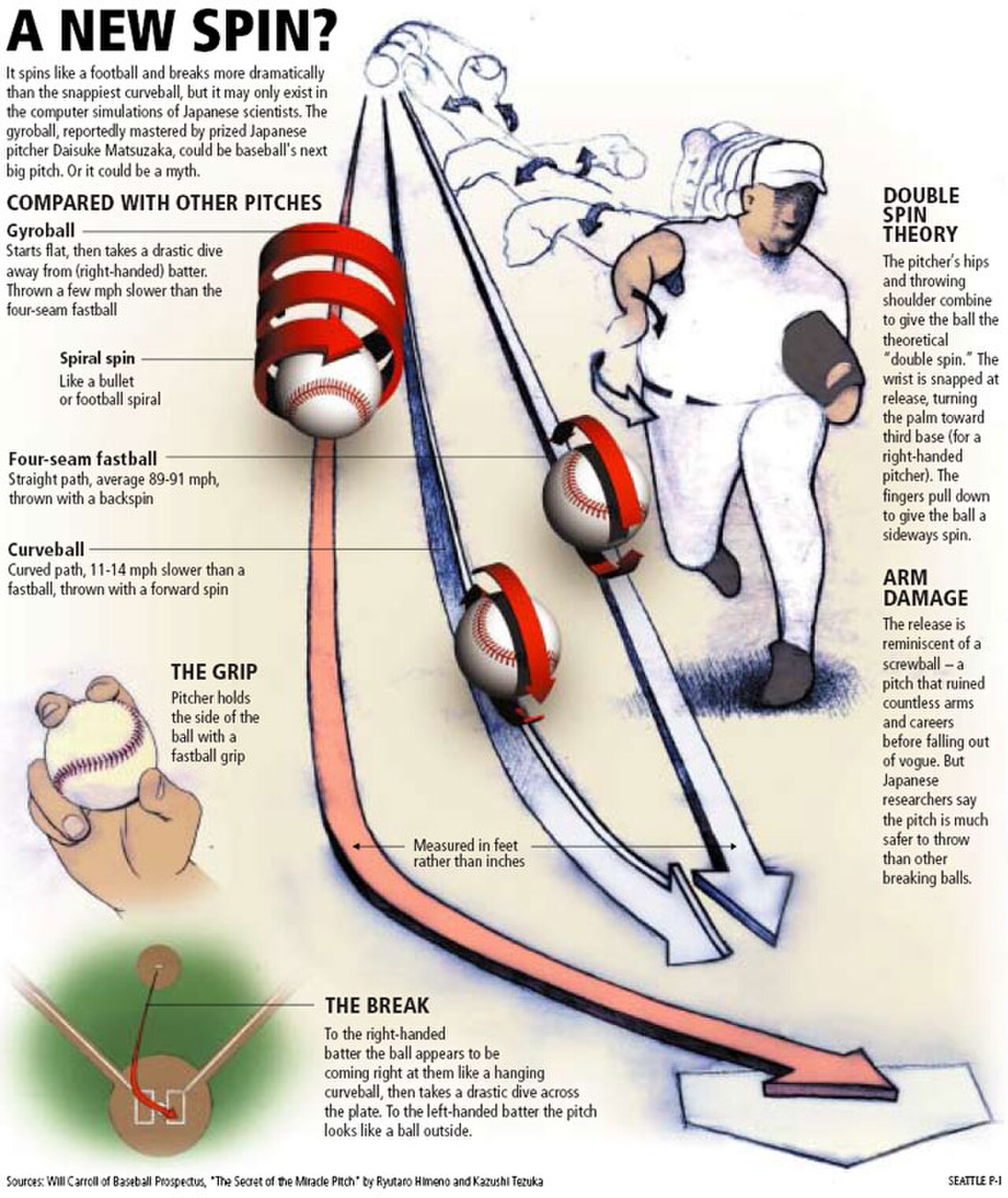
- A type of curveball with a severe break. Boston Red Sox pitcher Daisuke Matsuzaka is said to throw a gyroball. It was designed by a couple of Japanese scientists to reduce arm fatigue in pitchers. The result was a way to throw the ball with an extreme break. Whether such a special pitch really exists remains the subject of great controversy among experts of various pedigrees.[131]
H
hack
- To swing awkwardly at the ball. "As his son stood in the batter's box and hacked away, Wolpert came up with the idea of opening his own batting cage in Manhattan."[132] Sometimes said of an aggressive hitter who would swing at any pitch within reach, whether high, low, inside, or outside. "An unrepentant free swinger who hacked at anything in the same area code as the strike zone, Puckett drew just 23 walks that year."[133]
Hall of Fame
- The Baseball Hall of Fame in Cooperstown, New York. Abbreviated HOF. In popular usage, the terms "Hall of Fame broadcaster" and "Hall of Fame writer" are often used to describe recipients of two annual awards, respectively the Ford C. Frick Award and J. G. Taylor Spink Award. Recipients of these awards are recognized in dedicated Hall exhibits, but are not considered actual Hall of Fame members.
Hall of Very Good
- A tongue-in-cheek expression used to refer to players who had successful careers, but whose stats and/or overall performance are not good enough to put them into consideration for the Hall of Fame. Example of players said to be in the "Hall of Very Good" are Chris Carpenter,[134] Lee Smith (who eventually earned Hall of Fame induction), and Mark McGwire.[135]
hammer
- To hit the ball hard, typically for extra bases. "Aaron hammered that pitch."
- The nickname of Henry Aaron—Hank "The Hammer" Aaron—second all-time in Major League career home runs.
- A curve ball, usually of the 12 to 6 variety.
handcuff
- A hard-hit ground ball that bounces directly at an infielder is difficult for him to get his hands on – he appears to have been handcuffed.
- A pitch thrown high and inside "handcuffs" a batter because he can't get his hands far enough away from his body to swing the bat.
handle
- Often it's said of a player who has not fielded a batted ball cleanly that he "couldn't find the handle on it". This suggests the fanciful notion that a baseball would be easier to hold onto if it had a handle.
hang
- A breaking ball that does not "break", or change direction, and so is easy to hit. A hanging curveball.
- A pitcher may be hung with a loss if he is responsible for his team falling behind in runs and the team never recovers the lead.
- A runner may be hung up if he is caught in a rundown.
- A runner may be hung out to dry if he gets picked off at first base, or if a hitter misses a hit-and-run sign and the runner is easily tagged out at second base. A player may be hung out to dry if his team treats him in an unexpected or disappointing way. (Story: "The Mets got what they needed from pitcher Al Leiter yesterday. Unfortunately, Leiter was hung out to dry again, done in by his team's anemic offense.")
- A team may hang a (number) on the opposing pitcher or his team by scoring that many runs. May use a literal number or an informal term such as a crooked number or a snowman.
happy
- When a pitcher uses a particular type of pitch so much that he becomes less effective, he's sometimes said to be "happy" with the pitch – fastball happy or curveball happy, for example. "This article is a response, in part, to a Boston Globe sports rumor asserting that Josh Beckett has become 'Curveball Happy' and has changed his release point."[136]
hard hands
- A tendency to mishandle fielded balls. Also stone fingers. Contrast soft hands.
hardball
hat trick
- To strike out three times. Used jokingly, as the same term means to score three times in hockey and other sports. This term is also used to indicate someone who has hit three home runs in a game.
HBP
- Hit By Pitch.
head of lettuce
- When a player breaks their bat after hitting the pitch, and the main portion of the bat (the barrel) lands within the infield, the broken portion can splinter into many pieces. (If the barrel lands either in foul territory or outside the established infield, the event is not a head of lettuce.) The term pays homage to other food-related baseball terms such as "can of corn", "high cheese", "in a pickle", etc. The original use of the term dates to 2006 when Joshua Githens first noted the likeness to striking a head of lettuce with the bat. "That bat exploded like a head of lettuce!"
headhunter
- A pitcher who has a reputation for throwing beanballs.
heart of the plate
- Middle of home plate. "Looking to go up the ladder, Hughes instead missed right over the heart of the plate just below belt high with a 95-mph fastball. As good hitters do, Vladimir Guerrero made him pay with a single up the middle."[137]
heat
- Also heater. A fastball.
heavy hitter
- A power hitter. A player who hits a lot of home runs or other extra-base hits. A batter with a high slugging percentage. A slugger. A term shared with the sport of boxing, referring to a fighter who scores a large number of knockouts.
help his own cause
- Said of a pitcher who knocks in runs as a hitter, thereby helping himself to earn credit for a win.
herky-jerky
- A pitcher with an unusual or awkward wind-up or motion, as if he's not in full control of his legs and arms, may be said to have a herky-jerky motion.
hesitation pitch
- A pitcher who pauses in his wind-up, perhaps at the top of the wind-up, may be said to have a hesitation pitch. If this is part of his regular motion, it may be effective in throwing off the timing of the batter. If it's an occasional motion and used when there are runners on base, the pitcher is at risk of being called for a balk.
hidden ball trick
- A very rare feat in which a fielder has the ball and hides it from a runner, tricking him into believing some other fielder has it or that it has gotten away from them. (There is no rule against such deception except that once the pitcher toes or stands astride the rubber, he must have the ball in his possession or else a balk will be called.) Any baserunner so victimized will be ribbed endlessly by his teammates for having been caught napping.
high and tight
- A location pitch thrown above the strike zone and close to the batter.
high cheese
- A fastball thrown high in the strike zone.
high hard one
- A fastball thrown high in, or above the strike zone.
high heat
- A strike thrown high in the strike zone.
high let it fly; low let it go
- An adage about batting against a knuckleball pitcher. Fluttering knuckleballs are notoriously hard to hit, especially low in the strike zone.
hill
- The pitcher's mound.
hit
- The act of safely reaching first base after batting the ball into fair territory. Abbreviated as H, this meaning is synonymous with base hit. See also single, double, triple, home run, extra-base hit, error, fielder's choice.
- The act of contacting the ball with the bat. "The batter hit the ball right at the second baseman."
- When a batter is touched by a pitch. See hit by pitch
- The term sacrifice hit is used by scorekeepers to indicate a sacrifice bunt. It is typically an out, not a base hit (unless the batter beats the throw to first without benefit of an error).
hit a bullet
- To hit the ball very hard, typically a line drive.
hit and run
- An offensive tactic whereby a baserunner (usually on first base) starts running as if to steal and the batter is obligated to swing at the pitch to try to drive the ball behind the runner to right field. Contrast this to a run and hit, where the runner steals, and the batter (who would normally take on a straight steal) may swing at the pitch.
hit away
- After a batter has attempted but failed to lay down a bunt, or in a situation in which he might ordinarily be expected to bunt, he may instead make a normal swing at the ball on the next pitch. In such a case he is said to "hit away" or "swing away". "Smoltz swung away, fouling it off for strike one. Knowing that the bunt had been given away on the first pitch, Braves manager Bobby Cox took off the bunt sign this time."[138]
hit behind the runner
- An offensive tactic where the batter intentionally puts the ball in play to the right side (the first base side) with a runner on second. The intent is to advance the baserunner to third, where a sacrifice fly by the next hitter can score a run.
hit by pitch
- When a pitch touches a batter in the batter's box, the batter advances to first base. If the pitch hits him while he is swinging (striking) he is not awarded a base, and if the umpire feels he made no effort to avoid getting hit he simply calls a ball.
- Colloquially, a batter who is hit by a pitch has been plunked, drilled, nailed, plugged, or beaned.
hit 'em where they ain't
- Said to be the (grammatically casual) response of turn-of-the-20th-century player Willie Keeler to the question, "What's the secret to hitting?" in which "'em" or "them" are the batted balls, and "they" are the fielders.
hit for average
- Contrary to what might be literally implied, a player who "hits for average" is one who achieves a high batting average.
hit for the cycle
- When a given player hits a single, double, triple and home run in the same game. To accomplish this feat in order is termed a "natural cycle". Hitting for the cycle is a rare enough occurrence that Major League Baseball keeps special statistics on it.[139]
hit it where the grass don't grow
- Hit the ball into the stands for a home run.
hit on Christmas Day
- When a player seems to have a natural aptitude to get hits in all situations. "Magglio can hit Christmas Day", Tigers manager Jim Leyland said. "It's an old saying, and he's one of those guys who can. There's nothing fancy. He sees it, hits it and does it pretty damned good."[140]
hit parade
- A rapid succession of hits within the same inning or a high total of hits throughout a game.
hit the ball on the screws
- To hit the ball even center with measured force, often resulting in a loud crack of the bat. A slumping batter might be comforted by "hitting the ball on the screws" when not getting a hit. The phrase derives from golf, referring to a well executed shot. Back when "woods" were actually made of wood, manufacturers screwed a plastic insert into the club face as a safeguard against premature wear. When a golfer hit a good shot he would say, "I hit it on the screws."[141] Another source is the fact that early baseball bats usually cracked lengthwise into two pieces; many were repaired using glue and two screws. (Such repairs are now illegal.)
hit the deck
- When a batter drops or dives to the ground to avoid being hit by a pitch. "The third kind of pitch is the one that is coming right at your head. This one you don't even have time to think about. Some part of you sees the ball as it leaves the pitcher's hand, and something about the fact that the ball is coming straight toward your eye makes it almost disappear into a blind spot. You hit the deck before you even know you've done it."[142]
hit the dirt
- To slide. Sometimes used also as equivalent to hit the deck.
hitch in his swing
- When a batter does not swing the bat in a single motion – perhaps he lifts the bat or moves his hands or hesitates before swinging – he may be said to have a "hitch in his swing". Having a hitch may slow down how quickly or powerfully he swings at the pitch. "All winter, Green worked on eliminating a hitch from his swing. He did it by setting up a video camera at a batting cage near his home in Irvine, California, taping swing after swing, and comparing it with video from his days with the Los Angeles Dodgers."[143]
hitter
- Batter.
a person who hits a ball with a bat in baseball.
hitter's count
- When a batter is way ahead in the count (3–0, 3–1, 2–0) he's likely to anticipate that the next pitch will be thrown down Broadway—in the middle of the plate. See count.
hitter's park
- A baseball park in which hitters tend to perform better than average. This may be a result of several factors, including the dimensions of the park (distance to the outfield fences, size of foul territory behind the plate and down the lines), prevailing winds, temperature and relative humidity, and altitude. Whether a park is a hitter's park or a pitcher's park (in which hitters perform worse than average) is determined statistically by measuring Park Factors, which involves comparing how well hitters perform in a given park compared with how they perform in all other parks. This measure is regularly reported and updated for Major League Baseball parks by ESPN.com.[144] Baseball Reference [145] and other baseball research organizations also report park factors for major league parks. Baseball Prospectus [146] and other baseball researchers calculate park factors for minor league parks to help in adjusting the statistics of baseball prospects.
- Whether a park is a hitter's park or pitcher's park may change from day to day. For example, when the wind is blowing "out" at Wrigley Field, it is typically rendered a "hitter's park", and a double-digit score for one or both teams is not unusual.
- On the other hand, some are hitter's parks, any and all other factors notwithstanding. Atlanta–Fulton County Stadium, Braves home field from 1966 to 1996, was known as The Launching Pad.
hitterish
- A physical and/or mental state where a player is seeing pitches well and his timing is on, so that observers or the player himself feel he has a good chance at getting a hit. Often used by players and sportscasters. "It's like Charley Lau used to tell us, used to tell me: 'You look very hitterish up there. You look hitterish, you look like you're going to hit the ball hard'", Brett said in camp.[147]
hold
- A hold (abbreviated as H) is awarded to a relief pitcher if he enters in a save situation, records at least one out, and leaves the game without having relinquished that lead. To receive a hold, the pitcher must not finish the game (thus becoming the closing pitcher) or be the winning pitcher.
- Unlike saves, more than one pitcher can earn a hold in a game. It is also not necessary for the pitcher's team to win the game in order to achieve a hold; they merely have to be in the lead at the time the pitcher exits.
- The hold was invented in 1986 to give credit to non-closer relief pitchers. Holds are most often accredited to setup pitchers, as they usually pitch between the starter and the closer. Holds are not an official Major League Baseball statistic, but are recognized by the MLB in its rules.
hold the runner on
.jpg/1280px-Yandy_Diaz_(39633804400).jpg)
- When a runner is on first base, the first baseman might choose to stand very close to first base rather than assume a position behind first base and more part-way toward second base (a position better suited to field ground balls hit to the right side of the diamond). When he does this he's said to "hold the runner on (first)" because he's in a position to take a throw from the pitcher and thereby discourage the runner from taking a big lead-off.
hold up on a swing
- When a batter begins to swing the bat at a pitch but stops swinging before the bat makes contact with the ball or the bat passes the front of the plate, he may be said to "hold up on his swing".
hole
- One of the nine places in the batting lineup. The leadoff hitter in the first inning is the player in the "one hole". In the four hole, the cleanup hitter is hoping to get to the plate in that inning.
- Also see #in the hole.
hole in his glove
- A tendency to drop fly balls, usually after they hit (and seem to go through) the fielder's glove.
hole in his swing
- A scouting report phrase describing a batter who can't hit strikes in a particular location. "Howard became a star after fixing a hole in his swing."[148]
hole in the lineup
- A team that has one or more weak hitters in its 9-person batting order has a "hole in the lineup" that opposition teams can take advantage of. "There are no holes in that lineup, so to say you're going to pitch around one batter might not be the best thing."[149] "If the team that Shapiro has constructed is going to overtake the Boston Red Sox, the New York Yankees or any of the other contenders in the American League, it can't afford another season with a hole in the middle of the lineup that Hafner was from May through the playoffs last season."[150]
home
- Home plate. For a runner to reach home safely is to score a run. Getting a runner who is on base home is the goal of any batter.
home cooking
- When a player for the home team gets a favorable or generous call from the official scorer, the players may refer to the scorer's call as "home cooking". For example, the scorer may credit a batter for a base hit on a batted ball that a fielder bobbled briefly and then failed to make a putout.
- "Home cooking" is sometimes used synonymously with home field advantage. The reference may be to the home team having the advantage of living at home, not just to being able to play in its own stadium.
home advantage/home field advantage
- Teams playing home games have a small advantage over visiting teams. In recent decades, home teams have tended to win about 53.5% of their games.[151] Because teams play the same number of games at home as they do away during the regular season, this advantage tends to even out. In play-off series, however, teams hope to gain from home-field advantage by having the first game of the series played in their home stadium.
home game/home team
- A game played at the home stadium or ballpark of a baseball club. When the Yankees play in Yankee Stadium, they're playing a home game. The team hosting the game is referred to as the home team. In rare instances, the home team plays in a stadium not their own. In 2005, the Houston Astros played a "home" series against the Chicago Cubs at Miller Park in Milwaukee, home of the Brewers, because their home stadium, Minute Maid Park, was rendered temporarily unusable because of Hurricane Rita. In 2010, the Toronto Blue Jays played a "home" series against the Philadelphia Phillies at the Phillies' home park, Citizens Bank Park, because of security concerns due to the G-20 summit being held in Toronto. Despite being in Philadelphia, the Blue Jays wore their home white uniforms and batted last. Also, despite Citizens Bank Park being a National League field, the designated hitter was used in the series.
home half
- The second (bottom) half of an inning, in which the home team is at bat.
home plate
- See also plate.
home run
- A home run (or homer) is a base hit in which the batter is able to circle all the bases, ending at home plate and scoring a run himself.
home run derby
- A batting competition in which the object is to hit the most home runs.[152] The 1960 television series Home Run Derby featured such a competition.[153] The term can also be used to refer to a game during which many home runs are hit.[154] The term was first used in the 1920s to refer to the race ("derby") between batters to lead their league in home runs for the season.[155]
- Since 1985, Major League Baseball has hosted an annual Home Run Derby,[156] and the Chinese Professional Baseball League (CPBL) has done so since 1992. At least one minor league, the Southern League, has also held a home run derby.[157] In 2007, the Israel Baseball League played seven-inning games, and if the teams were tied at the end of the seventh inning the tie was broken by use of a home run derby.[158] A number of amusement parks, entertainment centers and batting cages offer a home run derby type competition.[152]
home run trot
- When a batter, realizing the ball he just hit is about become a home run, slows from a run to a celebratory trot. "Well, I've been saying it all year, and it finally happened tonight: David Ortiz became the first player in the 2010 season to take more than 30-seconds to trot around the bases after a home run. With four of the top five slowest home run trots of the year already - all four of which were clocked in at 28.95 seconds or slower - it seemed inevitable that he would be the first to break the half-minute barrier."[159]
- Sometimes a player mistakenly slows down, however, when the wind or a superb play by an outfielder, turns a home run into a double or single off the outfield wall, or to a long out, or to another odd outcome, as the following case illustrates:
Unfortunately for his personal power totals, Milledge was bamboozled into believing his liner in the fourth inning against the Chicago Cubs on Thursday night had cleared the left-field fence at PNC Park for his first career grand slam. Dead certain he had gone deep, Milledge raised his fist rounding first base, put his head down and went into a trot. Cool. Double-dog certain because the fireworks guy at PNC set off the pyrotechnics that explode every time a Bucs player goes deep. Music also began to blare. What a glorious moment for the Bucs! ... only, the ball had not cleared the fence. It hit the top and stayed in the field of play. As Bucs announcer Bob Walk said, "Uh oh, uh oh, uh oh, uh oh—we got a problem here." Milledge was not quite midway between second and third base when he realized the Cubs had him in a rundown. And, yeah, um, he was tagged out. Score that a two-run double and a big ol' base-running blunder.[160]
home stand
- A series of home games. See also road trip.
home team
- The "home team" is the one in whose stadium the game is played against the "visiting team". The home team has the advantage of batting in the second or bottom half of the inning. In case a game is played at a neutral site, the "home" team is usually determined by coin toss.
homer
- A home run.
- A derisive term for a dedicated, almost delusional, fan. Especially used for a broadcaster, in any sport, whose team "can do no wrong"; for example, they might argue a bad strike call, but say nothing about one against the opponent. Johnny Most of the Boston Celtics and Hawk Harrelson of the Chicago White Sox were notorious "homers." In a somewhat more humorous example, Bert Wilson used to say, "I don't care who wins, as long as it's the Cubs!" A common "homer" saying is, "My two favorite teams are (my team) and whoever's playing (my team's rival)."
hook
- When a manager leaves the dugout with the obvious intention of replacing the pitcher with a reliever, he may be said to be carrying a hook. "Here comes Sparky, and he's got the hook." Such a usage may have come from the large hooks that were sometimes used in Vaudeville to yank unsuccessful acts off the stage if they were reluctant to leave on their own. When he was manager of the Cincinnati Reds, Sparky Anderson's heavy reliance on relief pitching earned him the nickname "Captain Hook", a reference both to the standard usage and to the Peter Pan villain.
- A pitcher is said to be "on the hook" when he leaves the game with his team behind because of runs that he gave up—a hook on which he may be hung with the loss.
- A curveball.
hook foul
- When the batter pulls the ball down the line, starting fair but ending foul, resulting in a foul ball. See also slice foul.
hopper
- A batted ball that takes several bounces in the infield, or a single "high hop" after it hits the ground just in front of home plate. Also see "short hop".
horsehide
- The ball (a baseball) used in the game of baseball.
- The leather cover on the baseball (which is now usually made of cowhide, not horsehide). A slugger may be said to "knock the horsehide off the ball". Horsehide was the cover of choice for decades, as it was less prone to stretching than cowhide. This was necessary in part because in the early days, they tried to play the entire game with a single ball, or as few as possible. That became moot in the 1920s, but horsehide continued to be used until the 1980s or so, when horsehide became prohibitively expensive and cowhide was finally adopted as the standard cover for a baseball.
hose
- A strong arm, said typically of an outfielder. To "be hosed" is to be thrown out on the bases, typically from the outfield.
hot
- A batter who is having a hitting streak or a team having a winning streak is said to be "hot". "'Today was pretty impressive', Scioscia said. 'Hitters, they have their times. When they're hot, they're hot. You can't do anything about it.'"[161]
hot box
- The area between two fielders during a rundown.
hot corner
- The area around third base and the third baseman, so called because right-handed batters tend to hit line drives down the third base line. The third baseman is sometimes called a "cornerman".
hot stove league
- An old fashioned term for a "Winter league" with no games, just speculation, gossip, and story-telling during the months between the end of the World Series and the beginning of Spring training, presumably conducted while sitting around a hot stove. One of Norman Rockwell's well-known baseball paintings is a literal illustration of this term.
house by the side of the road
- A batter who strikes out looking. The term was made popular by legendary Detroit Tigers radio broadcaster Ernie Harwell, who would often say, "He stood there like the house by the side of the road, and watched the ball go by."[162] The phrase originates from the title of a poem by Sam Walter Foss.
howitzer
- A very strong arm. A cannon. A gun. Usually applied to an outfielder. Named after the Howitzer artillery piece. Headline: "Roberto Clemente: A Howitzer for an Arm, An Ocean for a Heart".[163]
human rain delay
- A human rain delay is a derisive term for a player who is very deliberate in his play, such as a pitcher who takes a long time between pitches or a batter who constantly steps out of the batter's box. "The Seattle Mariners will announce a new manager today—Mike Hargrove. Hargrove bears a great nickname—'The Human Rain Delay'. The name stems from the fact that, as a player, Hargrove would take about 15 minutes for every plate appearance. He would step out of the batter's box, fidget with his gloves, his helmet, his pants. He drove the pitcher nuts, but that was his plan."[164]
humpback liner
- A ball hit deep in the infield on a trajectory between those of fly balls and line drives.
hurler
- A pitcher.
I
ice cream cone
- See: snow cone.
I have it. You get it.
- A fielding play, usually where a lofty fly ball is to land equidistant between two fielders. Both are unsure who should catch it, usually resulting in last-second leaps or dives. Often neither does, in which case the one who had the better chance is charged with an error.
immaculate inning
- A half-inning in which the pitcher strikes out all three batters he faces with exactly nine pitches.
in the batter's eyes
- A high fastball, usually at or near the batter's eye level. Above the strike zone, so a ball, and hard to hit, but also hard to lay off.
infield fly rule
- The umpire calls the batter out when (a) there are less than two outs in the inning, and (b) the batter hits a fly ball that can be caught with ordinary effort by an infielder in fair territory, and (c) there are runners on first and second (third base can optionally be occupied too).
- The batter is automatically called out in this situation whether or not a fielder attempts to catch the fly ball, assuming it stays fair. The rule states that the umpire is supposed to announce, "Infield fly, if fair." If the ball will be almost certainly fair, the umpire will likely yell, "Infield fly, batter's out!" or just "Batter's out!"
- This rule is intended to prevent the fielder from intentionally dropping the ball and getting force outs on the runners on base. The rule is a little mystifying to casual fans of the game, but it has been a fundamental rule since 1895, allegedly to prevent the notoriously tricky Baltimore Orioles from intentionally dropping the ball.
infielder
- First baseman, second baseman and third baseman, plus the shortstop, so called because they are positioned on the infield dirt. The pitcher and catcher are typically not considered infielders, but instead as the battery. However, for purposes of implementing the Infield Fly Rule, the catcher, pitcher, and any player stationed in the infield when the pitch is delivered are included as infielders.
inherited runner
Inherited runners or inherited baserunners are the runners on base when a relief pitcher enters the game. Since a previous pitcher has allowed these runners to reach base (or was simply pitching when the runners reached base, such as in the case of a fielding error), any inherited runners who score when the relief pitcher is pitching are charged to the previous pitcher's runs allowed and/or earned runs allowed total, depending on how each runner reached base. Modern box scores list how many runners each relief pitcher inherits (if any), and how many of those inherited runners the relief pitcher allows to score, called inherited runs allowed (IRA).
in jeopardy
- In general, a baserunner is in jeopardy at any time the ball is live and the baserunner is not touching a base, except in the cases of overrunning first base on a fair ball or advancing to an awarded base, e.g., on a base on balls or hit by pitch. A baserunner who is in jeopardy may be putout by a fielder at any time.[165]
injured list
- Major league teams may remove injured players from their active roster temporarily by placing them on the injured list. Another player can then be called up as a replacement during this time.
inning
- An inning consists of two halves. In each half, one team bats until three outs are made. A full inning consists of six outs, three for each team; and a regulation game consists of nine innings. The first half-inning is called the top half of the inning; the second half-inning, the bottom half. The break between the top and bottom halves is called the middle of the inning. The visiting team is on offense during the top half of the inning, the home team is on offense during the bottom half. Sometimes the bottom half is also referred to as the home half.
innings eater
- A pitcher who may or may not be a starter or a closer but who can be relied on to pitch several innings either to keep his team in contention or sometimes when the game is no longer close, is an "innings eater". Headline: "Appetites never diminish for 'innings-eating' pitchers".
The success of most pitchers is based on statistics such as won-loss record, ERA or saves, but the unsung "innings eater" is judged by how many innings he pitches and the impact his work has on the rest of the staff. "I don't have a whole lot of goals going into the season. I don't shoot for a certain ERA or a certain strikeout number or certain number of wins," says Blanton, entering his second full season. "I try to go out and get a quality start every time, six innings or more, and not miss any starts. I feel if I can do that, I'll get my 200 innings in a year and everything else falls into place with that."[166]
inside baseball
- The inside baseball is an offensive strategy that focuses on teamwork and good execution. It usually centers on tactics that keep the ball in the infield: walks, base hits, bunts, and stolen bases. This was the primary offensive strategy during the dead-ball era. Inside baseball is also a common metaphor in American politics to describe background machinations. The equivalent modern term is small ball.
inside the ball
- Proper mechanics of a baseball swing, in which the hitter rotates his body while keeping his hands and the bat close to his body, with the bat coming across the plate after the body has almost fully rotated 90 degrees from his initial stance. Sometimes the phrase used is that the hitter "keeps his hands inside the baseball", and sometimes that the hitter himself "keeps inside the ball" – never mind the connotation of a player's literally being inside a baseball. "He's staying inside the ball so good, man", Dunn said. "For big guys like us, that's a hard thing to do. You always want to get the head [of the bat] out. His right hand is staying inside, so good. That's why he's able to hit the ball to left, to center, to right. He's in a good place right now."[167]
inside-out swing
- When the batter swings at a pitch with his hands ahead of the end of the bat. For a right-handed hitter, this often leads to balls being hit toward the right side of the diamond. One of the most famous "inside-out" hitters is Derek Jeter: "While Jeter became known over his two decades for rising to the occasion and delighting fans with his heroics, he was above all a technician, slashing at pitches with his trademark inside-out swing."[168]
inside-the-park home run
- A play where a hitter scores a home run without hitting the ball out of play.
insurance run
- A run scored by a team already in the lead. These surplus runs do not affect the game outcome but serve as "insurance" against the team giving up runs later.
intentional pass/intentional walk
- Additional terms for the intentional base on balls.
interference
- Interference is an infraction where a person illegally changes the course of play from what is expected. Interference might be committed by players on the offense, players not currently in the game, catchers, umpires, or fans; each type of interference is covered differently by the rules.
interleague play
- Regular-season games between teams in different major leagues, which allow natural rivals and crosstown rivals to play each other more often, not just in play-offs.
Internet baseball awards
- While Major League Baseball calls on the Baseball Writers' Association of America (BBWA) to name the most valuable player, rookie of the year, and Cy Young Award winner each year, since 1997 Baseball Prospectus has conducted an on-line poll to make Internet Baseball Awards in those categories as well as manager of the year.[169]
interstate
- A batting average below .200. A player with a batting average of .195 is said to be on I-95, a reference to the numbering on the Interstate Highway System. See also the Mendoza Line.
in the books
- The game is over. Long-time New York Mets radio broadcaster Howie Rose (first on WFAN, now on WOR) ends every Mets win with the catchphrase, "Put it in the books!" (Rose's memoir is entitled Put It In The Book!)
in the hole
- The spaces between the first baseman and second baseman and between the shortstop and the third baseman, one of the usual places where a ground ball must go for a hit. "Ozzie went deep in the hole" but, despite Ozzie's best effort, the ball "found a hole" through the infield and into the outfield. See also up the middle and down the line.
- Due up to bat after the on-deck batter. Probably derived from boating, where it was originally "in the hold",[citation needed] the place prior to being "on deck". "In the hole" is a corruption of the original nautical term (a mondegreen or eggcorn) made popular by people who did not understand the original origin. Today, the corruption has become universal.
- An unfavorable count. A pitcher would be "in the hole" 3-0 and a batter would be "in the hole" 0-2.
in the (his) kitchen
- Pitching in on the hitter's hands.
in play
- A game is in play when the umpire declares "play ball" at the beginning of the game or after a time-out.
- Any batted ball is "in play" until either the play ends, the umpire calls the ball foul, or there is fan interference or some other event that leads to a dead ball. A ball hit into foul territory but in the air is in play (a fielder may attempt to catch it for an out and runners may attempt to advance after such a catch), but only before it hits the ground or the fence.
- In sabermetrics, a special definition of "ball in play" is the calculation of "batting average on balls in play" (BABIP), which excludes home runs even though they are fair balls.
- Also see play.
IO (in and out)
- Infield and outfield practice. "Everyone take your positions for a quick IO"
J
J-run
- The run the pitcher takes from the mound to first base in order to cover for the first baseman who has just fielded the ball.[citation needed]
jack
- A home run or to hit a home run. "Hitting a jack" or "Jacking one out of here".
jake
- Half-hearted or lazy effort by a player, i.e. "He jaked that play."
jam
- To pitch far enough inside that the batter is unable to extend while swinging. "The pitcher jammed the batter." The batter was "handcuffed" or "shackled" by the pitch.
- When runners are in scoring position with less than two outs and good hitters coming up. "The pitcher is in a jam."
- The "bases are jammed" (or loaded or full) when there are runners on all three.
janitor throw
- When an outfielder, 'cleaning' a pitcher's mess by throwing a runner out, spins or falls down after a strong throw.
jelly legs
- A batter's legs are "made out of jelly" when he departs from a good stance. "His curve ball ... it jelly-legs you." - Phillies First Baseman Jim Thome, referring to Barry Zito's curve.[170]
jerk
- To "pull" the ball towards left field if you bat right handed or "pull" the ball towards right field if you're batting left handed. Opposite of jerk would be push or hitting an "oppo", meaning going towards the opposite field.
- To hit the ball hard, typically used to refer to pulling the ball over the fence for a home run. "Derrek Lee jerked one of his patented doubles into the left-field corner to lead off the fourth against Minnesota lefty Johan Santana, the reigning Cy Young winner."[171]
Judy
- A Punch and Judy hitter who hits with little power.
juiced
- "Bases juiced" means #bases loaded.
- A player who is said to be juiced is thought to be taking performance-enhancing drugs. "It is now assumed, of course, that Bonds may well have been juiced on steroids at the time; the previous year he had set the all-time single-season record of 73 home runs, and his musculature was almost freakishly swollen."[172]
- A baseball that is juiced has been modified in some way that makes it travel farther when hit. "Spectacular increases in home runs have often raised the question: Has the ball been juiced up to travel farther, in order to increase the number of home runs?"[173]
jump
- A fielder is said to get a good jump on the ball when he anticipates or reacts quickly to a batted ball and is thereby able to make a good play by fielding or catching it.[174] Also see crack of the bat.
- A baserunner gets a good jump when he is able to leave the base well before the pitch reaches the plate. "Upsetting the timing of the baserunner can effectively prevent him from getting a good jump ... Base runners often read a pitcher's look and get their jump, or start, based on the pattern the pitcher establishes."[175]
- To move to another team or league despite existing contractual obligations.[176]
Junior Circuit
- The American League, so-called because it is the younger of the two major leagues. The American League was founded in 1901, while the National League – the Senior Circuit – was founded in 1876.
junk
- breaking balls and knuckleballs, pitches that are hard to hit due to movement rather than velocity. "I couldn't believe he threw me a fastball because he had me down 1-2", Thames said. "He's usually a junk pitcher and he tried to sneak a fastball past me, and he left it up."[177] See also: Eephus pitch
junkball pitcher
- A pitcher who throws predominantly junk, usually due to a weak (or slow) fastball. A junkballer or a junk artist: "Like all junk artists, Trujillo will have to prove himself at the higher levels before getting a shot at a major league job."[178] See also: Eephus pitch
K
K
- The traditional abbreviation for a strikeout. A backwards K is often used to denote a called strikeout. Invented by Henry Chadwick by taking the "most prominent" letter and reinforcing it with an inferred knockout, the connotation still exists when an announcer says the pitcher "punched out" the batter, a play on words that also refers to punching a time clock and to the motion a home plate umpire usually makes on a called third strike.
keep off the boards
- Also singular, "keep off the board". Keep a team from scoring, and hence off the scoreboard. "Wainwright has kept runs off the board at a better rate than Lester."[179] "After loading the bases with one down in the fourth, the Gators were kept off the board by Barham."[180]
keep the hitter honest
- A pitcher needs to mix up his pitches and thereby "keep the hitter honest" by making it difficult for the hitter to anticipate the type, speed, and location of the next pitch. Sometimes this means throwing a brushback pitch to keep the batter from leaning over the plate to reach a pitch on the outer part of the plate. "Partially with Boston in mind, Wang focused this spring on expanding his repertoire to keep hitters honest and move them off the plate."[181]
keep the line moving
- A reference to a series of batters getting on base safely and advancing runners on base, alluding to an assembly line. "Beltran's popout tore apart a rally that had shaken the Hall of Fame-bound Rivera, molding a game out of what moments before had been a five-run rout. Instead, Beltran couldn't keep the line moving, leaving an eager David Wright awaiting on deck."[182] The 2015 Kansas City Royals were one of the most notable examples of "keeping the line moving" during their postseason run, which led to a World Series title.[183][184]
keystone
- Second base.
- Together the shortstop and second baseman – the fielders nearest second base, often combining on double plays – are sometimes referred to as the keystone combination.
kicked
- A player who makes an error fielding a ground ball may be said to have "kicked the ball" or "kicked it".
kill
- A batter who hits the ball very far may be said to have "killed the ball".
- A pitcher who stifles a rally by the opposing team may be said to have "killed the rally".
knee-buckler
- A breaking ball (usually a curveball) that breaks very sharply, so much so that it freezes the hitter. It starts out directly at the batter (knees buckling out of fear) and then drops into the strike zone.
knock
- Knock in: To score an RBI. "Kenny Lofton knocked in the go-ahead run with a 10th-inning single Thursday afternoon as the Cleveland Indians beat Detroit, 3-1."[185]
- A hit: as in "a two-base knock".
- Knocks: Hard hits or extra-base hits, not necessarily producing RBIs or referring to a specific type of hit. "Curtis had some solid knocks today."
- Knocked around: A pitcher who gives up a lot of hits and gets removed from the game is said to have been knocked around or knocked out of the box or knocked out of the game. Example headline: "Toronto 7, Detroit 4: Phil Coke knocked around; Tigers' bats don't respond".[186]
- Knock down: an infielder who stops a line drive from getting through the infield "knocks it down", perhaps then picking up the ball and throwing the runner out.
- Knock off: to knock off an opponent is to win the game. "Hawai'i knocks off Santa Clara."[187]
- Knock the cover off the ball: to hit a baseball extremely hard. See also tore the cover off the ball.
knuckleball
- A pitch thrown with no spin, traditionally thrown with the knuckles, but also with the fingertips. It tends to flutter and move suddenly and erratically on its way to the plate. Also refers to a batted ball that flutters "like a knuckleball". SYNONYMS: knuckler, flutterball, butterfly ball, floater, bug.
L
lace
- To reach base by hitting a ball between infielders. "McCann laced it through the shift on the right side of the infield."
Lady Godiva
- A pitch delivered with nothing on it. A nod to the legend of Lady Godiva riding naked on horseback.[188]
LAIM
- An acronym for League Average Inning Muncher. A LAIM is generally a starting pitcher who can provide around 200 innings over the course of a season with an ERA (Earned Run Average) near the league average. A LAIM is counted on to consume innings, keeping his team in the game but not necessarily shutting down the opposition. The term was coined by baseball blogger Travis Nelson, but is used by other writers as well.[189]
large sausage
- A slang term for a grand slam home run. It is a takeoff from the term "grand salami" which some people use to refer to a grand slam.
laser show
- A batting performance with a high number of base hits, particularly line drives. Also, the nickname of Boston Red Sox second baseman Dustin Pedroia.
late innings
- The seventh, eighth and ninth innings of a regulation nine-inning game.
laugher
- A game in which one team gets a large lead, perhaps early in the game, and it appears the other team has no chance at all of catching up. With nothing to worry about, the manager and team can relax. An easy win; a romp; a blowout.
launch
- To hit a long fly ball, as if launching a rocket. "Orso, who recently signed with Alabama Southern to play college baseball next season, launched several rocket shots and by far hit the furthest home runs of anyone in the competition ..."[190]
- It is also said that a pitcher "launches" the ball when he throws a wild pitch that gets away from the catcher, and that a fielder "launches" the ball when he throws it wildly out-of-reach of the intended receiver.
launch angle
- The angle, with respect to the ground at home plate, at which a batted ball leaves the bat.[191]
launch pad
- A term for a ballpark in which many home runs are hit.
Lawrence Welk
- A (rare) 1-2-3 double play ("... an a one, an a two, an a ...").
lay down
- A player who bunts the ball is said to lay down a bunt. Also see dump.
lay off
- If a batter decides not to swing at a pitch, especially if he deliberately avoids swinging at certain types of pitches, he may be said to "lay off" a pitch. Pitchers tempt hitters to swing at pitches they cannot hit; batters try to lay off such pitches. "Batters can't seem to lay off his slider, just as his parents can't seem to lay off his carrot cake—they're nearly addicted to it."[192]
lead
- When a baserunner steps off a base before a pitch is thrown in order to reduce the distance to the next base he takes a lead.
- The player who is first in the batting order for a given team in any given inning is said to lead off the inning.
leadoff hitter
- The first batter listed on a team's lineup card (in the 1-hole or the "leadoff spot" on the line-up card). When the announcers read the starting line-up they might say, "Leading off, and playing short-stop, is Sammy Speedyrunner. Batting second, playing second base, Carlos Contacthitter. Batting third, in the pitcher's spot, is designated hitter Burt "Biggie" Brokenleg. Batting clean-up, playing left field, Thor Thunderbat ..."
- The first batter in an inning (who could be in any hole on a team's line-up card). If that batter gets a single, or a home run, or a walk, the announcer would say he has a "leadoff single", a "leadoff home run", or a "leadoff walk" respectively.
leaning
- A baserunner is said to be "caught leaning" or "leaning the wrong way" when he is picked off a base while shifting his weight toward the next base.
leather
- Referring to a fielder's glove, a player with good leather is a good defensive player (typically an infielder).
- Flashing the leather means making an outstanding defensive play.
- A leather player refers to a player who is outstanding on defense but only average or even less on offense. Ron Karkovice is one example of a "leather player".
left-handed bat
- Although baseball bats are symmetrical in shape, and thus there is no such thing as a left-handed baseball bat (or a right-handed baseball bat), in colloquial language a hitter who bats left-handed may be referred to as a "left-handed bat" or "left-hand bat". Headline: "Giants look to acquire left-handed bat".[193]
left-handed hitter
- Also "left-hand hitter". A batter who, paradoxically, bats from the right-side of the plate. Typically, an individual who is left-handed in most activities, including throwing a baseball, stands in the right-hand batter's box, the one closest to first base.
left-handed specialist
- A left-handed relief pitcher specializing in getting one out, often in critical situations. See also LOOGY.
left on base
- A baserunner is said to have been left on base (abbreviated LOB) or stranded when the half-inning ends and he has not scored or been put out. This includes a batter-runner who has hit into a fielder's choice, causing another runner to be put out as the third out.[194] It also includes runners on base at the end of a game, as when the home team scores a winning run in the ninth or a subsequent inning. Thus a batter who hits a single in the home half of the tenth inning in a tied game with the bases loaded drives in one run and leaves three on base (runners who were at first and second, and himself).
- Team LOB totals are commonly reported in a baseball box score. It counts only those left standing on the bases when the third out of each inning occurs. Team LOB is used in "proving" a box score. The number of a team's plate appearances is to equal the sum of that team's runs, that team's LOB, and the opposing team's putouts. In other words, every batter who completes a plate appearance is accounted for as a run scored, putout, or LOB.
- Individual LOB totals are sometimes reported in baseball box scores. This is a more recent statistic that is computed for each player who is at bat at least once in a game and is calculated on how many baserunners were "left on base" when the player was at-bat and caused an out, no matter how many outs there were at the time. Note that "at bat" does not include other plate appearances such as sacrifice bunts or flies made by the batter, third outs caused by pickoffs or caught stealing, or games ended with the winning run scoring on a successful steal, etc. Two common misconceptions of the individual LOB are that the individual LOB is the number of times the player was left on base as a baserunner (this is a "runner's LOB" and is not usually recorded), or that the individual LOB applies only when the at-bat player caused the third out. Note that the total of the individual LOBs for all players on a team will usually exceed the team LOB.
- A related statistic is "left on base in scoring position", which includes only those LOB where the runner was occupying second or third base. Yet another related statistic is "left on base in scoring position with less than two out". The intent of these statistics is to measure the tendency of a team or player to waste opportunities to score.
leg out
- To run hard to get safely on base or to advance a base: "Podsednik legged out an infield hit, stole second and scored when Everett legged out a double."[195]
letter high
- A letter-high pitch is one that crosses the plate at the height of the letters on the batter's chest. Also see at the letters. Equivalent term: "chest high". "Dietrich fouled off a couple of pitches before Porcello put him away with a letter-high fastball at 94."[196]
lift
- To remove a player from the lineup in the middle of a game. "Casey was lifted for a pinch runner."
lights-out
- A pitcher who so dominates the hitters that the game is effectively over once he takes the mound—so they can turn out the lights and go home. The pitcher retires the batters in order without allowing a single run. "Putz pitched lights-out baseball once he took over the job for good from Guardado."[197]
Linda Ronstadt
- A fastball the pitcher delivers with such velocity that the hitter has no time to respond—it "blew by you." A pun on the song title "Blue Bayou," originally recorded in 1961 by Roy Orbison but popularized through Linda Ronstadt's 1977 cover version.[188]
line drive
- Also known as a liner, a line drive is a batted ball that is hit hard in the air and has a low arc. See also rope.
- A line drive may also be said to be "hit on a line".
- A batter may be said to have "lined out" if the liner was caught by a fielder.
- Line drives can be dangerous to baseball players and spectators. For example, on July 22, 2007, Tulsa Drillers first base coach Mike Coolbaugh was killed in a line drive accident at an away game with the Arkansas Travelers. Though the ball hit his neck, his death was the impetus for base coaches to start wearing helmets.[198] In a 2021 minor league game, pitcher Tyler Zombro was hit in the head by a 104-mile-per-hour (167 km/h) line drive, fracturing his skull and causing him to have a seizure.[199]
lineup
- The batting order, which also lists each player's defensive position. An announcer reading the starting lineup for a game will typically begin something like this: "Batting first, playing second base ..."
lineup card

- A form kept by each manager listing the starting players and all other players who are on the active roster and available to play in the game. Typically this form will be taped to the wall inside the dugout for the manager and coaches to consult when they need to make substitutions during a game. Before the game starts the manager hands a lineup card to the home plate umpire. This lineup will change throughout the game as starting players are removed and substitutes inserted.
Little League home run
- A fair ball in which the batter is able to circle the bases and score due to the defense committing one or more errors on the play. Such a play is not officially scored as a home run due to the errors, but the effect on the score is the same.
live arm
- A strong arm, usually describing a pitcher who has a great deal of velocity on his pitches. "That pitcher has a live arm."
Live Ball Era
- The time since 1919 or 1920 when several rule changes moved teams to adopt offensive strategies that favored power hitting over the inside game that was common in the Dead Ball Era.
live on the corners
- A pitcher who "lives on the corners" throws most of his pitches on the inside or outside edges of home plate. He's not inclined to try to overwhelm the hitter with hard pitches down the center of the plate. Many of his pitches will appear to barely nibble the plate.
lively fastball/life on the ball
- A fastball that seems to be not just fast but also hard to hit because it may have some movement on it or it may appear to speed up as it gets closer to the plate. "'His fastball has got more life to it', Jays catcher Rod Barajas said. 'It's finishing. What I mean by that is the last 10 feet [to home plate], it seems that it picks up speed.' According to Barajas, that has particularly helped Ryan against right-handed hitters. "They end up being late, because that last 10 feet, it seems like it picks up a couple miles per hour," Barajas said.[200]
load the bases
- A succession of plays that results in having runners on all three bases. See also bases loaded or bases full.
LOB
- Abbreviation for left on base.
locate
- A pitcher's command is reflected in his ability to locate the ball—to throw it to an intended spot. A pitcher with "good location" not only has command but makes the right choices about where to throw the ball against particular batters.
lock him up
- To sign a player to a long-term contract, thereby keeping him off the free-agent market. "Come on Uncle Drayton, you have to lock this guy up for a few years. He is one of the best in the league and along with Berkman, is the new face of the Astros."[201]
- To throw a pitch that keeps the hitter from making any effective swing. For example, when a left-handed pitcher throws a roundhouse curve or an inside fastball to a left-handed hitter, the hitter may appear to freeze in place. "We had him 0-2. We were trying to go in with a fastball, hopefully lock him up."[202] Also see "freeze the hitter".
lollipop
- A soft, straight pitch with a lot of arc.
long ball
- A home run. A team is said to "win by the long ball" after a walk-off home run or the team hits several home runs to win. Headline: "Phillies Use the Longball To Take Game 1 from the Dodgers".[203]
long ones
- Home runs. "He ravaged Pacific Coast League pitching for seven more long ones before being recalled by the Reds later the same month."[204]
long out
- A ball that is hit deep into the outfield (and caught) is a "long out".
long reliever
- A type of relief pitcher. Long relievers enter early in a game (generally before the 5th inning) when the starting pitcher cannot continue, whether due to ineffective pitching, lack of endurance, rain delay, or injury.
long strike
- A foul ball which finishes particularly close to being fair, often where a fair ball would have been a home run. So named as despite the good effort of the hitter, the result is a strike against him if the count before the pitch was less than two strikes.
LOOGY
- A mildly derogatory nickname for a left-handed specialist. An acronym for "Lefty One Out GuY", a left-handed pitcher who may be brought into the game to pitch against just one or two left-handed batters to take extreme advantage of platoon effects. An example is Javier Lopez, who was a key component of the Giants' World Series winning bullpen in the 2010s. Starting in 2020, MLB instituted a new rule that any pitcher who enters the game in the middle of an inning must face at least three batters or finish the inning before he can be replaced, unless he is injured. This rule intends to reduce the length of a game by limiting pitching changes, but also reduces the benefit of a LOOGY on the roster, since most of the time he would also have to face a right-handed hitter, who is much more likely to get a hit off him.
look the runner back
- When there is a runner on first base, a pitcher who has already gone into the stretch may step off the rubber and either threaten a throw toward first base or just stare at the runner to encourage him to step back toward first. In either case he's said to "look the runner back" to first (rather than throwing over to first in an effort to pick the runner off).
- When there is a runner on second or third base (but not first) with fewer than two outs, an infielder fielding a sharp ground ball briefly stares at the runner to discourage him from trying to advance. The fielder then throws to first to force out the batter.
looper
- A softly hit Texas leaguer that drops in between the infielders and outfielders. Also blooper. A fielder may make a superior defensive play, however, and turn a looper into an out. "Sacramento's Lloyd Turner ended the fourth with a sprinting, sliding snag of Alvin Colina's looping liner to left that sent the stands into a frenzy."[205]
Lord Charles
- A slang term for a "12-to-6" curveball. Similar to Uncle Charlie.
lose a hitter
- When a pitcher gives up a walk, especially when he gets ahead in the count or has a full count but gives up a walk, he is said to have "lost the hitter".
losing record
- During the regular season, the team lost more games than it won. For a modern Major League team, this means a team lost at least 82 games out of 162 games played in what is called the losing season.
losing streak
- A series of consecutive losses.
loss
lost his swing
- See find his swing.
lost the ball in the sun
- When a player attempting to catch a fly ball is temporarily blinded by the glare of the sun in his eyes, he may "lose the flyball in the sun".
loud out
- When a batter hits a long fly ball that is caught in the outfield, perhaps when a crowd reacts loudly thinking it will be a homer, the announcer may say the batter made a "loud out". "Home runs are already overrated. A home run in one park is a loud out in another."[206] "Long, loud out as Garciaparra takes Green to the warning track. But the former Dodger makes the catch easily and we're in the bottom of the third."[207]
Louisiana ball
- A fastball thrown with such high speed that it goes right by you (pun on bayou). A term often used by Phillies radio play-by-play broadcaster Scott Frantzke.
lumber
- A baseball bat. Sometimes used in reference to a powerful offensive showing, "The Yankees busted out the lumber tonight with a 10–0 victory." Also timber.
M
Maddux
- Colloquial term for a game in which the pitcher throws a complete game shutout, on 99 or fewer pitches. Named after Hall of Fame pitcher Greg Maddux, who threw 13 such shutouts in his career.
Magic number
- A number that indicates how close a front-running team is to clinching a division or season title. It represents the total of additional wins by the front-running team or additional losses by the rival team after which it is mathematically impossible for the rival team to capture the title.[208]
magic words
- Specific words directed towards an umpire that are almost certain to cause immediate ejection from the game.
make a statement
- When a player does something to catch the attention or make an impression on the other team, he may be said to "make a statement". Perhaps he makes a spectacular fielding play, hits a home run, slides hard into second base, or throws a brushback pitch. This phrase is also used in other sports when a team seeks to show up or to demonstrate its power against an opponent. "There were a lot of times where we could have given up, but no one gave up. We made a statement here tonight".[209]
make the pitcher work
- When an offensive team tries to make the opposing pitcher throw a lot of pitches and tire them out by working the count, or taking pitches or fouling off pitches, it is said to be making the pitcher work. "We've got a lot of good hitters up and down this lineup, but the key is to make the pitchers work", Laird said. "Tonight we made Saunders work. Then we got to their bullpen and were able to string some key hits together."[210]
make-up call
- When an umpire makes a bad call on a pitch, he may implicitly acknowledge it on a later pitch by making another bad call to "make up" for the first. For example, say an umpire mistakenly calls a strike on a pitch that is out of the strike zone; he may later call a ball on a pitch that is in the strike zone so the hitter gets back what was initially taken away. Umpires typically, and understandably, deny there is any such thing as a "make-up call".
make-up game
- When a game is canceled because of a rainout or some other reason, a make-up game is usually scheduled later in the season. Late in the regular season if the outcome of that game would not affect which teams would reach the play-offs, then the game might not be made up.
manager
- See field manager. Different from the general manager.
Manfred man
- The runner placed on second base to start all extra innings beginning in the 2020 season. The rule change was put in place during the COVID-19 pandemic in order to prevent marathon games. The name is a reference to Rob Manfred, the Commissioner of Baseball at the time the rule was implemented.
manufacturing runs
- Producing runs one at a time, piece by piece, component by component by means of patience at the plate, contact hitting, advancing runners, taking advantage of errors, alert baserunning including stealing a base or advancing on an out or a mistake by a fielder. In other words: small ball.[211]
masher
- A home run hitter. See crush the ball.
matchsticks
- A string of ones on the scoreboard, indicating successive innings in which exactly one run was scored. Also referred to as a picket fence.
meat
- On the barrel (fat end) of the bat, but not the very end, is the "meat" of the bat where a hitter tries to make contact with the ball.
- The "meat (of the order)" is the middle of the lineup, usually the strongest hitters.
- A rookie, popularized by the baseball movie, Bull Durham; implies more brawn than brain.
- An easy out, typically evident during a strikeout.
- A baserunner easily thrown out at a base.
- Throwing hand, typically meaning a pitcher's. "Glavine started to reach for the ball with his meat hand but then thought better of it."
meatball
- An easy pitch to hit—down the middle of the plate.[212]
Mendoza line
- A batting average of .200. Named (most likely) for Mario Mendoza, a notoriously poor hitter but decent shortstop who managed to have a 9-year major league career from 1974 to 1982 with a life-time batting average of .215.[213]
men in blue
.jpg/1280px-COL_Ray_Compton_and_CSM_Snyder_throw_out_the_first_pitch_(35955383241).jpg)
- The umpires.
mercy rule
- See run rule.
metal bat swing
- A long swing that does not protect the inside part of the plate. Generally used to describe college players adjusting to professional ball and wooden bats.
middle infielders
- The second baseman and shortstop.
middle innings
- The fourth, fifth and sixth innings of a regulation nine-inning game.
middle of the inning
- The time between the top half and bottom half of an inning when the visiting team takes the field and the home team prepares to bat. No gameplay occurs during this period and television and radio broadcasts typically run advertisements. See also seventh-inning stretch.
middle of the order hitter
- A batter who hits with power, and who thus may be suited to be in the third, fourth, or fifth slot in the batting order. "I think Brett Jackson looks a lot more like a top of the order guy right now than a middle of the order guy, and he seems like a viable leadoff hitter based on his performance as a professional".[citation needed]
middle reliever
- A relief pitcher who is brought in typically during the middle-innings (4, 5, and 6). Since they are typically in the game because the starting pitcher allowed the opponents a lot of runs, the middle reliever is expected to hold down the opponents' scoring for an inning or two in hopes that their own team can close the gap.
midnight
- Used during the early days of racial integration to refer to any African-American player.
miscue
- An error. A word from billiards, when the cue stick slips or just brushes the cue ball thereby leading to a missed shot.[214]
miss some bats
- A pitcher who excels at getting batters to swing but miss is said to "miss some bats". A relief pitcher who is good at missing bats may be brought into a game when the other team already has runners in scoring position.
miss some spots
- A pitcher who does not have good command of their pitches and is not able to throw the ball where they intend to is said to "miss some spots". "Angels Manager Mike Scioscia agreed. 'He missed some spots on a couple of hitters', Scioscia said, 'and they didn't miss their pitches'."[215]
mistake
- A "mistake" is poor execution, as distinguished from an error. It could be throwing to the wrong base, missing the cut-off, running into an obvious out, or throwing a pitch into the batter's "hot zone" instead of where the catcher set up for it.
- There may be such a thing as a mistake hitter (a mediocre hitter who occasionally gets a pitch he can drive), but a "mistake pitcher" does not last long in the big leagues.
- When asked how the mighty Yankees lost the 1960 World Series, Yogi Berra remarked, "We made too many wrong mistakes."
mitt
- "Mitt" (derived from "mitten") can refer to any type of baseball glove, though the term is officially reserved to describe the catcher's mitt and the first-baseman's mitt. Those mitts (like a mitten) have a slot for the thumb and a single sheath covering all the fingers, rather than the individual finger slots that gloves have. By rule, mitts are allowed to be worn only by the catcher and the first baseman. See the entry on glove.
mix up pitches
- To be successful, most pitchers have to use a variety of pitches, and to mix them up tactically (not randomly) to keep hitters off balance. "Jackson was overwhelming. 'I was just trying to come out and be aggressive and mix my pitches up', he said. 'I've seen them in the past and I know what they can do. You have to mix it up to keep them honest'."[216]
MLB
- Commonly-used abbreviation for Major League Baseball, the organization that operates the two North American major professional baseball leagues, the American League and the National League.
money pitch
- A pitcher's best pitch, or the one he throws at the most critical time. They are said to earn their pay – their money – with that pitch. Headline: "The Outlawed Spitball Was My Money Pitch".[217]
money player
- A man who is good in the clutch. Someone you can count on (or bet on) when it really matters. Sometimes the term used is simply "money", as in "Alex has really been money these last few games".
moneyball
- An often misused term. It refers to Michael Lewis's 2002 book. "Moneyball player" most often refers to one who has a high on-base percentage, and does not steal a lot of bases. However, the essence of the book is about running an organization effectively by identifying inefficiencies and finding undervalued assets in a given market. As an example, the so-called Moneyball teams have shifted their focus to defense and speed instead of OBP which is no longer undervalued. "Moneyball" is often seen as the antithesis of "smallball", where teams take chances on the basepaths in an attempt to "manufacture" runs. In more traditional baseball circles, evoking Moneyball to describe a player or team can be a term of derision.
moonshot
- A home run that is hit very high. When the Brooklyn Dodgers relocated to Los Angeles and played in the L.A. Coliseum, Wally Moon took advantage of the short distance to the left-field fence—251 feet (77 m) from home plate down the left-field line, compared to 440 feet (130 m) to the right-field fence[218]—to hit high home runs.[219][220] The ball had to be hit high in order to clear the 42-foot-high (13 m) fence. For comparison, Fenway Park's famous Green Monster is 37 feet (11 m) tall. Dodgers broadcaster Jerry Doggett seems to have coined the phrase in 1959,[221] and the rest of the media picked it up.[219]
mop up
- A mop-up pitcher or "mop-up man" is usually the bullpen's least effective reliever who comes in after the outcome of the game is almost certain. Sometimes other position players also come in to mop up in the last inning in order to gain playing experience as well as give the regulars a rest. "La Russa said Hancock's final outing was typical of a reliever whose role frequently called for mop-up duty."[222] See also: long reliever.
morning journal
- A bat made from low-quality wood, its effectiveness similar to hitting the ball with a rolled-up morning newspaper.[223]
motor
- A player who gets an extra-base hit, or who is on base when a teammate gets one, is sometimes said to "motor" for an additional base – to continue running without hesitation. "This allowed Loehrke to score, and then a miscue by Ranger right fielder Drew Orbergfell allowed Lounsbury to motor to third base".[224]
- "Pinch runner Brandon Varnell used his blazing speed to motor down the third base line on the fielding error by Memorial reliever Garrett Hill and slide head first into home plate to tie the game at 5-5".[225]
mound
- The pitcher's mound is a raised section in the middle of the diamond where the pitcher stands when throwing the pitch. In Major League Baseball, a regulation mound is 18 feet (5.5 m) in diameter, with the center 59 feet (18 m) from the rear point of home plate, on the line between home plate and second base. The front edge of the pitcher's plate or rubber is 18 inches (46 cm) behind the center of the mound, making it 60 feet 6 inches (18.44 m) from the rear point of home plate. Six inches (15.2 cm) in front of the pitcher's rubber the mound begins to slope downward. The top of the rubber is to be no higher than 10 inches (25 cm) above home plate. From 1903 through 1968 this height limit was set at 15 inches, but was often slightly higher, especially for teams that emphasized pitching, such as the Los Angeles Dodgers, who were reputed to have the highest mound in the majors.
mound visit
- Mound visits or mound meetings occur when the pitching team's coaches, manager or players (most often the catcher) go out to the mound between pitches to consult with the pitcher, generally to discuss strategy. Each team is limited to one mound visit per inning (excluding visits to attend to an injury); a pitching change must be made on any subsequent visit. In 2016, Major League Baseball limited the amount of time allowed for individual mound visits to 30 seconds. In 2018, MLB limited the number of mound visits per team to six per nine-inning game, with one additional mound visit for each extra inning. This was reduced to five per nine-inning game in 2020.[226]
moundsman
- A pitcher.
movement
- Deviations from the expected flight of a pitch that make the ball harder to hit. Can be used to refer to both fastballs and breaking balls.
mow 'em down
- A pitcher who dominates the opposing hitters, allowing few if any to get on base, is said to have "mowed them down" as if they were just so much hay being cut down by a mower.
muff
- To fail to field a ball cleanly, often resulting in an error or only one out on a double play, typically on an easy play. "He muffed it. The ball went right through his legs." Also, to bobble.
murderer's row
- Murderers' Row was the nickname given to the New York Yankees of the late 1920s, in particular the 1927 team. The term was actually coined in 1918 by a sportswriter to describe the pre-Babe Ruth lineup, with quality hitters such as Frank "Home Run" Baker and Wally Pipp who led the A.L. in home runs. In subsequent years, any lineup with a series of power hitters who represent a daunting challenge to pitchers might be dubbed by the press as a "murderer's row".
mustard
- Refers to a high amount of velocity on a throw or pitch. A player may be exhorted to "put some (extra) mustard on it", with "it" usually referring to a pitcher's fastball or fielder's throw.
MVP
- Abbreviation for Most Valuable Player. At the end of every season, the Baseball Writers' Association of America chooses an MVP from each Major League. Typically an MVP is also chosen for each major play-off series, the World Series, and the All-Star Game.
N
NA
- (NABBP) - the 1857-1870 first governing body of baseball, the National Association of Base Ball Players
- (NA) - the 1871-1875 first professional league (in any sport), the National Association of Professional Base Ball Players
- (NAPBL) - the 1901–2021 trade association of minor leagues, the National Association of Professional Baseball Leagues—officially renamed Minor League Baseball in 1999.[227] Replaced in 2021.
nail-biter
- A close game. Nervous fans may be biting their nails.
nailed
- Hit by a pitch, drilled, plunked.
- The last pitches or last play of a winning game nail down the win or put the nails in the coffin of the opposing team.
- To throw a runner out. "Laureano nailed him at the plate."
nails
- A relief pitcher who is as "tough as nails" or very effective at nailing down a win is sometimes said to be "nails". "As the season has progressed, you can see that he looks forward to that 9th inning and he has been nails lately."[228] "This guy has been nails for us," Cardinals manager Tony La Russa said.[229] Phillies and Mets center fielder Lenny Dykstra was known as "Nails" for his all-out style of play.
neighborhood play
- An informal rule that used to apply to double plays. As long as the defensive player covering second base was in the "neighborhood" of second base when he caught the ball and threw it on to first base, the runner would be called out. The rule was designed to compensate for runners who slid into second too hard, making it dangerous for the defensive player. In recent years, umpires have required the defensive player to have a foot actually on second base, not just in the neighborhood, and have penalized runners who slide toward the defensive players too aggressively, so neighborhood plays are rarely seen today.
next batter's box
- The official name of either of the two on-deck circles. Each team has its own circular area, five feet (1.5 m) in diameter, which is designated for unencumbered use by the on-deck batter (the next batter due to bat after the current batter); the on-deck batter may wish to stretch, run in place, or take practice swings immediately prior to taking his turn in the batter's box (which actually is rectangular in shape). Especially during finals and semifinals, each circle is typically painted with the corresponding team logo. The location of the next batter's box is specifically defined in MLB rules, and the most common method to locate it was granted a patent.[230]
nibble
- When a pitcher focuses on pitching just at the left or right edges of home plate rather than throwing a pitch over the heart of the plate where a batter can get the meat of the bat on the ball, he's said to nibble at the edges. Tigers manager Jim Leyland praised Scherzer for his aggressiveness against such a powerful lineup: "The one thing you can't do against the Yankees is get behind in the count. If you do, they'll just sit on pitches and hit a lot of them hard. Max went after them. He understood he couldn't nibble around the edges of the plate, and he did a heckuva job."[231]
nickel curve
- A slider. Also used to mean an average or possibly "hanging" slider. Hitters look at the spin on a ball when it is released by the pitcher, so the "dot" (circle which is created from the pitcher's rotation on the ball that the batter sees to identify a pitch as a slider out of the pitcher's hand) is said to be "nickel sized". Also, it could be used to mean a pitch with more lateral movement (closer to a slurve than to a slider) rather than velocity.
nightcap
- The second game of a doubleheader.
NL or N.L.
- Abbreviation for National League, the older of the two major leagues.
NLCS or N.L.C.S.
- Abbreviation for National League Championship Series: the final, best 4 out of 7, playoff series to determine the National League champion. The winners of the National League Division Series play in this series. The winner of the NLCS is the winner of the National League pennant and advances to the World Series against the pennant winner from the American League.
NLDS or N.L.D.S.
- Abbreviation for National League Division Series: the first round of the league playoffs, to determine which two teams advance to the National League Championship Series (NLCS). This round pits the winners of each of the three league divisions plus the winner of the wild-card slot (the team that wins the most games in the regular season without winning a division) in two pairings, each of which plays a best three out of five series to determine who advances to the NLCS.
NOBLETIGER
- Acronym for "No outs, bases loaded ending (with) team incapable of getting easy run". This situation occurs when the batting team loads the bases with nobody out but does not score a run in the inning. The unofficial statistic was first tracked on Reddit, where it was named in honor of the Detroit Tigers.[232][233]
no decision
- Any starting pitcher who earns neither a win (W) nor a loss (L) is said to have a "no decision", which has no special meaning in official baseball statistics; however, it has become conventional to note whether he made a quality start.
no-doubter
- A home run whose landing destination in the stands is in no doubt from the moment it leaves the barrel of the bat. A no-doubter will be seen/heard to "leap" off the bat, usually having a launch angle between 20 and 40 degrees and high exit velocity.
no-hitter
- A game in which one team does not get any hits, a rare feat for a pitcher, especially at the major league level. Also colloquially called a "no-no". If no batter reaches base safely by any means (walk, error, etc.) the pitcher is said to have pitched a perfect game, which is much rarer than a "normal" no-hitter.
- It is a superstition that when a pitcher is working on a no-hitter (or perfect game), his teammates stay far away from him (sometimes even a whole bench length) and will not say anything to anyone about the no-hitter. Some play-by-play on-air announcers will also avoid mentioning the no-hitter until either an opposing batter gets a hit or the no-hitter is completed; others however will mention one in progress and are sometimes blamed for jinxing no-hitters.[234]
no man's land
- The area of the outfield between the middle infielders and outfielders, where a fly ball can fall for a hit (a Texas leaguer).
- A baserunner caught in a pickle is said to be in "no man's land".
- The portion of a ballpark's spectator area, usually the front row of seats, where a fielder may legally reach into to catch a fly ball, while a spectator or other personnel may legally touch same fly ball even if it interferes with the fielder's attempt to catch it. A ball touched by a spectator in this manner is not spectator interference.
no room at the inn
- Sometimes said by a play-by-play announcer when the bases are loaded, i.e., there is no open base. Usually means that intentionally walking and pitching around the batter are poor strategies for the fielding team, as a walk will score a run for the batting team. Also "no place/nowhere to put [the batter]".
no-no
- A no-hitter and a shut-out. Thus no hits, no runs. Headline: "Start of something good: Verlander's no-no may foreshadow future greatness".[235]
northpaw
- A right-handed pitcher. See southpaw.
NRI
- A Non-Roster Invitee (NRI) is a player invited to Spring training who is not yet on a Major League team's 40-man roster. He may be a young prospect, a veteran who has been released from or retired from a previous contract with a team, perhaps someone who left baseball after an injury. If he performs well, he has a chance to be placed on the roster and assigned to a minor league team or even join the major league team.
nubber
- A batted ball that travels slowly and not very far, typically because the ball is hit with the very end of the bat.
O
obstruction
- When a fielder illegally hinders a baserunner. He does not need to "get out of the way" while he is fielding the ball or actually has it (and can tag).
OBP
- See on-base percentage.
O-fer
- A batter who goes hitless in a game, as in 0 for 4 (spoken as oh fur). Also wears the collar or "takes the collar."
official game
- A game that can be considered complete. If more than half the game has been played before being ended, or "called", by an umpire, it is considered official and all records from the game are computed in the players' and teams' statistics. For a nine-inning game, five innings need to be played, or 4+1⁄2 if the home team is winning. An incomplete game can be either suspended or replayed from the first inning.
official scorer
- The official scorer is a person appointed by the league to record the events on the field and to send this official record to the league offices.[236] The official scorer never goes on the field during a game (but typically watches from the press box). The official scorer's judgments do not affect the progress or outcome of the game but they do affect game and player statistics. For example, only umpires call balls and strikes, whether a batted ball is fair or foul, whether a hit is a home run, and whether runners are safe or out. But it is the official scorer who determines whether a pitch that got by the catcher is a wild pitch or a passed ball, and whether a batted ball is a hit or an error (or a combination of the two); likewise whose errors, put-outs and assists are whose.
off day
- A day when a player performs below his normal level, whether due to illness, bad luck, or other factors. "Bonderman had an off-day and didn't have good command of his breaking pitches."
- A day when a team does not have a game scheduled. During the regular season, Major League Baseball teams almost always have games scheduled on Fridays, Saturdays, and Sundays, and they may need to travel between series. Off-days tend to occur on Mondays and Thursdays.
off-speed pitch
- A pitch that is significantly slower than a given pitcher's fastball. Typically, a curveball or a change-up.
off the hook
- When a team that is behind ties the game or takes the lead, the pitcher who would otherwise have been credited with the loss is said to be "off the hook".
off the trademark
- When a player hits the ball off the middle of the bat, where the manufacturer's trademark is usually placed, resulting in a weakly hit ball. Usually the result of a pitcher jamming the hitter.
OFP
- Overall Future Potential (OFP) is a scouting assessment of a young player's potential as a future major leaguer, scored from 20 to 80. The criteria are different for pitchers and position players. See also 5-tool player.[citation needed]
ol' number one
- A fastball. From the sign the catcher gives for that pitch.
Olympic rings
- When a batter strikes out five times in a game. This same dubious achievement is also called a platinum sombrero.[citation needed]
on a line
- When an outfielder throws the ball directly to an infielder or the catcher without relaying it or bouncing it, he's said to "throw the ball on a line". Usually used when a strong throw beats the runner and gets him out. "Jack Barry, however, made a running stab to grab the ball and threw on a line to McInnis for an out."[237]
on-base percentage (OBP)
- Percentage of plate appearances where a batter reaches base for any reason other than an error or a fielder's choice.
on deck
- The next batter due to bat after the current batter. The area designated for the on-deck batter is a circle five feet (1.5 m) in diameter, officially called the "next batter's box" and commonly called the "on-deck circle". Ironically, the on-deck batter rarely stands in the on-deck circle.
on his horse
- Running at full speed, especially in reference to an outfielder tracking down a fly ball.
on the black
- The edge of home plate, derived from its black border, which is buried if the plate is properly installed.
- A pitch that just nicks the edge of the zone for a called strike.
on the board
- A team is "on the board" (the scoreboard) when it has scored one or more runs. "After being shut out for six innings, the Sox are finally on the board." White Sox announcer Hawk Harrelson also uses the phrase as part of his home run call: "You can put it on the booooard ... YES!"
on the farm
- When a player is playing in the minor leagues, he is said to be spending time "on the farm". It refers to a team's farm system.
on the interstate
- A player batting between .100 and .199 is said to be "on the interstate". The term refers to the fact that a batting average in the .100s can resemble an interstate name (e.g., .195 looks like I-95, especially on older scoreboards). A hit to put an average above .199 gets a batter "off the interstate." A batter whose average is below .100 is sometimes said to be "off the map". See also Mendoza line. Players in the majors who spend too much time "on the interstate" will most likely be demoted to Triple-A.
on the ropes
- When a pitcher appears to be tired or lost command of his pitches, he may be said to be "on the ropes" and about to be replaced by another pitcher. The term likely derives from the sport of boxing, in which a fighter who is being beaten up or dominated by his opponent may lean against the ropes to keep from falling to the mat.
on the rug
- A player is said to be "on the rug" while playing a ball in the outfield on artificial turf.
on the throw
- A defensive attempt to put out a baserunner attempting to reach more bases than the type of hit would typically allow, such as a runner on first attempting to advance to third on a single.
- Also refers to the successful advance of a baserunner while such a play is being attempted on his teammate. See also: fielder's choice.
- A batter who safely reaches first base but is tagged out attempting to reach a subsequent base on the same play is credited with a hit for the number of bases he safely reached, but is said to be out on the throw.
- Example: With Abel on first base, Baker hits a base hit to center field. Abel easily reaches second and tries to advance to third, but the throw from the outfield is in time and he is tagged out by the third baseman. Meanwhile, Baker has safely reached second base. Abel is out at third base on the throw. Baker has a single and advanced to second on the throw. The next batter, Charlie, hits a double to the center field wall, allowing Baker to score from second. Charlie safely rounds first and second base and attempts for third, but the throw from center field is in time and Charlie is tagged out at third base. Charlie is credited with an RBI double, but is out at third base on the throw.
one-game wonder
- A player who appears in just one major league game, plays respectably, and then is demoted either to the bench or back to the minors.
one-hitter
- A game in which one team was limited to one hit, a great feat for a pitcher. Batters may have reached base via walks, errors, or being hit by a pitch. See also no-hitter and perfect game.
one-two-three inning
- Side retired in order. Three up, three down.
opener
- A traditional relief pitcher who starts a game for strategic reasons and is replaced early in the game, usually after the first inning, by a pitcher who is expected to last as many innings as a true starter.[52]
opening day
- The first day of regular-season play in Major League Baseball and other professional leagues.
opposite field hit
- A hit to the "opposite" side of the field from the direction of a player's natural swing, i.e., a left-handed batter who hits to left field or a right-handed batter who hits to right field. Also known as going the other way. See pull hitter.
OPS (On-base Plus Slugging)
- A term recently invented by statheads to measure of a batter's ability to produce runs. Obtained by adding slugging percentage and on-base percentage.
ordinary effort
- Defined in MLB Rule 2 as "the effort that a fielder of average skill at a position in that league or classification of leagues should exhibit on a play, with due consideration given to the condition of the field and weather conditions." A defensive player's ordinary effort is considered by the official scorer in making certain judgment calls, such as hit vs. error or wild pitch vs. passed ball.
out pitch
- The type of pitch that a pitcher relies on to get an out, often his best pitch. Headline: "Rodriguez embraces change as out pitch".[238]
outfielder
- An outfielder is a player whose position is either left field, center field, or right field. See position.
outside corner
- The location of a strike that travels over the far edge of home plate from the batter.
overpower the hitter
- To throw a pitch that is so fast the batter cannot catch up to it with his swing. "And eight runs were more than enough offense to back Wolfe, as he continually overpowered hitters with his blazing fastball. Santa Clara hitters just couldn't catch up to it."[239]
overshift
- A baseball vernacular term synonymous with "shift", either an infield or outfield shift. The fielders shift to occupy the areas a particular batter is thought to typically hit.
overthrow
- When a fielder throws the ball so high that it sails over the head and out of reach of his target. "Sean Halton struck out, but the catcher couldn't hold onto the pitch, and then overthrew first base, which allowed both Martin and Greene to score."[240]
- If a thrown ball goes over the head or wide of the infielder and sails off the field of play into the dugout or the stands, the umpire will rule an overthrow and allow the runner to advance one base.
- A pitcher who throws the ball too hard to control it well is said to be "overthrowing the ball". "Gardenhire said Crain, demoted to Class AAA Rochester earlier this season, is pitching with more confidence and, most importantly, he's not trying to overthrow the ball."[241]
P
paint
- To throw pitches at the edges of the strike zone. A pitcher who can "paint" consistently may be said to paint the black or paint the corner.
pair of shoes
- A batter who strikes out looking. "He was left standing there like nothing but a pair of shoes."
paper doll cutter
- A hard hit line drive that is hit so "square" and powerfully, that it has little or no spin. (Like a knuckleball) This results in the ball suddenly and sharply cutting left or right as it speeds past defenders. It is said that if such a hit were to strike a defensive player or runner, they would be left "cutting paper dolls" for the rest of their lives.
parachute
- A fly ball, perhaps driven into a strong wind, that appears to drop straight down into the fielder's glove.
park
- To hit (a home run) "out of the park"; reference to the parking lot may be inferred.
park effects
- See hitter's park.
passed ball
- A catcher is charged with a passed ball (abbreviated PB) when he fails to hold or control a legally pitched ball which, in the opinion of the official scorer, should have been held or controlled with ordinary effort, and which permits a runner or runners to advance at least one base; and/or permits the batter to advance to first base, if it's a third strike (with first base unoccupied and/or two outs). A run that scores because of a passed ball is not scored as an earned run. Neither a passed ball nor a wild pitch is charged as an error. It is a separately kept statistic.
paste
- To hit the ball hard. Often used in the past tense: "He pasted the ball."
patient hitter
- Doesn't do a lot of first-pitch swinging, swinging at pitches out of the strike zone, or even swinging at strikes he can't hit because of their location and/or type. Generally gets a lot of walks.
patrol
- An outfielder may be said to be "patrolling the outfield" (like a good soldier or police officer patrolling his assigned territory),
- A catcher who keeps runners from stealing bases is said to be good at "patrolling the basepaths".
payback
- If after the pitcher from one team tries to bean or otherwise hit a batter, the opposing pitcher retaliates by trying to hit a batter from the first pitcher's team, it's a "payback". Such retaliation often happens when it is one of a team's stars who is the initial target; in such a case the opposing pitcher is likely to target the star player on the other team when he gets his first opportunity. Umpires may issue a warning if they think a pitch is intentionally thrown at a batter, and if such an attempt happens again by either team's pitcher, the pitcher is likely to be ejected from the game.
payoff game
- The decisive one in a series, e.g. the third of five (if one team has already won two) or the fifth (if both have won two).
payoff pitch
- A pitch thrown with a full count. The implication is that much effort has gone into reaching this point (this is at least the sixth pitch of the at-bat), and the pitch will either pay off for the pitcher (a strikeout) or the batter (a hit or a walk). However, a foul ball can extend the at-bat. The term is most often used when a hit will score a run and a strikeout will end the inning.
PCL
- A AAA minor league that formerly had "open" classification (between AAA and major league) from 1952 to 1957, now operating as under Triple-A classification in the Western United States
pea
- A pitched ball thrown at high speed. "Clem can really fling that pea."[citation needed]
pearl
- A brand new baseball that has been rubbed down with ball mud, causing the ball to no longer be bright white and instead is a pearl white color.
pearod
- A hard line drive batted back at the pitcher.[citation needed]
PECOTA
- A system for forecasting pitcher and hitter performance developed by Nate Silver of Baseball Prospectus. A player's "PECOTA" may be the forecasted range of his performance on a variety of indicators for the current or future seasons.
peeking
- When the batter tries to see the catcher's signals to the pitcher.
peg
- To throw the ball to one of the bases. "The fielder pegged the ball to first."
pen
- The bullpen.
pennant race
- The competition to win the regular season championship in a baseball league. To win the pennant or flag, a major league baseball team must first win enough of the 162 games in the regular season to reach the playoffs. Then it must win the league division series (LDS) and the league championship series (LCS). See American League Division Series (ALDS), American League Championship Series (ALCS), National League Division Series (NLDS), and National League Championship Series (NLCS).
pepper
- A common pre-game exercise, where one player bunts to a nearby group of fielders; they throw it back as quickly as possible.
percentage points
- If Team A is in first place by less than half a game over Team B, Team B is said to be "within percentage points" of Team A.
perfect game
- A special type of no-hitter where each batter is retired consecutively, allowing no baserunners via walks, errors, or any other means. In short, "27 up, 27 down". A "perfect game" could involve multiple pitchers with one pitcher relieving another, but in the major league they are defined as being thrown by a single pitcher.
perfect inning
- An inning in which a pitcher allows no runners to reach base.
permanently ineligible
- Major League Baseball's designation for someone who is banned from MLB or affiliated minor league clubs, for misconduct. Permanently ineligible players are also ineligible for induction into the Hall of Fame. Banned individuals may be reinstated at the discretion of the Commissioner of Baseball.
PFP
- A commonly used acronym for Pitchers' Fielding Practice. A session in which pitchers practice fielding bunts and other ground balls, throwing to a base, and covering first base and home plate.
phantom ballplayer
- Someone who is incorrectly listed in source materials as playing in a Major League Baseball game, although they did not actually play.
phantom tag
- an erroneous call by an umpire in which a baserunner is ruled as having been tagged out when in fact the fielder never legally tagged the runner.
pick it clean
- To field a sharply hit ground ball without bobbling it.
pick me up
- Having made a mistake or failed an attempt, a player may ask a teammate, "Pick me up." Said in praise by a pitcher, "The guys picked me up with a lot of runs today."
pick up the pitch
- A batter's ability to detect what kind of pitch is being thrown.
picket fence
- A series of 1's on the scoreboard, resembling a picket fence.
pickle
- A rundown.
pickoff
- A quick throw from the pitcher (or sometimes the catcher) to a fielder covering a base when the ball has not been hit into play.
pill
- The baseball.
pimping
- Acting ostentatiously or showboating to gain the attention or approval of the fans. See grandstand play.
pinch hitter
- A substitute batter, brought in during a critical situation ("a pinch").
pinch runner
- A substitute baserunner, brought in during a critical situation ("a pinch").
pine tar
- Pine tar, which is notoriously sticky, improves a batter's grip on the bat. See Pine Tar Incident.
pink hat
- A fan of a team who is perceived to be merely "jumping on the bandwagon" as opposed to a more loyal, knowledgeable fan (of either gender).[citation needed]
pinpoint control
- A pitcher who is able to throw the ball to a precise spot in the strike zone has "pinpoint control". See control pitcher.
pitch
- A baseball delivered by the pitcher from the pitcher's mound to the batter as defined by the Official Rules of Baseball, Rule 2.00 (Pitch) and Rule 8.01.
pitch around
- To repeatedly miss the strike zone hoping the batter will "chase one". Also, deliberately walking him.
pitch count
- How many times a pitcher has thrown thus far (this game).
pitch to
- The opposite of pitching around, i.e. throwing every pitch into the strike zone.
pitch to contact
- A pitcher who doesn't try to strike out batters but instead tries to get them to hit the ball weakly, especially on the ground, is said to pitch to contact.
pitch tracking
- The use of technology and analytics to evaluate pitching, including information such as pitch velocity, spin rate, and break (curve).[242]
pitcher
- The fielder responsible for pitching the ball. Prior to 1884, the rules specified that the ball was to be "pitched, not thrown to the bat", i.e. underhand.
pitcher of record
pitcher's best friend
- Nickname for a double play.
pitchers' duel
- A very low-scoring game in which both starting pitchers allow few batters to reach base.
pitcher's mound
- The mound, or colloquially the hill or the bump.
pitcher's park
- A park in which pitchers tend to perform better than they perform on average in all other parks; inverse of hitter's park. See park factor.
- When the wind is blowing "in" at Wrigley Field, it is typically rendered a "pitcher's park", and a low score for one or both teams is not unusual. Under those circumstances, no-hitters also become possible at a park many fans normally think of as a "hitter's park".
- Because of its large foul area (recently shrunk to add more seating), symmetrical outfield walls, and small "corners" near the foul poles, Dodger Stadium is traditionally known as a pitcher's park, especially at night, when fly balls tend to die more quickly than they do during the day.
pitcher's pitch
- The pitch the pitcher wants hit because he knows it will still most likely result in an out.[243]
pitcher's spot
- In games where the designated hitter rule is not in effect, or in DH rule games where a team has forfeited its DH, this term refers to the pitcher's turn in the batting order; its usage usually implies there is some possibility that the pitcher will not actually take his turn batting and instead will be replaced by a pinch hitter and by rule a relief pitcher.
pitching from behind
- When a pitcher frequently falls behind in the count, he finds himself pitching from behind.
pitchout
- A defensive tactic used to pick off a baserunner, typically employed when the defense thinks a stolen base play is planned. The pitch is thrown outside and the catcher catches it while standing, and can quickly throw to a base.
pivot man
- Generally refers to the second baseman. A second baseman often has to turn or pivot on one foot in order to complete a double play. A short-stop also sometimes pivots to complete such a play.
PL or P.L.
- Abbreviation for Players' League, a one-year (1890) major league.
place hitter
- A batter who has skill in controlling where he hits the ball.
plate
- As a noun, plate usually connotes home plate. There is also a pitcher's plate, but it is more commonly referred to as the rubber.
- As a verb, plate means to score a run. "In the fourth our defense continued to hold and we managed to plate a couple runs in the bottom half of the inning to tie the game at 3."[244]
plate appearance
- Any turn at bat is considered a plate appearance for computing stats such as on-base percentage, and for determining whether a batter has enough of them (minimum 3.1 X number of scheduled games) to qualify for the batting average championship. Plate appearances consist of standard at-bats plus situations where there is no at-bat charged, such as a base on balls or a sacrifice. However, if the batter is standing in the batter's box and the third out is made elsewhere (for example, by a caught-stealing or by an appeal play), then it does not count as an appearance, because that same batter will lead off the next inning.
plate discipline
- A batter shows "plate discipline" by not swinging at pitches that are out of the strike zone, nor at pitches that are in the strike zone but not where he knows he can hit it. Such a batter might be described as a patient hitter.
platinum sombrero
- When a batter strikes out five times in one game. Also called Olympic Rings.
platoon
- The practice of assigning two players to the same defensive position during a season, normally to complement a batter who hits well against left-handed pitchers with one who hits well against righties. Individual players may also find themselves marked as a platoon player, based on their hitting against righties vs. against lefties. Casey Stengel brought some attention to the system by using it frequently during his New York Yankees' run of five consecutive World Series champions during 1949–1953.
- "Platooning" sometimes refers to the in-game strategic replacement of batters in the line-up based on the handedness of a newly inserted relief pitcher, or conversely the strategic insertion of a relief pitcher to face a batter of the same hand. This is the logic behind having a LOOGY on the roster, for example. The LOOGY is to pitching what a pinch-hitter is to batting: put into the line-up for short-term strategic advantage.
platter
- Home plate.
play
- Any small sequence of events during a game, never lasting long enough to contain more than one pitch, during which at least one offensive player could advance, or score a run, or tag up, etc., or could be put out. This includes, for example, a pop foul, during which it is possible for the batter to be put out, but advancing is not possible and neither is scoring. This term, "play", is mentioned (appears) in the article about the definition of an error.
- Where the action is focused at a given time, in particular where a runner is about to reach a base or reach home, and the defense is attempting to get him out. An announcer might declare "There's a play at home", for example, if a runner is attempting to score and the catcher is about to receive a throw and attempt to tag the runner out.
- Also see in play.
play by the book
- To follow the conventional wisdom in game strategy and player use. For example, when to bunt or when to bring in the closer.
player to be named later
- A "player to be named later" (PTBNL) is a mystery player in a baseball trade. The teams agree on a future date to decide who the PTBNL will be. This can be a minor leaguer, a cash payment, or even someone already on the trading team's roster.
players' manager
- A manager who is close to his players and whom the players consider a peer and a friend. The knock on players' managers is that they tend to not be disciplinarians and find it hard to make a tough decision in the team's best interest. Thus the term is not always complimentary, and many managers find they must maintain some aloofness in order to be effective. Joe Torre is often referred to as a player's manager; his approach can be effective with mature players who take their responsibilities seriously. Casey Stengel used to say the secret to managing was "to keep the guys who are neutral about you away from the guys that hate your guts."
playing back
- The usual position depth taken by infielders when they're not anticipating a bunt or setting up for a double play.
playing in
- When the infield is shallower than normal in order to attempt to throw out a runner on third-base on a ground ball. This does not allow the infielders to cover as much ground however, and can turn a routine ground ball into a base hit.
playoffs
- All the series played after the end of the 162-game regular season. This includes the American League Division Series, National League Division Series, American League Championship Series, National League Championship Series, and the World Series.
- Any short set or series of games played after the regular season to determine a division or league champion. Also called the "post-season". Technically speaking, if a one-game playoff is required to determine who wins the regular season or the wild card (and thereby qualifies for the post-season) is counted as part of the regular season.
plunked
- Hit by a pitch.
plus
- The plus sign (+) is an indicator that a starting pitcher began an inning and faced at least one hitter without recording an out. In the box score, the pitcher is said to have pitched x+ innings, where x is the number of innings completed in the game. For example, if the starter gives up two walks to lead off the sixth inning and is pulled for a reliever, "5+" innings is recorded in the box score.
plus pitch
- A pitch that is better than above average when compared to the rest of the league. Often the strikeout pitch.
plus plus pitch
- A pitch that is among the best of its type in the league and is essentially unhittable when thrown well. Often a breaking pitch.
plus player
- A player with above-average major league skills. A term from baseball scouting and player evaluation. See also 5-tool player.
poke
- A hit. Referring to an extra-base hit or home run, a fan or announcer might exclaim, "That was quite a poke." A reporter might record a line drive as "Cameron pokes a shot into left field."[245]
pop
- A batter with "pop" has exceptional bat speed and power. "Reggie popped one" implies that Reggie hit a home run. Example in baseball writing: "Ian Kinsler Proves He Has Pop to Center".[246]
- A pop-up is a batted ball that is hit very high and stays in the infield. Called a pop-foul when it falls or is caught in foul territory. Example: "Rondini popped it foul out of play" implies that Rondini hit a pop-up or pop-foul that went into the stands where a defender couldn't reach it.
- Brendan C. Boyd and Fred C. Harris, in their impish commentary in The Great American Baseball Card Flipping, Trading and Bubble Gum Book, discussed a player who was known for hitting sky-high popups and said that "he could have played his career in a stovepipe".[247]
portsider
- A left-handed pitcher, so named because "port" refers to the left side of a ship. Synonym: southpaw
position
- One of the nine defensive positions on a baseball team, consisting of (in scorekeepers' numerical order): (1) pitcher, (2) catcher, (3) first baseman, (4) second baseman, (5) third baseman, (6) shortstop, (7) left fielder, (8) center fielder, (9) right fielder. Positions 3 through 6 are called infield positions. Positions 7, 8, and 9 are outfield positions. The pitcher and catcher are the battery. For purposes of the infield fly rule the pitcher and catcher are counted as infielders, and such a broader definition of infielders is commonly used, if only to differentiate them from outfielders. Players in positions 2 through 9—all positions except the pitcher—are position players.
- A defensive player also positions himself differently—sets up in a different location on the field while playing his position—depending on who is pitching, who is at bat, whether runners are on base, the number of outs, and the score of the game.
position player
- Any defensive player other than the pitcher.
post-season
- The playoffs.
pound the batter inside
- To pitch the ball over the inside of the plate, in on his hands, typically with a fastball.
pound the strike zone
- See attack the strike zone.
powder river
- A fastball with extreme velocity.[citation needed]
power alleys
- Either of the two areas in the outfield between the outfielders, i.e. left-center field and right-center field. The furthest dimensions may not be marked on the wall.
power hitter
- A powerful batter who hits many home runs and extra base hits, but who may not have a high batting average, due to an "all or nothing" hitting approach. Dave Kingman is perhaps the best example of an "all power, low batting average" slugger. See slugger and slugging percentage.
power outage
- When a batter with a high slugging average suddenly appears to have lost that ability, he is "having a power outage".
power pitcher
- A pitcher who relies heavily on his fastball. Control pitchers and contact pitchers rely more on variety and location than velocity.
power stroke
- A hitter with a good power stroke is one who typically gets extra bases.
power surge
- When a batter with a low slugging average suddenly appears to have gained that ability, he is "having a power surge".
pow wow
- A meeting on the mound between a coach and players to discuss strategy. See tea party.
prep
- A prep player is a draft prospect who is still in high school, e.g. "Nationals select prep right-hander Lucas Giolito 16th overall."[248]
pro ball
- Used to refer to both major and minor leagues, especially on trading cards. For example, "Complete Professional Record" would include major and minor league seasons while "Complete Major League Record" would not. (Minor league players consider it an insult if asked when they'll "get to the pros".)
probable pitcher
- A pitcher who is scheduled to start the next game or one of the next few games is often described as a "probable pitcher".
productive out
- When a batter makes an out but advances one or more runners in the process, he has made a productive out. In contrast, a strikeout or other out in which no runners advance is unproductive.
projectable
- A scouting term for a young player with excellent tools who appears likely to develop into a productive or more powerful player in the future.
protested game
- A manager may protest a game if he believes an umpire's decision is in violation of the official rules. An umpire's judgment call (i.e., balls and strikes, safe or out, fair or foul) may not be protested.
pull
- To pull the ball is to hit it toward the side of the field usually associated with a full swing: a right-handed hitter pulls it left and a left-handed hitter pulls it right.
- To pull a hitter is to substitute a pinch hitter.
- To pull a pitcher is to relieve him. See hook.
- A pitcher has "pulled the string" (think marionette) if the batter swung where the pitch was going instead of where it went.
Punch and Judy
- A "Punch and Judy hitter" has very little power.
punch out
- A strikeout. Named such because the umpire will typically make a punching-like signal on the third strike, especially if the batter does not swing at the pitch.
purpose pitch
- A brushback, intended to make the batter move away from home plate. A batter targeted by such a pitch is sometimes said to get a close shave. 1950s pitcher Sal Maglie was called "the Barber" due to his frequent use of such pitches. A sportswriting wag once stated that its "purpose" was "to separate the head from the shoulders".
push
put a charge on the ball
- To hit the ball very hard, typically for a home run.
put a hurt
- To hit the ball extremely hard.
- To beat another team, especially by a decisive score.
put away
- A fielder who catches a fly ball, or who tags a runner may be said to "put away" his opponent. Similarly, a pitcher may "put away" a batter by striking him out.
- A team may "put away" its opponent by making a decisive play or out, or by breaking open the game and gaining a substantial lead.
Q
qualifier
- A qualifier is a batter or pitcher that has played enough to be eligible for a percentage-based league leaderboard. In Major League Baseball (MLB), batters become eligible for the league leaderboards in batting average, on-base percentage, slugging percentage, and on-base plus slugging percentage once they've taken at least 3.1 plate appearances per game played by their team, extrapolated to a total of 502 plate appearances for a standard 162-game season. MLB pitchers become eligible for league leaderboards in earned run average (ERA), walks plus hits per inning pitched (WHIP), and batting average against once their innings pitched is greater than or equal to the number of games their team has played, setting a minimum of 162 innings pitched for a 162-game season. Players must be qualifiers in order to win a batting title or an ERA title.[249]
quality at bat
- An at bat in which the batter is productive, whether that involves advancing a runner with a sacrifice bunt (or even a ground ball out), getting on base, or just making the pitcher throw a lot. Thus a quality at bat is not measured simply by the standard batting statistics such as batting average, on-base percentage, or slugging average. Minnesota Twins catcher Joe Mauer: "Seeing a lot of pitches, fighting bad pitches off – basically, just waiting for a pitch you can handle. Whether you're a power guy, or more of a slap hitter guy, if you find a pitch you're comfortable in handling, that's a quality at-bat. If you get on base or drive a ball up the gap, you pretty much know you had a good plate appearance. But it's mostly about making sure you get your pitch."[250]
quality start
- When a starter pitches at least six complete innings and allows three or fewer earned runs – even in a loss. A pitcher can perform well yet not be involved in the win–loss "decision". This statistic was developed by sportswriter John Lowe to capture an aspect of pitcher performance that is not part of the standard statistics collected by Major League Baseball.[251] It is catching on among baseball players and management, but also has some skeptics. Former Houston Astros manager Jimy Williams was said to hate this statistic. "Quality start?" he would harumph. "Quality means you win."[252]
quick pitch
- An illegal pitch where the ball is thrown before the batter is set in the batter's box. (Official Rules of Baseball, Rule 8.05(e))[253] If there is no one on base, the pitch is called a ball, but if there are any number of runners on base, it is ruled a balk. The ruling of a quick pitch is always up to the umpire.
quiet bats
- When a pitcher prevents the opposing hitters from getting a lot of hits, or big hits, he's said to have "quieted some bats". "Iowa's starting pitcher, Jarred Hippen, was able to quiet the Spartans' bats the rest of the way to seal the victory."[254] Headline: "Miscues, Quiet Bats, Cost D-Backs".[255]
quiet swing
- A batter who holds his head, hands, and bat very still while awaiting the pitch may be said to have a quiet swing. "Hideki Matsui's quiet swing and stance are a big part of the reason why he is able to hit for both power and average."[256]
R
rabbit ears
- Indicates a participant in the game who hears things perhaps too well for their own good. A player who becomes nervous or chokes when opposing players or fans yell at or razz them is said to have rabbit ears. Also, an umpire who picks up on every complaint hurled at them from the dugouts is described this way.
rag arm
- A player, typically a pitcher, with a weak arm. "I hope the Cubs did not give up an actual Major League player for this rag-arm home-run machine."
railroad
- To run into and knock over the catcher when running home from third base, or to run into a first-baseman when running from home to first. In either case, neither the catcher nor the first baseman may be able to duck out of the way because he must play the ball and stay in position in order to make an out.[257]
rain delay
- Rain delay refers to situations when a game starts late due to rain or is temporarily suspended due to rain. A game that is suspended after it has begun may be resumed either the same day or at a later date. A game that never begins, or that is canceled after it begins, due to rain is a rainout and in most cases will be rescheduled for a later date – a make-up date. In the event of a non-tie game past the 5th inning with heavy inclement weather, the game may be called with the winner being the team that was ahead at the end of the last completed inning (except during the MLB postseason).
rainbow
- A curveball with a high arc in its path to the plate.
rainout
- A rainout refers to a game that is canceled or stopped in progress due to rain. Generally, Major League Baseball teams will continue play in light to moderate rain but will suspend play if it is raining heavily or if there is standing water on the field. Games can also be delayed or canceled for other forms of inclement weather, or if the field is found to be unfit for play. If a game is rained out before play begins, a make-up game is rescheduled for a later date. If a game is called after play begins but before 4½ innings have been completed (if the home team is ahead) or five innings have been completed (if the visitors are ahead or the game is tied), the game is not an official game. The umpire declares "No Game", the game is played in its entirety at a later date, and statistics compiled during the game are not counted. Games that are stopped after they become official games count in the standings (unless the game is tied, in which case it is replayed from the beginning), and statistics compiled during the game are counted. In the MLB postseason, however, games that are called before 4+1⁄2 innings have been completed are treated as suspended games, and fans are usually given a rain check to attend another game.
rake
- To hit the ball really hard, and all over the park. When you're raking, you're hitting very well. "Mike Gosling allowed one run on five hits over 6+1⁄3 innings and Alex Terry raked Pawtucket pitching for 14 hits as the Bats defeated the Red Sox, 7–1, in an International League game Wednesday."[258]
rally
- To come back from a deficit. This typically occurs in the final innings of a game.
rally cap
- A cap worn backwards, sideways, or inside-out by fans or players to bring a rally. Said to have originated by fans of the New York Mets during the 1985 baseball season, when the Mets captured several dramatic come-from-behind victories, and spread to the players themselves some time during the 1986 season. It rose to national awareness during the 1986 World Series. The Mets were down three games to two and losing the deciding game to the Red Sox, when in the seventh inning, television cameras showed some of the New York Mets players in the dugout wearing their caps inside-out. The team rallied to win the game and the series.
range
- A fielder's ability to move from his position to field a ball in play.
reach or reached
- A batter becoming a baserunner by attaining first base without becoming out.
RBI
- An RBI or "run batted in" is a run scored as a result of a hit; a bases-filled walk or hit-by-pitch or awarding of first base due to interference; a sacrifice; or a single-out fielder's choice (not a double play).
- Official credit to a batter for driving in a run.
RBI situation
- Runners in scoring position.
receiver
regular season
- The 162-game schedule that all Major League Baseball teams usually complete. However, if a special one-game playoff is required to determine which team goes to the league division championship series (the ALDS or the NLDS), this 163rd game is also counted as part of the regular season. All team and player statistics from this game are also counted as regular season statistics. For example, if a pitcher wins his 20th game in the 163rd game played in the one-game playoff, he would be a "20 game winner" for the season. Similarly, a batter's performance in that extra game might determine whether he wins the title for best batting average or most home runs in the season.
- On occasion, teams do not complete every game of the regular season, as when playing a make-up game and the outcome of that game could not possibly help either team reach the playoffs.
regulation game
- A standard baseball game lasts nine innings, although some leagues (such as high school baseball) use seven-inning games. The team with the most runs at the end of the game wins. If the home team is ahead after eight-and-a-half innings have been played, it is declared the winner, and the last half-inning is not played. If the home team is trailing or tied in the last inning and they score to take the lead, the game ends as soon as the winning run touches home plate; however, if the last batter hits a home run to win the game, he and any runners on base are all permitted to score.
- If both teams have scored the same number of runs at the end of a regular-length game, a tie is avoided by the addition of extra innings.[259] As many innings as necessary are played until one team has the lead at the end of an inning. Thus, the home team always has a chance to respond if the visiting team scores in the top half of the inning; this gives the home team a small tactical advantage. In theory, a baseball game could go on forever; in practice, however, they eventually end (although see Longest professional baseball game).
rehab assignment
- When a Major League player recovering from injury or illness plays a short stint with one of the team's minor-league affiliates before coming off the disabled list. The particular affiliate may be chosen based on its proximity to the club's home town rather than the level of play. A rehab assignment does not carry the same stigma as being sent down to the minors for poor performance.
relay
- A defensive technique where the ball is thrown by an outfielder to an infielder who then throws to the final target. This is done because accurate throws are more difficult over long distances and the ball loses a considerable amount of speed the farther it must be thrown. Also cut-off. Also the second throw during a double play. As in "They were only able to get the lead runner because the relay was not in time."
relief pitcher
- A relief pitcher or reliever is a pitcher brought in the game as a substitute for (i.e., "to relieve") another pitcher.
reliever
- A relief pitcher or reliever is a baseball or softball pitcher who enters the game after the starting pitcher is removed due to injury, ineffectiveness, ejection from the game or fatigue.
replacement-level player
- A player of common skills available for minimum cost to a Major League Baseball team. A team of replacement-level players would be expected to win a baseline minimum number of games, typically 40–50, per 162-game season.
replacement player
- A player who is not a member of the Major League Baseball Players Association but plays during strikes or lockouts.
restricted list
- A roster designation for players who are not available, either because of a player's own action (such as declining to play or getting arrested)[260] or when "unusual circumstances exist."[261] Placing a player on the restricted list allows a team to remove the player from both their roster and their payroll indefinitely, while retaining their rights to the player.[261]
retire the batter
- To get the batter out.
retire the runner
- To throw the runner out at a base.
retire the side
- See side retired.
rhubarb
- An argument or fight in a baseball game. Hence, Rhubarb, a novel by H. Allen Smith. The term was popularized by famed baseball broadcaster Red Barber.
ribbie, ribeye
- Slang for a run batted in (RBI).
rifle
- A very strong arm. A cannon, a bazooka, a gun. Also used as a verb, "He rifled the ball home to catch the runner."
- A batter can also be said to rifle a ball when he hits a hard line drive. "Griffey rifles the ball ... foul, just outside first base."
right-handed bat
- A baseball bat is symmetrical, thus there is no such thing as a right-handed or left-handed one. A player who bats right-handed may be referred to as a "right-handed bat" or "right-hand bat". Headline: "Can That Right Handed Bat Play Third Base?"[262]
right-handed hitter
- Also "right-hand hitter". A batter who, paradoxically, bats from the left-side of home plate.
ring him up
- A strikeout. The phrase is drawn by analogy from cashiers, and from the "cha-ching" motion of a plate umpire. "Outside corner, ring him up, strike three called!"
rip
- To hit a hard line drive, as in "He ripped a single through the right side."
- A hard swing that misses the ball: "Reyes took a good rip at that pitch."
RISP
- Acronym for Runners In Scoring Position. See Runner In Scoring Position.
RLSP
- Acronym for Runners Left in Scoring Position, typically seen in the box score of a game. This is the sum of the number of runners left occupying second and third bases (scoring position) when the batting side has been retired.
road game
- A game played away from a baseball club's home stadium. When a team plays away from home, it's on a "road trip" and is the "visiting team" at the home stadium of another team.
road trip
- A series of road games or away games occurs on a road trip, a term derived from the days when teams indeed traveled from one town to another by roadway or railroad.
robbed
- When a fielder makes a spectacular play that denies a hit or a home run, the batter may be said to have "been robbed" by him. Headline: "A-Rod robbed of HR, Joba will join rotation".[263]
- If an umpire has made a questionable call, the losing team or fans may complain they "were robbed". "Braves Robbed of a Win ... was Beltran Out at 3rd in the 9th?"[264]
rocking chair
- The position occupied by the third base umpire, likely because the third base umpire does not generally have to make as many calls as the other umpires. For example, "Jim Joyce is in the rocking chair at third base."[citation needed]
ROOGY
- A slightly derogatory acronym for a right-handed relief specialist. "Righty One Out GuY".
rookie
- Conventionally, rookie is a term for athletes in their first year of play in their sport. In Major League Baseball, special rules apply for eligibility for the Rookie of the Year award in each league. To be eligible, a player must have accumulated:
roll a pair
- Reference to someone's saying the next play will be a double play. Also, "roll it".
room service
- A ball hit directly to a fielder such that he hardly has to move to get it, or a pitch that is easy to hit.[265]
rooster tail
- A ball rolling on wet grass, kicking up water behind it.[citation needed]
rope
- A hard line drive. Also see frozen rope. Sometimes used as a verb, "He roped one up the middle."
roster
- The official list of players who are eligible to play in a given game and to be included on the lineup card for that game. Major League Baseball limits the regular-season active roster to 25 players during most of the season, but additional players may be on the disabled list, and the roster can be expanded to as many as 40 active players after August 31st by bringing up players on the 40-man roster.
rotation
- A starting pitcher in professional baseball usually rests three or four days after pitching a game before pitching another. Therefore, most professional baseball teams have four or five starting pitchers on their roster. These pitchers, and the sequence in which they pitch, are known as "the rotation" or "starting rotation". In modern baseball, a five-man rotation is most common.
- Often a manager identifies pitchers by their order in the rotation, "number 1", "number 2", etc. "Discussions over whether Jason Schmidt or Brad Penny is more deserving to occupy the No. 2 spot in the starting rotation behind Derek Lowe can cease, as least temporarily."[266]
roughed up
- An offense has "roughed up" the opposing pitcher when it hits his pitches hard and scores several runs. Headline: "Hill Roughed Up in Loss to Pirates."[267]
roundhouse curveball
- A curveball that instead of breaking sharply makes a more gradual loop. "One Boston writer in the late-'40s summed up Joe Dobson's roundhouse curveball this way: 'It started out somewhere around the dugout and would end up clipping the outside corner of the plate. There are curveballs, and there are curveballs.'"[268]
round-tripper
- A home run. The analogy is to a commuter who buys a round-trip ticket from home plate to second base and back.
rubber
- The rubber, formally the pitching plate, is a white rubber strip the front of which is exactly sixty feet six inches (18.4 m) from the rear point of home plate. A pitcher will push off the rubber with his foot in order to gain velocity toward home plate when pitching.
rubber arm
- A pitcher is said to have a "rubber arm" if he can throw many pitches without tiring. Relief pitchers who have the ability to pitch consecutive days with the same effectiveness tend to be known as "rubber arms". Examples of these include Justin Verlander and Aroldis Chapman.
rubber game
- Also referred to as a "rubber match", a term used for the last game of a series or match when the two teams have evenly split the previous games. See also rubber bridge / best-of-three playoff.
run
- A player who advances around all the bases to score is credited with a run; the team with the most runs wins the game.
- A manager "runs his players" when he calls on them to steal bases and to be generally aggressive in trying to advance extra bases when the ball is in play.
- A player or coach may be "run" by an umpire by being ejected from a game.
run on contact
- See contact play.
run rule
- Also known as a mercy rule or run-ahead rule, a run rule is a rule used in some leagues that automatically concludes a game in which one team is ahead by a certain number of runs after a certain number of innings.
rundown
- A play in which a runner is stranded between two bases, and runs back and forth to try to avoid fielders with the ball. The fielders (usually basemen) toss the ball back and forth, to prevent the runner from getting to a base, and typically close in on him and tag him. Also called a hotbox or a pickle. Sometimes used as a baserunning strategy by a trailing runner, to distract the fielders and allow a leading runner to advance.
rung up
- Being ejected from the game. Also, slang for having struck out looking.
runners at the corners
- runners on 1st and 3rd, with 2nd base open.
runners in scoring position
- Runners on 2nd or 3rd base are said to be in scoring position, i.e., a typical base hit should allow them to reach home. Batting average with runners in scoring position (RISP) is used as an approximation of clutch hitting. Game announcers are apt to put up and comment on the latter statistic during a broadcast to set the stage for an at bat.
Ruthian
- Having the qualities of Babe Ruth, typically describing the flight of a long home run.
S
sabermetrics
- Sabermetrics is the analysis of baseball through objective evidence, especially baseball statistics. The term is derived from the SABR – the Society for American Baseball Research. The term was coined by Bill James, an enthusiastic proponent and its most notable figure.
sack
- Synonymous with bag—1st, 2nd, or 3rd base.
- A player who plays a particular base might be called a sacker. Most often this is the second sacker (second baseman). Together the second sacker and the short-stop may be referred to as sackmates because they often coordinate or share the coverage or play at second base. See double play.
sacrifice bunt
- A sacrifice bunt (also called a sacrifice hit or simply a "sacrifice") is the act of deliberately bunting the ball in a manner that allows a runner on base to advance to another base, while the batter is himself put out. If the sacrifice is successful, the batter is not charged with an at bat (AB). But he is credited with an SAC or S or SH.
sacrifice fly
- When a batter hits a fly ball to the outfield which is caught for an out, but a runner scores from 3rd base after tagging up or touching the bag following the catch. The batter is credited with an RBI and is not charged with an at bat. Also referred to as "sac fly", abbreviated as SF.
safety
- A base hit or "base knock". Getting "safely on (first) base" after hitting the ball without the interposition of a fielding error.
safety squeeze
- A squeeze play in which the runner on third waits for the batter to lay down a successful bunt before breaking for home. Contrast this with the suicide squeeze.
salad
- An easily handled pitch.
salami
- A grand slam.
Sally League
- The South Atlantic League ("SAL"), a Class A minor baseball league with teams located mainly in the southeastern United States.
sandwich round
- A round of drafts that occurs between the first and second rounds, and again between the second and the third, comprising solely compensatory drafts granted to teams that failed to sign their first or second round draft picks of the year before.
save
- In baseball statistics, save (abbreviated SV, or sometimes, S) is the successful maintenance of a lead by a relief pitcher, usually the closer, until the end of the game. A save is credited to a pitcher who fulfills the following three conditions:
- The pitcher is the last pitcher in a game won by his team;
- The pitcher is not the winning pitcher (For instance, if a starting pitcher throws a complete game win or, alternatively, if the pitcher gets a blown save and then his team scores a winning run while he is the pitcher of record, sometimes known as a "vulture win".);
- The pitcher fulfills at least one of the following three conditions:
- He comes into the game with a lead of no more than three runs.
- He comes into the game with the potential tying run being either on base, at bat, or on deck.
- He pitches effectively for at least three innings after entering the game with a lead and finishes the game.
- If the pitcher surrenders the lead at any point, he cannot get a save, even if his team comes back to win. No more than one save may be credited in each game.
- If a relief pitcher satisfies all the criteria for a save, except he does not finish the game, he will often be credited with a hold.
- The third rule can be contentious, as it is subject to the judgment of the official scorer.
- The last criterion in that rule can lead to ludicrous results. On August 22, 2007, the Texas Rangers beat the Baltimore Orioles by a score of 30 to 3. The winning pitcher, Kason Gabbard, pitched six innings, and left the game with a 14–3 lead. The Rangers' relief pitcher, Wes Littleton, pitched three scoreless innings, while his team went on to score another 16 runs, including six runs in the 9th inning. In return for protecting his team's lead for the last three innings, Littleton was awarded a "save".[269]
- Generally, a save situation is when a pitcher enters the game in the seventh inning or later with a lead of three runs or fewer, or with the potential tying run in the on-deck circle. Most of the time, the saving pitcher pitches one or more innings. Also called a save opportunity.
saw off
- When a pitcher gets a batter to hit the ball on the handle, and the batter hits the ball weakly or even breaks his bat, the pitcher may be said to have sawed off the bat. "If the bat handles are getting "sawed off" in players' hands or shattering into splinters, it's because players are ordering bats too thin to withstand the impact of a 90 mile-per-hour fast ball."[270]
scoring position
- A runner on 2nd or 3rd base is in scoring position, as he is presumed to have a good chance to score on a base hit to the outfield.
scratch hit
- A weakly hit ground ball that eludes the infielders and leads to a base hit. A bleeder.
screaming line drive
- Also a screamer. A line drive that is hit extremely hard, perhaps hard enough to knock the glove out of the hand of a fielder or to be so hard that the pitcher cannot get out of the way before he is hit by the ball. "I distinctly remember watching the game where Jon Matlack was hit in the head by a screaming line drive off the bat of Marty Perez and it bounced off his head. I also remember watching the night Cal Ripken hit a screamer right into Andy Pettitte's mouth. Both were a nauseating sight but this one must have been much worse. Baseball can be a dangerous game for the players and also the spectators."[271]
screwball
- A pitch that curves to the same side as the side from which it was thrown. For a right-hand pitcher, the ball would break to the pitcher's right—it would break "in" to a right-hand hitter. SYNONYMS: reverse curve, fadeaway, fader, screwgie, scroogie, reverse curveball.
seal the win
- To finish off the opposing team and end the game. "Red Sox closer Jonathan Papelbon nearly blew the game with a walk and an error, so he had plenty to celebrate when he then whiffed the dangerous Tampa Bay trio of Carlos Peña, B. J. Upton and Carl Crawford to seal the win".[272] See also nailed and shuts the door.
seamer
- two-seamer – a "two seam fastball" where the ball is held by the pitcher such that, when thrown, its rotation shows only two seams per revolution
- four-seamer – like a two-seamer, but the rotation shows four seams per revolution.
season
- The period from the first to the last scheduled game of a year. Typically, the major league baseball season runs from about April 1 until the end of October, including the "regular season" 162 games that each team plays and the play-offs, including the World Series. Baseball team and player records are also kept on a "seasonal" basis. "Sandy Koufax ended his career with four of the best seasons in history".[273]
- The post-season, including divisional and league series plus the World Series, is sometimes called the "Second Season."
seasoning
- The time-period when a struggling major-league player is temporarily sent down to the minors (most likely AAA) in the hope that the player can improve his skills enough to return to the major-league club. This can also refer more broadly to the time that a team keeps a young up-and-coming player in the minor-leagues, so as to give the player time to continue to develop their skills, before they are brought up to the major leagues.
secondary pitch
- Any non-fastball pitch type.
seed
- Any hit that is hit so hard it barely has an arc on it. See rip. Also refers to any thrown ball with the same characteristic, typically in the infield.
seeing-eye ball
- A batted ground ball that just eludes capture by an infielder, just out of infielder's range, as if it could "see" where it needed to go. Less commonly used for a ball that takes an unusual lateral bounce to elude an infielder. Sometimes called a seeing-eye single. See ground ball with eyes.
send a runner
- If a coach signals for a runner to attempt to steal a base, he is "sending" a runner. Similarly, a third-base coach who signals to a runner who is approaching third base that he should turn toward home plate and attempt to score, the coach is "sending" the runner home.[274]
senior circuit
- The National League, so-called because it is the older of the two major leagues, founded in 1876. As opposed to the Junior Circuit, the American League, which was founded in 1901.
sent down
- A major league player may be sent down or demoted to a minor league team either before or during the season. When this occurs during the season, another player is usually called up or promoted from the minor leagues or placed on the active roster after being removed from the disabled list.
sent to the showers
- When a pitcher is removed from the lineup, he is sometimes said to be "sent to the showers" because his work for the day is done. Theoretically it is possible for him to be removed as pitcher and kept in the lineup as a designated hitter or even as a position player. But this is a very rare occurrence in the professional game, and is more frequent in the amateur game, especially in NCAA competition.
series
- A set of games between two teams. During the regular season, teams typically play 3- or 4-game series against one another, with all the games in each series played in the same park. The set of all games played between two teams during the regular season is referred to as the season series. For games played between teams in a single league, the regular season series includes an equal number of games in the home parks of each team. Its purpose is to minimize travel costs and disruptions in the very long major league baseball season.
- In the playoffs, series involve games played in the home stadiums of both teams. Teams hope to gain from having a home field advantage by playing the first game(s) in their own ballpark.
serve
- To throw a pitch that gets hit hard, typically for a home run (as if the pitcher had intentionally "served up" an easy one).
set position
- The posture a pitcher takes immediately before pitching. His hands are together in front of him and he is holding the ball in his pitching hand. His rear foot is on the rubber.
set the table
- To get runners on base ahead of the power hitters in the lineup.
setup pitcher
- A relief pitcher who is consistently used immediately before the closer.
seventh-inning stretch
- The period between the top and bottom of the seventh inning, when the fans present traditionally stand up to stretch their legs. A sing-along of the song "Take Me Out to the Ball Game" has become part of this tradition, a practice most associated with Chicago broadcaster Harry Caray. Since the September 11, 2001 attacks in the United States, "God Bless America" is sometimes played in addition to, or in lieu of, "Take Me Out to the Ball Game" in remembrance of those who lost their lives in the attacks, especially at home games of the New York Yankees and New York Mets. This occurs on Opening Day, Memorial Day, July 4, Labor Day, September 11th, Sundays and during the All-Star Game, and post-season including the World Series. In Milwaukee, fans often sing "Roll Out the Barrel" after the traditional song, while Boston fans sing "Sweet Caroline" and Baltimore fans sing along to "Thank God I'm a Country Boy". At Kaufmann Stadium, Royals fans sing "Friends in Low Places". "OK Blue Jays" is sung at Toronto Blue Jays home games.
shade
- A player (usually an outfielder) who positions himself slightly away from his normal spot in the field based on a prediction of where the batter might hit the ball he is said to "shade" toward right or left.
shag
- Catching fly balls in the outfield when not involved in actual baseball games. "While the other pitchers looked bored just shagging flies, he was busting a few dance moves to the music coming over the loudspeakers."[275]
shake off
- A player, typically a pitcher, who has a bad game or series, may be said to be trying to shake off the experience and regain his usual performance level. Detroit News headline: "Miner Tries to Shake Off Poor Start".
- A pitcher who disagrees with the catcher's call for the next pitch may shake off the sign by shaking his head "no", thereby telling the catcher to call for a different pitch. If the pitcher shakes off several signs in a row, the catcher may call time out and walk to the mound to talk to the pitcher.
shell
- A pitcher who is giving up numerous hits, especially extra-base hits, is said to be getting shelled – as if under siege by enemy artillery.
shift
- Where all infielders and/or outfielders position themselves clockwise or counter-clockwise from their usual position. This is to anticipate a batted ball from a batter who tends to hit to one side of the field. Also shade. In the case of some batters, especially with left-handed batters and the bases empty, managers have been known to shift fielders from the left side to the right side of the diamond. The most extreme case was the famous "Ted Williams shift" (also once called the "Lou Boudreau shift"). Cleveland Indians manager Boudreau moved six of seven fielders (including himself, the shortstop) to the right of second base, leaving just the leftfielder playing shallow, and daring Teddy Ballgame to single to left rather than trying to "hit it where they ain't" somewhere on the right side. Williams saw it as a challenge, a game within The Game, and seldom hit the ball to left on purpose in that circumstance.
shine ball
- One way for a pitcher to doctor the ball is to rub one area of the ball hard to affect the ball's flight toward the plate.
shoestring catch
- When a fielder, usually an outfielder, catches a ball just before it hits the ground ("off his shoetops"), and remains running while doing so.
short hop
- A ball that bounces immediately in front of an infielder. If the batter is a fast runner, an infielder may intentionally "short hop the ball" (take the ball on the short hop) to hasten his throw to first base. Balls may be short-hopped to turn a double play, but it may backfire sometimes. For example, Carlos Guillén had a ground ball that bounced to him, and he short hopped it; however, it went off his glove and went high in the air.
short porch
- When one of the outfield walls is closer to home plate than normal, the stadium may be said to have a short porch. For example, Yankee Stadium has long had a short porch in right field.
short rest
- When a pitcher starts games with just a three- or four-day break, instead of the typical five between starts, he is said to have had a short rest. "The big story Tuesday night, by a long shot, was Dallas Keuchel pitching six shutout innings. In the Bronx. On short rest".[276]
shorten his swing
- See "cut down on his swing".
shorten the game
- A team that has a strong staff of relief pitchers is sometimes said to have the ability to shorten games: "The Tigers will be fearsome postseason opponents because of their bullpen's ability to shorten games."[277] If the team gets ahead in the first six innings, its bullpen can be counted on to hold the lead; thus the opponent needs to grab an early lead to still have a chance in the last few innings to win the game.
shot
- A home run, as in "Ryan Howard's 2-run shot gives him 39 home runs for the year."
the show
- The major leagues. Particularly "in the Show". Or in "the Bigs" (big leagues, major leagues).
show bunt
- When a batter changes his stance so that he appears ready to bunt the ball, he's said to "show bunt". Sometimes this move is intended to make the infielders creep in toward home plate, but the hitter swings away instead. And sometimes it's intended to cause the pitcher to change his pitch. See also butcher boy.
show me
- An easy-to-hit ball thrown by a pitcher to a batter who has fouled off many balls in that particular at-bat, so risking an excessive pitch count. While the likelihood of an extra-base hit is high, there is also a chance that the batter will strike out or put the ball in play where it can be fielded. Either way, a show-me pitch usually finishes the at-bat quickly.
- Also used to describe a specific pitch in a pitcher's repertoire that is weaker than their other offerings, particularly one that is rarely thrown. "Mahle's slider has always been more show-me pitch than put-away weapon."[278]
shutout
- According to the Dickson dictionary, the term derives from horseracing, in which a bettor arrives at the window too late to place a bet, due to the race already having started, so the bettor is said to be "shut out" (this specific usage was referenced in the film The Sting).
- A team shuts out its opponent when it prevents them from scoring any runs in a given game.
- "Santana shut out the Royals with a 3-hitter" means that the Royals went scoreless as Santana pitched a complete-game shutout. The pitcher or pitchers on the winning team thus get statistical credit for an individual shutout or a combined-to-pitch-shutout, respectively.
shuts the door
- When a pitcher, generally the closer, finishes the ballgame with a save or makes the last out (or fails to do so): "No one from the Brandeis bullpen was able to shut the door in the top of the ninth in Tuesday's game." Also used more generally to refer to a victory: "Thomas, Halladay slam door shut on Dodgers."[279]
side retired
- When the third out of an inning is called, the "side is retired" and the other team takes its turn at bat. A pitcher or a defensive team can be said to have "retired the side". The goal of any pitcher is to face just three batters and make three outs: to "retire the side in order", have a "one-two-three inning", or have "three up, three down".
sidearmer
- A pitcher who throws with a sidearm motion, i.e., not a standard overhanded delivery.
sign
- Non-verbal gestures used by catchers and coaches to communicate team strategy:
- A catcher is said to call the game by sending signs to the pitcher calling for a particular pitch. After he moves into his crouch, the catcher gives the sign by placing his non-glove hand between his legs and using his fist, fingers, wags, or taps against his inner thigh to tell the pitcher what type of pitch to throw (fastball, curve, etc.) as well as the location. A pitcher may shake off (shake his head "no" to) the initial sign or nod in agreement when he receives the sign that he wants before going into his windup. If there is a runner on second base, a catcher may change the location of his glove (from his knee to the ground, for example) to signal the pitcher that he is using an alternate set of signs so that the runner won't be able to steal the sign.
- A coach sends signs to players on the field, typically using a sequence of hand movements. He may send signs to offensive players, including batters and runners, about what to do on the next pitch—for example, to sacrifice bunt, to take or to swing away at the next pitch; to steal a base; or to execute a hit-and-run. He may send signs to the catcher to call for a pitchout or to intentionally walk the batter.
single
- A one-base hit.
sinker
- A pitch, typically a fastball, that breaks sharply downward as it crosses the plate. Also see drop ball.
sitting on a pitch
- A batter who is waiting for a particular type of pitch before swinging at it. He may be sitting in wait for, say, a curveball or a change-up, or a pitch thrown in a certain location, and he won't swing at anything else even if it's down the middle of the plate. Sometimes hitters who know a pitcher's pattern of pitches, or what type of pitch he likes to throw in a given count, sit on that particular pitch. This approach stems from the advice Rogers Hornsby gave to Ted Williams, telling him that the secret to hitting was simply to "wait for a good pitch to hit".
situational hitting
- When a batter changes his strategy depending on the game situation: the inning, number of outs, number of men on base, or the score. He may not swing for the fences or even try to get a base hit, but instead make a sacrifice bunt or try to get a sacrifice fly or make contact with the ball in some other way.
skids
- A team that is on the skids is having a losing streak, perhaps a severe one that threatens to ruin their chances at the playoffs or to drop them into the cellar. Headline: "Yankees Remain on the Skids".[280] Also used in the singular, skid, for a losing streak or hitless streak: "Peralta's single in the fourth ended an 0-for-26 skid."[281]
skip
- A manager. Taken from the boating term skipper, the captain or commanding officer of a ship.
sky
- Used as a verb: to hit a fly ball. "Sizemore skies one. . . .Caught by the right fielder."
skyscraper
- A very high fly ball. Sometimes referred to as a "rainmaker" because it is so high it may touch the clouds.
slap hitter
- A hitter who sacrifices power for batting average, trying to make contact with the ball and "hit it where they ain't". Prime examples: Willie Keeler, Ty Cobb, Tony Gwynn, Pete Rose, Rod Carew, and Ichiro Suzuki.
slash line
- A representation of multiple baseball statistics separated by the slash, for example .330/.420/.505. The typical data represented are batting average (AVG) / on-base percentage (OBP) / slugging percentage (SLG).[282] Also known as a triple slash. Slash is used as a verb meaning to effect a given slash line. Less commonly, a slash line may contain four statistics ("quad slash line"); the first three being as noted and the fourth being on-base plus slugging (OPS).[283]
slice foul
- When a fly ball or line drive starts out over fair territory, then curves into foul territory due to aerodynamic force caused by spinning of the ball, imparted by the bat. A slice curves away from the batter (i.e.: it curves to the right for a right-handed batter and to the left for a left-handed batter).
slide
- When a runner drops to the ground when running toward a base to avoid a tag. Players also sometimes slide head-first into first base. If former St. Louis Cardinals pitcher and Hall of Famer Dizzy Dean had seen something like that, he'd probably have said the player never should have "slud into first".
- A team having a losing streak is in a slide or on the skids.
slider
- A relatively fast pitch with a slight curve in the opposite direction of the throwing arm.
slug
- A slugger maintains a high slugging average. Just as a "perfect" batting average would be 1.000 (a thousand), a "perfect" slugging average would be 4.000 (four thousand).
- A slugfest is an exceptionally high scoring game, perhaps with double digits for both teams; the opposite of a slugfest is a pitchers' duel.
slump
- An extended period when player or team is not performing well or up to expectations; a dry spell or drought.
slurve
- A cross between a slider and a curveball.
small ball
- A strategy by which teams attempt to score runs using station-to-station, bunting and sacrifice plays; usually used in a situation where one run will either tie or win the game; manufacturing runs; close kin to inside baseball. "It's important for us to think small ball and hit behind runners, and also score with base hits, doubles, sacrifices—there are many ways to score", Alex Rodriguez said. "Later on, when it counts the most, it's hard only to score by home runs".[284]
smoke
- To smoke a batter is to throw a smoker (an inside fastball) for a called strike.
- A pitcher who throws smoke throws the ball so hard the batter sees only its (imaginary) vapor trail.
snap throw
- A throw made by the catcher to either first or third base after a pitch in an attempt to pick off the runner.
snicker
- A type of foul ball in which the batter grazes ("snicks") the ball with the bat. The ball continues toward the catcher, with a slightly modified trajectory, making it a difficult catch.[citation needed]
snow cone
- A catch made with the ball barely caught in the tip of a glove's webbing. Sometimes referred to as an "ice cream cone".
snowman
- An 8-run inning as it appears on the scoreboard, like two large balls of snow stacked on top of one another.
soft hands
- A fielder's ability to cradle the ball well in his glove. Contrast hard hands. "I was teaching the players to field the ball out front and 'give in' with the ball and bring it up to a throwing position. The analogy I used was to pretend the ball is an egg and give in with it. I consider this to be 'soft' hands."[285]
soft toss
- When a coach or teammate from a position adjacent the hitter throws a ball under-hand to allow the hitter to practice hitting into a net or fence.
soft tosser
- A pitcher who doesn't have a really fast fastball. "Jones, a soft tosser when compared to the Tigers' other hard throwers, struck out Posada, retired Cano on a soft fly, and got Damon to fly out."[286]
solo home run
- A home run hit when there are no runners on base, so the batter circles the bases solo.
sophomore jinx
- The tendency for players to follow a good rookie season with a less-spectacular one. (This term is used outside the realm of baseball as well.) Two of the most notorious examples are Joe Charboneau and Mark Fidrych. The statistical term for the sophomore jinx is "regression to the mean".
southpaw
- Left-hander, especially a pitcher. Most baseball stadiums are built so that home plate is in the west and the outfield is in the east, so that when the sun sets it is not in the batter's eye. Because of this, a left-handed pitcher's arm is always facing south when he faces the plate. Thus he has a "southpaw".
spank
- To hit the ball, typically a line drive to the opposite field.
- To win a game handily or decisively. Headline: "Tigers Spank KC 13-1. Did the Royals Wave the White Flag?"[287]
sparkplug
- A fireplug. A player known for his aggressive, never-say-die attitude (though perhaps modest ability) who may help to spark his team into a rally or a win. "Versalles was the sparkplug that led the 1965 Twins to their first World Series."[288]
Spider Tack
- A sticky paste product designed for strongman competitions that has been illegally used by some pitchers to enhance their grip on the ball. Illegal grip enhancers have been used by spitball pitchers before, but Spider Tack specifically made headlines during the 2021 pitch doctoring controversy.[289]
speed merchant
- A fast player, often collecting stolen bases, bunt singles and/or infield hits.
spike
- A runner can "spike" an infielder by sliding into him and causing an injury with the spikes of his shoes.
spitter
- A spitball pitch in which the ball has been altered by the application of spit, petroleum jelly, or some other foreign substance.
split-finger
- A fastball that breaks sharply toward the ground just before reaching the plate due to the pitcher's grip; his first two fingers are spread apart to put a downward spin on the ball. Also called a forkball, splitter or Mr. Splitee.
splits
- A player's splits are his performance statistics broken down or split into categories such as batting average against right-handed vs. left-handed pitchers, in home games vs. away games, or in day games vs. night games. When statistics are split in such a way they may reveal patterns that allow a manager to use (perhaps to platoon) a player strategically where he can be most effective. Sabermetricians may use such splits to investigate patterns that explain overall performance, including topics such as whether a pitcher may have doctored the ball during home games.[290]
spoil a pitch
- When a pitcher throws a strike over the plate that at first seems good enough to strike the batter out but the batter fouls it off, the batter may be said to "spoil the pitch". The usage is similar to that of "fighting off a pitch".
spot starter
- A pitcher who starts an occasional game (perhaps only one game) who is not a regular starter in the rotation. This is a pitcher who is already on a team's roster and usually works as a relief pitcher. In contrast to a spot starter, who is already on the roster, an emergency starter is typically a player who is brought up from the minor leagues on very short notice because a regular starter is injured. Sometimes, however, even a player who is already on the roster may be referred to as an emergency starter if his starting role arises because the regularly scheduled starter has been injured.
- In recent years, the term "spot starter" has more commonly been used to describe a pitcher called up from the minors specifically to make one start before being optioned back down to the minors immediately following the game, particularly when the pitcher in question is the extra player added to the active roster for a scheduled doubleheader.
spray hitter
- A batter who hits line drives to all fields. Not a pull hitter.
spring training
- In Major League Baseball, spring training consists of work-outs and exhibition games that precede the regular season. It serves the purpose of both auditioning players for final roster spots and giving players practice prior to competitive play. The managers and coaches use spring training to set their opening-day 25-man roster.
square around
- When a batter turns his stance from being sideways to the pitcher's mound to facing the pitcher's mound. This is typically done when a batter prepares to bunt a ball, in particular when he intends to do a sacrifice bunt. "Whether you square around or pivot, you want to make sure you are in a comfortable and athletic position to bunt the ball. Your knees should be bent and your bat should be held out in front of your body. The barrel of the bat should be at the same height as your eyes and at the top of the strike zone".[291]
square up
- To get a good swing at the ball and hit it hard near the center of the ball. "It makes a big difference because you work hard to square a ball up, but they catch it or make a good play", Pierre said. "It takes the wind out of you a little bit and it makes him (Verlander) probably feel better, too".[292]
squeeze play
- A tactic used to attempt to score a runner from third on a bunt. There are two types of squeeze plays: suicide squeeze and safety squeeze. In a suicide squeeze, the runner takes off towards home plate as soon as the pitcher begins his throw toward home plate. In a safety squeeze, the runner waits until the batter makes contact with the ball before committing himself to try to reach home.
squeeze the zone
- When an umpire calls balls and strikes as if the strike zone is smaller than usual, he's said to "squeeze the zone".
squibber
- A nubber. A batted ball that is either off the end of the bat or from a very late swing, which puts side spin on it as it rolls (typically toward the first or third baseman).
staff
- The pitching staff of a given team.
stand-up double or triple (or standing/standing up)
An extra-base hit in which the runner reaches base easily without needing to slide, i.e. remains standing up as he touches the bag. Also referred to simply as "standing" i.e. "the runner from 3rd base scores standing (up)."
stance
- When a hitter steps into the batter's box, he typically stands a few inches from home plate with one shoulder facing the pitcher's mound. His particular manner of bending his knees or holding his bat is referred to as the batter's stance or hitting stance.[293]
- A catcher typically crouches or squats behind home plate, holding his glove up as a target for the pitcher. This is referred to as a catcher's stance.[294]
- A pitcher's stance or pitching position involves how and where he stands on the mound, how his back foot toes the rubber, his windup, and his delivery.
stanza
- An inning. "In that stanza, however, the Tigers . . . clawed their way back into the ballgame."[295]
starting pitcher
- The "starter" is the first pitcher in the game for each team. (For a less frequently used strategy to start the game, see opener.)
starting rotation
- Another term for rotation (the planned order of a team's starting pitchers).
station
- A player's assigned defensive position.
station-to-station
- Oddly enough, this term can mean completely different things. It can be referred to as a close relative of inside baseball, where hit-and-runs and base-stealing are frequent. It can also mean its exact opposite, where a team takes fewer chances of getting thrown out on the bases by cutting down on steal attempts and taking the extra base on a hit; therefore, the team will maximise the number of runs scored on a homer.
stathead
- Statheads use statistical methods to analyze baseball game strategy as well as player and team performance. They use the tools of sabermetrics to analyze baseball.
stats
- Short for "statistics", the numbers generated by the game: runs, hits, errors, strikeouts, batting average, earned run average, fielding average, etc. Most of the numbers used by players and fans are not true mathematical statistics, but the term is in common usage.
stayed alive
- When a batter who already has two strikes swings at but fouls off a pitch, he may be said to have "stayed alive". He (or his at bat) will live to see another pitch. Similarly, when a team that is facing elimination from the playoffs wins a game, it may be said to have "stayed alive" to play another game.[296]
steady diet
- When a batter shows that it is easier to get him out with a certain type of pitch, he may receive a "steady diet" of that type of pitch thrown. Headline: "Phillies' Howard Gets a Steady Diet of Curveballs".[297]
steaks
- RBIs. Derived from the common pronunciation of RBI as "ribbie", which was apparently once pronounced as Rib-eye.
steal
- See stolen base.
stealing signs
- When a team that is at bat tries to see the sign the catcher is giving to the pitcher (indicating what type of pitch to throw), the team is said to be stealing signs. This may be done by a runner who is on base (typically second base) watching the catcher's signs to the pitcher and giving a signal of some kind to the batter. (To prevent this, the pitcher and catcher may change their signs when there is a runner on second base.) Sometimes a first-base or third-base coach might see a catcher's signs if the catcher isn't careful. In unusual cases, the signs may be read through binoculars by somebody sitting in the stands, perhaps in center field, and sending a signal to the hitter in some way.
- When a hitter is suspected of peeking to see how a catcher is setting up behind the plate as a clue to what pitch might be coming or what the intended location is, then the pitcher will usually send the hitter a message: stick it in his ear.
stepping in the bucket
- A phrase for an "open" batting stance, in which the hitter's leading foot is aligned away from the plate (toward left field for a right-handed batter). The stance reduces power in the swing and slows the hitter's exit toward first base; however, many players believe it allows them to see the pitch better, and more naturally drive the ball to the opposite field.
stick it in his ear
- "Stick it in his ear!" is a cry that may come from fans in the stands, appealing to the home team pitcher to be aggressive (throw the ball at the opposing batter). The line is attributed originally, however, to Leo Durocher.
stick it in his pocket
- Said of an infielder who secures a batted or thrown ball, but chooses to hold the ball rather than throwing to try for an out. For example, a shortstop might range in the hole to field a ground ball, but then elect to "stick it in his pocket" rather than attempting to throw to first base to put out the batter-runner, whether to avoid the possibility of a throwing error or to prevent another runner on base from advancing on the throw. Often happens on a ball hit so slowly that, by the time it's fielded, the runner(s) have already advanced so far that a throw and catch for a force out is unlikely or impossible.
sticky stuff
- Layman's term for illegal grip-enhancing substances used by pitchers such as pine tar, petroleum jelly, human saliva, and some resin-based products.
stolen base
- In baseball, a stolen base (or "steal") occurs when a baserunner successfully advances to the next base while the pitcher is delivering the ball to home plate. In baseball statistics, stolen bases are denoted by SB. If the catcher thwarts the stolen base by throwing the runner out, the event is recorded as caught stealing (CS). Also see uncontested steal.
stole first
- A batter who reaches first base following an uncaught third strike has (unofficially) "stolen" it.
stone fingers
- A fielder who misplays easy ground balls. Also see hard hands and tin glove.
stopper
- A team's best starting pitcher, called upon to stop a losing streak[298]
- A team's closer (pre-2000)[298]
- An unusually effective relief pitcher[299]
stranded
- Another term for left on base.
streak
- A series of consecutive wins (a winning streak) or losses (a losing streak). Also, a string, especially if referring to a series of wins.
- A series of games in which a batter gets a hit (hitting streak) or fails to get a hit (hitless streak), or accomplishes some other feat of interest (e.g., gets a stolen base or hits a home run).
stretch
- A stretch in baseball pitching means starting sideways, raising your arms high, then throwing the ball. Pitchers often do this with runners on base to keep an eye on them.
- For other uses of the word "stretch", see stretch a hit, stretch run, down the stretch, and seventh inning stretch.
stretch a hit
- To stretch a hit is to take an additional base on a hit, typically by aggressive running.
stretch the lineup
- To stretch the lineup is to have strong hitters after the 3rd, 4th, and 5th places in the batting order, which are normally where the power hitters are found. "Victor goes out there every day and shows you why he is a professional hitter – he's never afraid to just take a base hit when that's what there for him", Leyland said. "Carlos lets us stretch our lineup with another professional hitter, and also a switch-hitter".[300]
stretch run
- The last part of the regular baseball season when teams are competing to reach the playoffs or championship. Perhaps derived from the term "home stretch" in horse racing or car racing when the horse (or car) comes out of the final turn and is racing toward the finish line. Headline: "Tigers eyeing help for stretch run"[301] (The Tigers are seeking additional players as they approach the end of the season).
strike
- When a batter swings at a pitch, but fails to hit it, when a batter does not swing at a pitch that is thrown within the strike zone, when the ball is hit foul and the strike count is less than 2 (a batter cannot strike out on a foul ball; however, he can fly out), when a ball is bunted foul, regardless of the strike count, when the ball touches the batter as he swings at it, when the ball touches the batter in the strike zone, or when the ball is a foul tip.
- A particularly hard, accurate throw by a fielder attempting to put out a baserunner (or a particularly hard, accurate pickoff attempt by the pitcher) is sometimes referred to as throwing a strike.
strike out
- Of a pitcher, the throwing of three strikes in one plate appearance. This normally retires the batter, and counts as one out. However, it is possible for the hitter to strike out and still reach base, if the catcher drops the strikeout pitch.
- Of a hitter, with a count of two strikes, to make a third strike by swinging at and missing a pitch, swinging at a pitch and tipping a foul ball directly into the catcher's mitt which is subsequently caught, taking a called strike, or bunting a ball foul.
strikeout pitch
- The last pitch of a strikeout; the third strike.
- The type of pitch (specific to each pitcher) that he or she prefers to use as the last pitch of a strikeout. This is almost always a breaking pitch – a pitch that moves out of the strike zone, increasing the chance that the batter will swing and miss.[302]
strikeout pitcher
- A pitcher who strikes out hitters a lot.
strike 'em out/throw 'em out
- A double play in which a batter strikes out and the catcher then immediately throws out a baserunner trying to steal. Sometimes this is called strikeout/double-play. Usually scored 2-6 or 2-4 for an out at second.
strike out the side
- A pitcher is said to have "struck out the side" when he retires all three batters in one inning by striking them out.
- "All three" may mean that only three batters came to the plate (and struck out), but the phrase could refer to the three batters who made outs (regardless what happened to the others).
strike zone
- The imaginary prism over home plate used to "call" balls and strikes.
string
- A series of consecutive wins. A winning streak.
- Any other series of consecutive events, such as strike-outs or scoreless innings.
struck out looking
- "Struck out looking" means the batter didn't swing at a pitch the umpire judged a strike, resulting in an out. Some scorecards show it with a backwards "K". Sports commentators have also been known to use the slang term "just browsing" when showing a batter that's "struck out looking" on SportsCenter or other related shows.
struck out swinging
- A batter called out on strikes when swinging at the third strike is said to have "struck out swinging". Usually labeled with the traditional forward "K" on scorecards.
struck out bunting
- A batter called out on strikes when the third strike resulted from a bunted ball that came to rest in foul territory.
stuff
- A pitcher's "stuff" is how hard their pitches are to hit, combining movement (breaking balls) or speed (fastballs). This is separate from location, another key aspect of pitching.
submarine
- A pitcher who throws with such a severe sidearm motion that the pitch comes from below his waist, sometimes near the ground. (A submariner does not throw underhanded, as in fastpitch softball.) See submarine.
subway series
- When two teams from the same city or metropolitan area play a series of games, they are presumed to be so near to one another that they could take the subway to play at their opponent's stadium. Mets vs. Yankees would be (and is) called a subway series; a Cubs vs. White Sox series would be an "L" series; and a series between the Oakland A's and the San Francisco Giants would be (and was) the "BART" series. However, a series between the Los Angeles Dodgers and the Los Angeles Angels would not be a subway series, because there is no subway or other rail service between Dodger Stadium and Angel Stadium of Anaheim (not even the fabled but fanciful line between "Anaheim, Azusa and Cuc ... amonga").[303] Instead such a series is referred to as a freeway series.
Sunday Funday
- After winning a weekend series in college baseball, the team will party Sunday night. This is because college teams play five nights a week and have no free time to party except on Sundays, because they can rest on their required Monday off day.
suicide squeeze
- A squeeze play in which the runner on third breaks for home on the pitch, so that, if the batter does not lay down a bunt, then the runner is an easy out (unless he steals home). Contrast this with the safety squeeze.
summer classic
- The Major League Baseball All-Star Game, also known as the Midsummer Classic. These annual games, typically played in July, pit the all-stars of the National League against the all-stars of the American League, a concept designed to acknowledge and showcase the achievements of the best players in each league.
sweep
- To win all the games in a series between two teams, whether during the regular 162-game season or during the league championships or World Series. During the regular season, pairs of teams typically square off in several 3- or 4-game series at the home parks of each team. It is also thus possible for one team to sweep a 3- or 4-game series, the "home series" (all the games a team plays at its home field against another given team), the "road series", or the "season series" between two teams. ("Sweep" was also used to mean winning both games of a doubleheader. Sweeps are also used for a college baseball team who wins all three games of a weekend series.)
sweeper
- A pitch very similar to a slider, but with more horizontal movement.
sweet spot
- The meat of the bat.[304] "Batters know from experience that there is a sweet spot on the bat, about 17 centimetres (6.7 in) from the end of the barrel, where the shock of the impact, felt by the hands, is reduced to such an extent that the batter is almost unaware of the collision. At other impact points, the impact is usually felt as a sting or jarring of the hands and forearm, particularly if the impact occurs at a point well removed from the sweet spot".[305][306] " 'I was ready for a fastball early in the count, because I knew he would go to his other stuff later", Santiago said. "I got one, and I just wanted to hit it on the sweet spot' ".[307]
swing
- When a batter is following his coach's advice to not bunt (never mind those runners), he is said to "swing away".
- "Swing for the downs" means swing mightily – all or nothing.
- Attempting a home run is to "swing for the fences".
- "Swing from the heels" means swinging very hard, hoping for an extra base hit.
- A "swingman" is a pitcher with relatively good stamina who can function as either a long reliever or a starter, e.g. Justin Masterson during his time with the Red Sox.[308]
switch hitter
- A switch hitter can hit from either side of the plate, i.e. bats both left-handed and right-handed.
T
tablesetter
- a player placed high in the batting order for his tendency to hit for average and steal bases is said to "set the table" for the power hitters behind him in the lineup.
- an unexpected event early in a ball game, such as a defensive error or a hit batsmen, can be called a "tablesetter" for the outcome of the game.
tag
- A tag out. A runner is out if, while in jeopardy, a fielder touches him with a live ball or the hand or glove holding a live ball.
- To hit the ball hard, typically for an extra-base hit.
tag up
- When a batter hits a ball that is caught before touching the ground (he is out) every runner must retreat back to the base he just left. Once he has touched that base (tagged up), he may legally advance again. If he fails to tag up he can be called out on appeal.
tailgate
- A catcher's butt. In the phrase "he didn't keep his tailgate down" an announcer means a pitched ball was very low or even hit the dirt and went between the catcher's legs.
take a pitch
- When a batter decides not to swing at a pitch, he "takes the pitch." He may do this following the instruction of a coach who has given him a take sign.
take sign
- The signal from a coach for the batter to not swing at the next pitch—to "take" it. Sometimes when a new pitcher or a reliever comes in, batters are given a general instruction to take the first pitch. Most often, they are told to take a pitch when the count is 3–0.
take something off the pitch
- To throw an off-speed pitch or to throw a given pitch slower than the pitcher usually throws it.
take the bat out of his hands
- To issue an intentional walk. By doing so, a pitcher reduces the potential damage from allowing the batter to swing at and hit a pitch. "Buck Showalter took the bat out of Barry Bonds' hands with an unheard-of strategy – a bases-loaded intentional walk. Amazingly, the Arizona Diamondbacks manager got away with it."[309]
take the crown
- To win the championship, i.e. remove the current champions from the throne.
take the field
- When the defensive players arrive at their positions at the beginning of a half-inning, they have "taken the field". (The pitcher "takes the hill".)
take-out slide
- A slide performed for the purpose of hampering the play of the defense. A runner from first to second base will often try to "take out" the fielder at the base to disrupt his throw to first base and "break up the double play". Although the runner is supposed to stay within the base-paths, as long as he touches second base he has a lot of leeway to use his body. Runners in this situation usually need to slide in order to avoid being hit by the throw from second to first; but whether they do a "take-out slide" or come into the base with their spikes high in the air depends as much on their personal disposition as it does the situation. The title of a biography of Ty Cobb—"The Tiger Wore Spikes"—says something about how he ran the basepaths.[310]
- Before the 2015 season, "runners were given a good deal of leeway when sliding into a base in an attempt to break up a double play." After some infielders were injured on rough plays during that season, notably when Chase Utley slid into Ruben Tejada during the National League Divisional playoffs and broke his leg, Major League Baseball instituted the "bona-fide slide" rule.[311] The runner must make contact with the ground before reaching the base, he must be able to reach the base with a hand or foot, he must be able to remain on the base at the completion of the slide (except at home plate) and he must not change his path for the purpose of initiating contact with a fielder.
tap
- To hit a slow or easy ground ball, typically to the pitcher: "Martinez tapped it back to the mound." A ball hit in this way is a tapper.
tape measure home run
- An especially long home run. The term originated from a 1953 game in which Mickey Mantle hit a ball out of Griffith Stadium in Washington, D.C. The distance the ball flew was measured and the next day a picture of Mantle with a tape measure was published in the newspaper. A play-by-play announcer may also call a long home run a tape measure job. Although fans have always been interested in how far home runs may travel and in comparing the great home runs of the great and not-so-great home run hitters, the science of measuring home runs remains inexact.[312][313]
tater
- A home run. The term started to appear in the 1970s, specifically as "long tater". (The ball itself has been known as a "potato" or "tater" for generations.)
tattoo
- To hit the ball very hard, figuratively to put a tattoo from the bat's trademark on the ball.
tax evader
- A deep fly ball which has a chance to become a base hit or home run. Said of Brett Lawrie's inside-the-park home run on 25 June 2016 when the ball was still in the air with its fate not yet certain.
TB
tea party
- Conference on the mound, involving more players than just the pitcher and catcher, and sometimes coaches and managers. Also a pow wow.
tee off
- Easily hittable pitches are likened to stationary baseballs sitting on batting tees (or possibly golf tees, since this term is also part of the lexicon of golf), and therefore batters hitting such pitches are said to be 'teeing off'.
telegraph
- To tip one's pitches.
terminator
- A pitcher's "out pitch" (usually his best pitch); the one upon which he relies. Made famous by the movie Major League II.
Texas Leaguer
- A Texas Leaguer (or Texas League single) is a weakly hit fly ball that drops in for a single between an infielder and an outfielder. This is now more commonly referred to as a flare, blooper, or "bloop single". It is most colorfully called a 'gork shot' or a 'duck snort.' See blooper.
- Outfielder Ollie Pickering is credited with giving baseball the term "Texas Leaguer," a pejorative slang for a weak pop fly that lands unimpressively between an infielder and an outfielder for a base hit. According to the April 21, 1906, edition of The Sporting Life,[314] John McCloskey, founder of the Texas League and then-manager of the Houston Mudcats – who would later go onto manage the St. Louis Cardinals – signed 22-year-old Pickering to play center field on the morning of May 21, 1892. That afternoon, Pickering turned in one of the most remarkable performances in the history of the Texas League, stringing together seven consecutive singles in one game, each a soft, looping fly ball that fell in no-man's land between either the first baseman and right fielder or the third baseman and left fielder. News of Pickering's feat spread quickly throughout the nation and the term "Texas Leaguer" became ingrained in the baseball lexicon. Pickering's seven consecutive singles in a game still stands as a Texas League record.[315] Pickering would go on to play and manage for 30 years, with major league stops as an outfielder for the Louisville Colonels, Philadelphia A's, Cleveland Blues (now Guardians), St. Louis Browns and Washington Senators.
third of an inning
- A concept in statistics to account for when a pitcher retires only one or two of the [at least] three batters in a full inning, e.g. 3.1 and 5.2 (for convenience in print; those represent 3+1⁄3 and 5+2⁄3 respectively).
three-bagger or three-base hit
- A triple.
three true outcomes
- The three ways a plate appearance can end without fielders coming into play: walks, home runs, and strikeouts. Baseball Prospectus coined the term in homage to Rob Deer, who excelled at producing all three outcomes. The statistical result of the three true outcomes on a player's slash line is a low batting average, as well as an unusually high on-base percentage relative to the batting average. Traditionally, players with a high percentage of their plate appearances ending in one of the three true outcomes are underrated,[citation needed] as general managers often overestimate the harm in striking out, and underestimate the value of a walk.
three up, three down
- To face just three batters in an inning. Having a "three up, three down inning" is the goal of any pitcher. Unlike in a 1-2-3 inning, batters are permitted to reach base so long as only three batters are faced by the pitcher. For instance, a single, then a strikeout, then a double play is a three up three down inning, but not a 1-2-3 inning. See also: side retired, 1-2-3 inning.
through the wickets
- When a batted ball passes through the legs of a player on the field (most commonly an infielder) it's often said, "That one went right through the wickets." The term refers to the metal arches (called wickets) used in the game of croquet through which balls are hit. Letting the ball through his legs makes a baseball player look (and feel) inept, and the official scorekeeper typically records the play as an error.
throw a clothesline
- When a fielder throws the ball so hard it appears to hardly arc at all, he has "thrown a clothesline". Akin to a line drive being described as a rope or frozen rope.
throw him the chair
- Striking out a batter, causing him to sit down in the dugout.[citation needed]
thrower
- A pitcher who throws the ball hard in the direction of home plate but without much accuracy or command. Distinguished from a "pitcher", who may or may not throw the ball as hard but who has command and is likely to be more successful in getting batters out.
throwing seeds/throwing the pill/throwing BBs
- When a pitcher's fastball is so good it seems as though the baseball is the size of a seed (or pill or BB), and just about as hittable.
tie him up
- Getting a pitch in on the hitter's hands, making it impossible for him to swing.
tilt
- A game. A face-off between competitors, as in a joust. Headline: "Myers, Phillies beat Mets in key NL East tilt".[316]
time play
- A run can be scored on the same play as the third out, but only if the third out is not a force out, and is not made by the batter before reaching first base. In order for the run to count, the runner must reach home plate before the third out is made elsewhere on the field, so the play is known as a "time play".[317]
tin glove
- A poor fielding (defensive) player is often said to have a "tin glove", as if his baseball mitt was made of inflexible metal. This is a sarcastic reference to the gold glove awarded for defensive excellence.[citation needed]
tipping
- When a pitcher inadvertently signals what type pitch is next, he is said to be "tipping" or "telegraphing" them. It may be something in his position on the rubber, his body lean, how he holds or moves his glove when going into the stretch, whether he moves his index finger outside his glove, or some aspect of his pitching motion. Akin to what is called a tell in poker: a habit, behavior, or physical reaction that gives other players more information about your hand.
- Coaches as well as players on the bench make a habit of watching everything an opposing pitcher is doing, looking for information that will allow them to forecast what kind of pitch is coming. When pitchers go through a bad spell, they may become paranoid that they're tipping their pitches to the opposing batters. A pitcher and coaches are likely to spend a lot of time studying film of the games to learn what the pitcher might be doing that tips his pitches.
- Pitchers will try to hide their grip even while delivering the ball. Rick Sutcliffe used to wind up in such a way that his body concealed the ball from the batter almost until the moment of release. In contrast, relief ace Dennis Eckersley, playing a psychological game, would hold the ball up in such a way that he purposely showed off the type of grip he had on it, essentially "daring" the batter to hit it.
toe the slab
- To take the mound; to pitch. Sometimes expressed as "toe the rubber". Literally, to put the toe of his shoe on the rubber.
took the ball out of the catcher's glove
- When a batter swings a bit late, perhaps hitting the ball to the opposite field, a broadcaster may say he "took the ball out of the catcher's glove" (just before the catcher was able to catch it).
took the collar
- Went hitless. See collar.
tomahawk
- To hit a high pitch, perhaps one that's out of the strike zone, so that the batter may appear to be swinging downwards as if his bat is a tomahawk. "Things started well for the Blue Jays in their first at-bat when Stairs tomahawked a Matsuzaka pitch on one bounce into the stands behind Fenway Park's famed Pesky's Pole for a ground-rule double."[318]
- Kirby Puckett when asked by broadcaster Jim Kaat about his walk-off home run which won Game Six of the 1991 World Series, "I just tomahawked that ball, Kitty!"
Tommy John surgery
- A type of reconstructive elbow surgery with estimated recovery time 14-18 months. Pitcher Tommy John was the first professional athlete to successfully undergo it.
tools
- See 5-tool player.
tools of ignorance
- A catcher's gear.
Different sources have credited Muddy Ruel and Bill Dickey with coining the phrase.
toolsy
- A player with many tools who hasn't matured yet.
TOOTBLAN
- A tongue-in-cheek term for when a baserunner commits a blunder that leads to him being tagged or forced out. It stands for "Thrown Out On The Basepaths Like A Nincompoop".[319] It was created as part of an effort to determine what impact on-base outs had on a batter's on-base percentage.[320]
top of the inning
- The first half of an inning during which the visiting team bats; derived from its position in the line score.
top of the order batter
- A batter who has speed and a propensity to get on base, and who thus may be suited to be the lead-off or second hitter in the line-up. "I think Brett Jackson looks a lot more like a top of the order guy right now than a middle of the order guy, and he seems like a viable leadoff hitter based on his performance as a professional."[citation needed]
top-step pitcher
- When a pitcher has reached a point where he's at risk of being pulled and replaced by another pitcher, the manager may be standing at the "top step" of the dugout, ready to go immediately to the mound after the next pitch.
tore the cover off the ball
- Hit the ball so hard that the batter figuratively tore the cover off the ball. Also used in Ernest Thayer's famous "Casey at the Bat":
"But Flynn let drive a single, to the wonderment of all,
And Blake, the much despised, tore the cover off the ball ..."[321]
tossed
- When a player or manager is ordered by an umpire to leave a game, that player or manager is said to have been "tossed". Usually, this is the result of arguing with an umpire. Similar to being "red carded" in soccer. See ejected.
total bases
- The sum of the number of bases advanced by a batter/runner on his own safe hits over a specified period of time, where a single = 1, a double = 2, a triple = 3, and a home run = 4. The quotient of total bases divided by at-bats is slugging average, a measure of hitting power. (It can be argued that total bases would include walks and steals.)
touch all the bases
- To "touch all the bases" or "touch 'em all" is to hit a home run. (If a player fails to literally "touch 'em all" – if he misses a base during his home run trot – he can be called out on appeal).
touched up
- A pitcher who gives up several hits may be said to have been "touched up".
touchdown
- A seven-run difference, derived from six points for a touchdown plus the extra point in American football. For example, a team ahead 10–3 is said to be "up by a touchdown".
TR
- Throws right; used in describing a player's statistics, e.g. John Doe (TR, BR, 6', 172 lbs.)
track down
- To field a ball, typically a ground ball that a fielder has to travel some distance to stop or a fly ball that an outfielder has to run far to catch. "Mike Cameron, Milwaukee Brewers, can track down flies with the best centerfielders in baseball today."[322]
trap
- When a fielder attempts to catch a batted baseball in the air but the ball hits the ground just before it enters the fielder's glove, the fielder is said to have "trapped the ball". Sometimes it is difficult for the umpire to tell whether the ball was caught for an out or instead trapped. "Any outfielder worth his salt always makes the catch of the sinking line drive by rolling over and raising his glove triumphantly. It does not matter if he trapped the ball. It does not matter that the replay shows he trapped the ball. What is important is the success of the deception at that moment so that the umpire calls the batter out."[323]
triple
- A three-base hit.
triple crown
- A batter who (at season's end) leads the league in three major categories: home runs, runs batted in, and batting average.
- A pitcher who (at season's end) leads the league in three major categories: earned run average, wins, and strikeouts.
triple play
- When three outs are made on one play. This is rare. While a typical game may have several double plays, a typical season has only a few triple plays. This is primarily because the circumstances are rather specific—that there be at least two runners, and no outs, and that typically one of these circumstances occurs: (1) the batter hits a sharp grounder to the third baseman, who touches the base, throws to second base to get the second out, and the second baseman or shortstop relays the ball to first quickly enough to get the batter-runner for the third out (also called a 5-4-3 or 5-6-3 triple play, respectively); OR (2) the runners are off on the pitch, in a hit-and-run play, but an infielder catches the ball on a line-drive out, and relays to the appropriate bases in time to get two other runners before they can retreat to their bases. The latter situation can also yield an extremely rare unassisted triple play, of which 14 have occurred in the entire history of major league baseball. A second baseman or shortstop will catch the ball, his momentum will carry him to second base to make the second out, and he will run and touch the runner from first before the runner can fully regain his momentum and turn around back to first.
turn two
- To execute a double play.
twin bill
- A doubleheader.
twin killing
- A double play.
- Winning both ends of a doubleheader.
twirler
- An old fashioned term for a pitcher. In the early years, pitchers would often twirl their arms in a circle one or more times before delivering the ball, literally using a "windup", in the belief it would reduce stress on their arms. The terms "twirler" and "twirling" faded along with that motion. The modern term "hurler" is effectively the substitute term.
two away or two down
- When there are two outs in the inning.
two-bagger or two-base hit
- A double.
two-seam fastball
- A fastball held in such a way that it breaks slightly downward, and most often away from the pitcher's arm, as it crosses the plate. A sinker. A two-seamer. Due to the grip, generally with or along the two straight seams, as opposed to a four seamer, which is gripped across the horseshoe, the batter sees only one pair of seams spinning instead of two.
two-sport player
- Many college athletes play two sports, but it is rare for someone to play two major league professional sports well or simultaneously. Sometimes players have brief major league trial periods in two professional sports but quickly drop one of them. Some "two-sport" players who played multiple major league baseball seasons have been Jim Thorpe, Brian Jordan, Gene Conley, Bo Jackson, Danny Ainge, Ron Reed, Deion Sanders and Mark Hendrickson. Although Michael Jordan tried to become a major league baseball player after his first retirement from the National Basketball Association, he didn't make the big leagues and did not try to play both baseball and basketball at the same time.
two-way player
- A term borrowed from American football to describe either a player who can pitch and hit well, or a player who can pitch and play another defensive position well. The most famous Major League ballplayer who was truly a two-way player was Babe Ruth. He started his career as an outstanding pitcher and later played in the outfield—and was one of the greatest home run hitters of all time.
- The term is sometimes used to describe a player who is good at both offense and defense: "Manager Jim Leyland said during the season that he believes Inge has the potential to become one of the league's best two-way players."
U
UA or U.A.
- Abbreviation for Union Association, a one-year (1884) major league.
Uecker seats
- Spectator seating offering a very poor view of the playing field, usually located in a stadium's upper decks. Named for longtime Milwaukee Brewers announcer Bob Uecker, in reference to one of his Miller Lite TV ads from the 1980s in which he is removed from the box seats and, after musing that he "must be in the front row," learns that his tickets actually put him in the back row of the right field upper deck.
ugly finder
- A foul ball hit into a dugout, presumably to "find" someone who is ugly or to render him that way if he fails to dodge the ball.
ukulele hitter
- A weak hitter – banjo hitter, Punch and Judy hitter. "Wolff: Ukulele Hitter Makes Hall of Fame as Broadcaster".[324]
ultimate grand slam
- A grand slam by a member of the home team when they are exactly three runs behind in the bottom of the final inning, thus overcoming a 3-run deficit and winning the game with one swing. See also walk-off home run.
umpire
- "The ump" is in charge of a game, as are members of his crew ("refs" in most other sports).
unassisted play
- When a fielder single-handedly executes a play which is more often completed by multiple fielders. For example, with a runner on first base, a ground ball is hit to the shortstop who then steps on second base, completing a force out. Unassisted double plays are rare, and unassisted triple plays are extremely rare.
Uncle Charlie
- A curveball.
uncontested steal, undefended steal
- If a base runner successfully advances to the next base while the pitcher is delivering the ball to home plate but the catcher does not attempt to throw him out, then the steal may be scored as an uncontested or undefended steal. In the game's statistics, the runner would not be credited with a stolen base. Also called defensive indifference. See also stolen base, fielder's choice.
up
- The player at bat or on his way there.
- "Batter up!": Start the inning (says an umpire).
- Three up, three down: Three batters came to the plate and all three are out.
- A team in the lead is "up" by some number of runs.
- Called up, a player has been promoted from the minors to the majors.
up and in
- Same as high and tight.
up in the zone
- A pitch to the upper part of the strike zone. "When Miller throws his fastball up in the zone, opponents are hitting .079 (6-for-76) and have missed on 36 percent of swings (league average is .232). When his fastball is down or in the middle of the strike zone, opponents hit .270 with a miss rate of 15 percent."[325]
up the middle
- (adverb) Said of a ball batted through the middle of the infield, i.e. over or near second base and toward or into the outfield.
upper decker
- A home run that lands in the stadium's upper deck.
- A dip of tobacco placed in the upper lip.
uppercut
- When a batter's swing moves upward as the bat moves forward. "The looping or uppercut swing is most common when the hitter 'loads up his swing' in order to hit with more power."[326]
upstairs
- A high pitch, usually above the strike zone.
up the elevator shaft
- A high pop-up directly over the batter.
up the middle
- The area near an imaginary line from home plate through the pitcher's mound and second base into center field. General managers typically build teams "up the middle", i.e. strength at catcher, second base, shortstop, and center field.
utility
- A player (usually a bench player) who can play several different positions.
V
visit
- A team (and their fans) in another team's home stadium are "visiting" as "the visitors".
- A conference with a pitcher is referred to as a "visit to the mound".
VORP
- Value Over Replacement Player, Keith Woolner's method of evaluating baseball players. VORP ranks players by comparing their run production (for batters) to that of an imaginary "replacement-level" player that teams can acquire for the league-minimum salary.[327]
vulture
- A reliever who records wins in late innings by being the pitcher of record in the midst of a comeback.[328]
W
waiting for the express and caught the local
- A batter caught looking at an off-speed pitch for strike three, when the game situation called for (or the batter was expecting) a fastball.
wallop
- A home run. Also used as a verb: "Albert Pujols walloped that pitch."
walk
walk-off
- A home team immediately wins the game when they score a run to take the lead in the bottom of the last inning.
warning track
- The dirt and finely-ground gravel area along the fence, intended to help prevent fielders from running into it.
warning track power
- The lack of "home run power" when a batter can only hit a fly ball that is caught at the warning track, just missing a home run.
waste a pitch
- When a pitcher gets ahead in the count he may deliberately throw the ball outside the strike zone, hoping the batter will chase it. "Waste a pitch", the opposite of attack the strike zone, is the counterpart to a batter's "taking" a 3-0 pitch.
- The phrase is sometimes applied also to hitters who deliberately foul off a strike to get good wood.
wave
- To swing and miss a pitch, usually with a tentative swing.
- When an umpire signals to a runner to take a base on an overthrow into the dug-out or in case of a ground rule double or a balk, he waves the runner to the next base.
- When a third-base coach signals to a runner advancing toward the base to continue toward home plate he is said to wave the runner home.
- "Doing the wave" in the stands.
wearing a pitch
- When a batter allows a pitch to hit them, or knowingly drops their elbow or shoulder into the pitch to be awarded first base.
- Sometimes if a player jumps out of the way of a pitch you may hear his teammates telling him to, "wear it!" from the dugout.
web gem
- An outstanding defensive play. Refers to the webbing of a glove. Popularized by Baseball Tonight on ESPN.
went deep
- Hit a home run. See go deep.
went fishing
- When a batter reaches across the plate trying to hit an outside pitch (and misses) he "went fishing" for it.
wheelhouse
- A hitter's power zone. Usually a pitch waist-high and over the heart of the plate. "Clem threw that one right into Ruben's wheelhouse. End of story."[329][330]
wheel play
- Upon a bunt to the left side of the infield, the third-baseman runs toward home to field the bunt, and the shortstop runs to third base to cover. The infielders thus rotate like a wheel. "Lohse's bunt was a bad one, in the air over the head of Beltré, but it required Andrus to make an outstanding pick, stopping in his tracks as he was headed to cover third on the wheel play and then throwing to first."[331]
wheels
- Legs. A player who runs the bases fast "has wheels".
whiff
- A swinging strike (referring to the bat whiffing through the air without contacting the ball).
whiffout
- A swinging third strike.
whip
- A curveball.
- See Walks plus hits per inning pitched.
whitewash
- A shutout.[citation needed]
wild card
wild in the strike zone
- A pitcher who throws strikes but without sufficient control over their location is "wild in the strike zone". Headline: "Zambrano Is Too Wild in Strike Zone".[332]
wild pitch
- A wild pitch (abbreviated WP) is charged to a pitcher when, in the opinion of the official scorer, a pitch is too high, too low, or too wide of home plate for the catcher to catch the ball with ordinary effort, and which allows one or more runners to advance; or allows the batter to advance to first base, if it is a third strike with first base unoccupied. Neither a passed ball nor a wild pitch is charged as an error. It is a separate statistic.
win
window shopping
- Caught looking for strike three.
windup
- In baseball, there are two legal pitching positions: the windup, and the set. The choice of pitching position may be tactical, as the windup has a generally slower execution than the set and is thus at greater risk of allowing a stolen base. However, some pitchers, particularly relief pitchers, are more comfortable pitching from the set position, and thus use it regardless of the situation.
winning record
- A team that has won 82 games this year is having a winning season, because now they can lose the rest and still not have a total of that many losses.
winning streak
- A series of consecutive wins.
winter leagues
- Leagues with their seasons held during the off-season of Major League Baseball include: Arizona Fall League, Australian Baseball League, Dominican Winter Baseball League, Mexican Pacific League, Panamanian Professional Baseball League, Puerto Rico Baseball League, Venezuelan Professional Baseball League, Nicaraguan Professional Baseball League, and Colombian Professional Baseball League. Defunct winter leagues include the Cuban League and California Winter League.
wire-to-wire
- A phrase borrowed from horse racing. It refers to a team's leading a game from the first inning to the end of the game, or leading their division (or league) from the first two or three weeks of the season to the end of the season. Also sometimes used to refer to a pitcher's throwing a complete game, especially a shut-out.
wood
- The bat. See get good wood.
work the count
- When a batter is patient and tries to get ahead in the count, or to get a pitch that he can hit hard, he's said to "work the count" or to "work the pitcher". Tigers Manager Jim Leyland: "We tell our hitters to be aggressive all the time, and at the same time we tell them, 'Work the pitcher.'"
worm burner
- A hard hit ground ball that "burns" the ground. A daisy cutter.
worm killer
- A pitch, usually an off speed or breaking ball, that hits the ground before it reaches home plate.
wrapped around the foul pole
- When a batted ball that goes for a home run passes just inside the foul pole while curving toward foul territory, it is sometimes described as having "wrapped around" the pole. (The ball may actually land in foul territory, but if it passed inside the pole it is still fair. This however was not the case before 1931.)
WW
- Scoresheet notation for "wasn't watching", used by non-official scorekeepers when their attention has been distracted from the play on field. Supposedly used frequently by former New York Yankees broadcaster Phil Rizzuto.
Y
yabo
- A big home run, usually hit by a hoss player. The term was made colloquially popular in the mid-2010s by electric sports personality, Dan Katz aka "Barstool Bigcat", host of the popular "Pardon My Take" podcast.
yacker/yakker
- A curveball with a big break.
yank
- To pull a fair ball down the foul line. "Damian Miller then yanked a double just inside the third-base bag and down the line, scoring both runners."[333]
yard
- The baseball field. A home run has "left the yard", and whoever hit it went yard. "Doing yardwork" is hitting many home runs or otherwise exhibiting power.
yellow hammer
- A sharp-breaking curveball. Named after the yellowhammer, a bird that dives steeply to catch prey.
yips
- A condition in which a player, usually a pitcher, loses control over the direction of his throws. "Rick Ankiel was transitioned to a position player due to developing a case of the yips on the mound."
Z
zeroes
- A no-hitter or perfect game, so called because the line score shown on the scoreboard is 0–0–0, though it is subjective when referring to a no-hitter and perfect games, because the opposing team can make errors. However, it will normally show as 0–0–0 (no runs, no hits, no errors) on the scoreboard.
zinger
- A hard-hit line drive base hit
zip
- Speed. A pitcher with a good fastball is said to have zip on the ball.
zone
- The strike zone.
- A pitcher is said to be "in the zone" not only by throwing strikes but by maintaining his focus and throwing pitches that get batters out. "You hear about pitchers being in the zone and stuff like that, and that's what I was doing. I was zoned in. I was throwing the right pitch every time, and until the kid got the hit, I honestly didn't even realize."[334]
See also
- Baseball statistics
- "Baseball" Category in the Wiktionary
References
- ^ BA Staff (April 8, 2020). "Explaining The 20-80 Baseball Scouting Scale". Baseball America. Archived from the original on September 8, 2023. Retrieved September 7, 2023.
- ^ "Stan Musial Quotes". Baseball Almanac. Archived from the original on 2013-11-02. Retrieved 2013-10-30.
- ^ Hoff, Rick (July 30, 2007). "Gwynn credits success to one number: 5.5". San Diego Union Tribune. Archived from the original on July 9, 2023. Retrieved July 9, 2023.
- ^ "Willie Mays Baseball Stats and player history. | The Baseball Page". June 22, 2011. Archived from the original on June 22, 2011.
- ^ "Andre Dawson | The BASEBALL Page". Archived from the original on 2006-05-07. Retrieved 2012-10-02.
- ^ "Duke Snider | The BASEBALL Page". Archived from the original on 2006-05-07. Retrieved 2012-10-02.
- ^ "Vladimir Guerrero". Baseball Hall of Fame. Archived from the original on 2018-07-30. Retrieved 2018-08-11.
- ^ Kevin Acee (June 2001). "Majors' Five-Tool Players Who Are They? - skills of baseball players". Baseball Digest. Archived from the original on 2015-09-24. Retrieved 2023-01-21.
- ^ Clay Davenport, "Is There Such a Thing as a Quadruple-A Player?" in Jonah Keri, Ed., Baseball Between the Numbers (New York: Basic Books, 2006): 242-252.
- ^ "For Players and Agents RE: Playing Baseball in Japan". japanball.com. Archived from the original on September 10, 2012. Retrieved December 20, 2012.
- ^ Clemmons, Anna Katherine (2011-01-07). "Matt Murton thrives in Japanese setting". ESPN. Archived from the original on 2011-01-10. Retrieved December 20, 2012.
- ^ Lykos, Deana M. (June 2008). "Why are the Japanese Leagues Considered AAAA Baseball?" (PDF). Asian Baseball Committee Journal. 6 (2): 1–3. Archived from the original (PDF) on February 20, 2020.
- ^ Glassey, Conor (2009-07-10). "Royals Trade Two Young Arms to Seattle for Shortstop Betancourt". Baseball America. GrindMedia, LLC. Archived from the original on 2013-10-04. Retrieved 2013-10-03.
- ^ "Trade Bait: Morrow in Toronto". The Baseball Opinion. 2009-12-24. Archived from the original on 2011-07-16. Retrieved 2013-10-03.
- ^ "Scientific Baseball Has Changed The Old Game". The New York Times. 1911-04-30. Archived from the original on 2013-10-04. Retrieved 2013-10-03.
- ^ Britt, Robert Roy (2005-12-15). "Baseball Science: Better Hitters See Ball as Bigger". Live Science. TechMediaNetwork. Archived from the original on 2013-10-02. Retrieved 2013-10-03.
- ^ Witt, Jessica K.; Profitt, Dennis R. (December 2005). "See the Ball, Hit the Ball: Apparent Ball Size is Correlated With Batting Average". Psychological Science. 16 (12). SAGE Publications: 937–938. doi:10.1111/j.1467-9280.2005.01640.x. PMID 16313656. S2CID 41053164.
- ^ "Baseball Basics: Lingo". Major League Baseball. Archived from the original on 2023-11-21. Retrieved 2023-01-21.
- ^ "McGraw, John - Baseball Hall of Fame". Baseball Hall of Fame. Archived from the original on 2011-07-12. Retrieved 2023-01-21.
- ^ "Many at home with cheating". tribunedigital-baltimoresun. 13 December 2005. Archived from the original on 2015-10-23. Retrieved 2023-01-21.
- ^ Casey Michel. "The Most Exciting Play in Baseball Has Found Safe Haven In...Softball?". Bleacher Report. Archived from the original on 2014-03-29. Retrieved 2023-01-21.
- ^ Dickson, Paul (2011). The Dickson Baseball Dictionary (3rd ed.). W. W. Norton & Company. p. 54. ISBN 9780393073492. Retrieved March 7, 2021.
- ^ "Johnny Giavotella's career day keys Royals past Tigers", ESPN.com, 7 August 2011 Archived 4 March 2016 at the Wayback Machine.
- ^ "Shortstop mixes golden glove with solid bat - Baseball and Softball Preview". Archived from the original on April 15, 2008. Retrieved October 27, 2008.
- ^ "Wesleyan shortstop Winn has bat and glove | ajc.com". Archived from the original on December 2, 2008. Retrieved October 27, 2008.
- ^ AP, "Justin Verlander, Tigers salvage split of doubleheader with Rangers", ESPN.com, April 21, 2012 Archived March 5, 2016, at the Wayback Machine.
- ^ Dickson, Paul (2011). The Dickson Baseball Dictionary (3rd ed.). W. W. Norton & Company. p. 82. ISBN 9780393073492. Retrieved April 21, 2015.
- ^ "Batted around - Define Batted around at Dictionary.com". Dictionary.com. Archived from the original on April 19, 2014. Retrieved April 21, 2015.
- ^ Diamond, Jared (April 20, 2015). "MLB: Here's a Perplexing Question to Bat Around". Wall Street Journal. Archived from the original on April 21, 2015. Retrieved August 9, 2015.
- ^ Zeegers, Madilyn (May 9, 2019). "Why MLB Players Love and Hate Bat Flipping". Sportscasting. Endgame 360 Inc. Archived from the original on October 3, 2020. Retrieved January 9, 2020.
- ^ "Battery (baseball)". Encyclopædia Britannica. Archived from the original on June 8, 2008. Retrieved November 11, 2008.
- ^ a b Edward Gruver. "Koufax". BaseballLibrary.com. Archived from the original on July 20, 2008. Retrieved November 11, 2008.
- ^ Farnum, Amy (February 24, 2011). "Opinions mixed on BBCOR impact". NCAA.com. Archived from the original on September 30, 2017. Retrieved September 29, 2017.
- ^ Chicago Sun-Times, July 10, 2000 Archived January 2, 2008, at the Wayback Machine.
- ^ "MLB Baseball". CBSSports.com.[permanent dead link]
- ^ "Probable Pitchers". San Diego Padres. Archived from the original on 2021-06-13. Retrieved 2023-01-21.
- ^ "Divisions Of The Code: Rule 3.17" (PDF). Major League Baseball. Archived (PDF) from the original on February 5, 2009. Retrieved November 20, 2019.
- ^ Robert Roy Britt, "Baseball Science: Better Hitters See Ball as Bigger", Live Science, December 15, 2005. Archived July 5, 2008, at the Wayback Machine
- ^ "Alex Avila's 3-run homer rallies Tigers in 9th", ESPN, August 5, 2013 .
- ^ Lester, Larry (January 2001). Black Baseball's National Showcase. U of Nebraska Press. ISBN 0803280009.
- ^ Hillsdale High School Archived November 8, 2007, at the Wayback Machine
- ^ Buster Olney, "BASEBALL: No Adventures as Knobloch Starts Over in Left", New York Times, March 23, 2001.
- ^ "Chicago White Sox vs Boston Red Sox - Recap". ESPN.com. Archived from the original on 2016-03-03. Retrieved 2023-01-21.
- ^ "Really Bad Pitch Funny Baseball Bloopers Videos". Guzer Funny Videos and Games. Archived from the original on 2012-09-02. Retrieved 2023-01-21.
- ^ "Pirates Score Late To Blow Open Close Game Against Stony Brook". East Carolina Pirates. Archived from the original on 2011-07-10. Retrieved 2023-01-21.
- ^ Steve Bartman
- ^ Josh Kalk, "Anatomy of a Pitch: Curveball", The Hardball Times, May 14, 2008.
- ^ "USATODAY.com - Cubs sliding, Padres rising". usatoday.com.
- ^ David Shulman, "Baseball's Bright Lexicon", American Speech 26, No. 1 (February 1951): 29-34.
- ^ John Schlegel, "'I needed ... an equalizer': When Hoffman throws his changeup, that's all, folks", MLB.com, March 4, 2005 Archived June 13, 2021, at the Wayback Machine.
- ^ a b Miller, Sam (October 4, 2018). "A brief history of bullpenning". ESPN.com. Archived from the original on October 4, 2018. Retrieved October 4, 2018.
- ^ "How Buehrle carved up Tampa Bay with just one 90-m.p.h. pitch | DailyHerald.com Blogs". Blogs.dailyherald.com. Archived from the original on 2020-08-01. Retrieved 2019-11-20.
- ^ Newman University April 16, 2011 Archived April 6, 2023, at the Wayback Machine.
- ^ Cafardo, Nick (November 8, 2007). "Waiting on Lowell". The Boston Globe. Archived from the original on March 4, 2016. Retrieved January 21, 2023.
- ^ "Caught looking". Open-site.org. Archived from the original on February 17, 2004.
- ^ Joe Mehling, "Toledo stifled by YSU, lose 7 of last 8 games", The Independent Collegian Archived 2011-10-08 at the Wayback Machine. [retrieved 2 July 2011]
- ^ "How pitchers can make hitters make adjustments", StevenEllis.com [retrieved 2 July 2011]
- ^ Ryan Thorburg, "Rockies Play Hardball vs. Yanks", DailyCamera.com, June 21, 2007. Archived July 21, 2009, at the Wayback Machine
- ^ George Voss, "Umpire Confrontations", Baseball Digest, January 2002. Archived 2011-08-09 at the Wayback Machine
- ^ "A cheap run for the Rays... | NJ.com". Archived from the original on 2012-10-06. Retrieved 2009-08-12.
- ^ Tom Gage, "Tigers' arms stymie Red Sox in series opener", Detroit News, |breaking|text|FRONTPAGE October 13, 2013.
- ^ https://www.boston.com/sports/boston-red-sox/2018/08/30/what-the-heck-is-the-eck-talking-about/
- ^ a b Dickson, Paul (2011). Skip McAfee (ed.). The Dickson Baseball Dictionary (3d ed.). New York: W.W. Norton & Co. pp. 182–84. ISBN 9780393073492. Retrieved April 22, 2014.
- ^ Sullivan, Jeff (2011-03-11). "J.D. Drew, Phillies Fans, And A Lesson In Battery-Throwing". SBNation.com. Archived from the original on 2020-06-04. Retrieved 2020-05-30.
- ^ "Tristram Speaker". Deadball.com. Archived from the original on 2006-06-16. Retrieved 2019-11-20.
{{cite web}}: CS1 maint: unfit URL (link) - ^ Alyson Footer, "Cooper Unhappy with Fundamentals", MLB.com, March 25, 2008 Archived February 14, 2012, at the Wayback Machine.
- ^ Jon Perez, "Falcon's Sweep Masters", Saipan Tribune, July 1, 2007 Archived September 27, 2007, at the Wayback Machine
- ^ David, Laurila (9 November 2011). "Q&A: Bob McClure on Banny, Simba & Deception". Archived from the original on 8 April 2012. Retrieved 31 May 2012.
- ^ "Fantasy Baseball - USATODAY.com". USA Today. Archived from the original on 2011-07-17.
- ^ James Click, "What if Ricky Henderson Had Pete Incaviglia's Legs", in Jonah Keri, Ed., Baseball Between the Numbers (New York: Basic Books, 2006), p. 117.
- ^ Sal Baxamusa, "The Memory Remains", The Hardball Times, September 27, 2006 Archived August 19, 2013, at the Wayback Machine.
- ^ Robert K. Adair, The Physics of Baseball (New York: HarperCollins, 2002), pp.136-139.
- ^ At the time of the Sosa incident, a list of well-known cases of doctoring the bat was published by ESPN.com [1] Archived 2023-02-13 at the Wayback Machine.
- ^ Robert K. Adair (June 2001). "The Crack-of-the-Bat: The Acoustics of the Bat Hitting the Ball". Acoustical Society of America, 141st Meeting, Lay Language Papers. Archived from the original on 2006-12-12. Retrieved 2006-11-21.
- ^ Heartland Pinstripes: Wild Win Archived 2007-07-29 at the Wayback Machine
- ^ "Info". [dead link]
- ^ "Sports Talk - Tampa Bay Sports Blog : Orioles show lack of class vs. Rays Sunday". Archived from the original on 2010-01-19. Retrieved 2009-09-21.
- ^ Jack Magruder, "Team USA Wins Revenge Game", BaseballAmerica.com, November 17, 2005 Archived March 3, 2016, at the Wayback Machine.
- ^ Mike DiGiovanna, "Angels' Guerrero makes adjustments to his swing", Los Angeles Times, April 24, 2008
- ^ "Granderson gets a knuckler". Facebook. 2009-08-31. Archived from the original on 2021-03-08. Retrieved 2019-11-20.
- ^ Carrie Muskat, "Zambrano enduring 'dead arm' phase – Cubs righty lightening workload to stretch out, strengthen arm", MLB.com, August 30, 2008 Archived September 1, 2008, at the Wayback Machine.
- ^ "Tigers vs. Twins - Game Recap - September 20, 2009 - ESPN". ESPN.com. Archived from the original on February 13, 2023. Retrieved January 21, 2023.
- ^ See Baseball Prospectus glossary Archived 2016-10-24 at the Wayback Machine for details.
- ^ Ian Browne, "Sox Sluggers Dial Long Distance", MLB.com (July 14, 2004)[2] Archived 2005-11-17 at the Wayback Machine
- ^ "CNNSI.com - Inside Game - Tom Verducci - Inside Baseball - SI's Tom Verducci: Glavine travels the Hall-way - Wednesday May 10, 2000 11:13 AM". Archived from the original on 2012-10-24. Retrieved 2009-05-31.
- ^ Daniel Engber, "How To Throw the Goopball: The physics of baseball's most popular illegal pitches", Slate (October 23, 2006).[3] Archived 2011-09-08 at the Wayback Machine
- ^ "Royals double up Blue Jays". Archived from the original on 2012-11-04. Retrieved 2023-01-21.
- ^ "Tigers cut Rangers' ALCS lead to 2-1 as Miguel Cabrera backs Doug Fister", ESPN.com, October 12, 2011 Archived June 3, 2016, at the Wayback Machine [retrieved October 12, 2011].
- ^ "MSN | Outlook, Office, Skype, Bing, Breaking News, and Latest Videos". www.msn.com. Archived from the original on 2013-06-27. Retrieved 2023-01-21.
- ^ Perconte, Jack (7 December 2015). "Baseball Terms {How well do You Know the Language of Baseball}". BaseballCoaching.tips. Retrieved May 28, 2016.
Swinging bunt, dribbler, squibber, nubber, tapper – a very weakly hit ground ball
- ^ Kornacki, Steve (September 12, 2009). "Tigers drop fourth in a row in loss to Blue Jays; Nate Robertson leaves with injury". mlive. Archived from the original on February 13, 2023. Retrieved January 21, 2023.
- ^ "Dodgers vs. Nationals - Game Recap - September 24, 2009 - ESPN". ESPN.com. Archived from the original on February 13, 2023. Retrieved January 21, 2023.
- ^ "Rose-colored glasses". Rose-colored glasses. Archived from the original on 2023-02-13. Retrieved 2023-01-21.
- ^ "The Official Site of The San Diego Padres: News: Thompson gets emergency start". Archived from the original on 2012-02-05. Retrieved 2023-01-21.
- ^ David Appelman, "Expanding the Strike Zone", The Baseball Analysts, December 7, 2006 Archived October 6, 2011, at the Wayback Machine. [retrieved September 23, 2011]
- ^ Associated Press, "J. D. Martinez belts 3-run homer in ninth as Tigers edge Indians", ESPN.com, September 3, 2014.
- ^ "Tigers vs. Indians - Game Recap - September 23, 2009 - ESPN". ESPN.com. Archived from the original on February 13, 2023. Retrieved January 21, 2023.
- ^ Adler, Lindsey. "'Nice way to say bulls—t': An appreciation of 'eyewash,' baseball's most usable term". The Athletic. Archived from the original on 2023-12-17. Retrieved 2024-04-14.
- ^ "Take Me Out to the Holosuite". Star Trek: Deep Space Nine. Archived from the original on 2016-08-11. Retrieved 2019-01-19.
- ^ "The Deep Space Nine Transcripts - Take Me Out To The Holosuite". www.chakoteya.net. Archived from the original on 2022-01-16. Retrieved 2023-01-21.
- ^ "Baseball Toaster: Bronx Banter : SUNDAY SERVICE". bronxbanter.baseballtoaster.com. Archived from the original on 2023-02-13. Retrieved 2023-01-21.
- ^ "Homepage". NBC Sports. August 23, 2015. Archived from the original on 2012-09-11.
- ^ Jim Baker, "Prospectus Matchups: Learning to Cheer Correctly" Archived 2016-06-29 at the Wayback Machine, BaseballProspectus.com (June 27, 2008).
- ^ Joe Sheehan, "Prospectus Today: Selection Bias" Archived 2010-02-25 at the Wayback Machine, BaseballProspectus.com, September 30, 2009.
- ^ David Pinto, "Evolving the Save Rule" Archived 2011-08-07 at the Wayback Machine, BaseballProspectus.com, August 8, 2007.
- ^ "Baseball must die". Salon Books. 30 April 1999. Archived from the original on 3 February 2008. Retrieved 21 January 2023.
- ^ "Koscso goes 5-for-5 in Game 1 Loss to Eastern Illinois". USF Athletics. 14 March 2010. Archived from the original on 13 February 2023. Retrieved 21 January 2023.
- ^ Joe Cowley in Chicago Sun-Times, July 29, 2006.
- ^ [4][dead link]
- ^ For example, see Ben Lindbergh, "Overthinking It: This Week in Catcher Framing" Archived 2018-12-15 at the Wayback Machine, Baseball Prospectus.com, April 12, 2013.
- ^ CANOE – SLAM! Sports – Columnists – Elliott: An edge in pitching experience[usurped]
- ^ "Pride of Taunton - Taunton, MA - The Taunton Gazette". Archived from the original on September 13, 2012.
- ^ [5][dead link]
- ^ David Shulman, "Baseball's Bright Lexicon", American Speech 26, No. 1 (February 1951): 29–34.
- ^ "Mulder shakes off injury to pitch gem". Archived from the original on 2012-03-30. Retrieved 2009-08-19.
- ^ "Orioles vs. Tigers - Game Recap - September 12, 2010 - ESPN". ESPN.com. Archived from the original on February 13, 2023. Retrieved January 21, 2023.
- ^ "MLB's new labor deal requires earlier start times on getaway days," Archived 2023-02-13 at the Wayback Machine from ESPN.com, 12/16/2016
- ^ "Even with getaway day lineup, Giants complete Colorado sweep," Archived 2022-05-20 at the Wayback Machine from San Francisco Examiner, 7/17/2019
- ^ "MLB Handicapping: Getaway Day," Archived 2023-02-13 at the Wayback Machine from Doc's Sports Service, 5/1/2009 (accessed 7/18/2021)
- ^ "North County Times - Pro Sports - M's go deep four times to trip Twins". Archived from the original on 2007-09-29. Retrieved 2007-08-24.
- ^ Zach Schonbrun, "Morrow hopes to go deep vs. Rays", Mariners.com, September 9, 2009 Archived June 16, 2016, at the Wayback Machine.
- ^ "Sporting News: Baseball History of the World Series". Archived from the original on 2009-06-29. Retrieved 2008-08-21.
- ^ Mike DiGiovanna, "Boston's Big Two Get on Very Well", Los Angeles Times, October 13, 2007.
- ^ "Futility Infielder • AROUND THE BASES". Archived from the original on July 26, 2011.
- ^ "ESPN - Indians vs. Angels - Recap - April 07, 2008". Archived from the original on 2008-11-04. Retrieved 2010-10-07.
- ^ "Detroit Tigers, Sean Casey, Todd Jones, Magglio Ordonez, Major League Baseball, Kansas City Royals – CBSSports.com". Archived from the original on 2007-09-05. Retrieved 2023-01-21.
- ^ Dan Caesar, "Pitch to Puhols is Fox Fodder", STLouis Today.com (October 22, 2006) Archived October 11, 2007, at the Wayback Machine.
- ^ "Major League Baseball posts a list of ground rules for each ballpark". Archived from the original on 2023-03-31. Retrieved 2023-01-21.
- ^ Cecilia Tan, "Why I Like Baseball: An Online Journal", Feb. 3, 2001 Archived 2006-10-29 at archive.today.
- ^ See Jeff Passan, "Searching for Baseball's Bigfoot", Yahoo Sports (March 13, 2006)[6] Archived 2017-02-12 at the Wayback Machine; Lucas Hanft, "In Search of the Magical Mystery Pitch", Boston Globe (August 27, 2006)[7] Archived 2016-03-03 at the Wayback Machine; and David Scheinin, "Thrown for a Loop: Matsuzaka's Mystery Pitch, the Gyroball, Is an Enigma Wrapped in Horsehide", Washington Post (December 23, 2006).[8]
- ^ "Getting Started: Batter up!". CNN. 30 July 2001. Archived from the original on 13 February 2023. Retrieved 21 January 2023.
- ^ "BaseballBiography.com". Baseballbiography.com. Archived from the original on 2023-02-04. Retrieved 2023-01-21.
- ^ Calcaterra, Craig (November 20, 2013). "Chris Carpenter retires". Archived from the original on February 13, 2023. Retrieved January 21, 2023.
- ^ Rymer, Zachary D. "Creating MLB's All-Time Hall of 'Very Good' Team". Bleacher Report. Archived from the original on 2023-02-13. Retrieved 2023-01-21.
- ^ Darryl Johnson, "Analyzing the Struggles of Josh Beckett: It's Not the Curveball", Bleacherreport.com, May 5, 2009 Archived May 9, 2009, at the Wayback Machine.
- ^ "Yahoo". mlb.fanhouse.com. Archived from the original on 2020-11-06. Retrieved 2023-01-21.
- ^ "Baseball Articles". Diamond Mind Baseball. 11 November 2015. Archived from the original on 13 February 2023. Retrieved 21 January 2023.
- ^ "Players who have hit for the cycle". MLB.com. Archived from the original on 2018-01-23. Retrieved 2023-01-21.
- ^ Steve Kornacki, "Tigers manager Jim Leyland says Magglio Ordonez could hit on Christmas Day", MLive, June 16, 2010 Archived June 16, 2016, at the Wayback Machine. [retrieved 17 June 2010]
- ^ "Golf dictionary, phrases, words, terms and their real meanings". Archived from the original on 2007-08-06. Retrieved 2007-07-05.
- ^ Celia Tan, "Why I Like Baseball, An Online Journal" Archived 2006-10-29 at archive.today, August 18, 2004.
- ^ Pat Borzi, "Baseball: With a Little Help, a Hitter Tries to Find his Swing", International Herald Tribune, March 6, 2007 Archived March 13, 2007, at the Wayback Machine.
- ^ "2020 MLB Park Factors - Runs - Major League Baseball". ESPN.com. 2015-01-21. Archived from the original on 2007-08-26. Retrieved 2020-05-30.
- ^ "Park Adjustments". Baseball-Reference.com. Archived from the original on 2019-11-28. Retrieved 2019-11-20.
- ^ Graham, Nathan (2004-07-30). "Park Factor Review: A Look at All Parks, Majors to A-Ball - Baseball ProspectusBaseball Prospectus". Baseballprospectus.com. Archived from the original on 2018-12-15. Retrieved 2019-11-20.
- ^ Zimmer, Benjamin. "Feeling hitterish with Diz and the Babe". Archived from the original on 26 May 2011. Retrieved 31 May 2011.
- ^ Buster Olney, "Howard Became a Star After Fixing a Hole in His Swing", ESPN.com, March 28, 2007 .
- ^ Billy Witz, "It has Gotten Late Early for the Usually Pesky Angels", New York Times, October 22, 2009.
- ^ "The Hole in the Middle of the Indians Line-Up - Blogcritics Sports". Archived from the original on 2011-10-27. Retrieved 2009-10-23.
- ^ Cyril Marong, "Historical Trends in Home-Field Advantage".
- ^ a b Marsh, Carole (2012). The Baseball Mystery Teacher's Guide. Gallopade International. pp. 5, 28. ISBN 9780635080905.
- ^ Perry, Dayn (July 15, 2013). "VIDEO: The original 'Home Run Derby'". CBSSports.com. Archived from the original on August 21, 2013. Retrieved June 25, 2014.
- ^ "Pirates Slow Down Dodgers In Bid To Overtake Giants". The Daily Notes. Canonsburg, Pennsylvania. UPI. September 14, 1959. p. 6. Retrieved April 3, 2022 – via newspapers.com.
- ^ "The Home Run Derby". The Pantagraph. Bloomington, Illinois. June 19, 2022. p. 9. Archived from the original on April 3, 2022. Retrieved April 3, 2022 – via newspapers.com.
- ^ "Topics: Home Run Derby". ESPN.com. December 5, 2012. Archived from the original on June 17, 2014. Retrieved June 25, 2014.
- ^ "MLB Team News". scout.com. Archived from the original on 2019-12-15. Retrieved 2023-01-21.
- ^ Nate Silver, "L'Chayim to the IBL", BaseballProspectus/Unfiltered July 2, 2007.
- ^ Larry Granillo, "David Ortiz's Record-Slow Home Run Trot", Wezen-ball.com, 24 May 2010 Archived 25 December 2013 at the Wayback Machine. [retrieved 16 April 2011]
- ^ David Brown, "Fireworks send Lastings Milledge into an ill-fated home-run trot", Big League Stew, 7 May 2010 Archived 11 June 2016 at the Wayback Machine. [retrieved 16 April 2011]
- ^ Kevin Baxter, "Botton Line Says: Angels Lose", Los Angeles Times, April 8, 2008.
- ^ "TheGoal.com". www.thegoal.com. Archived from the original on 2020-08-01. Retrieved 2023-01-21.
- ^ Skeptic, The Green. "Roberto Clemente: A Howitzer for an Arm, An Ocean for a Heart". Archived from the original on 2023-02-13. Retrieved 2023-01-21.
- ^ "Things I Love And Hate, Part Two: The Human Rain Delay". Archived from the original on 2023-02-13. Retrieved 2023-01-21.
- ^ Anthopoulos, Alex; Antonetti, Chris; Daniels, Jon; Dipoto, Jerry; Finley, Joe; Gorman, Brian; Hill, Michael; Mozeliak, John; Stearns, David; Gaski, Mike; Mifsud, Paul V. (2021). Official Baseball Rules: 2021 Edition (PDF) (2021 ed.). Triumph Books. p. 149. ISBN 9781629378930. Archived (PDF) from the original on 27 September 2022. Retrieved 12 October 2022.
- ^ Mel Antonen, "Appetites never diminish for 'innings-eating pitchers'", USA Today, 3 April 2006 Archived 2010-06-29 at the Wayback Machine. [retrieved 2 July 2011]
- ^ Brian MacPherson, "Hard work is paying off handsomely for David Ortiz", Providence Journal Archived 2012-05-04 at the Wayback Machine, May 1, 2012
- ^ Jonah Keri, "Good-bye, Mr. November: Taking Stock of Derek Jeter's Divisive Legacy", Grantland, September 24, 2014 Archived January 27, 2023, at the Wayback Machine.
- ^ Baseball Prospectus awards Archived 2017-07-05 at the Wayback Machine and Internet Baseball Awards Archived 2011-09-27 at the Wayback Machine
- ^ "Barry Zito Quotes". www.baseball-almanac.com. Archived from the original on 2018-03-31. Retrieved 2019-04-05.
- ^ Rogers, Phil (2005-07-13). "American beauty". Chicago Tribune. Archived from the original on 2023-04-05. Retrieved 2019-04-05.
- ^ Robinson, Eugene (2007-12-18). "Fans on the Juice". The Washington Post. Archived from the original on 2016-06-25. Retrieved 2019-04-05.
- ^ Sowell, Thomas (2001-12-30). "Was the ball juiced?". Townhall. Archived from the original on 2020-08-01. Retrieved 2019-04-05.
- ^ See Allan R. Andrews, "A Good Jump on the Ball: Algorithm in the Outfield", The American Reporter (8 October 1998) Archived 6 June 2011 at the Wayback Machine.
- ^ Jack Stallings and Bob Bennett, Eds., Baseball Strategies: Your Guide to the Game within the Game, American Baseball Coaches Association, 2003, p. 125.
- ^ Heiner, S. Philip (May 1977). "Post-Merger Blues: Intra-League Contract Jumping S. Phillip Heiner". William & Mary Law Review: 741–742. Archived from the original on 2023-02-13. Retrieved 2023-01-21.
- ^ "Granderson's homer, Thames' slam power Tigers' win". ESPN.com. 2007-07-07. Archived from the original on 2020-11-29. Retrieved 2019-04-05.
- ^ John Sickels Baseball Newsletter (June 15, 2001) Archived April 6, 2023, at the Wayback Machine.
- ^ "Social Media". MLB.com. Archived from the original on 2023-01-19. Retrieved 2023-01-21.
- ^ "Baseball Falls Short Against VMI in Season Opener, 5-3 - GatorZone.com". Archived from the original on 2012-03-22. Retrieved 2009-10-01.
- ^ "Wang overpowers Sox with two-hitter | MLB.com: News". Archived from the original on 2012-11-03. Retrieved 2009-08-04.
- ^ Anthony DiComo, "Knack in Clutch Spots Eludes Mets", MLB.com, June 16, 2007 Archived February 29, 2012, at the Wayback Machine.
- ^ Flanagan, Jeffrey. "KC makes 'keep the line moving' a way of life". mlb.com. Major League Baseball. Archived from the original on 2 November 2015. Retrieved 2 November 2015.
- ^ Kerkhoff, Blair. "For Royals, keeping the line moving starts with Alcides Escobar and Ben Zobrist". kansascity.com. Kansas City Star. Archived from the original on 2 November 2015. Retrieved 2 November 2015.
- ^ [9][dead link]
- ^ Detroit Free Press, May 7, 2011.
- ^ "Hawai'i knocks off Santa Clara". Archived from the original on 2011-07-08. Retrieved 2023-01-21.
- ^ a b "'Dickson's Baseball Dictionary' A Labor Of Love," Archived 2023-02-13 at the Wayback Machine from NPR.org, 3/9/2009
- ^ "Flashes of Adequacy". www.boyofsummer.net. Archived from the original on 2023-01-31. Retrieved 2023-01-21.
- ^ "Scout.com: Local Sluggers Show Off in AA Home Run Derby". scout.com. Archived from the original on 2011-07-16. Retrieved 2007-10-07.
- ^ Verducci, Tom (March 21, 2018). "Countdown to Liftoff: How Joey Gallo and Josh Donaldson Embody Baseball's New Era". Sports Illustrated. Archived from the original on November 27, 2020. Retrieved December 10, 2020.
- ^ Candace Buckner, "T-Bone appétit: Pitcher has good fall-back plan", Kansas City Star, June 21, 2007 Archived June 26, 2007, at the Wayback Machine.
- ^ Gordon Edes, Yahoo!Sports, July 4, 2011 Archived October 26, 2012, at the Wayback Machine.
- ^ Baseball Digest. 39 (4). Lakeside Publishing. April 1980. ISSN 0005-609X.
{{cite journal}}: Missing or empty|title=(help) - ^ Mark Gonzales, "'El Duque' dynamite in Sox debut", Chicago Tribune (April 8, 2005).
- ^ "BaseballAmerica.com: High School: Everyone Roasts at East Coast". baseballamerica.com. Archived from the original on 2009-03-05. Retrieved 2023-01-21.
- ^ Adam LaRoche, Akinori Otsuka, Albert Pujols, Major League Baseball - CBSSports.com Archived 2007-06-12 at the Wayback Machine
- ^ "Coolbaugh's death prompts MLB to adopt helmets for base coaches". ESPN. Associated Press. 8 November 2007. Archived from the original on 10 January 2015. Retrieved 14 September 2014.
- ^ "Pitcher Tyler Zombro's remarkable recovery after being hit by a line drive". ESPN.com. August 26, 2021. Archived from the original on April 5, 2023. Retrieved April 21, 2022.
- ^ David Singh, "With extra lively fastball, Ryan dominant", MLB.com, June 29, 2008 Archived November 2, 2012, at the Wayback Machine.
- ^ "Astros". Houston Chronicle. Archived from the original on 2008-04-16. Retrieved 2023-01-21.
- ^ Ric Gano, "Cubs Win, Lose Soriano", AP (June 12, 2008).
- ^ Schnee, Rick. "Field Of Dreams: Phillies Use The Longball To Take Game 1 From The Dodgers". bleacherreport.com. Archived from the original on 2011-05-21. Retrieved 2023-01-21.
- ^ Rick Swaine, "Bob Thurman", The Baseball Biography Project Archived 2007-06-12 at the Wayback Machine.
- ^ Josh Terrell, "Windsor Wins Fourth Straight; Cats Top Sox", Rivercats.com, May 18, 2007.
- ^ Carlton, John G. "No innovations in baseball?". St. Louis Post-Dispatch. Archived from the original on 2008-08-30.
- ^ Robinson, James G. (4 October 2006). "FINAL: Mets 6 - Dodgers 5". The New York Times. Archived from the original on 17 October 2021. Retrieved 21 January 2023.
- ^ "What Is A "Magic Number" And How Is It Calculated? - Baseball Biography". Baseballbiography.com. Archived from the original on 2022-11-08. Retrieved 2023-01-21.
- ^ "'We made a statement'". Archived from the original on 2013-02-02. Retrieved 2008-10-27.
- ^ "Tigers vs. Angels - Game Recap - April 22, 2009 - ESPN". ESPN.com. Archived from the original on April 5, 2023. Retrieved January 21, 2023.
- ^ According to Bill James, this term came into the language of baseball in the mid-1970s. James has tried to formalize its meaning for statistical analysis: a run is "a manufactured run if it is at least one-half created by the offense doing something other than playing station-to-station baseball." See The Bill James Handbook 2007 (Skokie, IL: ACTA Sports, 2006), p. 315.
- ^ Jeff Sullivan, "Here's What Happens When a Pitcher Throws a Meatball", FiveThirtyEight, August 13, 2014 Archived March 23, 2023, at the Wayback Machine.
- ^ "Mario Mendoza Stats". Baseball-Reference.com. Archived from the original on 2022-11-28. Retrieved 2023-01-21.
- ^ "miscue". Archived from the original on 2023-01-30. Retrieved 2023-01-21 – via The Free Dictionary.
- ^ Kevin Baxter, "Bottom Line Says: Angels Lose", Los Angeles Times, April 7, 2008 .
- ^ "Tigers shut out Orioles as Jackson allows two hits in eight innings", ESPN.com, May 31, 2009 Archived June 3, 2016, at the Wayback Machine.
- ^ "The Outlawed Spitball Was My Money Pitch", Sports Illustrated, July 4, 1955 Archived November 4, 2012, at the Wayback Machine.
- ^ Steve Marble (February 10, 2018). "Former Dodgers slugger Wally Moon, whose 'Moon shots' helped team reach three World Series, dies at 87". Los Angeles Times. Archived from the original on April 5, 2023. Retrieved January 21, 2023.
- ^ a b Chris Landers (July 13, 2017). "Discover the mysterious origins of some of baseball's most well-known terms". MLB.com. Archived from the original on March 2, 2019. Retrieved January 21, 2023.
- ^ Steve Springer (March 23, 2008). "Dodgers' Moon found success in Coliseum". Los Angeles Times. Archived from the original on May 22, 2011. Retrieved January 21, 2023.
- ^ Dickson, Paul (2011). The Dickson Baseball Dictionary (Third ed.). W. W. Norton & Company. p. 554. ISBN 978-0393073492.
- ^ "FOXNews.com - Cardinals Relief Pitcher Josh Hancock Killed in Car Accident - Local News | News Articles | National News". Fox News. Archived from the original on 2012-10-18. Retrieved 2023-01-21.
- ^ Dickson, Paul (2011). The Dickson Baseball Dictionary (3rd ed.). W. W. Norton & Company. p. 554. ISBN 9780393073492. Retrieved March 7, 2021.
- ^ CCNY Athletics, April 20, 2011 Archived March 10, 2016, at the Wayback Machine.
- ^ Tim Ritter, "'Whatever It Takes': Rawlings, Washausen spark 5th inning rally to keep Zebras alive", Claremore Daily Progress, May 6, 2011 Archived August 9, 2011, at the Wayback Machine.
- ^ "What is a Mound Visit? | Glossary". MLB.com. Major League Baseball. Archived from the original on 21 January 2021. Retrieved 25 January 2021.
- ^ "The Official Site of Minor League Baseball". Archived from the original on 2005-08-28. Retrieved 2005-07-20.
- ^ WGN Sports - WGN-TV | Chicago[permanent dead link]
- ^ "MLB - Detroit Tigers/St. Louis Cardinals Preview Wednesday October 25, 2006 - Yahoo! Sports". Archived from the original on June 11, 2016. Retrieved January 21, 2023.
- ^ "Tool for layout of baseball diamonds (Du-Ber) - US Patent 4160324 Description". Archived from the original on 2011-06-12. Retrieved 2009-11-03.
- ^ John Perrotto, "On the Beat: Scherzer's WARP Drive", BaseballProspectus.com, May 9, 2011 Archived August 23, 2016, at the Wayback Machine.
- ^ ThisMeansWarm (August 2018). "Proposal: Calling a situation in which a team loads the bases without scoring a run a "NOBLETIGER," in recognition of how proficient we are at it". Archived from the original on 2022-10-14. Retrieved 2023-01-21.
- ^ efitz11 (11 October 2020). "NOBLETIGER frequency analysis (2016-2020)". Archived from the original on 12 October 2022. Retrieved 21 January 2023.
{{cite web}}: CS1 maint: numeric names: authors list (link) - ^ See Larry Stone, "Ten great moments in baseball superstition history", Seattle Times (Nov. 30, 2005).[10] Archived 2006-12-07 at the Wayback Machine
- ^ Tom Verducci, "Start of Something Good: Verlander's No-No May Foreshadow Future Greatness", SportsIllustrated.com, June 19, 2007 Archived October 20, 2012, at the Wayback Machine.
- ^ Before 1980 this person was typically a local sportswriter; beginning in 1980 the League hired "independent contractors" for the job. For an informative article, see David Vincent, "The Official Scorer", The Baseball Analysts Archived 2006-10-31 at the Wayback Machine, Aug. 18, 2005. On more recent changes see also David Laurila, "Scoring the Hits and Errors – Official Scorers in the Post-Season", BaseballProspectus.com Archived 2007-10-11 at the Wayback Machine, October 10, 2007.
- ^ Richard Adler, Mack, McGraw and the 1913 Baseball Season (2008), p. 258.
- ^ Allan Steele (2008-06-29). "Angels Notebook: Rodriguez embraces change as out pitch | Sports | Baseball | PE.com | Southern California News | News for Inland Southern California". The Press-Enterprise. Archived from the original on 2011-05-20. Retrieved 2010-06-29.
- ^ Palo Alto Daily News
- ^ KOZE-Sports.com (2008-03-15). "LCSC sweeps Corban to stretch win streak to 14". Koze-sports.com. Archived from the original on 2012-02-27. Retrieved 2010-06-29.
- ^ "Twins' Justin Morneau returns to Minnesota to see specialist about dizziness: First baseman to see specialist about dizziness | LexisNexis | Professional Journal archives from". AllBusiness.com. 2009-08-21. Retrieved 2011-12-06.
- ^ Verducci, Tom (March 28, 2019). "From Trackman to Edgertronic to Rapsodo, the Tech Boom Is Fundamentally Altering Baseball". Sports Illustrated. Retrieved August 8, 2021.
- ^ "Baseball Instruction: Hitting: How To Prepare To Hit". Qcbaseball.com. Archived from the original on 2012-03-05. Retrieved 2012-03-18.
- ^ "Mark's (Mostly) Softball Blog". Rollingthunda.com. Archived from the original on 2012-04-07. Retrieved 2012-03-18.
- ^ "MLB Baseball Glog – CBSSports.com". Cbs.sportsline.com. Retrieved 2012-03-18.
- ^ Randy Jennings, "Ian Kinsler proves he has pop to center", ESPN Texas Rangers Report, September 2, 2011
- ^ Brendan C. Boyd and Fred C. Harris, Great American Baseball Card Flipping, Trading and Bubble Gum Book (Boston: Little, Brown, 1973).
- ^ "Nationals select prep right-hander Lucas Giolito 16th overall in 2012 First-Year Player Draft" Archived 2013-02-06 at the Wayback Machine MASN, June 4, 2012
- ^ "9.22 Minimum Standards for Individual Championships". Baseball Rules Academy. Archived from the original on 3 February 2023. Retrieved 30 October 2022.
- ^ David Laurila, "Prospectus Q & A: Joe Mauer", Baseballprospectus.com Archived 2011-08-07 at the Wayback Machine, July 9, 2007.
- ^ Rob Neyer, "Quality Start Still a Good Measure of Quality", ESPN.com, April 13, 2006.
- ^ "Lopez@Large: 'Quality start' defined ... It's simple: You win". Archived from the original on 2010-07-10. Retrieved 2023-01-21.
- ^ "The Official Site of Major League Baseball: Official info: Official Rules". Archived from the original on 2012-04-29. Retrieved 2023-01-21.
- ^ Lansing State Journal, 3 April 2010.
- ^ MLB.com, 22 August 2006 Archived 10 June 2011 at the Wayback Machine.
- ^ Hideki Matsui - An Exceptional Athlete, A Decent Guy Archived 2006-05-01 at the Wayback Machine
- ^ "Should Major League Baseball ban "railroading"?". Suunews. 2011-06-03. Archived from the original on March 4, 2016. Retrieved 2019-11-20.
- ^ Louisville 7, Pawtucket 1 – Boston.com
- ^ As an exception, the Israel Baseball League plays 7-inning games, and if the teams are tied at the end of the 7th inning the tie is broken by use of a home run derby. See Nate Silver, "L'Chayim to the IBL", BaseballProspectus/Unfiltered July 2, 2007.
- ^ Jon Meoli (July 3, 2018). "Colby Rasmus tells Orioles he'd like to 'go home and discontinue playing,' is placed on restricted list". Baltimore Sun. Archived from the original on August 25, 2018. Retrieved August 24, 2018.
- ^ a b The Official Professional Baseball Rules Book (PDF). New York City: Office of the Commissioner of Baseball. 2019. pp. 93–96. Archived from the original (PDF) on November 8, 2021. Retrieved April 16, 2021 – via mlbpa.org.
- ^ Eric Seidman, "Can That Right Handed Bat Play Third Base?" BrotherGlove, July 18, 2011 Archived February 28, 2012, at the Wayback Machine.
- ^ "Homepage". NBC Sports. August 23, 2015. Archived from the original on September 11, 2012. Retrieved November 20, 2019.
- ^ "Braves Robbed of a Win…was Beltran Out at 3rd in the 9th?". Archived from the original on 2012-03-12. Retrieved 2009-09-24.
- ^ Tyler Kepner, "Yanks Enjoy Room-Service Pitching", The New York Times, May 11, 2002 Archived April 5, 2023, at the Wayback Machine.
- ^ Steve Henson, "Wolf Gets the No. 2 Spot ahead of Schmidt, Penny", Los Angeles Times, March 2, 2007 .
- ^ The Official Site of Major League Baseball: News: Major League Baseball News
- ^ "Baseball Historian – Part of the Sports Historian Network". Archived from the original on December 30, 2008.
- ^ "Rangers vs. Orioles - Box Score - August 22, 2007 - ESPN". ESPN.com. Archived from the original on April 5, 2023. Retrieved January 21, 2023.
- ^ "Math & Baseball Most Difficult Act in All of Sports". Archived from the original on 2010-04-19. Retrieved 2009-09-24.
- ^ "Yahoo". Yahoo. Archived from the original on 2001-07-13. Retrieved 2023-01-21.
- ^ "Bay, Papelbon's late-inning heroics lift Sox". EagleTribune.com. North Andover, MA. Archived from the original on 2013-01-21. Retrieved 2010-02-23.
- ^ "Pedro Martinez retires. Is he the best pitcher ever?". Archived from the original on 2011-05-31. Retrieved 2011-05-29.
- ^ See this usage of "send" in Nate Silver, "Send Alex Gordon", FiveThirtyEight, October 30, 2014.
- ^ "2001: Diary of a Season - RedSoxDiehard.com". www.redsoxdiehard.com. Archived from the original on 2023-04-05. Retrieved 2023-01-21.
- ^ Rob Neyer, "Don't Kill the Umpire", Just a Bit Outside, October 6, 2015 Archived September 14, 2016, at the Wayback Machine.
- ^ Matt Crossman, "Zumaya Gives Boost to Tigers' Playoff Hopes", SportingNews.com (September 14, 2006).
- ^ Clemens, Ben (September 8, 2022). "Post-Trade Deadline Pitch Mix Changes: Starters". Fangraphs. Archived from the original on April 1, 2023. Retrieved April 1, 2023.
- ^ The Sports Network – Major League Baseball[permanent dead link]
- ^ Boston Globe, June 27, 2007 Archived March 3, 2016, at the Wayback Machine.
- ^ "Tigers vs. Indians - Game Recap - September 24, 2009 - ESPN". ESPN.com. Archived from the original on April 5, 2023. Retrieved January 21, 2023.
- ^ "What is a "slash line"?". December 11, 2009. Archived from the original on April 5, 2023. Retrieved January 21, 2023.
- ^ "Twins 2024 Position Analysis: Left Field". twinsdaily.com. March 1, 2024. Retrieved July 1, 2024.
- ^ Ben Shpigel, "Yanks Feast on Mets Pitching, Belting 4 Homers Off Capuano", The New York Times, 22 May 2011.
- ^ "Baseball Corner – Baseball & Softball Equipment, Apparel, and Accessories". Archived from the original on 2023-04-05. Retrieved 2023-01-21.
- ^ "Mets, Cards, Tigers Score Game 2 Playoff Wins". Fox News. December 1, 2011. Archived from the original on October 19, 2012. Retrieved January 21, 2023.
- ^ "Tigers spank KC 13-1. Did the Royals wave the white flag? | Baseball Digest". baseballdigest.com. Archived from the original on 17 September 2011. Retrieved 2 February 2022.
- ^ Zoilo Versalles
- ^ Sawchik, Travis (3 June 2021). "Baseball's dirty little secret is out. We decided to experiment". theScore. Retrieved 5 February 2022.
- ^ A recent example is in the analysis of Detroit Tigers pitcher Kenny Rogers' home- and away-game stats to see whether they are consistent with the suspicion that he may be doctoring the ball in home games. See Nate Silver, "Comforts of home; Rogers better at Comerica, but is the success legit?" SportsIllustrated.com (October 23, 2006)[11] Archived 2012-10-20 at the Wayback Machine.
- ^ QCBaseball.com, "Baseball Instruction – Bunting, Sacrifice" Archived 2014-08-10 at the Wayback Machine. [retrieved 3 September 2011]
- ^ Mark Gonzales, "Sox Drop Opener of Crucial Series 8-1", Chicago Tribune, September 2, 2011 Archived September 3, 2011, at the Wayback Machine.
- ^ See "Hitting Stance", at QCBaseball.com Archived 2013-04-30 at the Wayback Machine.
- ^ See "Catcher's Stance" at Baseball-Catcher.com Archived 2022-12-08 at the Wayback Machine.
- ^ "Offensive Explosion Leads Baseball Past Arch-Rival LSU, 16-9 :: Every Green Wave starter posts at least two hits as Tulane scores most runs against the Tigers since 1951". Archived from the original on 2008-01-09. Retrieved 2023-01-21.
- ^ [12][dead link]
- ^ Philly.com, March 8, 2010. [Retrieved July 26, 2010].
- ^ a b "Stopper". Baseball Almanac. Retrieved 2024-07-03.
- ^ "Definition of STOPPER". Merriam Webster. 2024-06-23. Retrieved 2024-07-03.
- ^ "Carlos Guillén, Victor Martinez (4 RBIs) lead Tigers in romp", ESPN.com, July 30, 2011 Archived March 4, 2016, at the Wayback Machine.
- ^ Tigers Eyeing Help for Stretch Run[permanent dead link] [retrieved October 12, 2012]
- ^ "Glossary of Pitches | SportsMogul.com". Archived from the original on 2017-04-24. Retrieved 2023-01-21.
- ^ See "Jack Benny's Anaheim – April 2001", City of Anaheim history.[13] Archived 2007-04-19 at the Wayback Machine
- ^ For a study of "sweet spots" on different types of baseball bat, see Daniel A. Russell, "Acoustics of Baseball Bats" Archived 2010-05-28 at the Wayback Machine.
- ^ "The physics of baseball". www.physics.usyd.edu.au.
- ^ Also see Brad Christopherson and Sam Preston, "Exploration into the Mechanics of a Baseball bat".
- ^ "Rays vs. Tigers - Game Recap - June 13, 2011 - ESPN". ESPN.com. Archived from the original on August 18, 2020.
- ^ "Red Sox's rotation could be as good as it gets". ESPN.com. January 15, 2010.
- ^ "Walk on the wild side pays off for Showalter", Chicago Sun Times, May 30, 1998.
- ^ John Dennis McCallum, The Tiger Wore Spikes: An Informal Biography of Ty Cobb, Barnes: 1956. (ASIN B0006AUHWK).
- ^ "Slide Rule | Glossary". MLB.com.
- ^ "William J. Jenkinson. 1996. "Long Distance Home Runs."". Baseball-almanac.com. Retrieved August 31, 2011.
- ^ "HitTracker—How Far It Really Went". Hittrackeronline.com. June 3, 2011. Retrieved August 31, 2011.
- ^ "Texas Leaguers". Sporting Life. April 21, 1906. Retrieved October 27, 2019.
- ^ "Texas League Individual Records". Texasleague.com. May 21, 1892. Retrieved October 27, 2019.
- ^ "Harvey, Mets beat Phillies in key NL East tilt", USA Today, September 6, 2008.
- ^ "Rule review: 'Time plays' can be confusing", USA Today, May 28, 2010.
- ^ "Jays dig deep hole, can't get out of it". Canada.com. September 3, 2007. Retrieved August 31, 2011.
- ^ Scott Allen (July 31, 2014). "Bryce Harper leads the Nationals in TOOTBLANs this season". The Washington Post. Retrieved October 2, 2014.
- ^ Jun 29, foxsports; ET, 2015 at 9:03p (2015-06-29). "Appreciating TOOTBLAN & other new baseball lingo". FOX Sports. Retrieved 2019-12-18.
{{cite web}}: CS1 maint: numeric names: authors list (link) - ^ "Casey at the Bat by Ernest Thayer on Baseball Almanac". Baseball-almanac.com. Retrieved August 31, 2011.
- ^ "The Baseball Rap". Tcoletribalrugs.com. November 17, 2005. Retrieved August 31, 2011.
- ^ "Instant Replay: The End of Major League Baseball as We Know It", in Paul Soglin: Waxing America.com, June 14, 2008. [Retrieved July 19, 2010].
- ^ Richard Sandomir, "Wolff: Ukulele Hitter Makes Hall of Fame as Broadcaster", The New York Times, July 31, 1995.
- ^ William Cohen, "Shelby Miller hard to hit up in the zone", ESPN, June 17, 2013.
- ^ BatSpeed.com_Baseball and Softball Swing Hitting Mechanics
- ^ For accessible summaries, see Rob Neyer, "The World According to VORP", ESPN.com (February 2, 2007) and Derek Jacques, "Prospectus Toolbox: Value Over Replacement Player", BaseballProspectus.com (May 15, 2007).
- ^ "Dunn's 10 wins an unexpected boost for Marlins". ESPN. Associated Press. August 15, 2014. Retrieved August 18, 2014.
Mike Dunn's formula is simple. Come in, pitch well, and hope the Miami Marlins offense finds a way to win games late. It's working. Miami's leader in wins this season isn't one of their highly touted young starters, but rather a left-handed reliever who has never made a Major League start in his six-year career. Dunn picked up his 10th win of the season Thursday night, throwing two perfect innings as Miami rallied to top Arizona 5-4 to enhance its chances in the National League wild-card chase. His bullpen cohorts say he "vultures" wins. Nobody is complaining.
- ^ Dickson, Paul (1873). The new Dickson Baseball Dictionary. New York: D. Appleton and Company. p. 533. Cited first 1959 by Bill Rigney; Etymology attributed to Peter Tamony who suggested that batters "wheel" at the ball ("take good, level 'roundhouse' swings")
- ^ Rigney, Bill – Orlando Cepeda's slump. San Francisco Chronicle, May 11, 1959
- ^ Jay Jaffe, "World Series Prospectus – Game Six: The Crazy Train Keeps Rolling", BaseballProspectus.com, October 28, 2011.
- ^ Jenkins, Lee (July 23, 2005). "BASEBALL; Zambrano Is Too Wild in Strike Zone". The New York Times. Retrieved May 8, 2010.
- ^ JS Online: Some late-night delivery
- ^ John Brebbia – in "Brebbia Shining On The Mound", OrleansFirebirds.wordpress.com, July 13, 2011.
Sources
- Paul Dickson, The Dickson Baseball Dictionary, 3rd edition. New York: W.W. Norton & Co, 2009. ISBN 9780393066814